I’ve finished the game. Read my previous posts about this game first if you haven’t yet.
Saying the game was “difficult” is too light. I can reverse engineer at least some of the logic for the steps to win, but one moment in particular is so outrageous I don’t think it’s “solvable” in any regular sense. I would say this was created by the author for their own personal play and showing off to friends (yet it ended up in print somehow) but there’s a specific technical aspect I’ll be getting into that made me discard that theory.
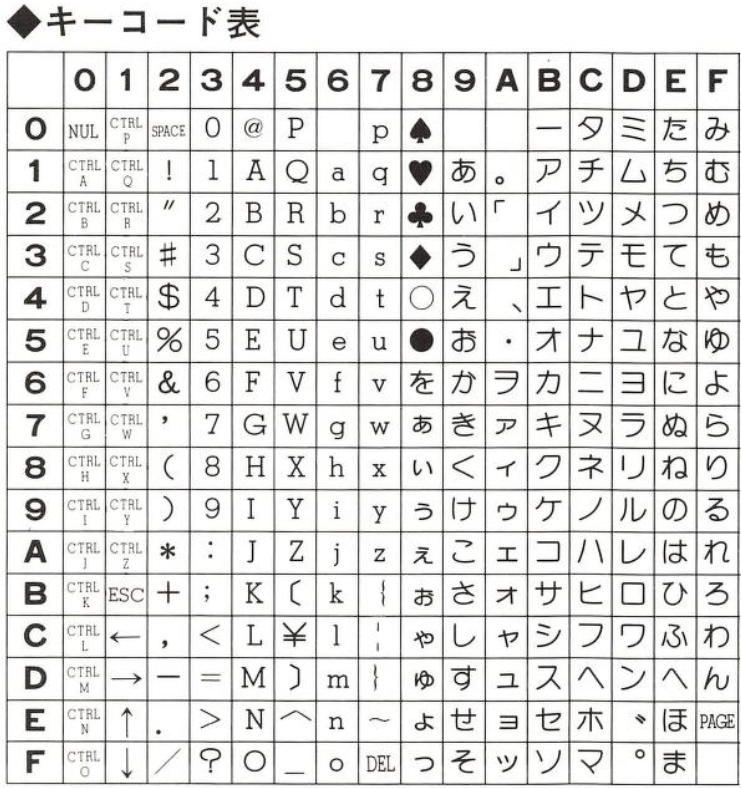
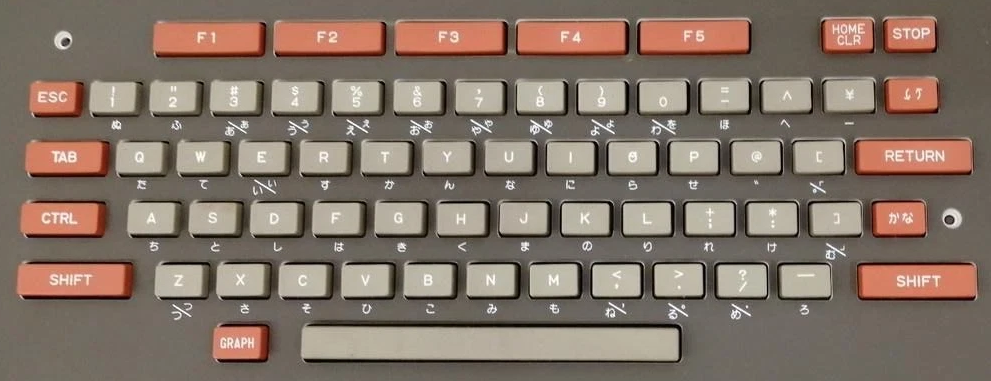
Since source-diving is going to be involved in all this, I need to talk about the PC-6001 character set.
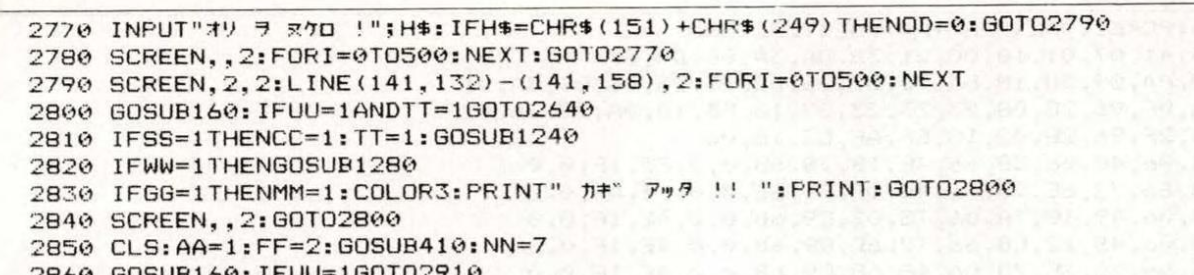
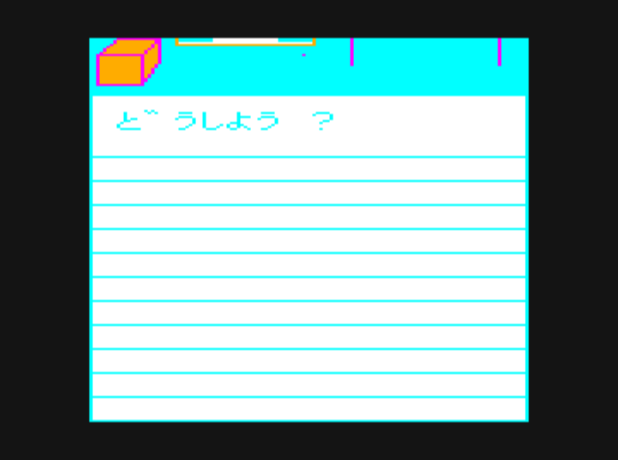
As an example of how the set works, let’s take a piece of the game I already got through: cutting through the cage. The game prompts the player with “オリ ヲ ヌクロ !” (“remove the cage!) at line 2770, while storing input in H$. The game is wanting “kiru”, that is, きる.
It checks H$ against the characters 151 and 249. The chart is in hexadecimal (base 16 rather than base 10) so we need to convert the numbers to check what characters they match. 151 in hexadecimal is 97 and 249 is F9.
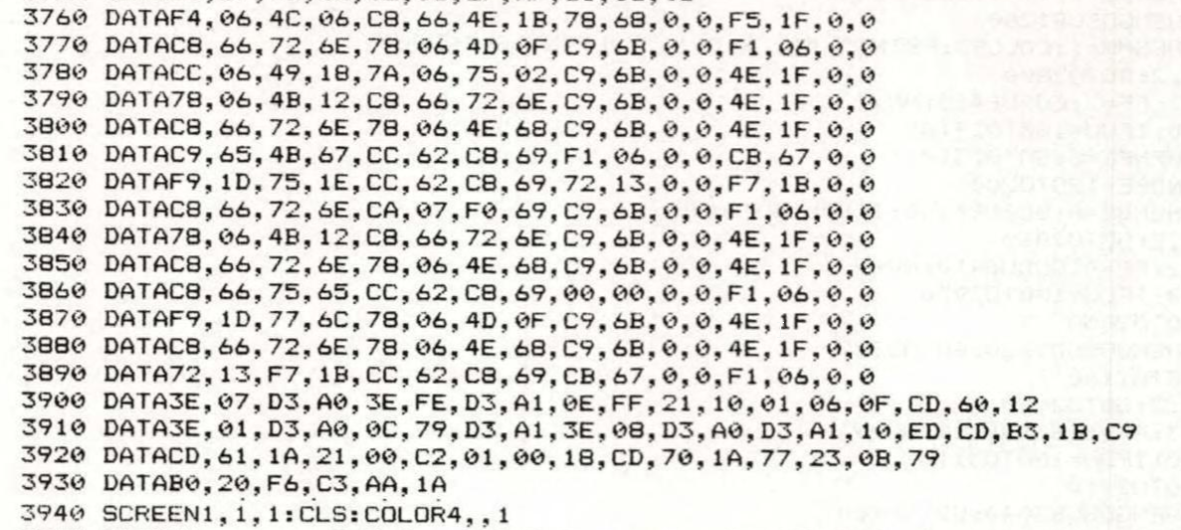
This is enough to get all the “bespoke” moments the game has (there will be two big moments later where this comes up) but it doesn’t get at the verbs/nouns generally. That’s because the BASIC has some data lines with character codes, but they aren’t stored “plain”; there’s an additional decipherment applied on top of that.
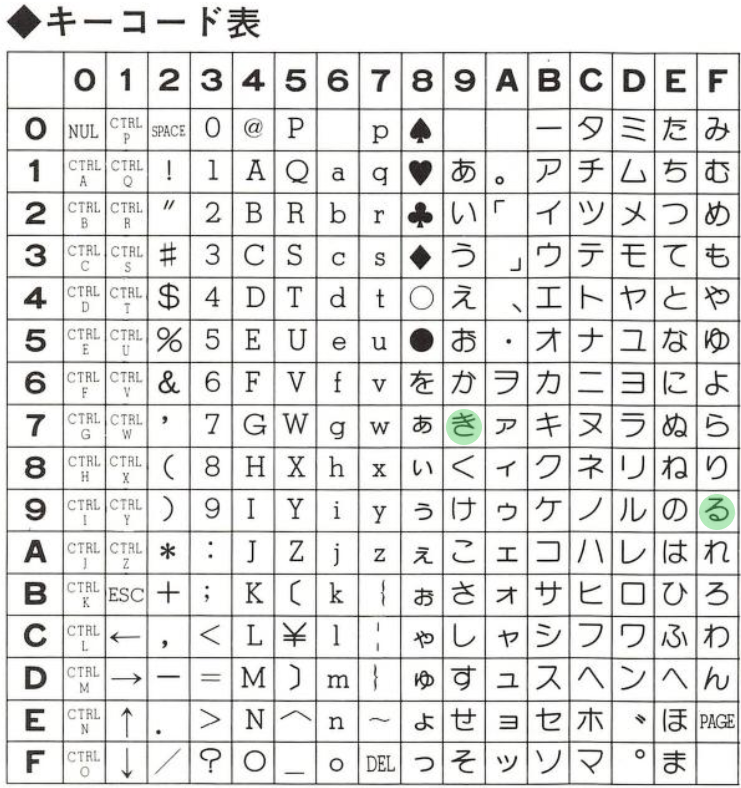
Let’s take the car (kuruma) as an example, written as kuru (くる). The word is stored as 4C 06 (you can see them as the third and fourth entries in line 3760). If you try to check the letters くる on the chart, you’ll get 98 F9 instead. What’s happening is that the actual bits undergo two different kinds of decipherment. I’ll lay them out for you in binary. First off, 4C (enciphered) to 98 (actual):
4C: 01001100

98: 10011000
Second, 06 (enciphered) to F9 (actual):
06: 00000110

F9: 11111001
If you squint at the binary digits, you’ll see in the first case, there’s a rotation one step to the left, and in the second, all 0s and 1s flip (a NOT is being applied). Since all words are given by the player in exactly two characters, every input that comes from the table goes through this process. These actions are listed in order of the rooms (so the car is mentioned at the very start because that’s the only place you can do an action on a car). Every room has its own small set of commands that work, and these commands are separate from other rooms.
The attempt to prevent anyone from reading the words here suggests this really was meant for print (adventure games being solved by just typing them in was a common problem). With the storage method worked out, I was able to dump a word list of sorts, and goodness this gets absurd. The overall map, first, to orient ourselves:
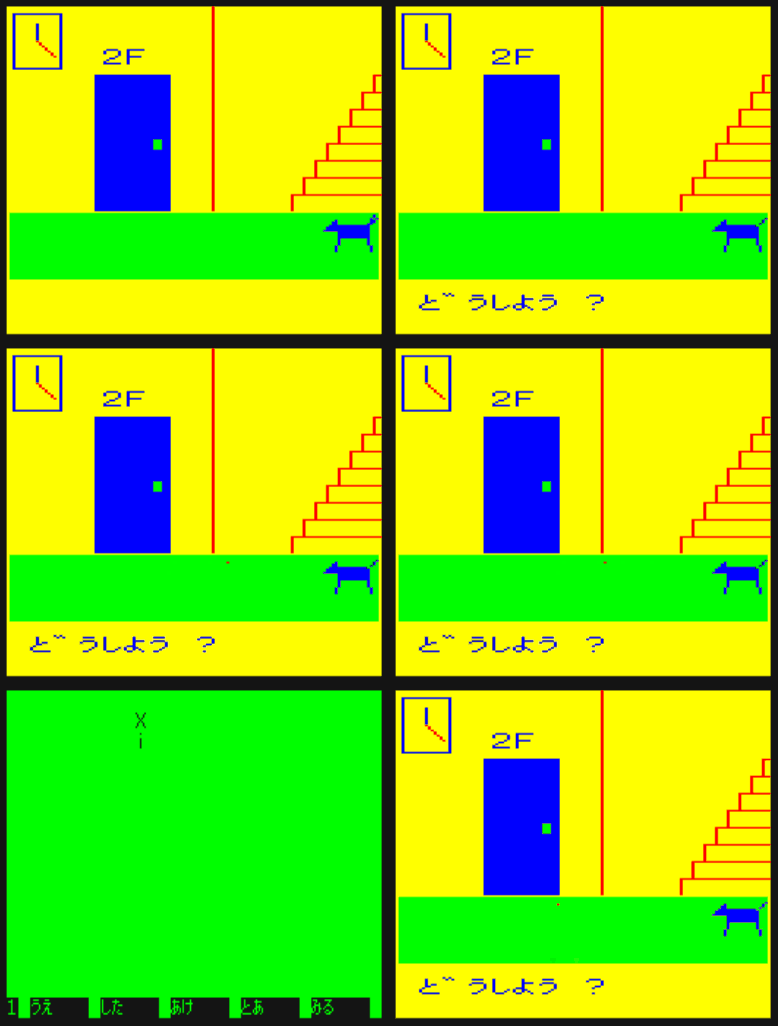
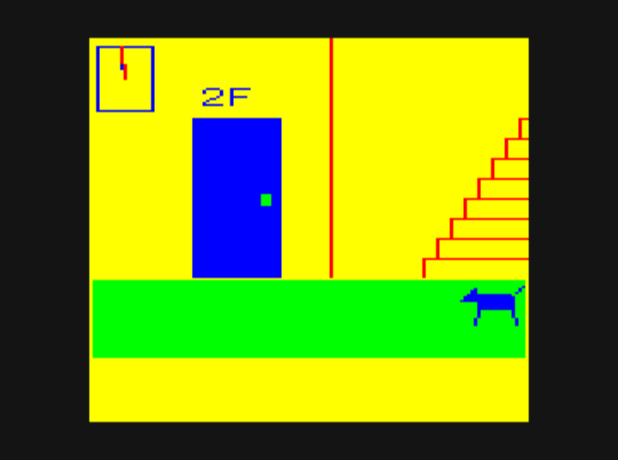
In the right tower there’s a dog on the second floor. After meeting the dog you go to the “shootout” minigame. (The animation below includes the moving dot which appears in many scenes; I never was able to figure out why it was there.)
You can in fact ignore the dog entirely and win the overall game; one winning process (after getting the first key from the car) is to go to the top available floor of the right tower (floor 4), go in and get the second key, leave (where I got stuck last time, I’ll explain how in a moment) and go back down past the dog a second time. Any time the dog is encountered a shootout begins. I assume it’s an “alarm” dog somehow but the circumstances are still befuddling of a new enemy appearing each time the dog barks at you.
There’s a slightly safer way of handling the right tower which only invokes the shootout once. You can get rid of the dog, and this comes straight from the deciphered commands in the source. You can kick the dog (not too outrageous, but rough in a limited parser) or you can “yaru han” (やる はん) which requires a little interpretation. Yaru (やる) in context here means giving food to a dog. With はん, remember that the voiced consonants are getting nuked, so my best guess is ぱん (“pan”) for bread. I don’t understand any reason why someone would think they’ve got bread with them (or any other food for that matter), but as we already saw with “cut” the author is comfortable with “invisible” implied inventory.
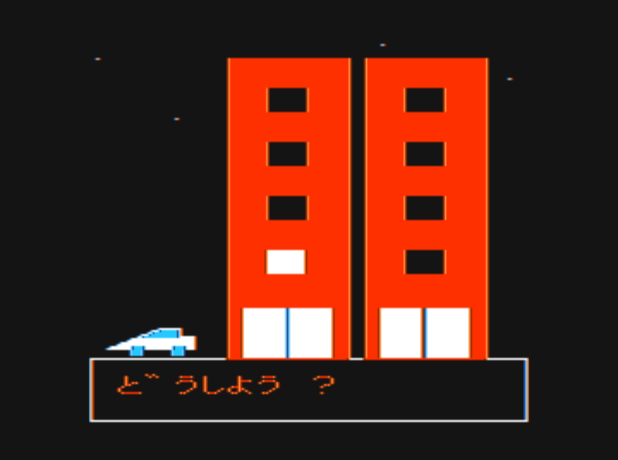
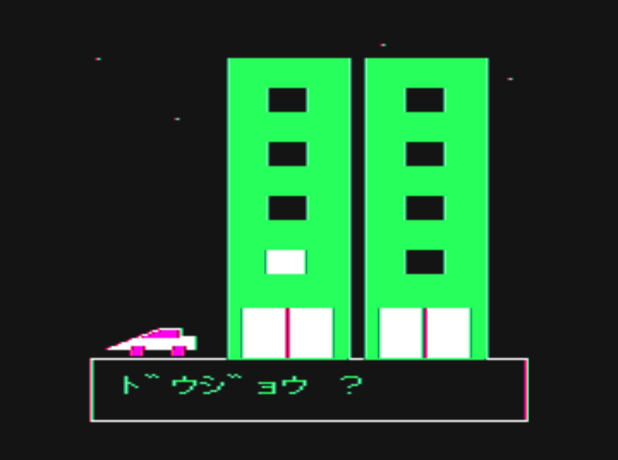
With the dog out of the way, what about escaping the cage room? If you look at the standard outside shot…
…the only room that’s pre-lit is the first floor of the left tower (that’s where you trigger the shootout minigame if you open the door; there’s no reason to do so). So when you enter the fourth floor of the right tower, the lights either go on automatically or there’s some unmentioned implied action where the player turns them on. (This is cleared up later; there’s a message I think the author forgot to trigger. Too bad the first time is where it’s really helpful!) In order to leave you need to switch off the light (kesu aka[ri]). There is no switch visible in the room, you’re just supposed to guess that it’s there.
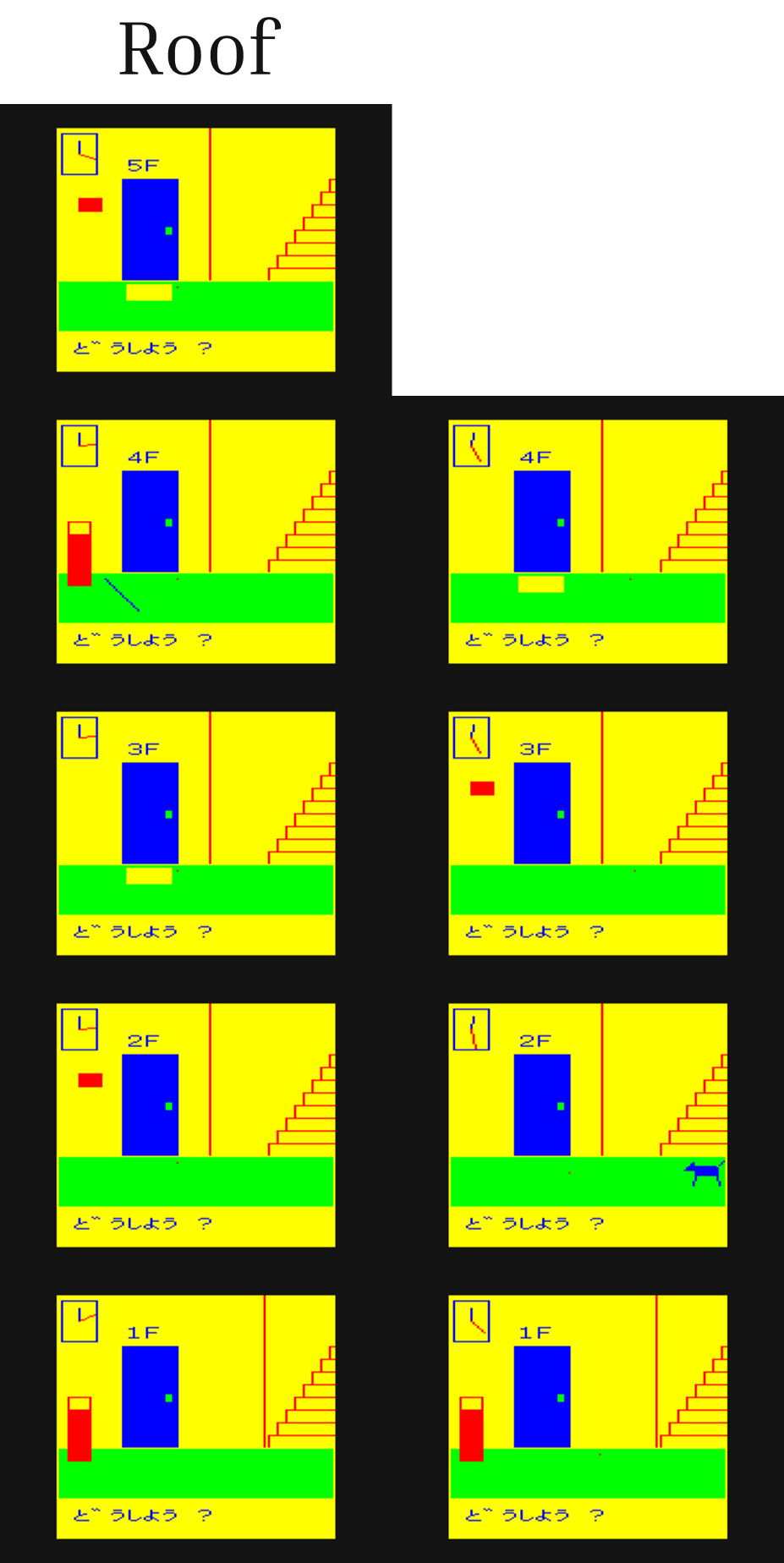
Now we’re done with the right tower! On to the left. Map again, just to stay grounded:
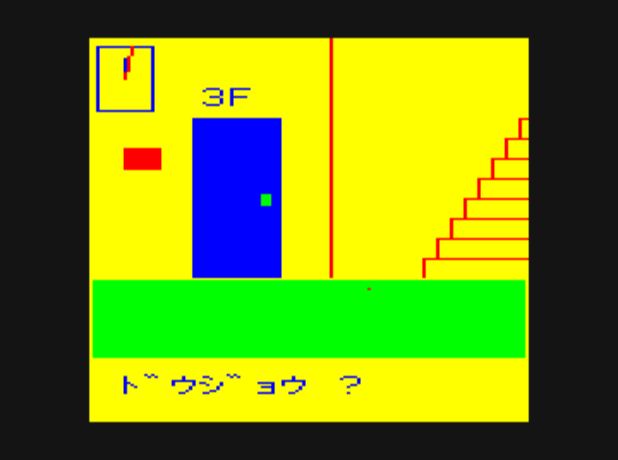
Floors 1 and 2 should be skipped (2 kills you outright if you open the door). The previously-locked third floor takes the second key. This incidentally has a message about the lights being turned on which I believe was missing on the prior door.
This room is relatively simple, except for the things you need to ignore because they won’t be recognized: just open the box, revealing a third key, and then make sure you turn out the light in order to leave.
Any mats or containers or wall plaques or mailboxes or whatever things we’ve been seeing don’t usually respond to commands (or give no useful information), with one exception. On the fourth floor you can find a stick if you search what turns out to be the trash.
This was pretty much the last thing I worked out on my own.
The third key goes to the fifth floor, and this is the part where the game leaps past solvable (…not like the dog thing or the cut thing or the light thing were reasonable to get…) Applying the key to the fifth floor, you fall down a trapdoor.
The game asks what you should do as you are falling, and while it isn’t clear from the screen, the game is hoping you press a particular keystroke, which will trigger using the stick from the fourth floor to brace yourself.
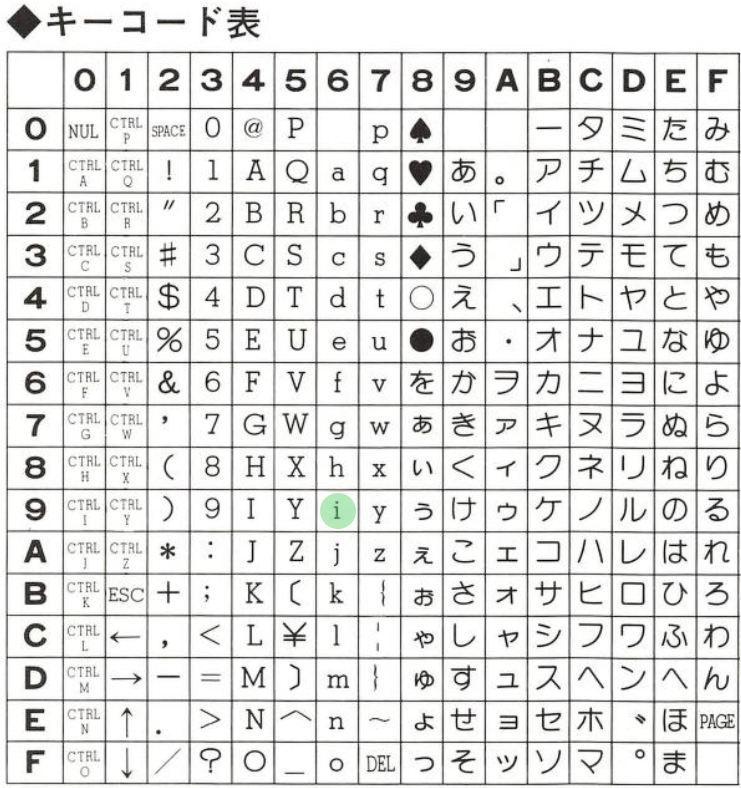
The line in question is 3450, which checks for CHR$(105), or 69 in hexadecimal. Pulling up that PC-6001 chart again…
…reveals that the keystroke being looked for is the English lowercase letter “i”. Keep in mind the player will almost certainly be in hiragana mode, as that’s how the game is otherwise controlled. Somehow they have to know to switch back to English letters and to type lowercase “i”. There seems to be no clue or indication of this anywhere. This is why I characterize the game as “unsolvable”. It’s like if you put a cheat code in a game that is intentionally required to get by a particular section, but don’t bother to tell the player about it.
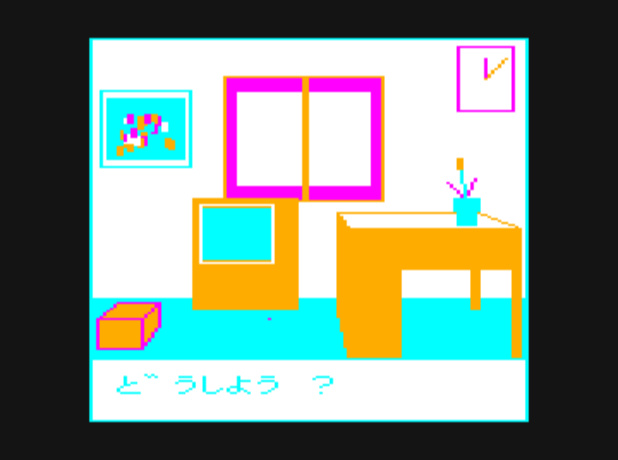
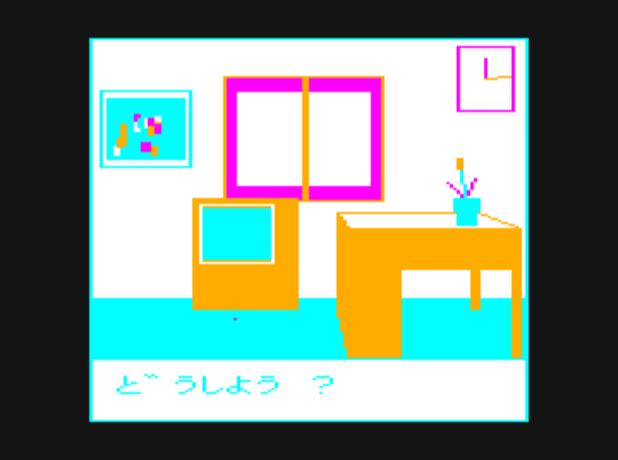
After being saved by a miracle, you can climb out of a pit (type anything, the game doesn’t check) and end up at the room you fell from. It looks identical to the room on the 4th floor of the right tower.
The big difference here (and this is purely from me dumping the commands) is that you can jump in the window now. (I’m guessing this jumps into the otherwise-inaccessible 5th floor of the right tower.)
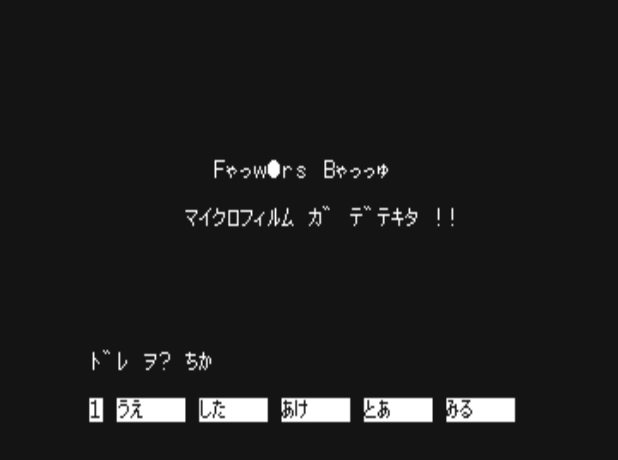
You need to grab the flowerpot (can’t refer to the other things). The game will tell you OK!! and that the microfilm you’re looking for is in the flower pot, but if you just try to grab it, it will explode.
With microfilm in hand, turn the lights out (as usual) and skedaddle. The big problem is “back” doesn’t work, nor does “jump window”; this time you need to just type “window” like it was a verb. This drops you back in the trapdoor room (fortunately no trapdoor again) so you can turn the lights off yet again and use “back”.
From here we once again reach an absolutely cryptic section akin to the “i” button. With flowerpot/microfilm in hand, you need to go back down to the first floor and then go down into the basement.
There is absolutely no indication there is a basement. This is only clear if you’re dumping the command list (with the 1-bit-shift / NOT alternating decryption method).
This shows a “waves” effect. From here to the end of the game there’s a decently accurate beach sound.
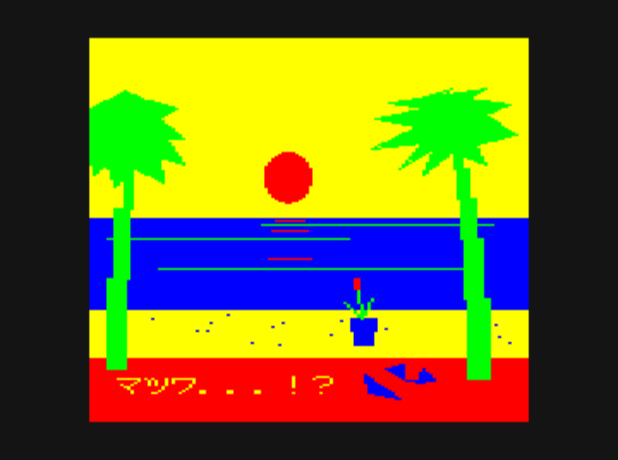
The game isn’t over yet; you end up on a beach with the flowerpot, and you are waiting for it to grow.
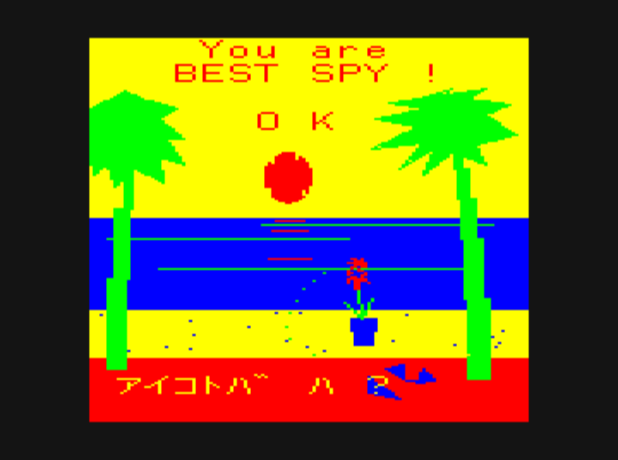
You then get a secret message about flowers blooming and the message “I found the microfilm!”
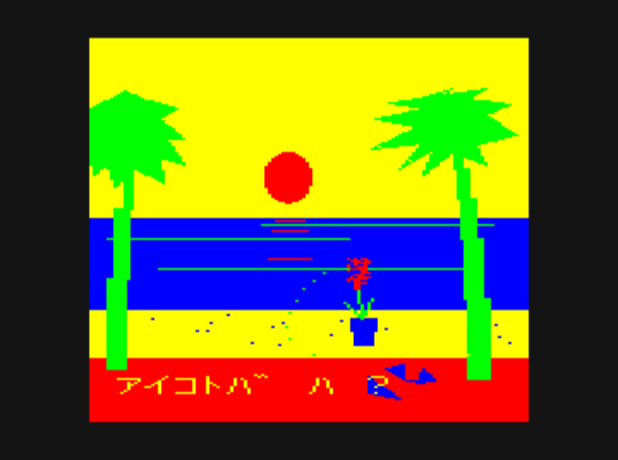
This is followed by a return to the scene where the flower is now visible.
After the flower blooms, there’s one last prompt. It needs you to type a two character command, as usual, asking if the password is アイ (“ai”, probably “love” in this case). The right response isn’t “ai” but instead the type of flower, “ume”, Japanese plum blossom. You have only two shots to get it right otherwise the game resets. I tested with GOTO 2140 (so I wouldn’t have to replay the whole game just to get two more attempts) but eventually I just looked at the symbol table again.
Red is the closest the PC-6001 would be able to do.
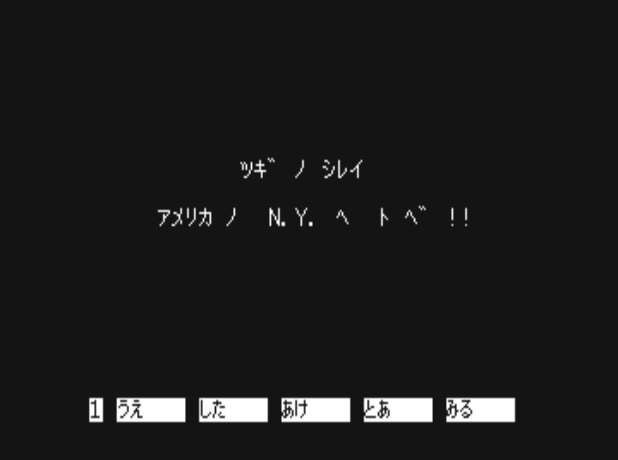
The game then suggests a sequel in New York. I’m good for now, thanks.
The wild and uneven parser and content are distant enough from Diamond Adventure (and what we know about The Spy) that I’m fairly sure the connection to The Spy is just a coincidence, or rather, the author saw Omotesando and Diamond Adventure and tried to copy Diamond Adventure specifically. The “leave no trace” aspect is specifically from Omotesando (where the player is positioned as a corporate spy of sorts, rather than a government spy) and I honestly might have solved that part on my own had the message about the lights turning on appeared in the first room where it applied.
Given the “i” button fiasco and the basement, this as printed was essentially unsolvable. I get what the author was aiming at but the custom parser system was far too confusing and restrictive, and winning via source dive can be satisfying in a meta-way but it still doesn’t make the game itself any better.
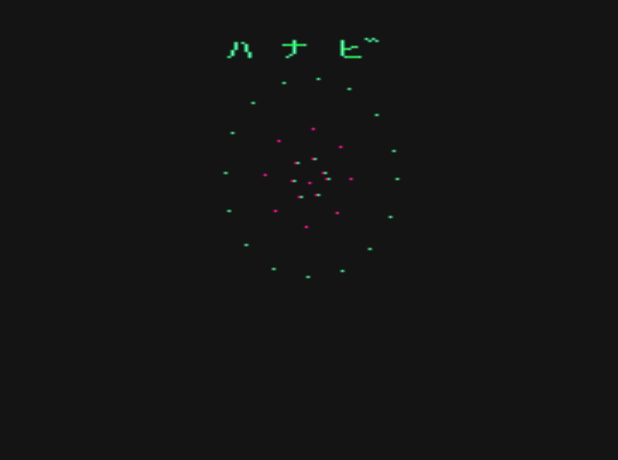
The curious thing is that the author (Momoki Todoroki) clearly poured a lot of love into the multimedia aspects, with a fully rendered title screen printed in hexadecimal, sound effects, multiple animations, and an attempt at a dynamic mini-game. The actual commands needed were just too cryptic to make it a real adventure experience. The Game Preservation Society has a tape-printed copy from I/O (head over there if you want to see the cover art, which turns the protagonist into an anthropomorphic creature with a tail) and there might be some hope it’s a later revision of the game that addresses the impossible parts.
Coming up: this one exhausted me, so I might change my schedule, but I’ve got a previously-lost long-sought-after game on deck.
I’m starting to get the impression this game might be kusoge on the level of Genma Taisen, but at least Genma Taisen was beatable. I didn’t get that far, and it wasn’t just because I’ve been busy; the game really tries hard to be impossible to play.
Before trudging ahead, an order of business: there are some typos in the text that were not true to the original, and gschmidl has an updated file here. I still haven’t studied the source code but after this post I’m honestly probably just going to go for it; you’ll see why in a moment. The revised download also fixes the function keys to work properly (in hiragana) and also changes the “what should I do?” prompt to be in hiragana as well (like the screenshots in the magazine). (ADD: One more update here that turns all the text into hiragana, as mentioned in a later issue of I/O.)
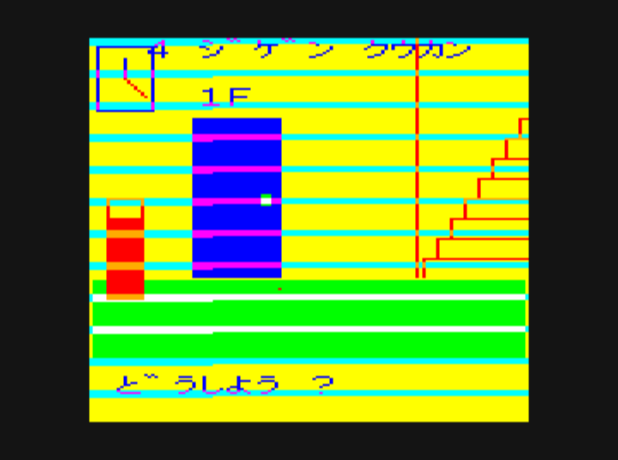
Another one of the mode 4 color schemes.
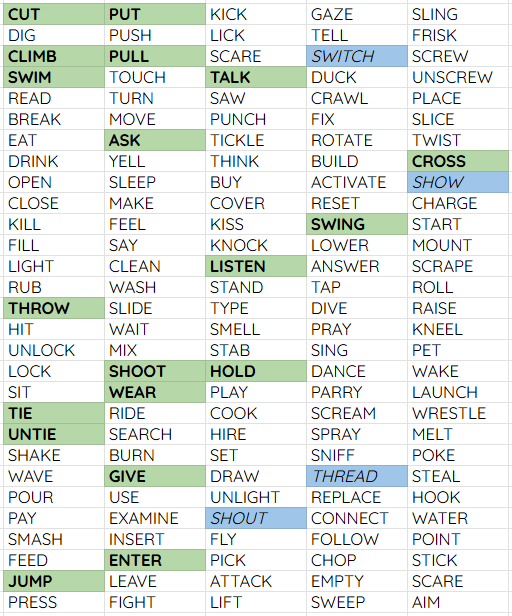
The first part I worked through was a genuine solve, via the clue that if you leave the starting scene and come back, the car is missing. This suggests the car is in some way important, so I tried whacking with various verbs until hitting “get in car” or “noru kuruma” (or rather, “noru kuru”, のる followed by くる because words need to be truncated to two characters). This reveals a key. Huzzah, progress!
The key did nothing in the left tower, but in the right tower (passing by the dog where the shoot-out happens), at the very top floor, the key unlocks the door.
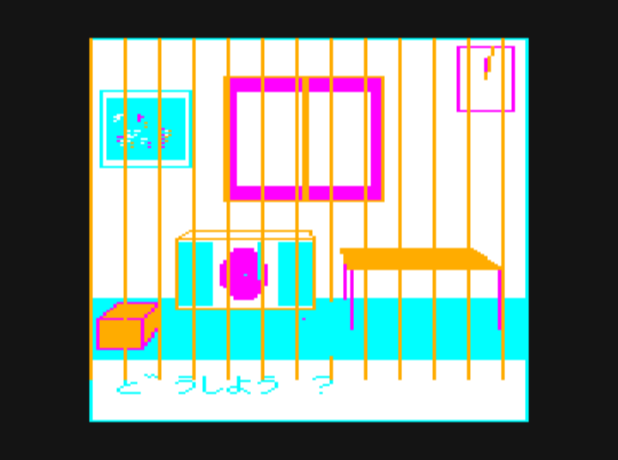
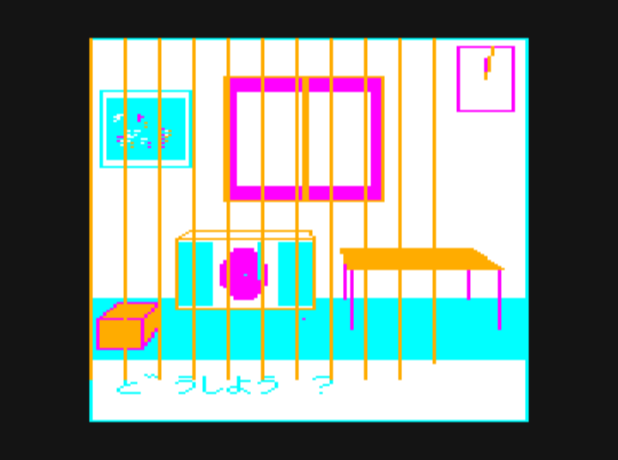
Immediately upon entering the room, cage bars appear, being drawn in left to right.
It works as an animation but it’s still mysterious about what’s going on.
The game then prompts オリ ヲ ヌクロ! or “remove the cage!” and wow this was cryptic. I guess your character is assumed to have some items because “cut” works. I actually resorted to whipping out my standard verb list and hacking through but by pure accident; “cut” is the very first verb on the list. (I’m not remembering why; I think it’s just the first verb I used as soon as I got the idea to make one, so it has stayed in its place of honor ever since.) This causes a hole to appear in the cage.
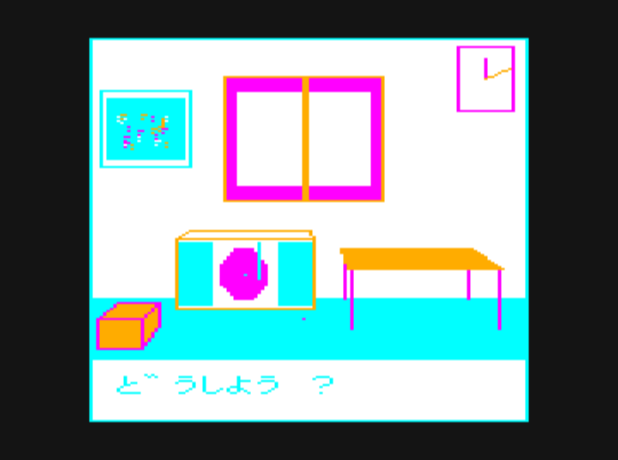
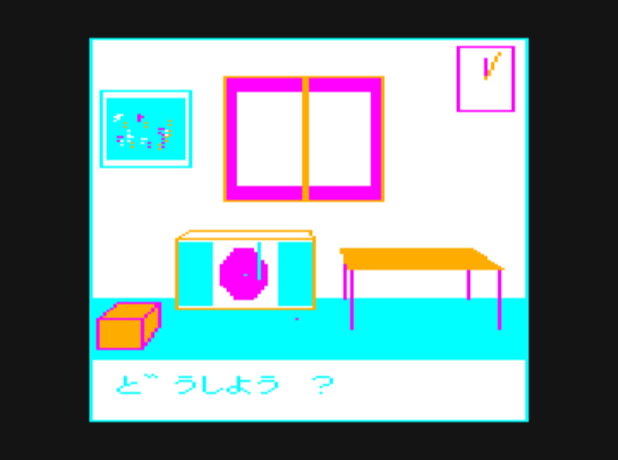
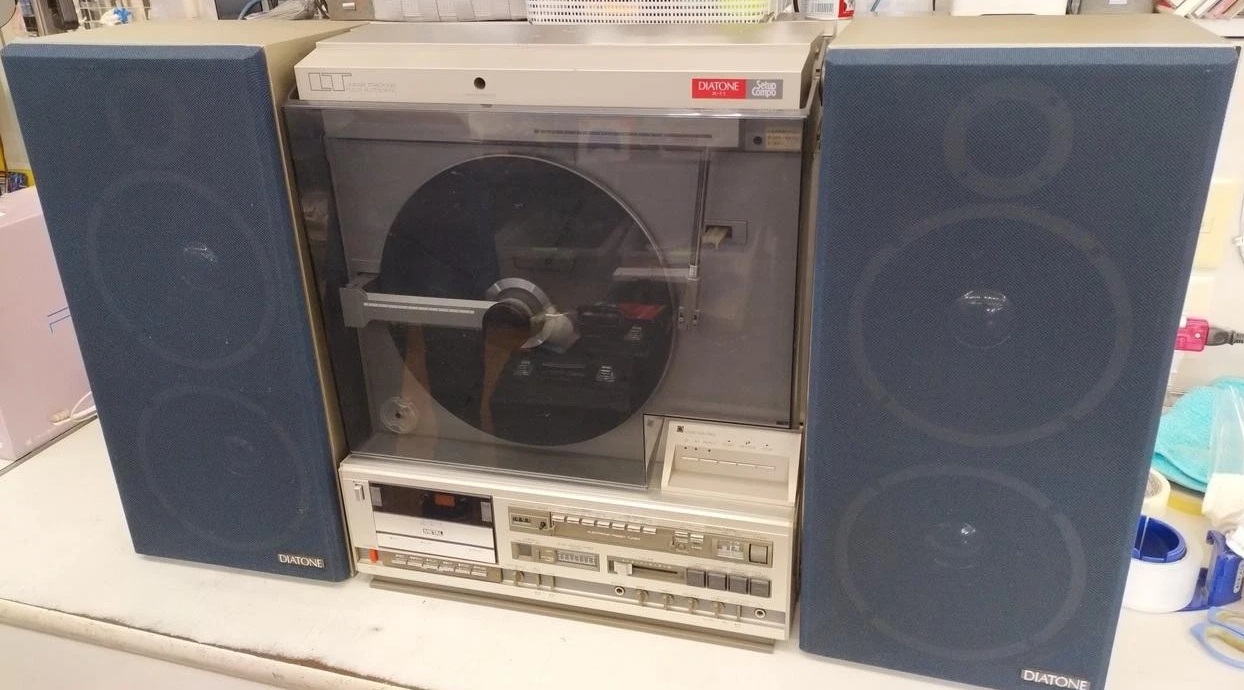
I asked in the comments what I was looking at, and Aula astutely noted that the device on the floor in the middle was probably a vertical turntable player. I’ve never heard of such a thing before but this was apparently a big thing in Japan circa 1980-1983; I found after typing “kiku” I could listen to it. I don’t know if this is a hint or just for fun (like, I assume, the fireworks).
Trying to refer to anything else was a lesson in frustration. I did finally get one more thing of use from the room, which was via move / furniture (“kagu”, not a word specifically for a table). This revealed a second key, which I presume I can use somewhere else if I can get out of the room. Unfortunately, the word that’s worked elsewhere to exit a place, てる (it’s shift-F1 on the keyboard, remember the function keys now work) gets a musical response but nothing happens.
As far as I can tell from my playing without cracking open the source code, this is as bespoke a parser as you can get. There are flags for the keys (and items, I presume) but otherwise everything is seeking out a specific word (or fragment of a word) in order to progress. At least Seiko’s Adventure had the decency to frame the guess-the-prompt aspect as a literal Hangman game.
I just played a type-in for BBC Micro from a British magazine; today I’ve got another type-in, this time from Japan.
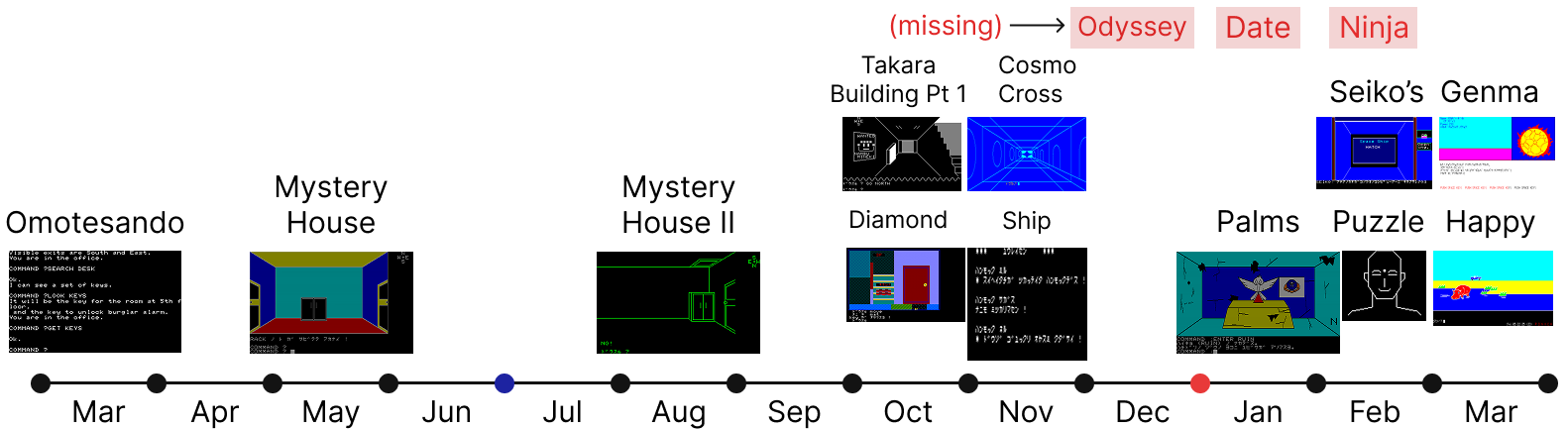
Before getting into details, some meta-business about chronology. In general, once this blog has reached a particular year, I haven’t been strictly chronological past that; with early computer games, dates have such a wide-swerving error bar that it isn’t worth the effort. (I additionally need some freedom of choice for psychological health purposes.) With Japanese games, there’s enough data by month from various sites that I’ve tried to stick to a by-month sequence and not just by-year. At some point I may declare everything in the year fair game (especially once the number of games starts to multiply), but everything so far fits into the timeline below.
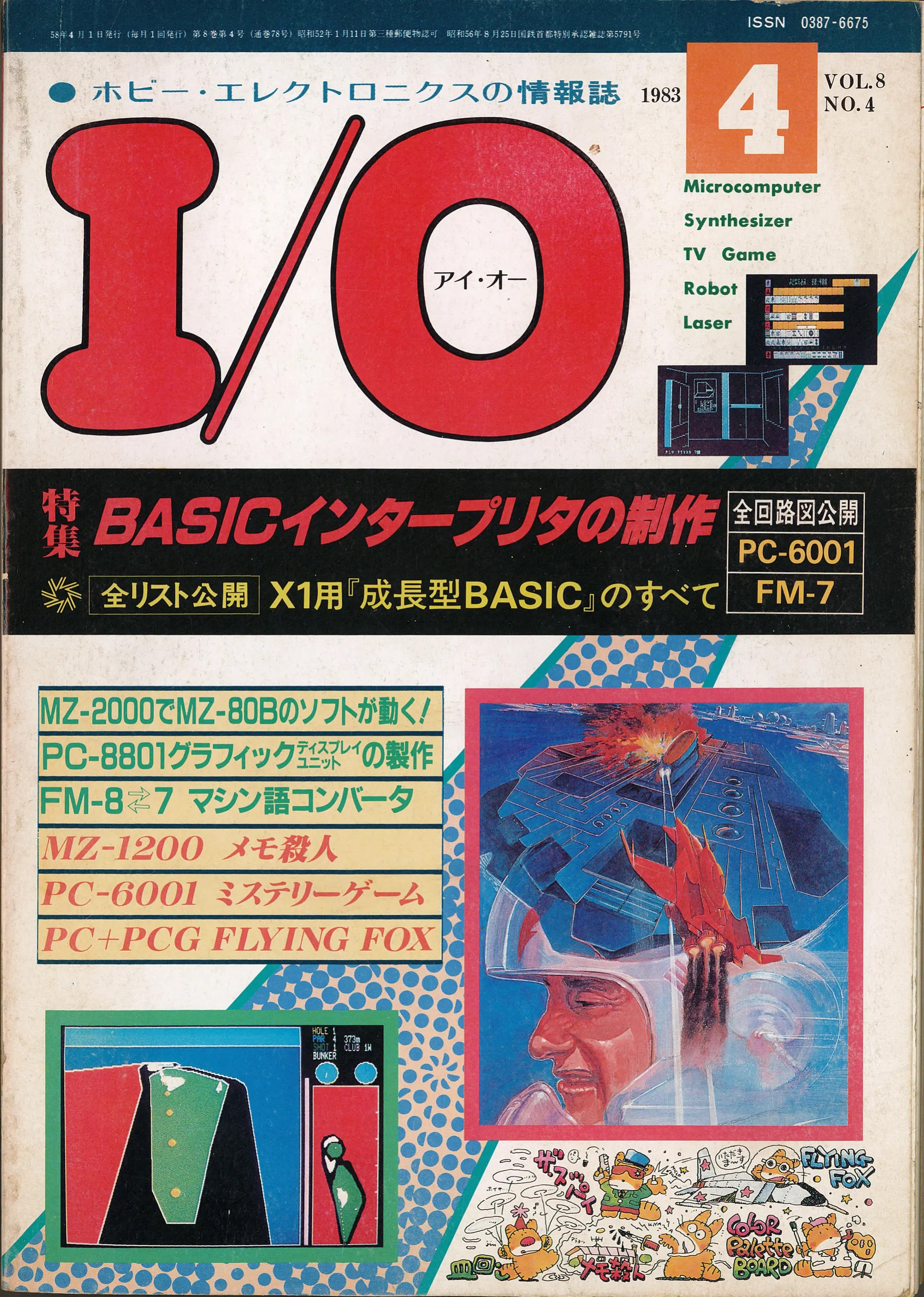
I’ve recently played Genma Taisen and Happy Bushman from early March 1983. Because of newsstand rules, magazines tend to show up a month early, so any “April” issues also fall into March. This includes the April 1983 “April Fools” Ah-Ski! issue from ASCII; Omotesando Adventure from the year prior is where adventures written in Japan started. The sequel tries to go in a very different design direction. In one of the competing magazines (I/O, April 1983 issue) there’s two adventure games that are much more clearly callbacks to prior adventures. I’m going to start with the I/O games first before visiting Ah-Ski!
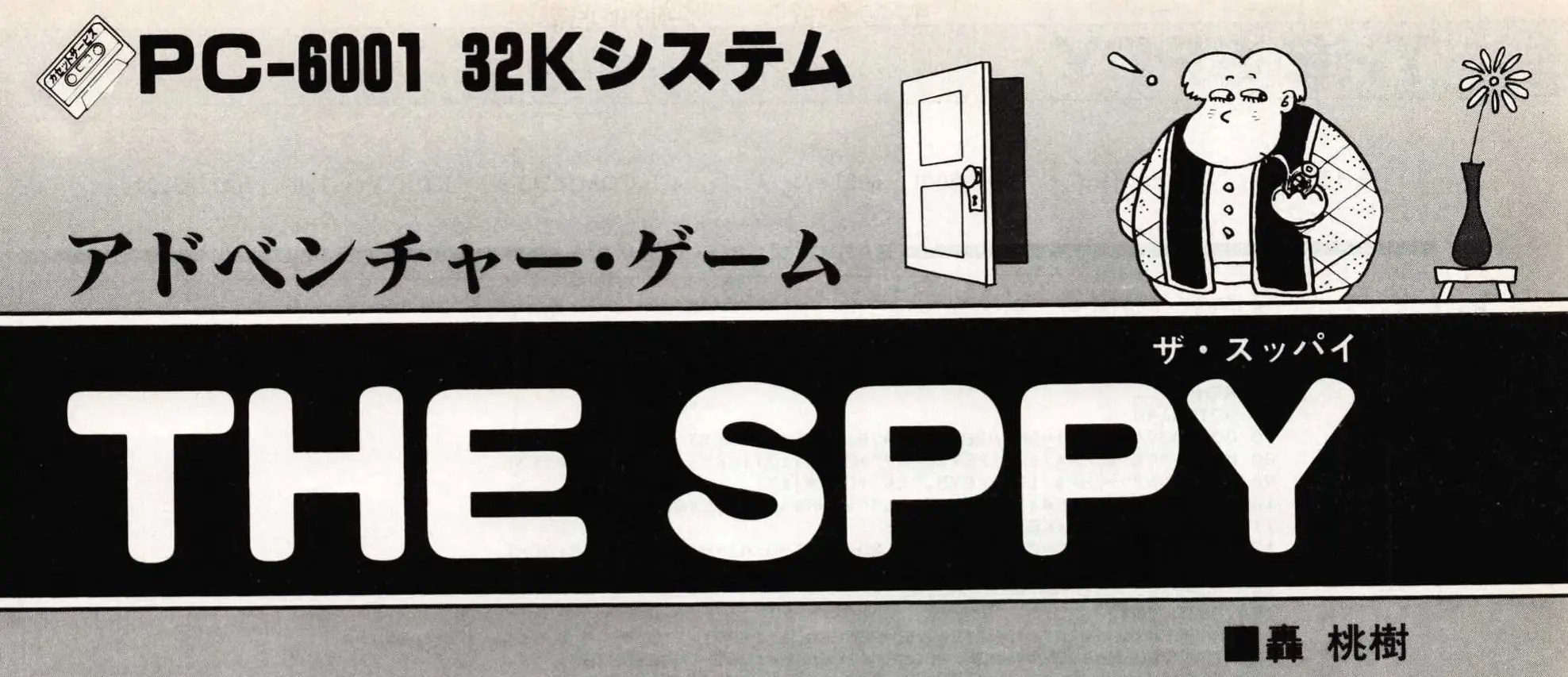
Out of the 600+ pages including type-ins, the two adventures are placed nearly next to each other (with a one-page Boxing game in-between) starting on page 215. The majority of the code of The Sppy is in BASIC, but there’s some hex code afterwards, mainly (based on what I can tell) for graphics. The author is given in the source as Momoki Todoroki.
As the top of the page announces, this is for NEC PC-6001. NEC also made the 8001 and 8801 which we’ve seen a bit more of (Phantom Ship and text-only Genma Taisen variant were 8001, Seiko’s Adventure was 8801). Both were slanted in a serious/hobbyist way; the PC-6001 was instead targeted squarely at families, and a good analogy would be the original TRS-80 versus the TRS-80 Color Computer. I have here a 1982 TV ad which should give an idea of the framing:
The PC-6001 has shown up here once before with a variant of Mystery House II (ported by N. Minami). Back when I played Diamond Adventure (again by N. Minami), I briefly tried a PC-6001 version. In that same post I found a capture of a Micro Cabin catalog from mid-1983, which is worth highlighting:
This is important in that it includes yet another game by N. Minami, The Spy. I spent a significant amount of time trying to decide if N. Minami and Momoki Todoroki were the same person; maybe Micro Cabin’s published version of The Spy is just a variant of The Sppy, or maybe the author rejiggered the code to write a sequel, Steve W. Lucas style. Pseudonyms would not have been out of place in this era.
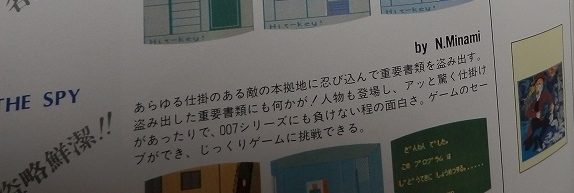
The main text of The Spy (the Micro Cabin game) says you will sneak into an enemy headquarters with traps in order to steal vital documents, and there’s surprising twists and a cast of fascinating characters; it’s “just as exciting as the 007 series” and features a save function. Diamond Adventure, by comparison, had you sneaking into a building to steal a diamond (and to go back even farther, this is strongly related to Omotesando Adventure, which had you sneak into the offices of ASCII to commit sabotage).
In The Sppy, you are Agent 006, ordered to steal a microfilm. The microfilm is meant to be used as a secret meeting, and your country will suffer greatly if the information in it is exposed. The microfilm is inside the Gemini buildings.
They’re clearly different games, but so close together in time (and on the same platform) the comparison is uncanny. The definitive thing to do would be to play both, but unfortunately Micro Cabin’s Spy has not yet been archived, so we’re staying with the Sppy type-in for now, which you can download here courtesy gschmidl (I used the emulator PC6001VX).
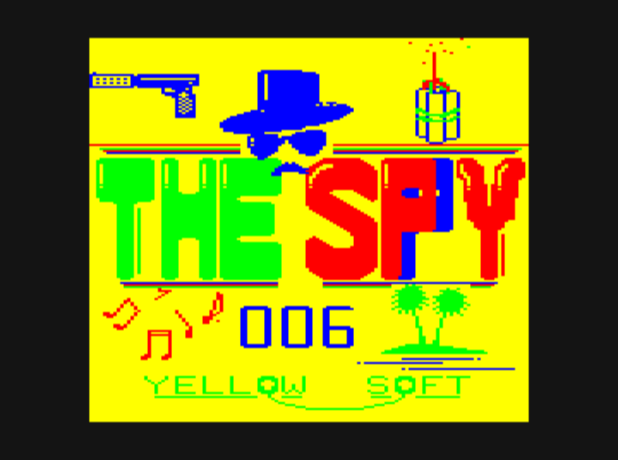
This is the only game I can find by “Yellow Soft”.
The controls are somewhat unusual: the instructions say to type two hiragana characters, omitting any voiced marks; if needed, the verb will also prompt for a noun afterwards. You start facing two buildings, and you enter みぎ (migi, right) to enter the right building but without the mark, so it’s actually みき (technically speaking, “miki”). This suggests an immediate issue, because ひだり (hidari, turns into hitari taking out the mark) is left and that’s three characters! You simply need to cut off the last character; that is, you want ひた (“hita”) for left. The British game Adventuremania had a similar parser where it needed all words to be cut to three letters.
There’s function keys with commands, but they enter the commands in katakana. Katakana does not work for controlling the game. The function keys do not work at all. I assume this was simply author oversight; the instructions even explicitly say to type in hiragana. (There’s a video that doesn’t get very far at all, but it shows the function keys in hiragana suggesting it’s a fixed version of the game. Maybe a later issue of I/O has a correction.)
BRIEF ASIDE: Katakana and hiragana are both syllable-based sets of kana for Japanese, and they have one-to-one mappings. So for example, “down” is “shita” which is した in hiragana and シタ in katakana; the sounds of “shi” and “ta” are exactly the same in both cases. Katakana is used for foreign words; hiragana is “smoother” looking and perhaps semi-analogous to using cursive rather than block capitals. The PC-6001 has hiragana written below the English letters of the keyboard. My own keyboard which I bought for playing Japanese adventure games also uses hiragana so it’s technically easier for me, even though my previous games so far have used katakana commands only.
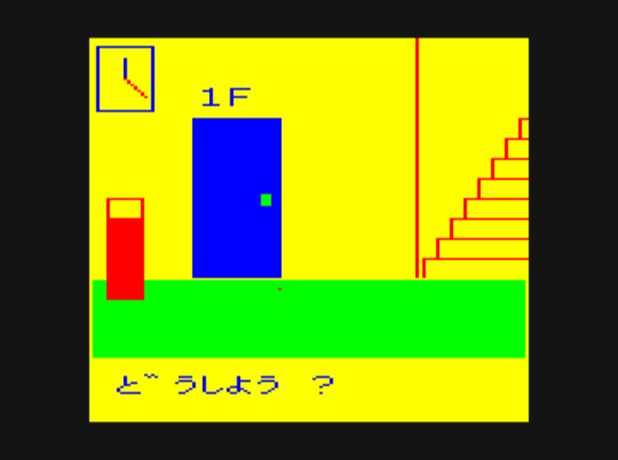
Returning to the game itself, remember there are two buildings…
This screen is “mode 4” on the system, which lets you choose between monochrome and four other palettes.
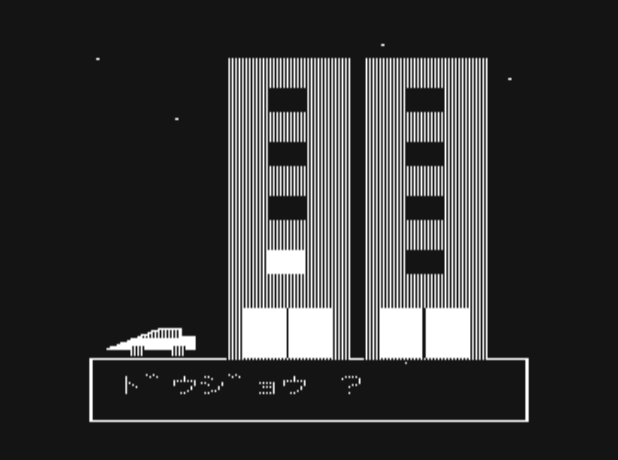
Black and white mode of the same picture.
…and you can start by simply choosing left or right. Let’s go left first.
There’s a time limit (real time, not turn count) to the game, represented by the clock in the upper left. If the player exceeds the time the game says “time is up, it’s dawn.”
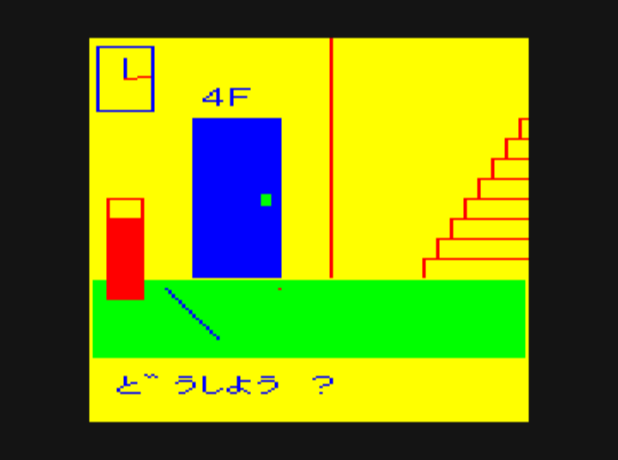
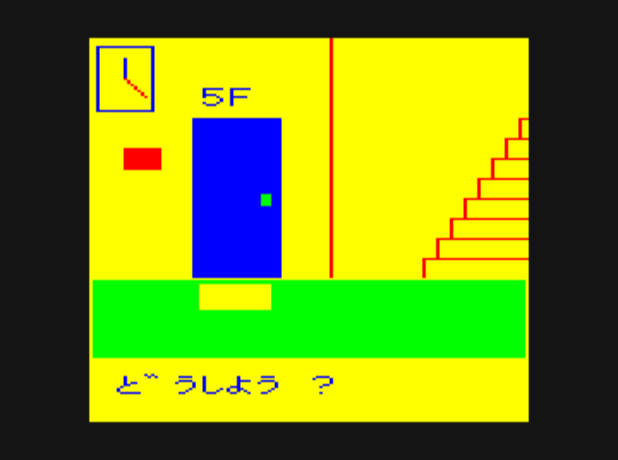
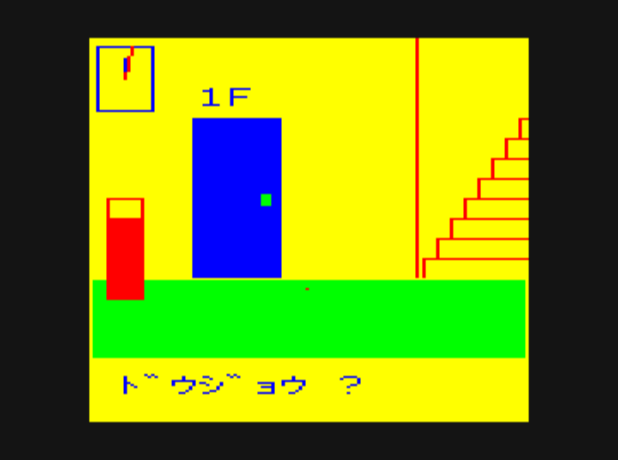
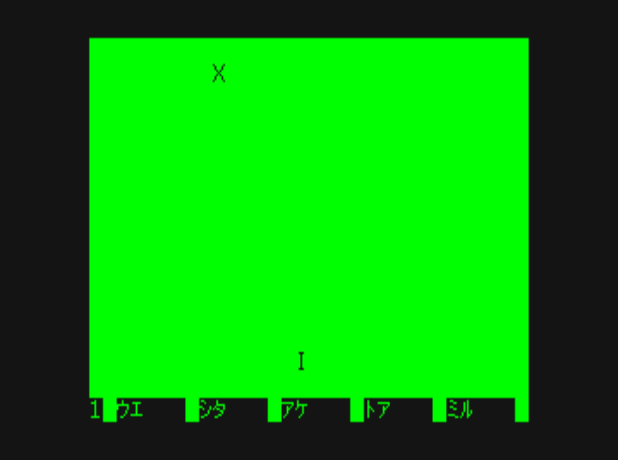
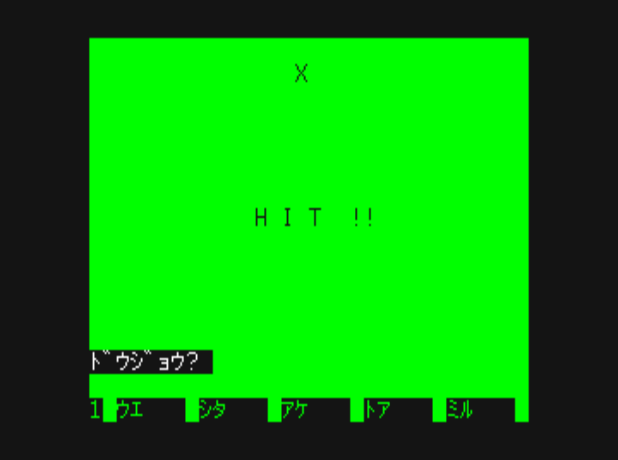
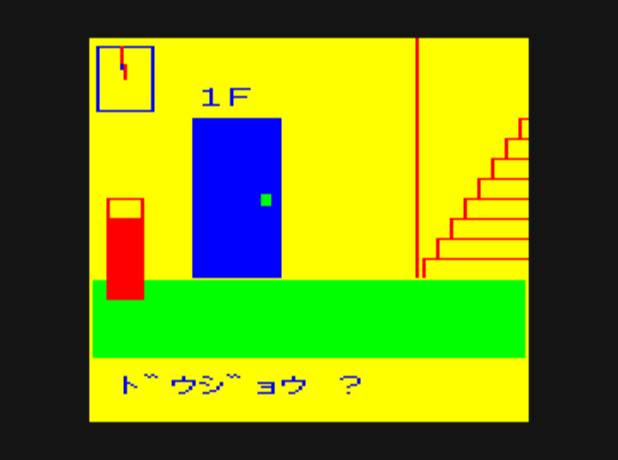
This is floor 1 of 5 floors and a roof. For this door, trying to open the door activates a minigame, where an “I” on the bottom of the screen is shooting at a “X” moving across the top of the screen. I’m unclear what is happening and if there’s any reward to be found.
This is “winning” the game. If the X gets all the way across the screen without being hit it is game over.
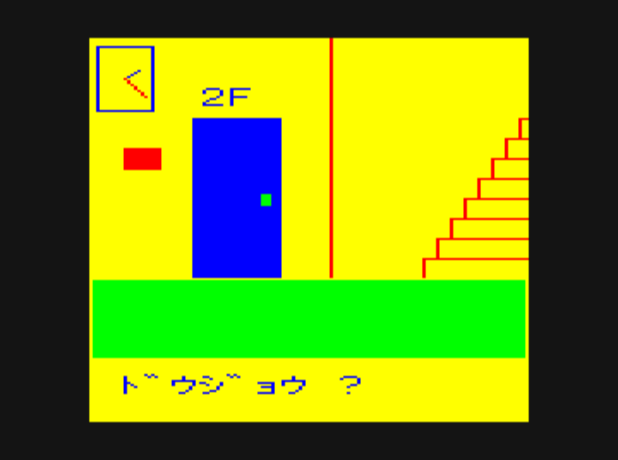
On the second floor…
…trying to open the door leads to the screen flashing off and on and the game being over. I assume a bomb or alarm but even slow-stepping with pause I don’t see any message to this effect.
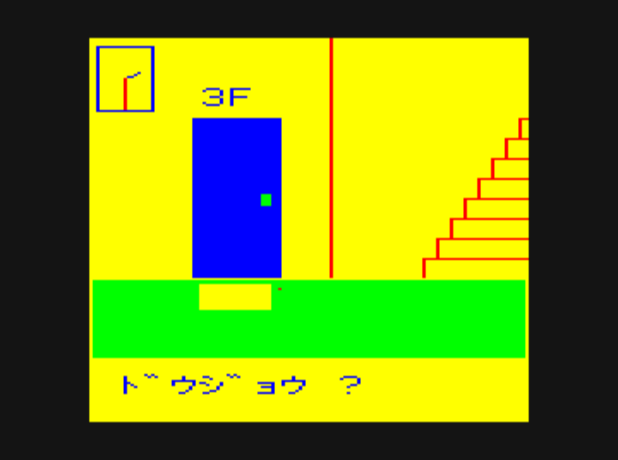
The third floor and fifth floors chastised me for not having a key; on the fourth floor I simply couldn’t use the verb “open” at all for some reason.
Also, that little pixel to the right of the door entrance moves to the right and back to the left upon first arriving at the floor.
Going up from the fifth floor leads to rooftop fireworks, whereupon you get returned to the fifth floor.
Cryptic! Note that I cannot swear all floors will always be consistent with what I just said; both Mystery House and Diamond Adventure had random elements, and even if Momoki Todoroki is not connected to Micro Cabin, they’re riffing off the games enough they may have decided that was a necessary feature.
Let’s try the right building instead.
Floor 1, rather than open/door triggering a mini-game, simply has the screen blink and kills you outright. You then get sent back to the title screen.
Floor 2 has a dog. Also, the mini-game triggers (I’ve been winning by accident, I guess, by not touching any buttons). OPEN doesn’t work here (trying to type the verb just has the game go back to asking what you want to do) I assume because the dog is stopping you.
It does a little tail wag.
The third floor is just like the first floor; opening the door kills you.
The fourth floor (upon open/door, which does work) has some message about doors exploding if you don’t have a key. Try to get up farther and the game says the stairs are broken.
So to summarize: there’s rooms that explode, a room with a shooting mini-game (and nothing else), a floor with a dog (and the same mini-game), and some fireworks on the roof of one of the buildings. I’m going to need to crack down and comb over the details to get by this one, and I feel safe in saying this one’s going to be tricky to finish.