It turns out I was stuck on what was the only hard part; there are pieces where you can lose, but for the most part it’s cases where it is clear what you did wrong and you just need to back up and try again.
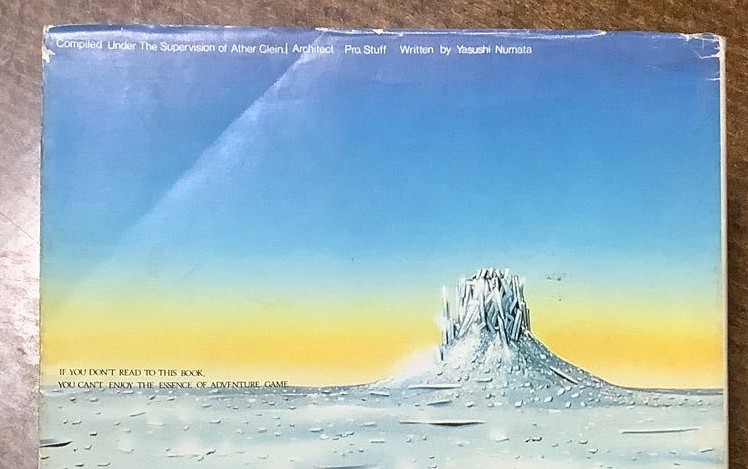
Before getting into the gameplay, a quick correction: I was taking the Romanization of the author’s name from Mobygames because I couldn’t find it elsewhere, but I realized the author’s name is printed (small and faintly) on the back of his book.
IF YOU DON’T READ THIS BOOK, YOU CAN’T ENJOY THE ESSENCE OF ADVENTURE GAME
Hence I changed Yū Numata to Yasushi Numata. Additionally, Busca in the comments points out there’s a sixth game, Burglar’s Adventure; you can see screenshots at the link I just gave.
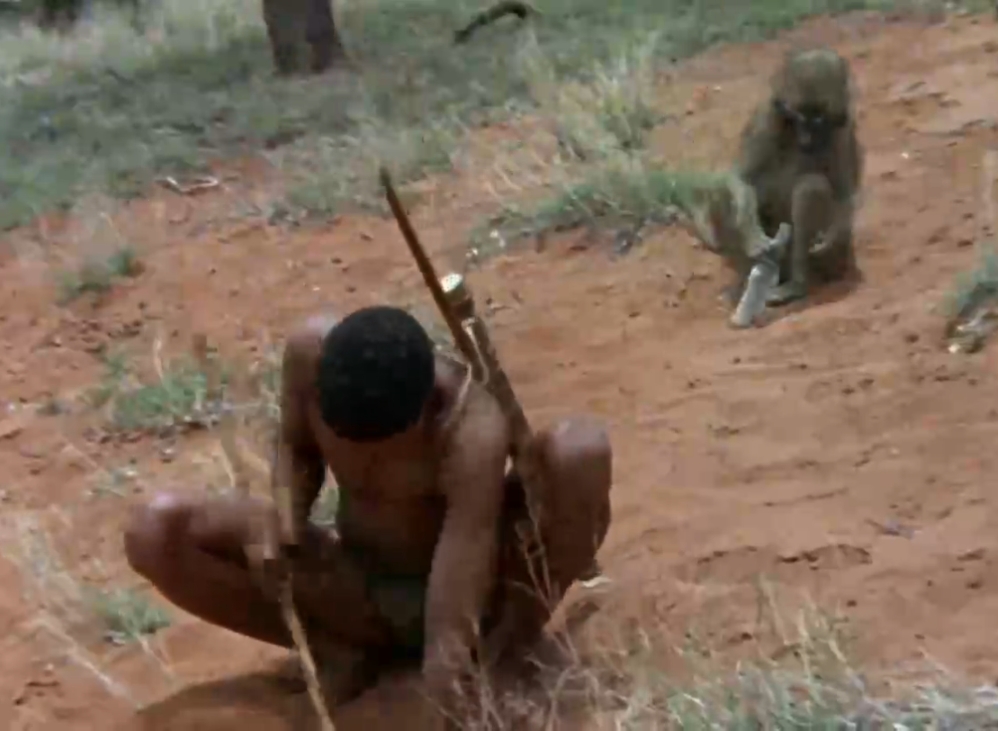
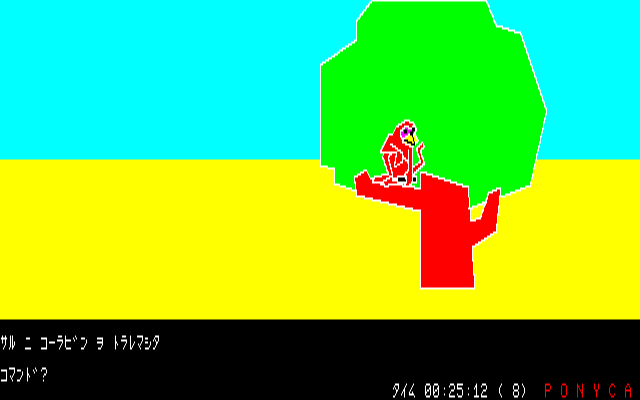
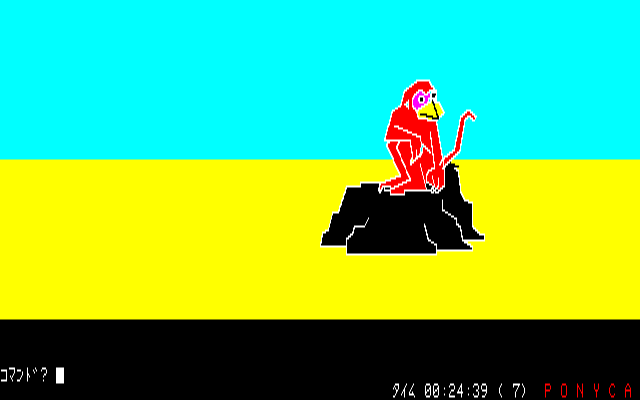
I had hit a point where the Coke bottle was stolen by a baboon. This occurs in the movie (see above). As I indicated last time, Xi talks the animal into dropping the bottle in the movie; I assumed some sort of direct confrontation in the game (even if of a different nature).
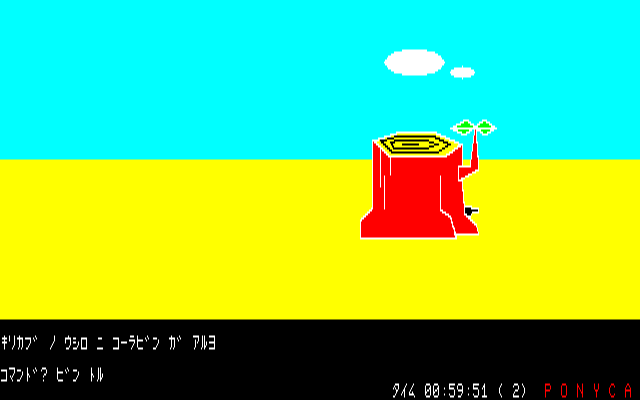
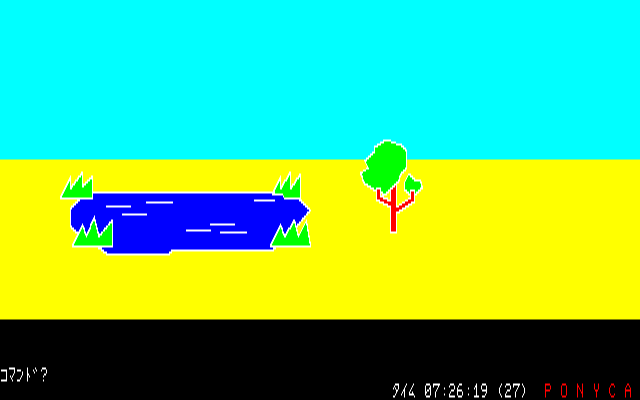
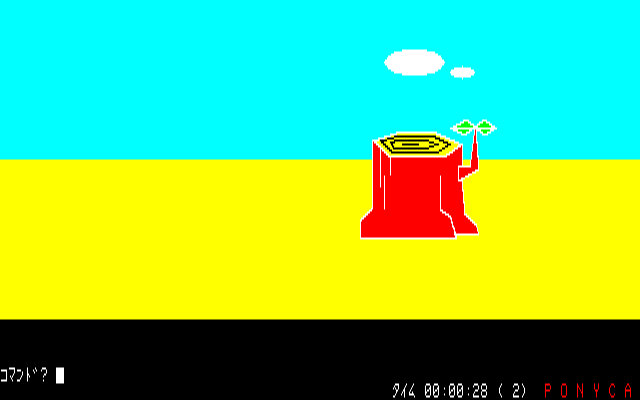
There’s some fruit you can pick if you advance — I thought maybe I could trade — but the baboon disappeared and I thought I was softlocked. This is entirely wrong; you’re supposed to go backwards a fair ways into the village to the stump, and then look at the stump. This reveals the hiding place of the bottle.
Unless I missed a message, there’s no obvious way to realize this. It ended up being the hardest part (for me) in the game.
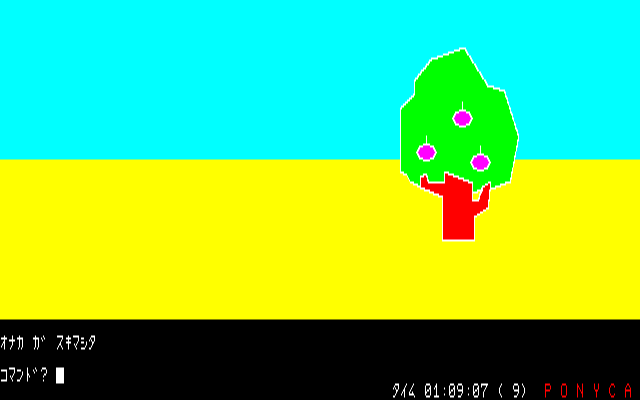
The remainder of what happens is more straightforward; there are a few “traps”, but of a relatively obvious nature. For example, back to those fruits I tried to give to the baboon:
You’re supposed to eat them. If you don’t, in the next scene where it gets dark and you need to sleep, you die of hunger. That’s what I mean about the “trap” being obvious. Certainly by normal adventure game practice you’d hang on to the fruit, but knowing about the starvation makes it essentially a non-puzzle.
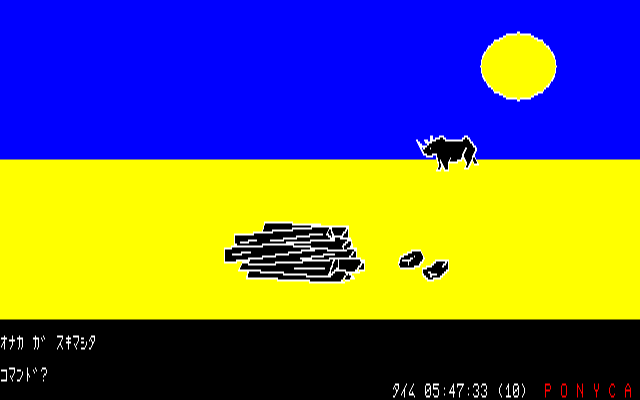
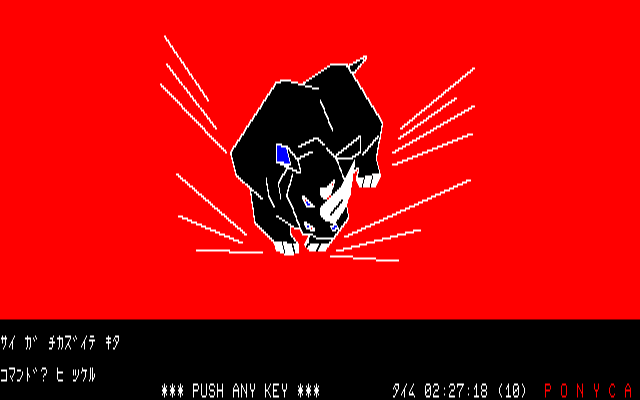
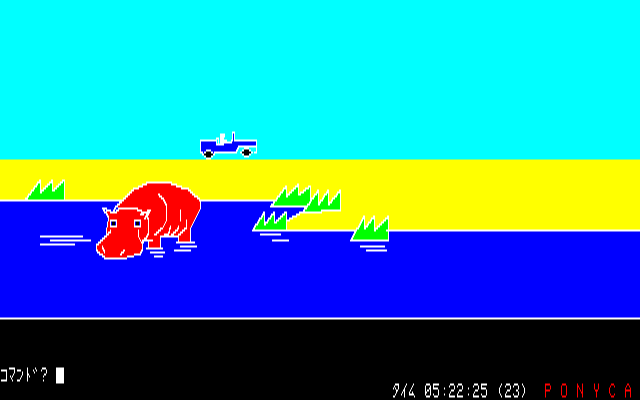
There’s a second issue here, which is you get killed by a beast if you fall asleep. I caught on the fire needed lighting; start trying to do so and a rhino comes charging.
After a second try it gets successfully lit and the animal goes away. You can now sleep.
Onward! More “advance” … quite a bit. I appreciate the simplification here of removing compass directions when exploration isn’t the point of the game, but it means the author needs to do even more work to fill in the void left behind.
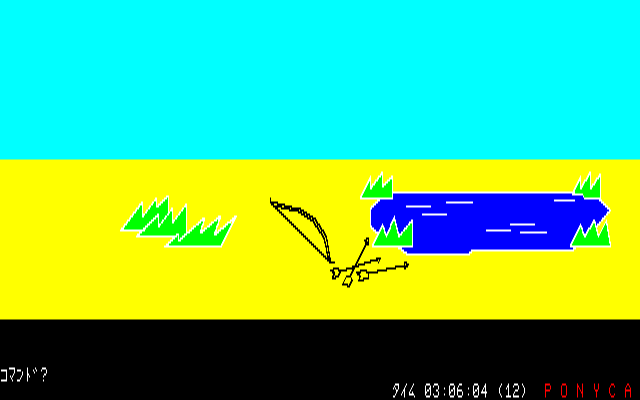
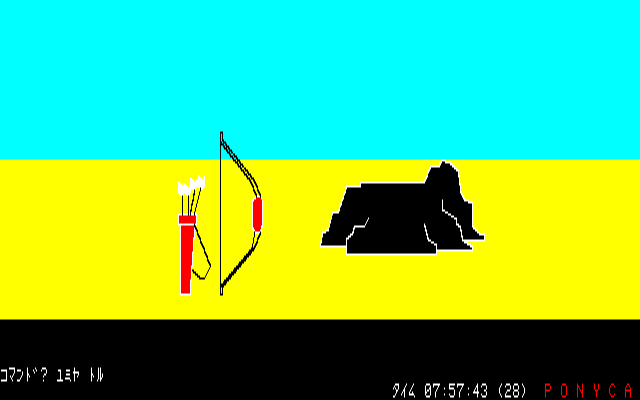
Bow and arrows just lying around. You need to take them.
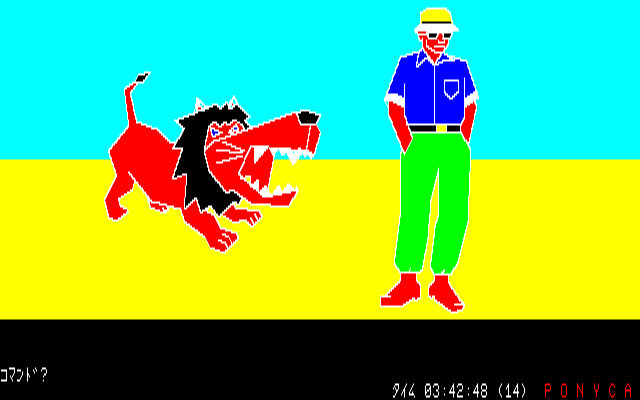
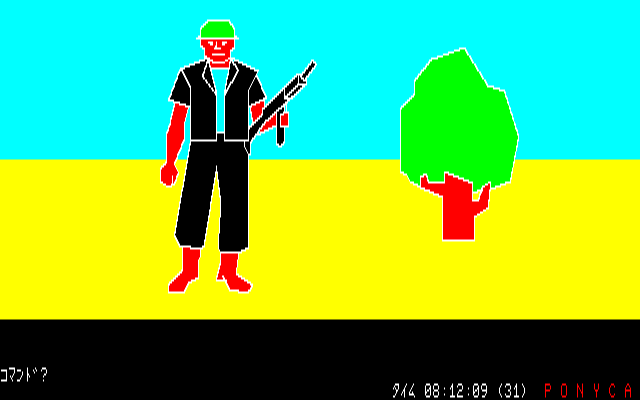
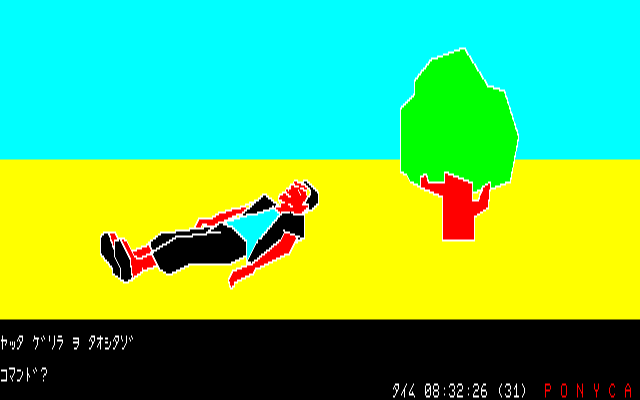
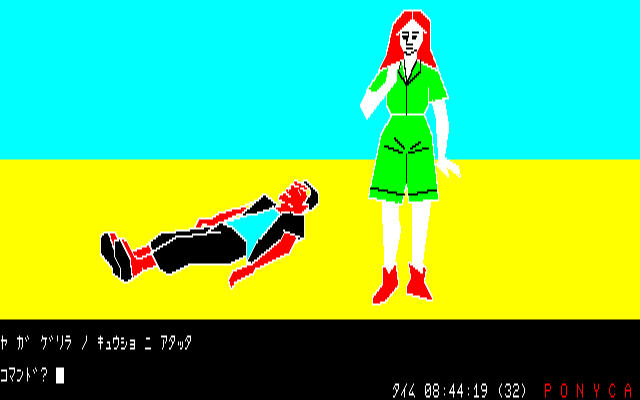
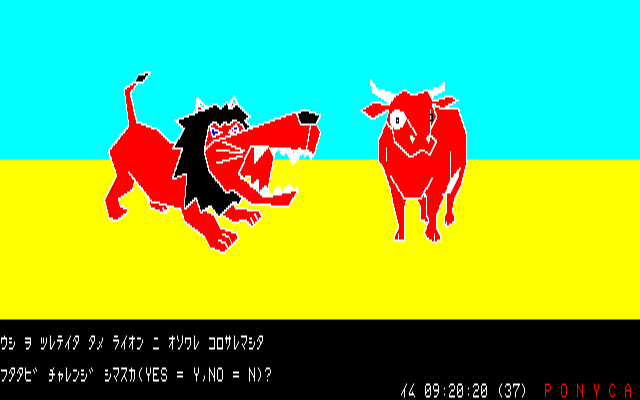
Oh no, a lion! And that’s supposed to be Steyn there (this movie’s version of the man who is helpless saying coherent words around women). He seems cooler in this version. You can shoot the lion and he doesn’t even turn around, it’s like how the cool guy in shades walks away from the explosion without glancing.
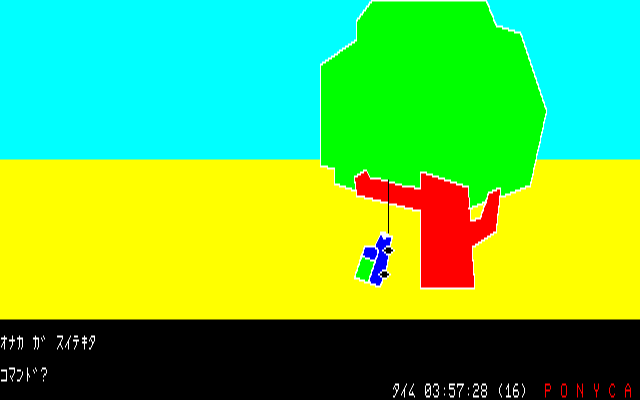
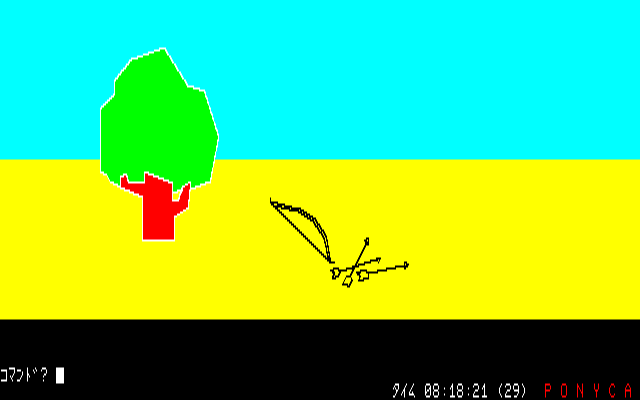
And the truck’s in the tree, you just pass by here and admire the scenery.
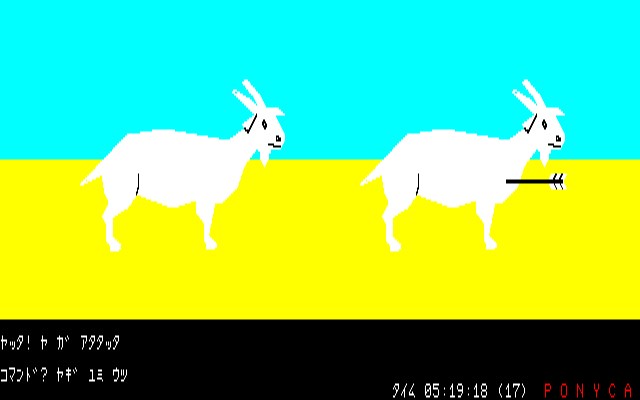
Killing the lion was important because of a moment later where you pass by some goats. If you just keep walking you die of starvation. Clearly, the intent is to use the bow and arrow you still have handy.
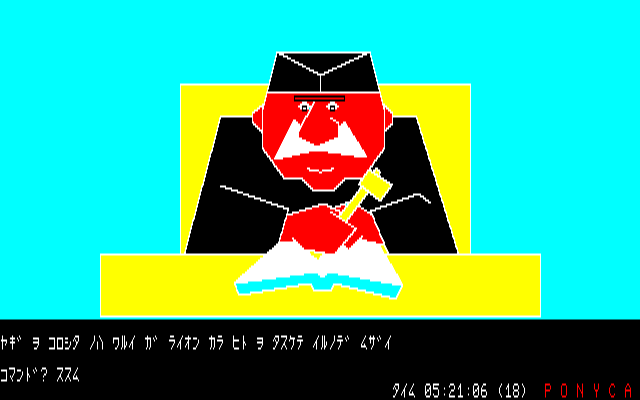
Unfortunately, this gets you arrested (this also happens in the movie!) but because you did the good deed earlier, you get let off easy by the judge. We can resume taking the Coke bottle on our quest!
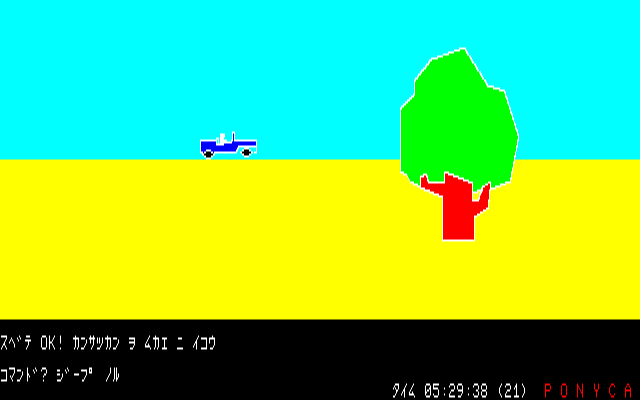
We now have the jeep available to take. I’m not even sure how this is sequenced exactly. (Fictional Xi does not know how to drive.) The implication is perhaps Steyn is helping, but he doesn’t get drawn in the Jeep, he only shows up in a scene later.
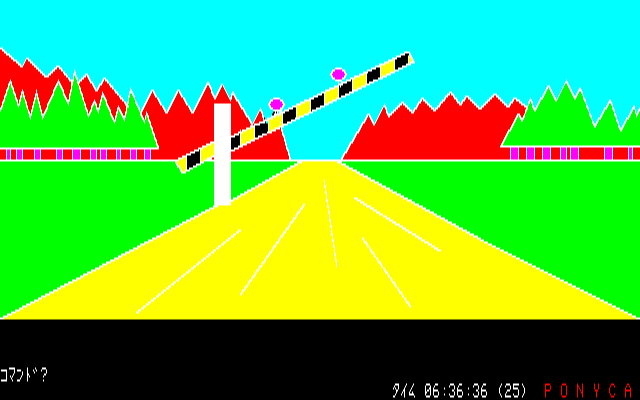
After some driving, you reach a gate. And the “puzzle” is to get out of the jeep, open the gate, and keep moving forward.
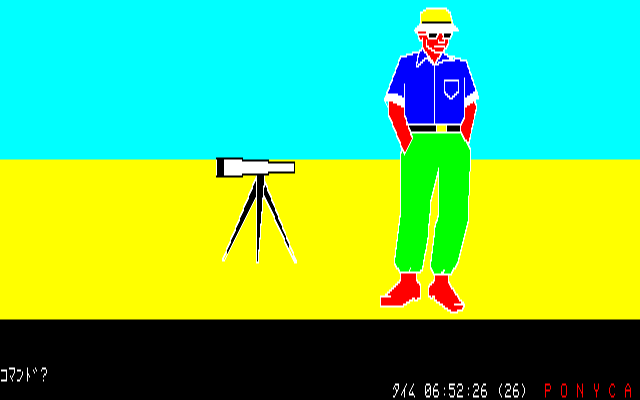
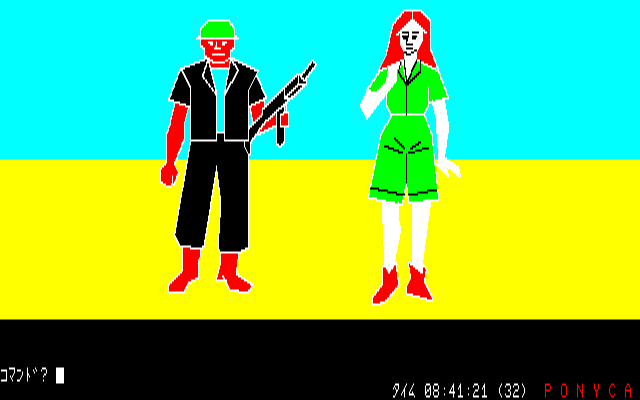
Steyn (who maybe was travelling with us) pulls out a telescope and we see some kids with some guerillas. Now comes the final part of the game, where we take them down. Except our bow and arrows were confiscated!
Don’t worry, we’ll see them again soon. First though, we need to take the shrub/weed out of the way here otherwise (later) we make too much noise. This was the only other “hard” part of the game I thought because it isn’t very clear at describing what happens.
Past that are a bow and arrows — they’re just lying around everywhere I guess — which describe themselves as “big and cute” when you pick them up.
Forward some more reveals another bow and arrows, this one small enough to make it easy to sneak.
Pick up the comically oversized bow (or forget to grab the weed) and you’ll get spotted here; as long as you only took the smaller bow you can continue.
The bow and arrow serve their purpose just fine, and they do so on the next scene as well.
Better than Solid Snake.
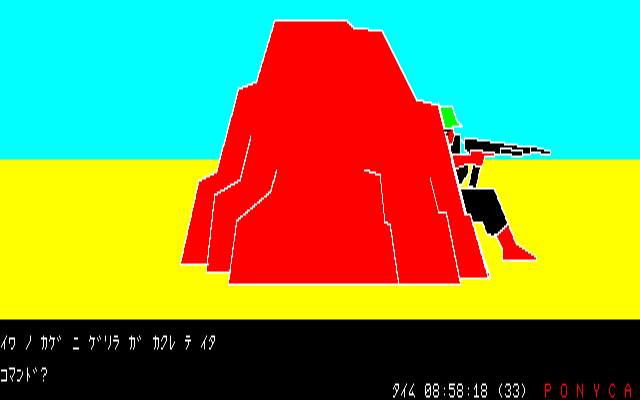
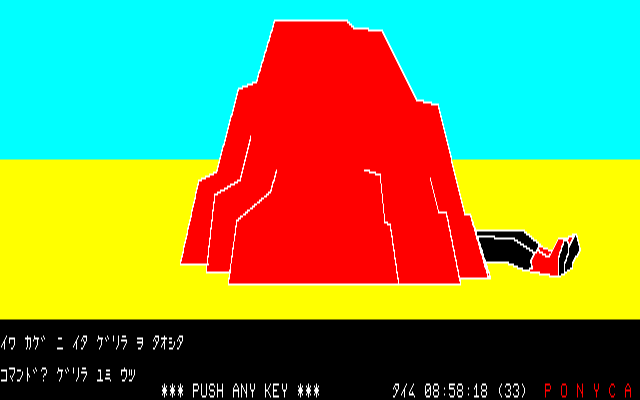
Then there’s just a rock, and oh no if you keep going you get shot! You need to LOOK ROCK and then do the shooting.
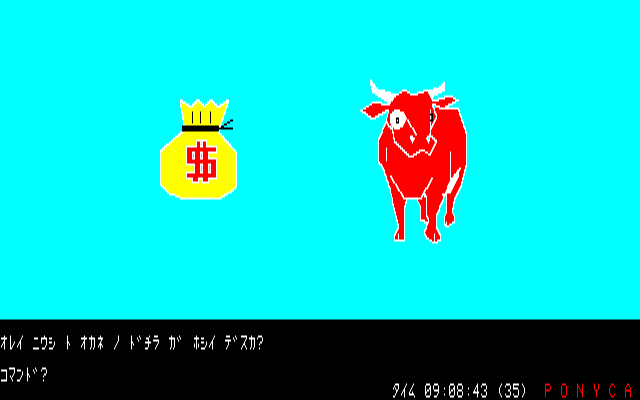
With that you get offered a cattle or money as a reward, and assume you blow off the money, the funniest death scene of the game ensues.
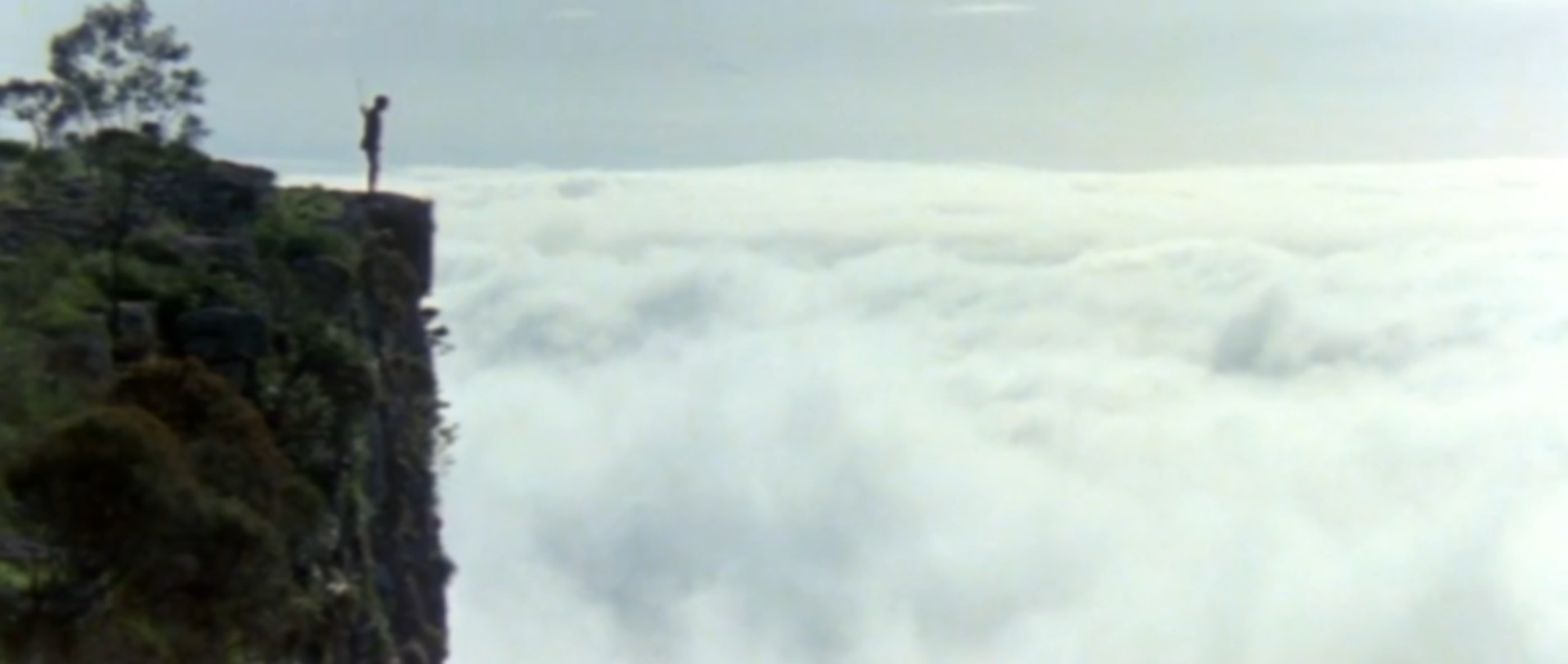
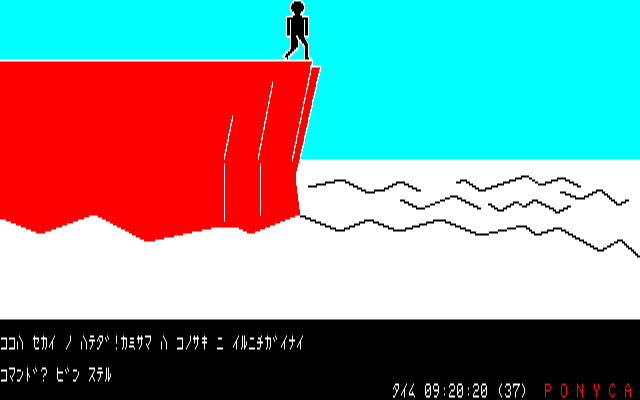
You’re supposed to pick the cash (I guess avoiding tempting any stray lions) and you finally can reach the end of the world. Movie version first, just for comparison:
I like how matter-of-fact this is.
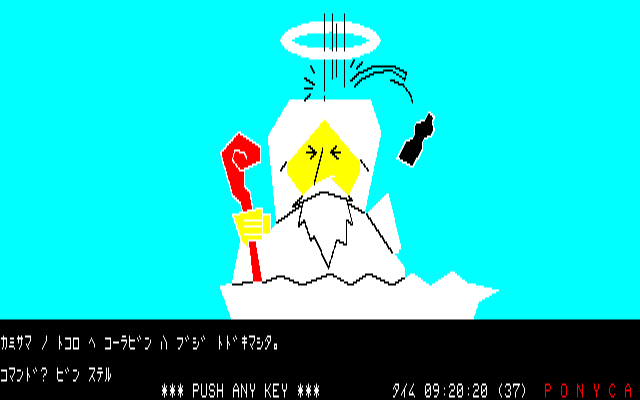
Because it wouldn’t be a Japanese game without killing the god-boss at the end bonking God at the end with a Coke bottle.
Kazuma Satou in the comments points out he “finished the whole thing with no hints in less than the movie’s runtime.” It took me a little longer (both looking up things like the Japanese word for telescope and me trying to argue with the baboon).
In a more serious sense, there was clearly some major struggle in both this game and Genma Taisen in figuring out how to adapt a movie. The only reason The Dark Crystal worked in parts was exploration; here, both games remove that aspect entirely and rely more or less on binary live-or-die choices (like picking up the wrong bow; and really, are you going to ignore the charging lion?) This doesn’t have as many ridiculous moments like the fake-out questions or quizzing what your power levels are.
At least it turned out better than the arcade game. It was released before this game, mid-1982, as Gonta Road Rush (with some unfortunate imagery on the side of the cabinet). Quoting Game Machine from August 1982 (courtesy tweakbod from Gaming Alexandria).
The game follows “Gonta,” a tribesman, as he overcomes various obstacles to return to his home in Africa; the game consists of three stages in total. It begins with a city street stage, then goes through a tunnel and so on while avoiding moving cars one after another. Monsters that attack along the way can be defeated with the spear (button operation).
It was released in the US as Desert Dan with some graphical changes. The description of the video below claims “it’s probably one of the worst arcade games I have ever played.”
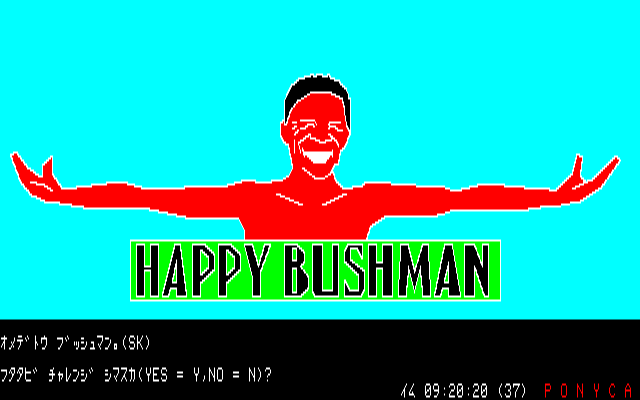
Adventure authors were not the only ones struggling with the idea of converting media, it seems. At least Happy Bushman has some scenes that vaguely resemble the movie!
Coming up: the grand finale ending to Thissala. No, really.
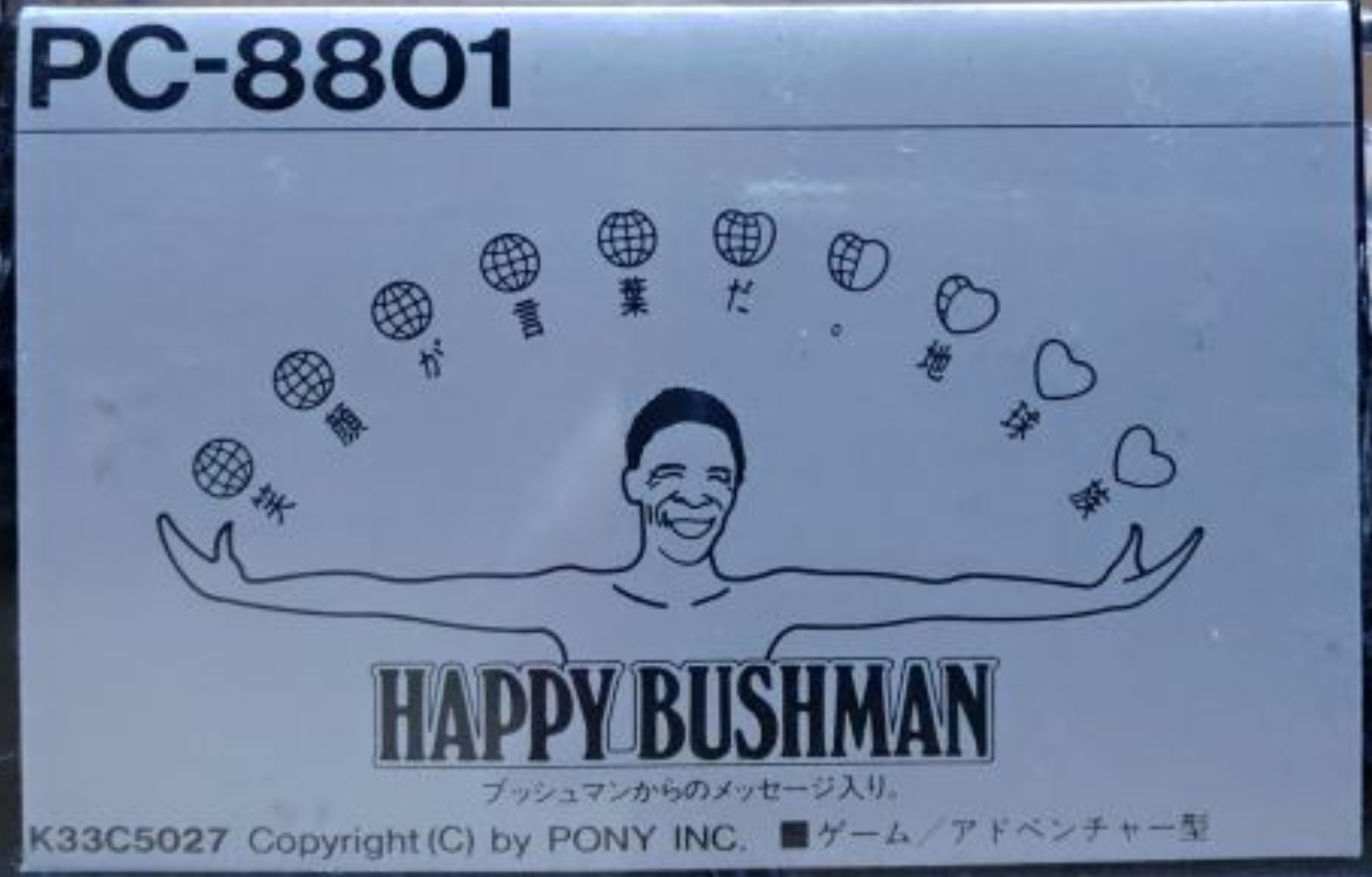
Recently I played Genma Taisen, published by Pony Canyon in Japan in March 1983 to coincide with the accompanying animated film. It was an official conversion; the “first” from Japan, maybe, although there were Space Battleship Yamato games (like this one and this one) and I don’t know if any were “official”. In the same month, Pony Canyon released another game, Happy Bushman. It was based on the live-action film The Gods Must Be Crazy, from South African filmmaker Jamie Uys (Uys is pronounced “Ace”).
Converting a slapstick comedy film might seem an odd choice, but there was logic to it. For me to fully explain what happened I need to start with Uys and the creation of the film:
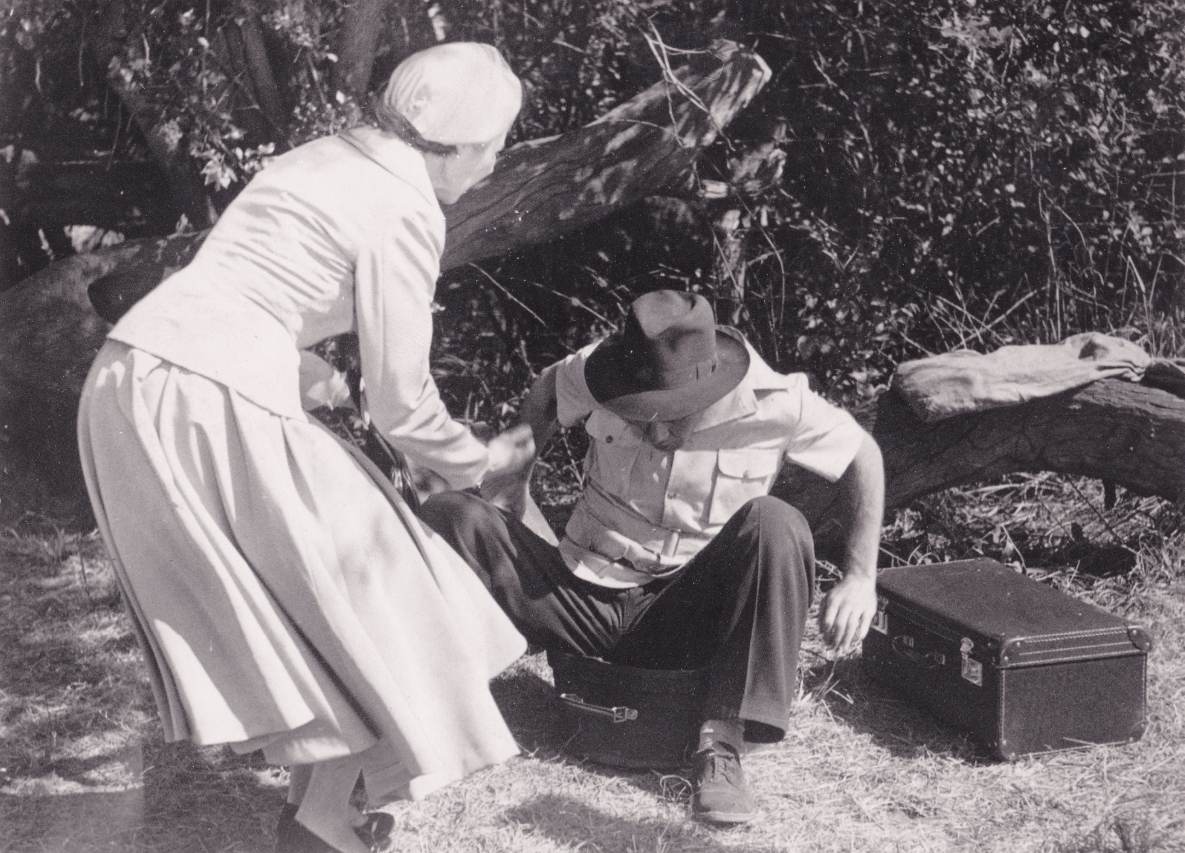
Uys made his first film, Daar Doer in die Bosveld (Far Away in the Bushveld), in 1951, with what he describes as a “two-man crew” with just himself and his wife (the only exceptions being a few more actors and music). The plot has Hans Botha (played by Jamie Uys) being tasked to pick up a new schoolteacher, Martie du Toit (his wife Toit Hettie Uys) from a bus stop. The car has trouble with the brakes; Hans has trouble with speaking to women, zany antics ensue. The same character gets reused in a 1954 sequel, and then Uys does a remake in 1958.
This was done amidst apartheid South Africa, and the same year as the remake shown above he made the short propaganda film The Condemned Are Happy at the behest of the South African government showing the “benefits” of forced removals. Quoting from the film: “one Sunday I went to look at the new town, my eyes grew big when I saw the houses they had built … truly the white man is very clever.”
Jamie Uys rose in prominence and while he was one of the first to bring films internationally, he insisted on growing the industry locally. His most “serious” work, Dingaka from 1964, is a court drama where an African tribesman is on trial for murder. Quoting a preview article in South Africa Digest from ’64, It contrasts the “hectic life of the city” with the “simple, unsophisticated setting of the South African veld”. (This idea gets mentioned explicitly at the start of The Gods Must Be Crazy.) The music is quite good and the film as a whole suggests to me Uys simultaneously had interest in local cultures while also holding an “idealized” vision of them.
The idealization shows up strong in The Gods Must Be Crazy (1980), which allegedly shows the authentic life of the ǃKung (one of the San peoples), starting in literal documentary style. The background was entirely made-up. The lead actor (Nǃxau) was a cook making a salary and quite familiar with modernity, but Uys claimed he “spent three months crisscrossing the Kalahari desert” to find his lead, and took photos and “marked the longitude and latitude” so he could find the people again. He claimed he met N!Xau in Botswana who had supposedly only seen one white man before (a missionary) and when he asked him to come work, he “didn’t understand, because they have no word for work.” None of this was true. To be clear: the issue isn’t that actors were acting — this was fiction, after all — but that Uys pretended the basic “documentary” frame held, and this was really showing the life of the San. More clicks were added to the soundtrack to make their language sound more exotic.
The film was test-screened in the US without much success; it was instead Japan where it first hit international fame. It was the biggest moneymaker of 1982, considering both foreign and domestic films. It turned out that N!Xau (and the idea of the San) attracted the Japanese imagination (Uye called him a “national hero” in the country); he flew to visit and did numerous interviews and learned to enjoy the taste of sake.
The Japanese loved this tiny star from Africa and couldn’t see and talk enough about his short khaki pants, shy smile and language.
After a film makes money in theaters, it can make money in television. Early in April 1983 it showed on Fuji TV, combined with a media rush similar to Genma Taisen, with both a new music album (in February) and and a new computer game (in March). Pony Canyon’s advertising for the game explicitly mentions the premier of the TV show coming up on Golden Movie Theater (and the availability of the album).
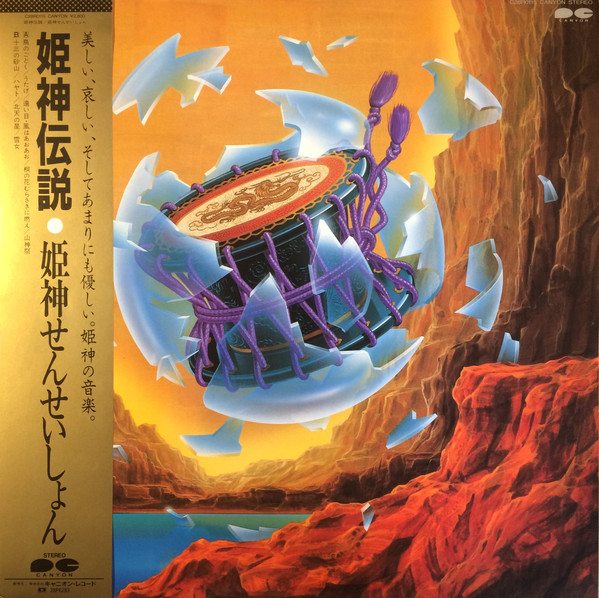
The album was, significantly, via Canyon Records; in other words, the game and the album both came from Pony Canyon. The artist for the game, Takaomi Shibayama, was from the music side of the business and has a long list of credits as art director through the early 80s. (As far as I can find this was his only game.)
One of his 1983 albums, via Discogs.
The designer/programmer on Happy Bushman was Yasushi Numata, part of one of Japan’s computer clubs. I haven’t talked about Japanese computer clubs much; as an example, The Theoretical Science Group of Tokyo University is probably the most “famous” of Japan’s early computer clubs now (as much as late-70s computer history in Japan can be famous) because of their creation of Heiankyo Alien which originated the “digger” genre of game, leading to Space Panic and (by indirect means) the ultra-seller Lode Runner. (There’s a video from F_T_B if you want to know more about them and their rivalry with the University of Tokyo Microcomputer Club.)
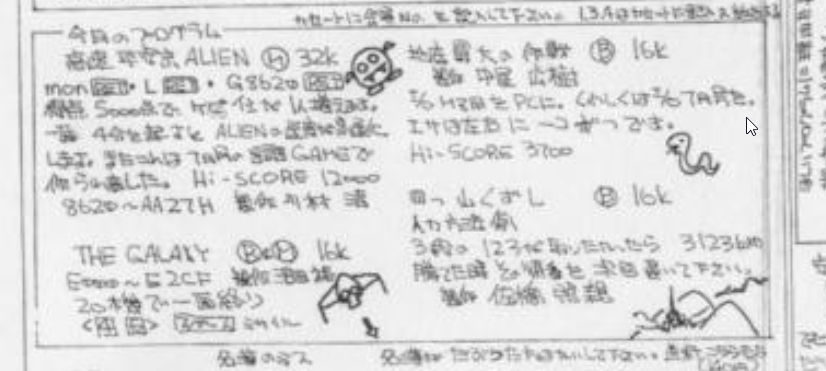
I’m not talking about the TSG today, but rather FORESIGHT, situated in Yokohama. They were founded in 1980 by three high school students (as opposed to being a university club). They started just exchanging information and programs related to the PC-8001. They began their own zine; our author first appears in the August 1980 issue with THE GALAXY.
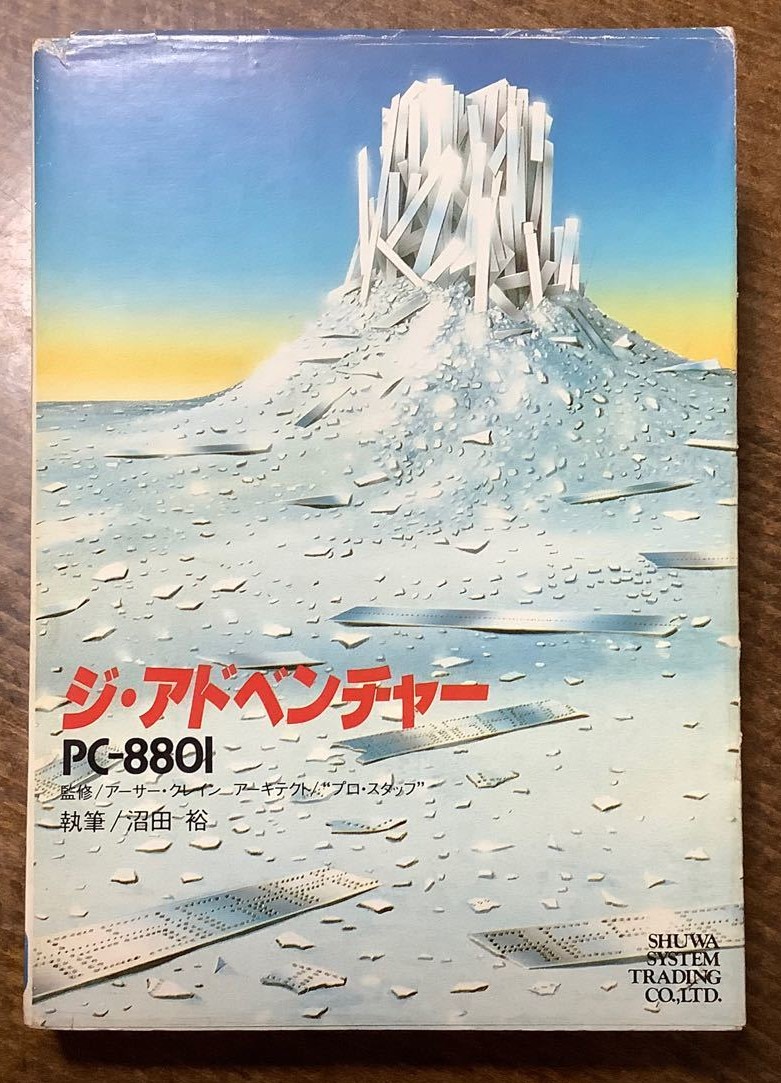
Yasushi Numata had some other programs appear (including a Star Trek variant and a golf game) but the most relevant item he made was a book about programming adventure games for the PC-88 series. It was published after Happy Bushman (in October) and is elaborate enough that Numata had clearly been thinking about the topic for a while (it includes 5 original games).
Source. The games are Treasure Hunt Adventure, High School Adventure, Planet Adventure, Survival Adventure, and Monster Adventure, the latter two being RPGs.
I do not know how Yasushi Numata got connected with the Pony Canyon production. Shuwa System Trading Co. (which published the book) is entirely unaffiliated. He does have FORESIGHT listed with his name in the credits; my guess is the club was contacted first and Numata was considered the best candidate for the project.
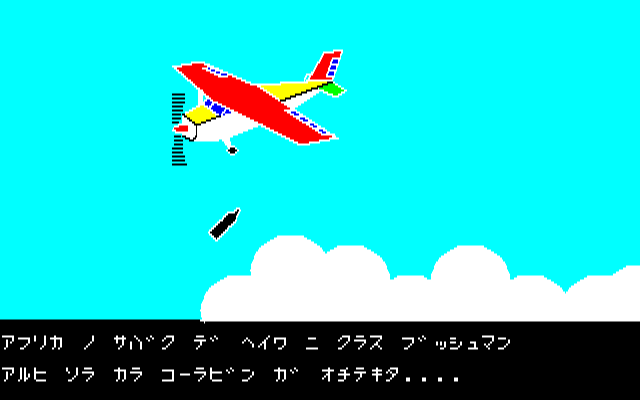
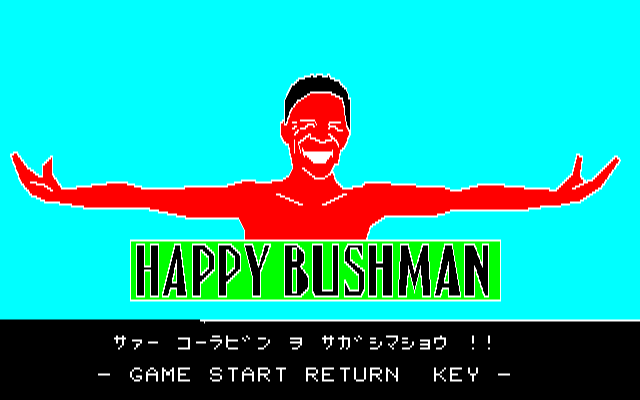
The plane is animated flying from right to left. The “special thanks” is to Fuji TV.
The PC-88, FM-7 (and 8), and Sharp MZ computers all got ports. I went with the FM version but I’m playing on an 8 rather than a 7 (the two are generally cross-compatible with BASIC programs on tape, just the 8 was made first and was slower).
Just like in the movie, a plane drops a Coca-Cola bottle from above towards our protagonist. Unlike the movie, it doesn’t fall right next to him.
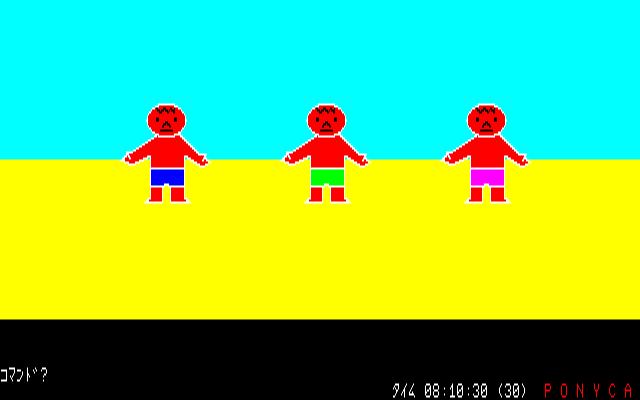
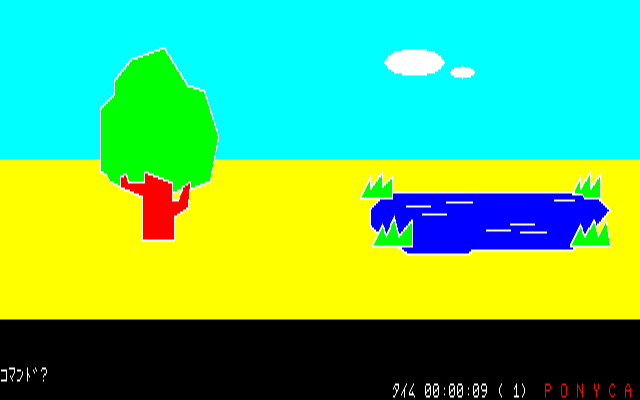
You play as the main character Xi from the movie, starting in the village. There are no compass directions, you can only move “ahead” (susumu) or “back” (modoru) so everything is strictly linear. I do not have a manual so I admit I had to consult a walkthrough immediately to realize this. I’ve tried to hold back otherwise for now.
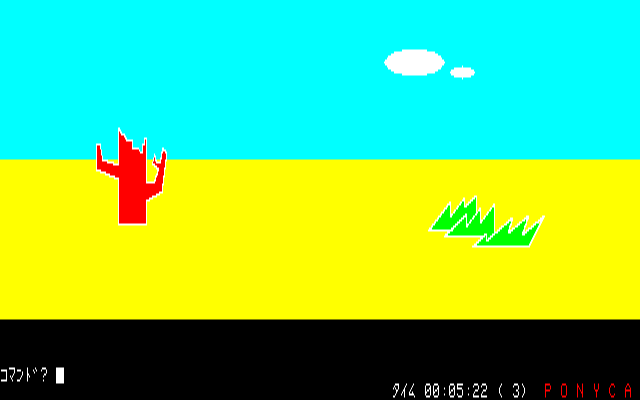
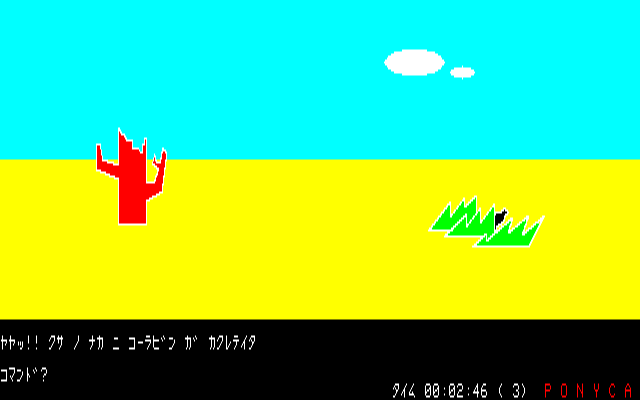
If you keep going forward, you eventually reach an elder who stops you and tells you that you can’t leave the village as it is against the rules. The key here is the grass shown above at about the halfway point, where you need to break out “miru” and LOOK GRASS. This reveals the bottle, which you can then take.
With the bottle in hand you now get told that you need to return it to God. (There’s no long sequence where the bottle is shown to be useful and people fight over it. The game seems to be aiming for a loose adaptation like The Dark Crystal.)
Leaving the village, there’s a baboon who will eventually nab your bottle as you pass on by. (You repeat typing “ahead” all this time — it’s essentially a way of advancing the clock on the story.)
If you advance farther and come back, the baboon is gone. In the movie Xi talks to the baboon and explains how the object is evil which might be the solution here, but I’m going to save all that (and hopefully the remainder of the game) for part 2. Stay tuned!
(Special thanks to F_T_B for his help with research.)