(Read part 1 on Happy Bushman here.)
It turns out I was stuck on what was the only hard part; there are pieces where you can lose, but for the most part it’s cases where it is clear what you did wrong and you just need to back up and try again.
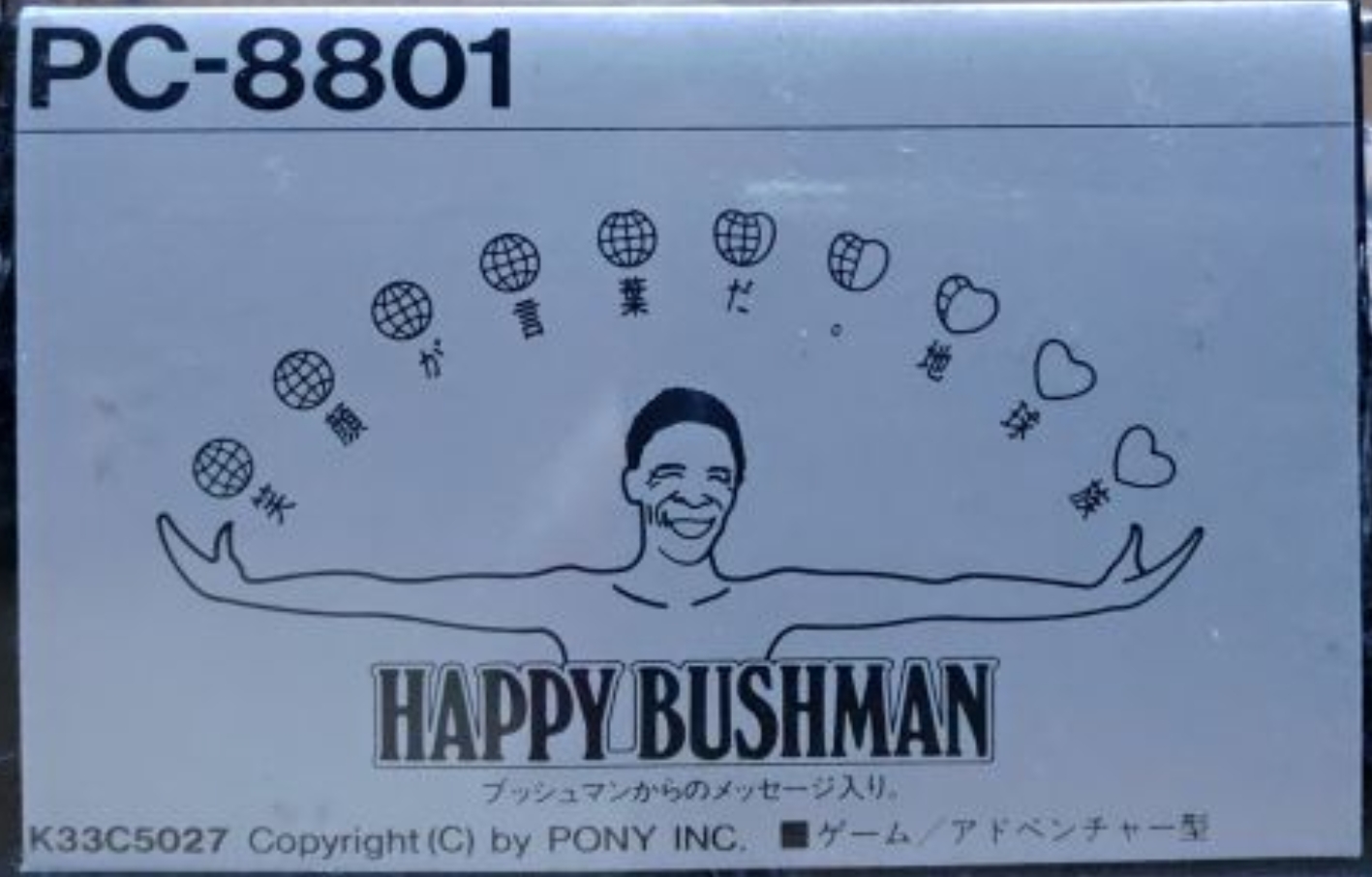
Original PC-88 version, from Yahoo! Auctions.
Before getting into the gameplay, a quick correction: I was taking the Romanization of the author’s name from Mobygames because I couldn’t find it elsewhere, but I realized the author’s name is printed (small and faintly) on the back of his book.
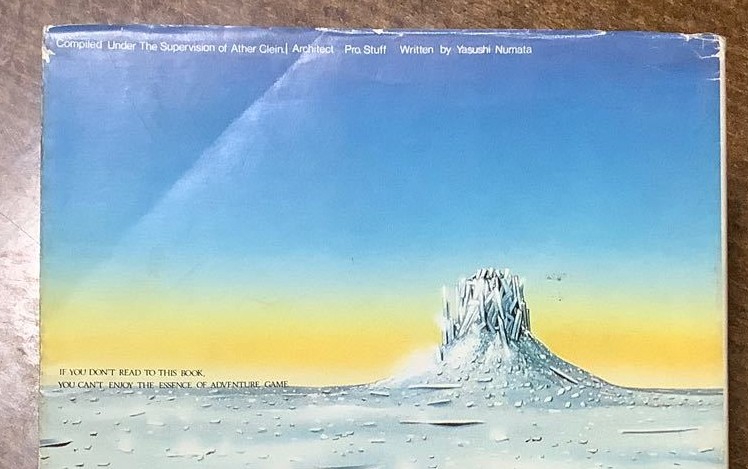
IF YOU DON’T READ THIS BOOK, YOU CAN’T ENJOY THE ESSENCE OF ADVENTURE GAME
Hence I changed Yū Numata to Yasushi Numata. Additionally, Busca in the comments points out there’s a sixth game, Burglar’s Adventure; you can see screenshots at the link I just gave.
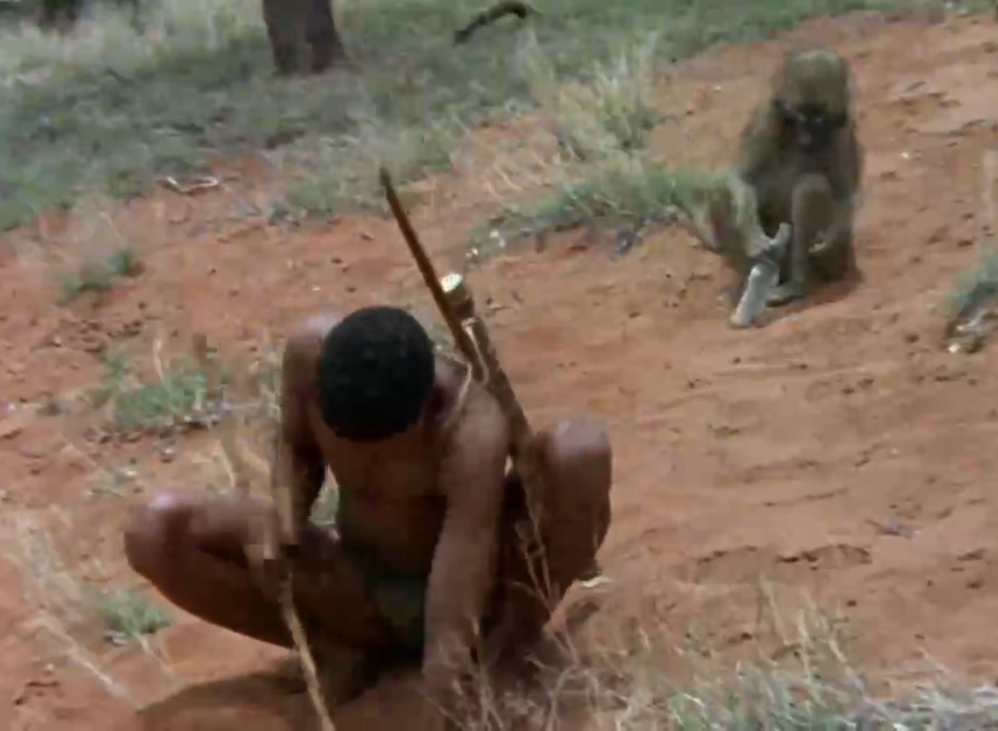
I had hit a point where the Coke bottle was stolen by a baboon. This occurs in the movie (see above). As I indicated last time, Xi talks the animal into dropping the bottle in the movie; I assumed some sort of direct confrontation in the game (even if of a different nature).
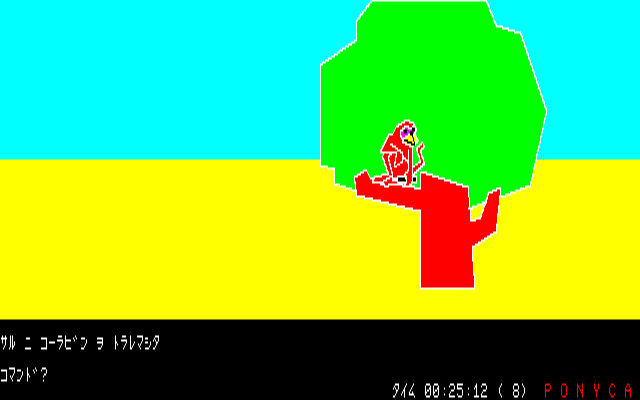
There’s some fruit you can pick if you advance — I thought maybe I could trade — but the baboon disappeared and I thought I was softlocked. This is entirely wrong; you’re supposed to go backwards a fair ways into the village to the stump, and then look at the stump. This reveals the hiding place of the bottle.
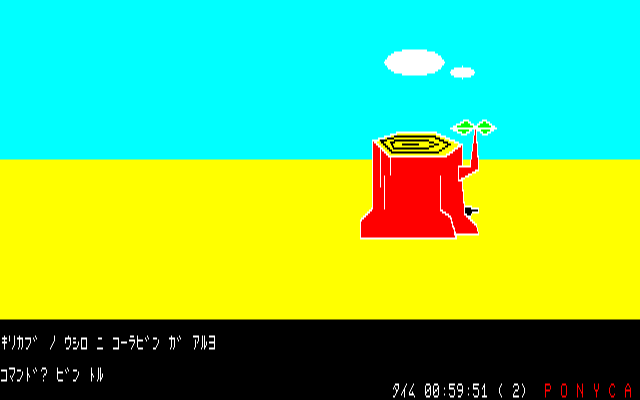
Unless I missed a message, there’s no obvious way to realize this. It ended up being the hardest part (for me) in the game.
The remainder of what happens is more straightforward; there are a few “traps”, but of a relatively obvious nature. For example, back to those fruits I tried to give to the baboon:
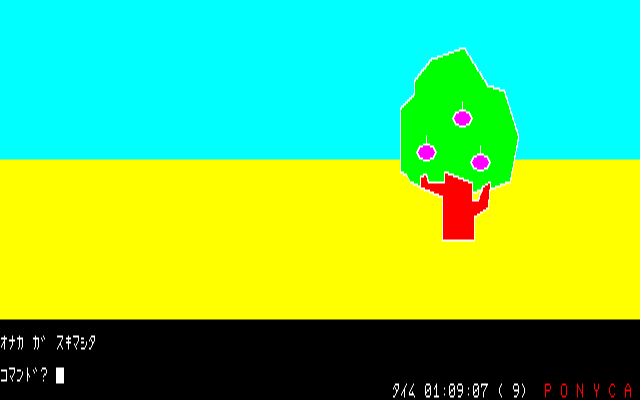
You’re supposed to eat them. If you don’t, in the next scene where it gets dark and you need to sleep, you die of hunger. That’s what I mean about the “trap” being obvious. Certainly by normal adventure game practice you’d hang on to the fruit, but knowing about the starvation makes it essentially a non-puzzle.
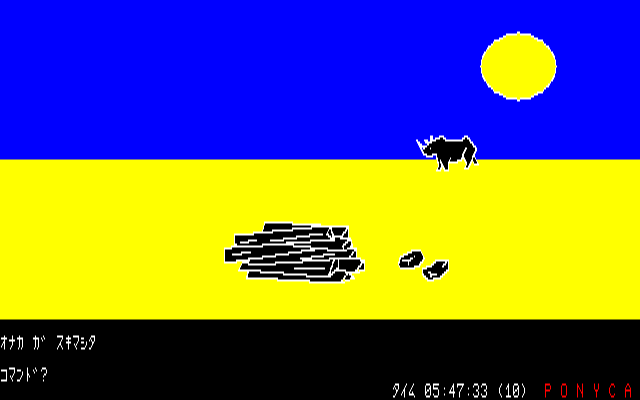
There’s a second issue here, which is you get killed by a beast if you fall asleep. I caught on the fire needed lighting; start trying to do so and a rhino comes charging.
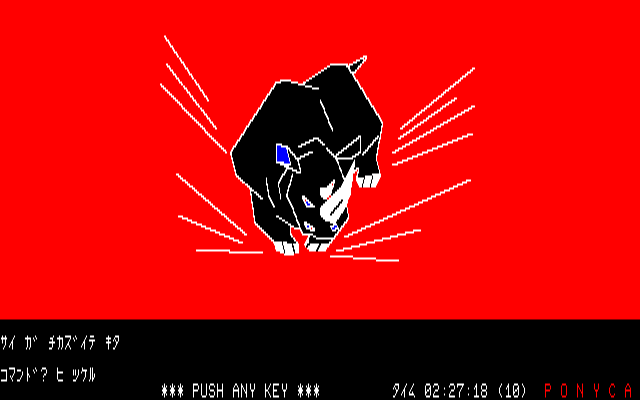
After a second try it gets successfully lit and the animal goes away. You can now sleep.
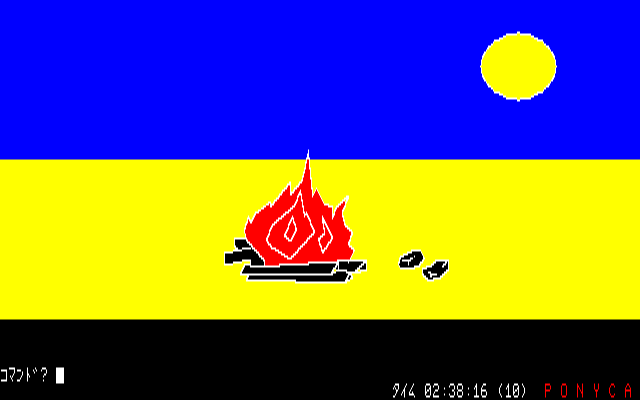
Onward! More “advance” … quite a bit. I appreciate the simplification here of removing compass directions when exploration isn’t the point of the game, but it means the author needs to do even more work to fill in the void left behind.
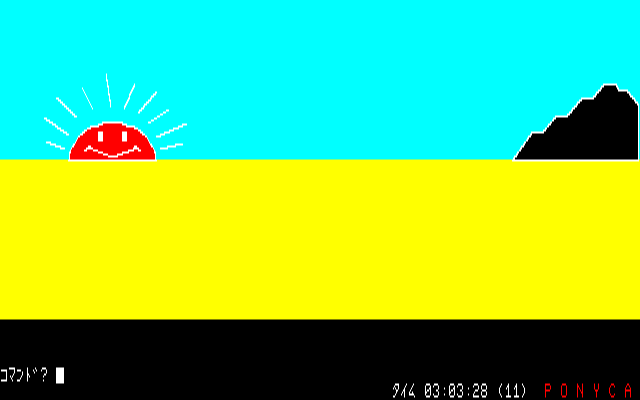
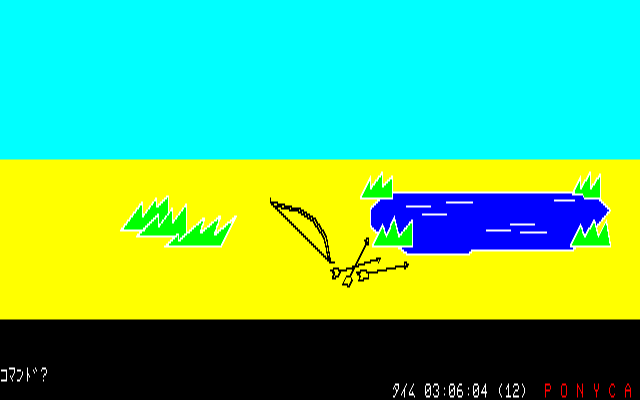
Bow and arrows just lying around. You need to take them.
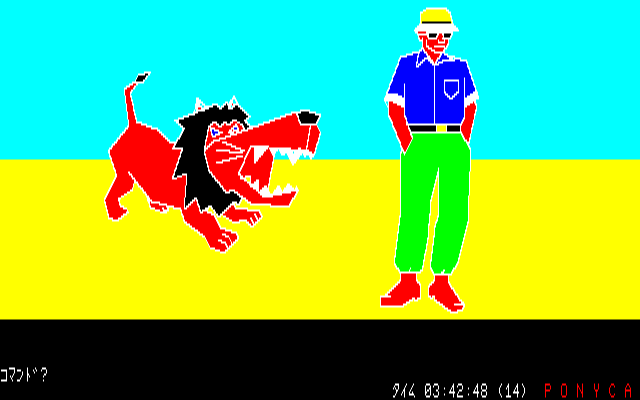
Oh no, a lion! And that’s supposed to be Steyn there (this movie’s version of the man who is helpless saying coherent words around women). He seems cooler in this version. You can shoot the lion and he doesn’t even turn around, it’s like how the cool guy in shades walks away from the explosion without glancing.
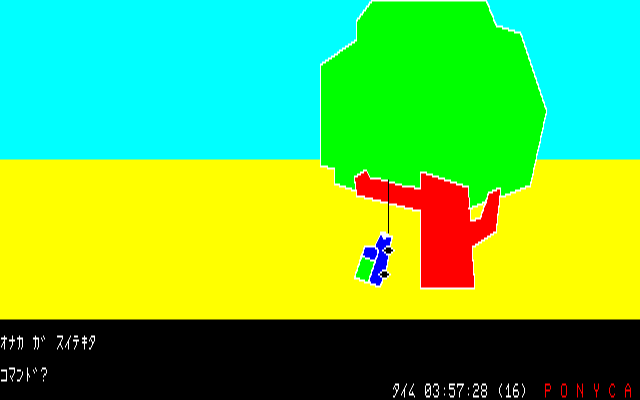
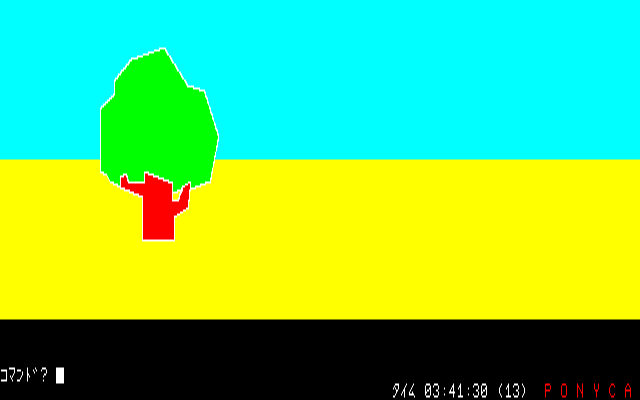
And the truck’s in the tree, you just pass by here and admire the scenery.
Killing the lion was important because of a moment later where you pass by some goats. If you just keep walking you die of starvation. Clearly, the intent is to use the bow and arrow you still have handy.
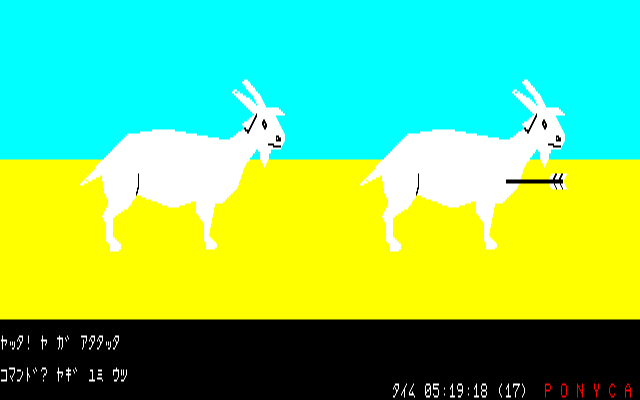
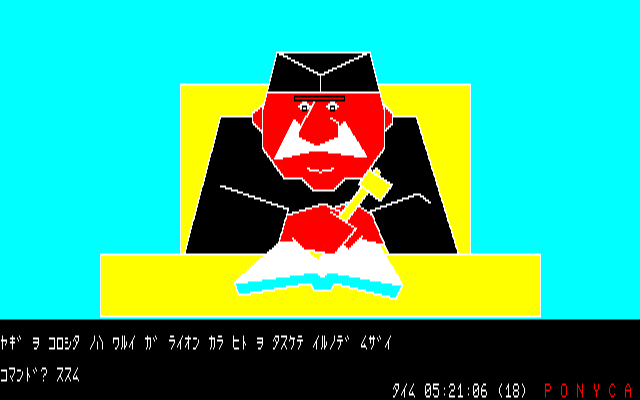
Unfortunately, this gets you arrested (this also happens in the movie!) but because you did the good deed earlier, you get let off easy by the judge. We can resume taking the Coke bottle on our quest!
We now have the jeep available to take. I’m not even sure how this is sequenced exactly. (Fictional Xi does not know how to drive.) The implication is perhaps Steyn is helping, but he doesn’t get drawn in the Jeep, he only shows up in a scene later.
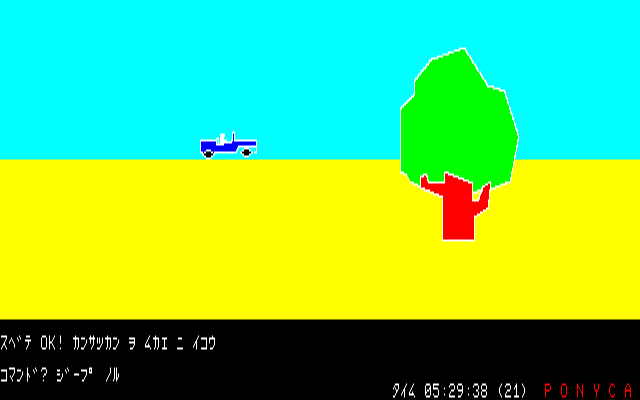
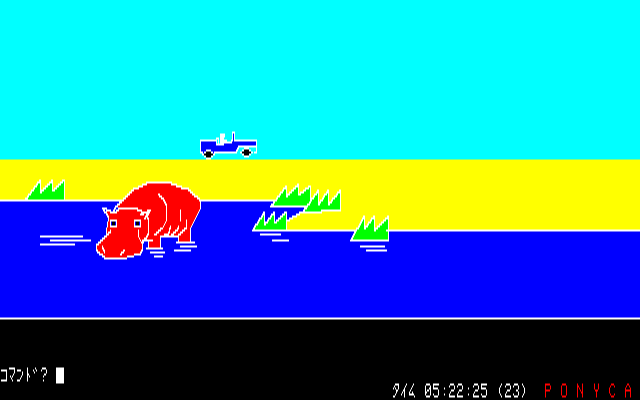
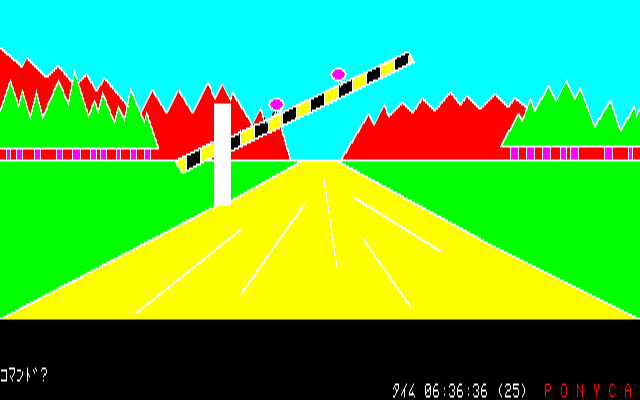
After some driving, you reach a gate. And the “puzzle” is to get out of the jeep, open the gate, and keep moving forward.
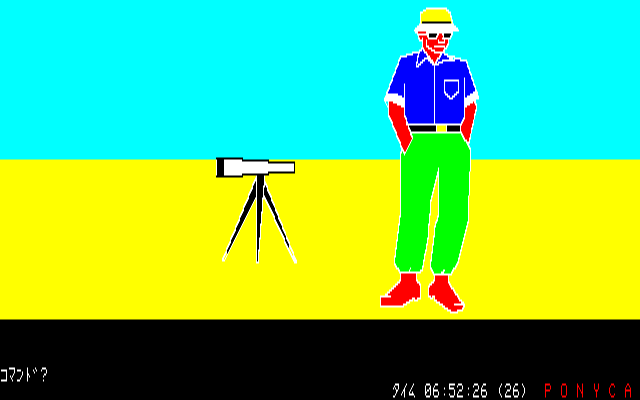
Steyn (who maybe was travelling with us) pulls out a telescope and we see some kids with some guerillas. Now comes the final part of the game, where we take them down. Except our bow and arrows were confiscated!
Don’t worry, we’ll see them again soon. First though, we need to take the shrub/weed out of the way here otherwise (later) we make too much noise. This was the only other “hard” part of the game I thought because it isn’t very clear at describing what happens.
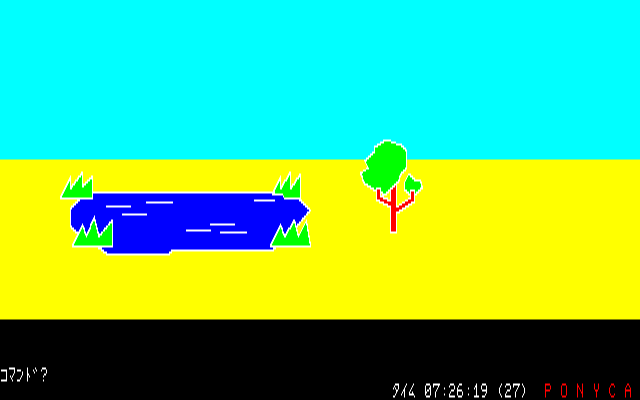
Past that are a bow and arrows — they’re just lying around everywhere I guess — which describe themselves as “big and cute” when you pick them up.
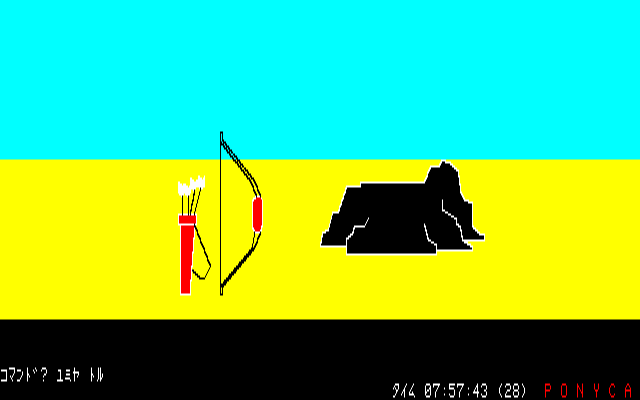
Forward some more reveals another bow and arrows, this one small enough to make it easy to sneak.
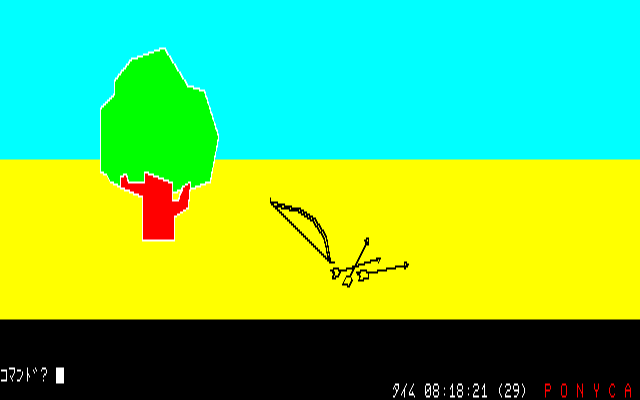
Pick up the comically oversized bow (or forget to grab the weed) and you’ll get spotted here; as long as you only took the smaller bow you can continue.
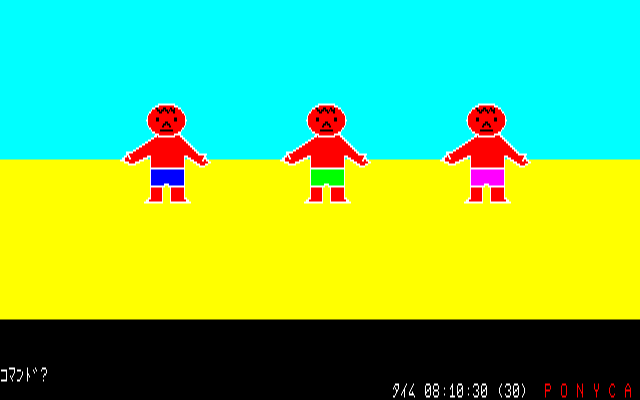
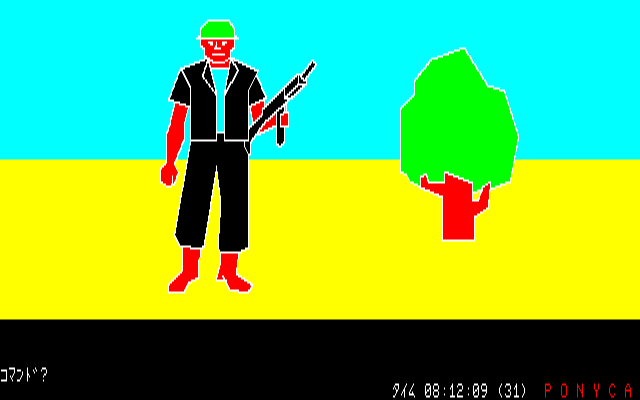
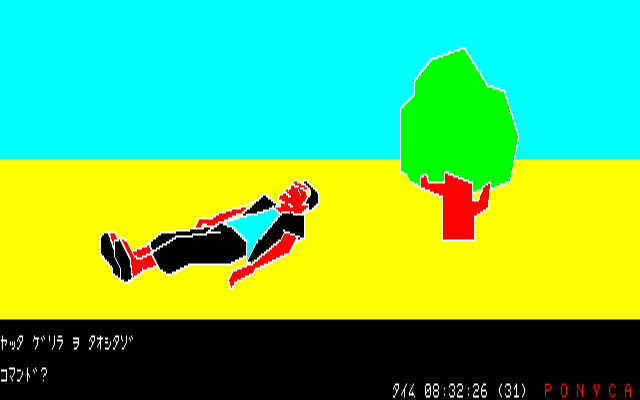
The bow and arrow serve their purpose just fine, and they do so on the next scene as well.
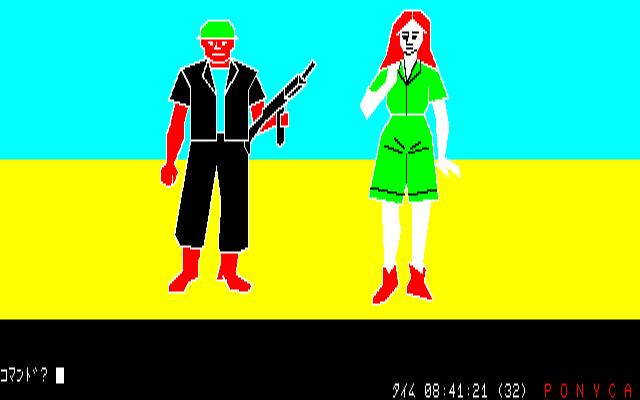
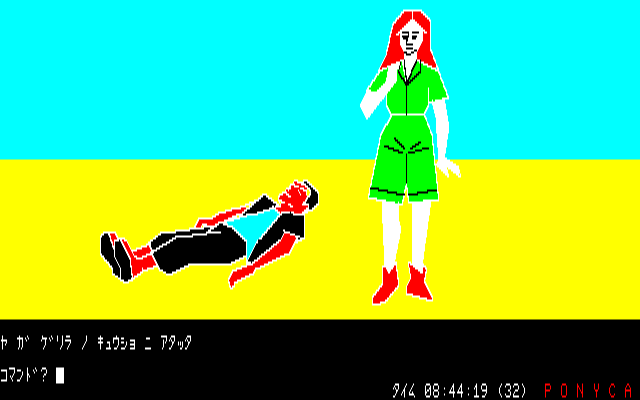
Better than Solid Snake.
Then there’s just a rock, and oh no if you keep going you get shot! You need to LOOK ROCK and then do the shooting.
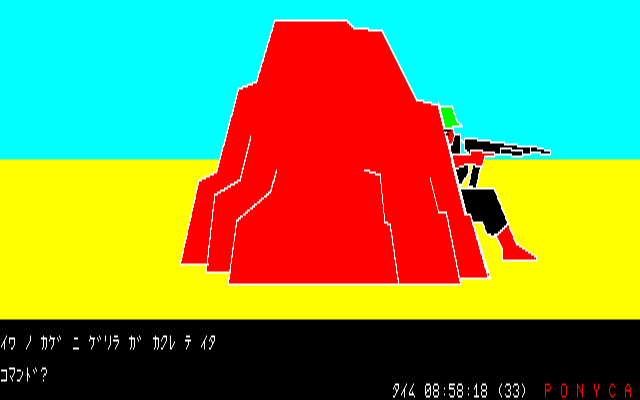
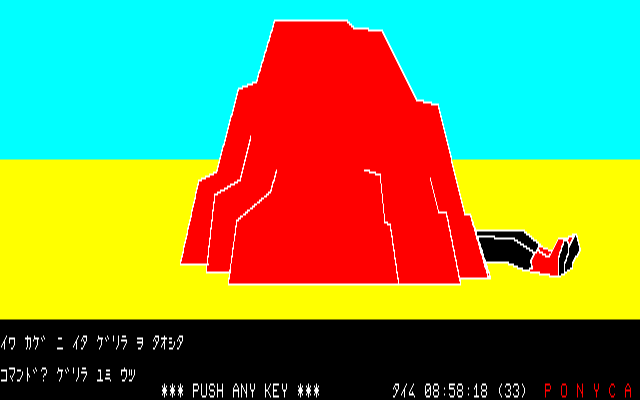
With that you get offered a cattle or money as a reward, and assume you blow off the money, the funniest death scene of the game ensues.
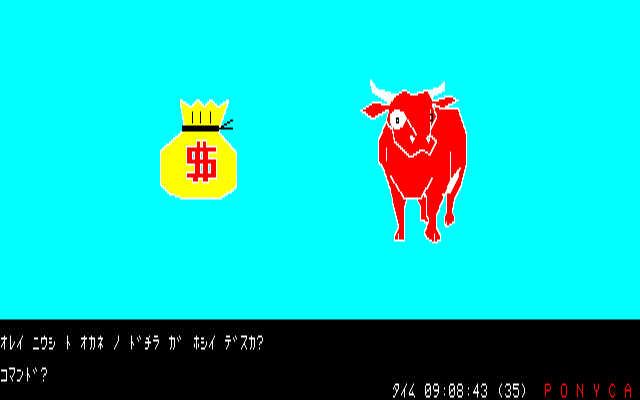
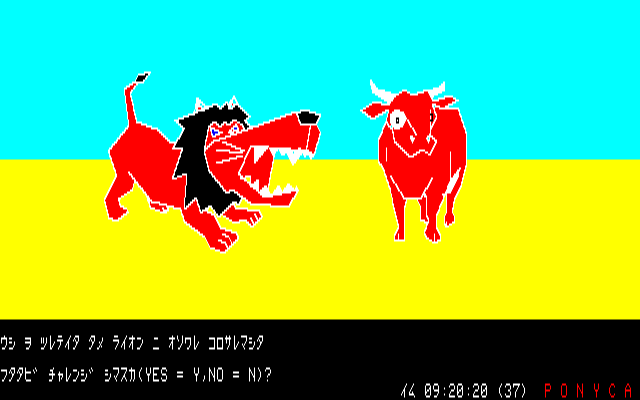
You’re supposed to pick the cash (I guess avoiding tempting any stray lions) and you finally can reach the end of the world. Movie version first, just for comparison:
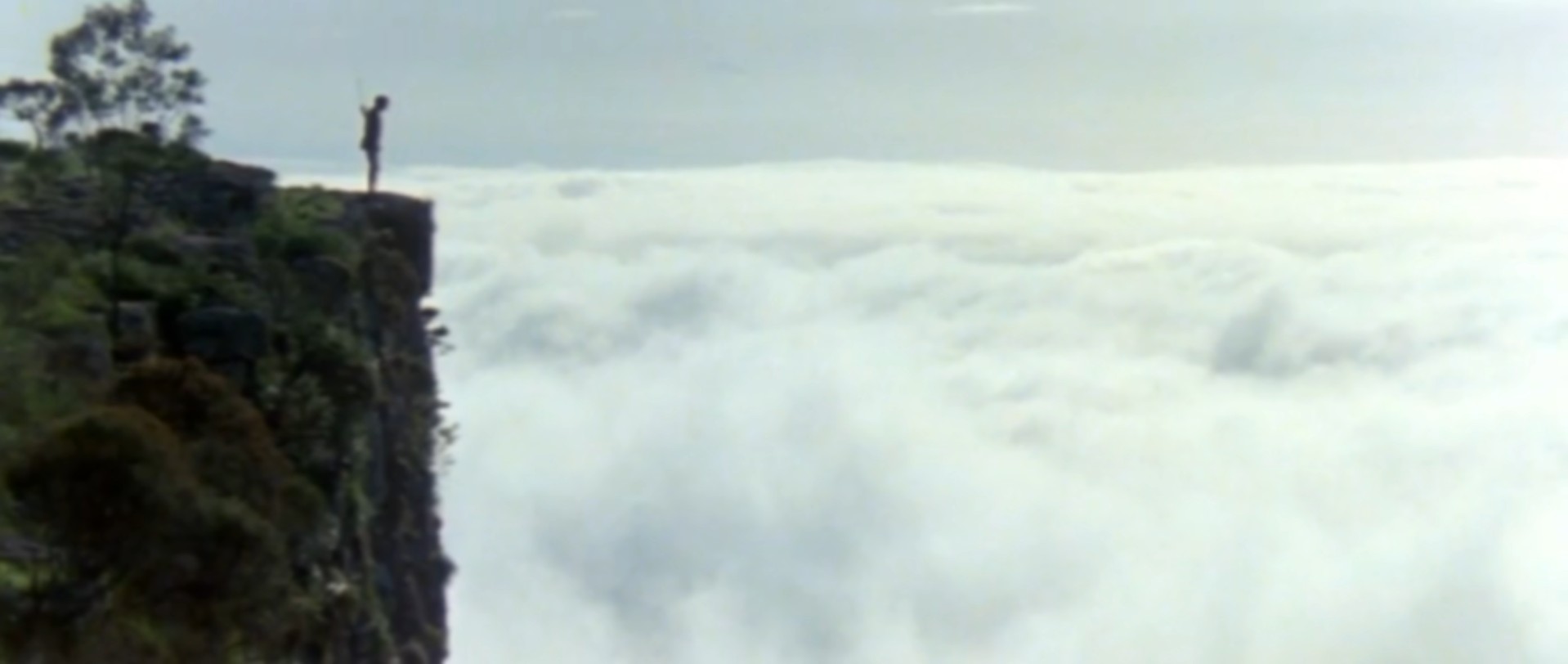
I like how matter-of-fact this is.
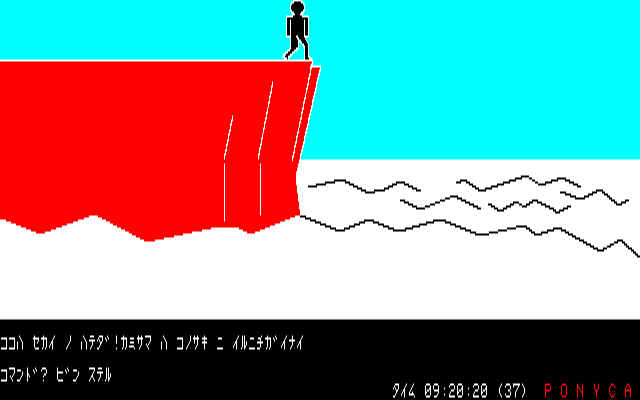
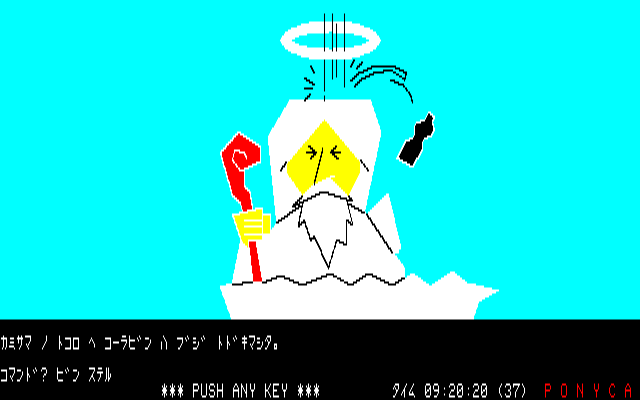
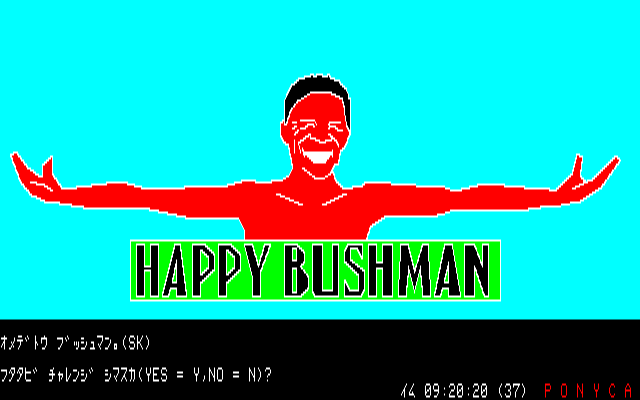
Because it wouldn’t be a Japanese game without killing the god-boss at the end bonking God at the end with a Coke bottle.
Kazuma Satou in the comments points out he “finished the whole thing with no hints in less than the movie’s runtime.” It took me a little longer (both looking up things like the Japanese word for telescope and me trying to argue with the baboon).
In a more serious sense, there was clearly some major struggle in both this game and Genma Taisen in figuring out how to adapt a movie. The only reason The Dark Crystal worked in parts was exploration; here, both games remove that aspect entirely and rely more or less on binary live-or-die choices (like picking up the wrong bow; and really, are you going to ignore the charging lion?) This doesn’t have as many ridiculous moments like the fake-out questions or quizzing what your power levels are.
At least it turned out better than the arcade game. It was released before this game, mid-1982, as Gonta Road Rush (with some unfortunate imagery on the side of the cabinet). Quoting Game Machine from August 1982 (courtesy tweakbod from Gaming Alexandria).
The game follows “Gonta,” a tribesman, as he overcomes various obstacles to return to his home in Africa; the game consists of three stages in total. It begins with a city street stage, then goes through a tunnel and so on while avoiding moving cars one after another. Monsters that attack along the way can be defeated with the spear (button operation).
It was released in the US as Desert Dan with some graphical changes. The description of the video below claims “it’s probably one of the worst arcade games I have ever played.”
Adventure authors were not the only ones struggling with the idea of converting media, it seems. At least Happy Bushman has some scenes that vaguely resemble the movie!
Coming up: the grand finale ending to Thissala. No, really.


The Back to the Future adventure game suffers from similar problems, it’s incredibly rigid to the plot structure of the film.
Glad to help out on this one.
-F_T_B
Huh, I wonder what the story is with that author’s name. Mobygames takes its reading from the FM-7 in-game credits where it’s written phonetically in katakana. The katakana there reads Yū rather than Yasushi.
Maybe the book’s entry in the NDL database (English language version, you can switch to Japanese at the bottom) and the author entry linked from there can help to clarify?
Correction submitted to Moby, but maybe it can be included as an AKA rather than to replace the existing name on file.
I’d say AKA is most appropriate here
the REM statement also has the ユウ
For my purposes, I’m better off picking the name we have Romanized because this author is going to occur again with the book, and I can’t have the name be given in two different ways