Most soap operas take a while to work their way up to murder, but EastEnders kicks off with it from the very first scene, airing February 1985 on BBC One.
A door gets kicked in; the characters Arthur Fowler, Ali Osman and Den Watts find the “cantankerous old man” Reg (who had been missing a few days) nearly dead. It is revealed later another character attacked him trying to steal his old war medals. (Reg dies. Conversation reveals Reg was too much of a “nasty old drunk” for people to care.)
I would say “this sets a tone that would continue its whole run” but it’s a still-running soap with over 7400 episodes (as of this writing) so I can’t declare anything constant, but it did get a reputation as being gritty and topical. It was designed by Julia Smith and Tony Holland (previously of the police procedural Z-Cars) with the intent of being a “younger” competitor to ITV’s Coronation Street (first launched 1960). It was squarely designed as working-class and diverse.
By the mid-80s all sorts of British TV was getting adapted into games, like The Young Ones and Minder. In 1986, multiple companies were interested in EastEnders. The contract was won by the Welsh company Macsen.
It is having to work very closely with EastEnders — seen by nearly 20 million people each week — to get the correct amounts of excitement and authenticity. The best-loved soap in Britain has an almost religious effect on many fans and a poor game simply won’t be accepted, it seems.
The co-owners, Moelwen Gywndaff and Edryd Gywndaff, explained that they were “co-operating very closely with the BBC” and that “all the life is there, and if you get away from that, then you are getting away from the essence of EastEnders.”
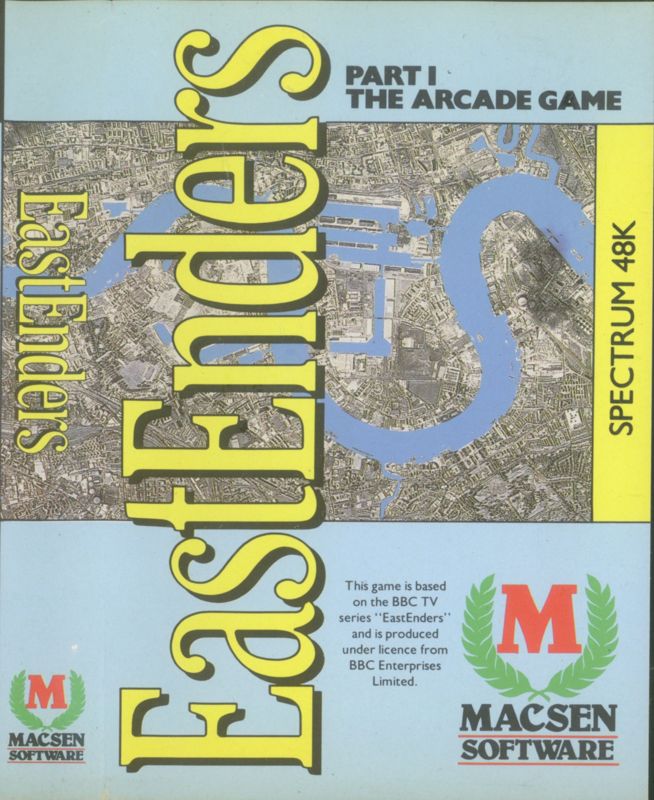
Out by the end of 1986. Cover via Mobygames. The “PART I – THE ARCADE GAME” suggests they intended an adventure game for part II. I could see an EastEnders version of Urban Upstart working out.
I’m not clear what the original intent was with “close co-operation” — this was printed in the September version of Bang Weekly before work started — but it didn’t land that way. The production was rushed. The actual creation was done by the trio of Anthony Roberts, Paul Towers, Derek Laws under the label of Towers Software; Anthony Roberts himself explains:
I was part of a 2 main programming team that brought this Wonderful game to the Spectrum (and C64, although that one never made it to production!). We were holed up in a Welsh Hotel for 3 weeks prior to Christmas, after being commisioned by Macsen to produce this game from scratch. I have no idea where the music came from, it was given to us as a module we just called into as required. Macsen did indeed go bust, just as the game was released, and we never received a penny for our efforts!
For what its worth, if you could see past the awful graphics, (and lack of joystick control!!!), as a strategy game it was oddly captivating.
The music that was handed off was by Julie Dunn (who was called David Dunn at the time). She made other well-regarded music from the day; the game I recognized just browsing her work was Finders Keepers.
If you didn’t see the warning signs yet: EastEnders the video game is widely considered very bad, being a cryptic assortment of mini-games with barely any connection to the show. The video I’m linking below is titled Possibly the Worst Game Ever.
So how did Macsen get the contract for a highly-regarded show in the first place? The Bang article claims that “its track record of previous licenses” are what counted: games based on the TV game shows Blockbusters, Bullseye, Countdown, and Treasure Hunt.
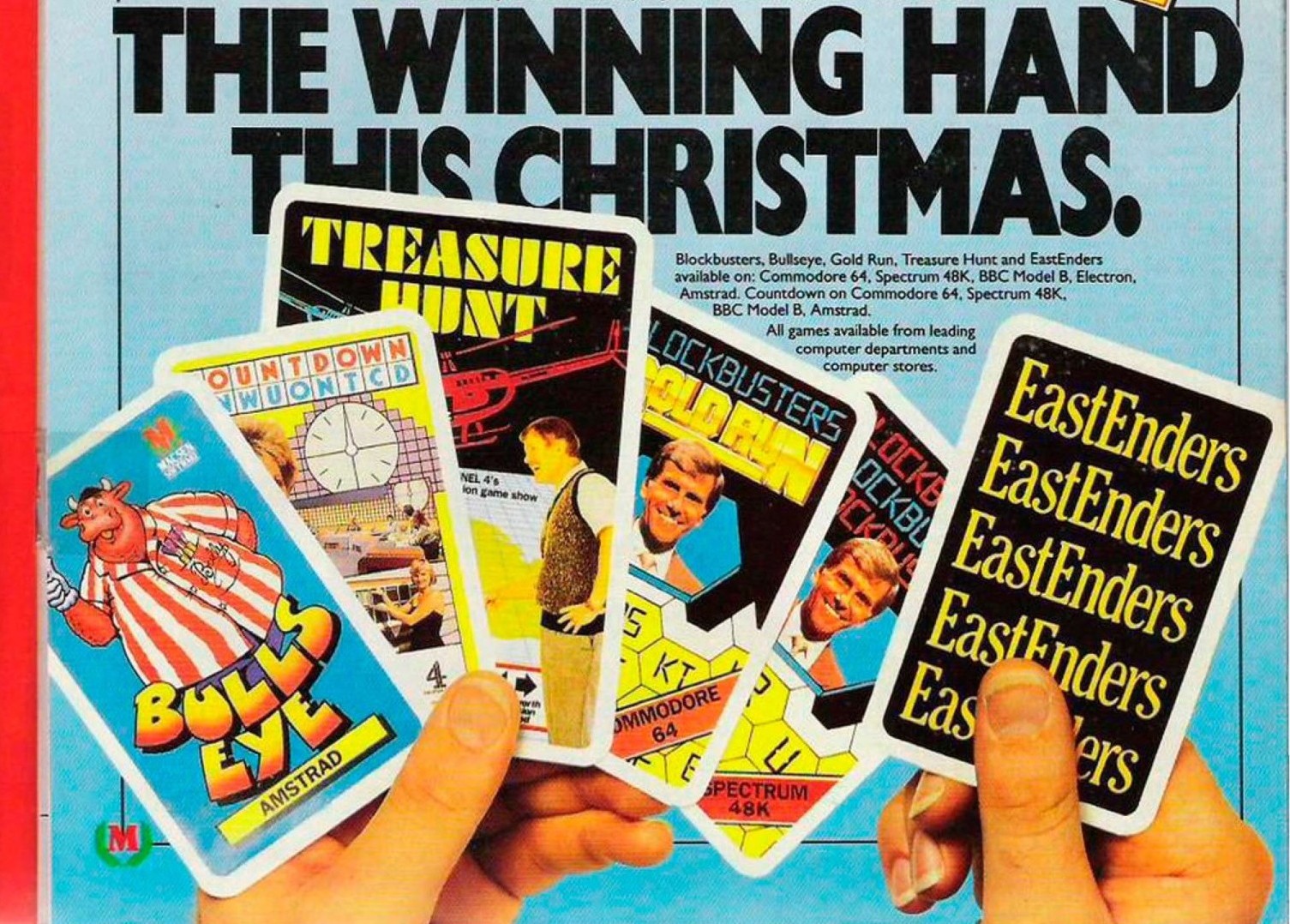
The C64 ports of Blockbusters (and the “Gold Run” spinoff) are both by today’s author, Huw Ford. It is unclear if he was ever engaged to work on EastEnders (maybe he was going to do the never-made C64 port before everything imploded?). Given he worked on a 1985 game show conversion with a different company he had probably parted ways with them already, which may have been for the best: by the middle of 1987 Macsen was sunk with a debt of 350,000 pounds.
Prior to his game show work he launched his own label in 1983, HFS Software; he was 21 years old.
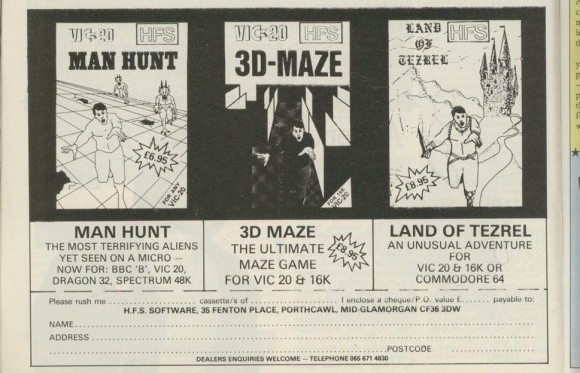
From Computer Choice, Dec. 1983 issue. Notice how the same pose is used with all three games.
Confusingly, the name of the company shifted (with the same address) to WordLight and to Omen, not in any particular sequence; the Dragon 32 cover of Land of Tezrel uses both company names simultaneously.
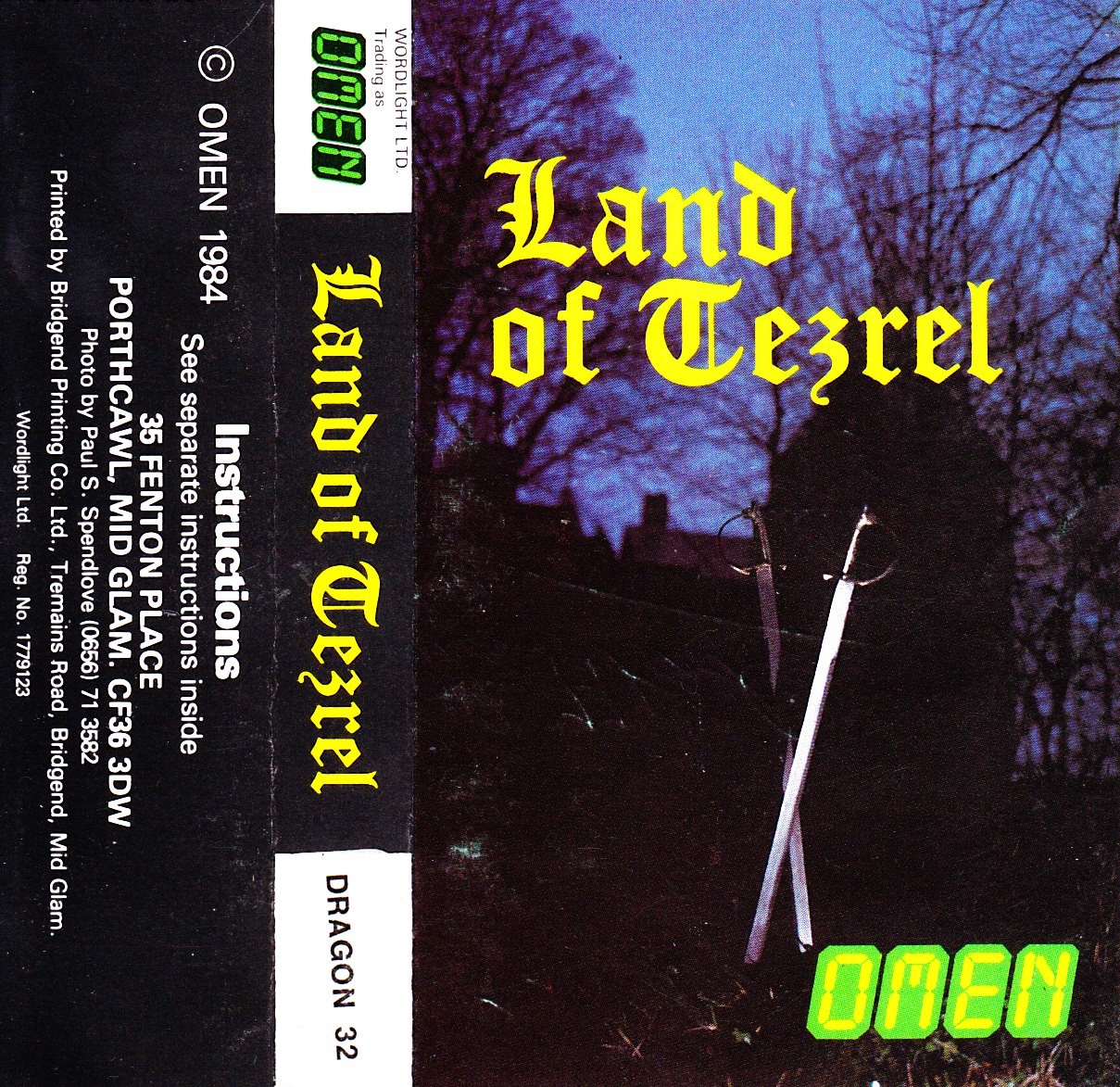
Via World of Dragon.
Land of Tezrel landed on C64, VIC-20, Dragon, and BBC Micro, with the C64/VIC-20 versions by Ford only, the Dragon port by Anthony Mansell, and the BBC port by Gavin Cradle. Neither of the people porting have any other credits, although it is possible Mansell worked directly for Dragon Data; as Ford explains, while he was creating his games he “only lived a few miles away” from the factory (in Wales) and he was able to talk to the developers.
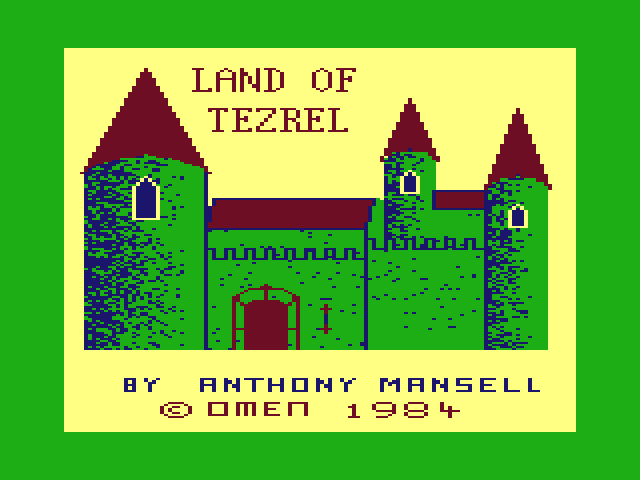
I went with the VIC-20 version I have (a later OMEN branded one) just because it felt like the original platform. Through discoveries I made later this turned out to be clearly the case; additionally, even though I have the (earlier-published) HFS version for C64 and the (later-published) OMEN version for VIC-20, I can say the VIC-20 version just slapped on a new title screen and really represents the earlier version of the game. I’ll get into that later.
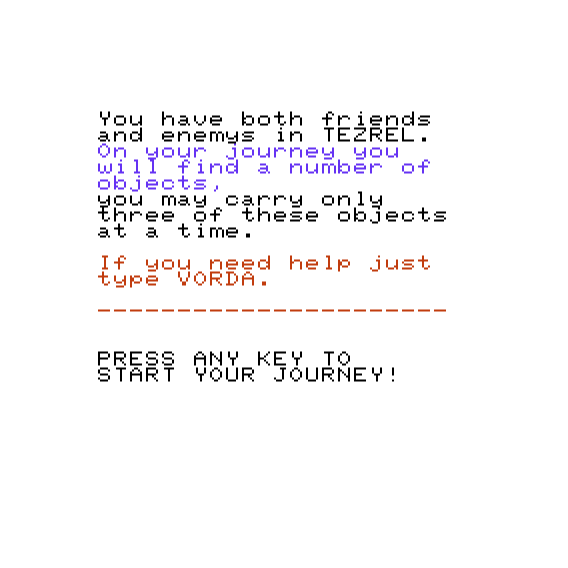
The early ad called this “AN UNUSUAL ADVENTURE” and while it doesn’t seem like it right away — your goal is to gallivant around a standard fantasy world, find the Magic Ring of VORDA, and escape — I pretty quickly caught on to what the author meant. The entire game is outdoors on a 10 by 10 grid (just a touch larger than HOBBIT) but also has the player’s original position and most object positions randomized. The actual function of the objects stays consistent but the random elements are enough to toss this into adventure-roguelike territory. The closest comparison I can think of is Dungeon from Andrew Colin’s Introduction to BASIC; while there are major enough differences it could be coincidental, it’s possible Ford was referring to the guide while making this game. The other comparable game is Conquest of Memory Alpha with its own grid structure and randomness (a less likely crossover since that was a TRS-80 game).
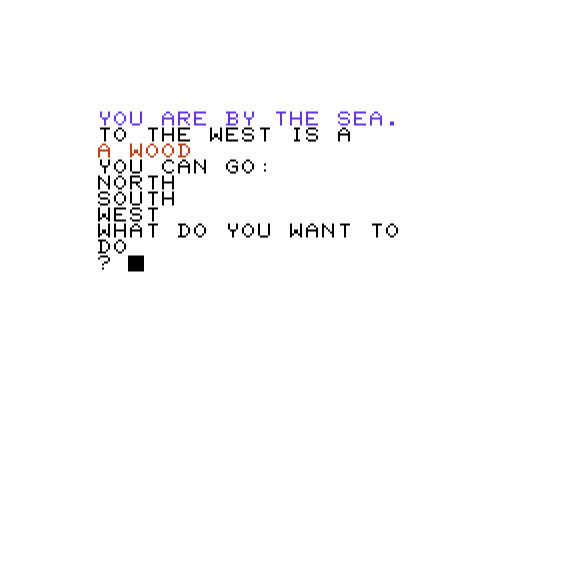
The above screen comes from one of my starts. The start location is random with the exception of starting on the south side of the map (there’s a river dividing the north and south portions).
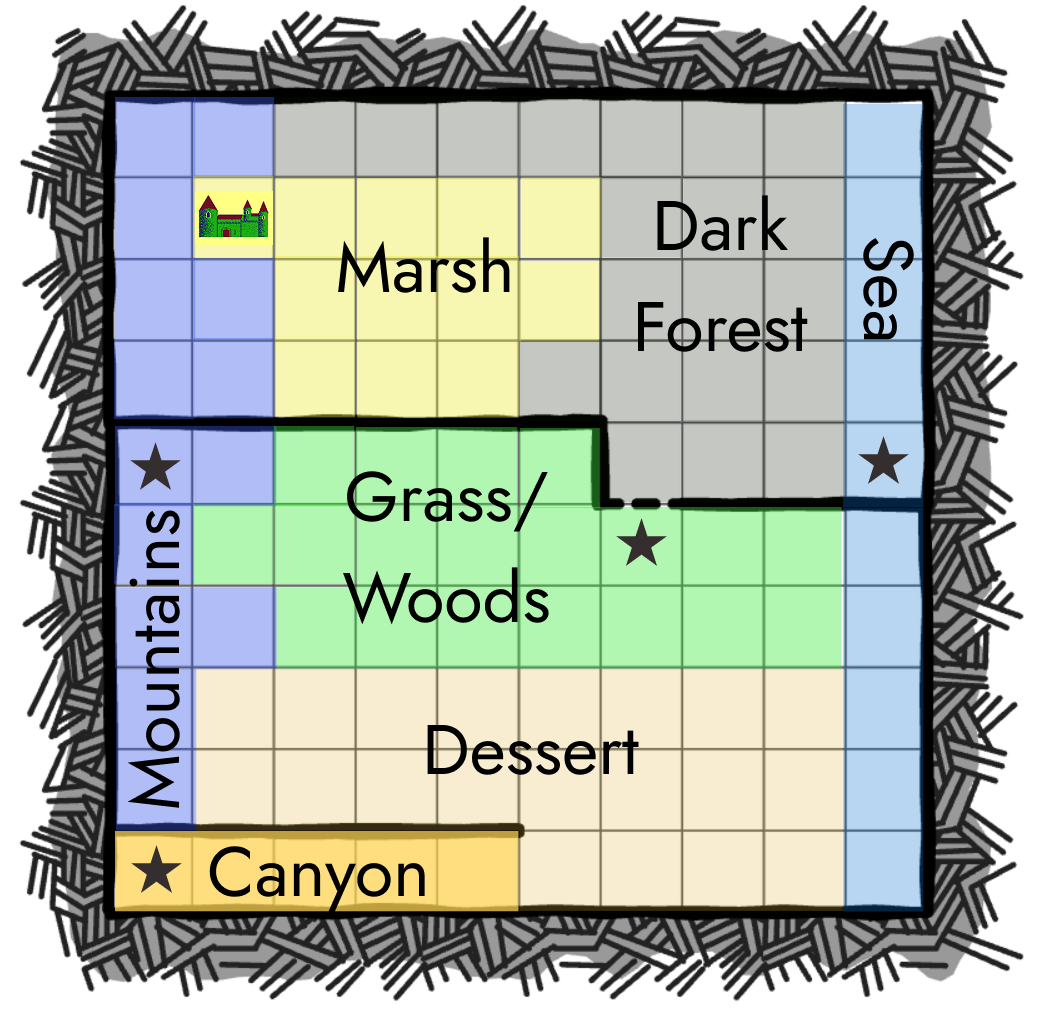
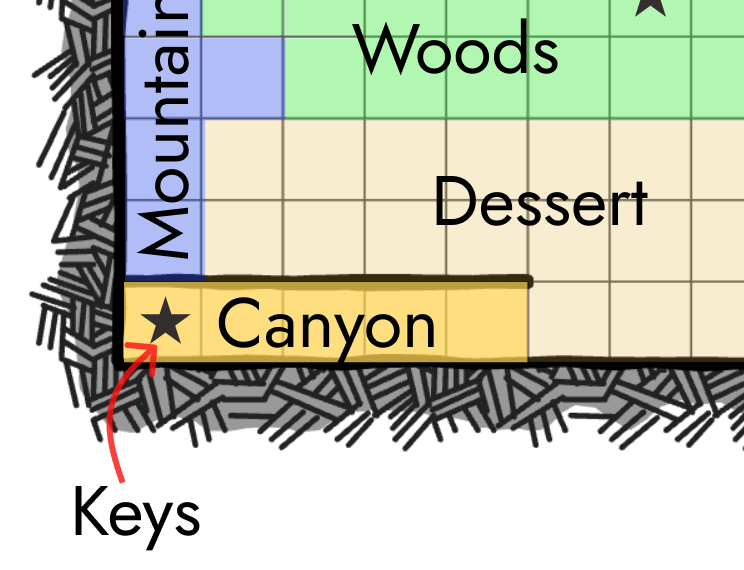
Stars mark important spots. It is indeed “dessert” and not “desert”.
We’ve seen a similar region division idea elsewhere (like with Reality Ends; one thing that helps this game along is occasionally describing when there’s an adjacent region, giving specific places more flavor.
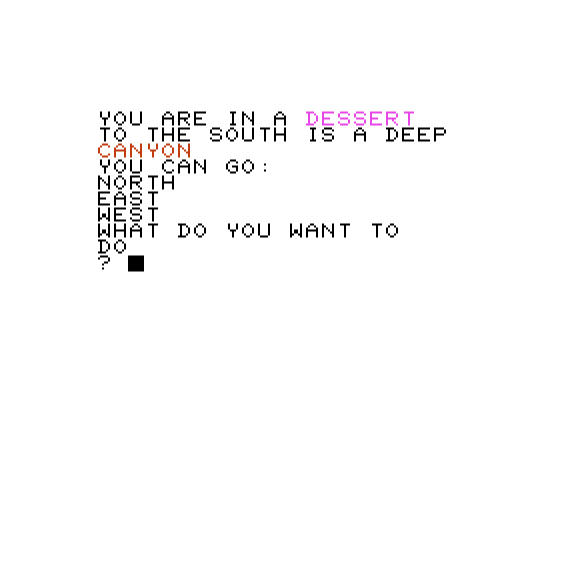
Items (spread at random) include a sword, an “oracle box”, and a wand. One room has a path across the river which suggests you need to get a cape from a dragon to pass by. I never did find the cape.
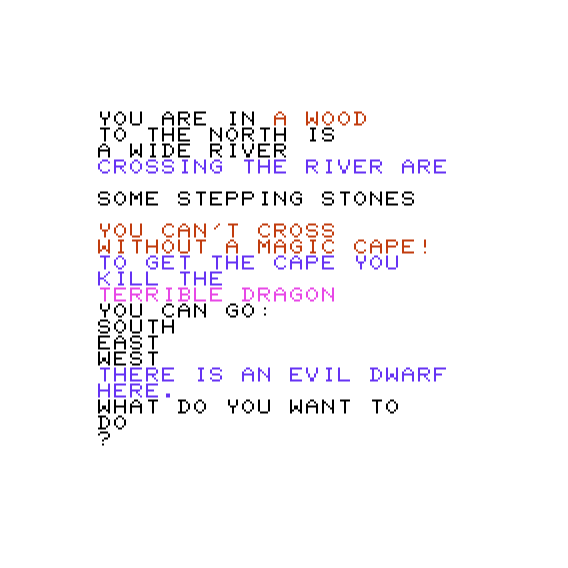
The reason I didn’t find the cape was the wandering enemies that you can find. The dwarf (seen above) simply tries to swipe objects; I was holding a sword, I tried KILL DWARF, and it worked. I no longer had to worry about the dwarf swiping things.
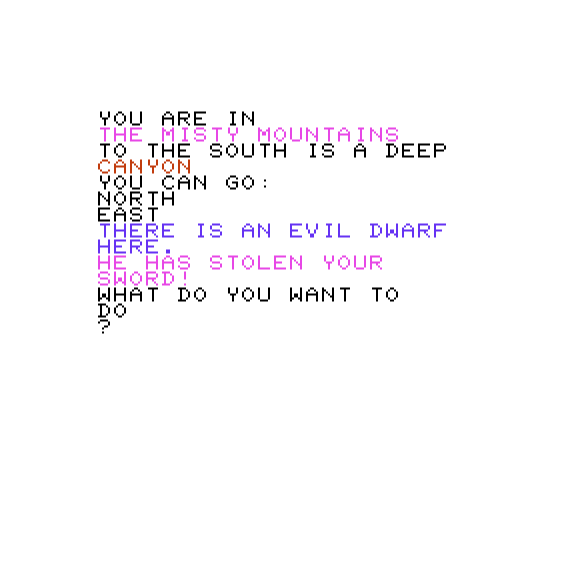
At least the game clarifies it’s an EVIL dwarf, unlike the one in Twin Kingdom Valley which seemed to be peaceful that I left alone.
In addition to the dwarf, there’s a MONSTER and a DRAGON that show up. In both cases they will magic you away to another place unless you either type RUN (a command you can get by typing HELP during the scene) or by killing them. Unfortunately, at this stage in the game I wasn’t sure how to kill them; despite KILL DWARF working, when I tried it on either enemy the game didn’t understand my command, so I had to suffer getting teleported instead.
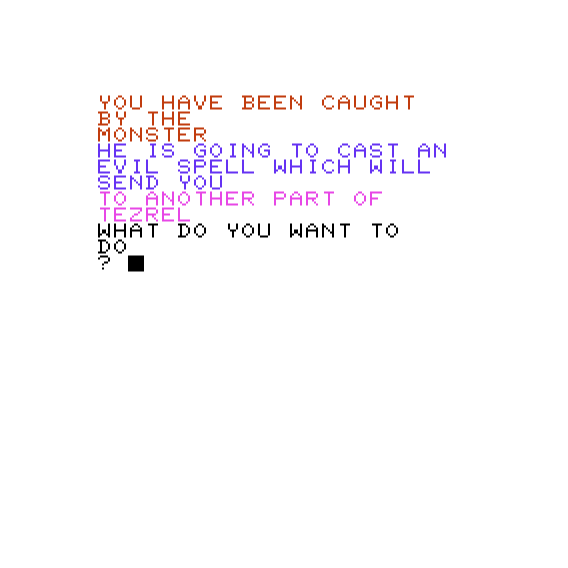
However: the teleporting isn’t bad! The teleport can land you anywhere on the map, including on the north side, so even though I didn’t find the cape to get over the river, I didn’t need it because I could just jump over by teleport instead. Before exploring that side, two other elements on the south side to note.
The first is a canyon (lower left corner) where at the end there seem to consistently be some KEYS. I say “seem to” because the randomness seems a little glitchy in this game.
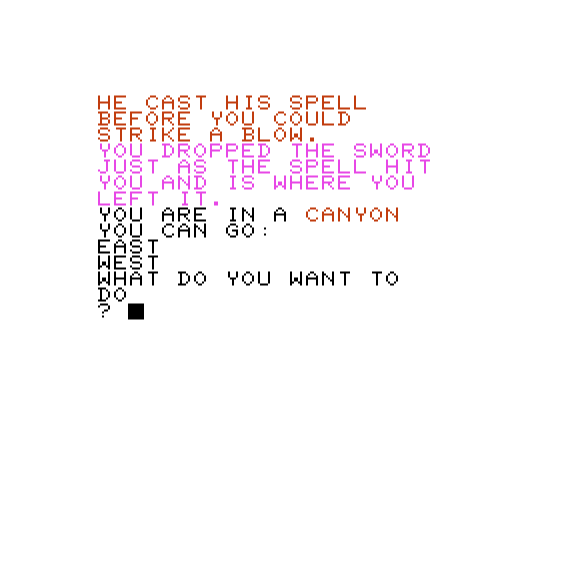
Sometimes (but not on every game) a wizard would block the way in the canyon. The wizard asks if you have a fish to give. If you say NO (without a fish) he simply refuses you to pass; if you say YES (with no fish) he gets angry and teleports you away. On my winning run I didn’t see the wizard so I didn’t need to deal with the fish, but it’s simply a red fish (not a red herring) randomly placed elsewhere on the map the wizard wants.
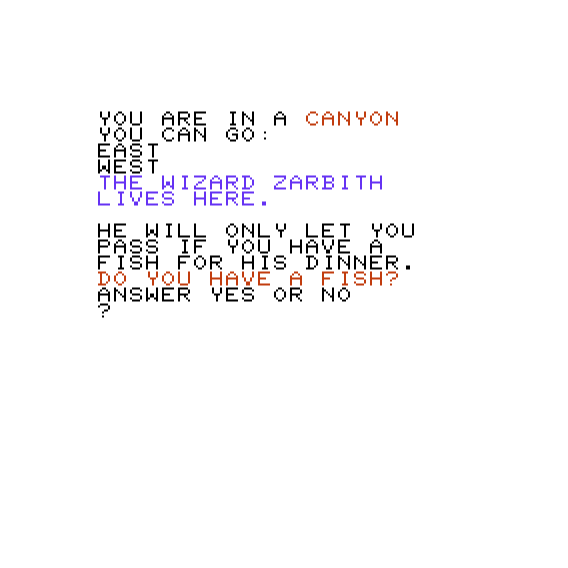
The wizard showed up in most of my attempts, so I’m not sure why he was sometimes absent.
There’s additionally, in the mountains, a room with a waterfall. Saying the word VORDA teleports you there. (Usually: I did have the word refuse to work sometimes, and just like the wizard not showing up, I’m not clear why.)
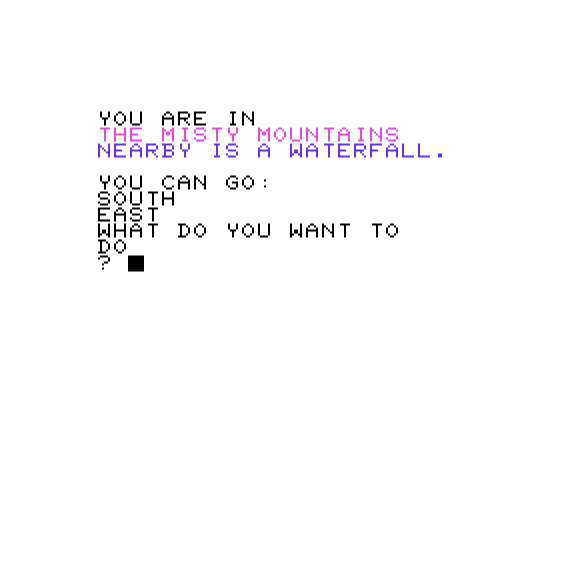
We’ll return here later.
With that taken care of, let’s teleport to the north side of the map.
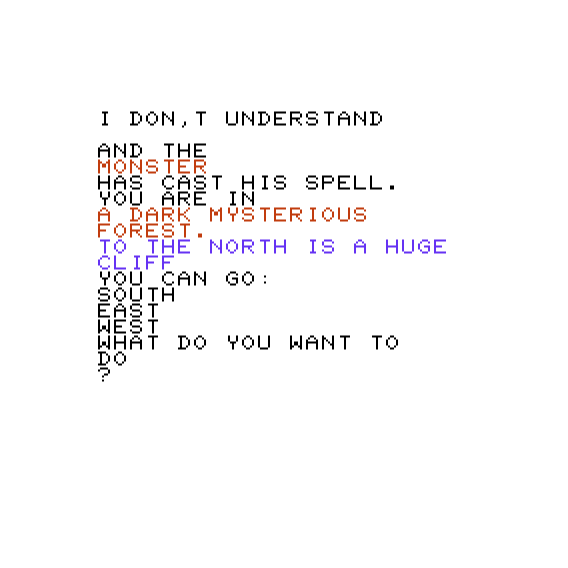
I had the sword. The I DON,T UNDERSTAND was a result of me trying to KILL MONSTER.
There’s a “ruined castle” on the east side with a LITTLE OLD MAN. The game says if you give the man some food he will give you a hint where the ring (the main quest for the game) is.
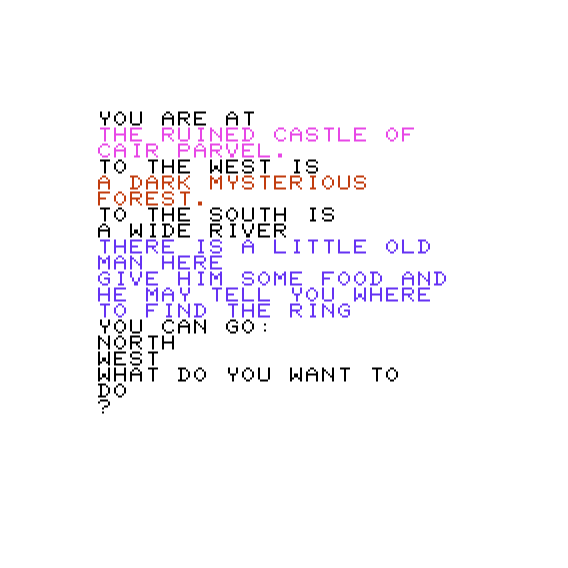
The food was nearby; he just says it’s in the Snow Queen’s Castle, which is not terribly helpful because after mapping things out that’s clearly the only other important thing where something might be hiding.
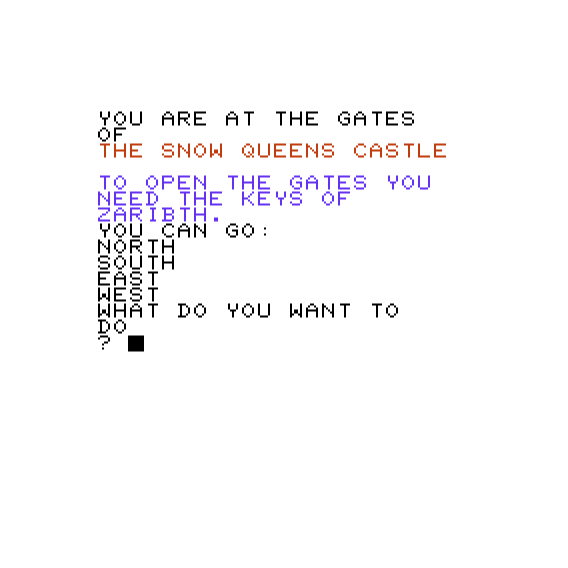
There are two sets of keys you need to open the gate. One is at the end of the canyon (I think always) and the other is randomly placed. With both you can OPEN GATE. This is near the end of the game but I was getting sent away by the GUARDIAN OF THE GATE. KILL GUARDIAN was not doing any good.
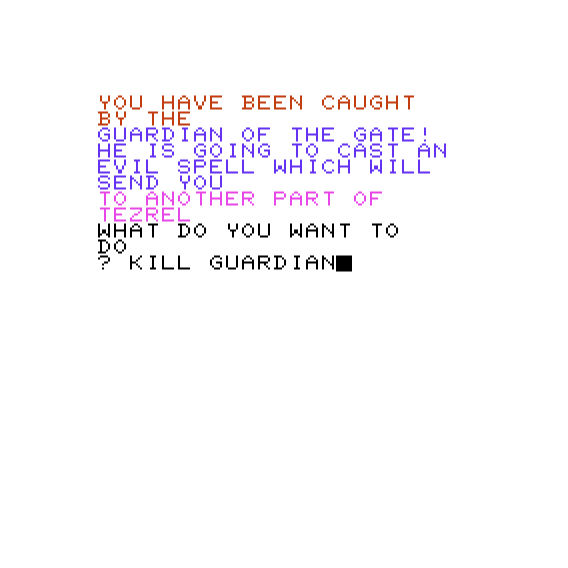
After numerous frustrating attempts (including bringing the wand over and trying to make that work) I checked the walkthrough, only to find out that it was for the C64 version and has a significantly different series of events, and it tells you to KILL GUARDIAN here (the exact thing that wasn’t working). I asked gschmidl for some help and he extracted a text file with the source code.
932 ifmid$(in$,u,3)=”use”ormid$(in$,u,4)=”kill”ormid$(in$,u,4)=”figh”then950
933 ifmid$(in$,u,3)=”run”then995
934 ifmid$(in$,u,3)=”hel”thenprint”{clr}if you are unarmed{down} ‘run'{down}”:u=256:nextu:goto930
935 nextu
936 print”{clr}{down}i don,t understand”
937 print”{down}and the”:printo9$(cq):print”has cast his spell.”:goto987
950 foru=1tolen(in$)
951 ifmid$(in$,u,4)=”wand”andwa=1andys>msthen22100
952 ifmid$(in$,u,4)=”wand”andwa=1andys<msthen22000
953 ifmid$(in$,u,5)="sword"then22200
I’m not quite sure why KILL DWARF worked, but after studying things over I realized the game wanted either USE SWORD or KILL SWORD. This isn’t a guaranteed win but at least the game now understood me.
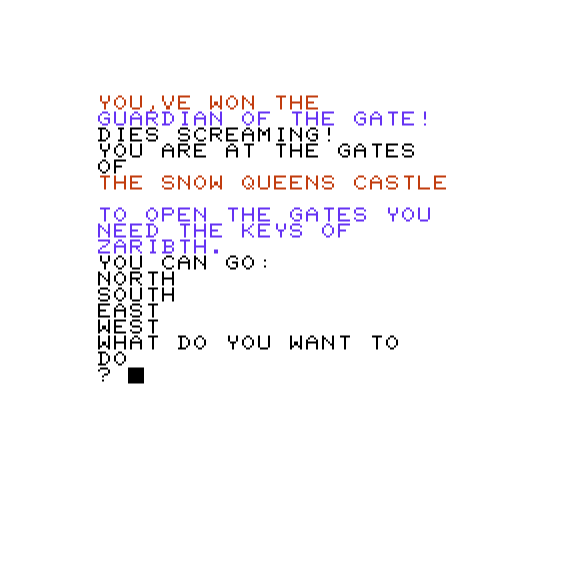
With the RNG going my way, the guardian died and I was able to claim the ring.
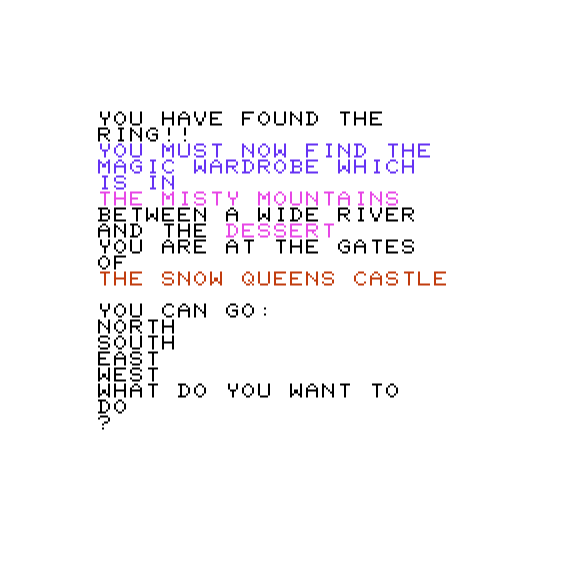
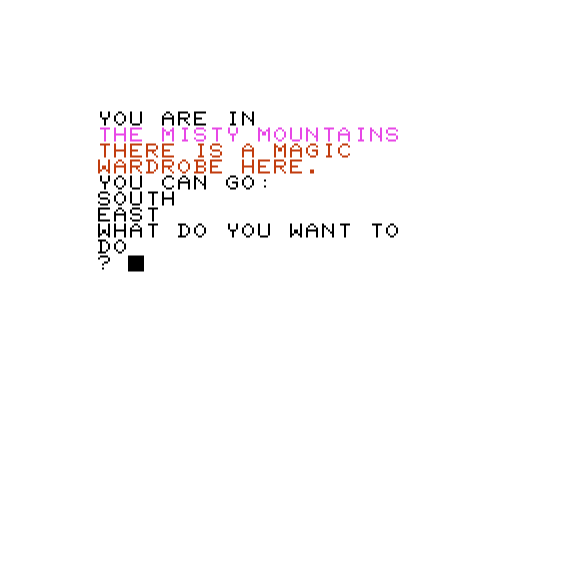
Not quite the end, though! The game now wants you to find a wardrobe and escape (I assume this is Narnia-adjacent). Trying out VORDA which warps back to the waterfall reveals the wardrobe right away. OPEN WARDROBE reveals one last monster fight and then victory.
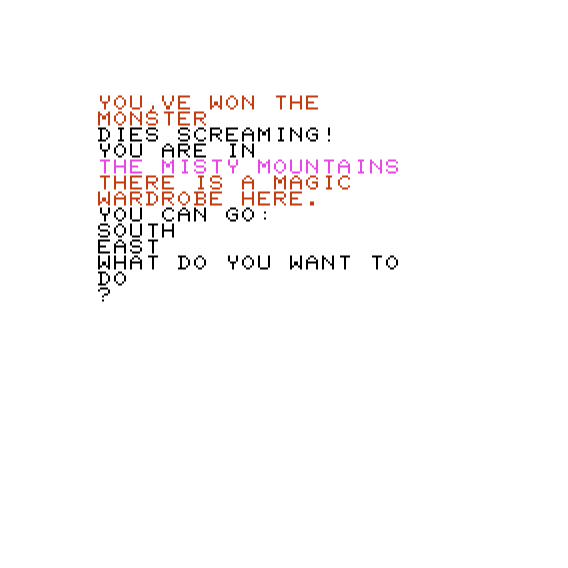
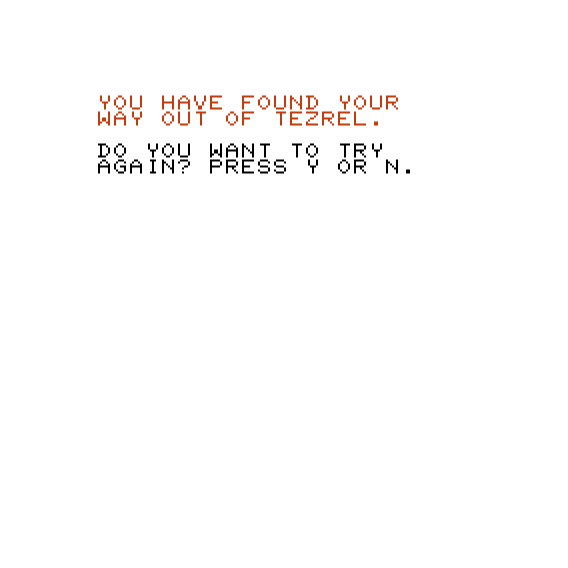
Regarding the C64 version, the sword is no longer out in the open: you have to jump into a cave to find it. The dragon also is no longer in a random place, and you need to SMASH a STALAGMITE to reach the lair if you want to claim the cape (still optional because of teleportation, though). Also oddly, the north side of the map now has a bit more structure to it; the second pair of keys are now consistently placed at a dead end, and the Snow Queen Castle becomes actual rooms rather than something you interact with indirectly while outside.
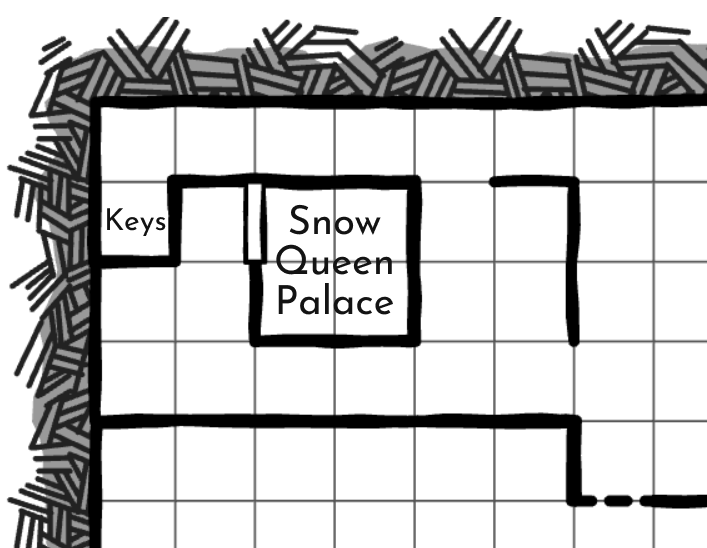
The author’s original vision seemed to match more closely with Colin’s Dungeon (pure RNG item placement, only three items can be held in inventory at a time, lots of random teleports) but with some changes to reduce the pure-slot-machine aspect in the initial VIC-20 version, and even more changes after to create the C64 version. The improvements did help, even though this is just an “afternoon game” (or at least it would be, had I not had the parser trouble with USE SWORD). I also thought the “region” system worked in the tight restrictions the author had in terms of content; the description of adjacent regions plus a few extra rooms were enough to keep the landscape from being flavorless.
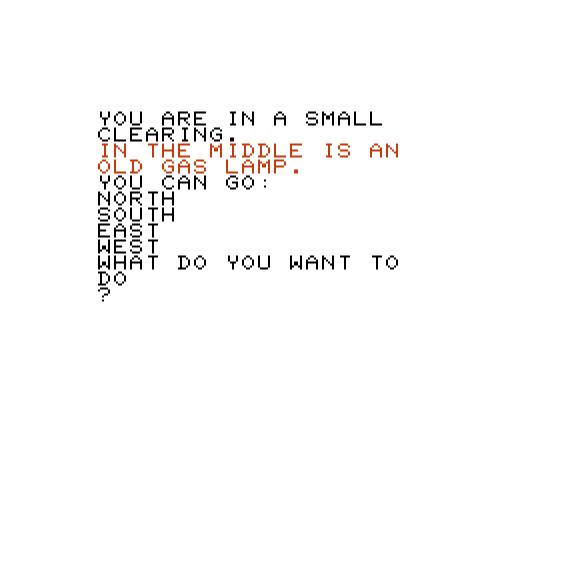
This is a “street lamp” in the dark forest on the north side. In the VIC-20 version you can RUB LAMP and get a message about nothing happening; the C64 version has a joke about a genie coming out and falling over dead.
Due to the heavy randomization, this game also enters the rare pantheon of “early text adventures that reflected later careers”; Huw Ford eventually went on from writing game show conversions to work on gambling machine software, and the CEO of his most recent company calls him a “Jedi coder” who “knows every computer language” in an interview.


I never played any of those Macsen games, but I remember them all, and all the programmes they were based on. Happy days.
I wish I knew more about what happened on their downfall, but I think that would require talking to the actual owners. There is a picture from after they got the EastEnders contract of a Macsen-branded race-car so maybe there was some dodgy spending involved, but without more context I don’t want to commit to anything:
https://archive.org/details/Sinclair_User_057/page/143/mode/2up
Indeed, who knows.
Fun aside: One of Macsen’s other licences, Countdown, has been running continuously on British TV for even longer than EastEnders. It started in 1982, with over 8700 episodes to date.
The street lamp in the forest is also from Narnia, isn’t it?
yeah! forgot about that
And “The Misty Mountains” is a Tolkien reference.