(Continued from my previous post, read that post first before this one.)
As is usual for one of these massive games of this era, the best place to start is outside. I’ll be showing it off in three sectors, the first being the environs around the starting cabin (the one that has the key / jug / lamp and is the place where the treasures go).
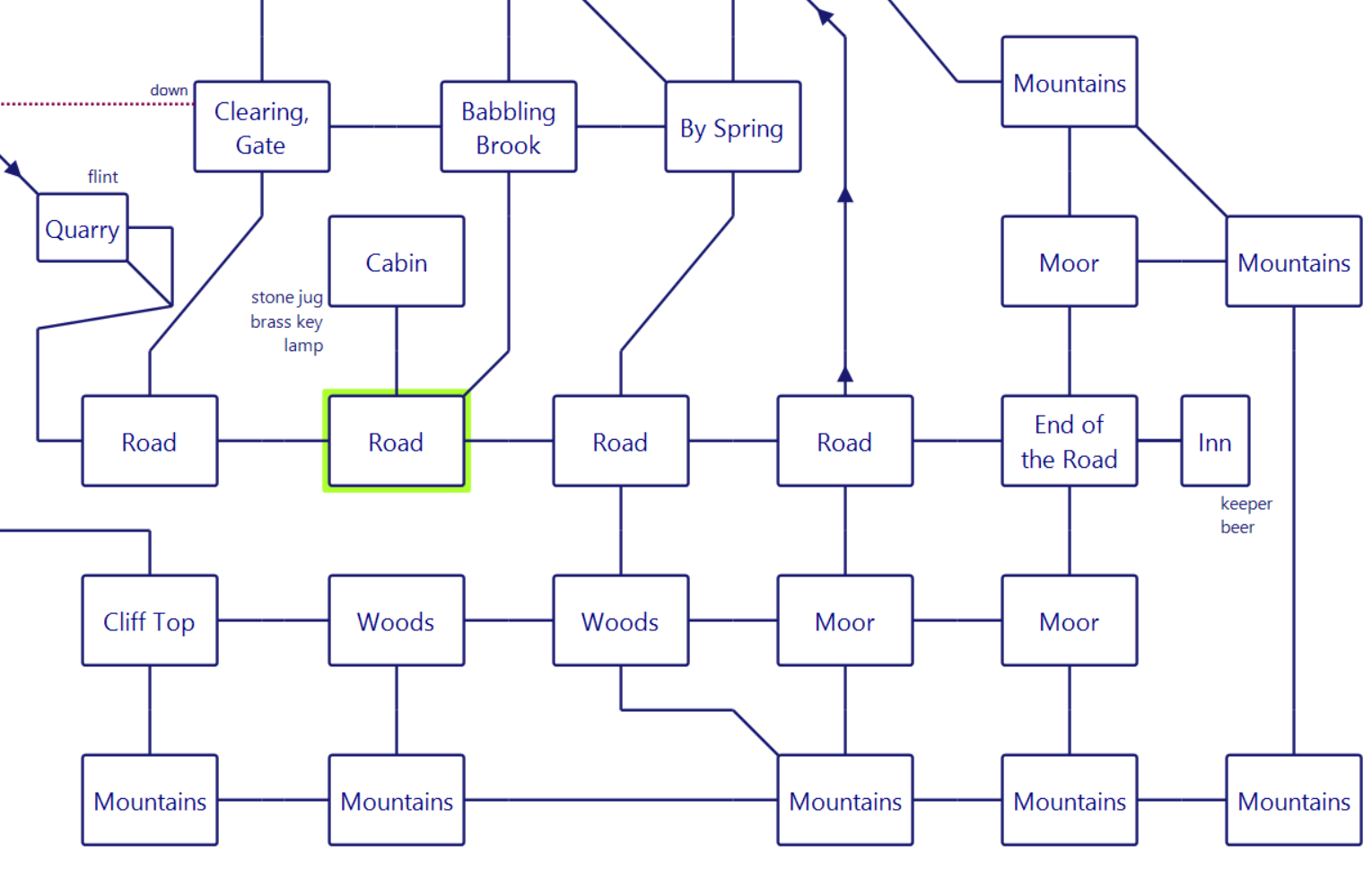
I originally thought perhaps this was going to be on a grid and I could do something more minimal, but no: this is a traditional Adventure map with twists and turns along with one-way paths. It does make creating the map feel less like “lawnmowing” and for certain swerves of landscape (like the mountains) breaking out from a grid makes some sense.
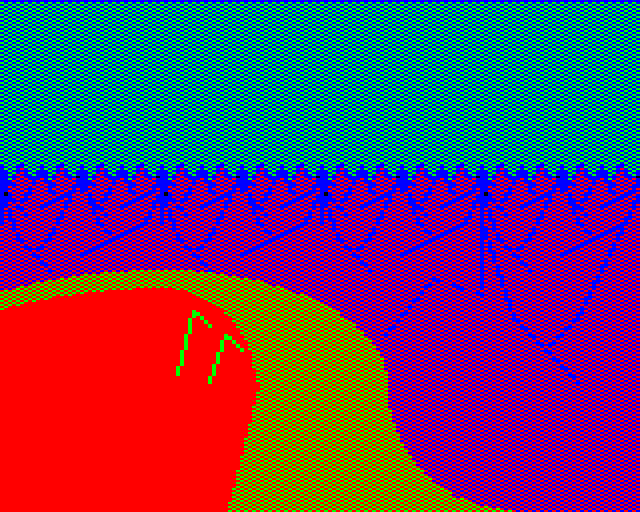
Description: The picture is your view west. You are wandering through high mountains, paths lead west, north west, south.
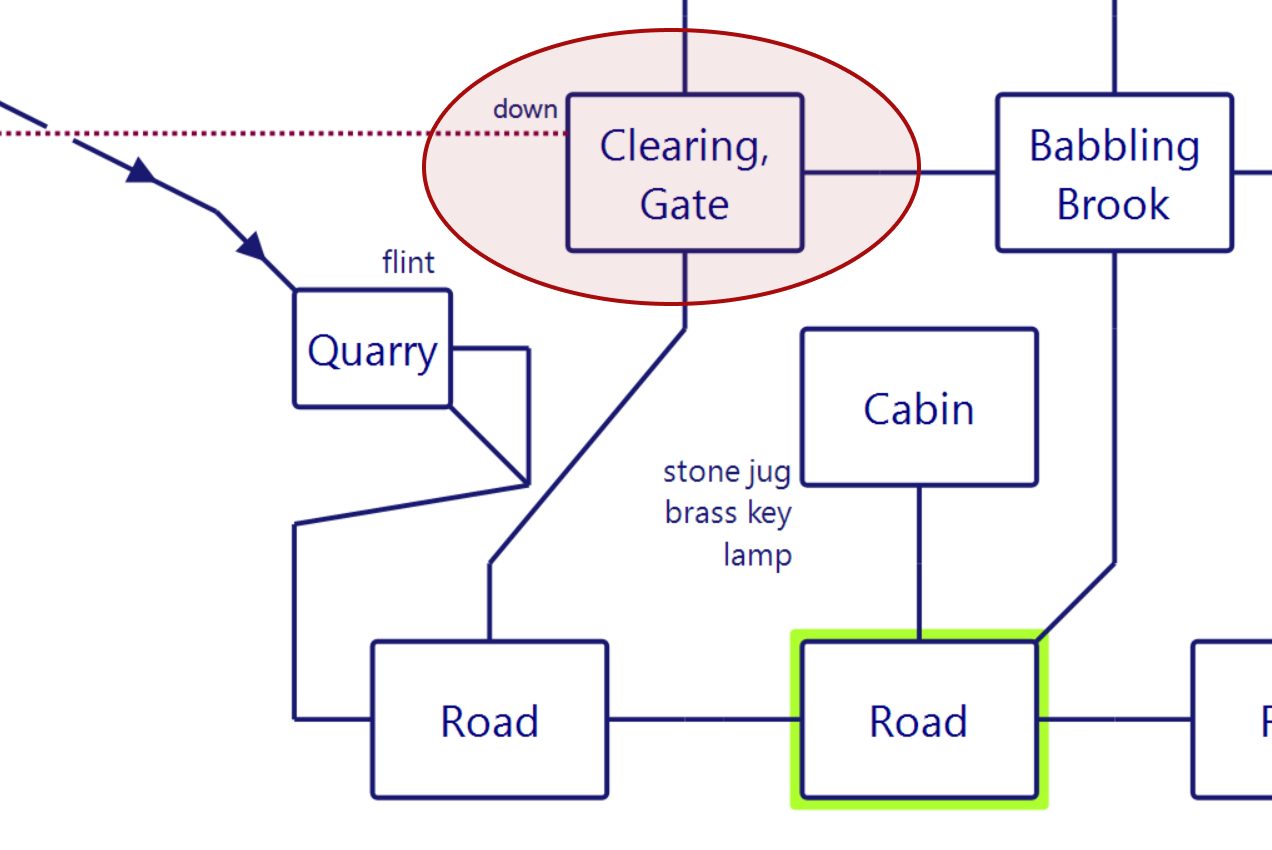
I ended up switching my mode fairly quickly to “picture first time, but not on second visit” since the game lets you just hit TAB to see the picture at any time, but also because the “first time” aspect is handy for mapping. If I arrive at a room that does not give a picture, I know I’ve already visited it, meaning I didn’t need to do any “breadcrumbs” like I was mapping out a maze; I especially found this helpful in a couple aspects where the map re-united in a way I wasn’t expecting. For example, the quarry to the west of the start — one of the first places you should visit for reasons I’ll get into later — has a flint stone. There’s two exits elsewhere on the map that land back on the quarry (one-way), and without the “no picture” clue I would have thought it was a different quarry.
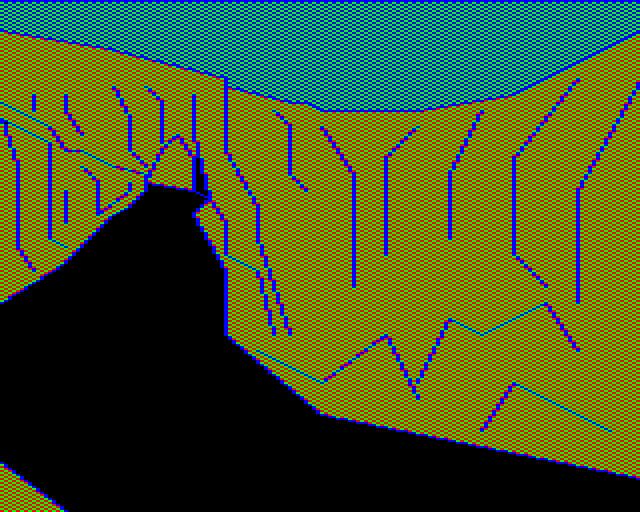
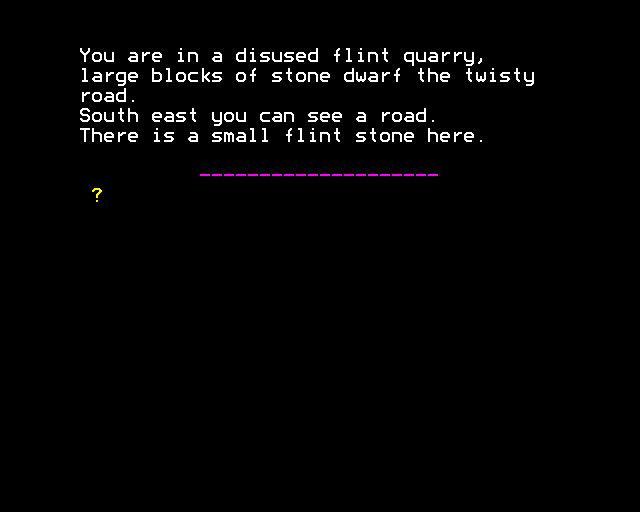
That’s incidentally not saying the exits are south and east, but rather there’s just one exit “southeast”. There’s another unmentioned exit to the east which goes back the same way. Unfortunately despite the system constantly letting you know what you can find in different directions, enough directions are unmentioned I have to test all of them.
If from the start instead of heading west to the quarry but take the road east instead, it leads to The Sword Inn. The inn is drawn farther away and then closer (applying the system I discussed last time which draws “objects” rather than scenes and can change the size).
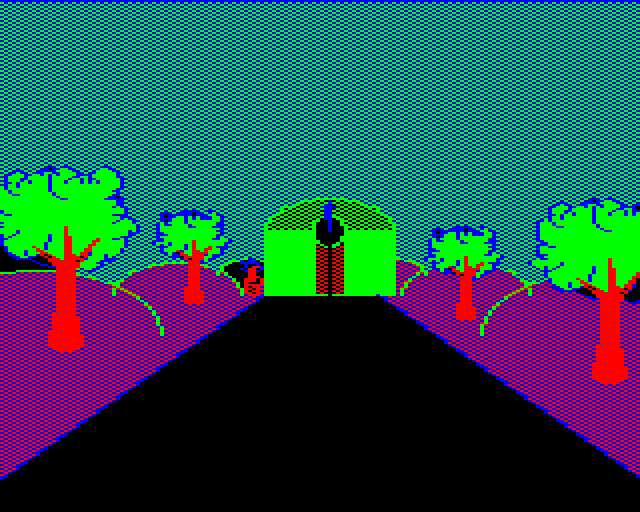
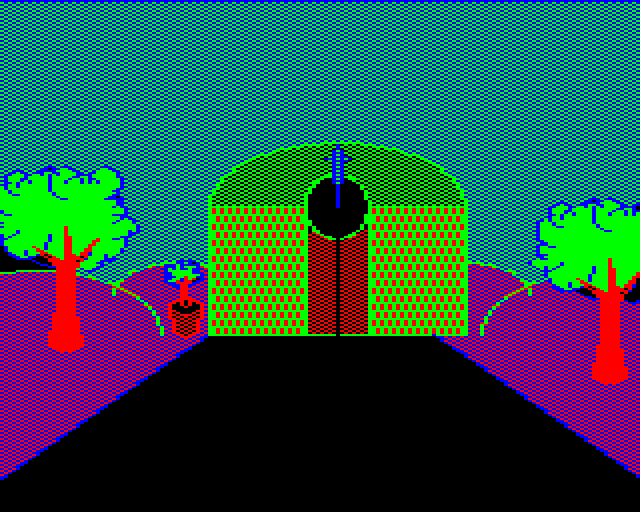
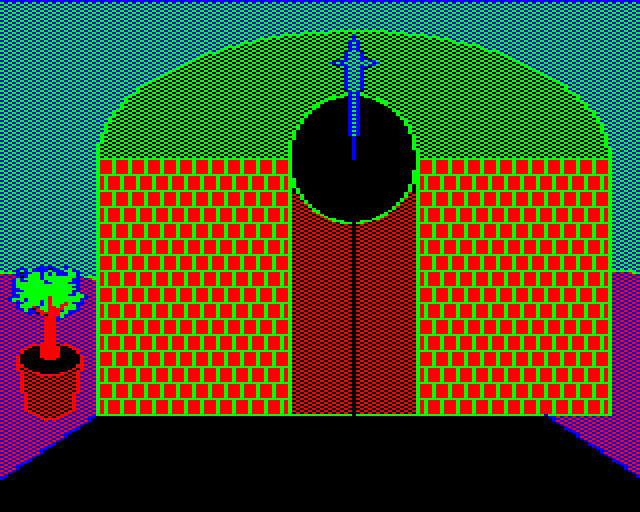
This is important not only in the technical application of Trevor Hall’s system, but also in his philosophical approach on how to treat space. Especially with modern text adventures having a road of multiple “rooms” can be considered fluff and is best cut; despite the wandering creatures (which I’ll get to) there’s a fair amount of empty space on the Twin Kingdom map. From one of his interviews:
It’s boring if you only have 20 places to visit. If you don’t have some ‘dead’ locations with nothing happening, you go from one nasty disaster to another, which is too intense. You need padding, to get lost before you find something.
He’s likely thinking of Scott Adams (who was tight by necessity); we recently had a Marc Leduc game make terrific use of tiny space so this is more of a general standpoint than an absolute rule. However, it does fit in with his goal of creating an “environment” rather than just a story (that in a graphical sense feels vaguely like walking around a modern open world game).
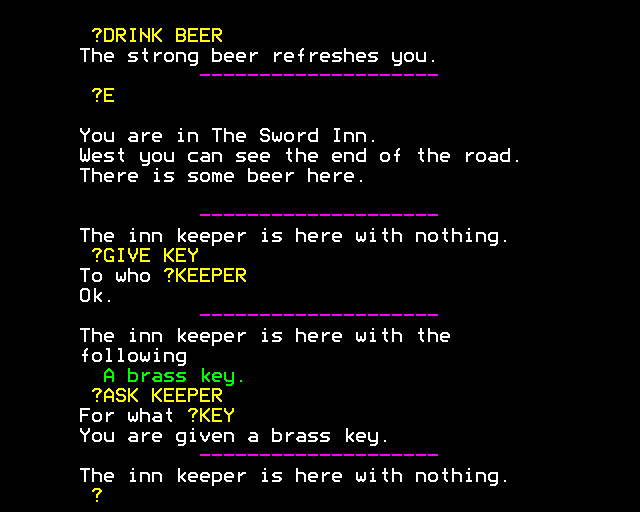
The inside of the Inn has a “keeper” and some “beer”. You can fill your jug with the beer (it “refreshes” you if you drink it).
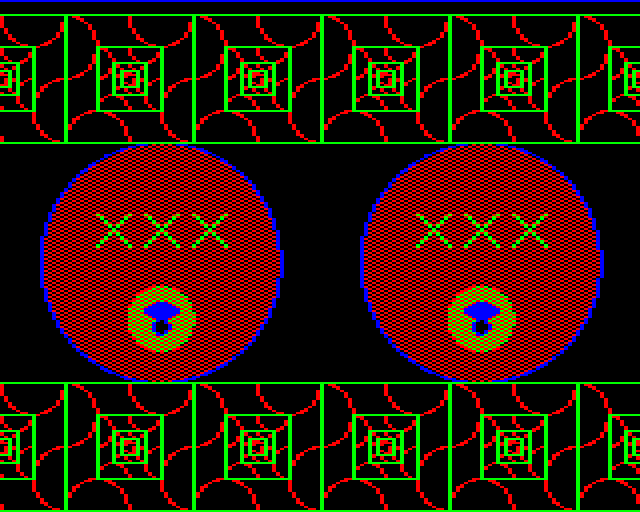
This led me directly to wonder what kind of character interaction was possible: could I have a conversation? The game helpfully gives a complete verb list from the start:
help option inventory score draw picture view look quit end drink swim wave wait ask empty pour fill give off on light unlock open close shut lock get take drop throw cut hit
The only commands on there that are “social” are give and ask (I guess “wave” could be here that’s for a “wave wand” kind of command). I was able to give my key to the keeper, then ask for it back. Maybe it’s useful to have an NPC hang on to things for you? (Not the keeper, since you can just stash things in the cabin, but there might be a section later where this comes up.) No way to ask about rumors or the like.
Speaking of NPCs, wandering around the aboveground I’ve found at least two elves, one gorilla, and one troll. The gorilla and troll are both pains; they will sometimes follow you and whack you with whatever weapon they have at hand. (The gorilla specifically will “throw” its items while the troll will “hit” you.) I’ve just been trying to map things out but occasionally I suffered a death in the middle of testing exits or whatnot.
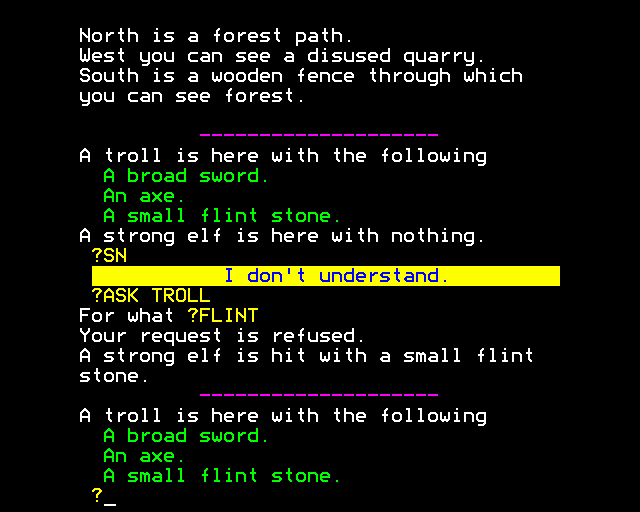
NPCs can fight each other; here the troll has whacked an elf. You might also notice the troll carrying a flint stone; that’s the flint stone (the only one in the game) nabbed from the quarry, so assuming you’re in this circumstance you need to extract it from the troll in order to use it, and given the flint is used to light the lamp, it becomes important fairly quickly. I find it easier to just nab the flint first and avoid the problem.
The map I started this post with includes one of the three ways underground: just west and north of the starting room.
It’s the most elaborate room in terms of the graphics trying to depict the grand span of the environment.
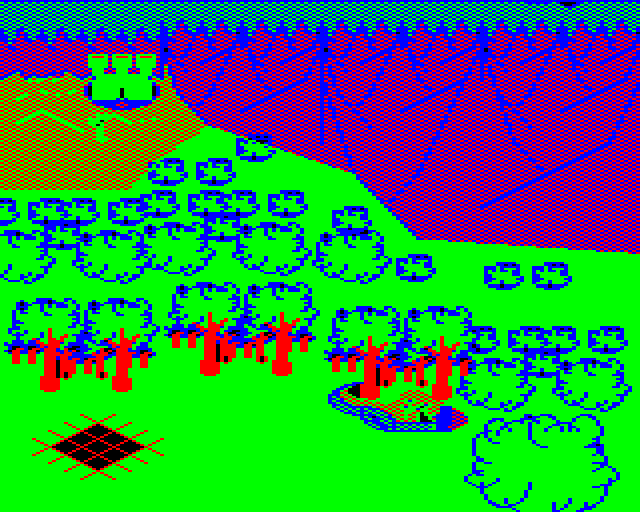
You are in a clearing. North is a forest path. East is a forest path. South you can see a road. Down is a locked brass grate through which you can see a narrow passage.
While I haven’t placed any of the moving characters on my map (due to the fact I don’t know for certain their home bases) I’m pretty sure after enough attempts the gorilla always starts here with a wooden club. It’s possible to ignore it, unlock the gate, and run on by. I’ll show the first two rooms of the underground but I’m staying with the outdoors otherwise.
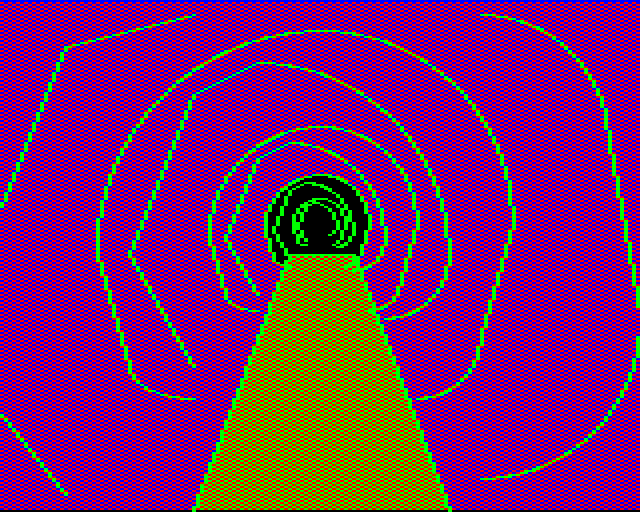
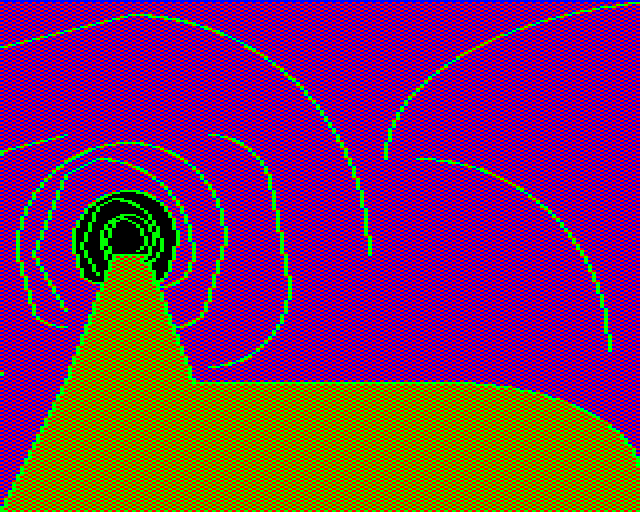
There’s a crystal ball here, but I haven’t gotten it to work yet.
Moving north…
…there’s not much new to see. (Unless I’m missing a secret, of course.) It’s just meant to be a pleasant forest environment, although rather oddly there are two one-way exits leading over to the mountains.
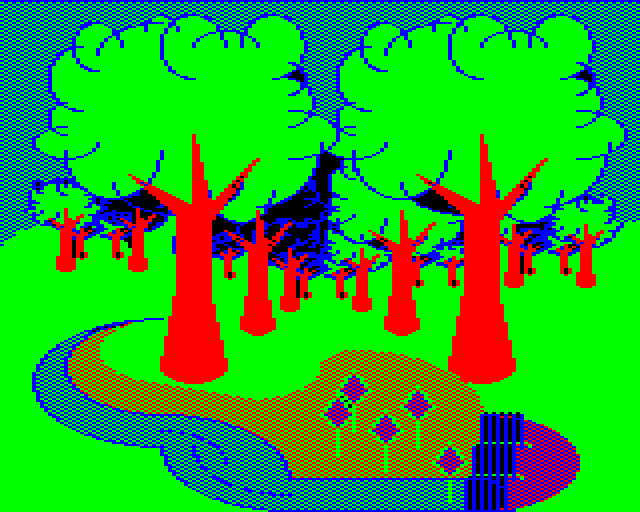
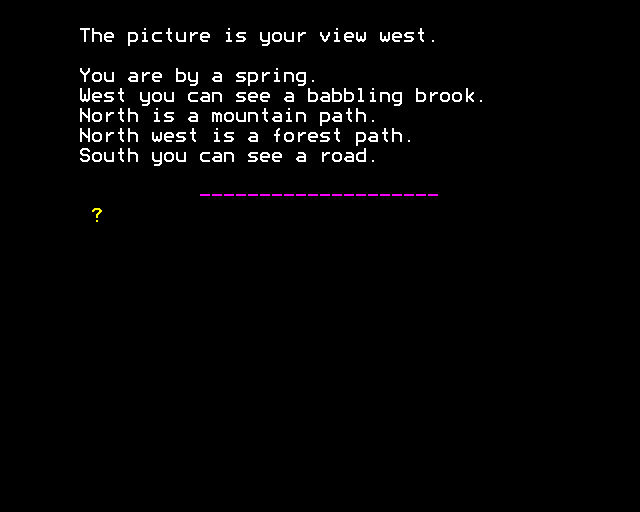
Notice how the game consistently tells you what the direction the view is in, and this direction changes based on the room (and not some kind of relative-direction setup based on where the player came from). This is pretty rare but it showed up in The Palms.
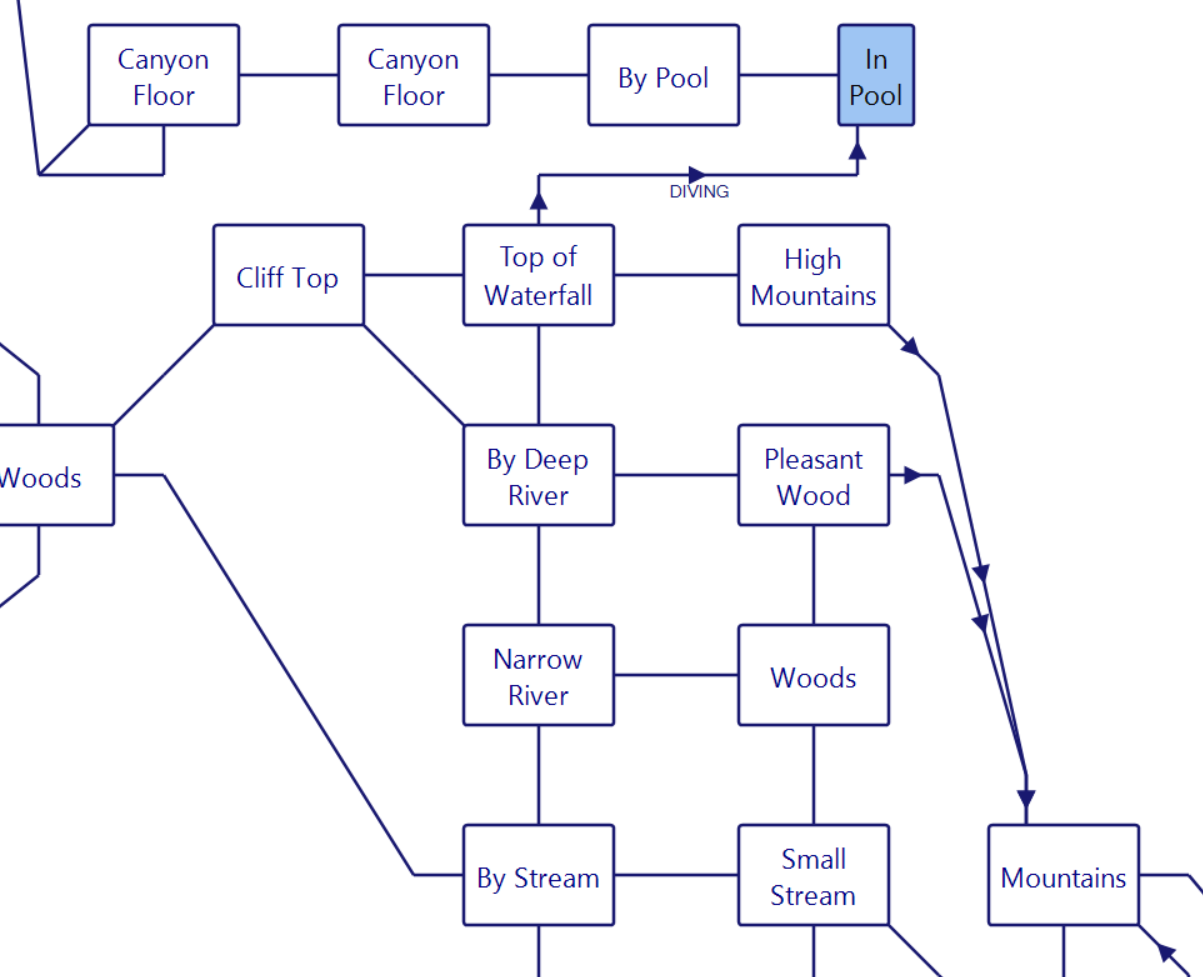
To the far north there’s a “Top of Waterfall” and going north farther has you dive into a crocodile pool, which you immediately are forced out of by the game.
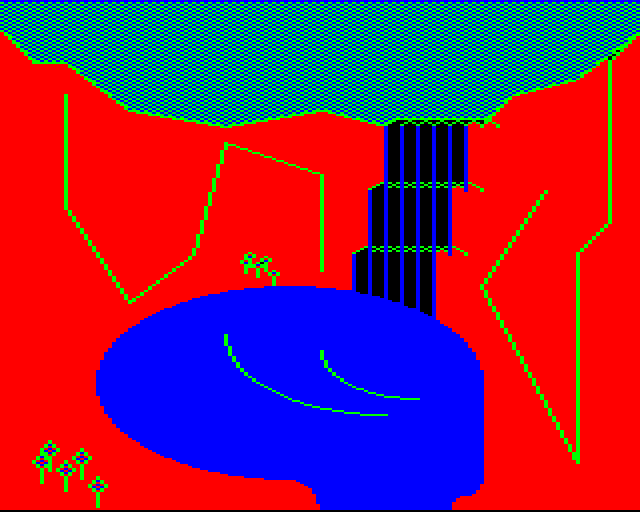
This is a canyon where you can go west and see the spring farther in the distance (again, using the “object” paradigm rather than completely pre-cooked “scenes”).
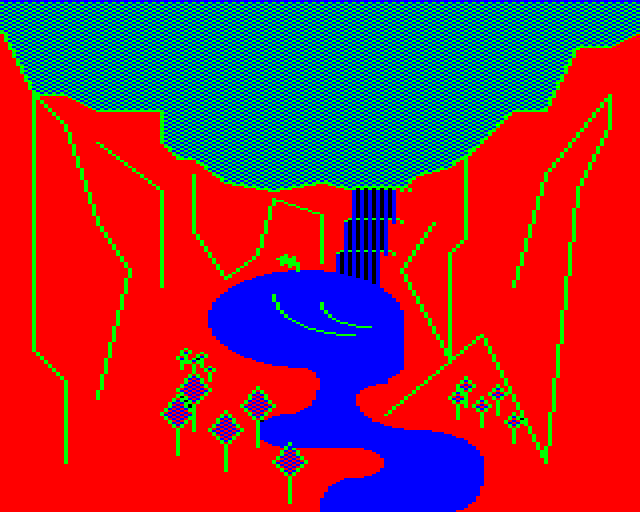
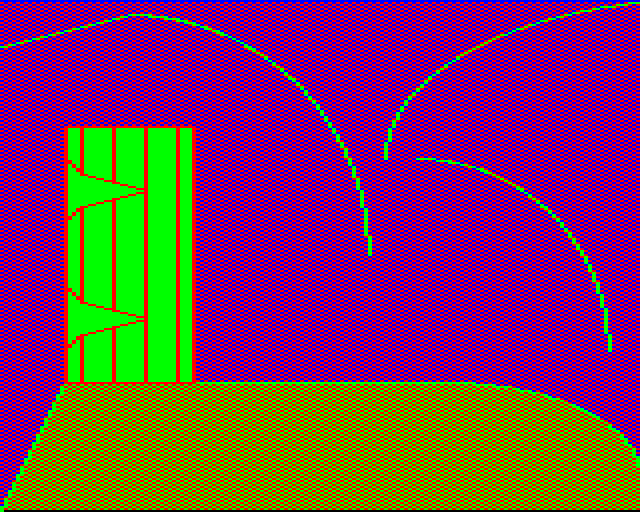
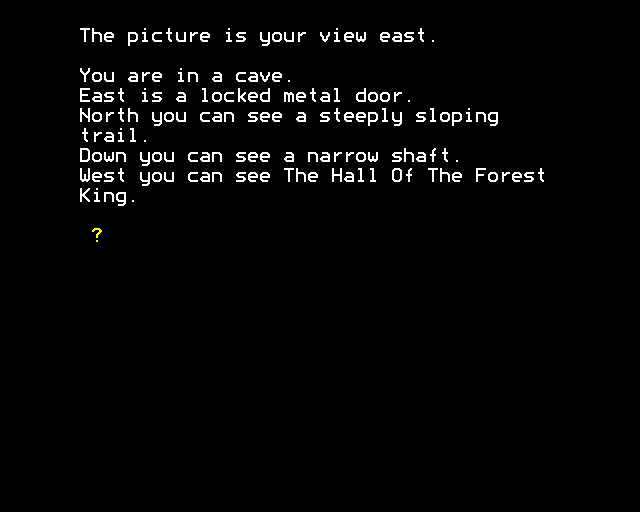
Going even further you can find a cave (the second underground entrance). A very brief look at the cave (which I’ll save for a later post):
The cave in context (on the northeast side of the map):
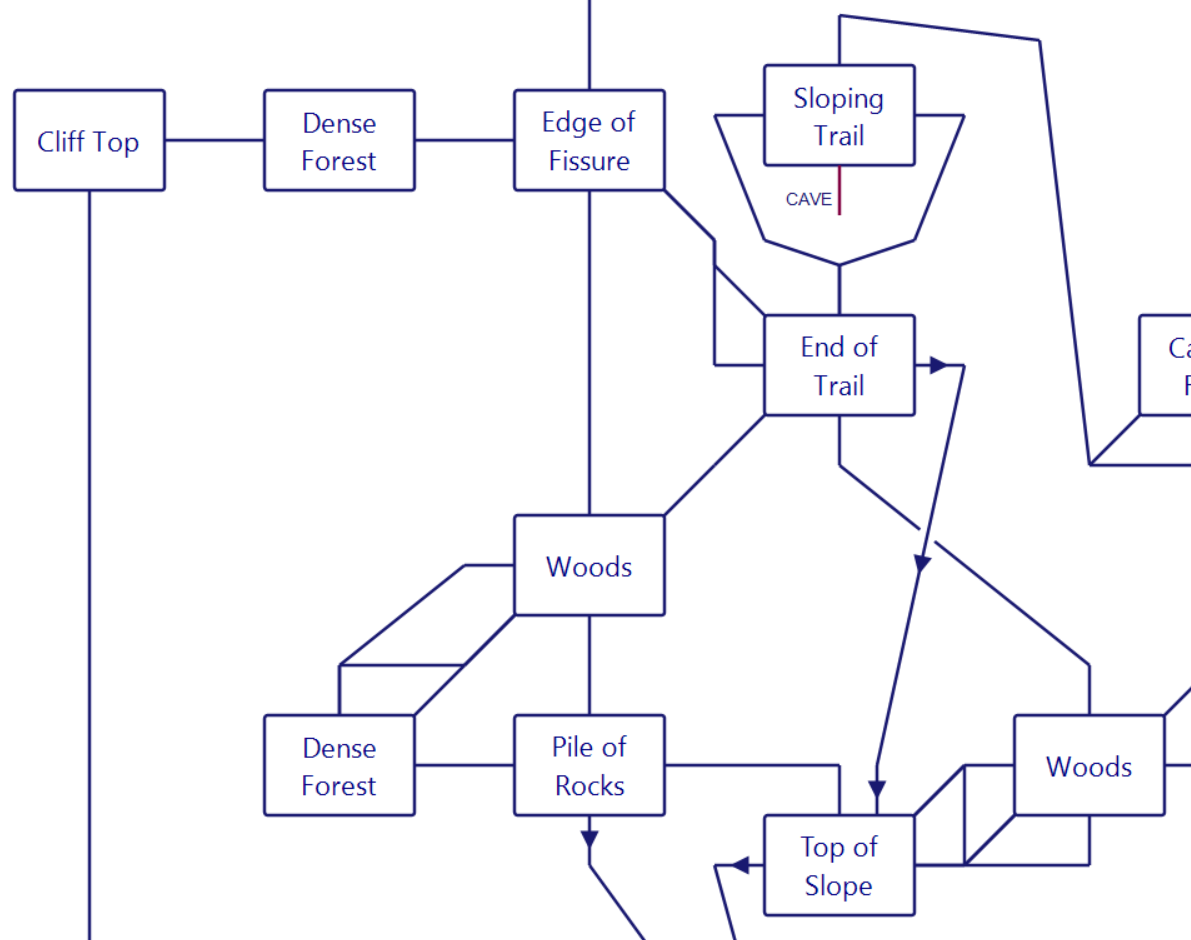
Most of these rooms are just connective tissue; the sloping trail which enters the cave connects back up to the forest, and the forest lets you go south to eventually reach the quarry (that’s the one-way passages I mentioned earlier), west to a “cliff top” (which lets you quickly loop back to the first map) and a fissure.
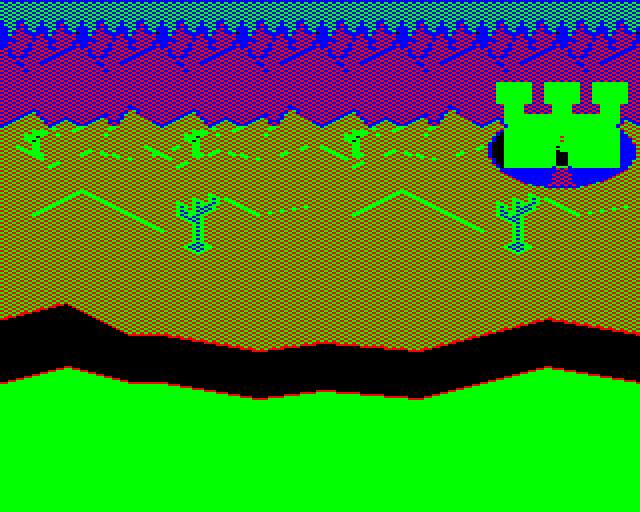
You are on the south edge of a deep fissure. North you can see down a dangerous fall.
Despite the game saying “you are dying” if you go north, you can actually survive the fall, landing in a narrow canyon! Going west in the canyon leads to a narrow fissure with Watersmeet at the end, and a cave (the third underground entrance) right beforehand.
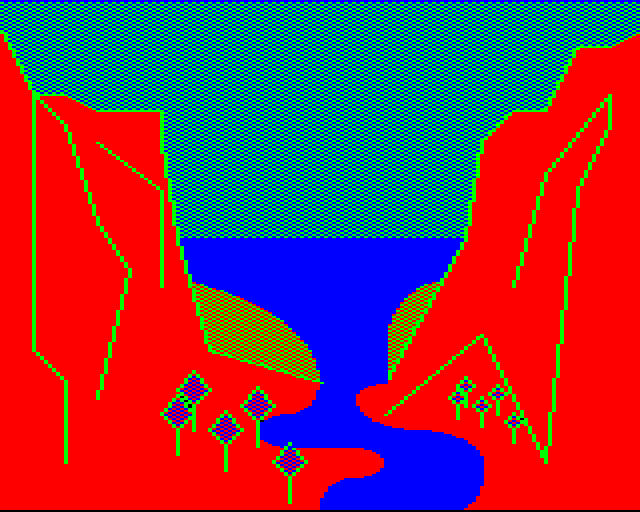
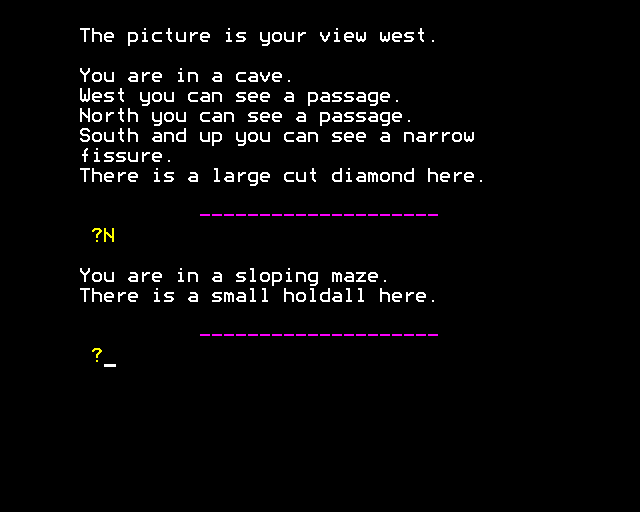
Just a brief look at the cave in the fissure.
Going east just lands back in the canyon with the crocodile pool, so that’s everything (probably) on the outside. I admit I haven’t tested every single direction in every room (the room exits it gives usually are right) and of course one of the underground sections may pop back outdoors again (like to the north side of the canyon, I imagine). I also don’t know if the three undergrounds I’ve found merge together or if all three are separate.
There’s still a lot to explore with the NPCs; I haven’t tried fighting back yet (they’re pretty possessive of the weapons, and I’ve been focused on mapping anyway). I do know you can arm the “allied” NPCs and have them fight as well, so even if all the game is tracking is how good your weapon is, there could be some interesting strategies involved.


Leave a Reply