(Continued from my part 1, read that part first.)
Before tangling into the gameplay, one bit of bookkeeping and one bit of meta-discussion.

From Akiba PC Hotline.
For the bookkeeping, one thing I didn’t linger on is: what should I be calling this game? On the side of the box, on the front of the tape, and on two of the title screens, the game is just
幻魔大戦
but on the front of the box, and on the third title screen, a subtitle gets added, using English text.
幻魔大戦: Harmagedon
Even the colon is questionable! There’s also no good way to convey the mixture of languages. The original film often just gets called Harmagedon but that also isn’t consistent.

From the press package which is absolutely worth a look if you’re a fan of the franchise.
On top of that, the film title either gets translated as “Genma Taisen” or “Genma Wars” depending on your source. I try to prioritize what English title gets used from Japanese sources, but I’ve seen that mixed too. I eventually just gave up and used the title given by Mobygames which seems to be the most common one.
On the meta-discussion: as I’ve emphasized in the past, this isn’t really a “review” blog, even though you could interpret things that way. I’m trying to approach with a “why did this happen” perspective; while I’ll still point out when something is painful, what’s more interesting to me is that a game got made in the first place, especially a game like this connected to a movie with both a high budget and high earnings (it was the top-earning animated film of 1983 in Japan). I’m trying to build a contextual history.
This game really stretched my patience, though. There is one person (the proprietor of the AVG walkthrough site) who liked the game, so I gave it the best shot I could.
Even if we buy into Takahashi’s idea for this game (or maybe it was the producer Kadokawa’s idea), which is to pick particular scenes from the movie and dramatize them (with essentially choice-based gameplay), the concept is erratic. It skips past the airplane being destroyed and Luna being recruited as a “psychic warrior” — fine, maybe that’s just a “cutscene” — but then it also skips by one of the earliest “dynamic” scenes where Luna talks the cyborg warrior Vega into arising from his slumber and joining the cause, invoking his past love for the psychic Arietta (which sustained him for thousands of years).
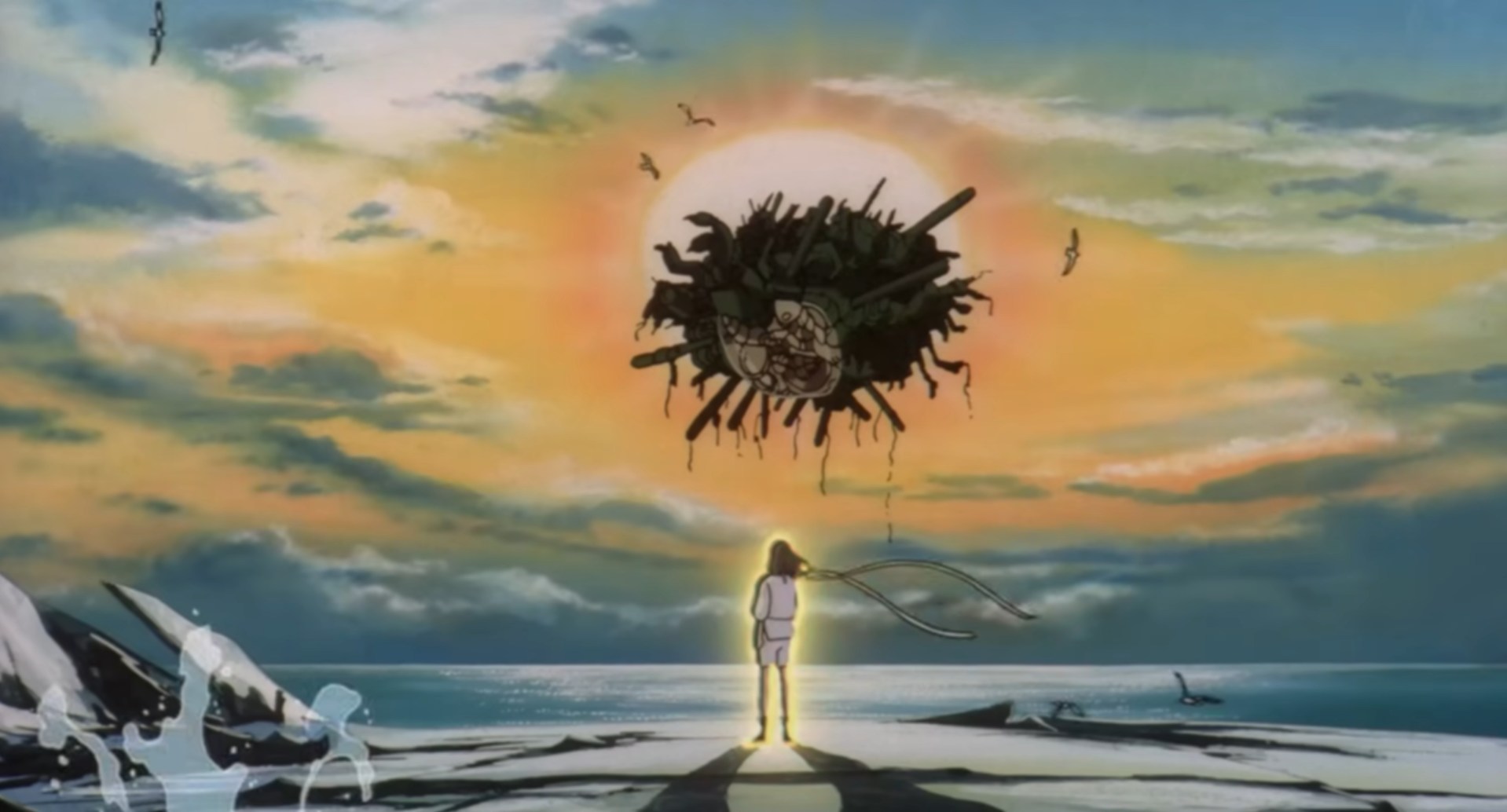
It skips a lot more besides, but I’ll get to the exact timestamp in a moment. One last detail before diving in: I played the PC-8001 (text-only) version of the game first and then went over to PC-98; I will share from both simultaneously and explain places where they diverge.

So Jo Azuma, Princess Luna, and Vega are already together, and Jo encounters what he thinks is his girlfriend Junko. You (the player) are then prompted to pick a fighter. This indicates which of the trio is going to do an action.

I tried 3, Vega, and got the following:
Could it be that you still think she’s a Genma?
If your guess is correct, this is going to be a big problem!
Should I attack her? (y/n)
If you pick “yes” the response is…
Oh no! She really is human…!
…and the game ends. This would seem to resolve that we are supposed to pick Jo, and everything should be fine … you might think.
You can do so, and she’ll request kisses, in repeated y/n prompts; you can keep doing y over and over again until eventually get:
You fool! I am Zambida!
Wahahahaha!
(The actual line is “ワッハッハッハッハ”.)
The enemy will then reduce Jo’s strength to 0.
The “optimal” sequence seems to be:
a.) use Luna, who will sense Junko wants a “farewell kiss” from Jo
b.) do one kiss from Jo after
c.) decline to do another, after which you’ll get the reveal; Jo can then attack and win; if you don’t go through this process, Jo’s power level will be too low to win the fight and you’ll lose
Notice this is 100% inconsistent with what happens when you just attack with Vega. I’m also not clear why Luna wouldn’t sense the subterfuge.
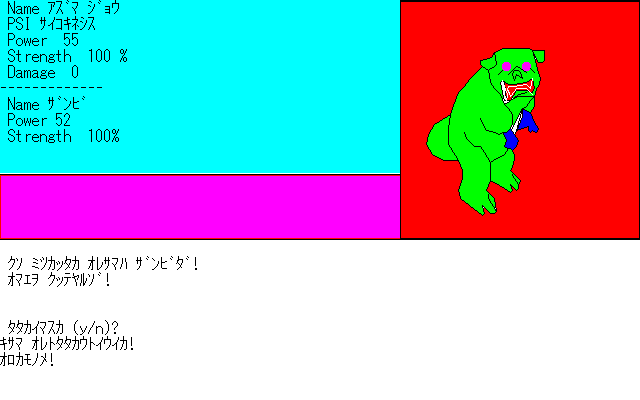
This marks the end of “scene 1” in the game. Scene 1 matches with a scene fifty-three minutes into the movie. I have it cued with the timestamp below.
It works a little differently (Jo is alone, and senses the ruse from “Junko” having an odd smell). I couldn’t find the exact pose from the game’s art in the movie (although I didn’t check frame-by-frame). I did find a match in the artbook by the character artist Katsuhiro Otomo.
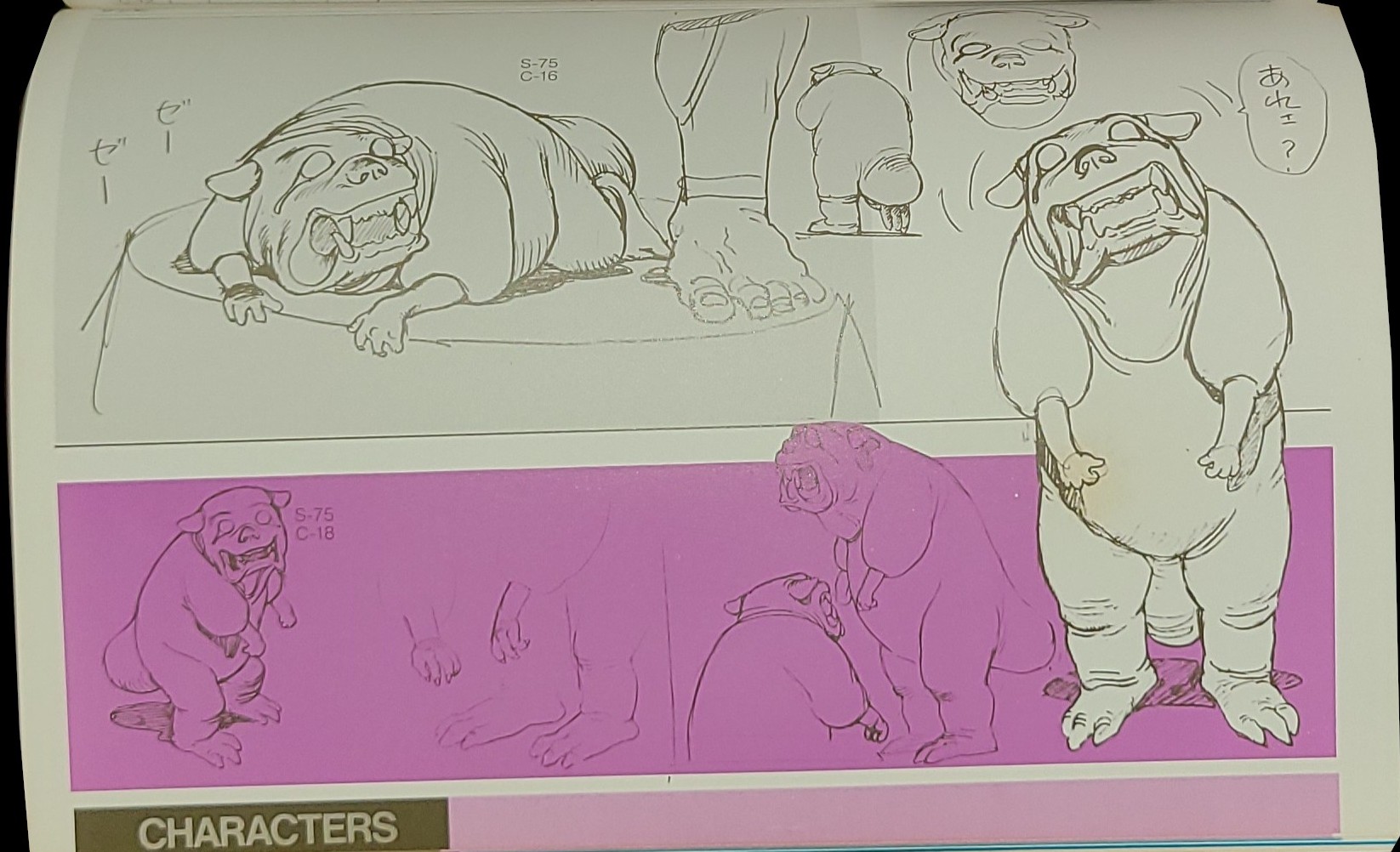
Source. Compare the game art with the sketch in the lower left. It’s close enough I suspect Takahashi had access and traced it to make the image.
The next scene moves the action to New York (without any prompting what’s going on, although to be fair it’s sudden in the movie too) where Luna wants to recruit the psychic warrior Sonny.
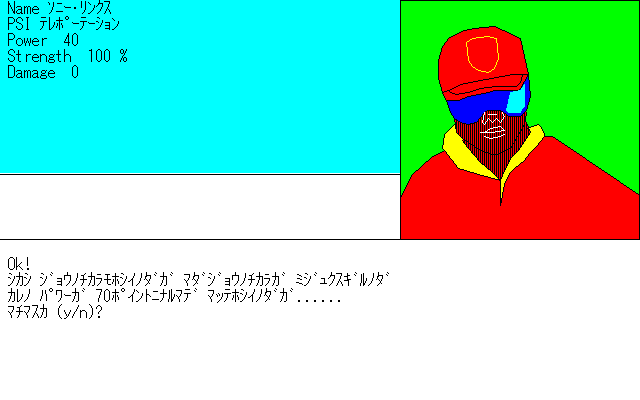
In the movie, Sonny gets captured by the “police” while running away on roller skates and phasing through walls before being put in a cage by one of the Genmas. The way the sequence works in the game is first:
a.) You get asked if you should bring Jo along, who is weak; you should decline
b.) You find Sonny trapped in a “cage” by Zamedi, and are told attacking would be a bad idea because the “power gap” is too large. You then get asked if you should attack (say no).
c.) Then you get asked if you (Luna and Vega) should attack together; again say no otherwise it’s game over.
d.) The game asks about “taking another look” at the enemy’s true form (say yes)
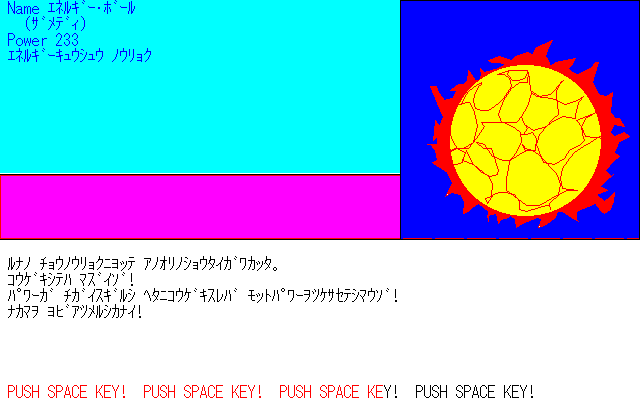
e.) The game mentions an eye and asks if you want to attack it; surely now we can do something? … no, you need to decline again
f.) The game concludes that you have to now summon your allies; pick Luna (who in the movie does a lot of networking with the psychics) and you’ll suddenly have more characters appear, including Jo who had been left behind before but somehow is stronger for going through this process
g.) You’ll then get a prompt for which character to pick now; pick Jo and have the game crash
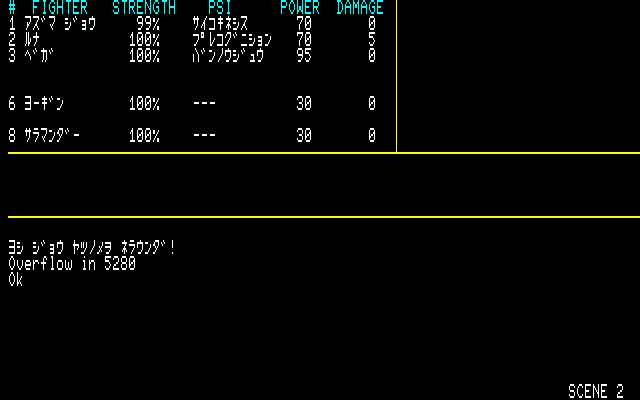
OK, that’s on PC-8001 only, and maybe just my emulator settings. But I had to modify the line in order to go farther, changing
5280 FORI=1TOJJ*1000:NEXT:JJ=3:RETURN
into
5280 FORI=1TO1000:NEXT:JJ=3:RETURN
and then typing RUN to restart.
(The loop seems to be just a “dramatic delay”; the JJ value must have been too large making it break with JJ times 1000.)
The PC-98 version reduces this part down a little — there isn’t quite the long interrogation where you need to refuse to attack even after looking at the eye. I suspect the PC-8001 was made first and some edits were put in after the graphics, but no changes were backported while doing so.
Going back to the action, Jo says he’s going to target the eye, but the game then asks what the power level of the enemy is (which is no longer on the screen, and was randomized; on that PC-98 screenshot it was 233). I was stuck for a while on the PC-8001 version before I realized you can’t type the number on the top-line number keys otherwise the game will end; you have to type the power level number on the numpad for it to be recognized. (Fortunately, the number pad issue doesn’t happen on PC-98.)
You then get power from other psychics and manage to win the battle…

Zamedi and Vega scene from the movie.
…and scene 3 begins. First you are interrogated about the power level of one of your characters from the previous scene (chosen at random) and if you get the number wrong, the game is over.
Then, Jo is overcome with rage about his sister being killed (not in the game, a scene you don’t see but you have to fill in from watching the movie, we were busy answering memory trivia instead). The PC-8001 version asks about resting and you’re supposed to say yes; the PC-98 version instead asks about if it is possible to fight alone (yes or no).

You’re supposed to say “no”.
Then you get sort of a character trivia quiz. Which of these characters are allies? Say “yes” to the allies and “no” to the enemies.
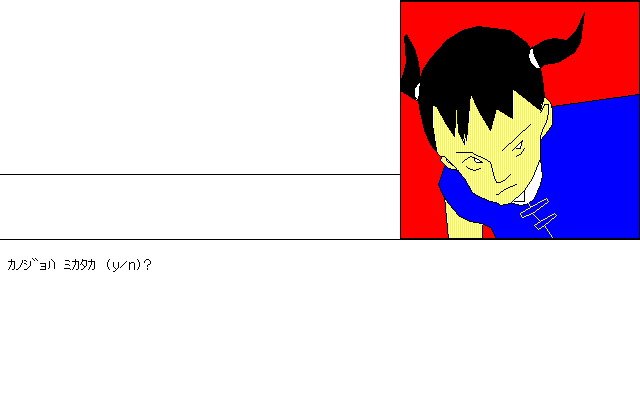
Tao, a literal child who is fighting with us.

This one’s Doctor Kafu, the bad guy.
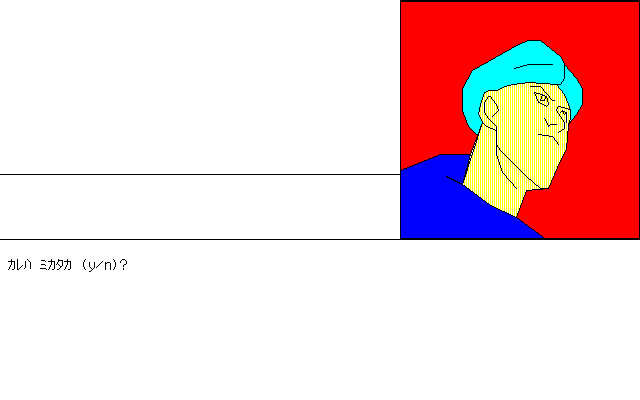
Asanshi, a stereotypical Middle Eastern character.
It’s sequenced slightly different in the PC-8001 version, where they come in a different order (the Doctor is at the end), and it’s more along the lines of them responding to Princess Luna’s psychic call; it makes slightly more narrative-ludic sense, not like this game is really trying for that much anyway.
Then you need to face off against the Doctor, with your three fighters in tow. You can’t choose Tao right away (game over, how dare you pick a child before the adults) so you can have Jo and Asanshi attack; they both get turned into stone, and the game then prompts if Tao should be attacking; you’re supposed to say “no” (logical, the other two just got vaporized).
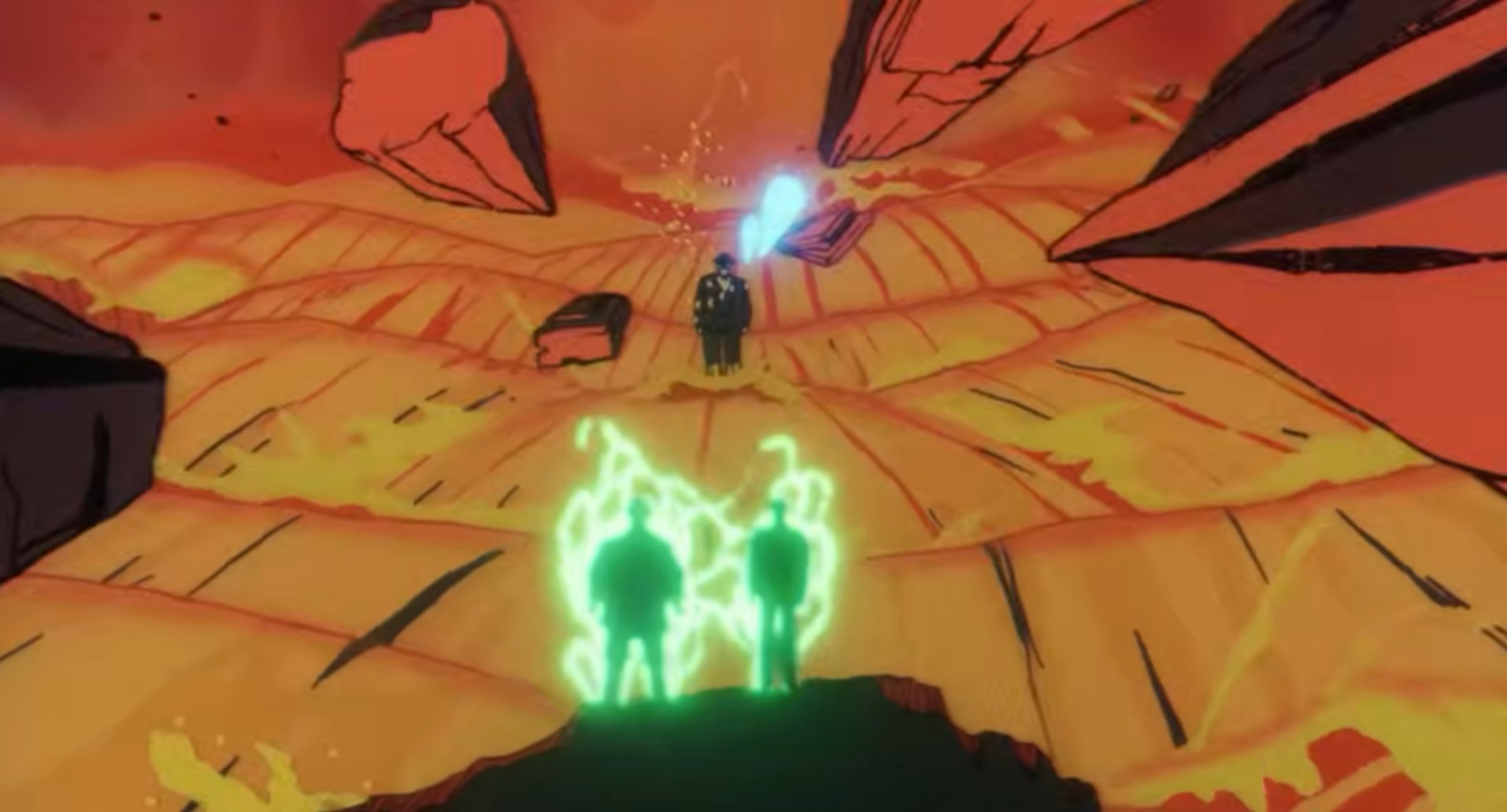
Face-off against the Doctor in the movie. Jo actually takes out the Doctor while he’s turned into stone.
Tao is able to summon help so everyone comes…

Before that last scene, you’re asked if you are having fun. If you say “no”, the game immediately ends.
…and you’re able to use the power of love to de-stone the two other fighters to get your full set of 8.

Notice the 5 damage on Jo. More on that in a moment.
You can then say you want to attack, but it turns out if you have any damage on any of the characters you will lose. You can accumulate damage from wrong choices, but you can also accumulate damage over time. In the PC-98 version I never was actually able to get away with Jo having a damage of 0, but since I was able to beat the PC-8001 version I was able to answer that, yes, it is love that saves the Earth, thus winning the game.
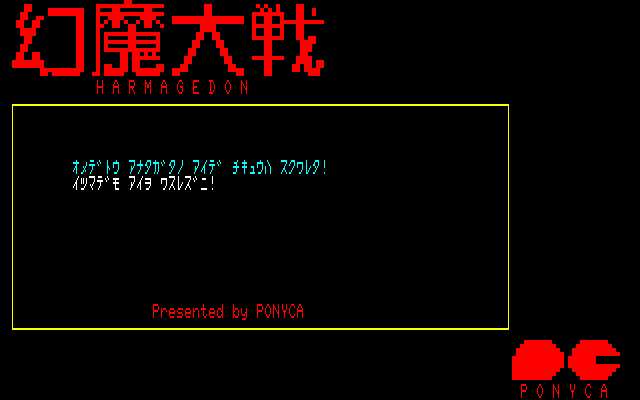
Congratulations! Thanks to your love, the Earth has been saved! Never forget your love!
I will let the reader decide what level of kusoge all that was. Kazuma Satou points out in the comments that “You can at least see the end of this one with a lot of patience.” The heroic author at the AVG walkthrough site seems to have treated it as a bizarre computer-artifact to be reckoned with rather than worrying overly much about it making narrative sense.
I am mainly interested in: how did it happen?
It’s certainly tempting to blame the producer Haruki Kadokawa, who was on a hyperkinetic mission to merge all forms of media, fueled by cocaine. (Not a joke, he did some time in jail for cocaine smuggling in the 90s.) Takahashi additionally confirms in his Technopolis interview that the proposal “didn’t originate from me”. He felt it was “rushed” and was simply trying to make the deadline of matching the release of the movie. Computer games were still so new that this sort of anomaly was still possible.
At least it sold well; he estimated to have passed 10 million yen in earnings for the year (~$900,000 in 2026 USD), including his other adaptation game based on the movie Antarctica.
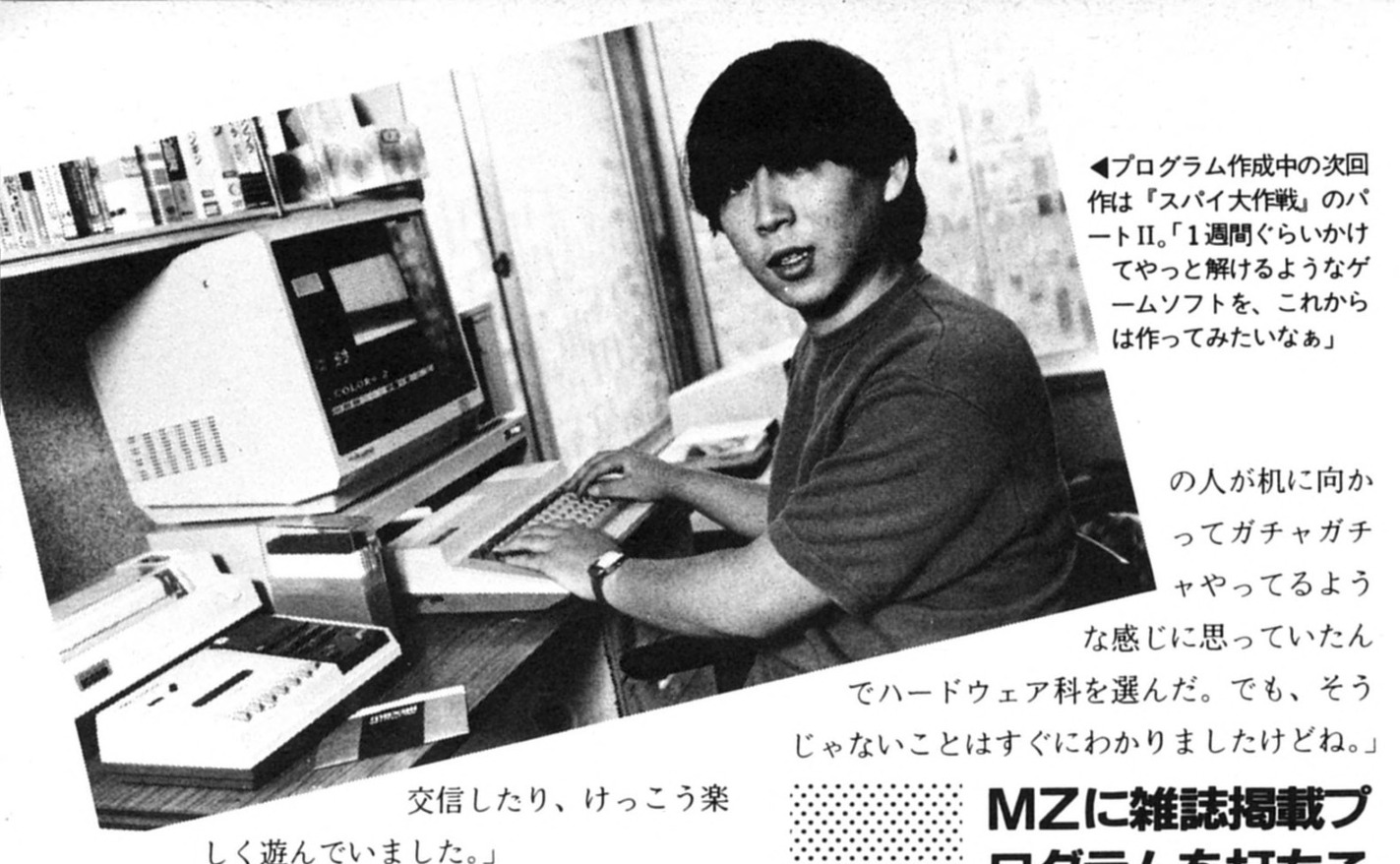
Clearly he had more passion for his own work; he talks in the interview about wanting to work on a sequel to Mission: Impossible (which never surfaced).


Max. Maximum kusoge.
I’m not sure how you’d even make a good game out of Genma Taisen, considering the source material is trash to begin with. The manga is appallingly racist even for 1960s Japan, and the only good thing about the movie is Keith Emerson’s soundtrack. If there’s any hope for the series it would be Kazumasa Hirai’s novels, which I have yet to read but from what l’ve skimmed seems at least more interesting than the manga.
Also, for what it’s worth, I got the strong sense that the proprietor of the AVG blog was being wholly ironic, not genuine, with his “praise”. The statements that seem like they might be positive are actually calling out the developer for poor game design. Remember that translating the words themselves doesn’t necessarily translate the *intent* behind those words.
Certainly possible (although having read enough of their other stuff, they’re really tolerant of some janky stuff, so I wasn’t sure). It certainly has been the case I’ve taken on an absolutely terrible game by almost all metrics but enjoyed myself anyway because I was dissecting it in a meta-sense (for the blog).
This kinda seems like those IP-cash in games that are Monopoly or Concentration with the characters’ names pasted on, except without the appealing gameplay of Concentration. Or Monopoly, even.
Taking all the cool scenes out of a movie to make a game out of them is normally a solid idea, but I guess that usually works best with action games and not adventure games. It seems this one hit a rather unfortunate series of usually bad signs, and rather than going all the way back around to good just hit the absolute rock bottom of quality. Hey, at least this one has a very convenient scapegoat!