I’ve finished the game; you should read my previous posts on the game before this one.
I apologize for the delay, but I had the perfect storm of life-interference, the game being finicky, and me being slow to translate. Also, just to announce straight from the top (before any serious spoilers on the rest of the game): if you want to play the game in English, Jim and Charlie Gerrie now have a translated version available.
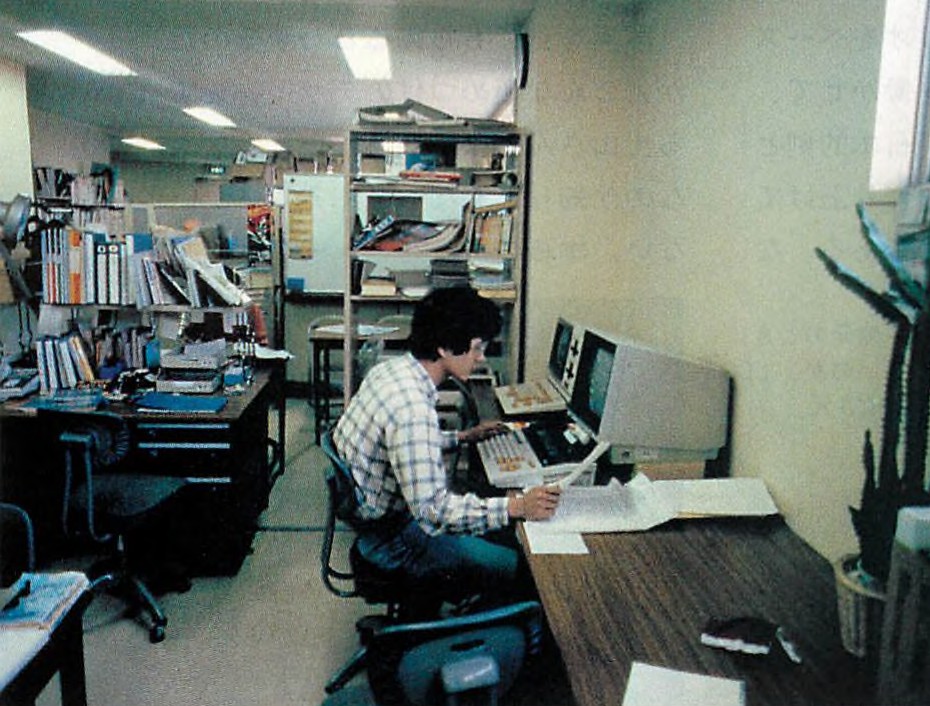
Inside Shinkigensha. LOGiN, August 1983. “For entertainment, people began making programs with humans in the lead role. This is how we see the emergence of the adventure game as a genre.”
Yasuhiro Kume is listed as the author, and he is also listed as the author on their next game (Takarajima, Treasure Island) which we will eventually get to, although the company profile linked above seems to indicate the second game was a more collaborative effort. Specifically, they tried to reproduce the “same kind of division of labor seen in film” with the original author working with a screenwriter, and a separate producer, director, and cinematographer. All this implies that while the “division of labor” wasn’t imposed yet, The Phantom Ship likely had some back and forth going on as it was made (unlike, say, Sword of Raschkil, which printed the source code as sent by a high school student directly as-is). I will discuss Yasuhiro Kume himself a little more for Treasure Island.
The article does not mention “Micro House” as a separate entity from Shinkigensha at all, which is part of the reason I’ve been suspecting they were always an “in house” spinoff, so to speak.
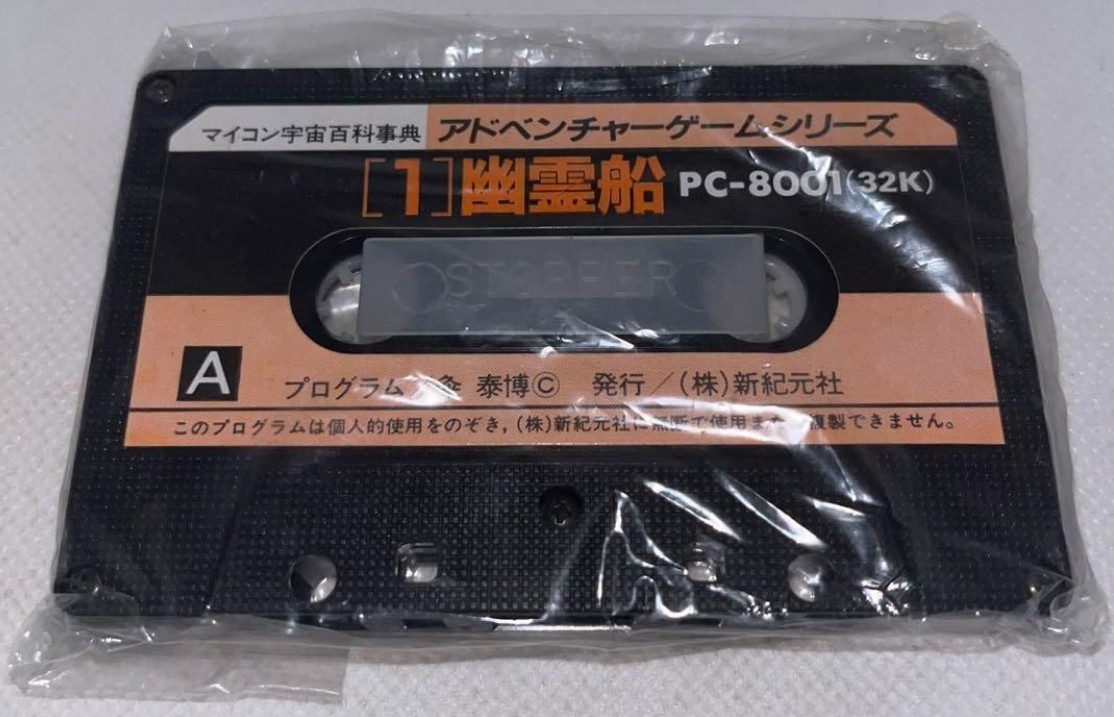
Via Mercari.
Back to the action–
As a reminder from last time, I had discovered that things don’t exist until you LOOK (miru) at a room. What I also didn’t understand is that this goes even further: if you need to interact with an item more deeply (handwavy exactly what that means, I never figured it out) you need to also look directly at the item first. For example, back at what I was calling the “cook’s room” there’s some storage, and it turns out there’s a barrel visible if you look. I marked it down and didn’t come back until later, at which point I was getting messages that made me think I shouldn’t bother to drill down further. Rather, you can look in the barrel and find some biscuits (not good to eat) and you can move it to find a key.
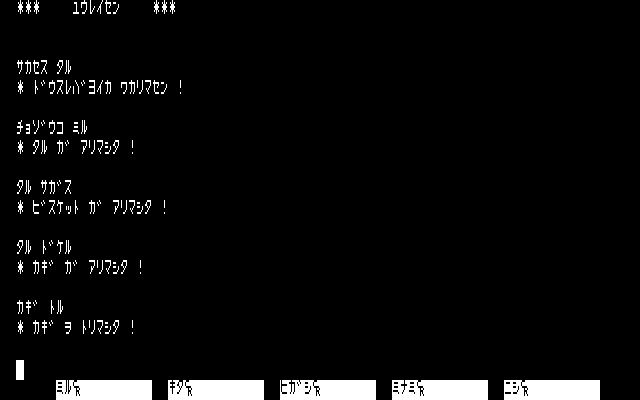
The first key! (カギ on the last lines, or kagi). And I took it to my locked doors and … couldn’t find anywhere it would open. Agh!
By now I had poked around the source code enough to know there were multiple keys. After some discussion in the comments I realized the same “look closely before you apply something” also applies to the skeleton. As a reminder, I had listened to the skulls in the basement to find I was supposed to say “amen” (アーメン); I tried it on all the skeletons I had available but had no reaction. The reason I didn’t was I was supposed to LOOK SKELETON first before doing the action. Once you do that, they are at “peace” and you can safely search (although sometimes you’ll still turn up nothing).
The only catch is that you need to be careful that you aren’t typing the wrong letter in the katakana font. (I admit this is more a “me” thing than a “you” thing.) “Nu” (ヌ) and “a” (ア) look different in a modern font but awfully similar on the PC-8001.

My old nemesis from The Palms returns. The command on the left failed, but the first character of “amen” is different.
From a skeleton at the “officer rooms” I was able to find yet another key, with which I was able to unlock the two officer rooms I hadn’t been to yet. One of the rooms yielded a hammer and broom and the other yielded yet another key, this time going to the captain’s room.
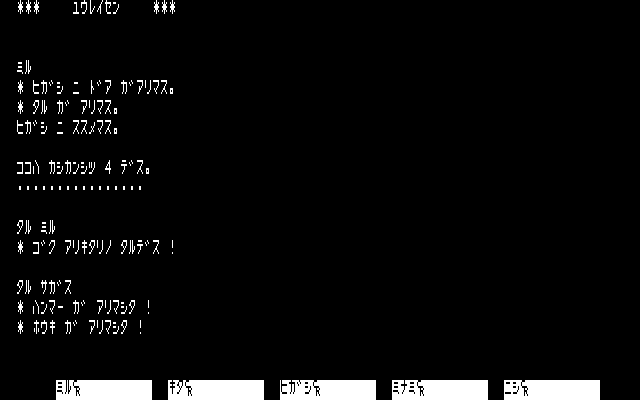
This broke things open; from here I started to find keys at a fairly random rate. Checking the captain’s room first…
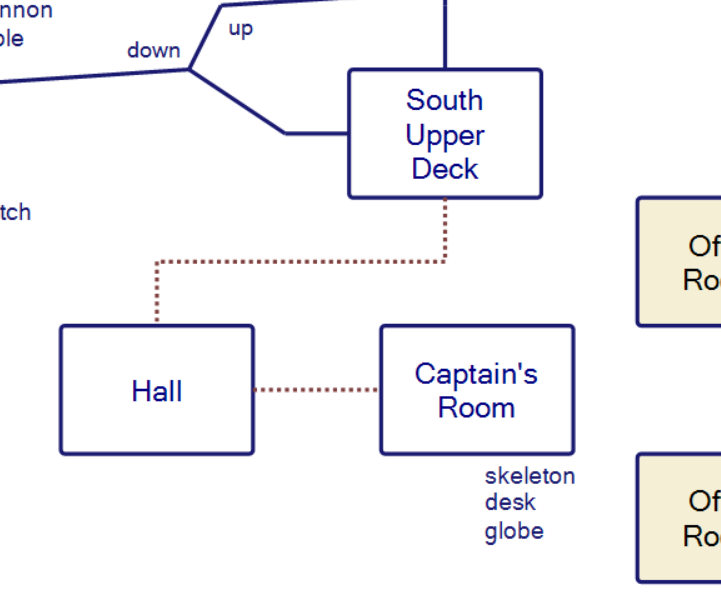
…I was able to find a safe at a desk (couldn’t open it yet) and get a key by spinning a globe. There’s also a paper that lets you know when you’re ready to leave you should use the boat in the middle of the ship. (It’s communicating in a meta way; it turns out you can leave almost immediately upon arriving, although I was missing a verb, also you’ll see later.)
After that, with the hammer I was now able to break the hatch and get down to the lower levels of the ship.
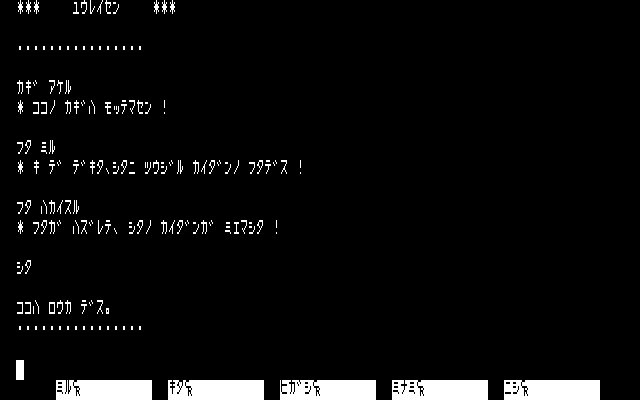
The lower part is in two layers. I started at the bottom, which turns out to have almost nothing, although it was long and tedious to realize this.
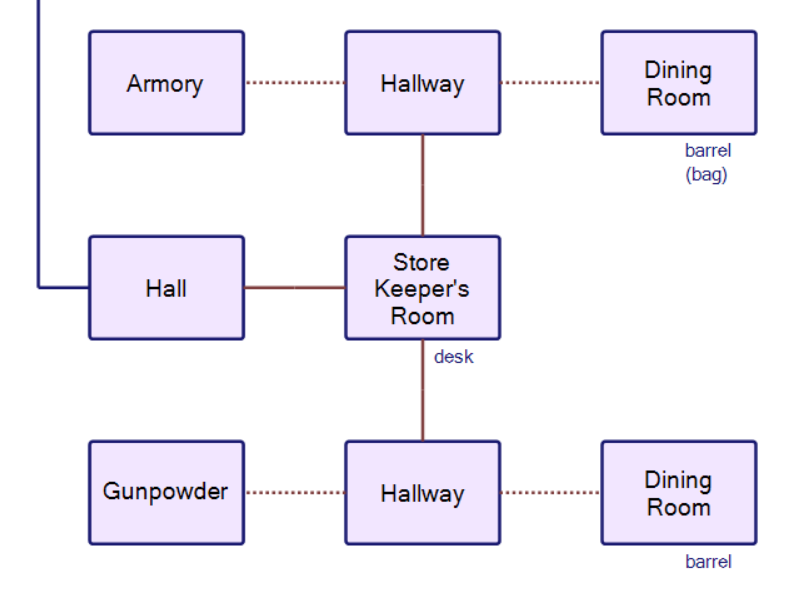
There’s a “sack” with some supplies you can grab at the dining room, but otherwise this area involved not only tediously checking each object with all my relevant verbs (look, search, move) but also tediously unlocking and opening doors as required. When there’s multiple locked doors, the process is…
>USE KEY
Which door do you want to unlock, west or east? EAST
OK, you’ve unlocked the eastern door.>OPEN DOOR
Which door do you want to open, west or east? EAST
OK, you’ve opened the eastern door.>USE KEY
Which door do you want to unlock, west or east? WEST
OK, you’ve unlocked the western door.>OPEN DOOR
Which door do you want to open, west or east? WEST
OK, you’ve opened the west door.
…which gets so enormously tiring. The process is generally longer than this, because usually I would need to try an exit first, get a “you bonked into a door” type message, try to open it, find it is locked, and only then go through the use key – open door process, all the while having to specify which direction I mean if there are multiple doors.
The other lower level is a little more interesting, but still had the same door tedium:
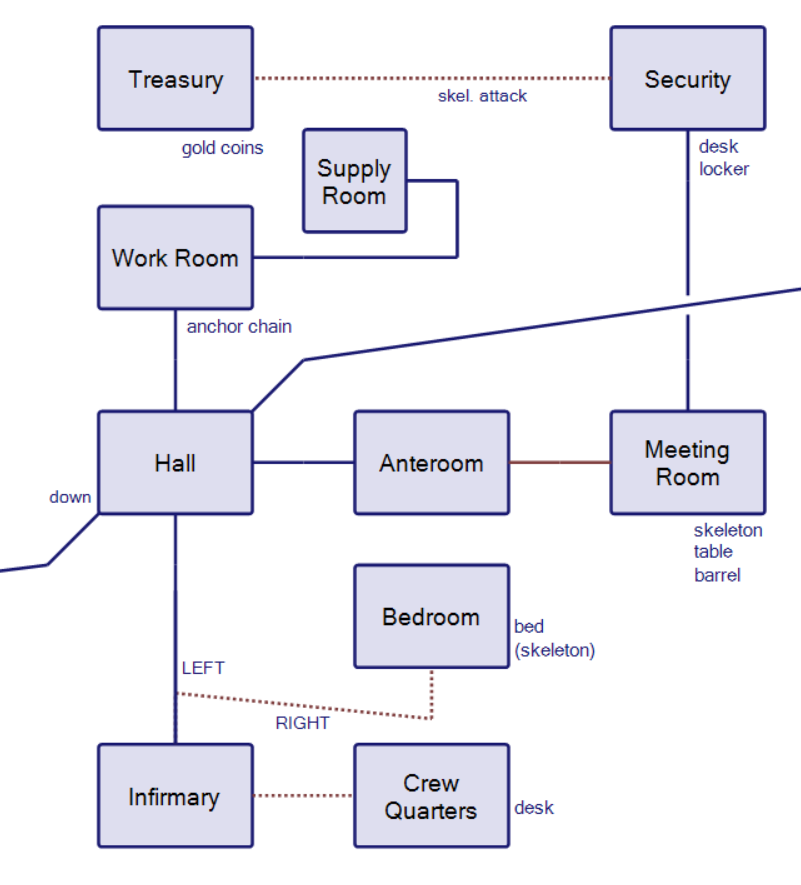
One branch has an infirmary with two locked doors, one to north-right and one to the east. (When you specify a door, you need to say north, then say right, you can’t just say right; you have to do this twice in a row, one to unlock the door and once to open it.) There’s a skeleton in a bed off the side which hides another key (don’t forget to “amen” first) and then that key leads to a “crew quarters” which hides yet another key leading to the commander’s cabin.
The commander’s cabin is on the same floor as the pile of skulls, and importantly as you’ll see in a moment, it has a cross, but also a bookcase which can be moved (I was clued on this ahead of time through my poking around the source code). Beneath the bookcase is a secret room with a diamond.
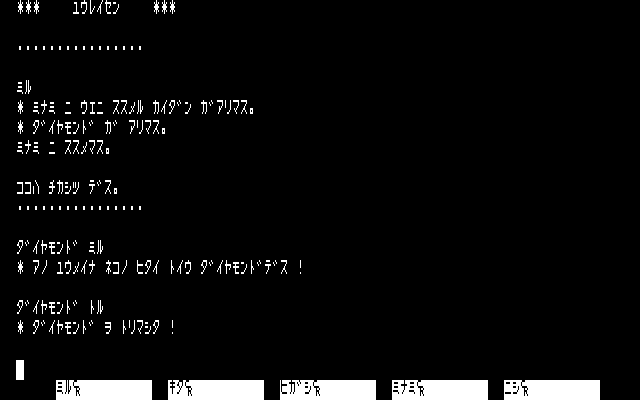
The cross is important because back at the same level as the infirmary there’s also a treasury (the key back in the captain’s room globe opens that). There’s a skeleton there that tries to kill you, and this is the only “active” menace in the game.
The spirit of the commander is protecting the treasure, and is now coming for your life…
I was stuck for a while here because not only did I not have the cross found yet (leading me to test a bunch of “amen” variants and methods of fighting like with the cannonball, no luck), but the exact parser command to type was elusive. You need to throw the cross.
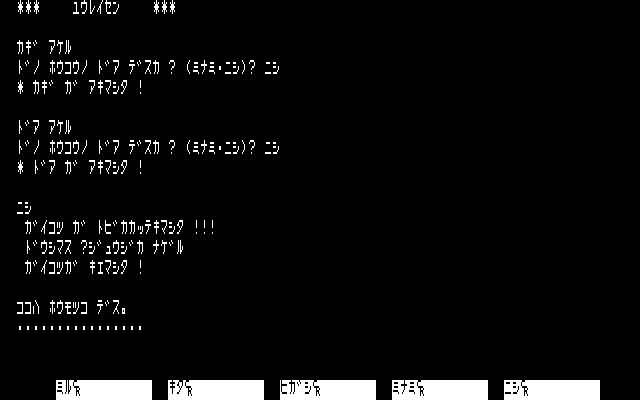
This leads to some gold which is apparently enough to buy 1000 for the NEC 9800 series of computers. (This reference incidentally puts a hard limit on development of October 1982, since that’s when the machine came out. It was originally business-oriented and expensive.
I still hadn’t opened the safe yet, and I admit I had to poke at the walkthrough to find: I needed to go back to the big trash pile (which was always resistant to my searches) and use the broom with a command that roughly translates as “clean up” (that is, without referring to the noun “broom”).
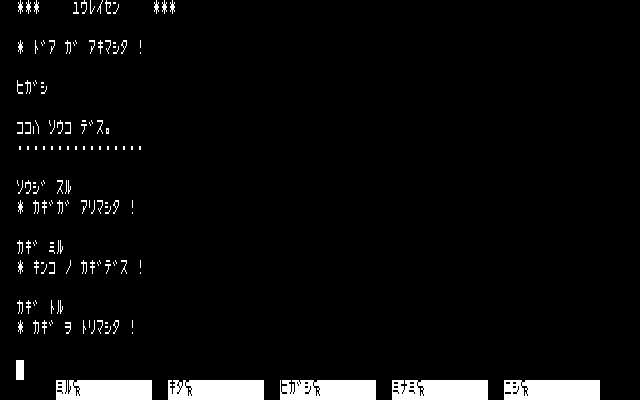
This reveals the safe key; the safe holds a pirate treasure map (and the next game might pick up where this one left off, but I haven’t checked it carefully yet). For now though we need to get off on the small ship, so we need to KICK it into the water. Sigh. It is common for both English and Japanese games to never make it easy to get a ship going, it seems.
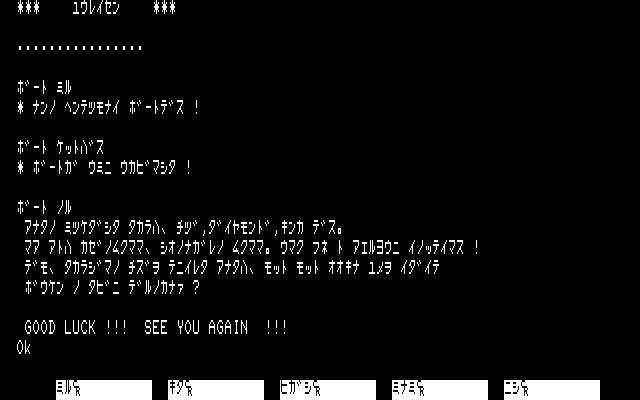
“The treasures you discovered are a map, diamond, and gold coins. From here on, you’re now dependent on the wind and tides. I hope you manage to find another ship! Now that you have the treasure map to the island, I wonder if you’ll dream even bigger and set out on a new adventure?”
Rob pointed out one particularly bizarre katakana spelling: チヅ for map instead of チズ. I don’t have the energy or expertise to fully tackle this, but チヅ is an older form of the spelling (see “chidu” and “chizu” mentioned on this list of Classical Japanese word differences); it could also be an academic clinging to an old etymology. Shinkigensha had only just transitioned from their more academic publishing so the word might be a vestige of that. “Pick up” incidentally can be given by the player as “hirou” or “hirau”, the latter being non-standard but part of the Kansai dialect.
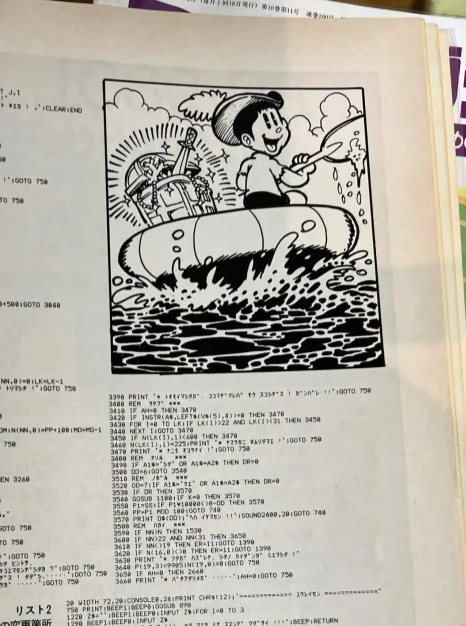
From PC Magazine June 1983, and thanks again to Joseph and the Game Preservation Society.
Conceptually, I found it interesting to have the game’s emphasis be on atmosphere and have the puzzles all essentially be optional. In practice, the endless barrels and tables and so forth that needed to be examined blurred together, and while keys were technically marked with where they went, there wasn’t a way to tell in most cases until after unlocking the doors in question! (That is, if you know a key goes to the captain’s quarters, but not which door that is, that’s not helpful information.) Still, this was fairly deep for a type-in, and of course the author was working essentially without precedent; there were no other text-only games written in Japanese to refer to.
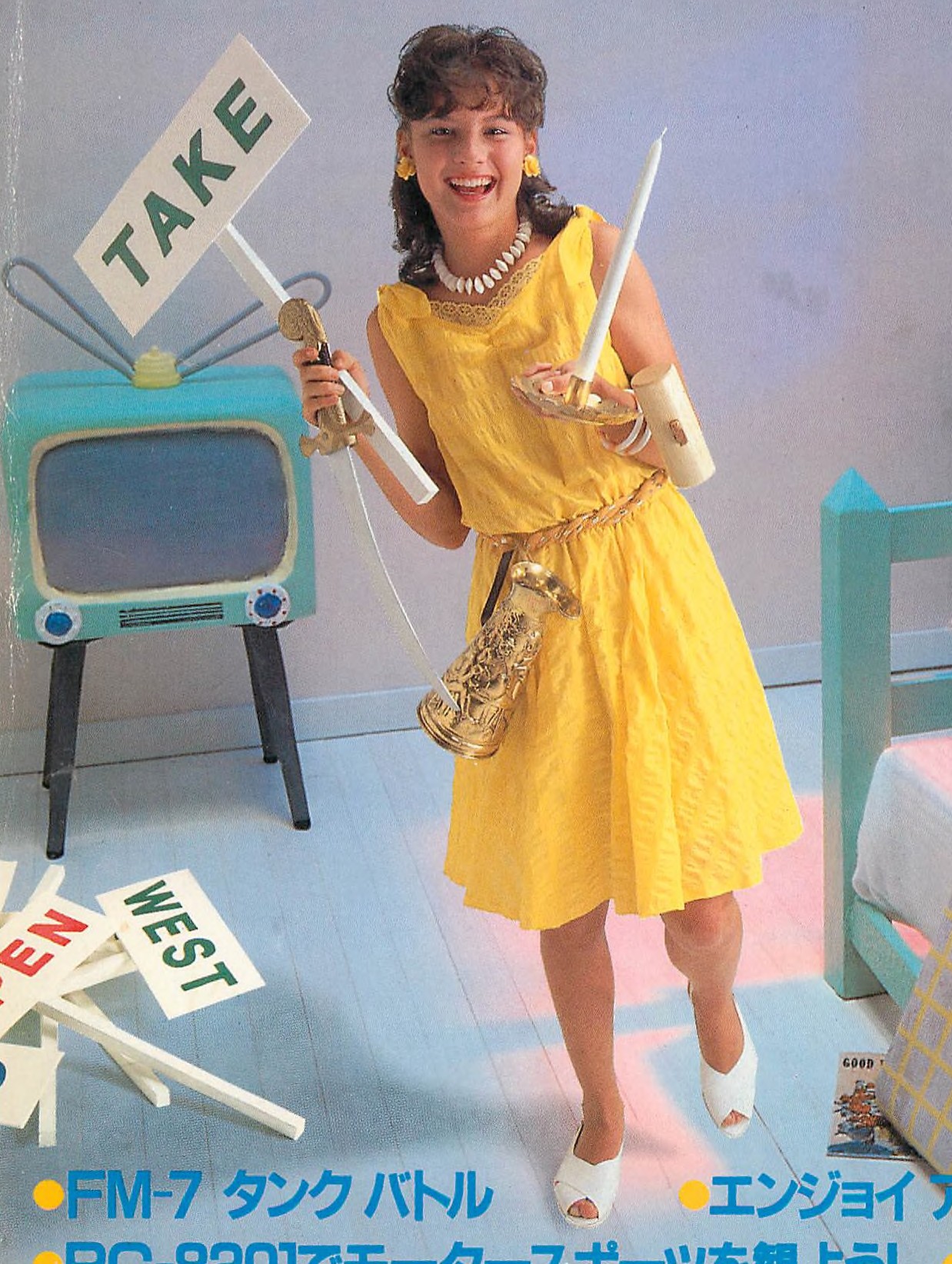
From the front page of LOGiN August 1983, showing an adventurer mid-game.
Coming up: Ireland.


‘The only catch is that you need to be careful that you aren’t typing the wrong letter in the katakana font. (I admit this is more a “me” thing than a “you” thing.) “Nu” (ヌ) and “a” (ア) look different in a modern font but awfully similar on the PC-8001.’
Pretty sure this is just an “Americans trying to decipher old Japanese fonts” issue. It’s not going to get any easier until the Windows days, I’ve afraid, but you should be able to get used to simple ones like these compared to a PC-98 game using some kanji which does not work very well in the given space.
indeed, more of a “me” thing as I said
although to be fair, _someone_ was shelling out ¥35,000 for the special PC-88 kanji chip from Prosumer (that was sold with The Odyssey, one of the games we’ve had to skip)
I agree that the kanji basically looked like crap when first implemented in the 8 and 16 bit eras, and weren’t a huge improvement in readability over the eye destroying katakana-only stuff of the early days. I always felt that the most pleasant compromise was the hiragana/katakana mix that became standard on the Famicom, Mark III and MSX in the second half of the ’80s. The rush to jam as much kanji in as possible during the SFC/PC-98 era was more annoying than anything else, IMO.
I think your speculation on the weird “chizu” usage is likely correct, btw. Regarding the kansai-ben verb, that reminds me of one of those things which made me feel I had finally “made it” in understanding “real” Japanese back in the day, after being able to successfully play through stuff like “Pro Yakyuu? Satsujin Jiken!”, “Jarinko Chie”, etc. on my Twin Famicom and not have any trouble understanding the dialect, slang, or jokes and cultural references. That was mostly thanks to intense study of a wonderful book on the subject, which I unfortunately can’t remember the name of now…
Thanks to the Gerries for the English version of this!
Thanks Jason for the complete walkthrough and all the detailed translation and archival work. And thanks gschmidl for the source code!
Jason, you noted that the keys telling you “what they were for” (if you LOOK at them) was of limited use, but I found that “LOOK DOOR” in most places provides a description of “a Sign” telling what the room is.
There are also some “tools” if you LOOK at (or is it SEARCH?) the BROOM after you discover it. But I think it is just a red herring probably meant to lure you into exploring the workshop on the lowest levels…
I found the key under the dust pile didn’t have a description. In the DATA statements I got, it was just an empty ,, item, with no text in it. So I just made it print a ? when you LOOK at it. Maybe a Katakana didn’t decode right?
Totally agree with the tedium of the LOOK/SEARCH/MOVE and UNLOCK DOOR/DIRECTION/OPEN DOOR/DIRECTION typing. I’m thinking maybe I should tweak my English version to streamline a little to perhaps encourage modern players to explore the game. At the very least, I think I should just have it trigger an automatic “LOOK” when you enter a room. But then again, there is an efficiency when you’re just moving through spaces…
Jim
Key under the pile is described as a safe key with LOOK.
Thanks Jason. I’ve added that fix to my English version. And I have changed the verb “SCAN”, which was meant as synonym of LOOK to just L so there is at least a shorthand for that often used command. I’ve noticed that in the final showdown with the captain if you select LEFT or FLEE LEFT that the game will prompt for a direction and then you can type EAST and escape. It’s a weird direction as the normal exit given how you come in would be EAST. But if your just type that or any other direction besides LEFT the Captain just gets you. But maybe it’s meant to be quirky like that.