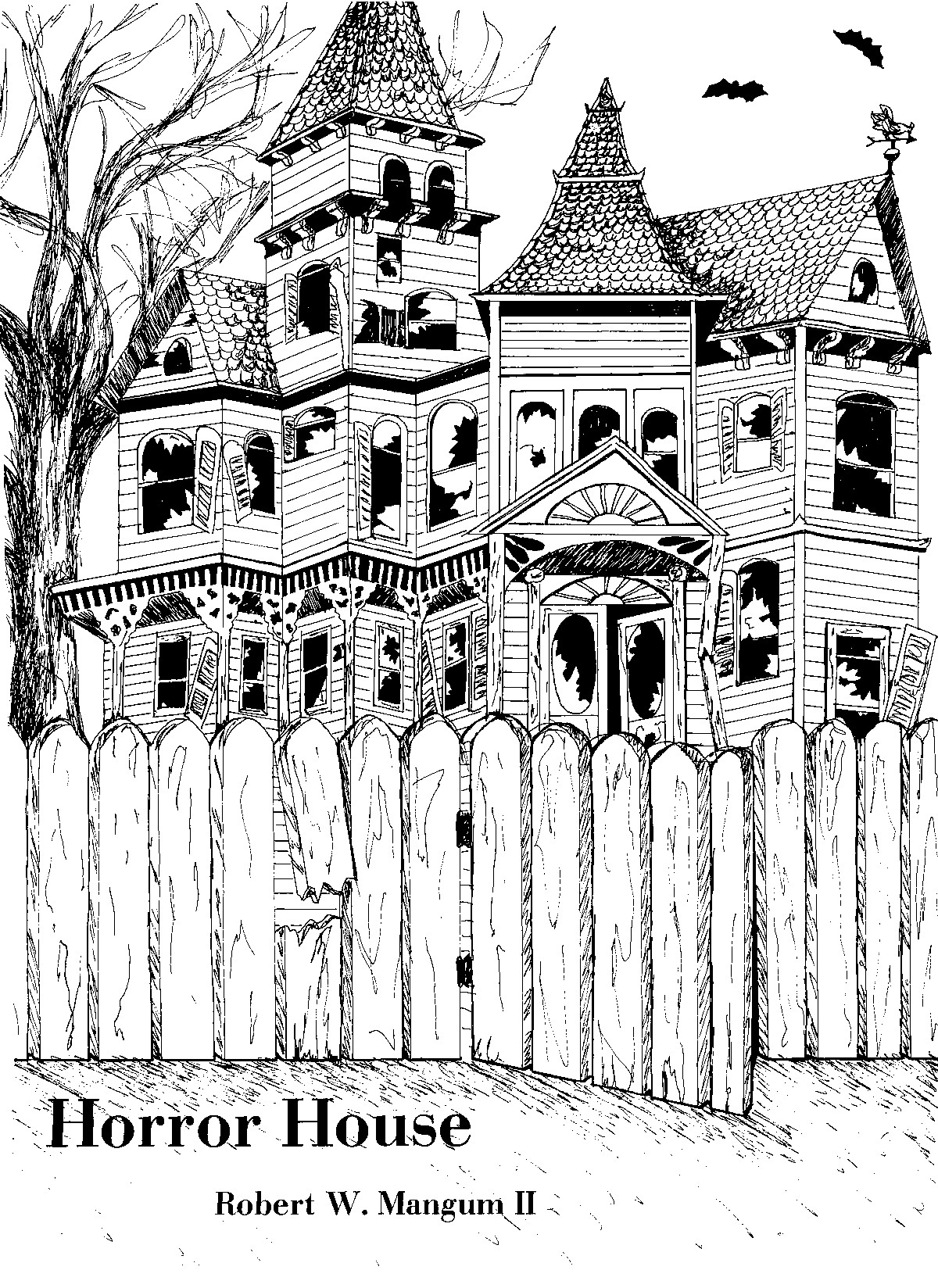
So far, out of the Falsoft contest adventures, I’ve played Polynesian Adventure, Search for the Ruby Chalice, and Escape from Sparta. I pointed out last time that these tend to be the only games published by the particular authors, although in the case of today’s author (Robert Mangum II) this isn’t true. He published two games, one that won in the first Falsoft contest and one that won in the second.
Robert Mangum, a 15-year-old sophomore at Astronaut High School in Titusville, Fla., purchased his TRS-80 Color Computer when he was an eighth grader. His hobbies include reading, playing the stock market, and writing Color Computer games. He aspires to pursue the latter hobby as a career.
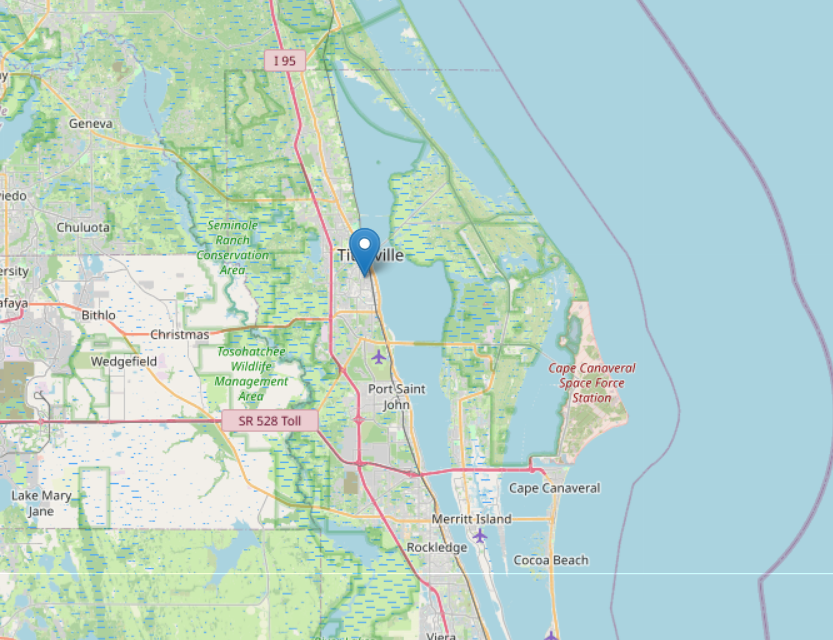
As the “Astronaut” in the school name implies, Titusville is east of Orlando, close to Cape Canaveral and one of the US’s space launch sites.
I’m unclear if the introductions to the various games given in the book are written by the author(s) themselves or by the magazine editors, although I suspect the latter for reasons I’ll get into. Horror House’s book-intro has a very Encyclopedia Brown feel to the writing, and even though the lore doesn’t affect the game at all I felt like reading this one out loud. No overdramatic Dungeon Master this time, I went with something a little more like Goosebumps.
In summary, in order to get into a local club, we have to prove we aren’t a “chicken” by going into the local Horror House and defeating the various “ghouls and goblins”. (!!) Not even pretending there aren’t any and you’ll be safe, nope, you actually gotta commit homicide, kid. Hope being popular is worth it!
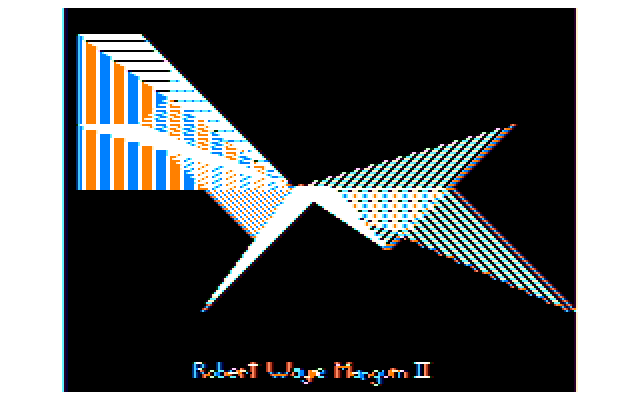
The game starts with an animated visual effect where the initials of the author draw themselves into the distance, then disappear.
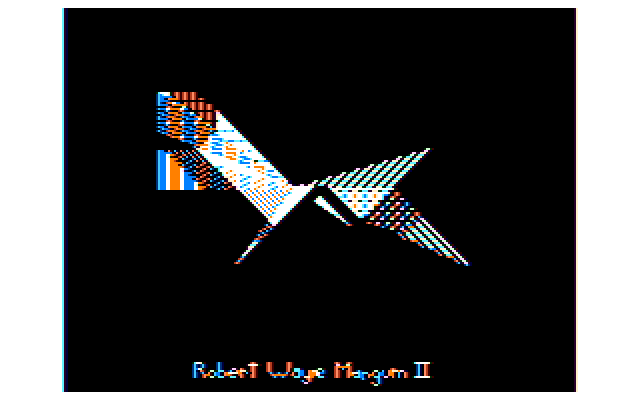
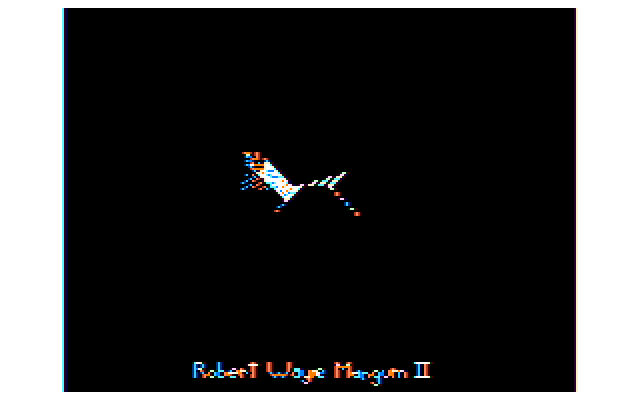
I love it when cinematic ambition gets applied to the start of a regular type-in text game.
This is a game fairly similar to the last one we played (Escape from Sparta) in which there’s an overall “health” stat; Sparta called it Energy, but this game just calls it Health Points, similar to but not exactly like Dungeons & Dragons (which used “hit points”).
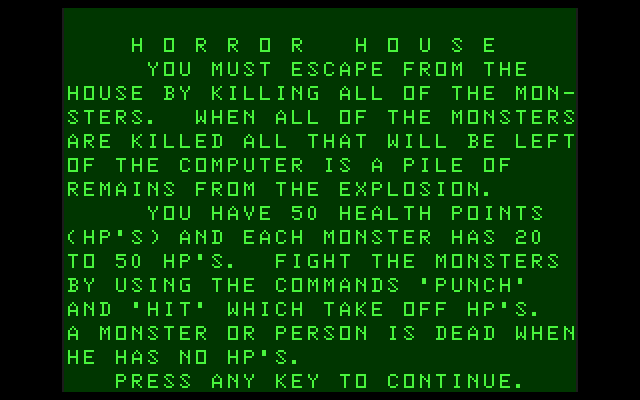
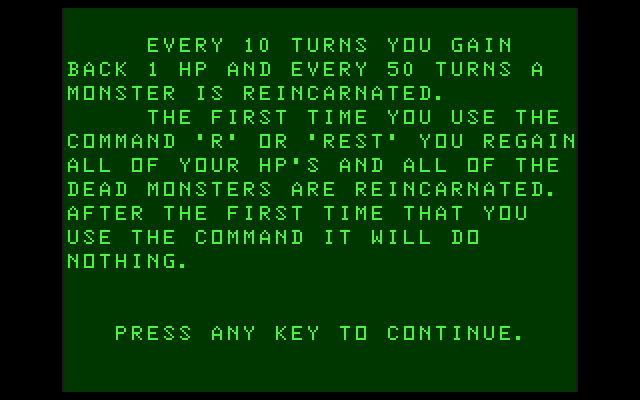
The game is up-front this is going to be combat focused, but with rules that are somewhat unusual for an adventure game: you regenerate health, and the monsters reincarnate. Specifically, you get 1 HP back every 10 turns, and one monster reincarnates every 50 turns. (If you see a loophole in this already, I’ll get back to you later.) You can “REST” only once but it will cause a total reset of your HP, at the cost of resurrecting all dead enemies.
The game also gives the complete (restricted) verb list.
MOVE, PULL, OR PUSH
PUT, LEAVE, OR DROP
PUNCH / HIT
N, S, E, OR W
INVENTORY
INSERT
LOOK
REST
GET OR TAKE
The game announces AS YOU ENTER THE HOUSE THE DOOR LOCKS but gives no room description. There essentially isn’t one. After LOOK:
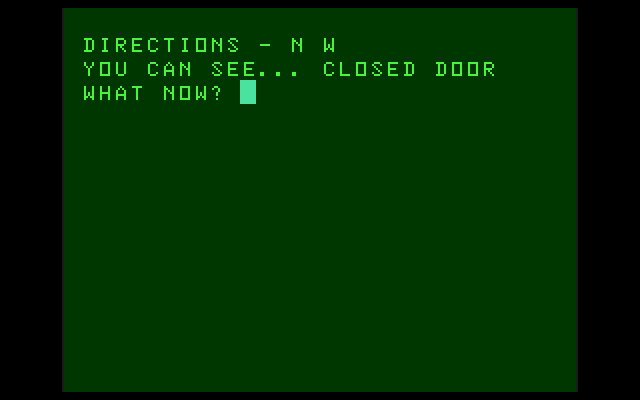
You are informed of any objects or enemies in a particular room, and if the room doesn’t have any, it just is described as having NOTHING.
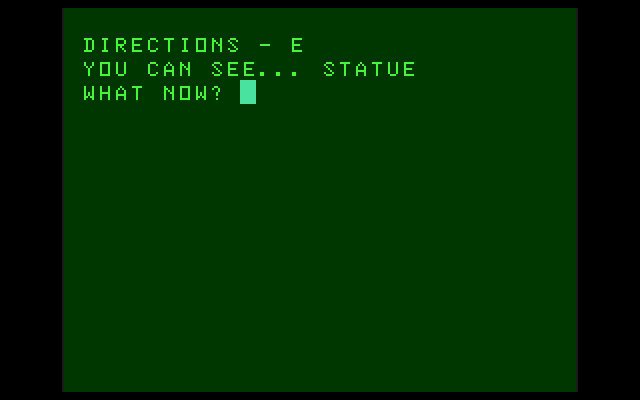
You can MOVE STATUE which reveals a blue coin, but it also turns the statue into a living statue (one of the enemies).
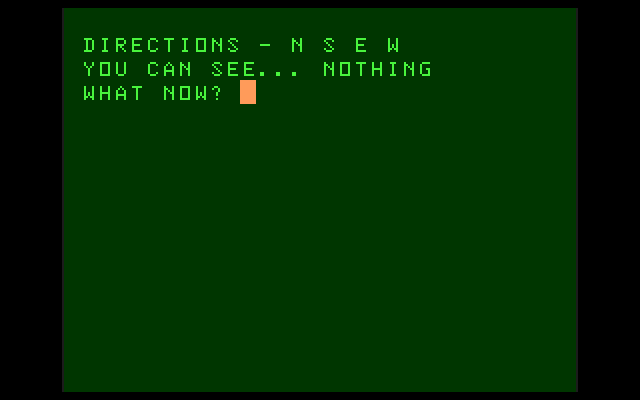
A more typical room, just north of the start.
I started with a traditional adventure map but quickly realized I would be better off breaking out Dungeon Scrawl and doing a Wizardry-style map instead.
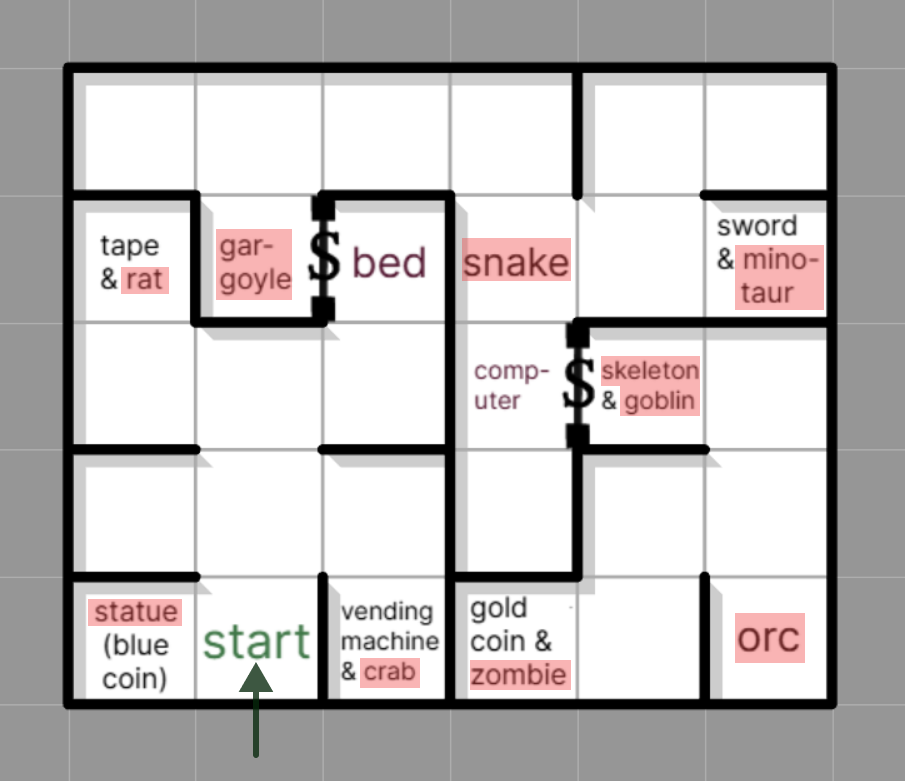
The enemies (where PUNCH and HIT must be applied) move around so I don’t know on a particular game if they’ll always be where I placed them, but at the very least this is a deterministic setup; there is no random rearrangement at turn one. My first battle was a giant crab at a vending machine where I punched it in the face (?).
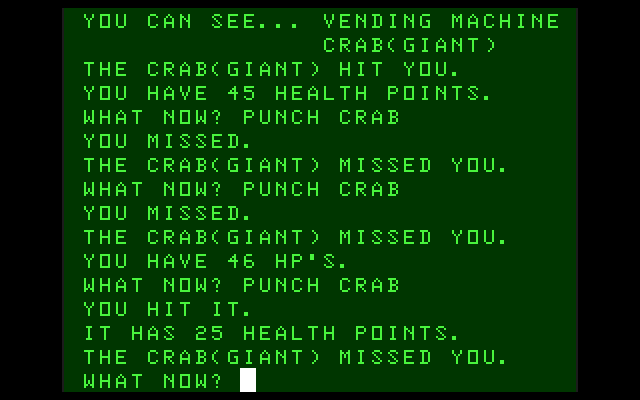
No real time element here: just slowly exchanging blows while health points go down on both sides. Not all enemies have the same starting health (there’s a rat early that starts lower, for instance).
You are allowed to run away; enemies may chase you, and you can easily find a situation with multiple creatures clustering in the same room.
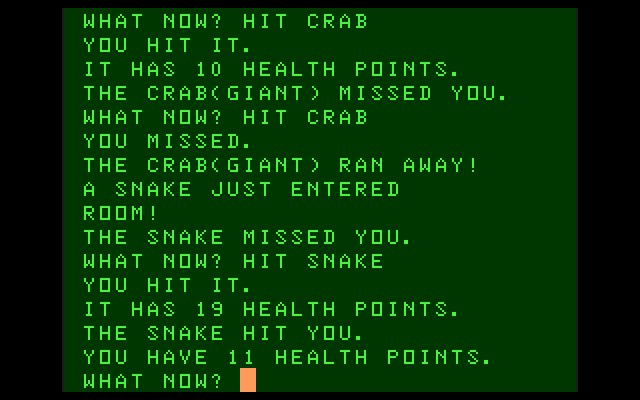
In the crab and snake vs. protagonist battle above, this is actually crab version 2, after resurrecting. Remember that enemies resurrect after 50 turns. Given that a fight can take up to ten, and walking from one side of the map to the other can take as much as fifteen (assuming you know where you’re going to hunt down an enemy) trying to get all the enemies to stay dead at the same time is a bit of a dilemma.
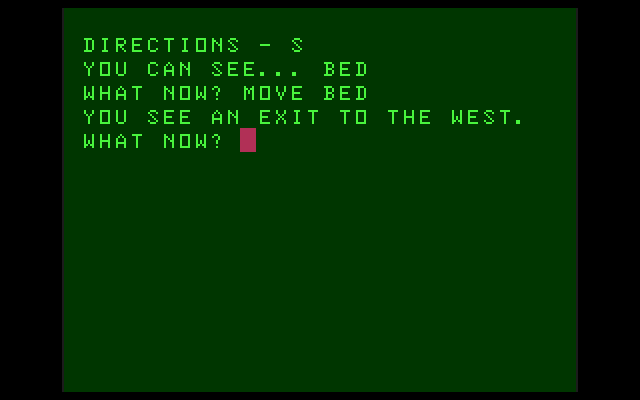
There are two puzzles (besides the blue coin); one is a bed that simply be moved to reveal an exit.
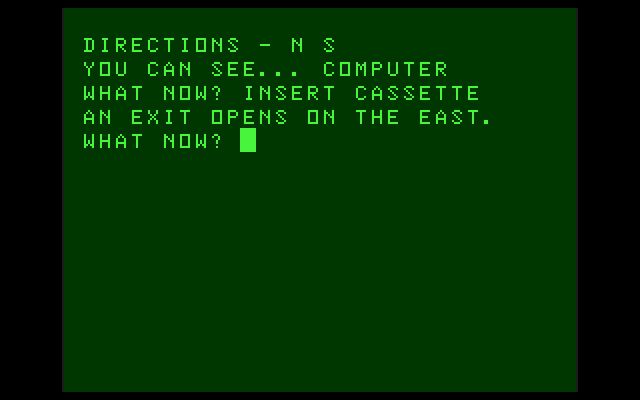
The other is a computer (“IT IS A 64K COLOR COMPUTER”); there’s a tape cassette elsewhere (guarded at least at the start by a rat) and INSERT TAPE will open a second secret door.
A sword is out in the open (past the first secret door) and it does seem to help a little so I found the best strategy was to make a beeline there first. (PUNCH explicitly is “attack with no weapon” while HIT explicitly means “attack with the sword”, and you can’t hit things without the sword. This gets at the “game-meaning of verbs doesn’t match dictionary-meaning” problem I had with The Phantom Ship.)
I tried just naively hitting everything but the tendency of monsters to cluster meant I was succumbing to too much damage, and REST seemed to reset everything so that didn’t help, until I realized the loophole I alluded to earlier: while you can personally restore health, and enemies can resurrect, the enemies cannot restore health.
This means the best strategy is to hit each enemy down to low health, but not kill them. It’s a little like catching Pokemon.
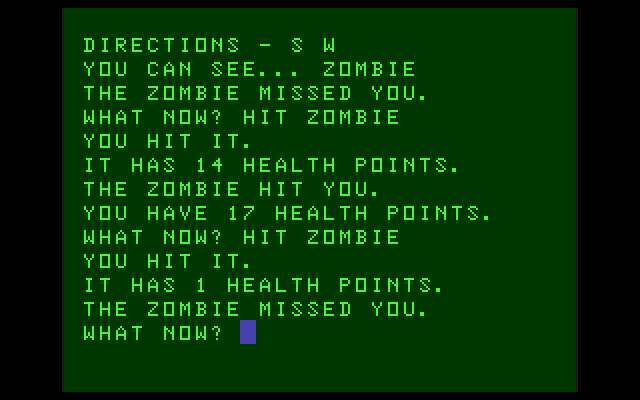
Once I had enough enemies whittled down to single digits, I picked a starting place just outside an enemy (the MINOTAUR which I knew I had at 1), did REST, and started a slaying spree. The goal is to kill faster than they resurrect, and my strategy worked such that I only had to deal with one resurrection, the minotaur I started with.
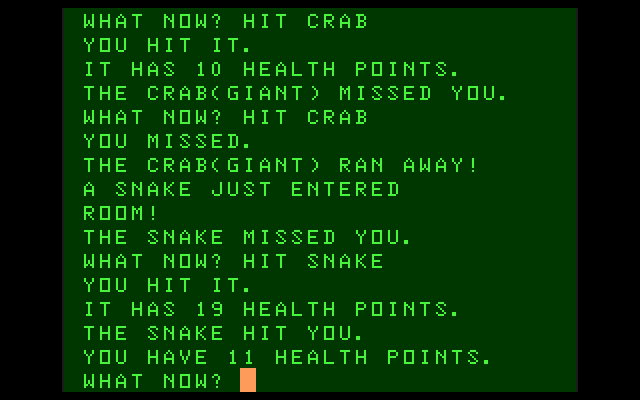
Enemies can run away as well. The movement of enemies keeps the combat from being ultra-dull like adventure-game-combat often is, but just regular dull. You need more options (like Eamon) for it to feel like more than just a sequence of dice rolls.
Once you’ve killed all the monsters, if you go back to the computer you’ll find it has fallen into a pile of rubble. LOOK PILE reveals a red coin; you can combine that with the blue coin from under the statue and a gold coin just lying out in the open and take them back to the vending machine.
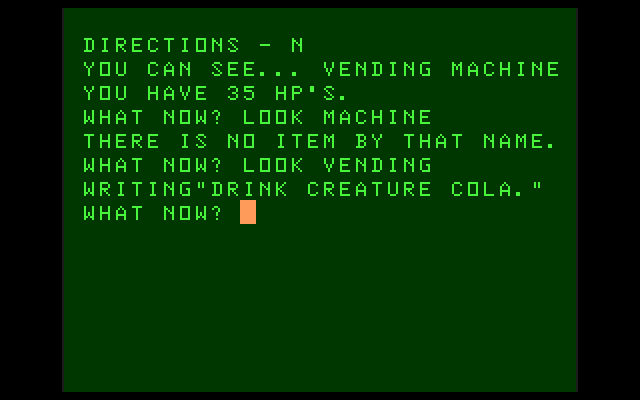
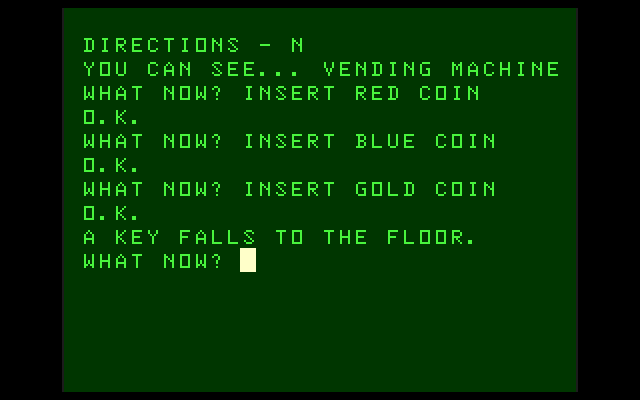
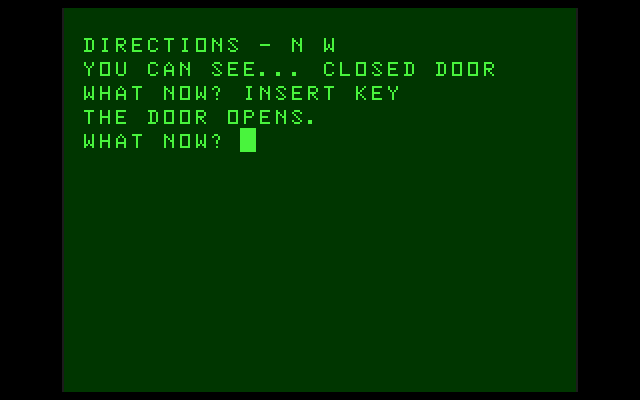
The key then can be inserted at the door at the start, letting you escape.
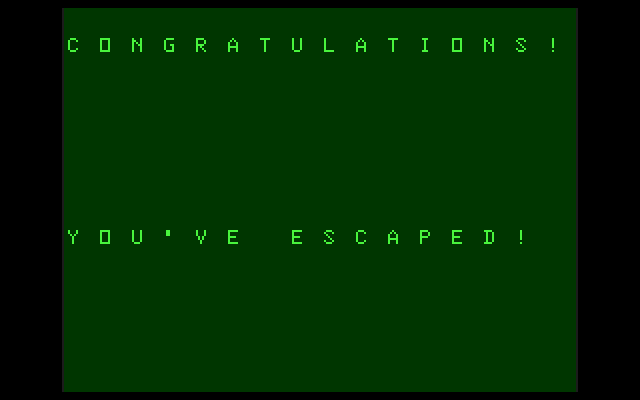
I should highlight that the opening text from the book (which I recorded) had falsehoods. Not only are there no ghouls (and just one goblin), but the text claims the house will explode when the computer does. I was genuinely worried by that last part but there’s no timer: the computer simply falls apart, and you are in complete safety once all the monsters are dead. Also notice that the screenshot-intro said nothing about us doing a dare and wanting to join a club. I think the opening was so abrupt that the book editors (Lawrence Falk, James Reed, Susan Remini) decided they needed to add some context; not only did the context not make sense, but it was actively deceptive and changed my behavior at the end of the game (until I realized no explosion was forthcoming).
I haven’t found any letters complaining about embellishment, so the authors must have just let it go.
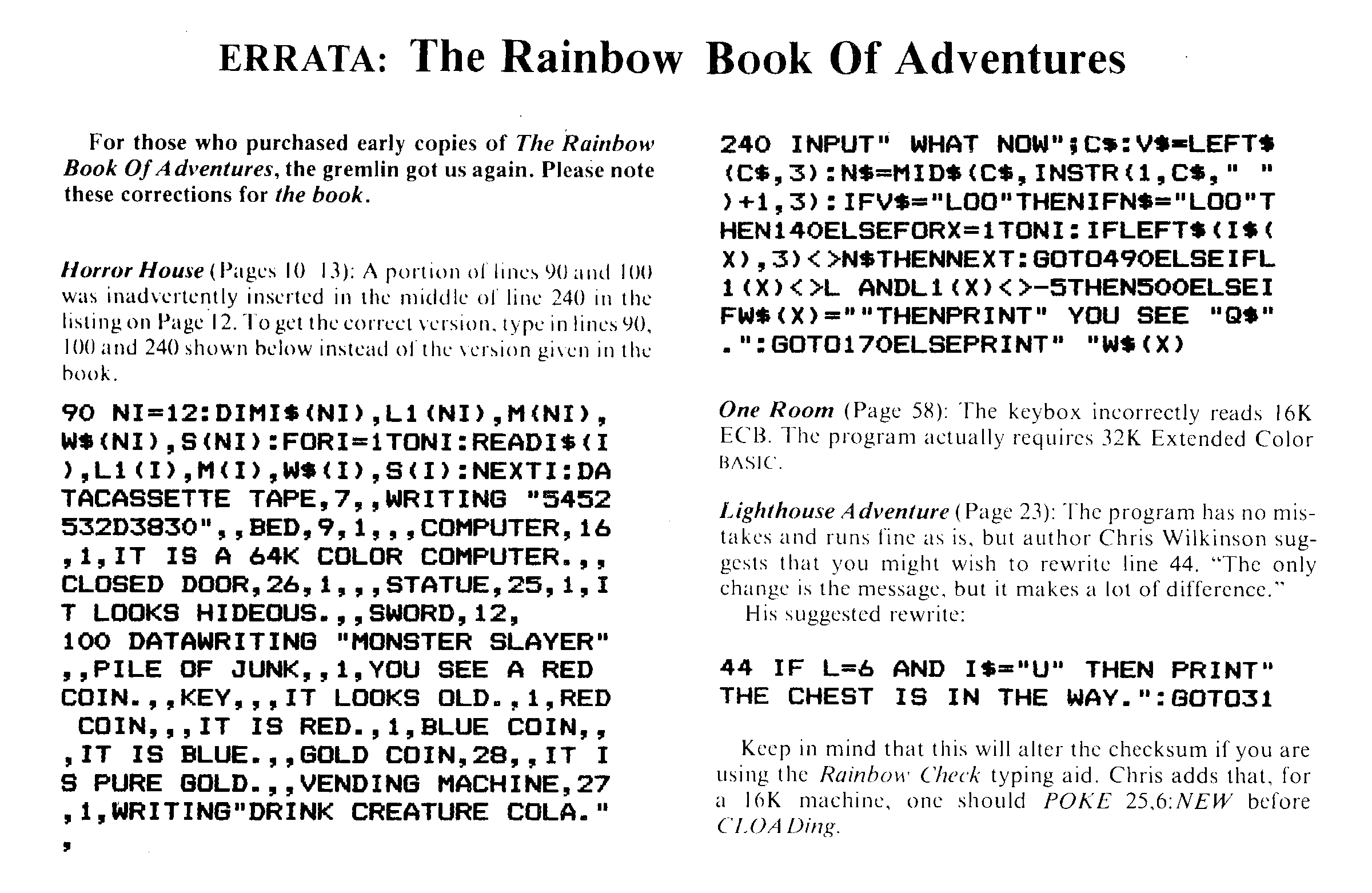
Before signing out, I should add that JIMMY ADVENTURE 5 strikes again: the was a misprint in the original book that made the source code for this game entirely broken.
Coming up: I’m finishing something else (it’s related to the blog, but not another game) so the next post will be delayed by about a week.


The first of these 3 links works, but the second and third links are broken.
thanks!
uh is this a souls like? rest and the enemies come back? ha
Of course not, that’s absurd. Dark Souls is a Houselike.
“[15 year old Robert Magnum’s] hobbies include reading, playing the stock market, and writing Color Computer games. He aspires to pursue the latter hobby as a career.”
I hope he’s branched out from writing TRS-80 Color Computer games since then! There’s not much of a market for new CoCo software nowadays. ;-)