The Adventure Game (1980-1986) was a British gameshow where contestants were tasked with escaping from the planet Arg. It’s essentially an early lo-fi version of The Crystal Maze, and if that doesn’t ring bells, just think of it as a series of escape rooms.
It wasn’t filmed “live”; the article linked above discusses 3 hours being filmed for each (half-hour) episode. Being made for children, it was intended as educational, and so a lot of time gets spent setting up real physics and math problems. The lead, Patrick Dowling, previously worked on The Great Egg Race, a competition with a series of engineering tasks, named after a vehicle powered by a rubber band that transports an egg.
The various mechanisms (at least in the 1980 season which I was sampling) get explained before the players go through them, and there’s a lot of emphasis on players talking through their thought process.
A scene from the first episode, explaining a puzzle involving clown doors.
The guests tended to be two “show business personalities” and one “guest” (that is, someone not used to TV) and the showrunners would sometimes customize puzzles based on the guest’s personal knowledge to make them more comfortable.
One of the common elements through episodes is a colored floor of shapes called Drogna that the players need to logically step through. It was later turned into a game for the BBC Micro.
Contestants from the first episode solving the Drogna puzzle.
They sometimes played an adventure game on a computer as part of the obstacles. Season 1 used a HP 9845 workstation while later seasons used a BBC Micro.
The above is from Season 1 Episode 3, with Maggie Philbin, Moira Stuart, and James Burke (of Connections fame). Yes, that’s an automap in 1980, meaning the innovation can be found by either making a game for children or making something that will make sense over television.
THERE ARE THREE EXITS E,S AND W AGAIN
THERE’S AN UGLY GREAT TROLL DEMANDING FOOD – HE WON’T LET YOU PASS
FISH
HE’S GETTING VERY, VERY ANGRY.
SPRAY
HE’S GETTING VERY, VERY ANGRY.
CUCUMBER
HE SAID ‘CUCUMBER? YUK!’ AND THREW IT AT YOU.
In the above segment, they’ve passed by some spam sandwiches and attempted to give their cucumber sandwiches instead. They go back for the spam sandwiches but don’t run across the troll again, eventually going in another direction. Going that way they encounter an ADDER, and rather than interpreting the ADDER as a snake, they are supposed to use the SUBTRACTOR they are holding.
STOP! THERE’S AN ADDER IN THE MIDDLE OF THE TUNNEL.
SUBTRACTOR
OH GOOD – THE ADDER IS NOW SUBTRACTED AND HAS VANISHED.
It looks like there might be some control on the part of the showrunners of the adventure game portion as it is going on or at least creative editing. (That is, the game might not be “fully playable” in a real sense — remember this isn’t live.)
We know at least one of our authors (Brian Howarth, see Arrow of Death Part 2) was influenced by the show, but our interest today is in a program made by Kuma for the Sharp MZ-80A that places the player as a contestant.
Via Sharpworks on Twitter. The MZ-80A was the “follow-up” to the 80K and comes with a proper keyboard.
We saw Kuma once before with the game Quest / Fantasy Quest by John Wolstencroft; this game has no author given and may have been “in-house”. It gets a mention in KUMA’s August 1982 catalog but doesn’t stick around for long. Strident suggests some kind of licensing issues (maybe because of the release of Drogna in ’83) although Sharpworks suggests the game was a “rush job” and withdrawn for quality control issues.
I know, at least, the game is supposed to be cryptic and hard.
I might say “I’ll try my best to solve honestly before succumbing to the lure of the walkthrough” except the game is ridiculously hard to control, even compared to some of the legends we’ve seen on this blog so far.
That’s a truly unorthodox verb list, and even knowing the verb that seems to fit an action doesn’t necessarily help. For example, you might think, given the direction on the sign, the next step is to WATER PLANT but the game just asks “How?” and TAKE TUBE has the game respond “TUBE?” (that is, it doesn’t recognize the noun). I tried WATER PLANT WITH TUBE and variants, also with no luck.
The only thing I’ve been able to do is SAY MYNAME to go to the next area. (The game actually instructs you to “speak” your name, yet SPEAK is not a recognized verb. There should be a name for this phenomenon, maybe “disjoint instructions”?)
The introduction said we have one Drogna “peice” already, but I have been unsuccessful in using it, even with USE (USE DROGNA: “What for?”). TYPE at least gets a response…
…and PRAY gets “OK….I’ll pray for you!” (Who puts an easter egg verb in a list of only 9 of them?)
I’m hoping there’s some basic communication norm I’m missing and things will start to go more smoothly after, but I don’t have faith anything about this game will be smooth.
(Also, thanks to Ethan Johnson for helping identify the HP computer used in the first season of The Adventure Game.)
Before reaching the finale, I’d like to mention two other historical tidbits on the author.
First, a number of people associated with CHROMAtrs — including the author himself — show up in this thread. A “Chuck Sites” who seems to be speaking from personal knowledge mentions
South Shore was lucky to get Robert French to write ChromaBasic. At Thirteen he could program circles around anybody. And he could type unbelievably fast too.
and a StevenHB, who actually worked for South Shore (the company that sold the hardware) adds
I worked with the author of CHROMA Basic, who was a (shockingly) young student from Kentucky.
with Robert French himself chiming in:
Wow, I just ran across this web page by accident. I’m the “shockingly young student from Kentucky” that StevenHB referred to above. I was 14 when I wrote and sold Chroma BASIC to South Shore, and I still remember it well. I also remember writing a Pacman-equivalent and some other games.
In the mid-80s Robert French’s other “big” TRS-80 product was a BBS system he called The French Connection.
I mention it not because the context will help with understanding Strange Adventure — it doesn’t really, other than being another showcase for our author’s machine language skills — but rather to dissuade any future historians from accidentally mixing up the program with a much more famous BBS. One of the very first personal BBSs (from 1979) was also called The French Connection, and was run out of California by an infamous con artist named Stephen Cohen. It was intended as a dating service. His shenanigans include posing as “Tammy”, who would not only keep the interest of lonely men but also extract their money (subscriptions were $18 a month).
My guess is Robert French was not aware of any of this when he named his BBS software.
Back to the game! Continuing from last time, I had vaporized a rock into rock dust (see above) and I was stuck on a “tiny hole” where the HELP command claimed some kind of hidden switch.
I pulled open the source code to solve the puzzle. First I checked the BASIC code to find the room itself:
17000 RO=33:PRINTB1$;” YOU ARE IN A SMALL ROOM. THERE IS A “;:IFAI=0THENPRINT”TINY”;ELSEPRINT”LARGE”;
17010 PRINT” HOLE AT YOUR FEET.”;:IFAI=0THENPRINT
17015 PRINT”THERE IS A PASSAGE TO THE EAST.”
It looks like the hole changes from TINY to LARGE when the variable AI is something other than 0, so I traced next where the value of AI gets changed.
156 AI=1:POKETR+NO,34:A=0:RETURN
Fine, where does line 156 get called? I traced it back to line 151, which seems to trigger when you drop an object, and specifically
IFRO=33ANDNO=7THEN156
That is, if the room number is 33 (the small room with the tiny hole) and the item we are dropping is 7, the flag changes.
Fine, which item is 7? From the machine code part I turned, with this section
SIC JEW ROP LAM BOT KEY RIN BOAT RUB LAS BAT PIL
The SICKLE is item 1, so counting from there, the RIN is 7. The ring?!? Why the ring?
Ladies and gentlemen, I’ve done it. I have found, after hundreds of games, the most absolutely pure piece of moon logic ever in an adventure game, and yes, this one deserves the name of “moon logic”.
The diamond ring drops into the room below.
The dragon does not block your way (nor stop you from taking the ring) so you can just be on your way if you want, and my first time through I did that, because this puzzle is rather difficult. Not “pure moon logic” this time, just rather tricky. Rather than plow in the order I solved things let’s just get this puzzle over now.
Examining the dragon has the game say THE DRAGON IS JUST THE KIND OF DRAGON YOU MEET EVERY DAY. The HELP indicates the dragon might be sleepy, and that refers back to the NOTE from early in the game: DEAR JOHN, SLEEP WELL. GOOD NIGHT, MOTHER. I tried SAY GOOD NIGHT (SAY GOOD also works) and the game claimed nothing happened, meaning it understood the word GOOD, even though it doesn’t represent a takeable object of any sort. I also, separately, had tried to DROP PILLOW (one of the treasures I had) but also to no effect. You need to combine the actions: DROP PILLOW, and then SAY GOOD NIGHT.
Not moon logic! Not the greatest of puzzles, either — there should always be an indicator if you have half of a solution so you know you are on the right track — but not completely arbitrary either.
The bag can incidentally be used to scoop up the rock dust from earlier, which is otherwise too fine to pick up.
Proceeding onward, there’s another area with some *HONEY*, and a crack. I was able to open the crack but only because I had previously extracted the verb list, and this is how I found WI stands for WIDEN.
Probably the only time we’ll see a game that requires this verb.
The room past the crack has some *SPICES*. With the honey and spices in hand we can go out of the cave (from a western exit) and find ourselves blocked by a bear. If you throw the honey he eats it and is still hungry (and of course being a treasure that is a bad thing). The spices scare the bear off:
Past the bear is … er, whoops!
HELP informs us our decision to push the button earlier may not have been wise.
Even given the trolling, I admit I loved this moment. I anticipated already that blowing up a rocket with an unseen missile seemed unlikely to be helpful, and the game already had shown the HELP command (which encouraged pushing the button) to be a bit of a trickster.
This is true of the very first room. Climbing the tree gets you eaten (by the tree).
Re-doing everything and passing by the button:
Here the game switches to sci-fi setting.
There’s a “mysterious puddle of water creeping around the room” early on that you can destroy by throwing the sponge from earlier in the game. Close to that is an experimental lab with a flask, which gets used right away when you hop in another side room and have the door seal shut behind you.
You eventually find a teleporter which leads to an engine room, and can start the engines, then go back to a control room to launch, and have the entire rocket blow up.
For whatever reason the self-destruct system has also been activated but only triggers upon launch (or maybe it is a long enough timer it takes travel into space for it to be meaningful); that can be taken care of with another button.
If you try to go back out the airlock, things don’t go well, as you’re in orbit.
For some reason this spelling made me laugh.
The teleporter has been redirected to the planet you are orbiting, instead.
To get anywhere on the icy surface you need to throw the “rock dust” for traction, and yes, that’s very easy to miss if you weren’t ready for that. (Back at least a saved game slot! At least the game has saving!)
Notice how, in a real-universe sense, we have completely stranded ourselves on a single island on a faraway planet with only our 9 treasures to keep us company. Maybe dragon eggs are edible.
I admit I appreciated the near-twist to the ending, and felt like it matched the general theming of the HELP command with attitude and other troll-like events. I realize, in an absolute “do I recommend this” sense, the answer is quite definitely no, and if I came up with a rating system (perhaps with a clever acronym, someone want to make one up for me?) this would score near the bottom on essentially every metric, but that’s not really the point of me playing this kind of game in the first place. Usually there’s something interesting and different and memorable in even the most out-there of games, and being given wrong advice by what normally is a meta-command surely qualifies; even the snarky narrator of the Infocom version of Hitchhiker’s Guide to the Galaxy didn’t go that far. The closest I can think of a similar trick being pulled is the Ice-Pick Lodge game The Void, and given the company responsible is mostly famous for Pathologic, this clearly dives into territory only explorable by avant-garde Russians and fast-typing 14-year-olds.
So I unstuck myself from the parser issues, had reasonably smooth sailing, then ran into more parser issues.
The first thing I tried was test something Voltgloss theorized, that HELP was not just a “meta” verb but an essential one. We’ve had, for instance, absolutely essential information given by the HELP command but not by the “proper in-universe” portion of the game.
Having tested enough times, I’d say it is more the traditional meta-shtick, although the game does a pretty good job of customizing the message for the location.
Typing HELP here says THAT SAND MIGHT COME IN HANDY.
Trying to go east and typing HELP again, though, indicates otherwise:
This is enough to indicate to me this is a “you got trapped” gag, not an actual puzzle.
Up next is the second hole, with the magic word AYUDAME. I was unable to get out of the hole while holding the rope, as I was trying things like THROW ROPE and the like, and just going UP didn’t work. The key was simply to be going UP while holding the rope and the game would let you use the rope automatically (mind you, I not sure what specific action the avatar is really taking).
From the HELP in this room, which led me to suspect I simply needed the right verb and the magic word was saved for later.
I had already marked on my map there was a tree where an attempt at using CLIMB failed because I lacked climbing equipment. With rope in hand I immediately tested CLIMB again (this time, not UP — yes, the parser is inconsistent) and was able to find an oil lamp hanging out on the top of the tree. Where they often tend to be found.
The result of trying HELP here. This is honestly where the flavor of the game is, it’s otherwise fairly straightforward sci-fi-fantasy blend.
The magic word AYUDAME, incidentally, I started testing in each and every room, marking as I went, before hitting paydirt in an entirely random place: the front of the cave immediately after getting bitten by leeches.
I knew I next needed to resolve the antiseptic bottle (the one where OPEN and APPLY and so forth didn’t work), and finally resorted to poking open the source code (or rather, in this case, the machine code file that needs to be run before the BASIC one). Here’s what I’ve come up with (this includes some information from later in this play session).
NO, SO, EA, WE, UP, DO, (directions)
GE, (get)
DR, (drop)
CH, (chop)
TH, (throw)
CL, (probably clean?)
SP, (spray)
RE, (read)
EX, (examine)
SAY, (say)
PU, (push)
SH, (shoot)
WI, (don’t know)
SM, (seems to be also open?)
OP, (open)
LI, (light)
UN, (unlight)
SAV, (save)
HEL, (help)
IN, (inventory)
SC, (score)
Using the key (and making sure I had a lit lamp) I was able to find and enter two locked doors in the cave. One led to a TRS-80 with the message PRESS THE BUTTON TO FIRE MISSILE.
The other contains the actual button to fire the aforementioned missile. The funny thing structurally is I pushed the button first and found what it did after.
No idea where the rocket is and what happens if you don’t destroy it.
Exploring around a little more I found a rock with the message DING-A-LING; saying DING revealed a *ring*, one of the treasures. I also came across a bigger rock blocking my way, some oars, and a boat at an underground lake.
Historically, text adventures have been awful at boat control, and this game is no different. I had already dumped the verb list and nothing seemed close to helping, until I finally realized the boat was portable enough I could just pick it up, and walking NORTH into the lake while holding the boat was considered equivalent to using it.
Just a bit past that are a LASER PISTOL, some BATTERIES (needed to operate the pistol), and a *SOFT PILLOW* (another treasure).
I was able to to take the pistol back to the large rock blocking my way and shoot it.
Now, though I’ve found myself stuck in the room immediately after.
HELP gives a message about there being a hidden switch in the hole, but I have no item that seems to help with the cause of pushing it (or at least none that the parser will recognize; you’d think the sickle has a long end so you could flip it around to push whatever’s in there). Given how arbitrary the magic word use was I suspect I’ve missed a hidden object and I need to comb back over the rooms I’ve been in.
Robert S. French is another one of the teenaged computer experts (like Stepka with Castle Fantasy, and Goodman with Building of Death) that wrote one adventure game amidst their tech-savvy early life and went on to prominence in a field other than games. In Mr. French’s case he has his name on 18 different patents related to parallel computing and now works at SETI in astronomy research. His most recent paper he lists as Orbits and Resonances of the Regular Moons of Neptune.
From Robert’s own web page he lists this period — prior to starting a Bachelor’s in Computer Science at MIT — as working at Various Companies from Louisville, Kentucky.
Implemented accounting and inventory software for several companies. Managed a small programming department at a mail-order company. Developed a new BASIC interpreter that was sold with the ChromaTRS color graphics board for the TRS-80. Developed dozens of utilities and games for the TRS-80 that were sold commercially. Developed some of the first shareware for the Amiga, including a well-regarded Mandelbrot set exploration system. Tutored students in programming concepts.
There were a number of “color conversions” for the basic black-and-white TRS-80, including one from a company in Canada sold in 1979, although the most prominent was ChromaTRS, which started being sold for Model I and Model III computers in 1982.
French’s contribution was writing CHROMA BASIC. From the manual:
CHROMA BASIC is a new program for use with a CHROMAtrs (T.M.} COLOR ADD-ON. Included in the CHROMA BASIC program are many, easy-to-use, graphics commands that can either be written into any Basic program or used independently.
His heavy familiarity with machine code interfaces explains a bit of technical oddity to today’s game, Strange Adventure, rather optimistically entitled Adventure #1 (there was no Adventure #2). In order to run it you need to first run an assembly language file which stays in memory (and seems to handle some parser aspects) before loading a BASIC file to run the game. You also need to crank the memory to 64560 when prompted for “Memory Size”. (I needed help from the trs80gp Discord group to puzzle this out, and George Phillips — one of the trs80gp co-authors — worked out the issue. Thanks!)
Regarding the “American Software Co.” label, Mr. French sold some other software by this name, mainly arcade clones.
It is, as the instructions say, another treasure hunt with asterisks around the names of treasures. This time there’s more than one, and the first one is in the very first room of the game.
Typing GET JEWEL has the game respond I DON’T SEE IT HERE which isn’t a great first impression. You’re supposed to GET SICKLE and then CHOP TREE.
THE JEWEL HAS FALLEN OUT OF THE TREE.
And that’s the only treasure I’ve seen so far. I’m stuck pretty early, in one case almost surely on a parser issue, with other puzzles I’m not sure. Here’s the lay of the land so far, zoomed out:
There’s a “jungle path” that passes through, marked in green; you start on the far east and there are “branches” along the way.
The first branch has a crowbar and a sponge out in the open, and a cryptic note.
This area also has some quicksand that doesn’t kill you right away, so it might be a puzzle, or it might just be a time-wasting trap.
I haven’t fully caught the vibe yet which option (ignore, or it is a puzzle) I should expect.
The next area has traffic you can kill yourself on…
…and then there’s a dead end. You can drop down a hole to find a rope (and no verb I’ve tried lets me use the rope to get back) and a magic word on a wall.
I have yet to try this in every single room, but I worry the game might be coded so you have to see the word before it works.
Finally, trying to go farther west forces you to cross a stream with leeches. The leeches bite you and after enough time the bites become infected and you die.
Fortunately, there’s a cave just past the stream with with SOLARCAINE ANTISEPTIC that ought to work. Unfortunately, no verb I’ve tried has worked for using the bottle. What I did discover is that the verb is a two-letter parser; that is, if you type DRINK BOTTLE the game turns it into DR BO, thinks you meant DROP BOTTLE, and the bottle now appears on the screen, confusing someone (like myself) who didn’t realize the parser limits yet). And yes, I realize the antiseptic ought to be applied topically, but I haven’t found a command that actually does that.
Also, if you go deeper into the cave and try to do any command, you trip over a rock and die, presumably due to lack of light.
My attempt at making a verb list at the moment is consequently an absolute mess:
I can tell easily, for instance, that WEAR is being parsed as WEST and RESET is being parsed as READ. However, I’m not clear about “CL” — the game gives a vague response, so it might be CLEAN (especially given the sponge) but maybe it is CLOSE instead? I’ll have to keep investigating. “SM” on any object I’ve tried says that the object is not a door, but is SMASH the most logical verb then? I could of course plunge into the source code but I’m not at that level of desperation yet, even though I have the nagging feeling the bottle solution might involve an unmentioned noun (that is, something like CURE BITES even though the BITES aren’t given as a specific target).
Back in the early 80s, Mike Taylor was just wanting to buy a copy of Skramble from Terminal Software for the VIC-20. It was one of the many, many, clones of the arcade game Scramble.
When he wrote in to order, he also mentioned “in passing” if they’d like to see the adventure game he had written. Indeed they did, and yes, all the companies in the UK was publishing tapes like a blizzard.
By our definitions, this was written as a private game (1982) that was published almost by chance a year later (1983). We probably should come up with a word for this, as it is different from a purely private game (like Danny Browne’s work) and a purely commercial game (The Mask of the Sun). The best example of this middle-state is Softporn Adventure which was written for friends, and the content meant the author had a great deal of failure trying to get the game to market before it got picked up by On-Line Systems (and eventually transformed into Leisure Suit Larry).
This was heavily influenced by Scott Adams (which could run on a memory-expanded VIC-20), rather than Crowther/Woods Adventure (which could not), and the author notes:
…it’s interesting to see how many conventions I unconsciously adopted from Scott Adams – things that I didn’t even recognise as being stylised until years later when I played very different games such as the original Crowther/Woods Adventure.
No lore to speak of this time:
The object of the game is to retrieve the Magic Mirror from wherever it might be in the programme’s landscape.
This kind of qualifies as a Treasure Hunt, but with only one item.
Also, this isn’t quite the bare-bones unmodified VIC-20; as the tape art indicates, 8K of expansion memory is required. This is still quite minimal and less than a standard TRS-80 game, and room descriptions are correspondingly succinct.
Just to give the main gimmick straightway, the general structure of this game seems to be an item relay. That is, the game passes through a series of “biomes”, there is an inventory limit of five, and a series of puzzles where you have to reckon with the fact you need to move more than five items from biome to biome. This doesn’t sound glamorous to the modern gamer, but the puzzles are otherwise fairly straightforward, so it’s what makes the game have sufficient density to be satisfying. (The very last puzzle is not of the same type and is just mean, but we’ll get to that.)
The game starts out in “your residence” and is reminiscent of Pirate Adventure starting in your apartment. There’s some hidden passages (like the one above) but the objects and rooms are minimal enough the secrets are generally meant to build atmosphere rather than be puzzling.
You can collect a BOOK, MEDAL, SWORD, KEY, AQUALUNG, and shiny TORCH, as well as find a Storeroom that indicates STORE THE MIRROR HERE. That is six items and we’re already hitting our item limit issue; to go to the next area you need to go out a window, but you can’t immediately go back again.
You instead need to find a LADDER at a rose bed, bring it back to the window, and then you can CLIMB LADDER back up to where the house is to get the sixth item.
In what I’ll call the “garden area” you can also find some SPECTACLES in order to read the BOOK which tells you a useful magic word is ZONK. The SPECTACLES and BOOK are no longer necessary at this point, and the ZONK word works if you are holding the torch.
I had tested ZONK before picking up the torch, leading me to this scene later.
You need to do some guess-the-verb and FOLLOW PATH in order to get to an area with a pond, and a swamp with some WHISKY. To recap our item situation, we’ve got an AQUALUNG, MEDAL, SWORD, KEY, and TORCH, but WHISKY would bring our items up to six. Thinking perhaps I could loop back later I went forward with the five items, wearing the aqualung and jumping into the pond.
Unfortunately, this drops you at a “damp semidark chamber” (see lower left of the map above) where you can’t go back up again, so it’s another one-way trip, and this time, there’s no way of going back up. You can only move forward into darkness (see torch scene) to a stream which you can swim, followed by a chasm which you can jump.
Keeping with the general theme, jumping over the chasm with too many objects breaks your neck, so you have to carry two things — the torch and one other item — over by ferrying back and forth.
I found a “drunk ogre” on the other side and realized I needed that whisky after all (GIVE WHISKY just causes it to disappear, no description even of what happens, you can use your imagination). This is next to a “narrow tunnel” with a large rock hiding a canoe in one direction…
…and a deep lake in the other direction, which the canoe automatically gets used on (it’s too deep for swimming).
I was stumped here for a while; going out in the canoe seems to cause you to get stuck (see above) and I ended up dragging out my verb chart.
I didn’t need to go all the way to solve the puzzle, but here’s the complete chart for reference. LISTEN tracks as LIST or INVENTORY, while the words like SWING are being interpreted as different verbs; SWI stands for SWIM.
The majority of the game’s verbs require a noun, including, rather puzzlingly, LOOK. In order to show a room description you need to LOOK AROUND. This made it so the right command, WAIT (just the one word) was off my radar, but I went through typing it anyway and found out the canoe was steering itself:
I found a manhole up high on the other side and realized I needed the LADDER from way back at the house. The problem was the pond was a one-way trip! I realized — given THROW was a verb, I could THROW items while next to the pond and they’d go in, and I could find them on the other side. This allowed me to redo the whole section — in multiple rounds — carrying over the WHISKY, MEDAL, SWORD, KEY, LADDER, AQUALUNG, and TORCH, eventually picking up the CANOE as well ferrying them all over to the manhole.
The ladder disappears under you as you go up the manhole, so this is another item check. What you need still is the SWORD, MEDAL, and AQUALUNG. (You also still need the ladder! … and yes, it disappeared … we’ll get back to that.)
There’s a “pink palace” with a guard that will take your MEDAL as a bribe.
This leaves open the palace which has a pool. If you have the aqualung worn, you can dive through the pool and make it back to the lake near the start, so we’ve found a way to loop back to the opening of the game.
The exit from the Courtyard is what goes back to the pond at the garden area.
Other than that, there’s a mean dwarf (KILL DWARF with the sword)…
…where you can find an AXE just afterwards. You can then take the axe over to an “impenetrable forest” and CHOP FOREST to expose a new route.
This leads to the *MAGIC MIRROR*! With the mirror in hand I could then jump back to the pond, go back to the house at the start…
…and realize I didn’t have my ladder any more to reach the window. Drat.
It turns out the ladder has re-materialized back at the rose bed where you first found it. I was just visiting everywhere in a futile attempt to see if I could get something new to happen with the MIRROR (you can’t rub it, or wave it, or anything). So you can take the ladder after all, make your way back in the house to the Storeroom, and then, find one last nasty surprise:
LEAVE (which worked in Zodiac on a breakable object to indicate “set down gently”) gets the same smashing result. I was able to THROW the mirror (!) and it safely landed, but no winning condition, so I assume I hit a bug.
A winner is me?
I needed hints for this very last puzzle. Every other hidden object in the game has been associated with another object, but once — and only once during the game — it turns out you need to LOOK NAME-OF-ROOM to find an object. Back in the cellar (which has a sword) you need to LOOK CELLAR to find a second item.
With the box at the Storeroom, you can safely drop the mirror.
Even with that final stumble, I found this enjoyable out of normal proportion for a minimalist game with no real “daemons” or other complexity which are usually needed to make difficult puzzles. The item-juggling took over sufficiently as a mechanic that I was engaged with the world beyond a simple apply-key-to-lock hunt, and out of the VIC-20 library this honestly was much more playable than Bruce Robinson’s work.
The author happens to be a longtime reader of this blog, so if I could ask some questions:
1.) Other than Pirate Adventure, what other Scott Adams games lent specific inspirations?
2.) Did the concept of shuffling items as a primary mechanic come from some Scott Adams moment in particular?
3.) Did you think at all about the possibility of publishing the game before the offhand mention to Terminal Software?
I was going to hit another reader-made game next. As of this writing Andrew Plotkin’s game Inhumane is listed at CASA Solution Archive as being written in 1982, so I had it queued up. However, reading the details, I found it was an Infidel parody, and since Infocom’s game Infidel wasn’t out until 1983, I knew something had to be wrong. The real release year is 1985 1984. So we have to pass by, but possibly Andrew is not upset about the game getting kicked far down along the queue (this was written when he was very young).
I still would like one more “breather game” before I take on my next monster, so I’ll try to find something random that will fit for next time.
Before I go on with Sharpsoft (and the history of this game in particular) I should briefly give an early history of Sharp personal computers, because it’s a bit of a mess and I need a reference as much as you do.
Sharp has been around since 1912 although not starting in electronics; the founder, Tokuji Hayakawa, got his first patent for a snap buckle. Three years later came the Ever-Sharp Pencil (and the source of the eventual name of the company Sharp).
In the 1920s the company started in radio, and has had fingers in electronics ever since. Importantly, they were involved early with calculators, including (in 1964) the first all-transistorized desk calculator from Japan, the Sharp Compet CS-10A.
By the time they got involved with personal computers in 1978, they had been making calculators for over a decade, which helps to explain the keyboard on the MZ-80K.
From the Home Computer Museum in the Netherlands.
The K stands for “kit” — this was first sold as a kit computer although it started to be sold fully assembled in 1979.
From the people who I have read who have touched a real one, the keyboard is miserable to type on and feels like what would happen if a company used to calculator keys made a transition to personal computers. (Possibly also cribbing from the Commodore PET, but that doesn’t make things better.) You’ll also notice a lack of BACKSPACE which is why DELETE is being used instead for the same function in Escape from Colditz.
Sharp also put out a blizzard of computers in a very short time, which I feel again may harken back to their calculator roots a little, going by a quick product cycle. Riffing off the MZ-80K line is the MZ-80C, MZ-80K2, MZ-80K2E, and finally the MZ-80A from 1982 (being both a “new line” and ending the 80K line).
From a 1980 programming book for the MZ-80K.
There was also in 1981 a MZ-80B line offshoot that was for business computers; the Sharp X1 line (also launching in 1982, the same year as the 80A) was intended to have more powerful graphics, and was the line that eventually led to X68000, the only Sharp computer that “mainstream” retro-nerds tend to care about; it was analogously comparable to the PC-98 but more capable of handling “smooth scrolling” and arcade action.
To shorten things out…
1. first Sharp computer — 80K
2. next-gen continuation of 80K — 80A
3. business computer line – 80B
4. graphical line – X1
…with MZ-700 (that I played Secret Kingdom on) being a continuation of the 80A line, adding color.
The tape that was discovered for Escape for Colditz had copies for MZ-80K on one side and MZ-80A on the other. I played the 80K version. It must have been a later printing; the game was originally available in 1981 only for the 80K (the 80A wasn’t out yet).
Regarding the publisher Sharpsoft, they have an ad in January 1981 Personal Computer World indicating they’d been around since 1980, although the absolute earliest they could have been founded was from the start of Sharp computers in the UK, the October 1979 launch at the Birmingham International Business Show.
There are many graphics utility programs but PrintPlot’s advanced features make it unique. Essentially, the program enables the user to plot a static graphics display directly on the screen using enhanced cursor facilities. Once complete, the program will automatically convert the display into a series of Print statements contained within a subroutine. When required, the program can be instructed to delete itself, leaving only the display subroutines which can be incorporated into subsequent programs.
The contract mentions 15% royalties, and proves they were contracting out rather than just cranking out all their own software. I’m guessing Colditz was picked up as another contract like the one with Dr. T. Johnson, but I don’t have an author associated (nor any names associated with Sharpsoft themselves). I will keep digging.
In the meantime, let’s break out the game! Which has us escaping from Castle Colditz (again). You can read the general historical background at that link; the shortened version is that Castle Colditz was an infamous Nazi POW camp considered “escape-proof” and a great deal of energy was put by prisoners into attempted escapes.
Note: LEFT, RIGHT, FORWARD, and BACK, not compass directions.
This time, oddly, we have a choice of equipment to start with. The Escape Committee consisted of POWs who did not attempt escape themselves but rather coordinated other escapes. The actual game effect is to be something akin to a gamebook (with the same unfortunate ramification of possibly softlocking the game before it even has started). You can carry a limit of four items.
I’m not 100% sure if the softlocking-on-start thing is true, because what this game is designed around is a short trek with a bunch of “alternate passages”, and some of the passages quite explicitly say what you need to pass through them. I made it through with a ROPE LADDER, a TORCH, some ANISEED (that’s for guard dogs, for some reason), and the CASTLE PLAN, which you can’t even leave the Committee room without taking.
Ideally — and I think this is what the author(s) were shooting for — you could pick any combination and find one unique route for passing through, then replay with a completely different set for a new route. In practice I don’t think it worked out, but I’ll be up-front and say my map isn’t comprehensive.
Before showing you the first part, I should mention one other unique “quality” to the game. The parser is a one-letter parser. It cuts off everything but the first letter of your command. I thought two letters was extreme, but it finally has been topped.
How does that even work for a parser, given T could be TAKE or THROW or literally any word starting with T? Well, the parser doesn’t actually do any verb-noun processing in the normal way; it takes the first letter of each word to form a combination. So GO UP gets turned into G U, GO DOWN gets turned into GD, GO FORWARD gets turned into GF, etc. which explains this part of the source code:
1010 A1$=”GUGDGFGBGLGR”:REM MOVES(6)
1011 A2$=”TMTSTLTTTITCTKTPTATRTUT1T2T3T4″
1012 REM TAKING EQUIPMENT
1013 A$=A1$+A2$+A3$
1014 A3$=”LMLSLLLTLILCLKLPLALRLUL1L2L3L4″
1015 REM LEAVING EQUIPMENT
1016 A4$=”SERHKQBHCPUALD”:REM OTHER COMMANDS
I’m not even sure what all of these things are, but LD is LOOK DETAILS (the equivalent of checking inventory plus getting a room description, although the game neglects to describe any objects sitting around in the room). KQ is KEEP QUIET, UA is USE ANISEED; fortunately this is prompted explicitly when it comes up.
If you try to go down through the window the game states YOU DON’T KNOW HOW FAR DOWN IT IS FROM THE WINDOW; this is the very first possible alternate route where maybe there’s a way through but I don’t know what it is. The game doesn’t like to react to active use of items.
From my first run of the game, trying to treat this like a “normal” adventure game with a real parser and responsive world model and so forth. Even though you need the plan to start I don’t think it gets used during the game otherwise.
Also, if you skip by testing out the window the game will complain that you should have tried out the window. This mixed messaging stumped me for a lot longer than you might think; it took me a while to realize that any items that I was using were going to trigger between rooms (the ones I got to work, anyway) and the only other commands I ought to worry about are explicitly listed when one of the random guards comes up.
More early blundering, even though if you check the help it mentions CLIMB as a possible word. You’re just supposed to GO UP.
Here’s an example of a random guard:
Aniseed only works on dog guards, but as far as I can tell it always works. If you don’t have the appropriate defusing-object, you’ll have to resort to one of the other options which doesn’t always work.
If you fail at a check, you’ll flee and drop your equipment. Usually this isn’t a problem, unless you happen to flee in a direction where you need an item to get back. (Mind you, this doesn’t always make sense, like the exit that requires a rope ladder, which you somehow can travel back through without said rope ladder.)
Because of all the parsing annoyances and general confusion the map took me a while to make, and I know this isn’t complete, but here’s my first part anyway:
Green marks the starting room.
The “chimney” is one of those one-way confusion spots. The game says you have to go down a chimney if you GO DOWN at the “Corner of Flat Roof” but I never got anything to work. However, you can GO UP from the other side just fine.
The bottom of the chimney. The door to the left requires a skeleton key to open from this side, but no key entering from the other side. This makes sense with some locks but not on a padlock.
Another alternate route was a building that looked close; any attempt to JUMP failed. I assume the game wants you to be holding a specific object, but I can’t confirm that.
My failed navigation meant the only route that worked for me was while holding the ROPE LADDER (where the game quite explicitly says you need the ladder; I didn’t have it but immediately restarted the game to pick one at the start).
Once past this I got to the second part of the map:
There are two passages that require a torch, which I happened to have, but there’s a route through one of the exits that doesn’t need a torch so it is purely optional.
Reaching victory gives a little bit of British patriotism music, so I’ve dropped it in video form.
The dread and envy of them all.
No, this is not a great game. It almost feels like — especially because of the parser — like someone described an adventure game to the author(s) and they tried to write one based on the description, rather than the usual familiarity with Crowther/Woods Adventure. I do appreciate their concept was interesting, even if they didn’t pull it off: adventure game more as a strategy game, with choices at the beginning affecting the gameplay overall. If this was done properly there’d be agonizing over options in a way we have enough information to make an thoughtful choice (should I get money for bribes, or the aniseed) and it truly would be possible to get through with alternate routes — but not in a way so bare-bones that only one specific item is required.
I do think the game is short enough it is fun to noodle with once you understand the limits of the parser, and maybe someone (one of you reading this, I mean) can discover a few lurking secrets. Here’s that download link again, and remember to load using the third save state. With the CPU set at x4 (from the Control menu) the speed is tolerable, although keep in mind this is a wonky late-70s keyboard so you shouldn’t try to type fast.
We hit one part of the Eno/Stalag two-pack recently; Eno was a whimsical and short treasure hunt, while Stalag asks us to “Escape the German prison camp before its bombed”. When originally sold by PAL Creations, Eno was one of the “bonus game” choices and Stalag was one of the main ones, so theoretically speaking the company thought of Stalag the more substantial of the two games. Once again, we don’t have the Tandy Color Computer version but rather the one published in the UK by Dragon Data for the more-or-less-compatible Dragon 32.
I have discovered a letter by one of our authors (Paul Austin and Leroy C. Smith) but I’m going to save going over it until after we’re done with this game.
Rather than escaping a prison with active guards, the guards have already left, and we’re trying to get out before bombs drop. I’m not sure how realistic this scenario is but I’m willing to roll with it.
You start with a NEEDLE in your inventory and just PICK KEY in order to get out of the Hot Box. Then the map gets wide open. Most of what’s on the map below is accessible right away.
Most of the game’s map.
There’s far more items than you need. This is a little bit like the Eno aesthetic writ large. We had a similar open style with Earthquake but that game was better; everything was divided in stores, and in hitting a particular puzzle often involved thinking about what store you needed to visit. Here, there are some themed areas, but you also might just need a key hidden in a football near a dog house.
Just outside the hotbox, after escaping with the needle. Nothing here is relevant other than the door which has a number combination lock.
I will mention right away there’s a SHOVEL that’s necessary but annoying to find. It is stuffed in a LOCKER in one of the barracks, but if you LOOK LOCKER you will just find a BELT. You need to look a second time to find the shovel. I admit I’ve hit this type of puzzle multiple times now (usually with backpacks, but ok) and it catches me still about half the time. (I mean, why wouldn’t we see the shovel? It’s just a locker, it can’t be that hard to see what’s inside.)
The game’s excess of items isn’t just accidental, it is actively deceptive about possible escapes. For example, you can find WIRECUTTERS hidden at the Chow Hall, and take them over to fencing, and without anything else being done you get fried:
However, you can go up the ladder at the start and find a control for the electricity. Switch the controls off lets you safely touch the fence, but unfortunately, the wirecutters just break when you use them.
The entire route (including shutting off the power) is a red herring.
Another bit that might be a red herring. You can find the note by noticing a bulge in a pillow and applying scissors, but I never found the text here to be relevant.
The clue that is relevant is from a jacket hanging off a hook.
For mysterious adventure-game reasons the number goes to the lock at the start. The whole purpose of getting into the area past the lock is to then find a can opener randomly lying around.
Incidentally, you can also find a “depression” outside that you can use the shovel to turn into a “deep hole”. The game does not let you ENTER the hole and as far as I can tell the whole room is meaningless. It doesn’t even work as a red herring, really; at least having a land mine blow up trying to enter the hole or something along those lines would give confirmation this is the wrong route, but we don’t even have that pleasure.
With the can opener you can get some ham from a can and use it to distract a dog, then get a football nearby, which as I already alluded to, can be cut open to find a key.
What happens without the ham. There’s bandages but there’s no command I could find to use them so you eventually just die. The only verbs are GET, DIG, CUT, LOOK, OPEN, PICK, PUSH, HELP, DROP, READ, CLOSE, EXAMINE. Did I also mention there’s no save game feature?
With the key you can get into a previously-padlocked barracks at the northeast part of the camp. Then you can move some tiles followed by some boards to find a secret hole.
You need to choose east as the route to get out. This more or less matches the map.
This sets up a sequel which was advertised but I have yet to find a copy.
Alastair at CASA calls this game “a considerable improvement on Eno” although I disagree; Eno may have been short but it was solvable without wasting time on bizarre dead-ends and the lack of a save feature didn’t really hurt it. Here, while the game is made up of simple elements (really, EXAMINE everything and try to bust an object open if it is suspicious) I found the gameplay sequence itself tedious. The bandages were especially egregious; the game gives its verb list up front so I can’t say the puzzle was guess the verb, but rather “guess that this thing you would think might have an effect actually doesn’t”.
OK, back to that letter I mentioned. This is in regards to Mansion of Doom, another PAL Creations game I have yet to get to, and shows up in the May 1984 version of Rainbow magazine. The magazine had reviewed Mansion of Doom and Mr. Leroy C. Smith of Pal Creations had some complaints.
First, the review (by a Mr. Paul Gani) had complained about how the game accepts GET but not TAKE as a verb. The response:
If Mr. Gani kept using TAKE instead of the accepted word GET. then I’d say he has a personal semantic flexibility problem.
Second, in response to a complaint about the lack of saving games, Mr. Smith shows his prowess with market research:
We also decided against having a save feature in our Adventures since most people would rather try to solve an Adventure from start to finish. If they can’t solve it in one night, then all they have to do is turn the computer off. and they can try to solve it another day.
The people demand the lack of a feature! Furthermore, Mr. Gani found the game to be “overpriced”, which the author also had to respond to:
We stand by its meager $14.95 purchase price 100 percent. We were amazed that Mr. Gani thought it was overpriced since marketing experts throughout the country keep urging us to raise the prices on all our fine 32K Adventures to $24.95 and $29.95 to be in the same price range as Adventures that are inferior to ours.
Yes. Many marketing experts. I’m sure.
The complaints about GET/TAKE and the lack of save remind me of the book by Don Norman, The Design of Ordinary Things. One of the main theses of the book is that many “user errors” in product use are really designer errors. He cites an example of people on a particular piece of software mixing up the right time to press the ENTER key and the RETURN key; the designers were adamant about their design and users were blaming themselves for the error.
And did they ever lose their work as a result? “Oh, yes,” they said, “we do that a lot.”
Similarly, citing “personal semantic flexibility” as a reason not to add a single synonym reflects the same sort of user hostility (it isn’t like there aren’t synonyms! both EXAMINE and LOOK are verbs). Not including a save game feature is lazy and potentially a technical snarl, sure, but claiming the users are truly desiring this lack of a feature is incredible folly (since the ones that really don’t want to save their game don’t have to!)
Relatedly, here’s a short video on “Norman doors” which baffle their users who pull when they’re supposed to push. User error, or design error?
Maybe this is all a little harsh; we’ll get to Mansion of Doom (1982) eventually and see for ourselves.
Short post today. This information showed up in comments, but I was meaning to make a full update for posterity before Magical Journey gets kicked off my “recently played” sidebar.
For the original TRS-80 experience, the ever-hardy Warrigal managed to fix the TRS-80 code directly, and I have a download here which will automatically run the game from a disk, using a program like trs80gp.
Jim Gerrie has also done a TRS-80 MC-10 conversion, found here. You can get a package with all of his games here.
One last thing I should point out is that the fixes do change the game structurally from what I experienced. Namely, this meta-map…
…is straight-out wrong. There is no path to go back to the start in the regular game (other than when you win, you get moved to the start). This means, for example, the softlock where I had dropped my shovel in order to get into the first forest area could not have happened. After this I constantly kept the shovel around, so without the bug I would have consequently had a little more inventory freedom.
Poster from the 1925 film version, still the closest to the book. Via Fandom Wiki.
Breakthrough number one was simply with the parser, regarding the guard dog. PUT LEASH ON COLLAR gave the cryptic message
There isn’t any switch on it.
which I thought meant some dog-slang I didn’t know (I’m a cat person), but after further investigation I realized the game was simply mis-parsing and thinking was hitting an actual light switch or something similar. I ended up just ramming through the entirety of my previously made verb list…
…and hit paydirt with GIVE.
This is a large rectangular room that was used as an office by the prison warden. Obvious exits lead east and north.
A large dog with a spiked collar is sitting here. He looks like he might bite if you annoyed him.
GIVE LEASH TO DOG
The dog growls ominously, but lets you clip the leash to his collar. Once leashed he seems much calmer, even friendly.
This lands the dog and leash in your inventory. The game is still pretty finicky here, as despite the two being described together, there is a difference between dropping the leash and dropping the dog. The dog will you kill you if you DROP DOG normally — that gets interpreted as also unleashing the dog. You need to DROP LEASH instead if you want to drop the dog temporarily, but fortunately for all this you don’t need to bother given the place to unleash the dog is only a few steps away:
E
You are in a small antechamber of some sort. It is simply, but attractively, decorated with nooses and pictures of famous condemned criminals. Passages lead east and west, and there is a doorway in the north wall.
E
You are in a grim looking door-lined hall. To the east is one particularly massive iron-bound door that is ajar. There is a large dark opening to the north.
A nasty looking prison guard is leaning against the cell door, and you hastily draw back, afraid he’ll see you.
DROP DOG
The dog narrows his eyes and snarls, showing ivory-white teeth. Suddenly he realizes he is free, and with a puzzled look he hesitates between you and the guard.
Finally he seems to decide that he hates the guard even more than you, and races toward him! The guard — dense, but no fool – runs like hell, with the dog snapping at his heels!
This is the other side of the starting prison cell, and you can now head north to snag a gold nugget, one of the other treasures.
With the dog out of the way, you can get in the warden’s office, described as a TREASURE TROVE in the room name.
This is the warden’s office.
N
This small square stone room was used to store the warden’s treasures; particularly the things he took away from prisoners. The only exit is a dark doorway that leads south.
This is where the black figure’s stolen loot goes to. (The figure is, as Voltgloss observed from the comments, The Persian, usually cut or merged with other characters for movie versions, although he shows up in the 1925 silent as the Inspector Ledoux.) Just like classic Adventure, after you have items stolen a chest appears with the trove as well, and taking the chest away from the trove causes the theft to stop altogether. On my “final run” I had nearly all my treasures stolen. It was easier than managing the inventory limit, to be honest, and only took to making transfers from the trove back to the wharf (the final deposit place of loot) near the very end. I never considered this as a strategy for original Adventure because the Pirate area in the maze is inconvenient to get to, and the Pirate is less persistent than the Persian is about filching things.
There is a lovely little chest here, full of jewelry.
My next moment of enlightenment was also a little meta. It went back to a portion of the game I thought I had already mapped and resolved, a storm drain with one treasure.
However, when I tried to go back to the area (on another run-through) I got stuck, and despite going north many, many, many times I was not able to get out with the emerald. Given the fact I did nothing special the first time, and none of the items I was carrying seemed to affect the area, I tried again and managed to get out. It simply is random, and the kind of random that one player (me the first time through) might luck through at first, but another player (me on the second) might roll unlucky 25 times in a row. I never worked out the actual percentage chance of escape, but if it’s, say, 10%, that means there’s an 11% chance that you could get unlucky 25 times in a row.
You are in the stormdrain.
N
You are in the stormdrain.
N
You are in the stormdrain.
N
You are in the stormdrain.
N
You are in the stormdrain.
N
You are in the stormdrain.
N
You are in the stormdrain.
N
You are in the stormdrain.
So, going back to the “mazes” I couldn’t get out of as they seemed to be single-room (the Catacombs and the Living Forest), I tested the theory I was just getting unlucky and kept trying to get out. The catacombs follows this theory exactly, so I found a “jeweled idol” and was able to escape the way I came.
There are thousands of strange twisted trees all around you, and oddly dressed people are running back and forth among them. The forest is there wherever you look, endless, frightening.
The Living Forest I was merely able to leave, so I knew I was missing something. I especially knew I was missing something because of this message:
BREAK MIRROR
The Magic Forest is axe-proof, bullet-proof, and maybe even Adventurer-proof. Your attack has no effect.
The mirror isn’t described in the room, but I was clearly presuming right that one was there. I thought to SING (one of the verbs off my list) but no dice:
“The sun shines bright on Pretty Red wing …”
I practice in front of the mirror every morning!
I ended up needing to check hints from Exemptus. There’s some “sheetmusic” I already used to play on an organ and open a secret passage, but apparently it also counts as vocal music if you’re holding it when you sing at the Forest.
It’s a toccata of some sort … “Don Juan Triumphant.”
SING
Your high note shatters the mirrors into a thousand pieces!
WOW, you really HAVE got a voice that shatters glass!
LOOK
You are in the Magic Forest.
A litter of broken glass covers the floor. You can see passages leading north, south, and east.
One solitary iron tree stands in the middle of the room.
To the south there’s a “tiny brass cricket” and I admit I had to check hints here again. Despite no indication otherwise you can READ it.
There was engraving on its back, but most of it is worn away. The only readable letters are “-UM-“.
This suggests you can JUMP, which warps you to a room with a ruby, yet another treasure.
You have found a tiny little room painted all in green. Big gold letters on one wall say “JUMP ROOM”. A steep narrow tunnel leads down to the west. If you go down, you will not be able to come back up.
There is a wonderful ruby here, carved to look like a cricket.
My only obstacles that remained were the two types of rats, the little ones and the big one. For the little ones, I hadn’t tried the cheese yet (I tried it on the big rat but just hadn’t gotten around to testing it on the others):
The mice eat the cheese a nibble at a time. They seem a lot friendlier now that they’ve been fed.
This yields a pretty heavy “Russian urn” and you have to be careful because getting back to the opera house requires climbing down a fragile rope ladder, and if you’re carrying too much it breaks.
With that resolved I technically had every single treasure. The big rat doesn’t block anything, the area it leads to you has alternate routes, but I looked up what to do:
A giant rat, easily eight feet high, bares its sharp front teeth, twitches its whiskers, and refuses to let you go by.
kill rat
Oh, sure! By yelling “BOO” I suppose?
yell boo
The giant rat looks startled, shocked, and keels over. I guess the poor thing had a bad heart.
Once the hypothetical came up the answer was easy; I hadn’t thought to KILL RAT. The game otherwise emphasizes the essential uselessness of the verb so it wasn’t at the forefront of my mind.
The theoretical question is a lot easier than Crowther/Woods asking if you are sure you want to engage in fisticuffs with a dragon. You’re still engaging in the parser here in the same way you’ve always done, you don’t have to switch modes and imagine it is possible to interact with the hypothetical narrator. Additionally, for someone who has trouble, the puzzle is genuinely completely optional.
Passing through the room marked in red (with the rat) lets you access the “Southwest Shore”, but there are multiple ways to arrive at the same place, most of them very straightforward.
I still must have missed some kind of puzzle (or maybe I was playing too slow and number of turns matters?) because I didn’t get the full spread of points. After you drop the last treasure at the wharf you just need to wait.
There is a strange idol here, covered with jewels.
(etc, some treasures skipped, you need to drop the white scarf before a jade horse or the jade shatters)
There is a rather dusty — but valuable! — tiara here.
There’s a wonderful little marble statue, signed by someone named “Picasso,” standing here.
There’s a gold nugget, off of a watch fob, here.
There is a delicate white silk scarf here.
A small gold ring lies gleaming on the floor.
WAIT
There is a sudden roaring sound as the motor of the launch comes to life. Hurriedly, you cast off the single mooring rope. The launch races off across the sea and finally comes to rest on a lovely, idylic beach. The local inhabitants all crowd around to celebrate your arrival, and proclaim National Adventurer Day, especially in your honor!
Your final score is 321.
You need 14 more points to reach the next higher rating.
You have become a Junior Grandmaster!
I’ve been puzzling over if there’s some sort of real story here with consistent lore, or if the author decided to tag what she thought were neat elements of the Phantom of the Opera story. There certainly seems to be some kind of logic:
we know from the dive mention of computers that we’re referring to at least the 1970s, 1960s at latest
there are a number of very ancient things, like a “yellowing program” from the 19th century, that indicates everyone involved ought to be dead
yet we have someone who appears to be the Persian and a protagonist who is the Phantom
we also have a single guard who is guarding our protagonist at the start
The timeline suggests that Erik (the Phantom) is too old to be the same Phantom.
There is a strange old prison near here, long abandoned except for a few caretakers, and some half-mad vagrants. A few people say that the prison is haunted by some sort of ghost, and that it guards some fabulous treasure. A lot of people have gone to search the old place, and have never been seen again.
Are we some sort of undead? Like an actual ghost? All previous renditions (that I know of) have Erik be a man, just a deformed one, but I could easily see a different take given we live in a coffin. At least the terror of the old prison and opera house would keep people in the waterfront town from filching the treasure lying around, but I’m unclear if we have been imprisoned a very long time, only to now initiate our revenge, or if this is recent events (why the loss of memory then, though)?
We do get a bonus point if we are holding a photo of Christine when the boat picks us up.
I still thought the lore was effective; unlike Dr. Who Adventure, this leveraged the “fan-fiction shorthand” well to make particular elements much more suggestive than they might otherwise be. I especially liked being able to teleport directly from the location the treasure gets stashed at to the private box reserved for the Ghost.
From the Girard article Do-It-Yourself Adventure. CHRISTINE is listed as a movement verb but I never found out where it gets used.
This was very tightly constrained via the Adventure framework. Dian even mentions in the article above
My own adventure games are built from two basic parts: the driver program and the text files or “script.” The script contains all of the vocabulary words that the driver recognizes, plus the object and place descriptions. There is also a builder program that converts the text in the script to machine-readable tables. Because the games are script-driven. I can build 70 to 80 percent of a new game without ever touching the actual program source code.
which can suggest something like the Scott Adams interpreter, but also suggests to me that the game has to be a treasure hunt and is limited in movable-characters to dwarf and pirate analogues. Still, it’s about the best game this kind of paint-over could attain.
I worry about future games with the same engine branching out, but we need to wait until 1983 anyway until we get there. Coming up next we’ve got two more prison escapes (short ones), two 1982 games written by people who comment on this blog, and finally an incredibly difficult game based on a British TV show where the TV show itself involves playing adventure games.
In addition to Norell having a port of Adventure to DOS, as mentioned in the thread here, Chuck Crayne also made an entirely different CP/M port of Adventure under the label California Digital Engineering. It’s a regular port with 350 points.
Based on investigation in that thread there’s no obvious hints that parts of the code were re-used for the original Crayne games, but it’s useful to see yet another connection. Even if the DOS engine was made “from scratch” deep familiarity with the original engine surely had some influence.
Weirdly, it is possible The Phantom’s Revenge is also making yet another Adventure-port reference, this time to Gordon Letwin’s port (originally Heathkit, and eventually the TRS-80 game Microsoft Adventure) but I’ll be getting to that.
My progress didn’t feel like “solving puzzles” technically even though I marked some of the puzzles off my previous list. Nobody thinks of the keys in original DOOM as being “puzzles” — there’s a blue door, you find a blue key, now you can open it. Similarly, here there were items I found that defeated obstacles where the use was 100% clear, the hard part was finding the item in the first place. The gating was by geographic-discovery as opposed to ratiocinating about a puzzle-dilemma.
My gameplay loop hence has felt different than my standard adventure playthrough. As illustration, here’s part of my map as I left off last time:
This is at the prison area (the YNGVI room is up on top) and some of the rooms have already been marked; this mark means I have checked north, south, east, west, northeast, northwest, southeast, southwest, up, and down, and made sure I haven’t missed any exits. The room descriptions have mostly been nice about listing all exits, but since my last session I’ve discovered one quite intentional deviation — and sometimes I just misread stuff — so this kind of care is necessary for play.
The “Dungeon” for example, I poked in and out of quite quickly on my last pass, but I had not marked it yet so I knew it still needed checking.
A sense of horror fills you as you realize you are in an old torture chamber. There is a rack, with tongs and braziers. One doorway leads west, and a dark opening is to the south.
The door of the iron maiden is open, showing a dark path that leads north.
S
You are wandering through the rat-infested dungeon.
The dungeon doesn’t say anything about exits, and in fact all exits work: this is another small maze.
This is the dungeon.
E
This is the dungeon.
S
You are wandering through the rat-infested dungeon.
The whole area is full of dust and cobwebs.
OK, this is technically a puzzle, but it is heavily telegraphed: I was carrying around a whiskbroom with nothing to show for it yet, and one of the dungeon rooms quite specifically talks about dust and cobwebs.
Your efforts raise a thick cloud of … achoo! … dust, and dislodge a trapdoor that swings open to show a dark opening in the … achoo! ACHOO! … floor.
D
You have found your way into an ancient crypt. The stones under your feet are worn, as if by the footsteps of people long dead, and the whole area seems old beyond belief. A narrow flight of stone steps leads up to a dark opening in the ceiling, and there is an equally dark arched doorway to the east.
Again, in a general gameplay sense, while this was a new discovery in the sense of a “wanderer explorer”, it didn’t feel like I had resolved some tricky gate. I think a good comparison is an RPG where you’re finding some new path in a dungeon, but not doing any work to get there other than look carefully. It still can be satisfying gameplay but it doesn’t happen as much with modern game density (and the implicit idea that a puzzle that isn’t really a puzzle is a bad thing).
Here’s another snapshot of map creation in progress. I tested every exit from the Crypt and marked it as “done”; then I moved on the room to the east, some Catacombs (“You are in a vast and silent catacomb, lined with the tombs of un-named, ancient dead.”) and found it was another maze, so I dropped an item (my trusty spoon, used at the start of the game for digging a whole and now my opening maze placeholder). So far on the image above I’ve tested west, southwest, and south, finding it to be looping.
Continuing my way around, I found every exit to be looping. In such a case I’ve also been testing my various magic words: FANTOME, HAM, and YNGVI. I’m not expecting any of them to work as they already have their locations, but I want to be careful about false assumptions. I’ve also found, by accident, that CHRISTINE is another transport-word, but I don’t know where it goes (“You can’t go in that direction, sorry” — like FANTOM and so forth do in the wrong place).
I don’t know yet if this means if the Catacombs is a puzzle that needs resolving, or just a softlock we’re supposed to avoid. I’ve also been stalled such in a Magic Forest quite near the Phantom’s “coffin” residence for similar reasons, although going north or south causes a unique effect:
There are thousands of strange twisted trees all around you, and oddly dressed people are running back and forth among them. The forest is there wherever you look, endless, frightening.
There is a tattered page of sheetmusic lying here.
D
You are in the Magic Forest.
There are thousands of strange twisted trees all around you, and oddly dressed people are running back and forth among them. The forest is there wherever you look, endless, frightening.
There is a tattered page of sheetmusic lying here.
N
With a sickening “THUD!” you hit your head against the cold, hard surface of a Magic Forest tree.
You are in the Magic Forest.
There are thousands of strange twisted trees all around you, and oddly dressed people are running back and forth among them. The forest is there wherever you look, endless, frightening.
There is a tattered page of sheetmusic lying here.
It could be that the Magic Forest is a puzzle and the Catacombs is a softlock, or they’re both softlocked, or they’re both intended as puzzles. I don’t know yet. It was time to move on (via a saved game) and explore more rooms, though.
The Warden’s Office have exits listed to the north and east, but I hadn’t tested them yet to a guard dog. (“A large dog with a spiked collar is sitting here. He looks like he might bite if you annoyed him.”) Incidentally, trying to attach the leash the dog says “there isn’t any switch on it” so either I’m going up the wrong tree or I am genuinely missing an item. It turns out only north is blocked by the dog, and east leads to a whole new area, so I kept mapping:
This is mostly of a “warden’s house”. You’ll notice not all rooms are marked; this means I haven’t done the thorough-exit check yet. In the Antechamber, I hit gold and hadn’t bothered to loop back yet:
This is a large rectangular room that was used as an office by the prison warden. Obvious exits lead east and north.
A large dog with a spiked collar is sitting here. He looks like he might bite if you annoyed him.
E
You are in a small antechamber of some sort. It is simply, but attractively, decorated with nooses and pictures of famous condemned criminals. Passages lead east and west, and there is a doorway in the north wall.
SE
You have found a secret passage that twists around through the prison walls. There are dark, forbidding openings to the east and northwest.
The game quite explicitly left the exit to the southeast unmentioned. This means my test-all-exits has not been in vain but it also means, since there’s at least one, I have to keep going. From an author’s perspective, sometimes it is tempting to violate some gameplay norm once for effect, with the knowledge that it only happens once; from the player’s perspective, they don’t know if the gameplay norm will be violated in the future, so they have to imagine it can occur an infinite number of times!
this is a nice comfortable study. There is a fireplace, some comfortable chairs, and the walls are lined with books. There are some rather plain doorways to the north and east.
There is a beautifully carved jade horse here.
E
You are in the warden’s bedroom. It is rather plain, and the only doorway leads west.
There is a document lying on the floor marked “ONE ONLY”
This document solves another puzzle, the guarded gate. It technically is slightly ambiguous (so requires a little thought process) but in practice I knew immediately where it had to go, so the effect was more like finding the blue DOOM key.
The warden house area incidentally has a newspaper clipping which help get through yet another door:
This is the east end of the prison exercise yard. There are high stone walls all around you.
There is a yellowed newspaper clipping lying here.
GET CLIPPING
Okay.
READ CLIPPING
“Operatic soprano Mille. Christine Daae has the perfect combination for a star: a magnificent voice coupled with a perfect face and figure. The beautious Mlle. Daae, born 112371, shines like a diamond on the stage of the Paris Opera.”
The oddly-given date suggested I should use the number at the vault in the office, and indeed it works (you just type the number like it was a magic word), although the only item in the vault is another treasure (a “lovely pink diamond”).
I shouldn’t be quite so blasé about the puzzles because there were two “obvious” puzzles I didn’t recognize right away. In one case I mentioned both parts in my last post: a card that said “Joe sent me” and a “dive” that wouldn’t let me in the back. By writing my post and reading it over I realized they had to go together.
This is obviously a low dive. Big burly men in black shirts, fallen women, and computer freaks of all sorts line the dirty bar. A crazed young man is frantically pushing buttons on a big machine with bright blinking lights. There is a small, inconspicuous door in the east wall.
E
This is a well-concealed backroom, filled with strange sounds. The air is heavy with odorous smoke. Cheap chairs line the walls, and people of all sexes lean back listlessly with sheets of paper in their hands and odd dark-screened devices in front of them. Some are muttering to themselves, others laughing.
There’s a very expensive Persian rug on the floor.
There’s no acknowledgement the item even does the solving, someone might run into the Parallel Universe Problem and solve it by accident. Also, that second room is described as a HACKER’S DEN in the title description, which strongly suggests to me another room specifically in Microsoft Adventure:
YOU ARE IN A STRANGE ROOM WHOSE ENTRANCE WAS HIDDEN BEHIND THE CURTAINS. THE FLOOR IS CARPETED, THE WALLS ARE RUBBER, THE ROOM IS STREWN WITH PAPERS, LISTINGS, BOOKS, AND HALF-EMPTY DR. PEPPER BOTTLES. THE DOOR IN THE SOUTH WALL IS ALMOST COVERED BY A LARGE COLOUR POSTER OF A NUDE CRAY-1 SUPERCOMPUTER.
A SIGN ON THE WALL SAYS, “SOFTWARE DEN.”
THE SOFTWARE WIZARD IS NOWHERE TO BE SEEN.
THERE ARE MANY COMPUTERS HERE, MICROS, MINIS, AND MAXIS.
This might just be coincidence; there is no scene similar to the Microsoft game where taking a computer causes you to get punished.
The second “obvious” puzzle I missed was involving the “big round black thing, with a hole in it”, and to be fair that description is vague. However, if you grab it and take INVENTORY you find it is actually a “LARGE BLACK INNER TUBE” — in other words, it lets you travel along the river. I had already traveled along the river but didn’t realize it was helping! I did have one other river location I had missed earlier (before I had the tube) leading me to a new area:
There seems to be no end to the river. Your eyes rest in fascination on the debris that floats along beside you. There is a narrow dark niche cut into the east bank here.
E
This is a dark niche in the east bank of the river. An ominous vaulted opening leads off to the east, and the river rushes by on the west.
E
You are moving along the watery path of an ancient Roman aquaduct. A dark vaulted opening leads west, and there is a rather ornate mosaic-covered archway to the south.
S
You are standing in the vast hall of an ancient Roman Bath. Everywhere you turn your lamp you see fabulous mosaics of sea creatures and lovely naked nymphs on the walls. There is a large arched opening in the north wall, and a hole in the floor where the tiles caved in. If you go down, you won’t be able to come back up.
There’s a piece of rare coral here, carved into a mermaid.
Still, even with this moment of realization this still felt more like expanding the map in an RPG (without puzzle-blockers) than in an adventure. I did technically solve two other things: I played music at an organ and found a new treasure…
There is a magnificent pipe organ against the south wall. Its gleaming pipes, pedals, and manuals seem to fill the room.
PLAY ORGAN
The organ swings slowly out from the wall, revealing a dark opening in the south wall.
…and I tried digging at the beach and found a pearl necklace…
There is a small patch of sand here, and the seawater laps gently back and forth just south of you.
DIG
Your digging uncovers a lovely pearl necklace!
…but really, I am only just now filling in the last pieces of the jigsaw puzzle’s borders before starting on the hard work of the “stumpers” of the game. My updated obstacle list:
obstacles: single large rat, multiple rats, guard dog, going west at starting prison cell, the magic forest “maze”, the catacombs “maze”, figuring out where CHRISTINE gets used
(Oh, I was able to get to the prison cell from the other side but I still get stopped by a guard, and there’s clearly a room there I need to see. So it’s the same puzzle, now just I have two ways to get to the same place.)
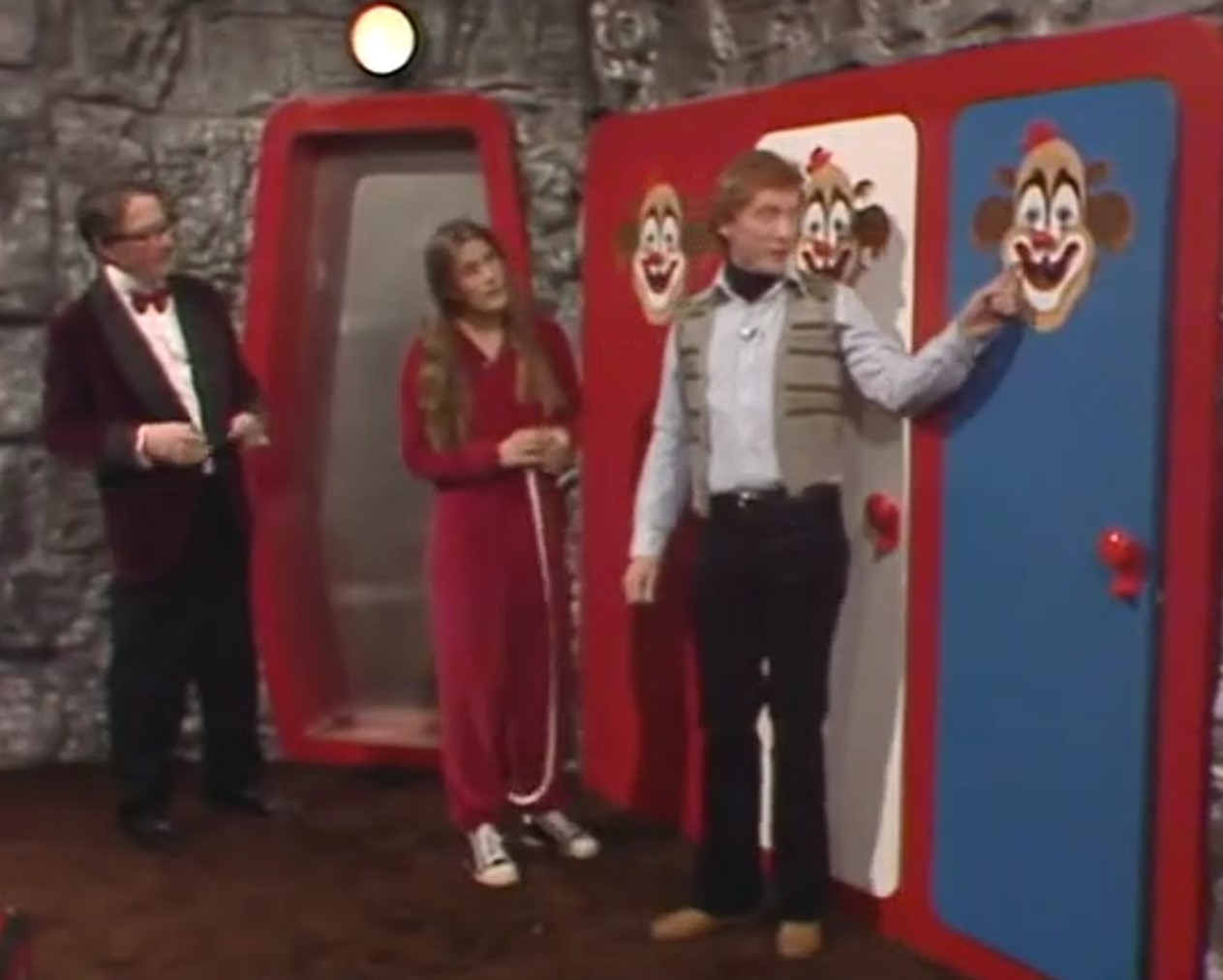
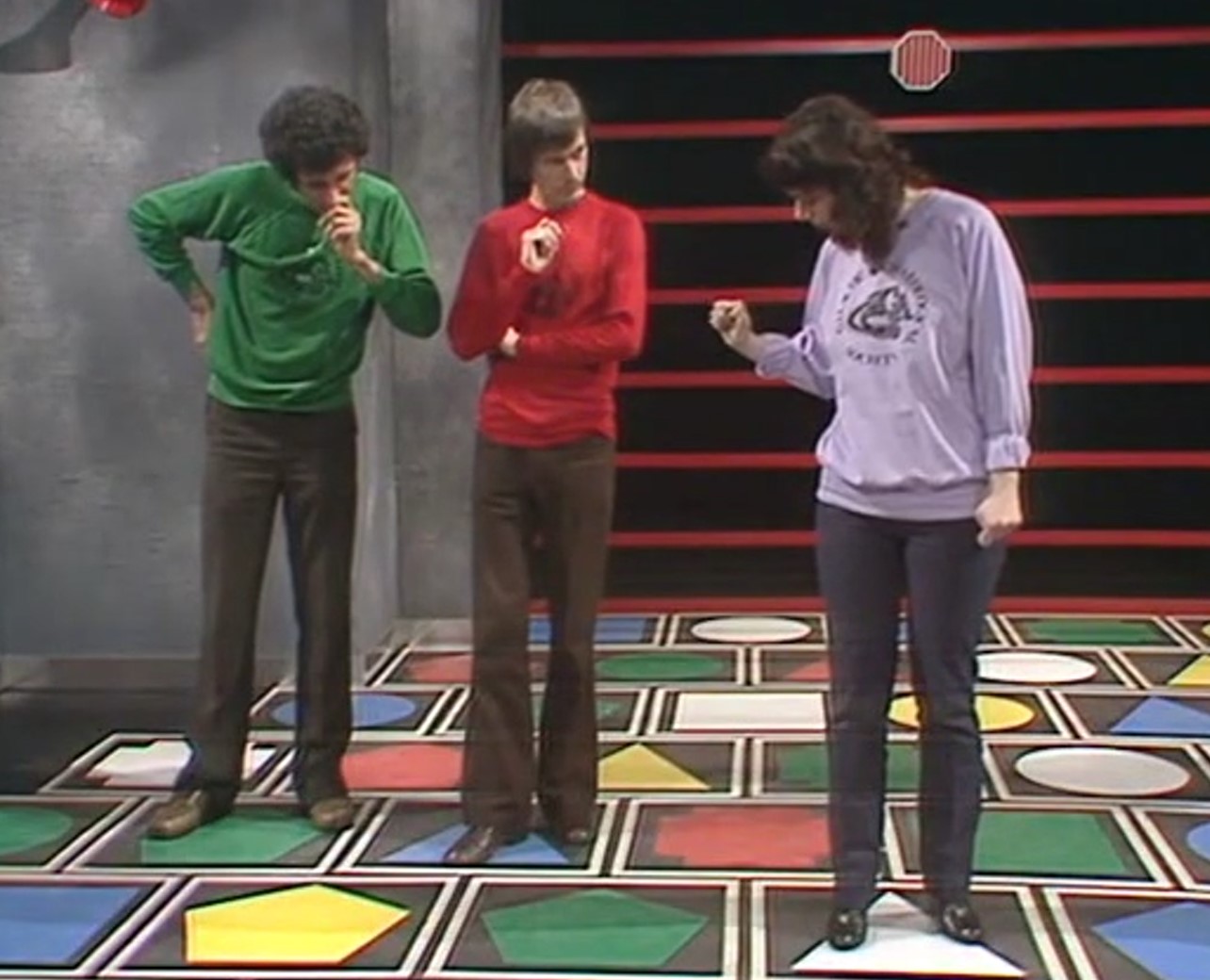
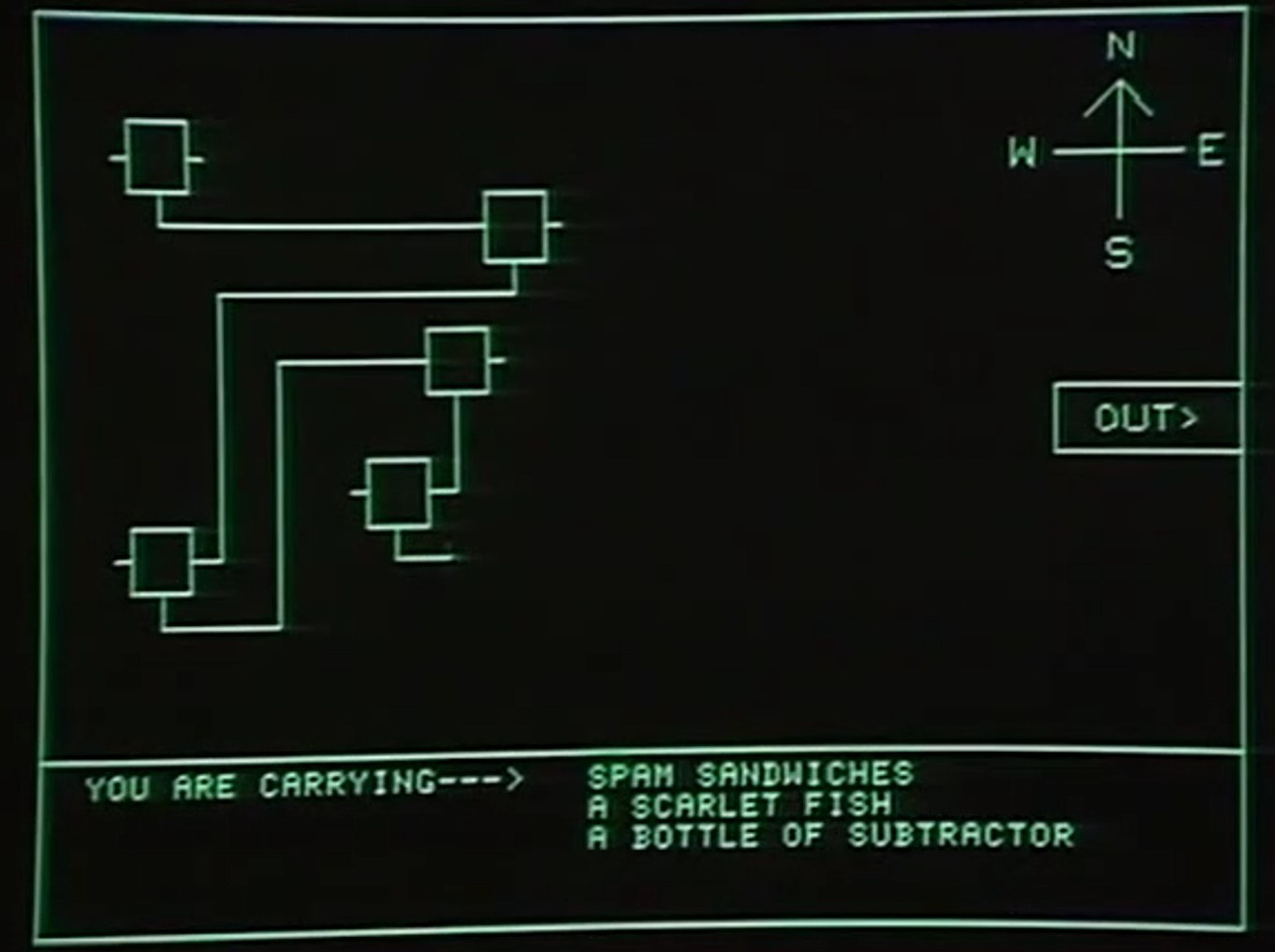
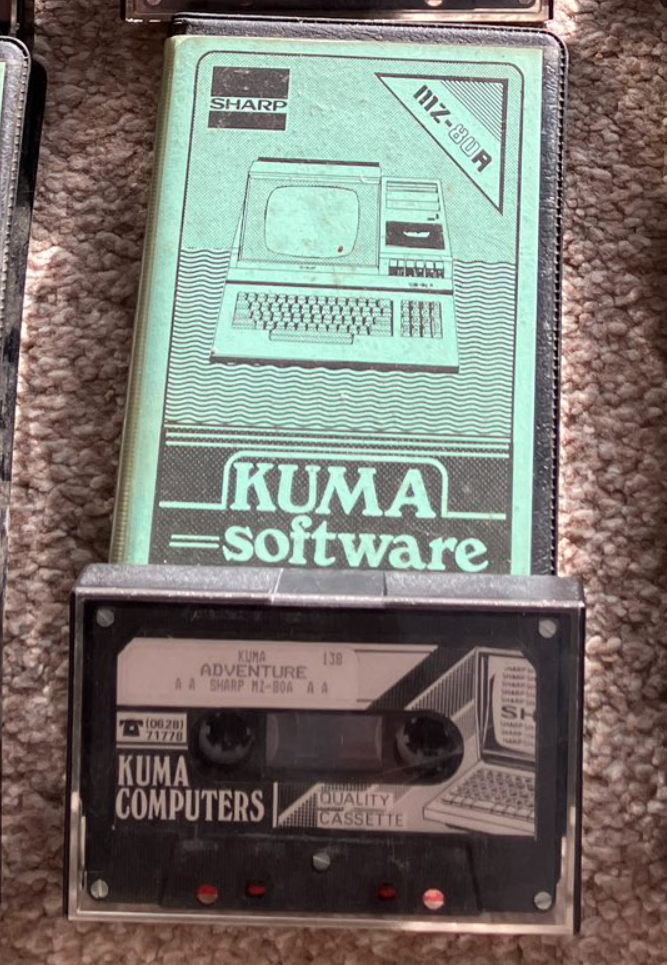
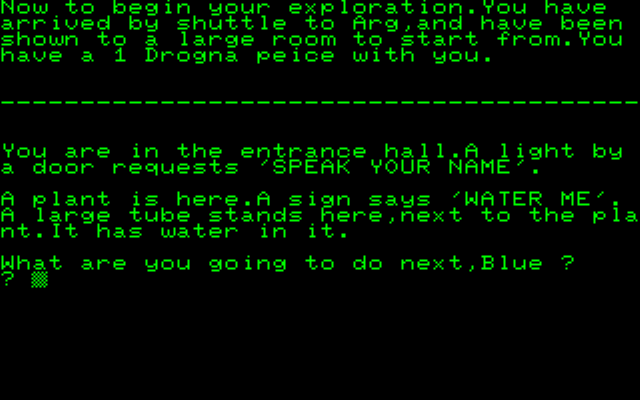
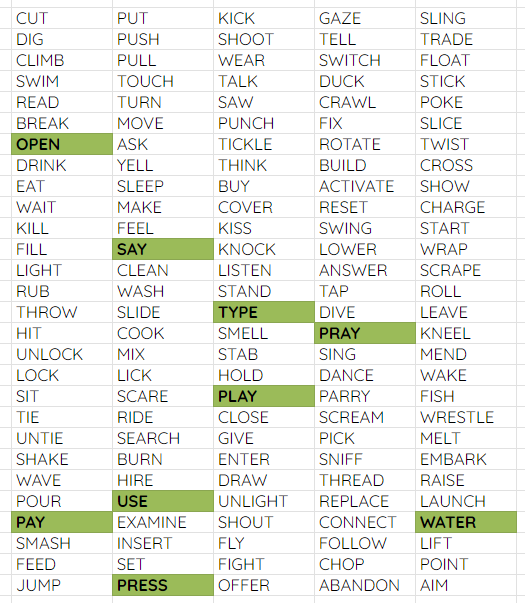
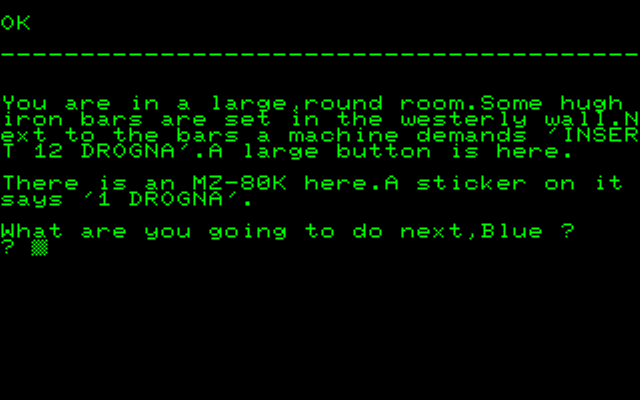
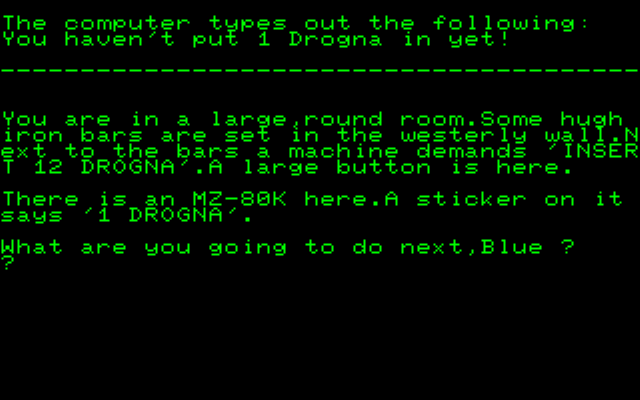
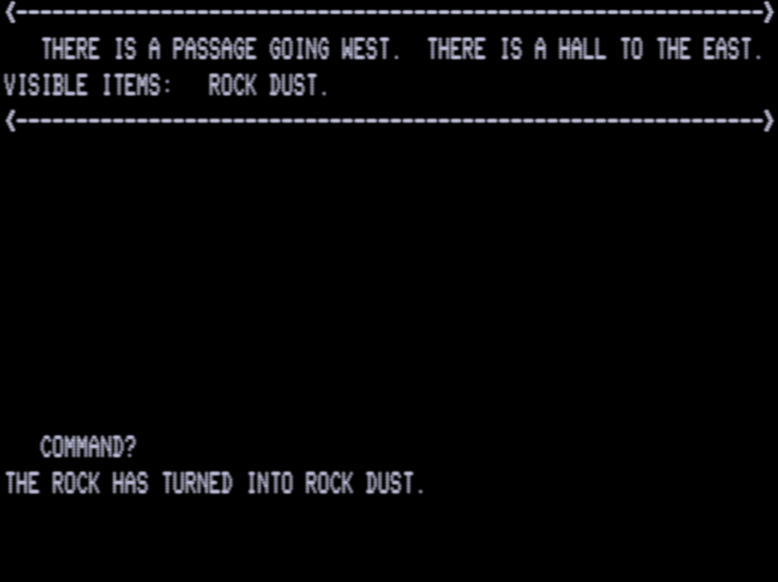
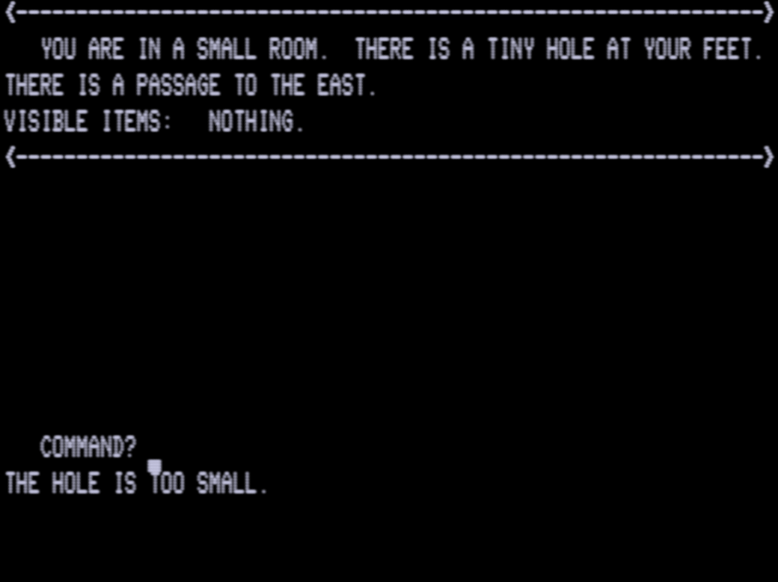
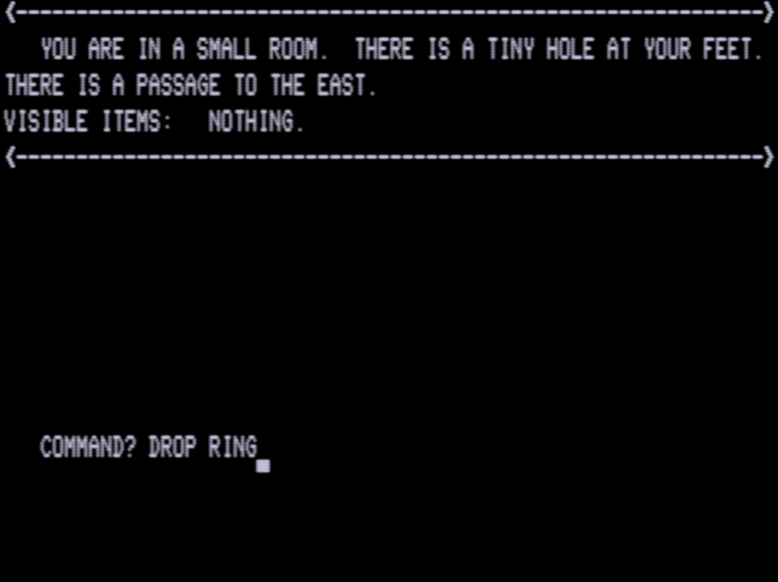
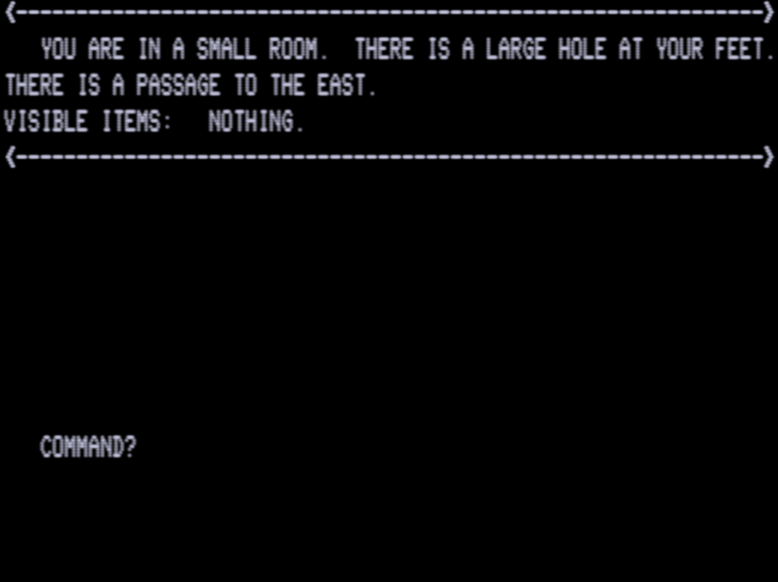
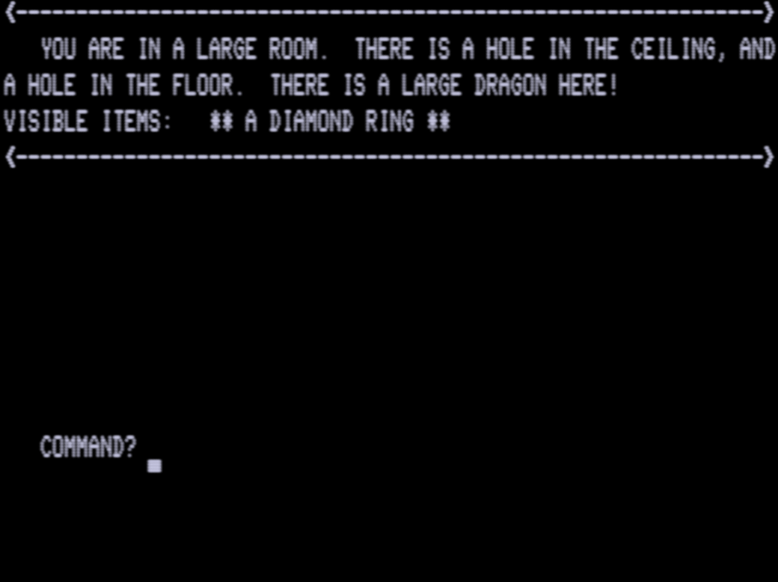
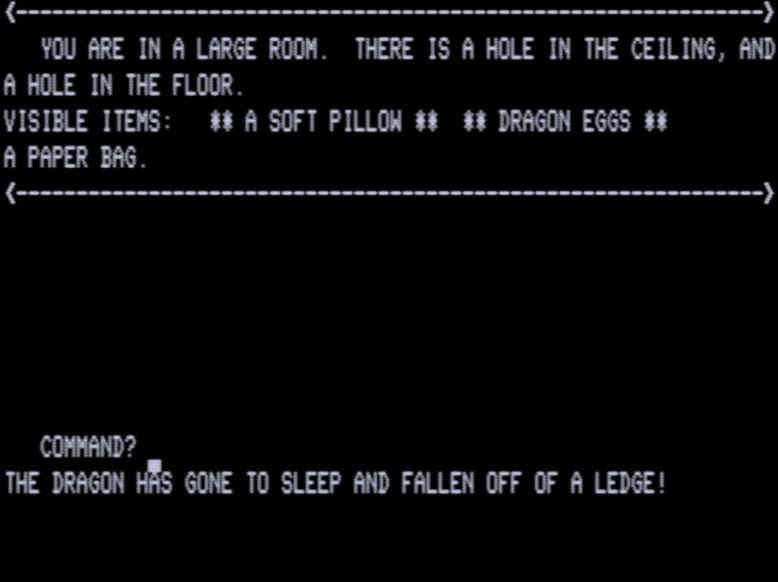
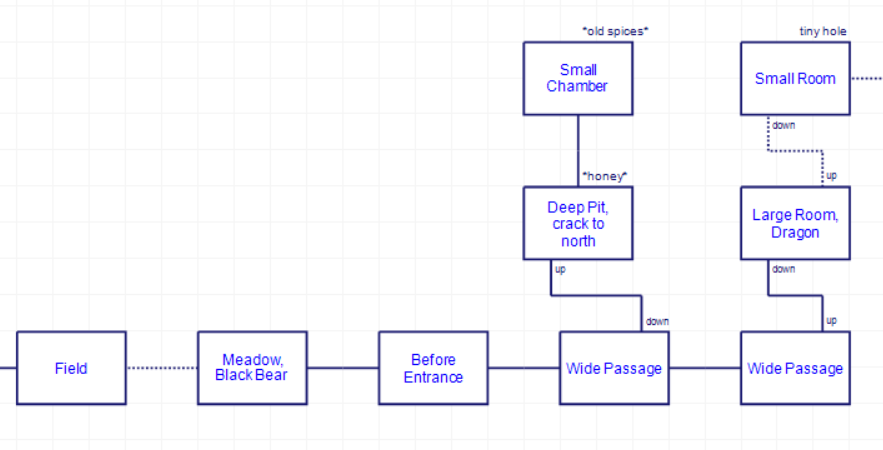
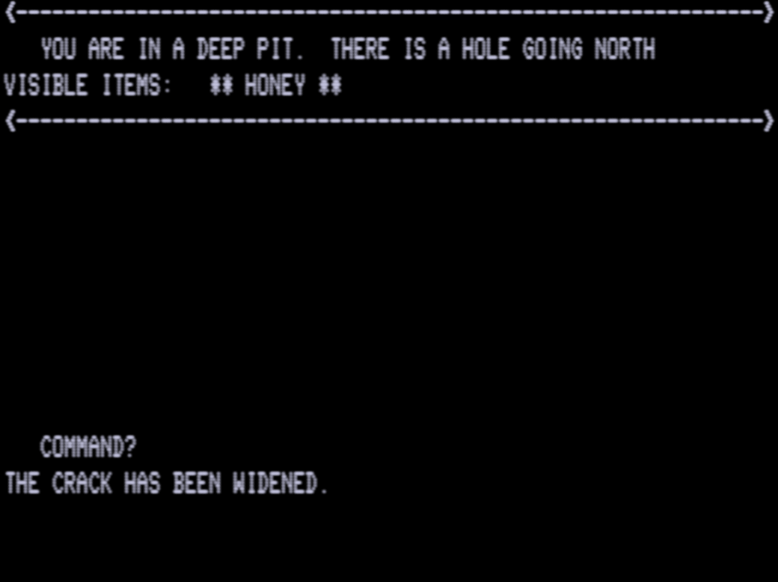
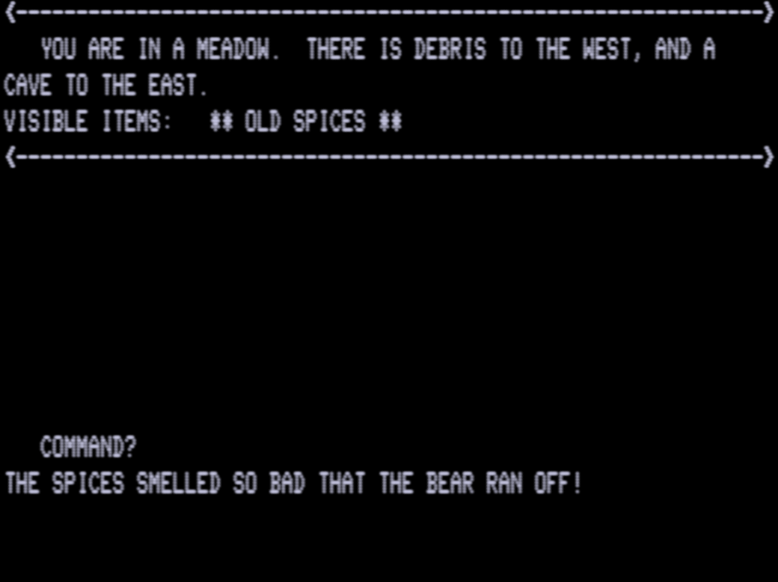
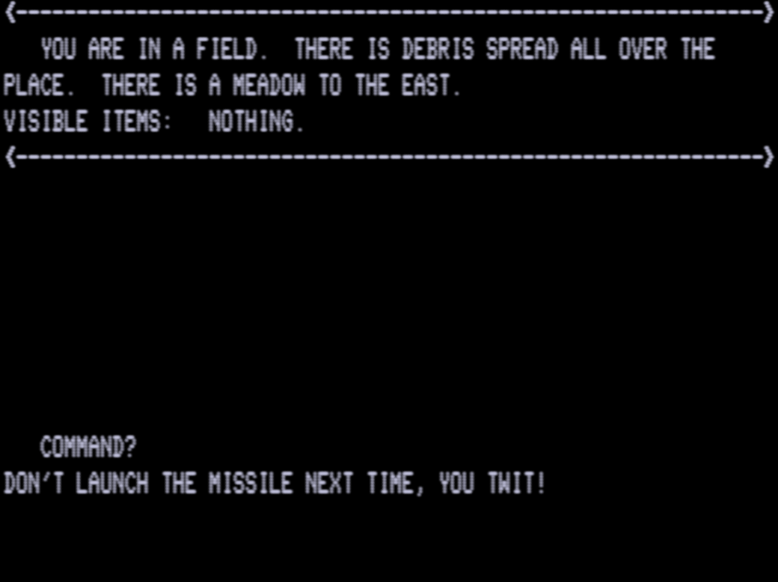
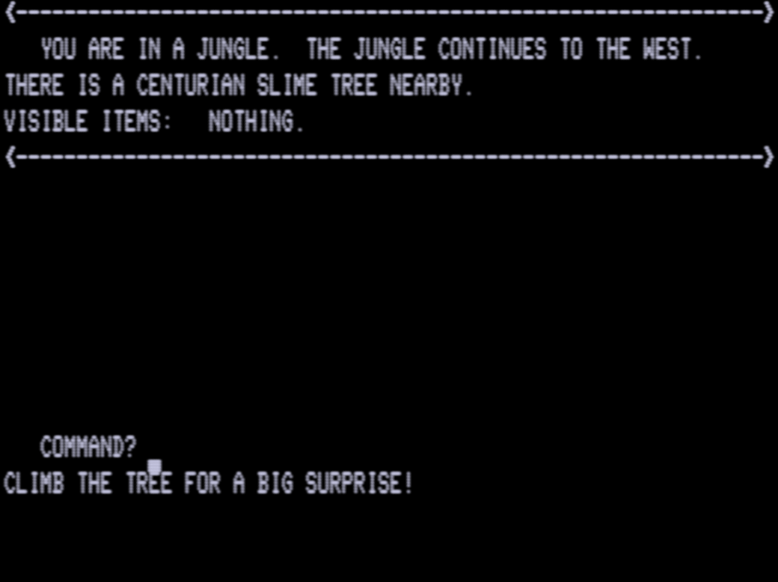
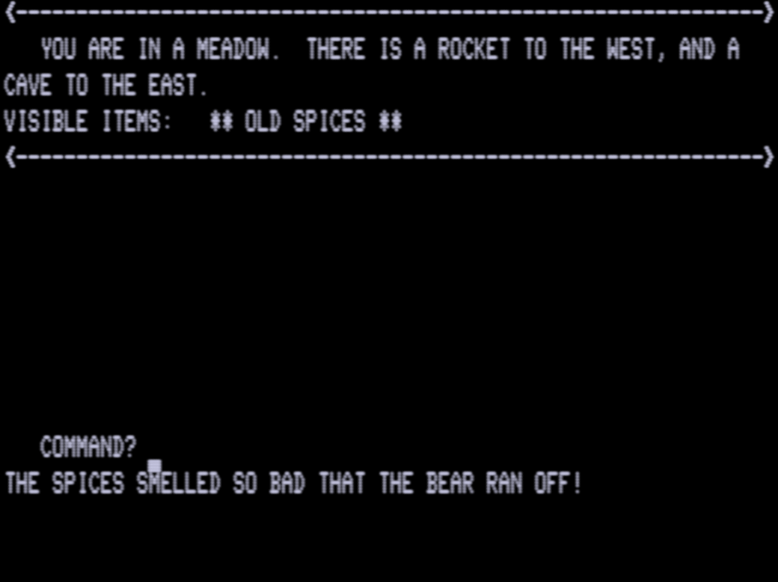
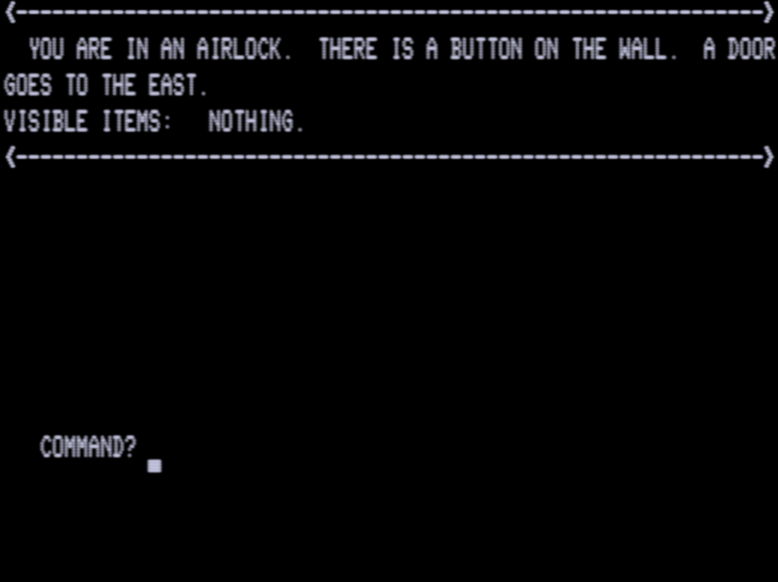
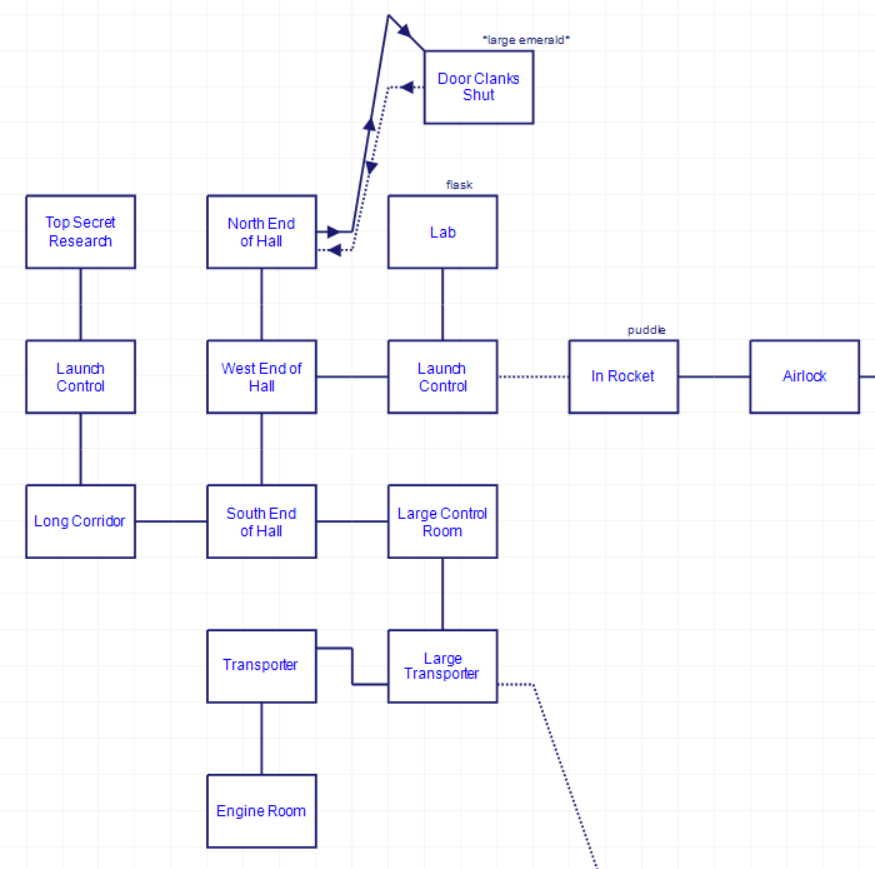
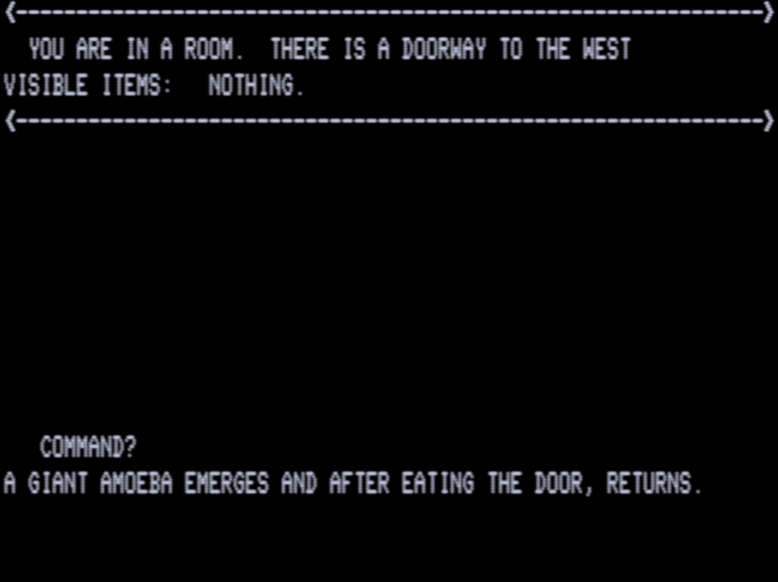
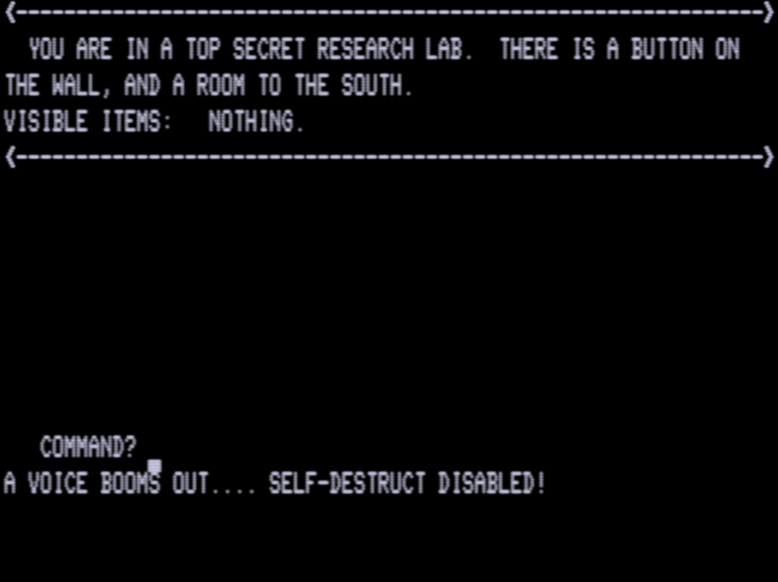
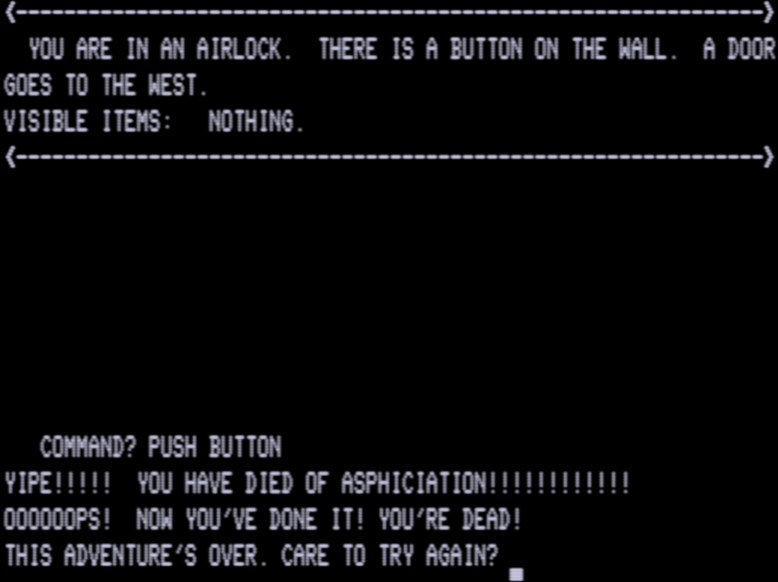
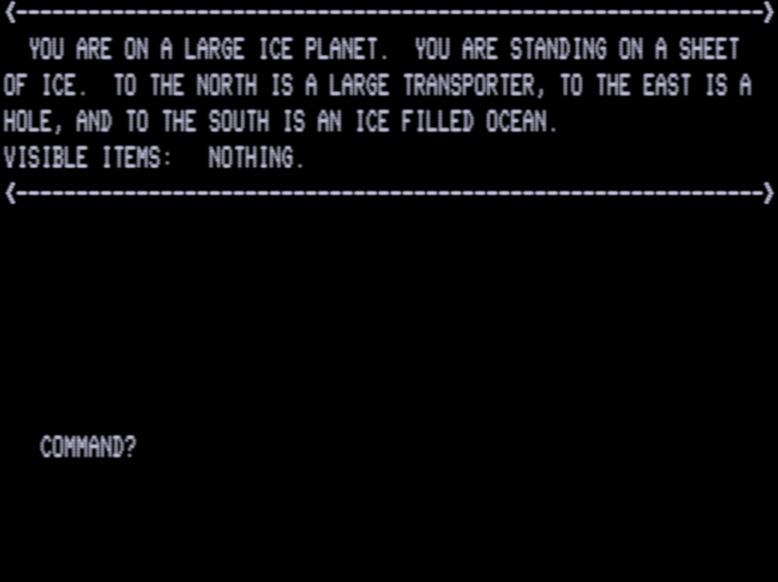
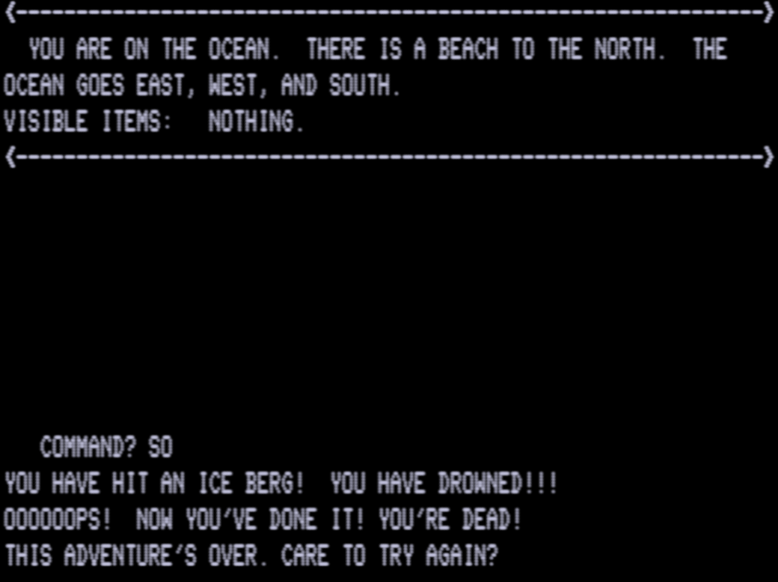
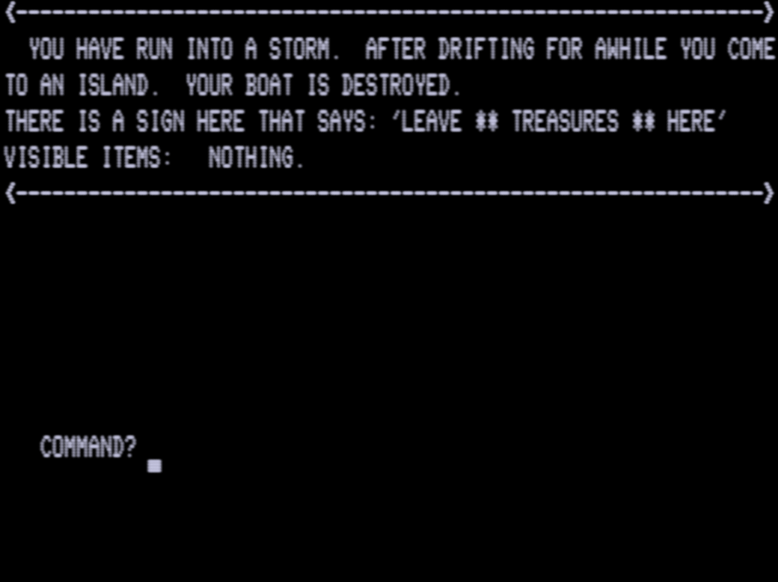
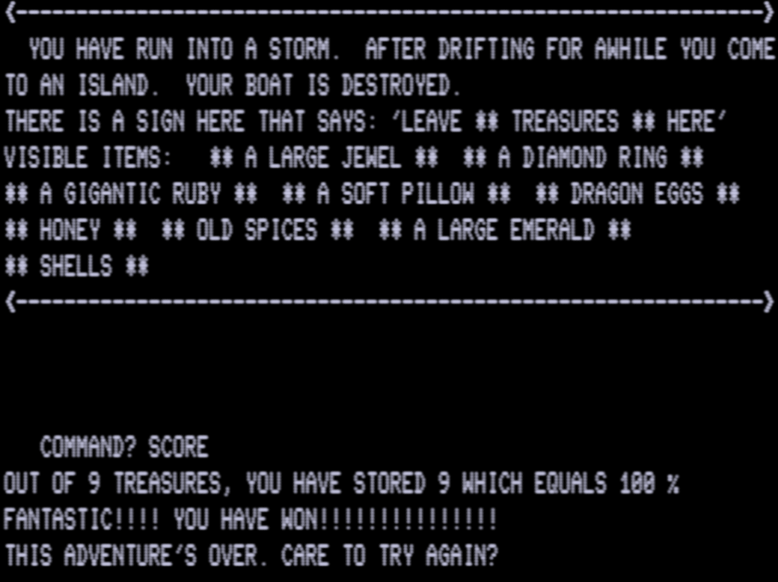
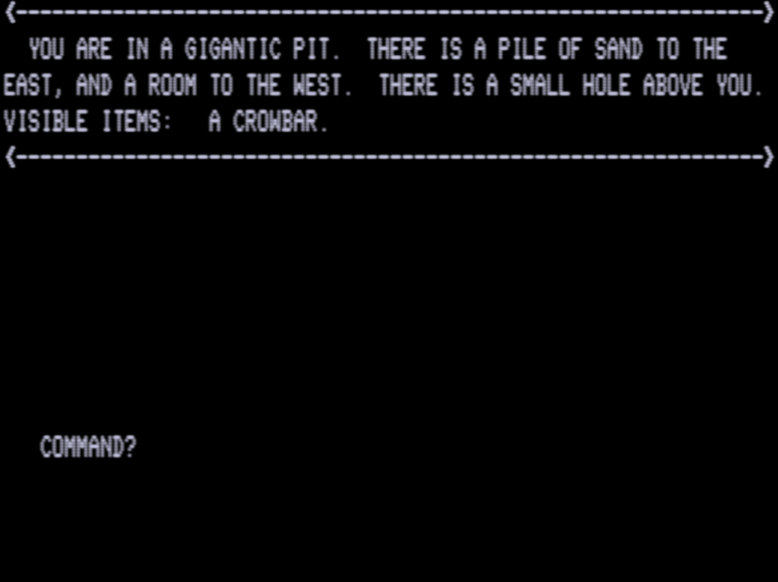
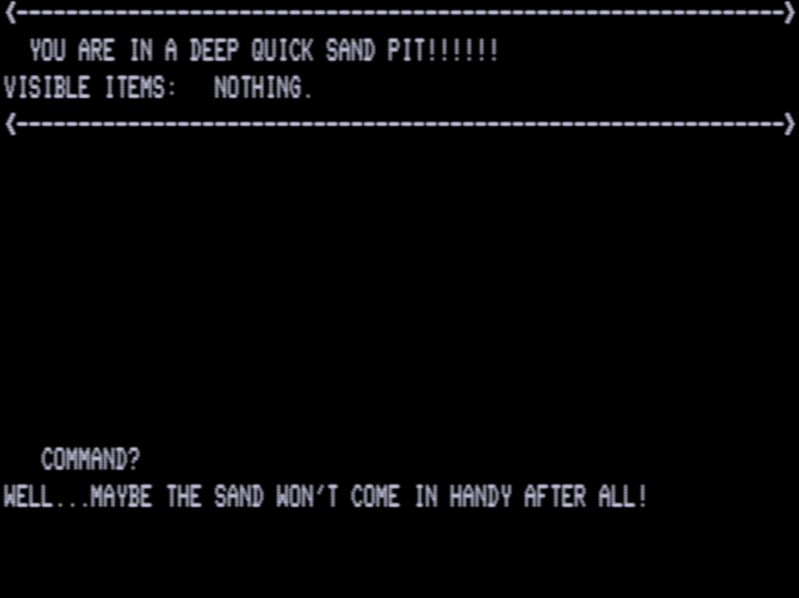
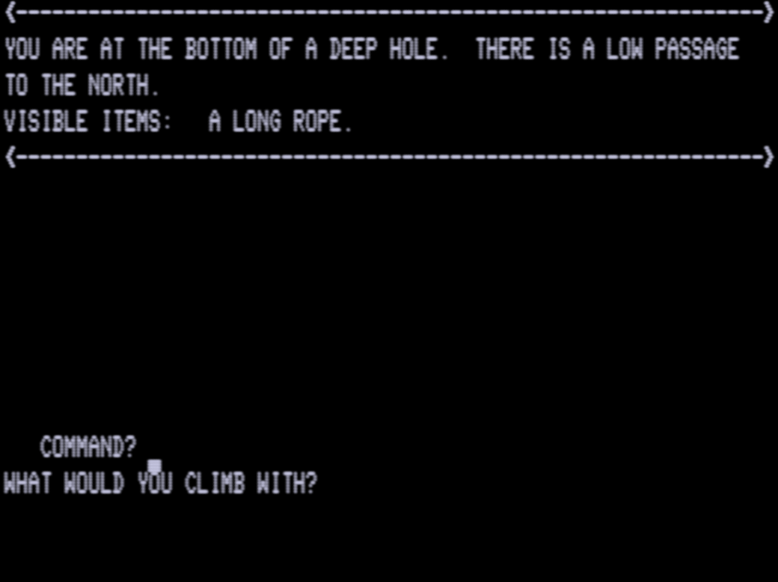
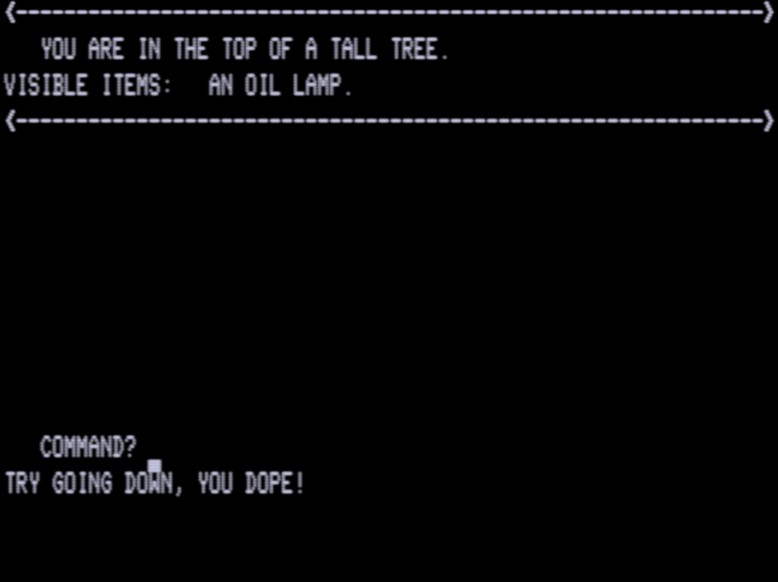
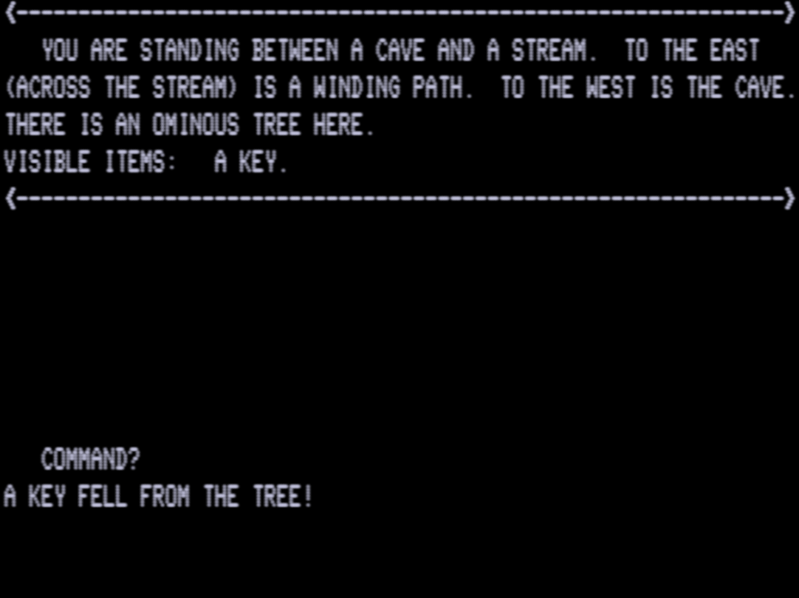
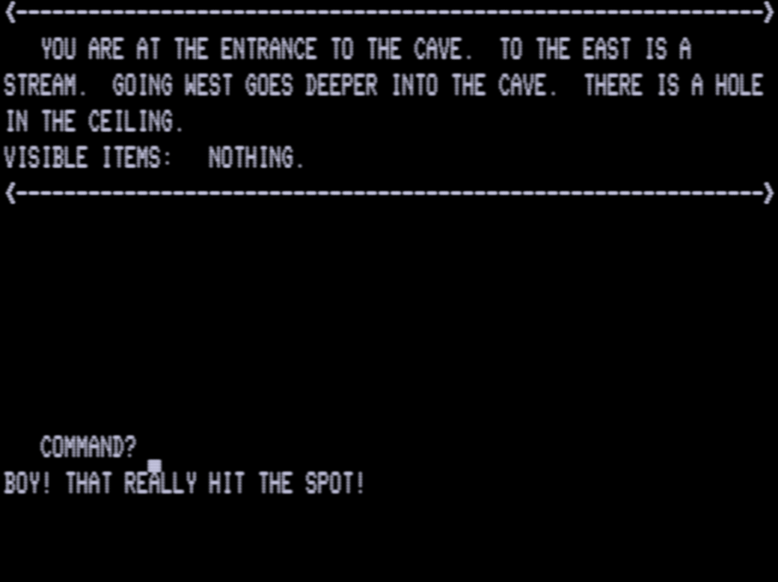
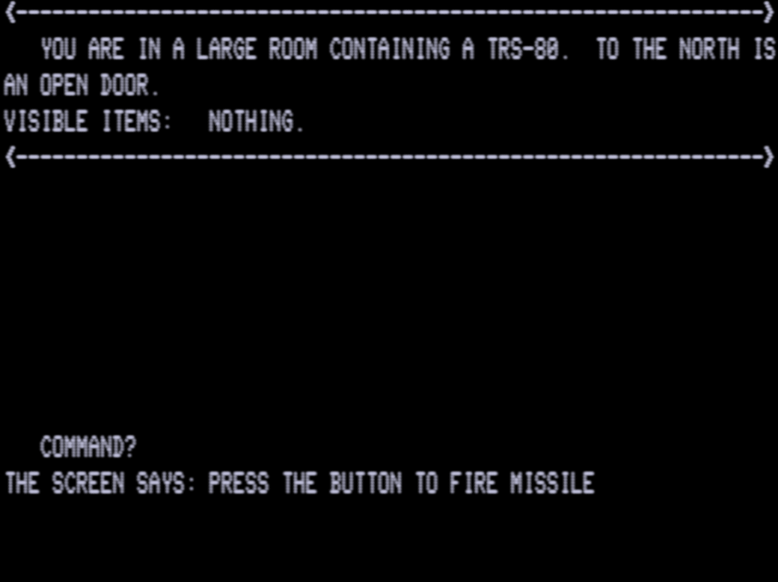
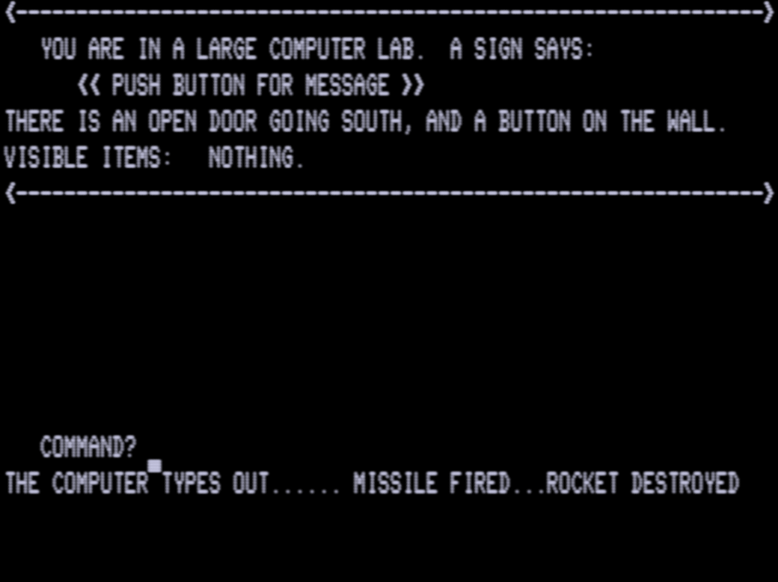
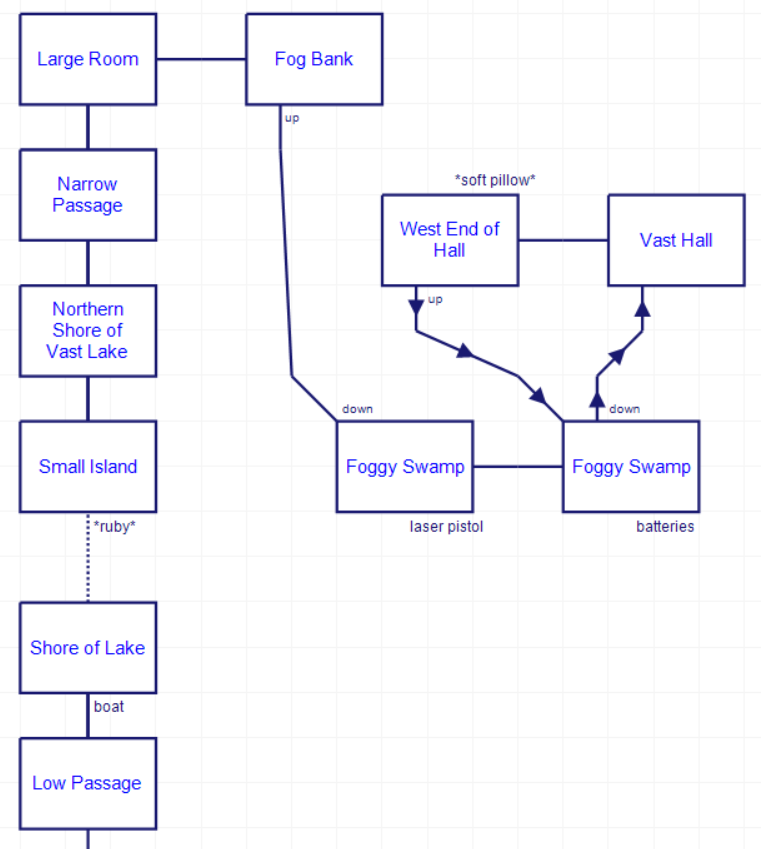
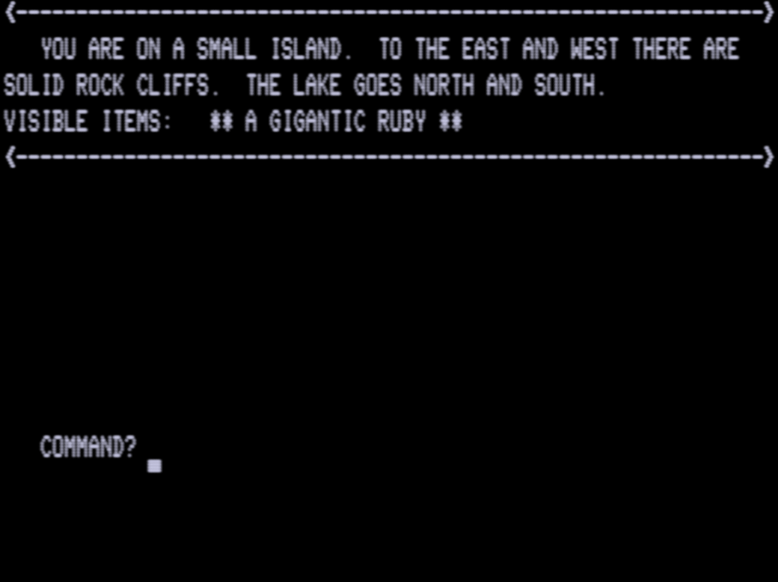
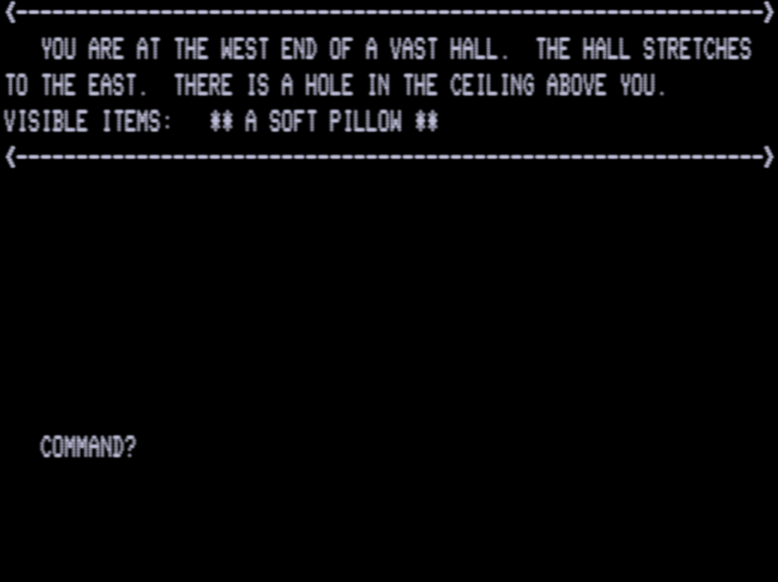
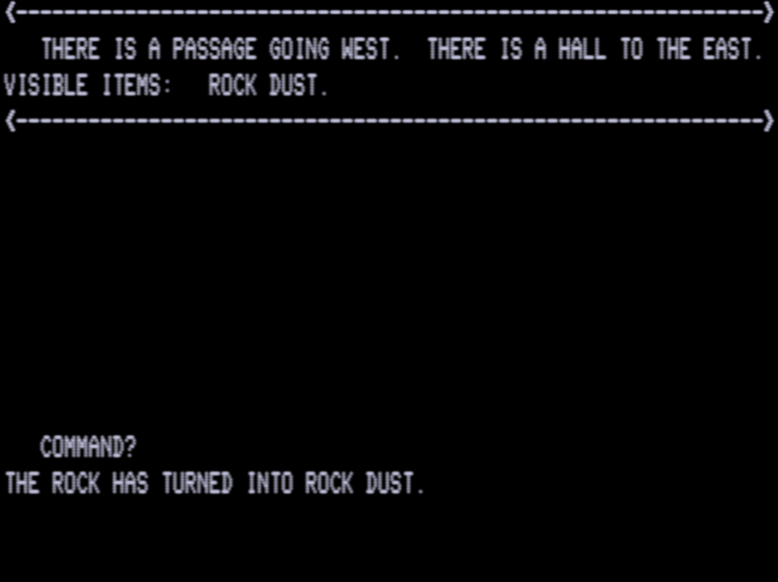


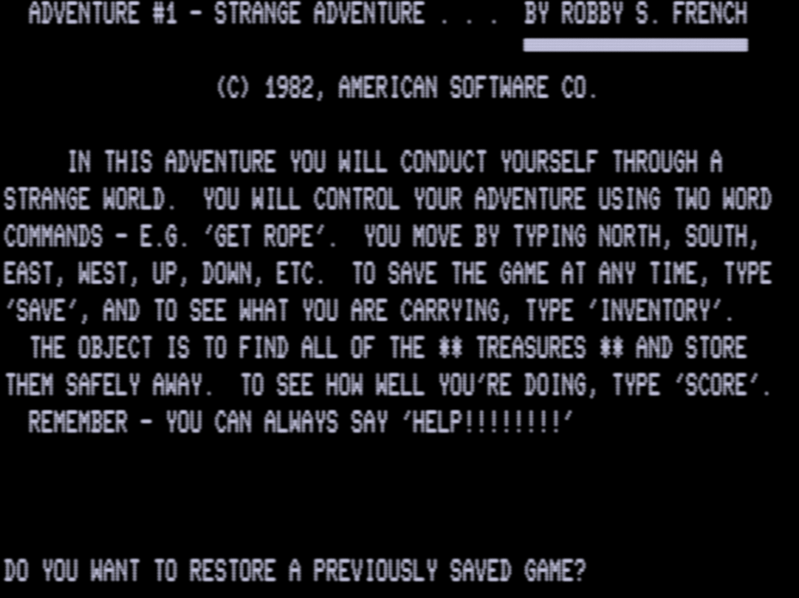
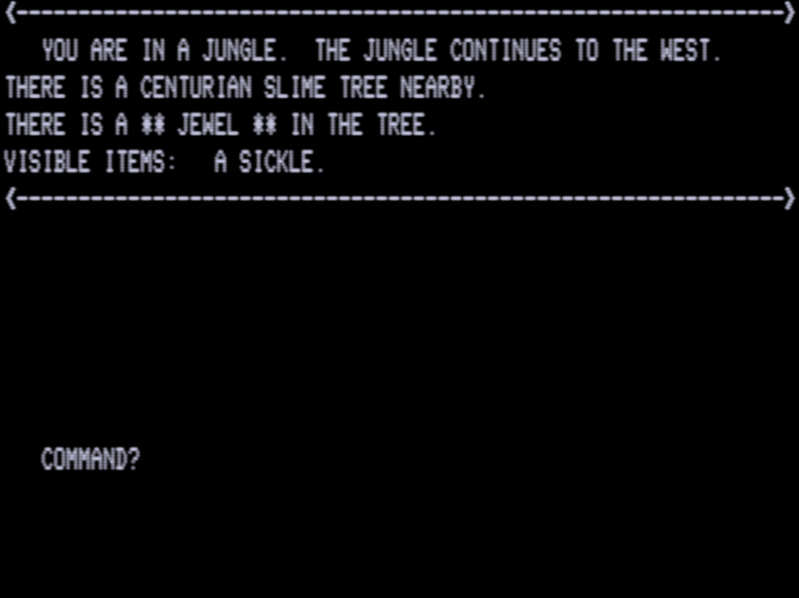
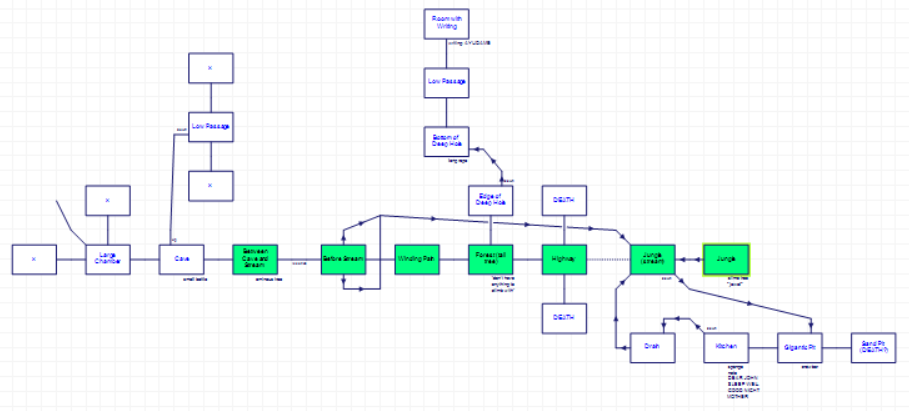
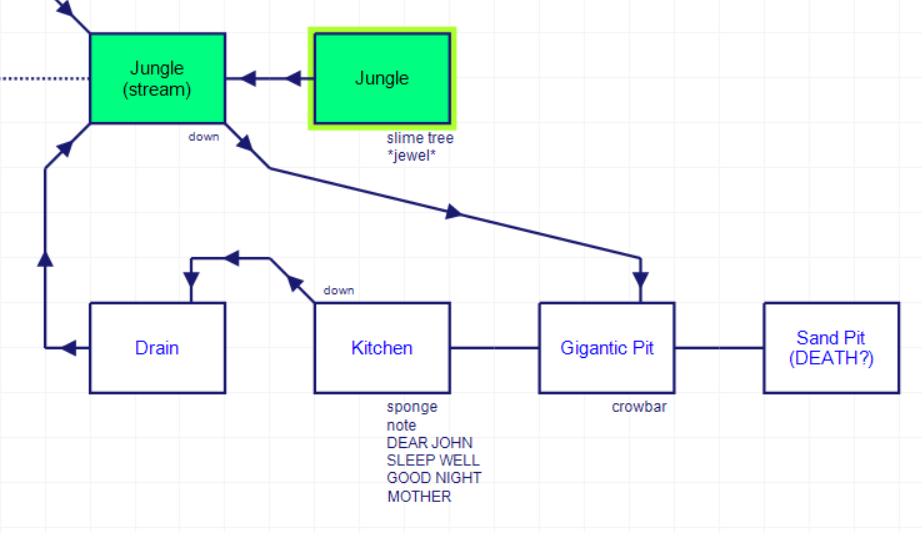
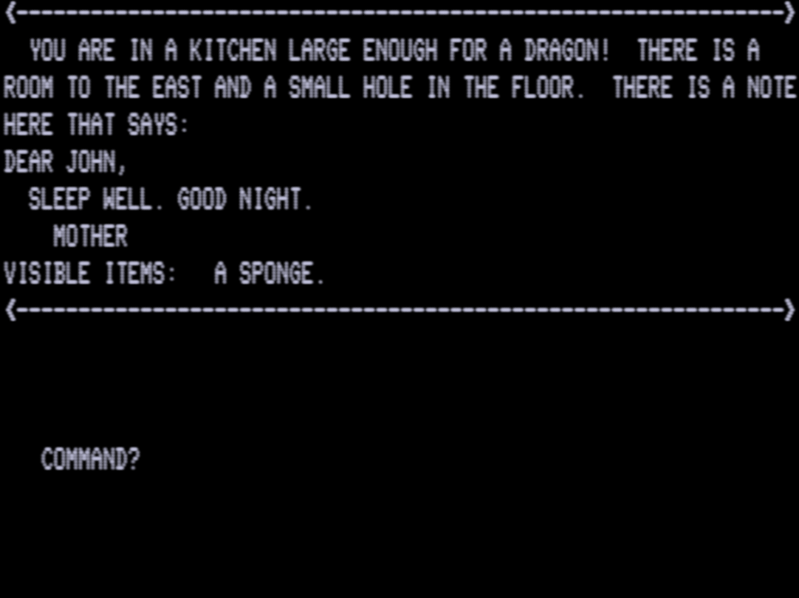
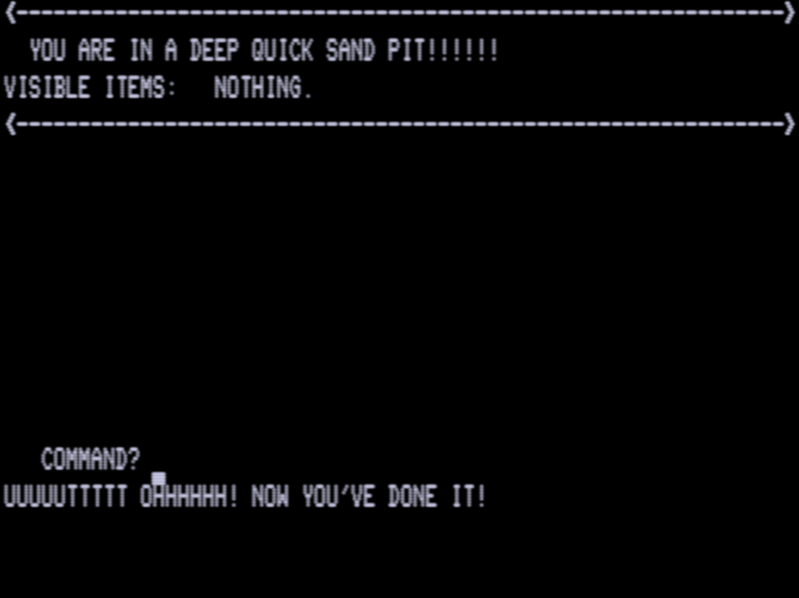
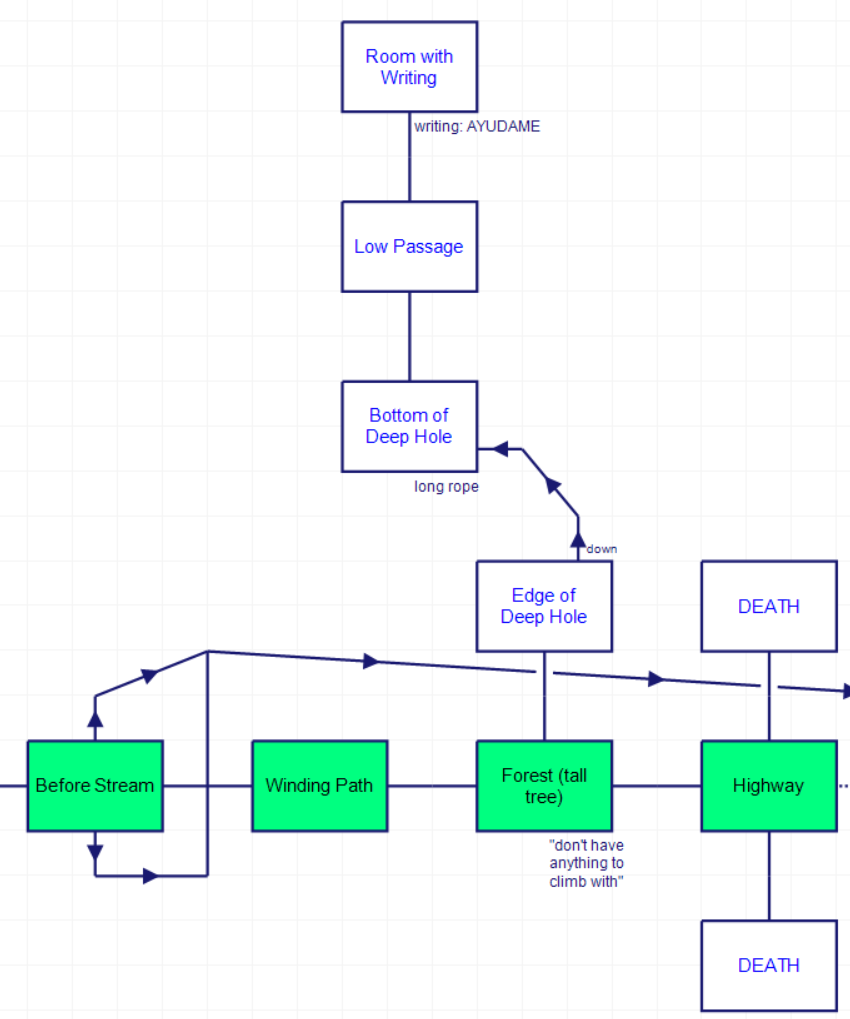
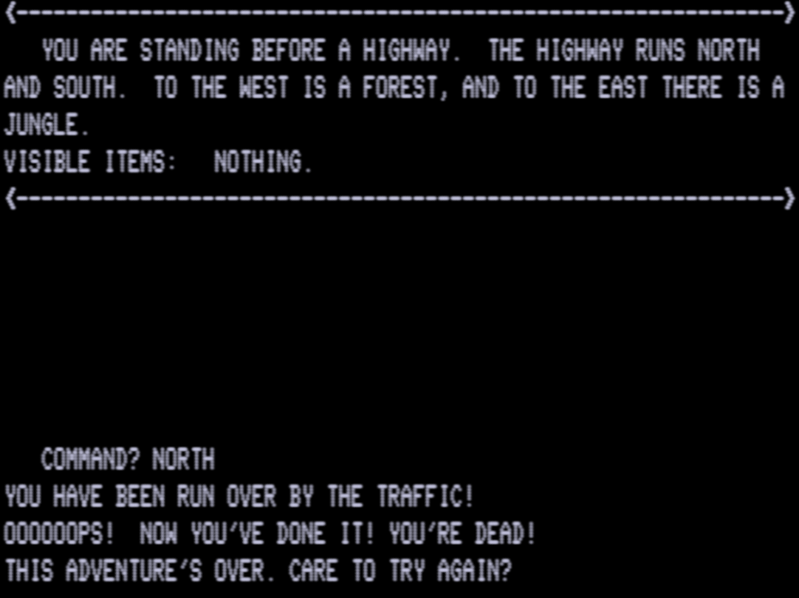
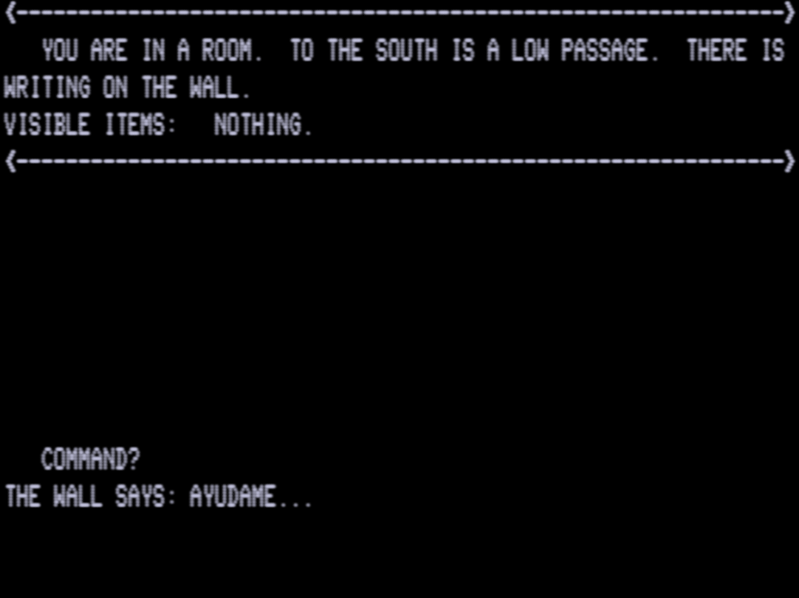
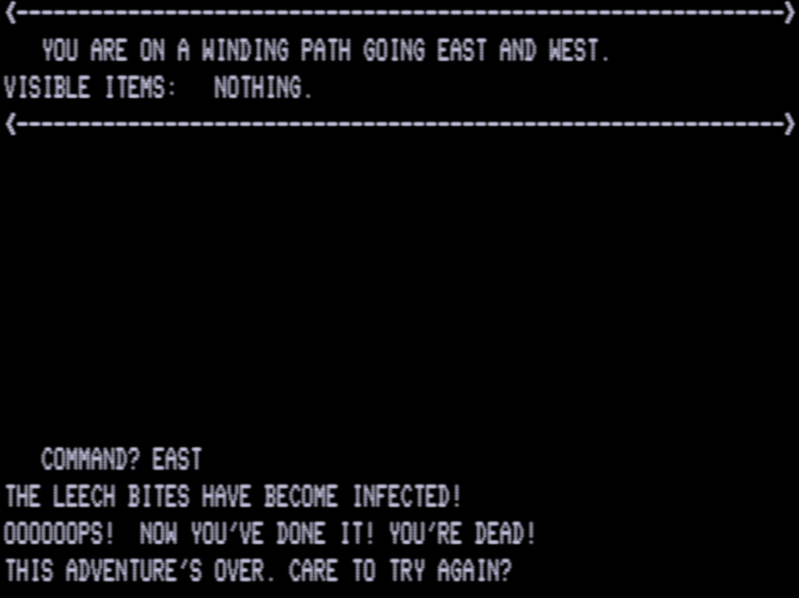
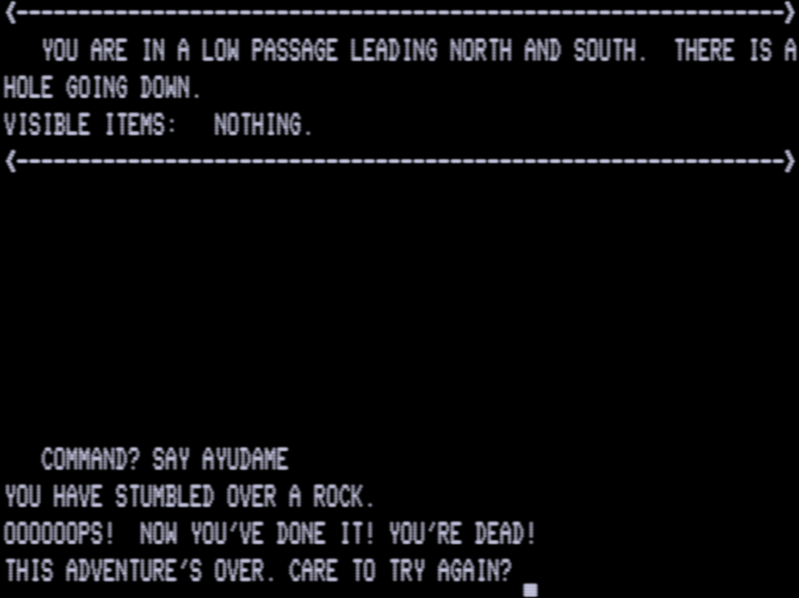
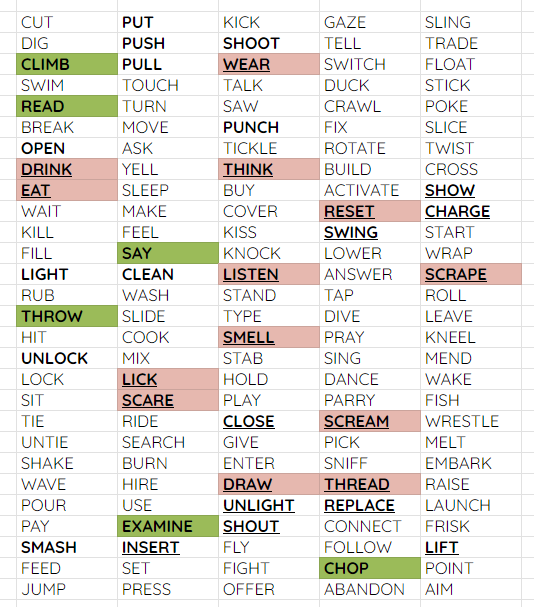

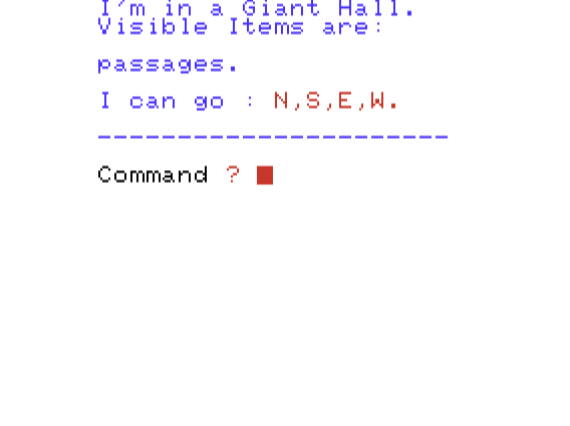
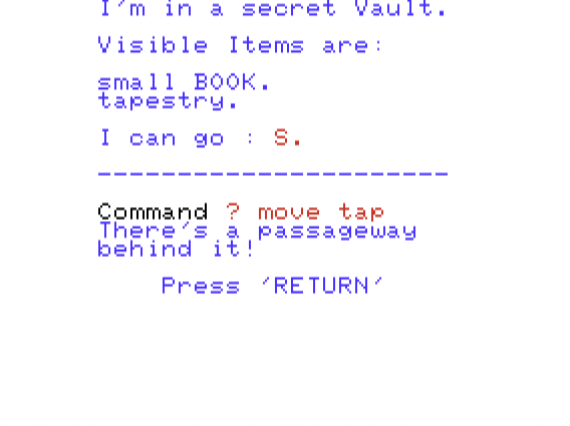


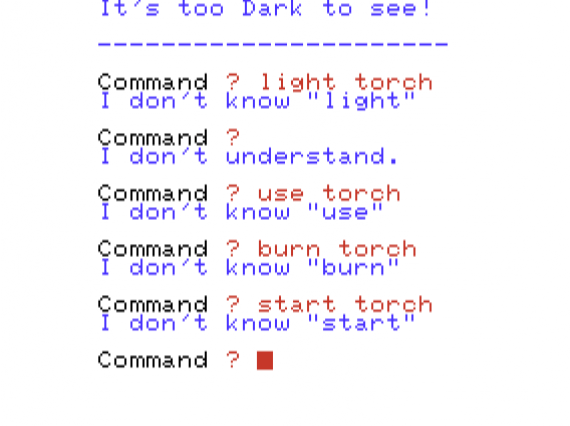


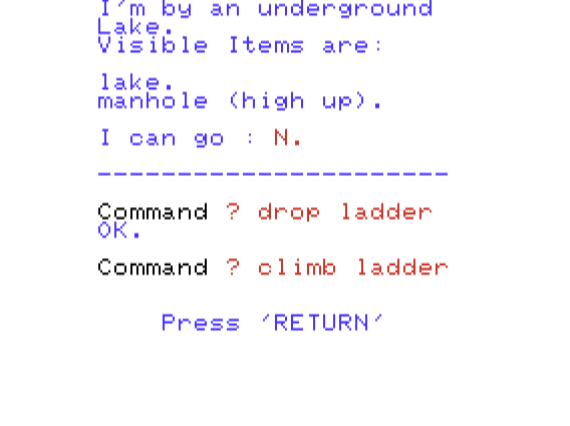

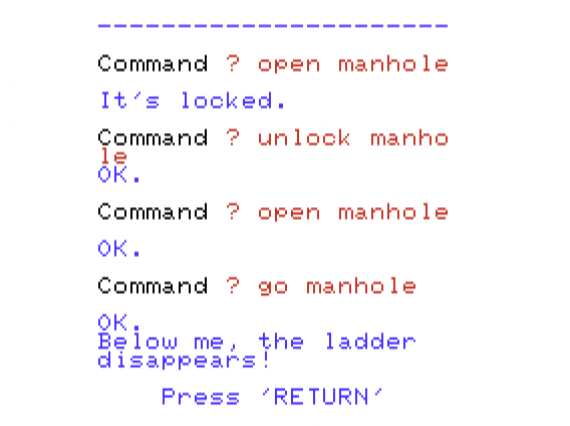

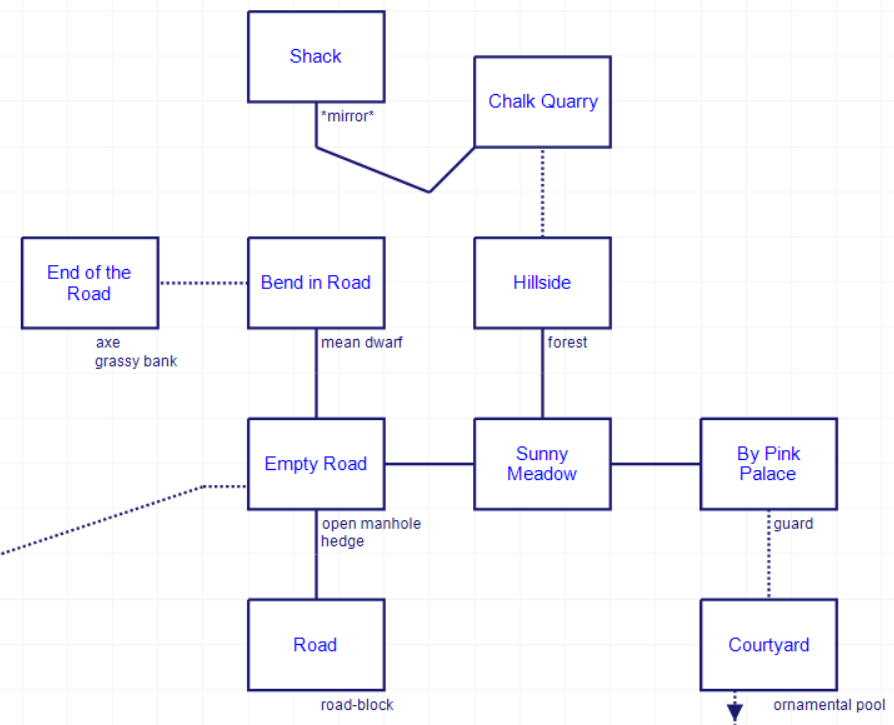
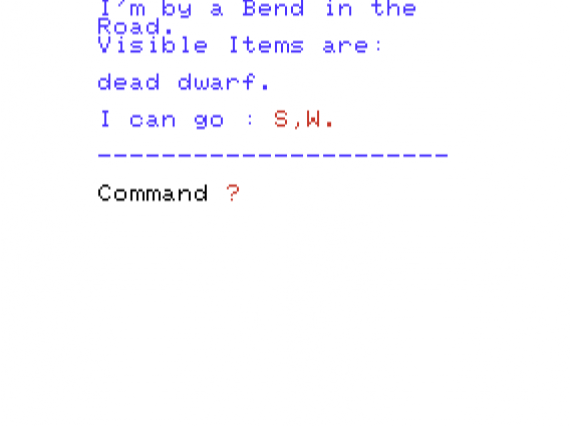


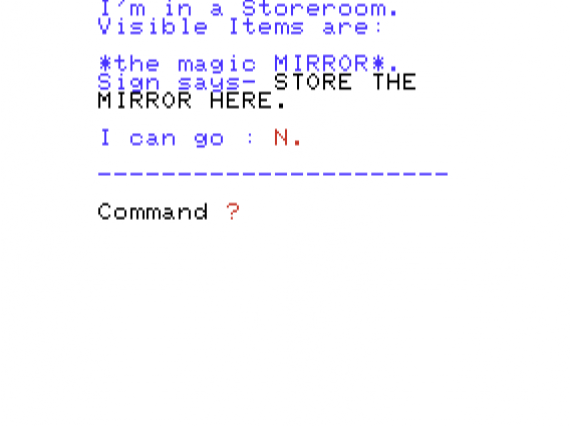

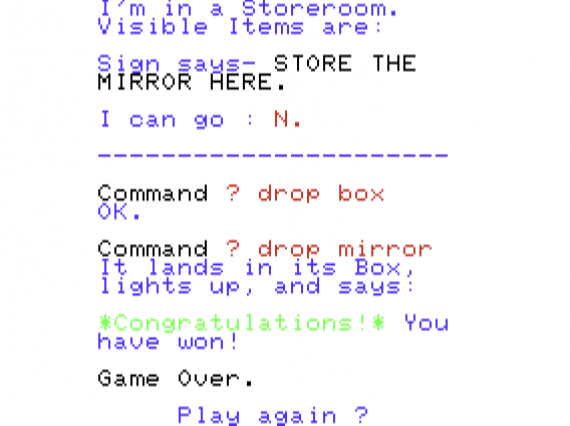

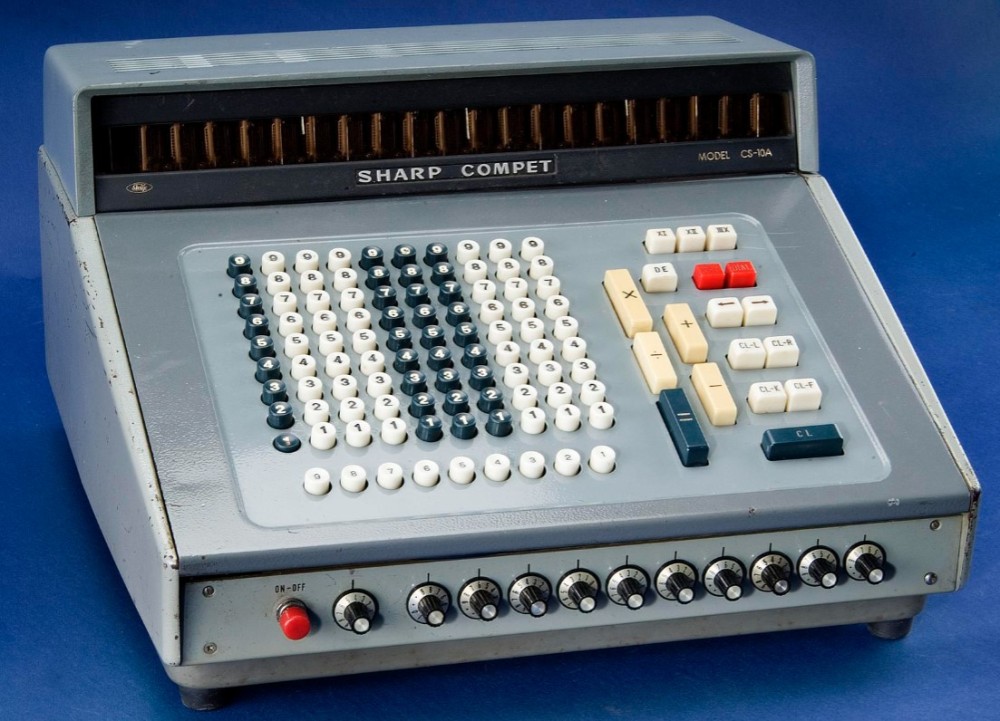




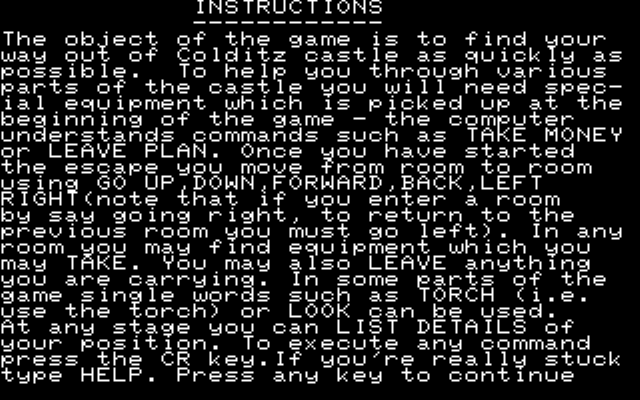
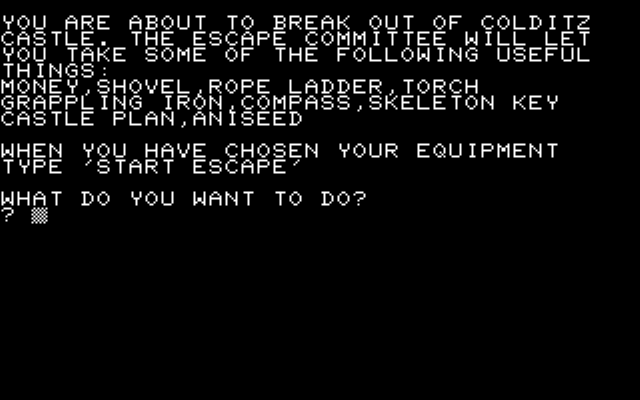
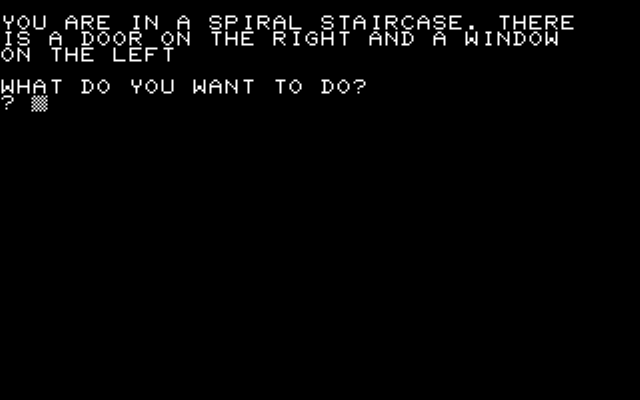
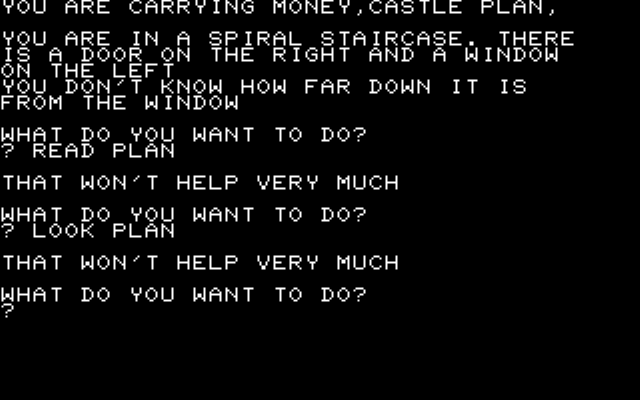
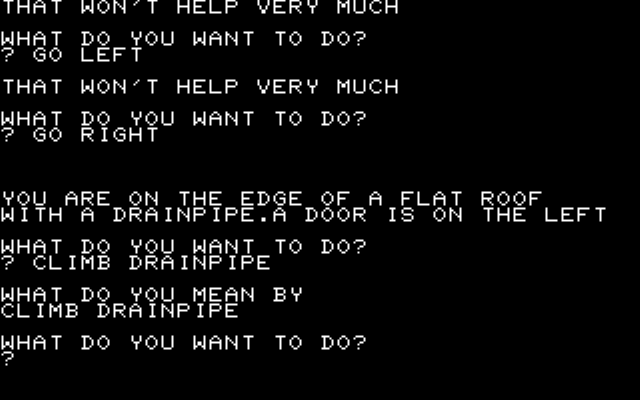

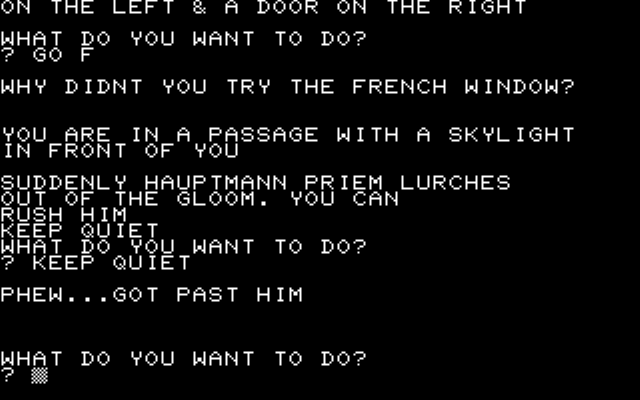

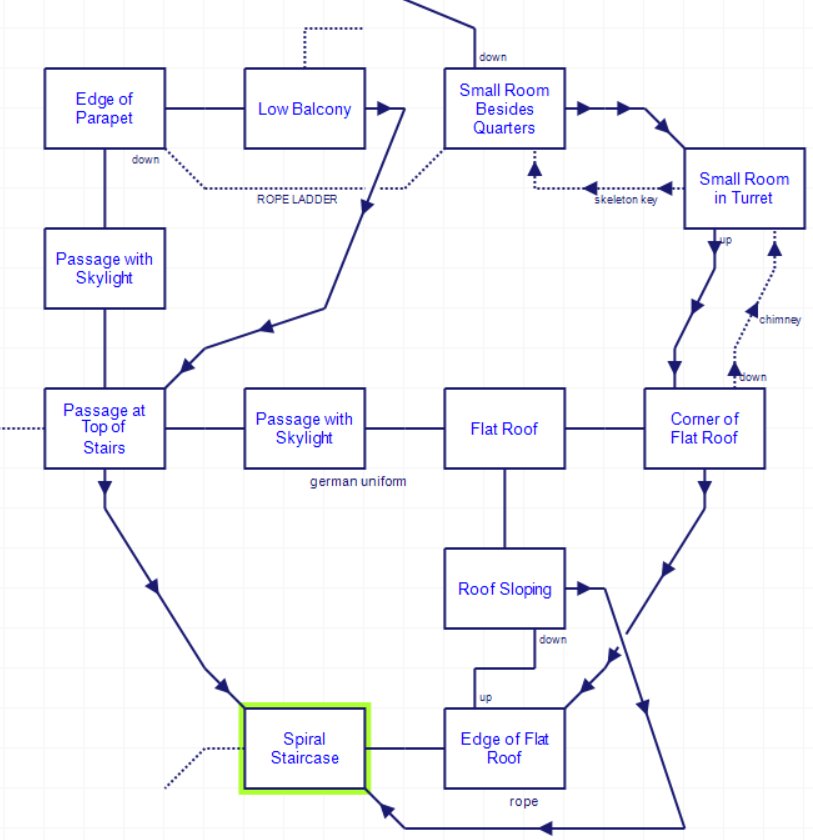
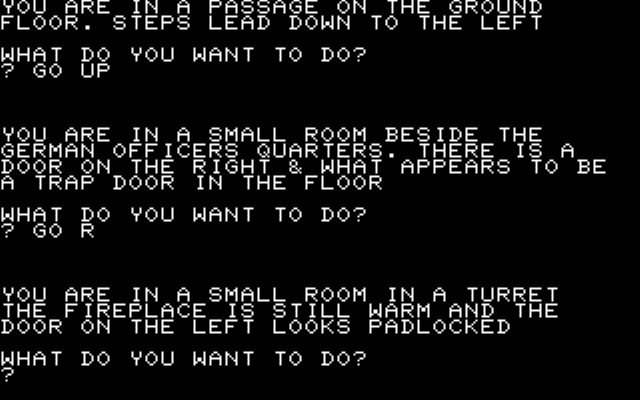
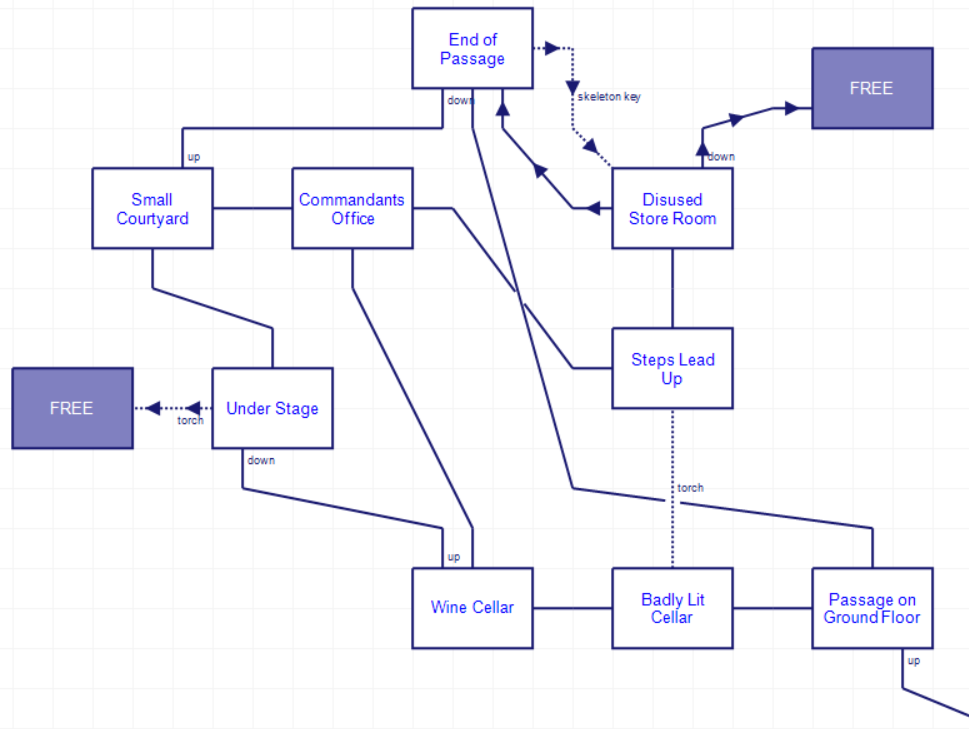
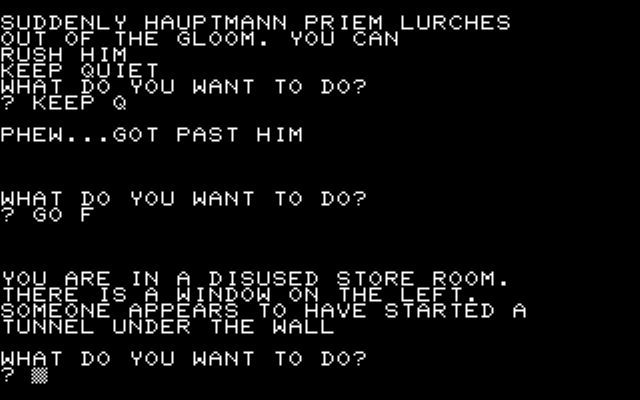



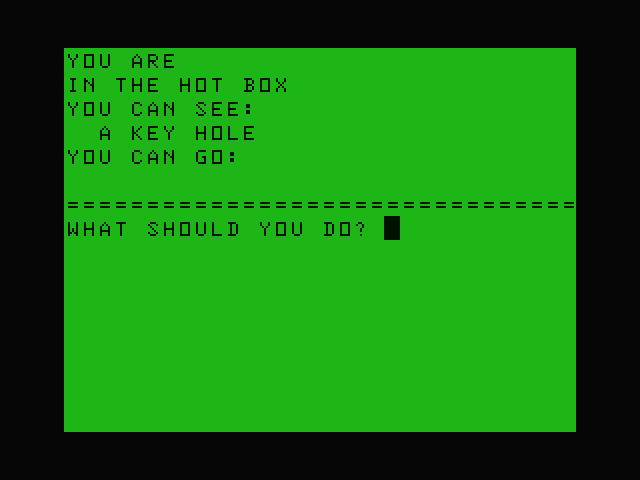
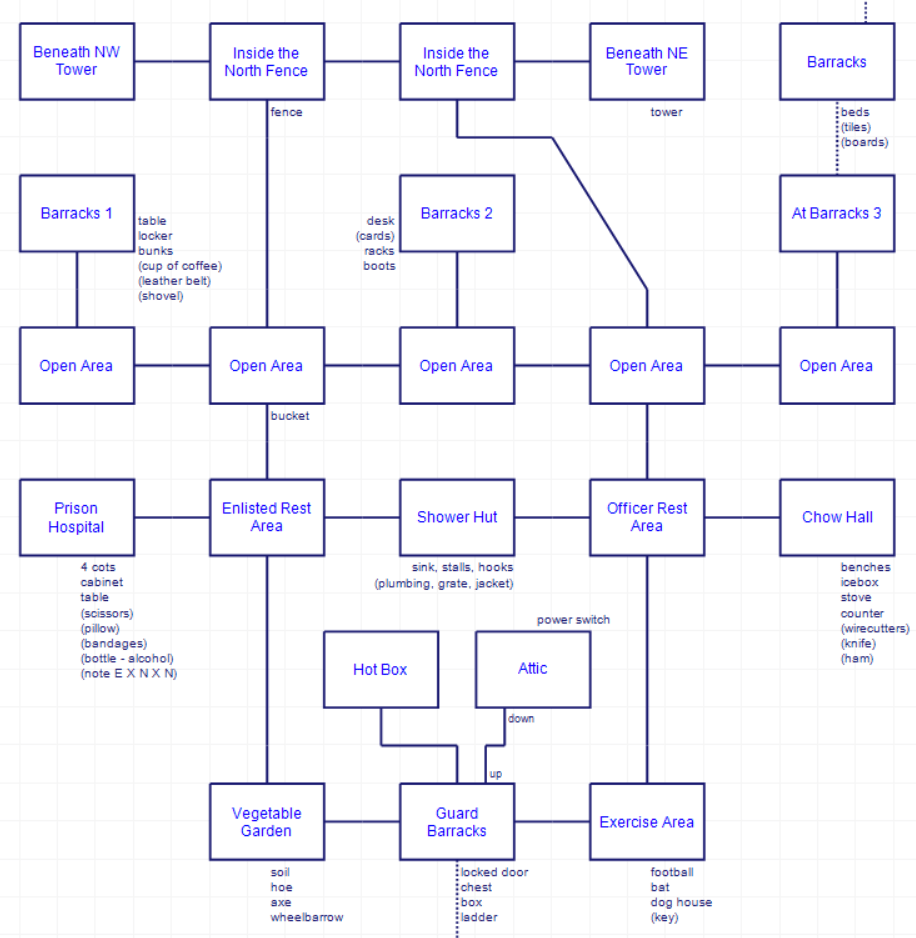
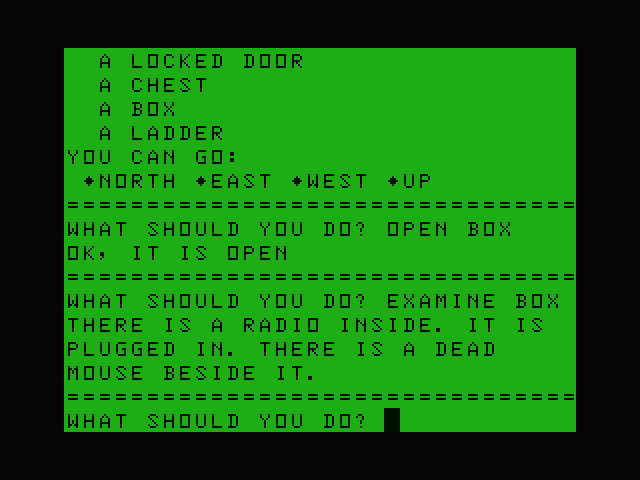


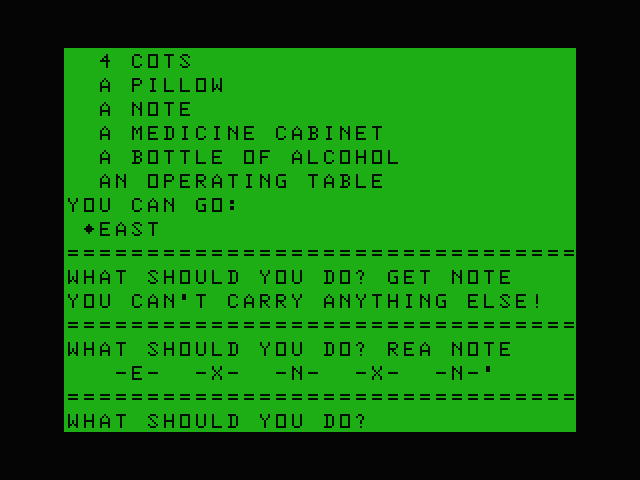


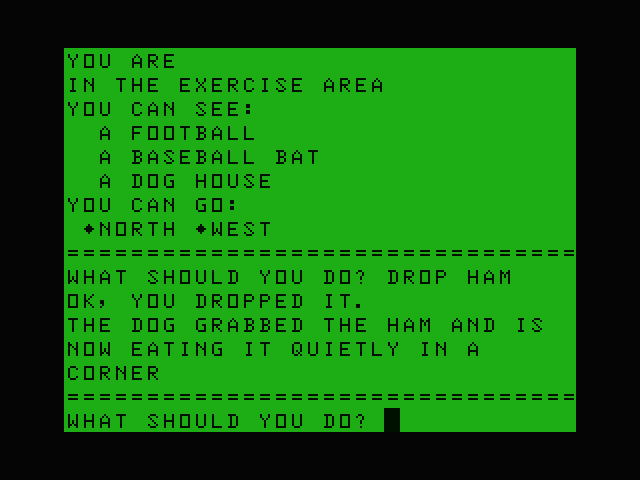
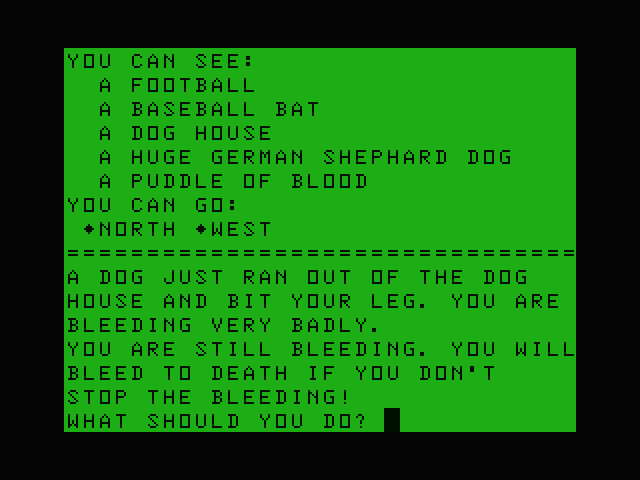
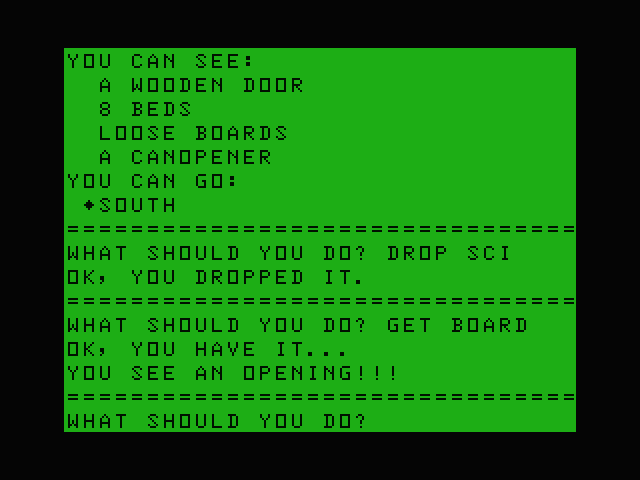
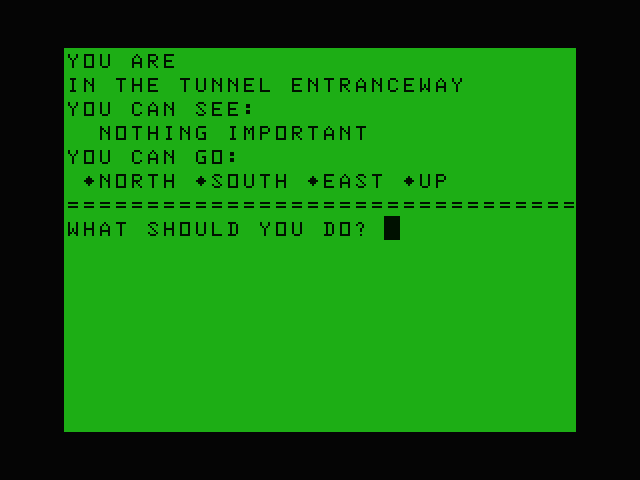





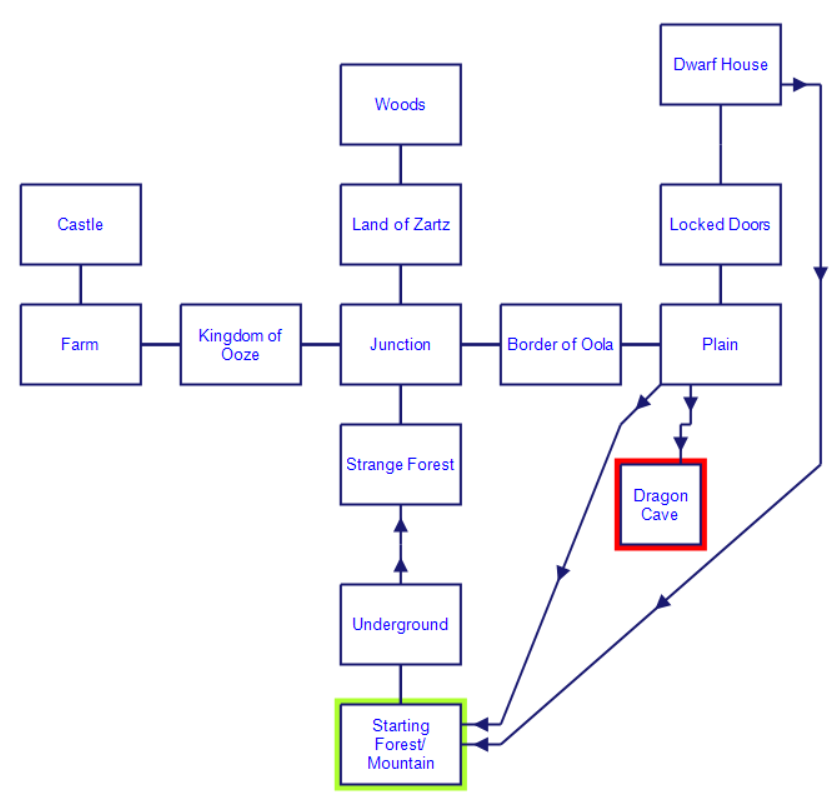

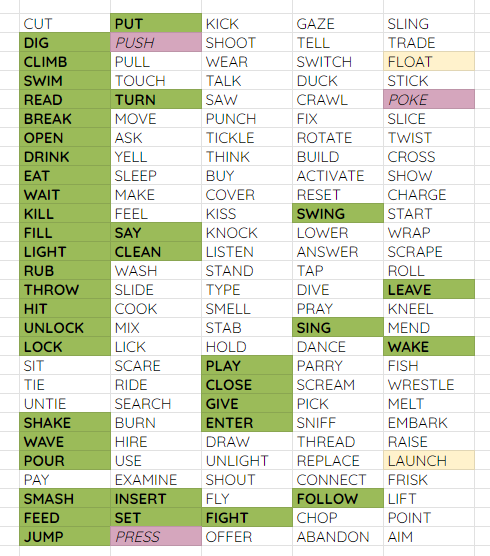
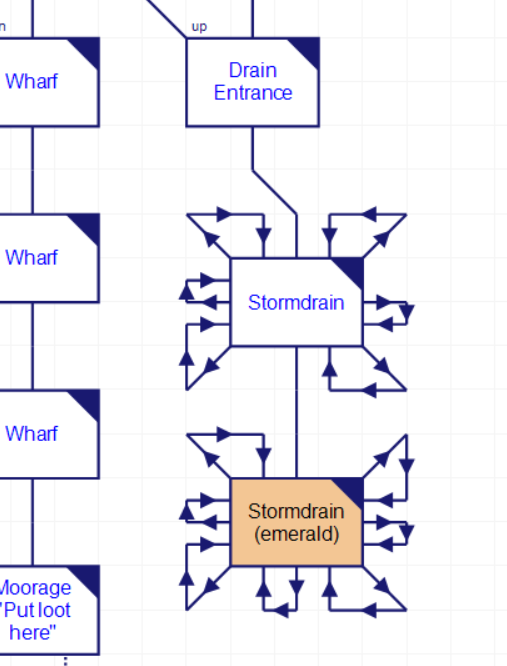

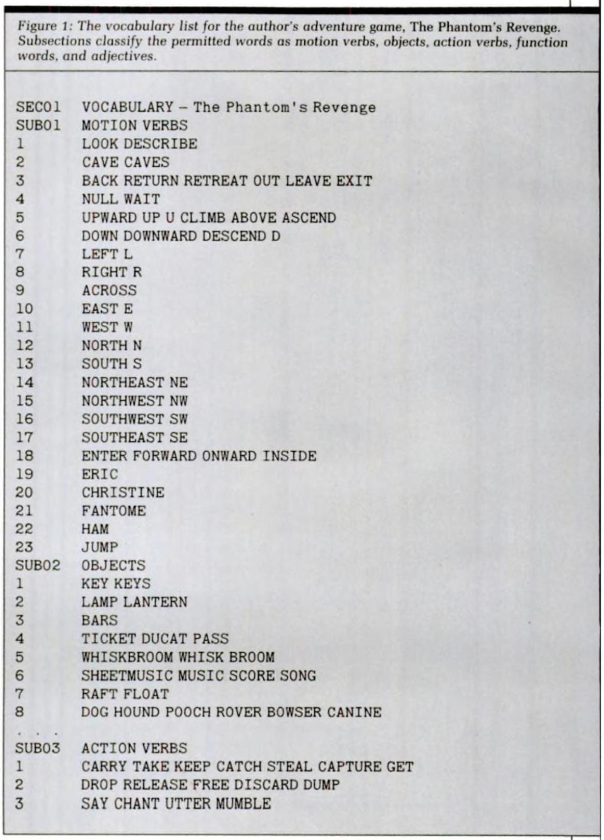


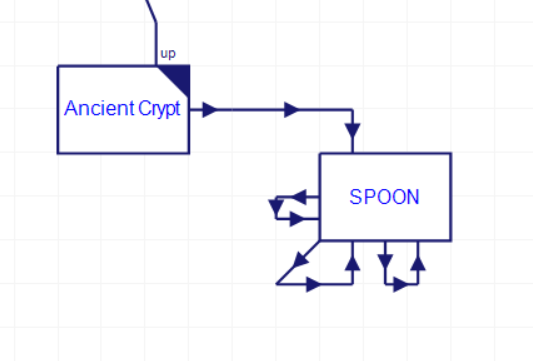


 Renga in Blue
