The twisty maze of passages, all alike:

So, so much better. (See previous installment: Worst Maze Ever.) It was clear early on there was some sensible geography going on with bottlenecks and specific sections. Being forced to drop items like a breadcrumb trail is much more interesting than squinting at the difference between “twisting” and “twisty”.
But also, perhaps more importantly: both dwarves and the pirate are active. The dwarves will pop up at randomly and throw knives at you; you need to throw an axe at them to kill them (it may or may not hit on the first try). Their knives also have a random chance of connecting and killing you back.
THERE IS A THREATENING LITTLE DWARF IN THE ROOM WITH YOU!
ONE SHARP NASTY KNIFE IS THROWN AT YOU!
IT MISSES!
YOU ARE IN A MAZE OF TWISTY LITTLE PASSAGES, ALL ALIKE.
throw axe
YOU KILLED A LITTLE DWARF. THE BODY VANISHES IN A CLOUD OF GREASY
BLACK SMOKE.
The pirate will steal any treasure you might be holding and store it “deep in the maze” as he says.
OUT FROM THE SHADOWS BEHIND YOU POUNCES A BEARDED PIRATE! “HAR, HAR,”
HE CHORTLES. “I’LL JUST TAKE ALL THIS BOOTY AND HIDE IT AWAY WITH ME
CHEST DEEP IN THE MAZE!” HE SNATCHES YOUR TREASURE AND VANISHES INTO
THE GLOOM.
This led (for my game) to some fascinating tactical and story implications. My first time in the maze I entered by dropping from the stalactite (meaning I couldn’t get back or find an exit easily) but I also left behind the axe so I could have more room for items to drop to help make a map. This was a mistake: dwarves started popping up and chasing me around the maze. It turns out you can duck into a dead end and they won’t follow, but will still be waiting for you outside. So a story came out where I was playing a game of cat-and-mouse, ended ignominiously by running out a dead end and getting skewered by a pair of dwarves waiting for me.
My second attempt came from the West End Hall (where it was easy to go back) but things were still interesting because there aren’t enough “normal” items to drop in every room for mapping so I had to resort to treasures. Of course the pirate can at any time snatch those treasures. While collecting treasures for the maze I had to balance out the reward from having more items to use vs. the risk of wasting more time vs. the fact they might be snatched while in the maze anyway. Eventually I realized the geography was sensible and started moving items that were already present rather than bringing in new ones (perhaps the only good effect of the twisty maze of passages all different is that I came in paranoid the geography would be bizarre and didn’t realize this would work straightaway).
Having an actual goal (the pirate’s lair) helped both with motivation and with story. As I kept getting treasures snatched and battling my way through dwarves I felt a tangible sense of getting closer and closer to the source.
The (general) elimination of NE / NW / SE / SW led to a much faster traversal even with the extra story involved. The map above took about an hour to make rather than three hours. Also interesting is that the pirate’s lair requires a northwest exit, so is somewhat “hidden in plain sight” — by that point players may have stopped even trying those directions. However it is still fair because the pirate does explicitly state he’s hiding his treasure deep in the maze, so it makes a puzzle of sorts based on one compass direction.
Everything put together for the most satisfying maze experience I ever recall having in interactive fiction. I can understand a little more why authors at the time wanted to copy it, but most that followed didn’t have the interesting considerations mentioned above.
I’ve already brought it up on a comment thread here and elsewhere, so I might as well make an official link:
Download for Renga in Four Parts
It is in Hugo (any multi-format interpreter like Gargoyle also ought to work).
This is not a “demo” — it is as long as it is going to be and was actually made shorter in initial testing — but more of an “open beta”. If you try it at this stage I have one request: please send a transcript (email address in the about text of the poem).
Here’s the “author notes” from the fair:
Not-frequently asked
Questions about
Renga in Four Parts
So what’s all this then? It’s interactive poetry. Back in 2005 I was theorizing about categories of interactive fiction (like “Hypertext” versus “Gamebook”), and ended up with an empty gap on my chart along the “high freedom of input, user does not control a character in the story” category. The closest I could come up with was Andrew Plotkin’s Space Under the Window, which referenced itself as interactive poetry (even though it wasn’t, strictly speaking, poetry). I thought – why not actual poetry?
So I’ve been puttering with this for 6 years. There were all sorts of bad ideas along the way but the IF Demo Fair gave me a chance to bring my experiment to a finish. Hence: the renga (“linked poem”) you are about to experience.
If this is haiku, where’s the 5-7-5 syllable thing? Japanese poets do not count “syllables”, they count onji, which means “sound symbol” and is not the same thing as an English syllable. In translation to get equivalent sound duration something close to 2-3-2 is a more accurate way to fit English, but even that is only a loose suggestion:
old pond . . .
a frog leaps in
water’s sound
— Matsuo Bashō (1644-1694)
In modern practice poets throw out syllable counts altogether and focus on rhythm in a limited space.
What should I type? It’s up to you. You can type particular words that occur in the text, or words that are implied. You can be entirely experiential and use word-association. Keep in mind that what you type is much a part of the poem as the verse.
>kite
Hovering, unobtrusive
watching over
the grey-sanded beach
Enjoy, and thanks for trying!
I thrashed around in that maze awhile longer. Finally, Alsing said, “Look carefully at the messages on the screen.”
“They’re all the same.”
“No, They’re not.”
Each chamber of this maze within the big labyrinth had a slightly different and unique address, formed by a particular arrangement of the words twisty, little, passages, and maze.
“And what do you do when you get lost?” asked Alsing.
“You make maps, of course.”
— Tracy Kidder, The Soul of a New Machine

Click image for a larger PDF map.
So I wanted the full original Adventure experience, and that included mapping this monstrosity. Despite the clever trick which could be designated the first wordplay puzzle in IF, I hold it is the worst maze ever made. To wit:
a.) It requires, if solved as designed, keeping one’s eyes from blurring the distinction between “twisty” and “twisting”; it is still possible to drop objects around as is more typical, and I would have done so had I not been more than halfway through the above map before the insight struck.
b.) It has no purposes other than dispensing an item which extends lamp life, the usage of which reduces one’s score so there’s really no reason for going into the maze at all.
c.) Even realizing (b.), given Adventure is a treasure hunt and there is the slight possibility of a secret dead end, it’s pretty much necessary to map the whole thing anyway just to be sure.
d.) This is, following a comment in this thread, a spreadsheet rather than a maze. I made a failed attempt at a coherent map before starting on my one-way diagram:

Compare with the entirely reasonable maze found in Crowther’s original:

e.) The dwarves or pirate dropping by could lend some excitement, but they don’t visit. Can’t blame them, really.
f.) The trick shows the way for future “tricks” and caused an endless stream of mazes in games to come, whereas if there was just the twisty maze of passages all alike that might not have happened. (Hyperbolic stretch, sorry.)
I tried to get into the exercise as a zen sort of experience, I really did, but even given the shock of the new Adventure had back in the 1970s (as seen in the Tracy Kidder quote) I have trouble imagining why anyone would want to duplicate this with other mazes back in the day. (There’s the maze of passages “all alike”, of course, but I’m guessing it isn’t that much better.)
The one saving grace is that both the vending machine and exit are naturally findable about 15% of the way in the mapping process. It is possible someone treated the rest of the maze as an “acceptable unknown” and only kept track of the valid routes in and out. Does anyone remember doing this back in the day? I recall being completist about maps even then because I had played too many other games with hard-to-find side passages, but it’s possible with Adventure being the only example at the time people weren’t so scared to leave things untouched. Even given that token of forgiveness there’s no reason NE, NW, SE, and SW should have been allowed as directions other than sheer sadism.
At this point I honestly don’t remember much about Adventure goes, so I’m going to blog about my playing experientially, like The Stack and The CRPG Addict.
I’ve hit a snag on the Don Eckman port:
I CAN SUSPEND YOUR ADVENTURE FOR YOU SO THAT YOU CAN RESUME LATER, BUT YOU WILL HAVE TO WAIT AT LEAST 90 MINUTES BEFORE CONTINUING
IS THIS ACCEPTABLE?
Specifically, SAVE doesn’t work (other than to give this original message, which has interesting implications for authentic play) so I have to restart every time.
I switched over to the Kenneth Plotkin port, which has a single save game that works and normalizes capitalization, but otherwise seems to be fine.
I’ve been playing a lot of old-style adventures lately, and one thing I’ve noticed is my initial forays into the dungeon/fortress/whatever have been purely mapping expeditions. It’s curious if I imagine it in a story sense, that I am creating alternate-universe clones to scout for me before the “real” expedition begins. This is especially the case for old adventures with lots of instant-death-puzzles. For me, part of getting over the amount of instant death was not to imagine each traversal of the map as a coherent narrative: only the last successful trek matters in a story sense.
While Adventure doesn’t have anything in the way of instant death that I’ve seen so far, now there’s an inventory limit of 7 items (*ahem* thank you Don Woods) so inventory optimization is important; fairly early on without any special effort I find myself maxing out my limit.
So I’ve been avoiding picking up things for the moment and just mapping, but even without solving any puzzles (except for the dragon, which I distinctly remember because it was unfair) I can map a huge chunk of the area:

Click the map above for a full sized PDF map.
I find refreshing the vast amount of exploration available for solving only a few puzzles. It’s hard to find the equivalent in modern games (or even many older ones). One tendancy that I’m glad has died out is the “go north one way, go west to go back” trick. Drawing the bottom section around Bedquilt has been torturous. It does, however, accurately convey the same confusion as crawling about a cave.
I’ve been making my maps with Trizbort, which has been working great except for the mazes. They’ll likely be the focus of my next post.
I figured while I was poking at Adventure I might as well move on to the 1977 Crowther and Woods version. Unfortunately, even getting the “most authentic” version can be a challenge; the list of available versions is epic. It would seem a simple matter to just pick WOOD0350 (the original Fortran source) but that version has never been ported directly (due to technical issues with the source being particular to the PDP-10).
David Kinder discusses several other close versions:
Kevin Black’s DOS version of his and Bob Supnik’s DECUS version, available as a DOS executable.
Kenneth Plotkin’s version, available as a DOS executable, MS Fortran source code and the PDP-11 Fortran source code from which the former was derived.
Don Ekman’s version, available as a DOS executable and MS Fortran source code, derived from Fortran source for the PDP-11/70. There is also an Amiga executable, compiled from the MS Fortran source.
I decided to test all of them, comparing with what is allegedly an image of a printout from Adventure being played on a PDP-10.

Kevin Black’s is out fairly quickly:
You are standing at the end of a road before a small brick building. Around you is a forest. A small stream flows out of the building and down a gully. In the distance there is a tall gleaming white tower.
While the gleaming white tower makes me curious it’s certainly inauthentic. Kenneth Plotkin’s version is better — the text essentially matches — but it normalizes the capitalization, which makes me wonder if there are any other minor changes.
Hence I went with EKMA0350, the Don Eckman Microsoft Fortran port (according to the READ.ME file, the only tweaks were for the sake of compiling).
HAVE PATIENCE. IT TAKES A WHILE TO INITIALIZE…
Effective immediately Colossal Cave is open all day, even during working hours. Although we are no longer locking the cave, you are expected to exercise some degree of self discipline.
WELCOME TO ADVENTURE!! WOULD YOU LIKE INSTRUCTIONS?
Already there’s a dose of charm, a reminder that this used to be playable only on very expensive servers that were normally used for “work” and “productivity”. There’s even an HOURS command (mentioned in the game information):
COLOSSAL CAVE IS OPEN TO REGULAR ADVENTURERS AT THE FOLLOWING HOURS
MON-FRI: OPEN ALL DAY
SAT-SUN: OPEN ALL DAY
HOLIDAYS OPEN ALL DAY
I presume this was originally set to be down during work hours. I confirmed this by trying a version of Adventure (440 point version) available on a PDP-10 simulator via telnet. Trying to start a game led to a very curious prompt:
I’m terribly sorry, but Colossal Cave is closed. Our hours are:
MON – FRI: 0:00 to 11:00
17:00 to 24:00
SAT – SUN: Open all day
HOLIDAYS: Open all day
Only wizards are permitted within the cave right now.
Are you a wizard?
#YES
Prove it! Say the magic word!
BLAHBLAH
Foo, you are nothing but a charlatan!
We do allow visitors to make short explorations during our off hours.
Would you like to do that?
I could go on a theoretical tangent about how the server is hosting a literal location that can be open or closed like an amusement park, rather than a story-narrative, but I’d rather get back to the Don Eckman port:
YOU ARE INSIDE A BUILDING, A WELL HOUSE FOR A LARGE SPRING.
THERE ARE SOME KEYS ON THE GROUND HERE.
THERE IS A SHINY BRASS LAMP NEARBY.
THERE IS FOOD HERE.
THERE IS A BOTTLE OF WATER HERE.
I and INV don’t work, but INVEN and INVENTORY do, hooray!
YOU ARE CURRENTLY HOLDING THE FOLLOWING:
SET OF KEYS
BRASS LANTERN
TASTY FOOD
SMALL BOTTLE
WATER IN THE BOTTLE
In the room it’s called a “lamp” and in inventory it’s called a “lantern”. Also you can still refer to it as a “headlamp”.

The “Forest (2)” room is rather mysterious: it can only be reached by going north from the regular Forest room, and only by random chance (1 out of 4, seems like). Why include that room? I suppose already at this stage Crowther was trying to make the outside seem larger than it really was. I remember in the 80s when I first played Adventure I wandered outside a long time curious if there was some obscurely hidden treasure. (I double checked and this map oddity is also in the Crowther original, so this isn’t a Woods addition. They means I’ll probably shuffle this comment into the other post at some point, but for the moment I’ll let this stand.)
* The LAMP in the game can be referred to as a HEADLAMP. In other words, the proper visualization is not this
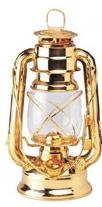
but this:
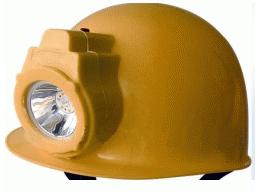
* WEAR is understood as picking something up.
* The game is in a “semibrief” mode of sorts where a full room description is displayed upon first entering a room and then once every five turns (in case someone flails around trying wrong directions, I suppose?).
* XYZZY works after all. Mea culpa.
* The solution to the bird puzzle is spoiled in the HELP response, again seriously suggesting the work-in-progress nature of the game (since it is only one puzzle out of three).
* The bottle of water lets you pour it on the ground.
* There are two ways to get “stuck”: 1.) you can use XYZZY to teleport without the lamp, and then can’t go anywhere without breaking your neck in a pit or 2.) you can kill the bird, blocking the ability to solve a later puzzle.
* The response to GET MIST:
MIST IS A WHITE VAPOR, USUALLY WATER, SEEN FROM TIME TO TIME IN CAVERNS. IT CAN BE FOUND ANYWHERE BUT IS FREQUENTLY A SIGN OF A DEEP PIT LEADING DOWN TO WATER.
* Also of note:
blast
BLASTING REQUIRES DYNAMITE.
* After more toying I’ve gotten the crystal bridge to appear; it requires the same object but a different verb than the 350-point version.
* Unlocking the grate and getting by the snake also have dynamic hint messages associated with them, but I haven’t been able to get them appear (but given my experience with the crystal bridge, they may still be accessible somehow). I suspect it possible Crowther planned for every puzzle to have a corresponding dynamic hint.
A long held-belief about Crowther’s Adventure was that it was designed as a “cave simulation” and it was Woods who came along added magic and treasures and turned it from interactive simulation into interactive fiction.
We know, from the hard work of Dennis Jerz locating the original source (before Don Woods started modifying it) that this is not the case: the original Adventure included puzzles, treasures, and fantasy. However, it never answered the question that seems to follow immediately: how does it play? (Past this point there are spoilers.)

(Click the image for a full PDF map.)
The map is much smaller than the Woods-modified game, although many of the iconic locations like the Hall of the Mountain King and J2 are there. However, one gets the strong sense this was an abandoned work in progress. The bottom level (with Bedquilt and the Swiss Cheese Room) has exits that don’t work, and one that crashes the game. The area even has a sign that says: ‘CAVE UNDER CONSTRUCTION BEYOND THIS POINT. PROCEED AT OWN RISK.’ I first took this sign as an signal of danger in the in-game universe, but instead it appears to be Crowther’s marker that the code is unfinished past that point.
There’s a long featureless hall to the west leading to nothing. Nearby is the twisty maze of passages, all alike, although it’s different here than in the Woods version:
There’s no items and no point in entering the maze (other than noting it is rather less twisty than the one Woods came up with!).
There are three puzzles (grate, bird, and snake) and five treasures (marked at the end with an exclamation point, like THERE ARE MANY COINS HERE!) but they are all distributed very near the Hall of the Mountain King, as if Crowther had just started scattering them. Besides that, there’s no score, and no special message or ending if all the treasures are brought back to the brick building.
Other items worth noting:
- Upon dying, there’s an option to continue playing:
YOU FELL INTO A PIT AND BROKE EVERY BONE IN YOUR BODY!
PAUSE GAME IS OVER statement executed
To resume execution, type go. Other input will terminate the job.
go
Execution resumes after PAUSE.
It works just like an UNDO command would.
- TAKE ALL doesn’t work (not surprising) but INVENTORY doesn’t either (!), so the player is forced to keep track of their inventory separate from the game.
- Going down the grate is a one-way trip. However, “PLUGH” works in the Y2 Room to get the player back to the brick building.
- XYZZY also seems to be in (it is described in the text and parsed) but I was never able to get it to work. (ADDED: It works just fine, see my followup post.)
- The axe-tossing dwarf is in, although there doesn’t seem to be anything the axe is usable for. More dwarves can come later to throw knives, but the only recourse seems to be ATTACK (verb only) and randomly kill one (while they randomly kill you back, although the undo feature mitigates that).
- TAKE ALL doesn’t work (not surprising) but INVENTORY doesn’t either (!), so the player is forced to keep track of their inventory separate from the game.
- Going down the grate is a one-way trip. However, “PLUGH” works in the Y2 Room to get the player back to the brick building.
- XYZZY also seems to be in (it is described in the text and parsed) but I was never able to get it to work. (ADDED: It works just fine, see my followup post.)
- The axe-tossing dwarf is in, although there doesn’t seem to be anything the axe is usable for. More dwarves can come later to throw knives, but the only recourse seems to be ATTACK (verb only) and randomly kill one (while they randomly kill you back, although the undo feature mitigates that).
- Typing out NORTH and WEST and other directions in full will eventually yield the message:
IF YOU PREFER, SIMPLY TYPE W RATHER THAN WEST.
- Swearing is recognized.
- There’s a dynamic hint for the bird puzzle in the source code, where the game ought to print:
ARE YOU TRYING TO CATCH THE BIRD?
whereupon you should be able to type YES and get a hint. However I wasn’t able to get it to trigger, it could be the code is buggy here.
- The source also mentions the crystal bridge, but again, I haven’t been able to get this to trigger and suspect it might be buggy. (ADDED: I was able to get it to work, see my followup post.)

Robb Sherwin is the author of Fallacy of Dawn, Necrotic Drift, and other works. His new game coming out soon is called Cryptozookeeper.
Read the rest of this entry »
Rise of the Videogame Zinesters written by Anna Anthropy
The only thing that bothers me about this article is that the notion of using interactive fiction for an independent view is somehow new.
Maybe the title of the article should be Discovery of the Videogame Zinesters?
Joe Dever (of Lone Wolf fame) also wrote a short post-apocalyptic series (4 books).
The first book has now been put online by Project Aon.
You are Cal Phoenix, the Freeway Warrior, champion and protector of Dallas Colony One. A murderous gang of HAVOC clansmen, led by the psychotic Mad Dog Michigan, are bent on destroying your fragile colony as it crosses the wastelands of Texas on the first stage of a life-or-death exodus to the California coast. These bike-riding clansmen are a formidable enemy: armed, cunning, and extremely dangerous, capable of launching a lightning raid at any time, day or night. You will need all your wits about you if you are to defend your people and reach your destination intact!


