This one was from a while ago, and while I’m not replaying (I beat the game, just not with a full score) I did check a walkthrough that was posted last year (after I had finished) because I was still bothered by the mazes.
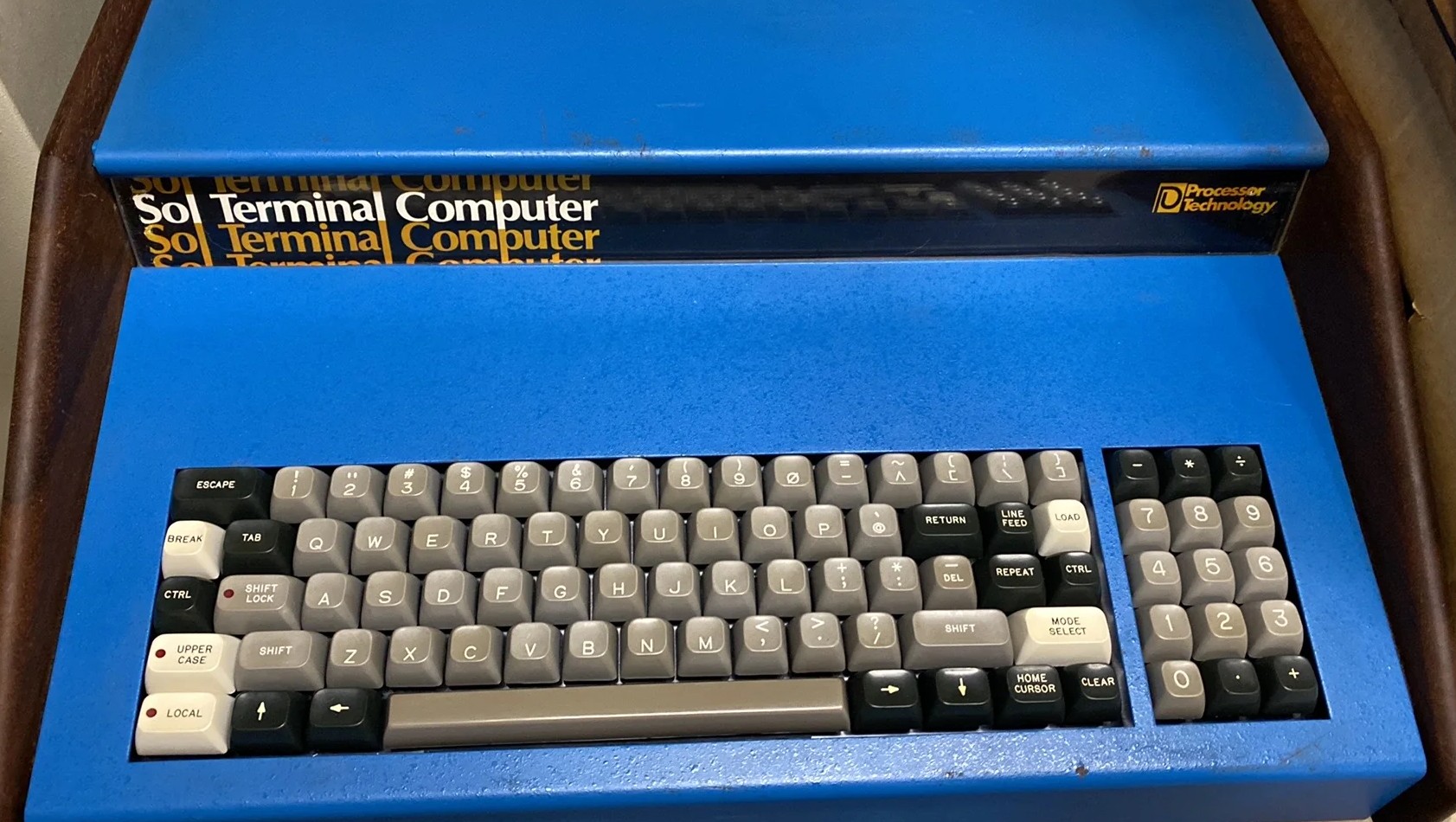
From Bonus Life Computers, $1999.99.
It was a game on the Sol-20 that was clearly heavily inspired by both D&D in general and Tomb of Horrors in particular. It has the finale with the demi-lich that’s only a skull. As it now has come up in two adventure games (Skull Cave and Epic Hero #2), I think it’s worth it to go into a brief aside on the history of Tomb of Horrors itself, then I’ll return to the new(-ish) discovery about the mazes. This combines information from Playing at the World by Peterson, Gygax’s foreword to Return to the Tomb of Horrors, and Dungeons & Dragons Art & Arcana: A Visual History.
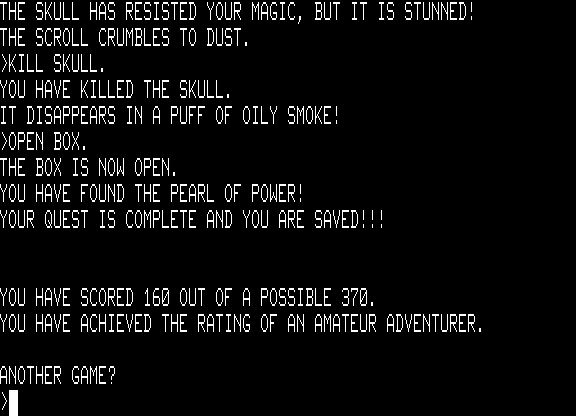
Alan Lucian was part of the same wargaming circles as Gary Gygax, joining the International Federation of Wargaming in 1969 and serving as one of their Senators in 1970. He also wrote an article in the same year about the board game Jetan, invented by Edgar Rice Burroughs for his John Carter series. (Excerpt below from The Chessmen of Mars.)
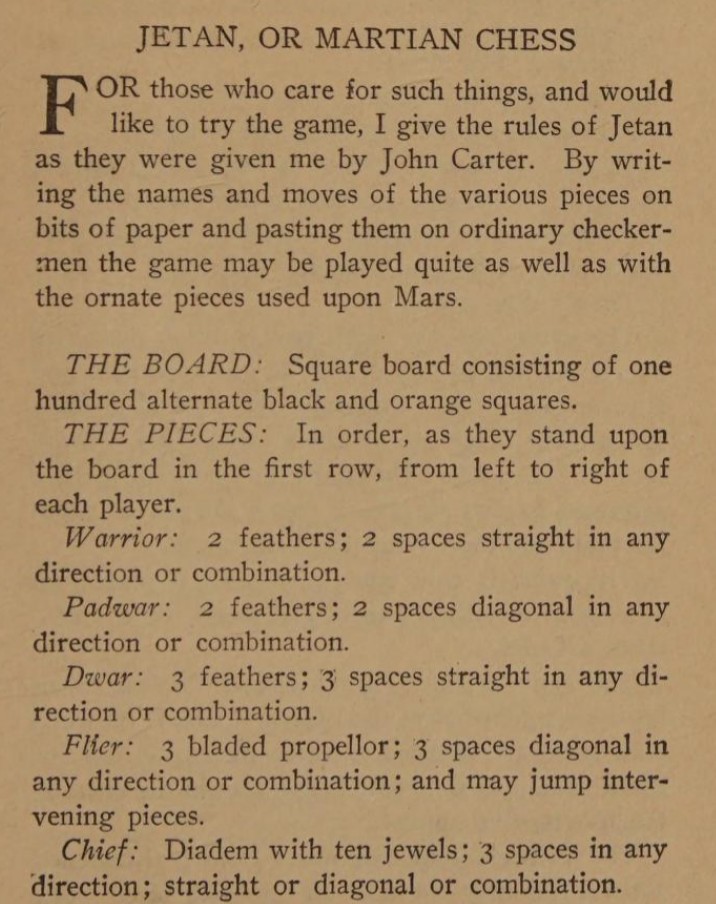
Gygax ran a play-by-mail game space-combat game (originally by Tullio Proni, revised by Gygax) called The War of the Empires. It ran for two years starting in 1969; Lucian tried to restart the game after it lapsed. Lucian was clearly known to Gygax as he gets mentioned in a letter by Gygax as potentially having interest in the newly-designed Dungeons & Dragons.
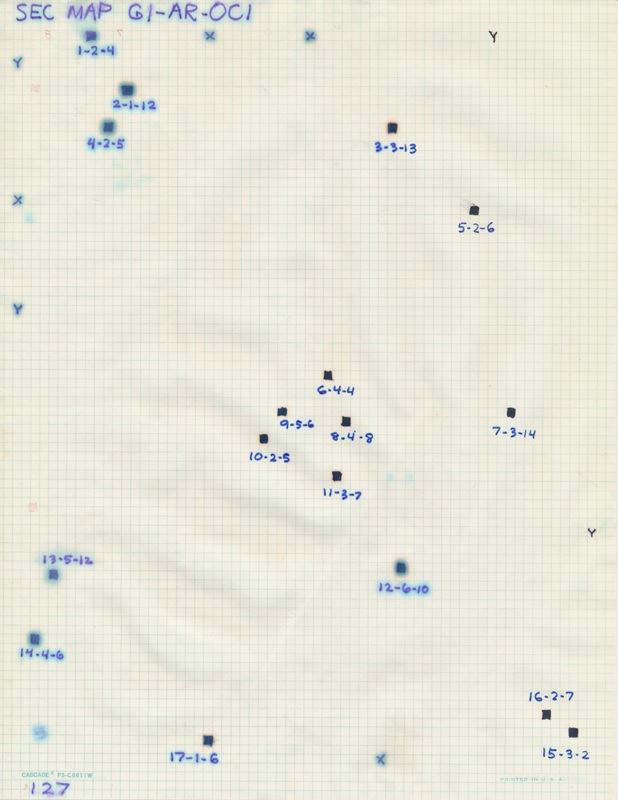
From Jon Peterson’s blog.
Lucien was indeed interested, and ran a Dungeons & Dragons campaign in California. In 1975 he sent to Gygax a new dungeon (handwritten on four pages, not including the map on graph paper): Tomb of Ra-Hotep. It was themed around an Egyptian tomb with many traps.
Passage turns into crawl space, and 6 [the end] contains 5-20 cobras! Can’t turn or run — crawl backwards away. Treasure is Ring of 3 wishes / Delusion (very hard to guess this one!) and Scroll of 7 cleric spells.
The final enemy, Ra-Hotep the lich, has a “jackal stick” with a Sphere of Annihilation at the end.
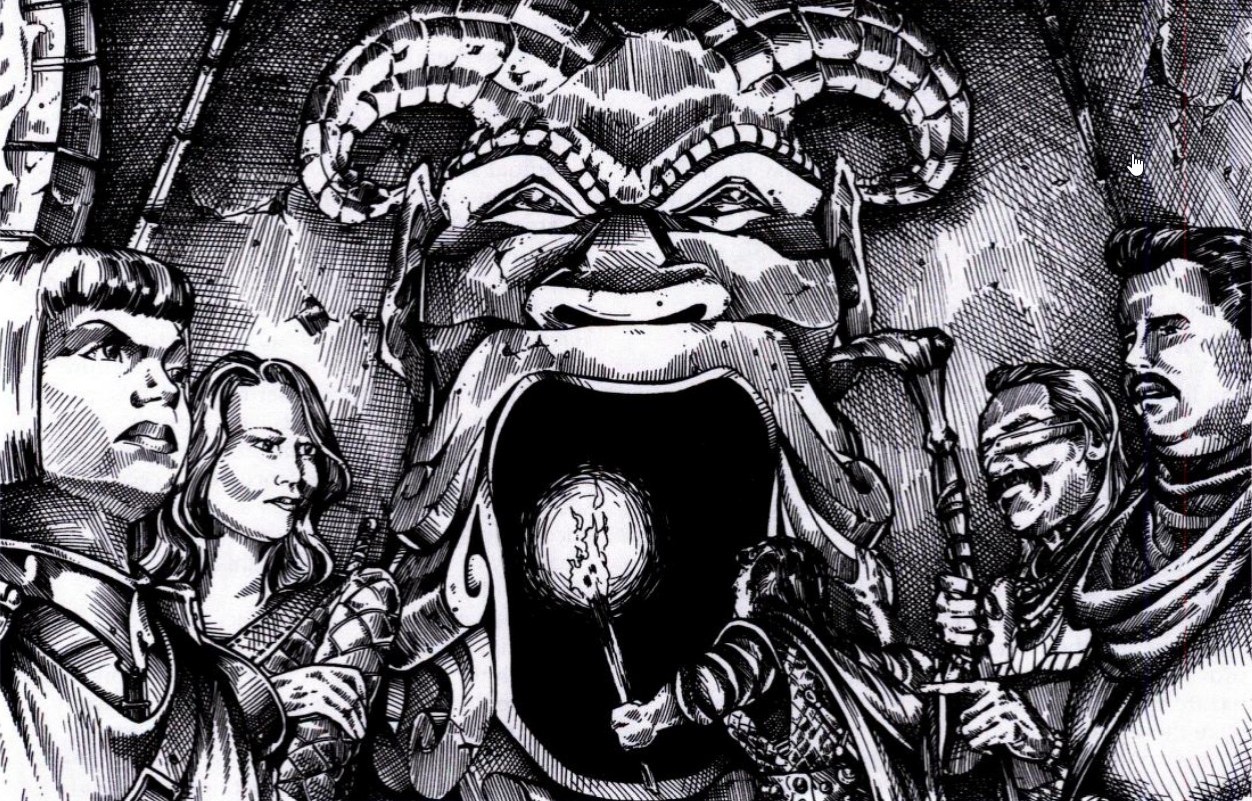
The sphere later got moved to a devil face at the end of the starting hallway. Source. The sphere causes instant annihilation to anything that touches it.
Gygax got back to Lucien (February 1975) that he had “reorganize[d] your excellent tomb area” and ran it through a trial. Quoting Gygax:
From his basis I developed the material that was to become the Tomb of Horrors, and I admit to chuckling evilly as I did so … Specifically I had in mind foiling Rob Kuntz’s PC, Robilar, and Ernie Gygax’s PC, Tenser. To make a pair of long tales truncated, Rob, by expending a lot of ore servants, managed to get through to the final encounter, and as the skull of the demilich rose to assail the one daring violation of his sanctum, Robilar swept all immediately visible treasure into his bag of holding and escaped. Ernie likewise managed to attain the ultimate, destroyed Acererak, and likewise left laden with loot.
All this eventually resulted in a “competition game” at the first Origins convention in the summer, where players were given two hours to get as far as they could through the Tomb of Horrors. The rules reflect the set in 1975, including mention of the later-scrapped character classes Divine and Mystic. The final enemy was now an unnamed lich that was merely a skull (that would become Acererak in the published version of 1978). Illustrations were included to be used during gameplay, made by a local 14-year-old, Tracy Lesch.
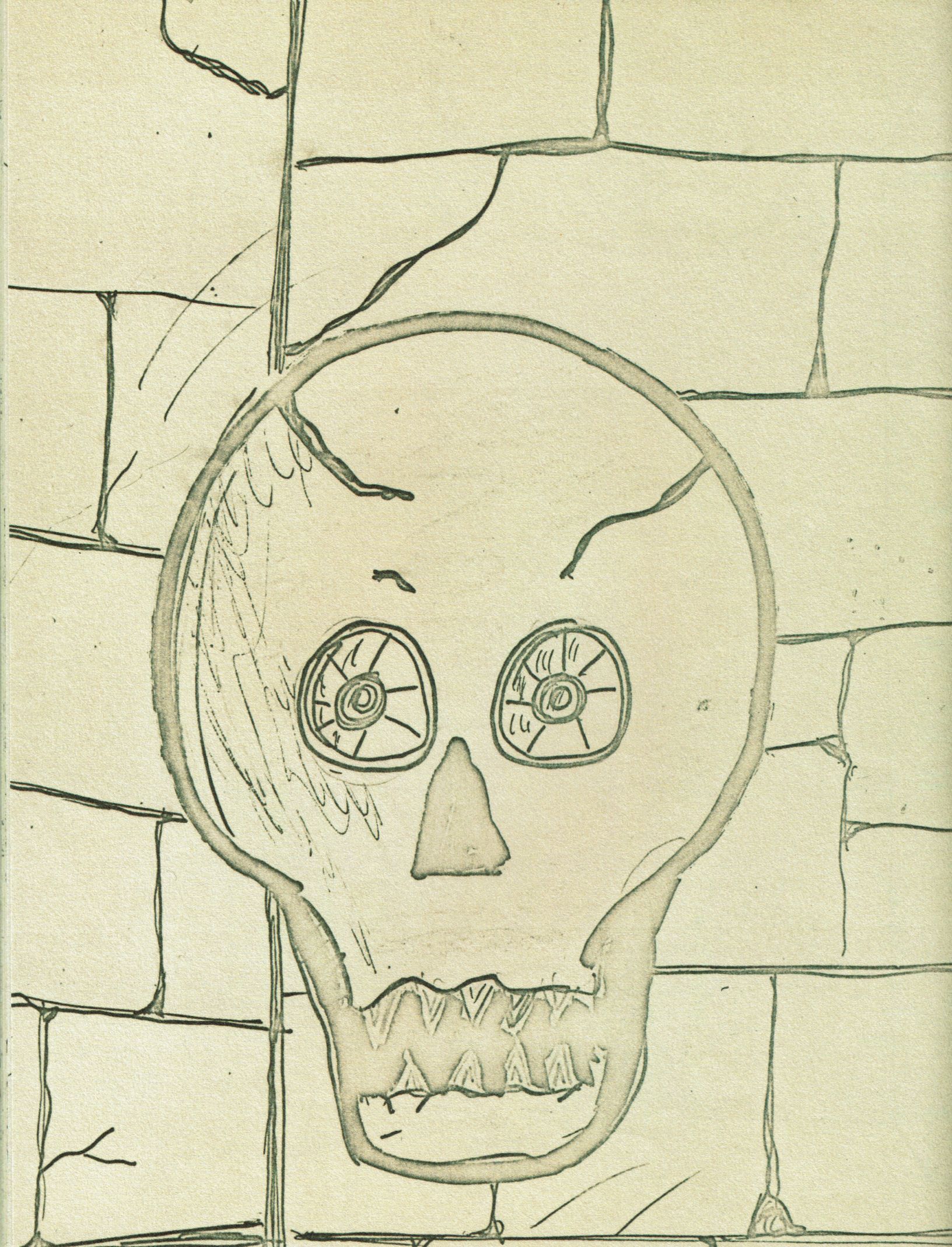
Lesch’s illustration of the lich at the end.
The illustrations were a genuinely novel element, but for my purposes I’d like to emphasize: so was the gameplay style. This was a game not about combat so much as puzzles. (I’ve run Tomb of Horrors before as a Dungeon Master, and one of the players was clearly getting irritated at the lack of combat rolls.) So much of the dungeon feels oriented around methods of survival while working out traps and magical items that it comes off more as an “adventure game” (in the computer-genre sense) than a “RPG” (again in the computer sense). The final battle against Acererak involves such an overpowered set of abilities that to win a player needs to do something clever rather than just attack.
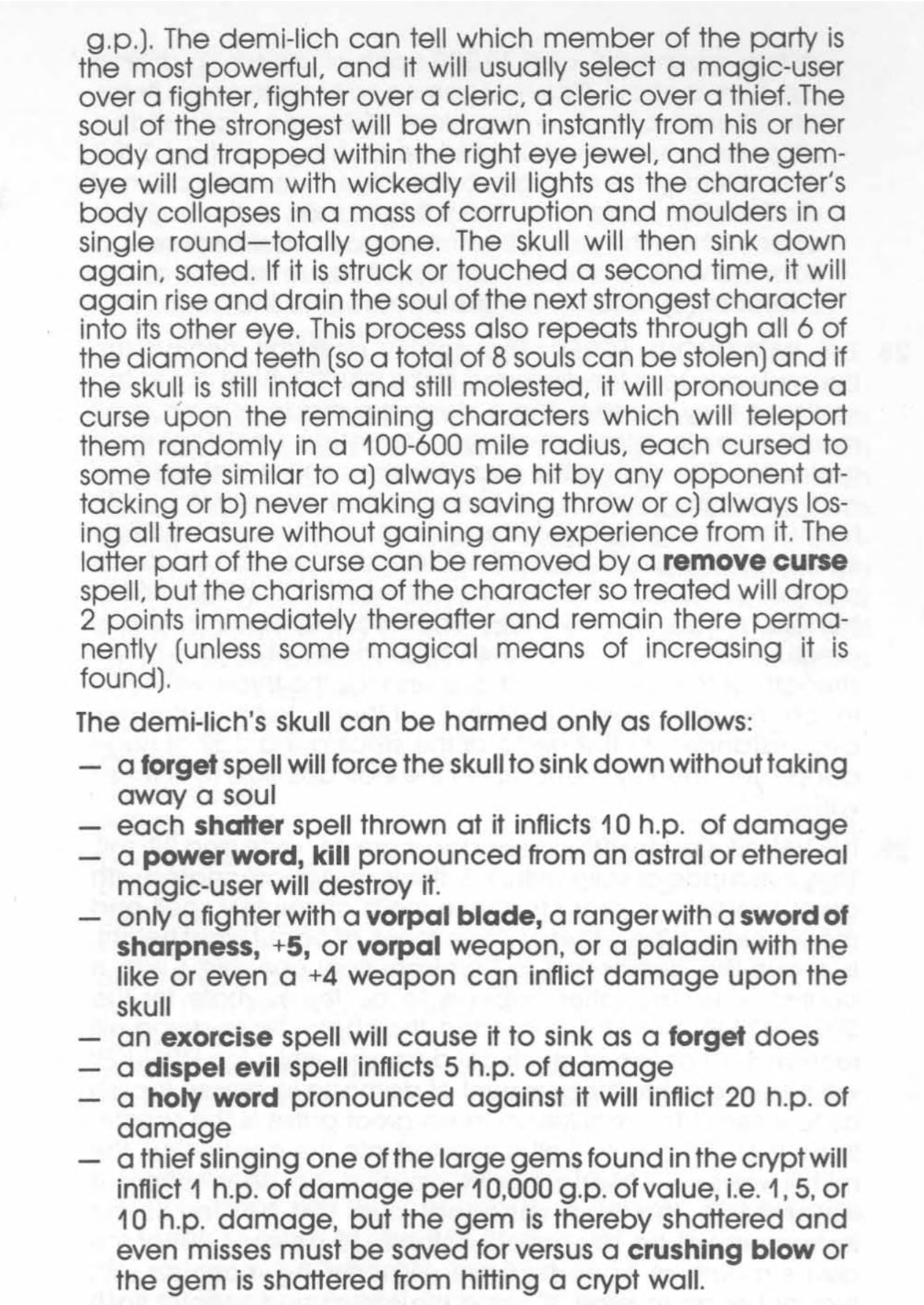
If touched (or struck) the lich targets the strongest character and sucks their soul.
This was true in the competition as well; one team took a cursed crown/scepter pair meant to trap players, and put the set on the demi-lich, vaporizing it. (The problem with having your villain lair full of deathtraps is they can be used against you!)
When D&D became popular, while some adventures tried to embrace it as much as possible (see: Cornucopia) others struggled because combat in adventure games just isn’t that interesting except for small segments. (Zork I has memorable combat, but it uses the combat system for the troll and the thief and nothing else. Not a standard dungeon crawler!) Adventure games lean so hard into the player being more of a “trickster” than a “warrior” that it became routine in this era for weapons to be red herrings. The one famous D&D campaign whose gameplay matched this sense was Tomb of Horrors, so it doesn’t surprise me to see two explicit references (there may have been more general inspiration elsewhere).
Let’s get back to that Sol-20 game.
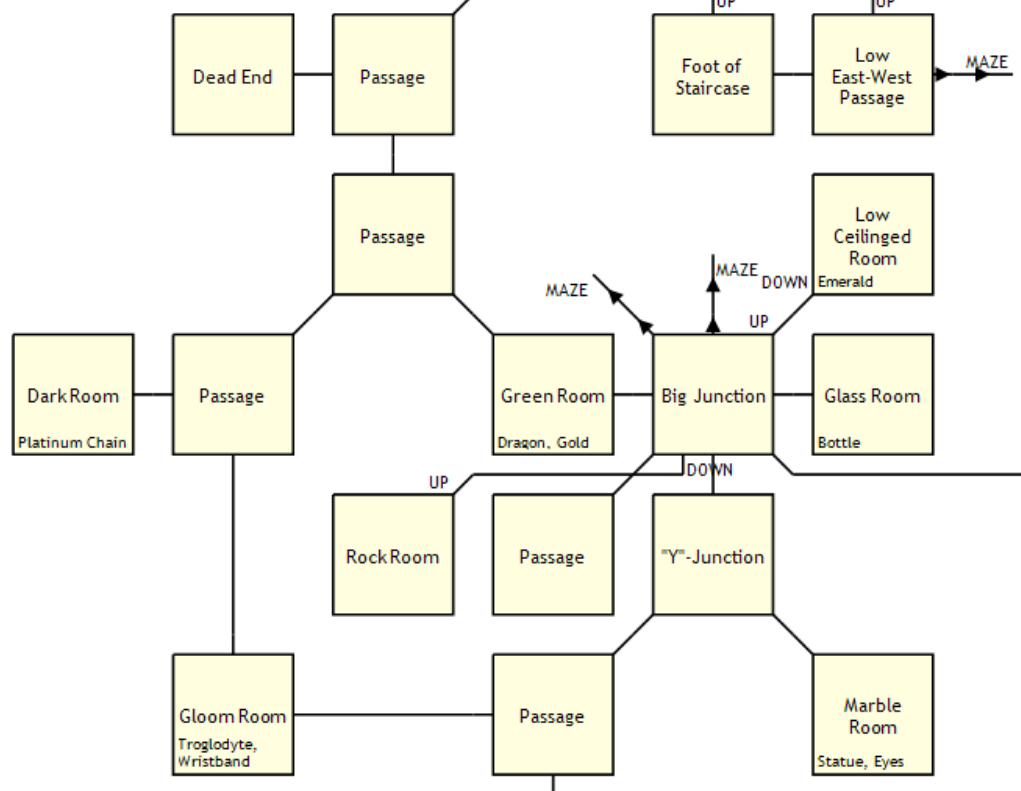
Map from impomatic.
The map is divided into a north area and a south area; the north area has a maze of passages “all different” and the south area has a maze of passages “all alike” (where a thief resides, and likely is meant to be the Zork thief). The problem is both mazes are, as I stated in my previous post, literally unmappable.
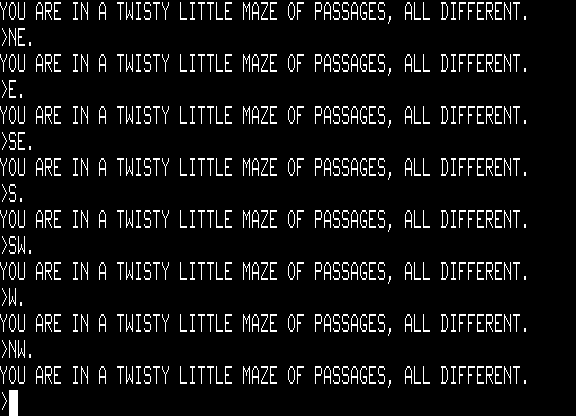
You cannot drop items (they get teleported away), and there are no sound clues or other messages. You might ask: how did the walkthrough (by benkid77) manage? By hacking the binary code of the game.
Each maze is a single room. There’s a series of five bytes giving the answer to maze 1 and six giving an answer to maze 2. There’s no representation of movement; the game simply checks the last five (or six) directions taken, and if they match the answer, the player is moved to the exit.
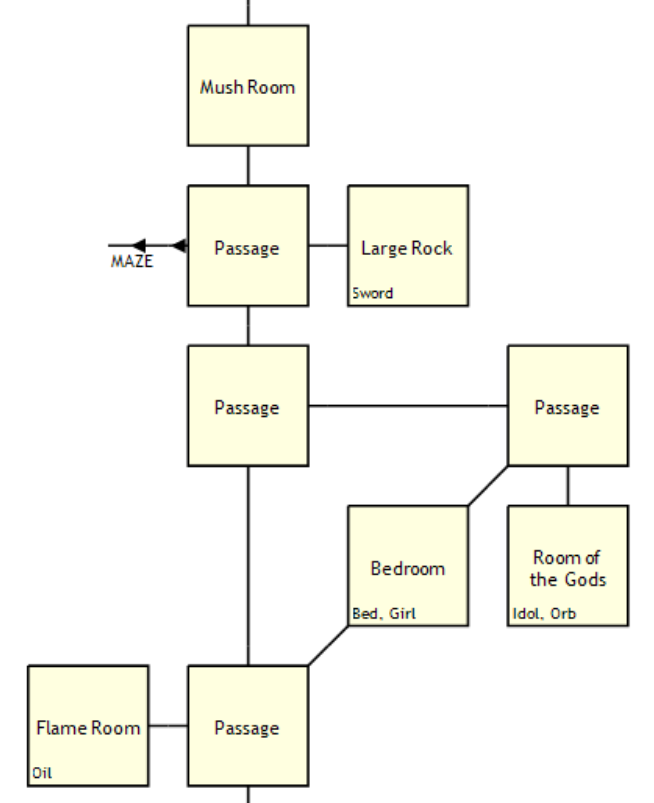
The part of impomatic’s map with the link to Maze 2, with the thief. There is no map of the maze because a.) there aren’t even any “rooms” in the normal sense and b.) benkid99 hadn’t done his hacking yet when this map was made.
Letting benkid77 take over:
There are three routes out of the first maze and two out of the second maze.
Four out of the five have been shown in the walkthrough above. For completeness, the fifth is from maze 1:- U, W, D, S, S -> Low east-west passage. But this was surplus to requirements.The 32 maze route and destination bytes are found at game file offset (and therefore memory location) 0BA0:
Maze 1, the “all different” maze:-
0BA0:
02 02 02 02 02 16
S, S, S, S, S -> Witt’s End0BA6:
01 03 06 02 0A 13
N, E, D, S, SW -> Big Junction0BAC:
05 04 06 02 02 0A
U, W, D, S, S -> Low east-west passageMaze 2, the “all alike” maze:-
0BB2:
02 03 02 03 02 03 2A
S, E, S, E, S, E -> Passage (to the east of Flame Room)0BB9:
07 05 04 01 06 04 26
NE, U, W, N, D, W -> Thief’s Lair
He goes on to ask “how the player would find these routes without disassembling the game.”
The odds are astronomically unlikely to stumble upon the correct sequences and usual mapping methods do not work here. I wonder if there may have been some additional documentation or hints accompanying the game, or some other clues I might have missed?
The “some other clues” is the kicker here: does anyone want to give it a try? You’ll likely need to play the game or at least watch the video of the complete walkthrough (meaning this is not something I expect people to solve in five minutes in the comments, but you never know). Even if there really is no answer (maybe the author had a plan but never finished; keep in mind this is an “unpublished” game) I still thought this was worth highlighting for how outrageous the setup is.
Coming up: a story that begins in the depths of WW2.


 Renga in Blue
Leave a comment