I’ve made progress on but haven’t yet finished the ADV part of Cosmo Cross; while I suspect the section is short, I made it through enough content to report in.
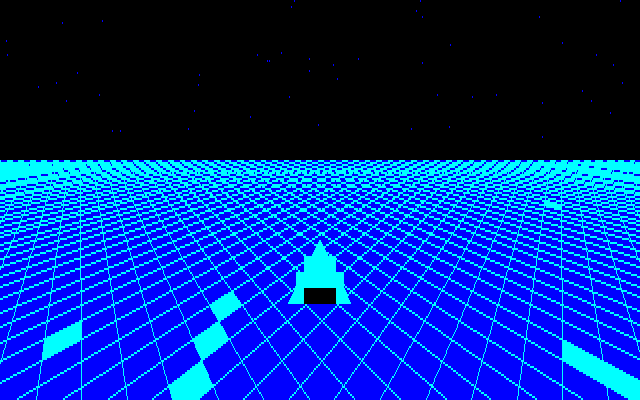
To continue from last time, I had found some difficulty beating the space combat portion that starts Cosmo Cross, so used the raw power of editing the BASIC code to jump to the part most relevant to this blog, the adventure. Once reaching orbit you activate a signal device and get a text message about getting teleported to Ariosferia.
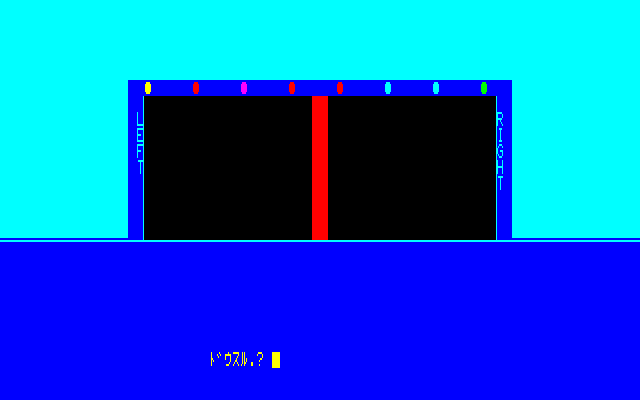
Soon you will see the surface of the planet, and arrive at the entrance to the base at its center.
The instructions also warn “you must never look behind you.” You’ll see what’s going on with that shortly.
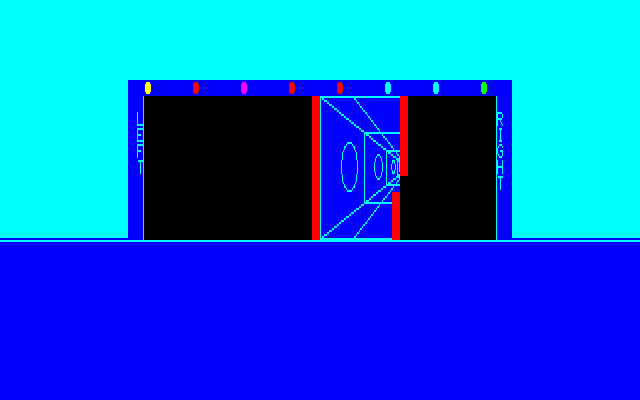
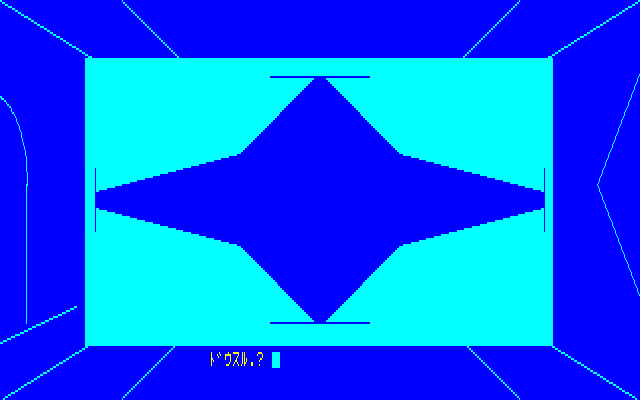
The parser is the kind (like original Mystery House) that asks verb and noun to be typed on separate lines; confusingly, sometimes a modifier is also requested. Here, you need TO OPEN / DOOR / LEFT or OPEN / DOOR / RIGHT. This will cause an animation showing one side or the other opening, and then GO / FRONT (not FORWARD or the like) will advance inside.
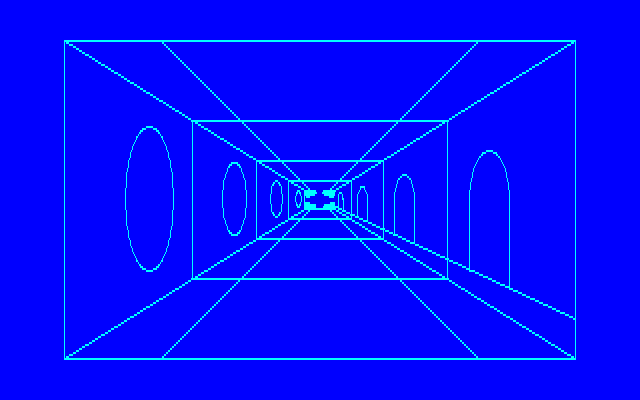
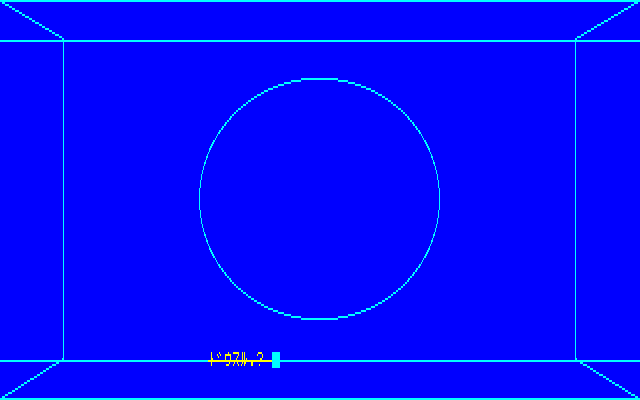
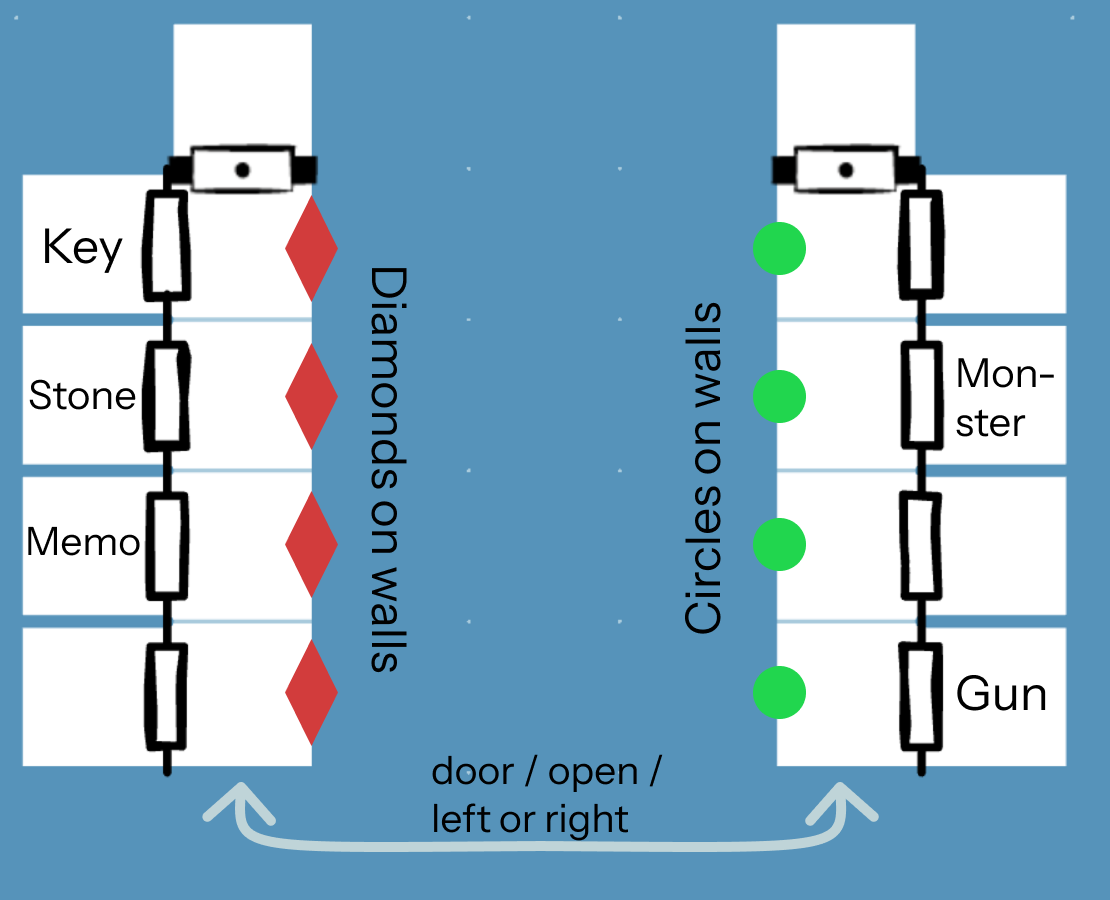
The left and right side consist of a series of four doors, and a series of four … windows? decorations? On the shot above when facing one of the windows I haven’t been able to do anything. After TURN / LEFT:
The game gives a full list of verbs if you press the HELP button on the keyboard. Other than OPEN, GO, and TURN which we’ve already used, there’s USE, TAKE, SHOOT, and PUSH. Helpfully, if you type one of these verbs and it doesn’t apply, the game will just prompt you for a verb again; at the “window” or whatever that is, I tried all four, indicating either some other condition needs to hold or they really are just decoration.
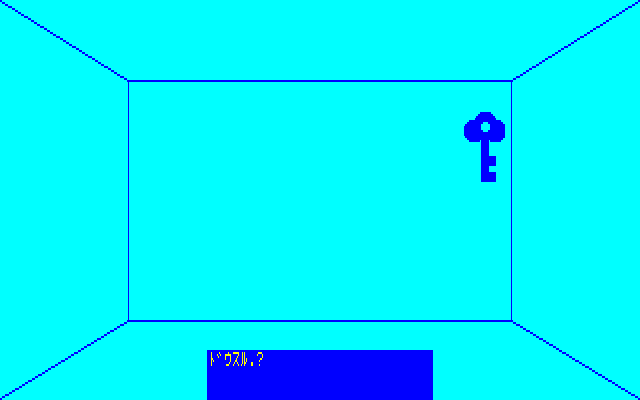
Opposite the symbols are doors leading to single rooms. Some are empty, some have items. The big issue has been identifying what the items are. While this one is clearly a KEY…
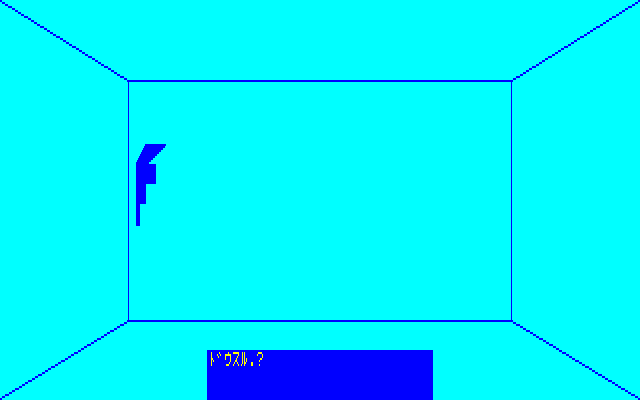
…what about this item?
After some squinting and thinking about the word SHOOT on the verb list, I decided (correctly) it was a GUN.
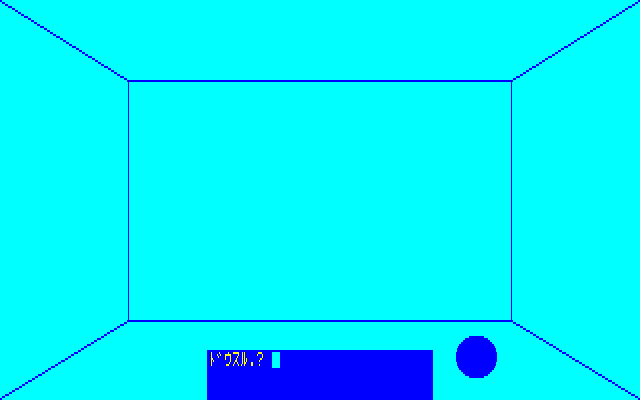
It was a bit harder for me to realize with the screen above I was dealing with the STONE (that is, the Bluestone we’ve been trying to find).
Here is the complete map of the two sections (at least in my playthrough – I’m fairly sure everything seen can shift around):
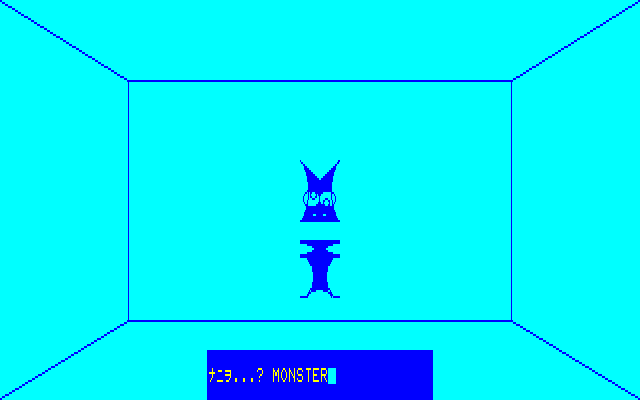
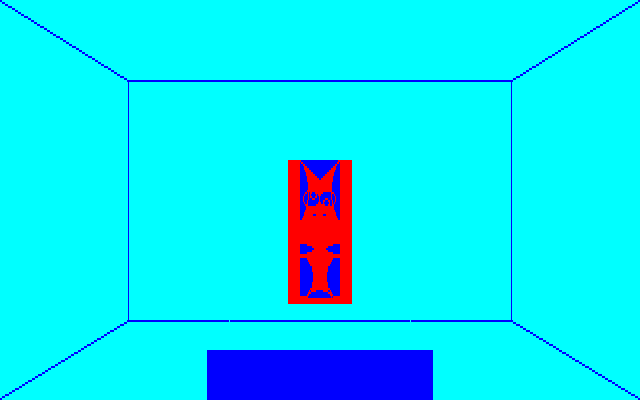
The “monster” is the one oddity; a creature moves around when you walk in, and it took a lot of noun-hunting before I decided to SHOOT / MONSTER. There doesn’t seem to be any positive effect. I may be in a situation like the squid in The Palms where the encounter is “optional”.
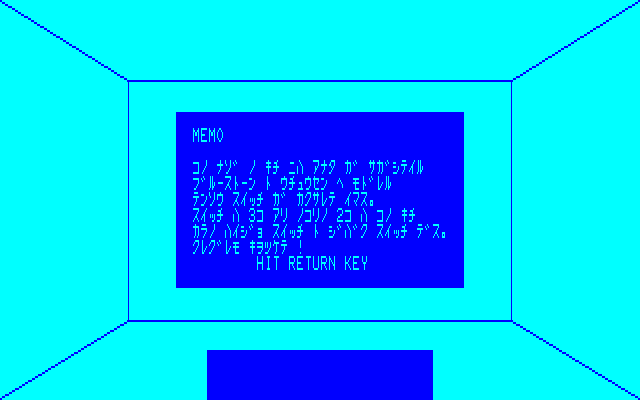
One room has a rectangle where the only reason I could come up with MEMO was the suspicion the author had played Mystery House 2. Taking the memo reads it automatically.
The memo indicates the Bluestone and the teleport switch to return to the spaceship are both hidden, and that there are three switches, including a “self-destruct” switch.
Two more details: the end of each hall has a figure which may or may not be passable. Via testing verbs I found the game was wanting USE, yet none of my items — and I apparently had all of them available — did anything useful.
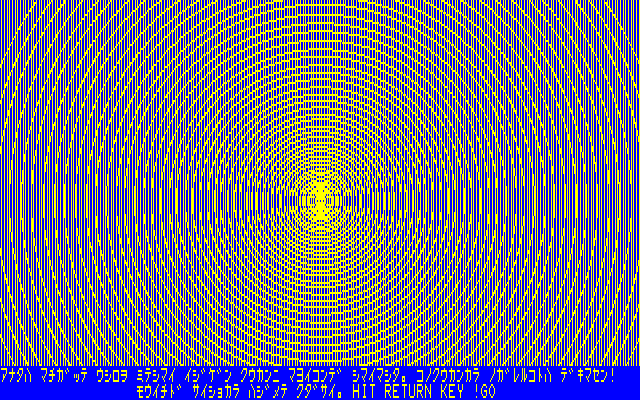
Finally, there’s the ominous “don’t turn around” message. If you turn to face “south” on my map you will outright die. This might have been a dodge to get out of drawing the opening room, but it’s a wonderfully atmospheric way to do it. I always felt a small bit of pressure while walking around even though this isn’t an intense/time based area like the first section of the game was.
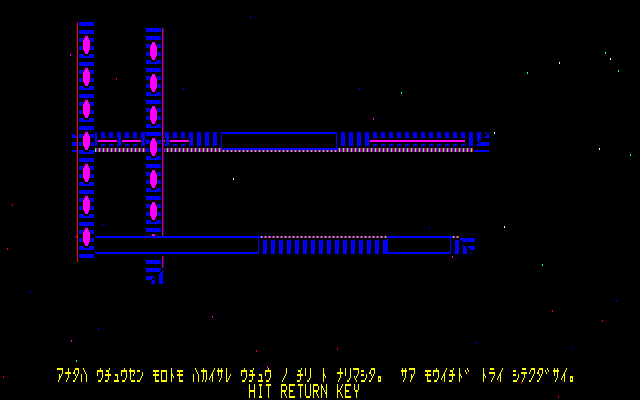
Sent to another dimension!
My guess is at least one of the “windows” or whatever those are have some extra secrets, so I need to laboriously test each one; the game tries to animate movement as much as it can so every step is sluggish. I still expect an escape with the Bluestone next time, and I’ll at least try the later sections; no promises I’ll get that far, though.
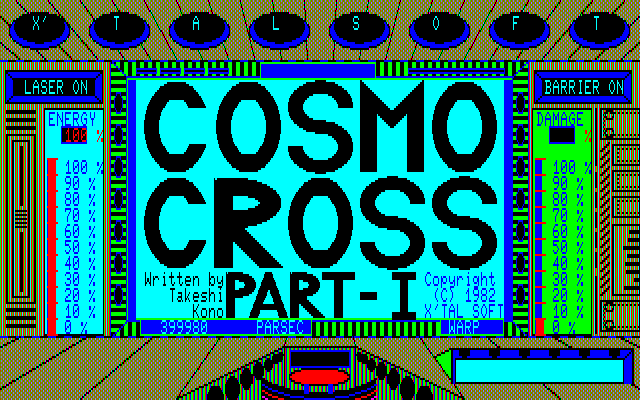
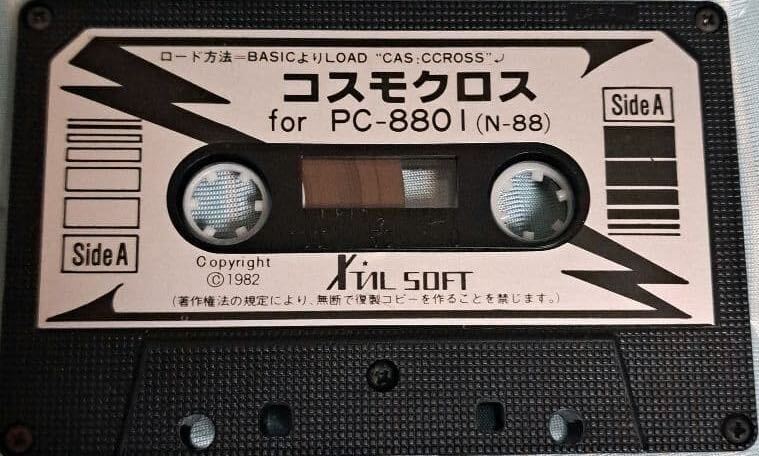
The company for today’s game, confusingly, goes by X’TAL SOFT, XTAL SOFT, or CRYSTAL SOFT depending on what document you are looking at. At least the title of the game is straightforward:
Except for the “Part-I”, thing, but that’s not part of the title; the game was sold as one whole but the three different parts are accessible with different passwords. Part-I is reached with XTAL.
The founding president, Yoshiyuki Morita, was a music fan in high school (along with Takeshi Kono, who he discussed rock and guitars with) and after graduating from university he founded the music studio “SKY SOUND” in Osaka. I found a 1982 recording from the studio, if you want to hear what sort of work they did:
In 1980, he saw a PC-8001 in Nipponbashi (aka “Den Den Town”, the second big electronics haven in Japan after Akihabara), and bought a MZ-80B for his studio “under the guise” of customer management.
Den Den Town in the 1980s. Via @carllin117464 on Twitter.
He found the management software terrible and learned programming by modifying it to be usable. This experience gave him enough of a taste of software development he wanted to work on his own. Because of the tape-based nature of computers at this time, it was not that unusual to switch from music to games; he founded Xtal Soft in April 1982 and the company’s first product (Cosmo Cross) was written by his old acquaintance Takeshi Kono, who left his job to join. Initial copies were made manually for the local Osaka area, one by one.
Cosmo Cross eventually sold a solid 10,000 tapes and was enough to kickstart the company to life, although where they really established their credibility was the RPG Mugen no Shinzou (translated either as “Heart of Fantasy” or “Heart of Illusion”). Quoting the composer Chihiro Fujioka (who had joined the company in 1983), the game was “a bit hard to explain” and they were “anxious about whether it would actually sell” but “the game decided the fate of Crystal Soft.”
While they have multiple early adventures, they became mostly known for their RPGs; both Lizard and Crimson are available to play on Switch (Japanese language only, they never sold in English). Noteworthy is that the music for Crimson includes Sky Sound in the credits so they were still operating the same time as the software company.
For the purposes of today’s game specifically, I want to jump ahead a bit to 1990: Xtal Soft does a merger with T&E Soft, the latter most famous for the seminal RPG Hydlide. Takeshi Kono is still around as a game director. Mitsuto Nagashima is hired right before the merger as a programmer; his first project is the Japan-only (and technically impressive) vertical shooter Chikyuu Kaihou Gun ZAS…
…which he follows up with a game for Virtual Boy, one of the most famous for the system: Red Alarm. While Mitsuto Nagashima wore quite a few hats, according to an interview…
I was in charge of the game’s content, balance, enemy positions, and even parts of the story.
…the director of the game was Takeshi Kono, the author of Cosmo Cross.
ASIDE: Of the two top videos on Youtube, one calls it one of the very best Virtual Boy games and one calls it the worst. The reactions seem dependent on how people are able to handle the wireframe graphics, and this may be a case where the 3D looks different to different brains. Gunpei Yokoi, designer of the Virtual Boy, is quoted as saying, “when playing, you completely forget it’s all just lines” but that clearly wasn’t true for everyone. Digging into the Youtube comments: “in the actual game, it [the wireframe design] can actually make it difficult to focus your eyes because there is no surface to focus to.”
Cosmo Cross is part space shooter, part adventure game. It was originally for PC-88 (the version I’m playing) and later got a Sharp X1 port. It isn’t quite like Probe One: The Transmitter with both running simultaneously forcing the player to leap between joystick and keyboard rapidly; a better comparison is The Desecration, which switches between “arcade segment” and “adventure segment”. The Desecration’s arrangement is:
action (in space) – adventure – action (in space) – action – action (in space) – action
(I’m basing this off both the manual which describes Act 2 of Part I as “kind of an adventure”, but also the guide from a 1984 issue of Oh! MZ. “Action” is more like “simulation” but I’m being handwavy here.)
There’s hence only a little adventure going on, but it’s unusual and early enough in Japanese adventure history to be worth a play even if I skip by the other parts. The problem is getting to it! I spent a long time deciphering what was going on with Part I Act 1.
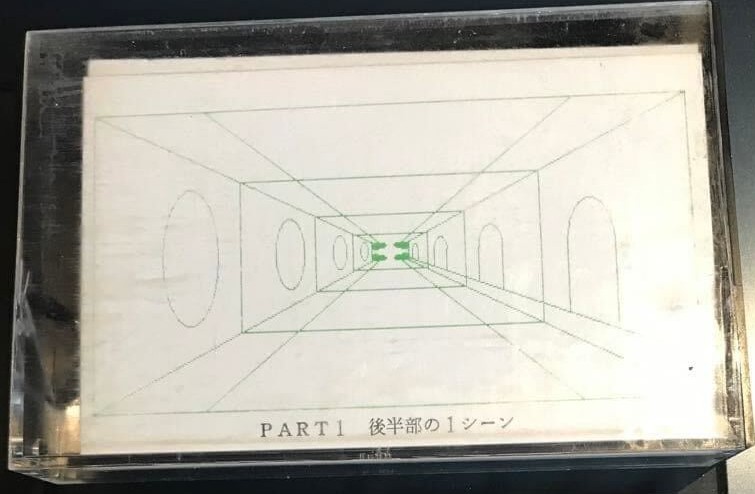
The game came with “instruction cards” showing each of the scenes. This is a scene from the “adventure” part of the game.
Plot: in the year 259 on the Octam calendar, humanity was expanding their space colonies, and started to have constant battles with the Zagros. While most humans had moved from Earth, they still regarded it with fondness, and so the Zagros came up with an evil plan: tamper with a device installed by ancient aliens — intended to keep planets stable — to instead fling a planet into Earth and destroy it.
Humanity pooled their resources to build a single spaceship, the Saint Cosmo, piloted by… you! Your mission is to
a.) fly to the “clear blue” planet of Ariosferia (アリオスフェリア) to retrieve a Bluestone (ブルーストーンを); note that “the Zagros have anticipated this and have set many traps on Ariosferia.”
b.) use that Bluestone to power a “Revival Ray” and fix the sabotaged planetary-stability unit.
There’s a lot of keys going on; there’s a summary here and the more full manual text here. The big issue is that there are three kinds of steering:
◆ The number pad is used to generally change which direction your ship is pointing at.
◆ While floating in space with no enemies, you can press up plus a number (1 through 4) to activate Warp at different speeds. You can backwards-Warp by pressing down and a number.
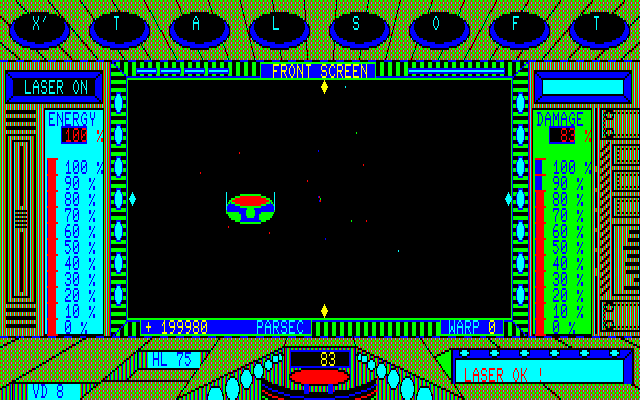
◆ You can press F1 to activate a laser (F2 to turn it off); then holding down arrow keys will move a “crosshair” around. You cannot do any other kind of movement with the laser on.
I often was befuddled trying to rapidly switch from one to another, and since any kind of stalling can result in being attacked by ships, the result of pressing F2 a little too slow for the umpteenth time can be deadly.
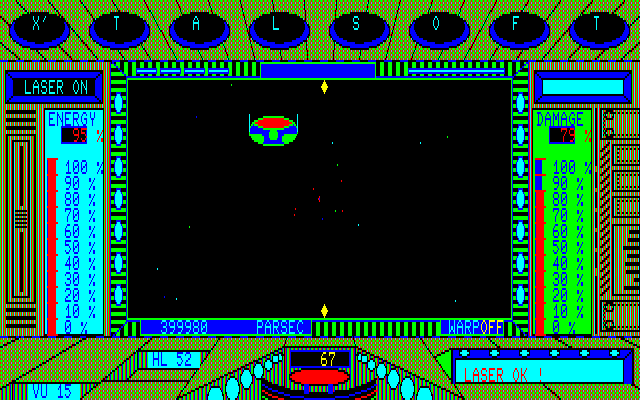
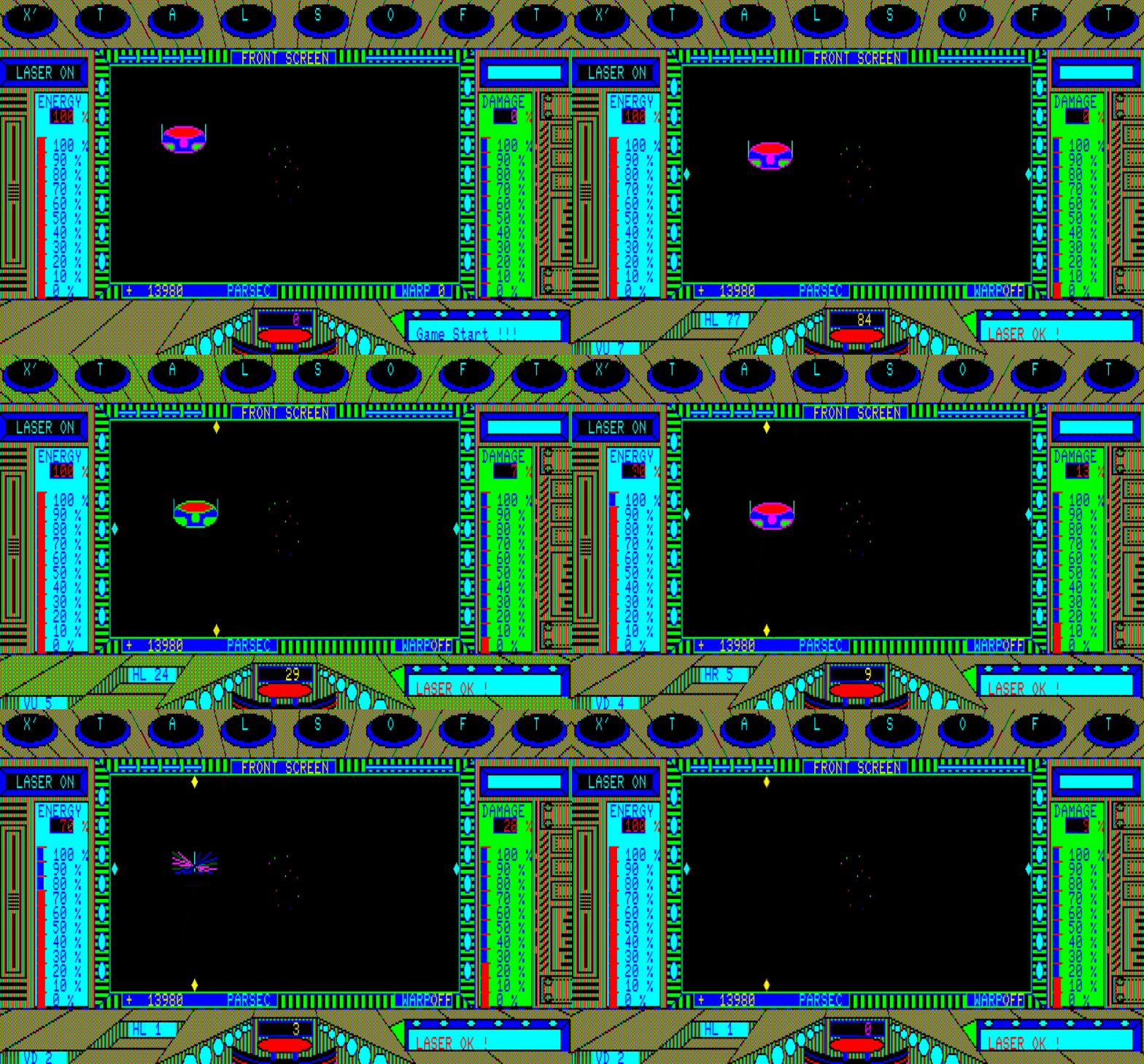
Facing a Zagros ship, with the laser active.
There’s also a “barrier” that the player can activate with F3 (and turn off with F4) which will absorb some enemy shots; there’s a lot of details and rules about what you can do with particular amounts of enemy damage (like reduced warp) but the important points are that killing an enemy gains you 30% energy, and in general if you start to get serious damage (past about 50%) it is almost inevitable that you are going to die.
Suffering major damage. Notice that the laser crosshairs no longer show on the right and left side; this is one of the results of the damage.
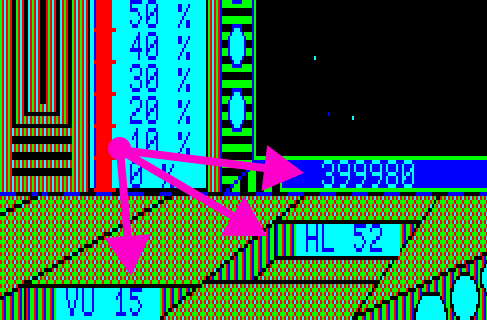
The numbers in the bottom left corner end up being important.
VU and HL refer to how far off you are from an enemy vertically and horizontally. If you get these numbers down to 0 you are dead center and your shot will automatically kill. (You can still cause damage and eventually kill if you aren’t direct on center.) These become super important later (in a section I haven’t reached yet, and will probably decline to play) when there are invisible enemy ships to contend with.
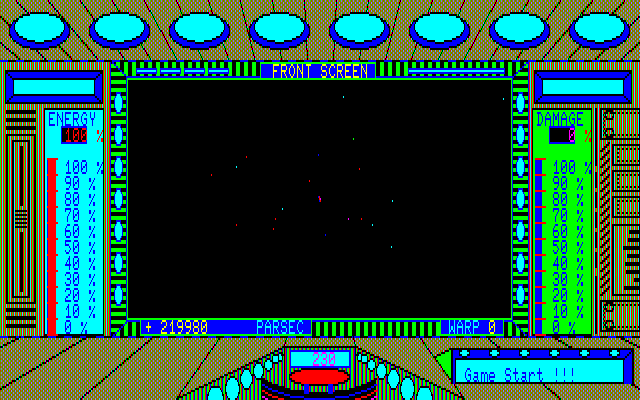
The PARSEC display indicates shows how close you are to the destination planets. There’s a whole set of planets off in the distance you can try to get closer and closer to, and you point to the right one with your number pad movement; if you aren’t pointing at any planet, the display saying 0 PARSEC will be black space. You need to be pointing directly at a planet to see it at 0, and the goal of each of the space sections is to fly to the correct planet.
Ariosferia (the initial goal) is the clear blue one as the instructions say; later sections apparently can have the colors change when up closer.
Closer to the planets, close enough that if you try warp speed 4 you’ll overshoot and the game will automatically switch to rear camera and you’ll need to use warp backwards. The blue one is in the lower right. It’s not true 3D space and you’re essentially on a “track” like the one in Red Alarm or Star Fox, just the way you point your ship matters when you get up to the <2000 parsec range.
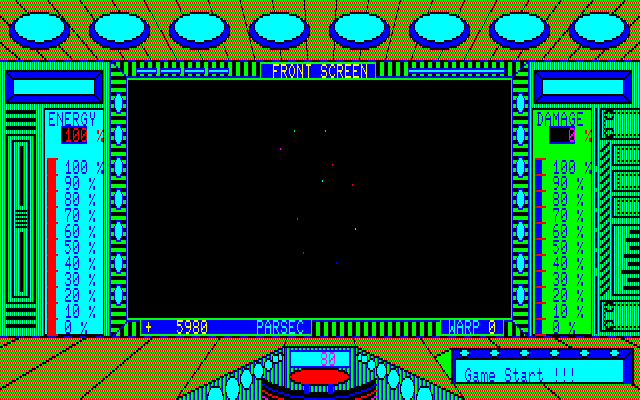
I found this section extremely frustrating to play. You start almost like a game of Lunar Lander where you’re just watching a number (the PARSEC count) in the corner, first holding up and Warp speed 4 and watching the counter tick down, then switching at the right moment to warp 3, 2, and 1 as you get closer and closer. Somewhere along the line you need to stop and steer, and that’s when an enemy will almost definitely appear (they can catch you at low warp, but it’s less likely).
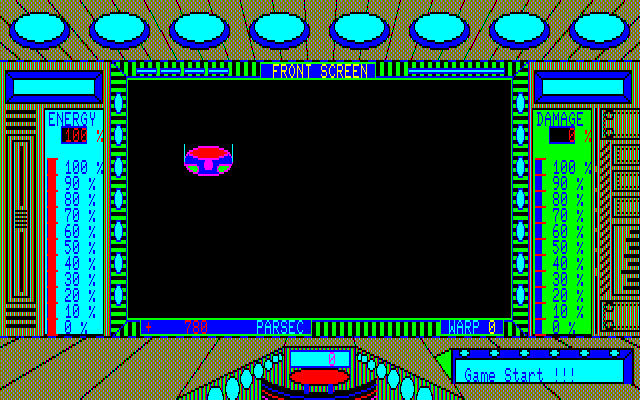
The big problem is that often ships will appear in a position like this…
…and the laser is very slow at moving. (You can’t do number-pad steering in combat.) You can take many hits just from moving to shooting position. Here’s a battle (with the barrier shields off) that went relatively lucky; often the ships aren’t as well behaved and you need to adjust multiple times:
I constantly found myself in a situation where I would sustain rapid-fire from an enemy ship and even with my attempt at moving the laser over as “fast” as possible eventually I just would die.
I finally threw in the towel, as this is All the Adventures, not All the Space Simulators. I have here a video of the game played on Sharp X1 cued to start right at “0 PARSECS” with the planet in view. Once pointed the right direction, your ship will enter orbit and you press F5 to activate the next section of the game.
The video above keeps going into the adventure part but does not finish it. Things get a bit complicated so I’m going to wait on delving into there next time. (The game is in BASIC, and I have a setup from gschmidl that will skip straight to the adventure.) I will try a few more jabs at the space combat, but unless I’m missing something I’ll say finding the Bluestone will stay as my ultimate goal, because I really don’t want to deal with shooting down invisible enemies in space.
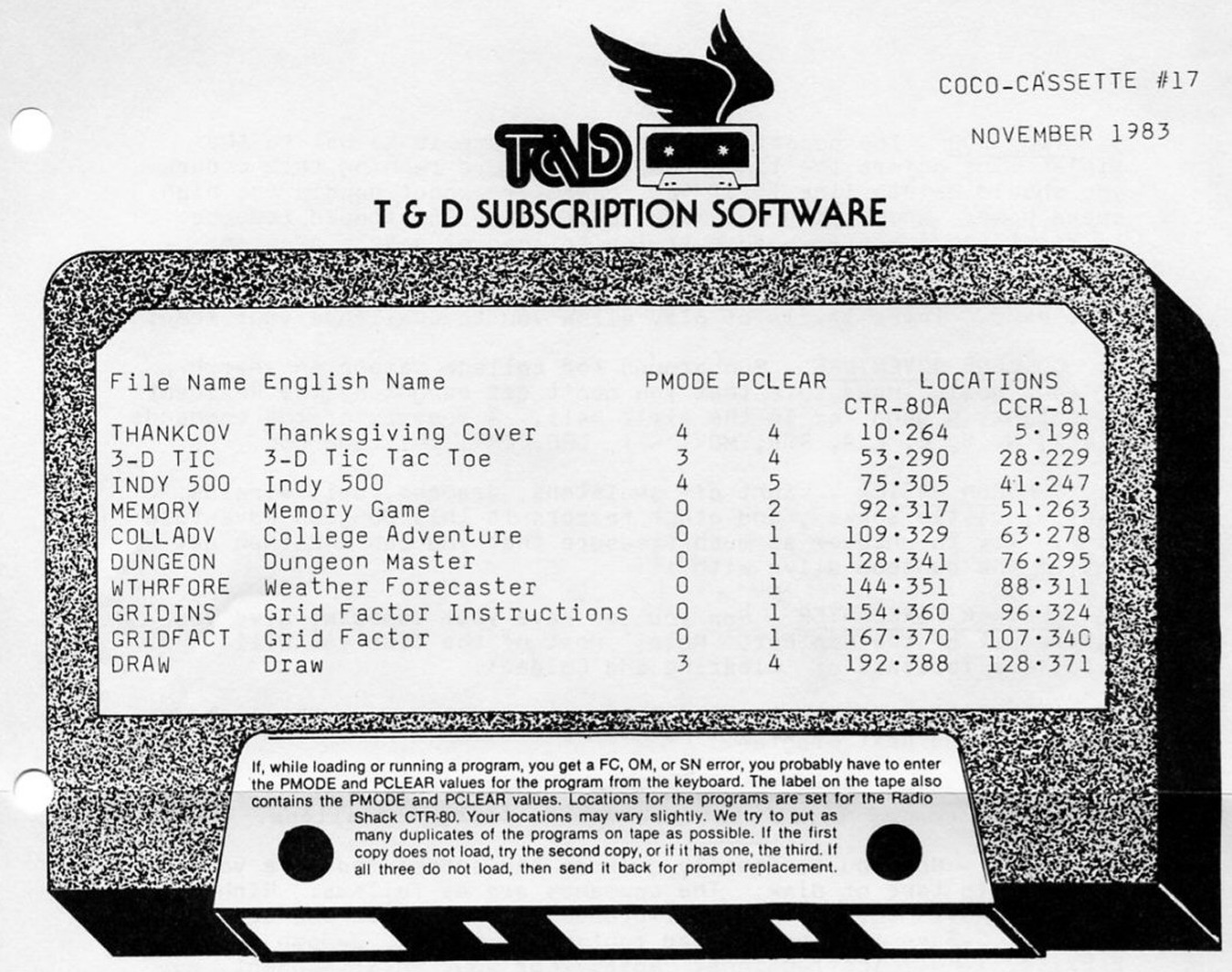
Today sees the return of the tapemag T&D Subscription Software, which we last saw with the game Killer Mansion. The tapemag was started in 1982 by Tom Dykema to distribute Tandy Color Computer tapes monthly and was successful enough to last until 1991.
Tom wrote a great deal of the software himself (“at the rate of about four programs a week”) but had a “programming genius down the street” help him and accepted contributions otherwise. A Facebook post by Youngstown Ken talks about several games of his taken in on the tapemag, including a clone of Trek that was published in the September 1983 issue.
The publication as a whole lands on CASA as having 77 adventure games (!!) so we’ll eventually be seeing a lot more of them. Just to be thorough I checked the T & D catalog for anything they described as in the “adventure” genre after Killer Mansion. There are two tagged from 1982, Quest for Lenore (Issue 2)…
…and Terrestrial Adventure (Issue 4).
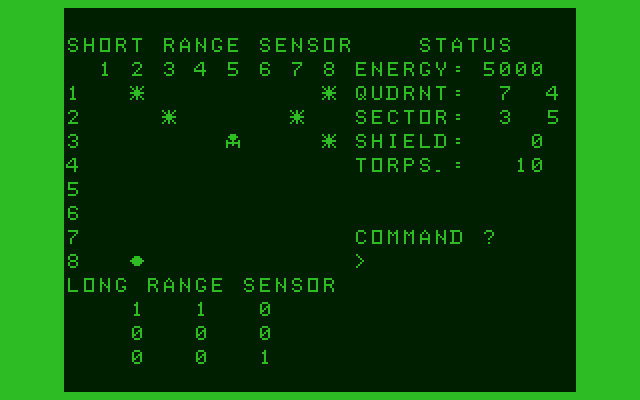
Neither quite fits what I’m calling an adventure, although Terrestrial Adventure is sort of a top-down “choose your own adventure” style game with mild action elements; you control a little green dot and if you run into anything on the map you die. (This almost feels like it is meant to parody the gameplay of the Atari 2600 game E.T. with the infamous pits, but Issue 4 was in October 1982 which is before the Atari game came out.)
The controls make a room like this perilous.
After that, there’s a long gap until the next adventure, which the listing guide calls College Adventure but the game itself calls University Adventure. Confusingly, the file is called COLLADV/BAS.
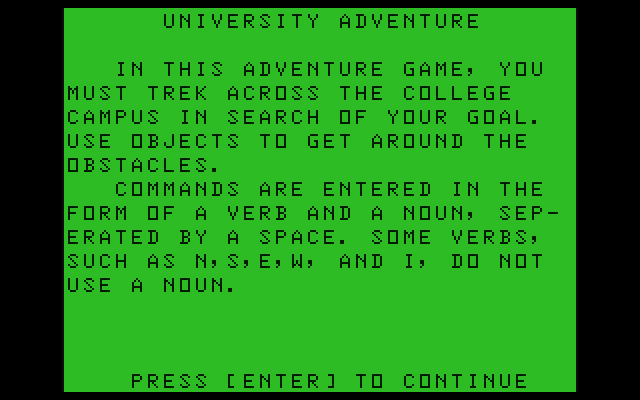
YOU MUST TREK ACROSS THE COLLEGE CAMPUS IN SEARCH OF YOUR GOAL, with no clarity what that goal might be.
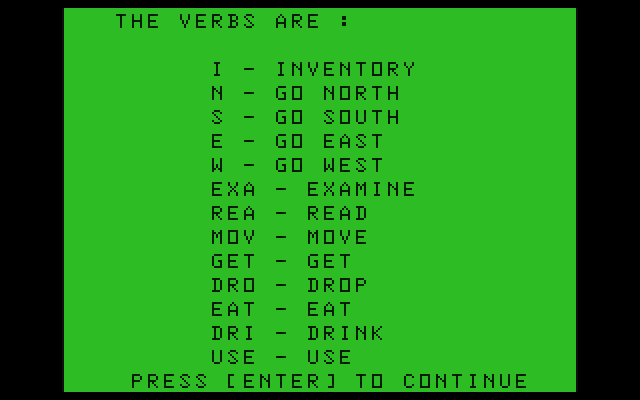
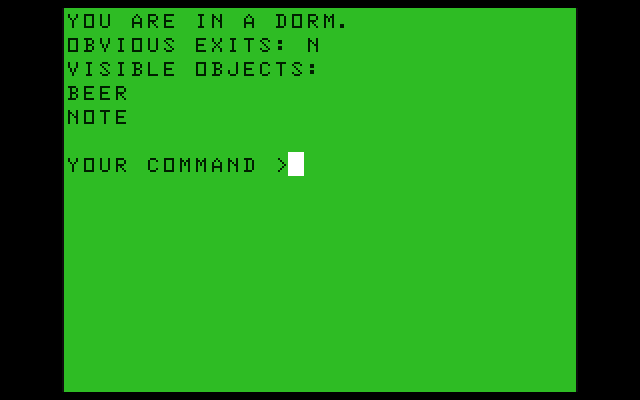
The verb list is unusual in that only the first three letters from the applicable verbs can be used. That is, from the starting room…
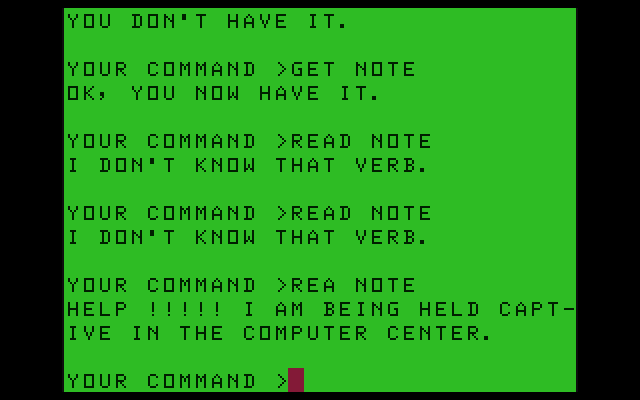
…and you can type GET NOTE just fine, in order to read it you must type REA NOTE, not READ NOTE. I’ve never seen this particular piece of jank before, indicating this is an author we haven’t met yet.
I’m so unused to the “shortened verbs only” setup that I accidentally typed READ in full twice.
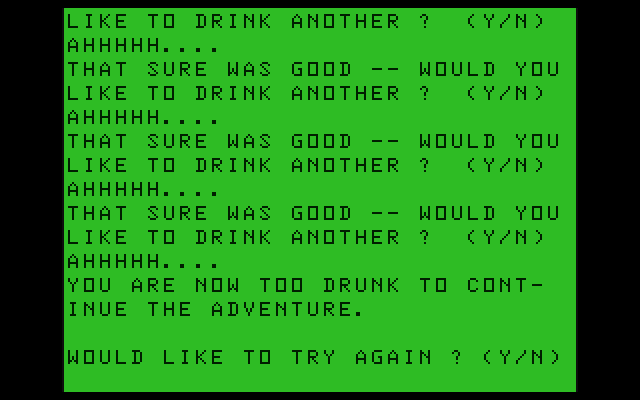
As the note indicates, someone is being held captive in the computer center. With the beer, you can DRI (not DRINK) it until you finally end up drunk.
We’re definitely on a University Adventure now! This moment where you could keep hitting Y made me laugh out loud.
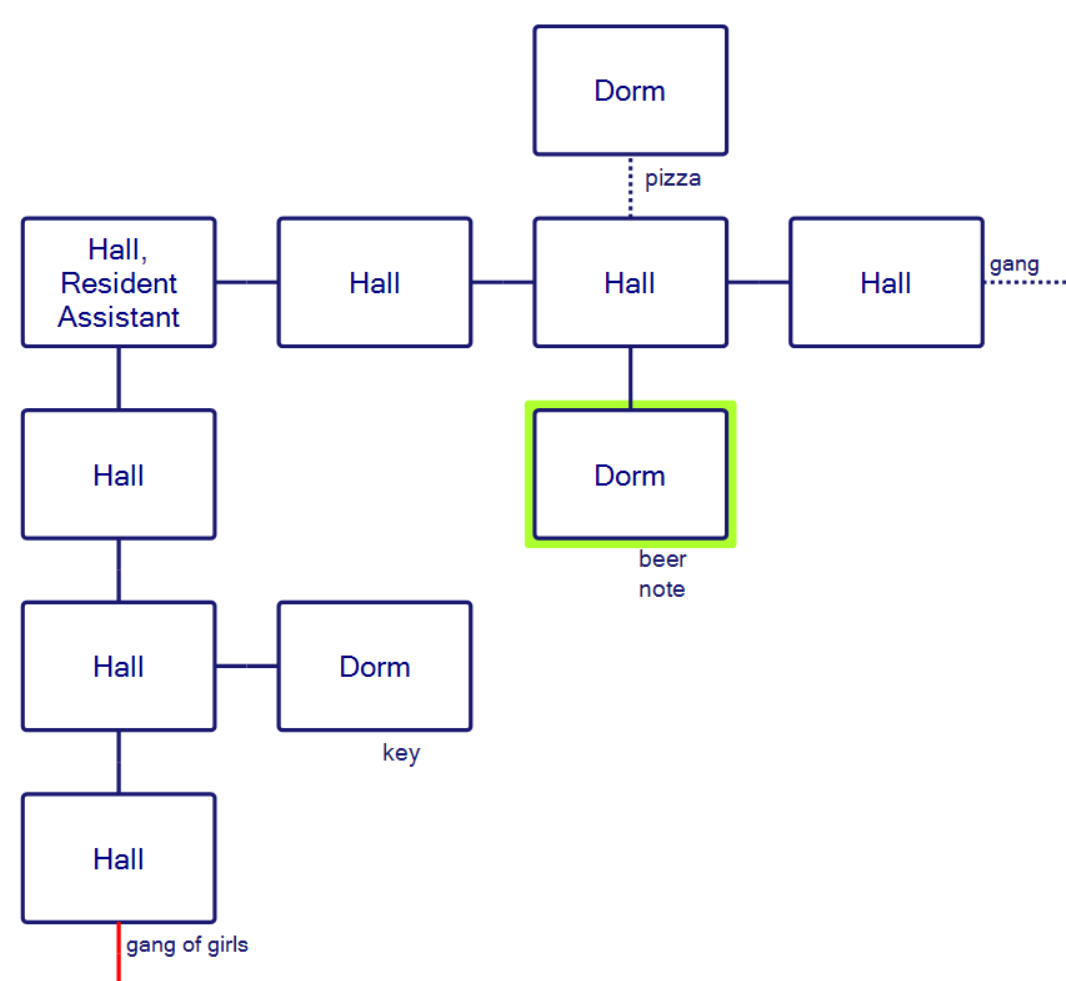
If you pick up the beer and take it to the west, a resident assistant will stop you and end your adventure prematurely.
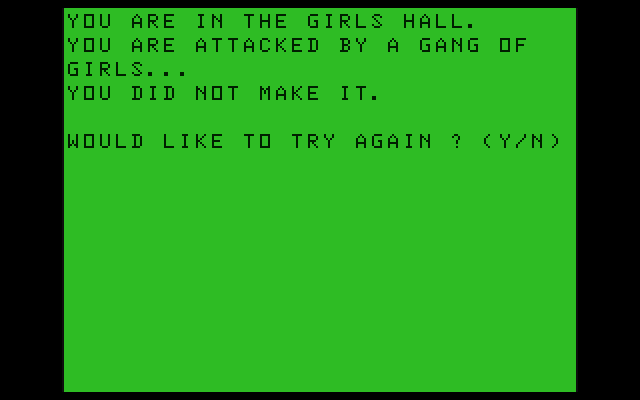
The trick is to not pick up the beer, walk on past, slip into another dorm and grab a key, avoid meeting the gang of girls down the south hall…
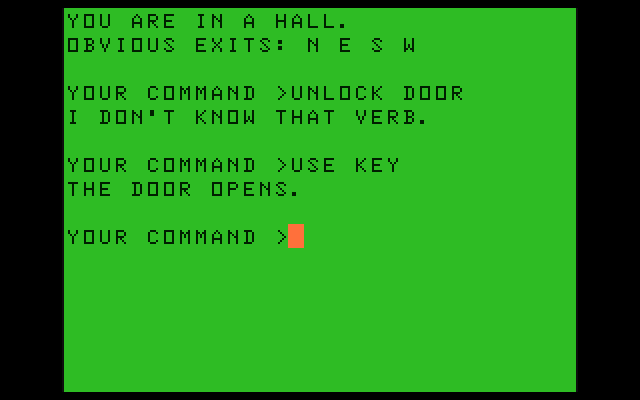
…and then unlock a closed door across your own dorm room…
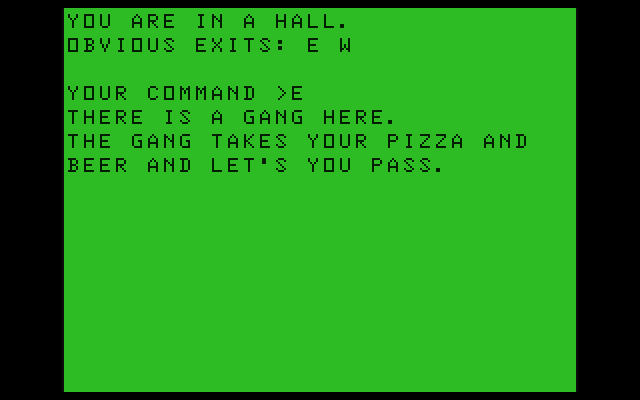
…and pick up a pizza. While the pizza and beer are held, there is a different gang (presumably of men) who will let you pass.
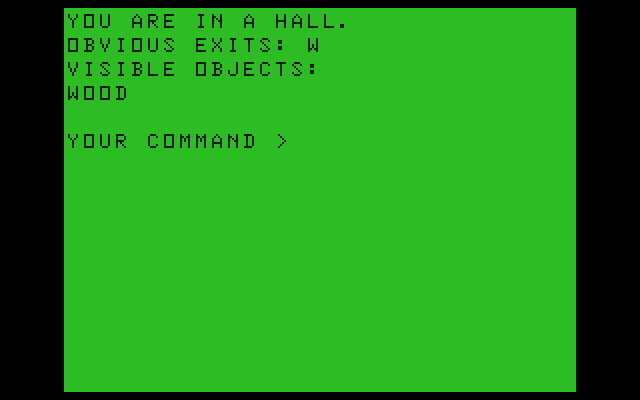
Go east for long enough and you’ll find a random piece of wood.
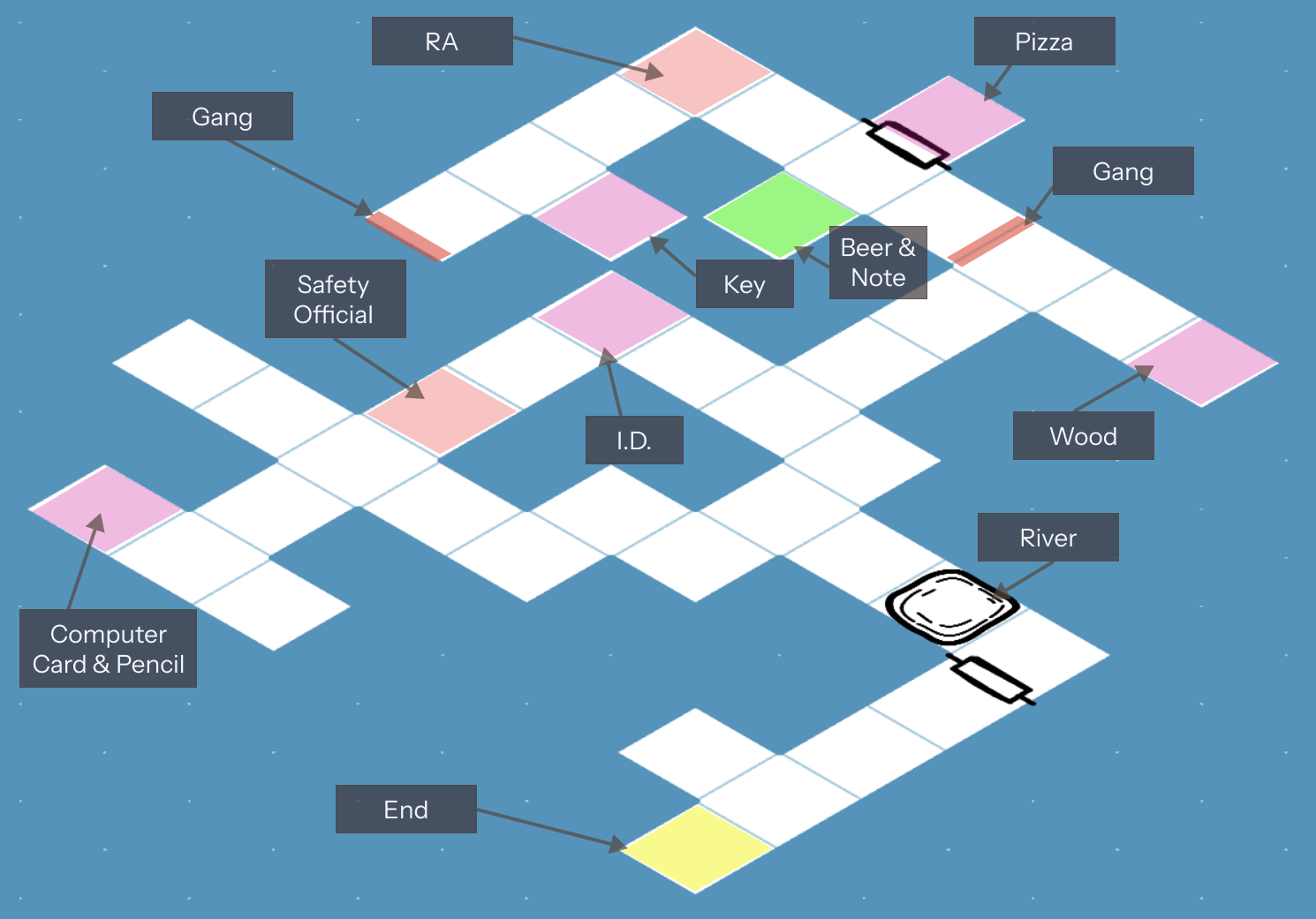
From here the only way to go is outside, and I’m going to switch to isometric mode!
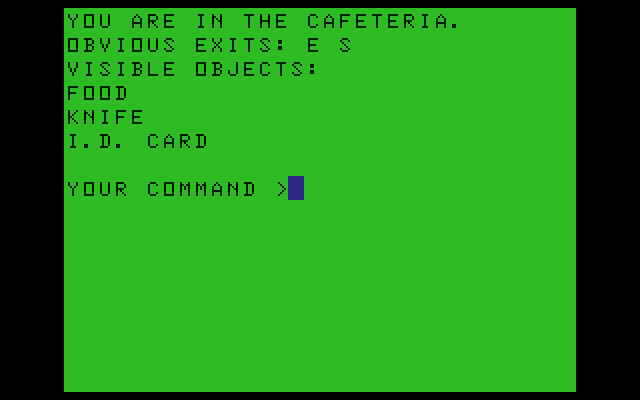
I’ve left items off as the remainder of the map is mostly a red herring. There is, for instance, a cafeteria.
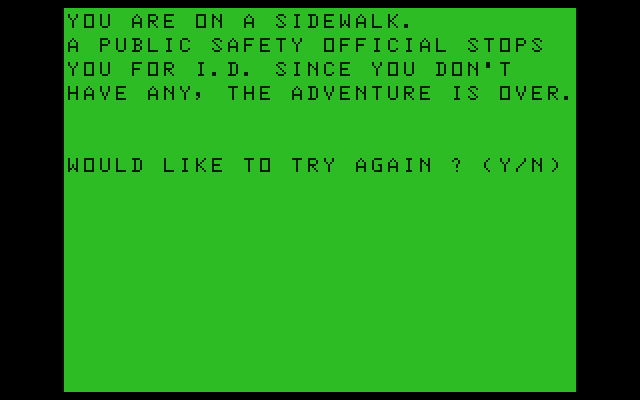
None of these items are useful except technically the I.D. card, where if you go south you’ll run into a safety official who will cause a game over.
However, this encounter isn’t necessary at all, because you can just avoid that spot on the map! (Not like it matters too much — the game has no inventory limit so you can scoop up everything. The only moment where this causes a problem is with the beer.)
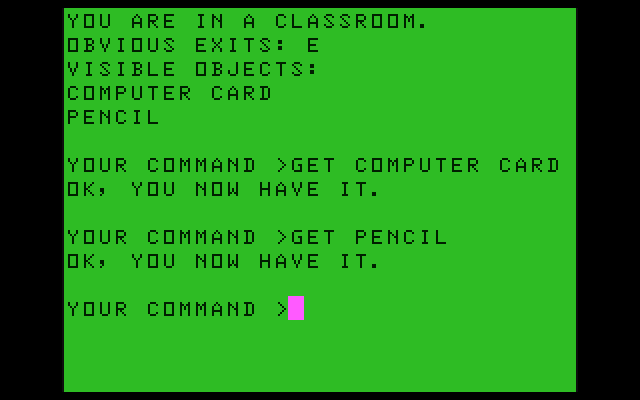
The important item is instead down in a classroom where you can find a computer card in a classroom.
Scooping up the pencil too, because why not.
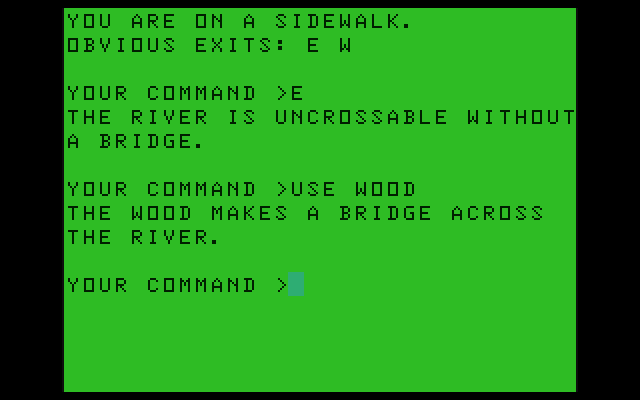
This can be taken over to the east where there’s a river that you need to USE WOOD in order to pass over…
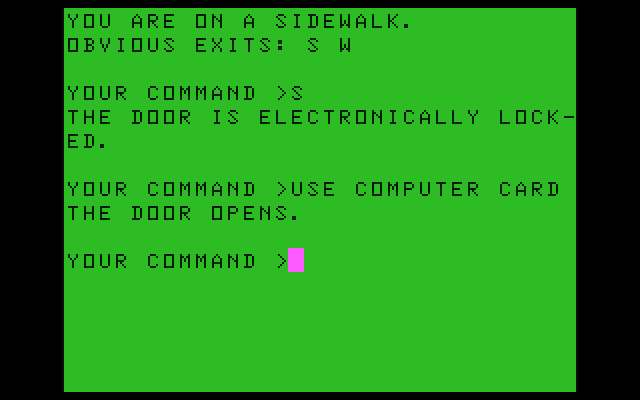
…followed by the computer card which gets applied to a security door.
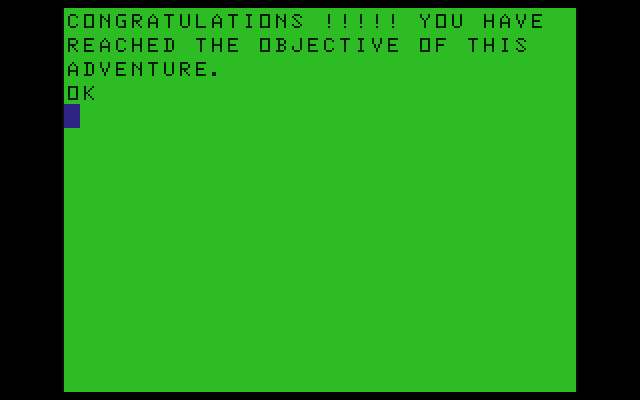
Head south and you’ll win, with no further plot explanation of who needed rescuing or if the note was just some kind of prank.
I get the impression the author was aiming for something a little more dense. The opening made me hopeful we were going to get a “my university” satire with lots of obscure references; that’s not a bad thing in this context because it means the author would be aiming at a particular target and trying to say something, even if that something is an observation on the overzealousness of campus patrol. However, they clearly gave up by the end and the red herrings start to feel more like parts of the game the author never finished with (potentially due to lack of memory space). The opening spiel to the T&D newsletter for this issue even says
WOW! The programs on this month’s tape are so long that we could barely put two copies of each on the tape…
…indicating the game couldn’t have been longer even if the author wanted it to be. At least “every verb must be written in three letters” is an odd enough aspect it will be clear if they pop up again.
Coming up: assuming I get the tech issues resolved, an early hybrid action/text adventure game in Japanese.




 Renga in Blue