Sure, hyperbole, but not by much.
I did beat the game, so make sure you’ve read read my previous posts about Toxic Dumpsite before this one.

The puzzle I was stuck on last time was, weirdly enough, fair. Maybe it needed some design finesse but…
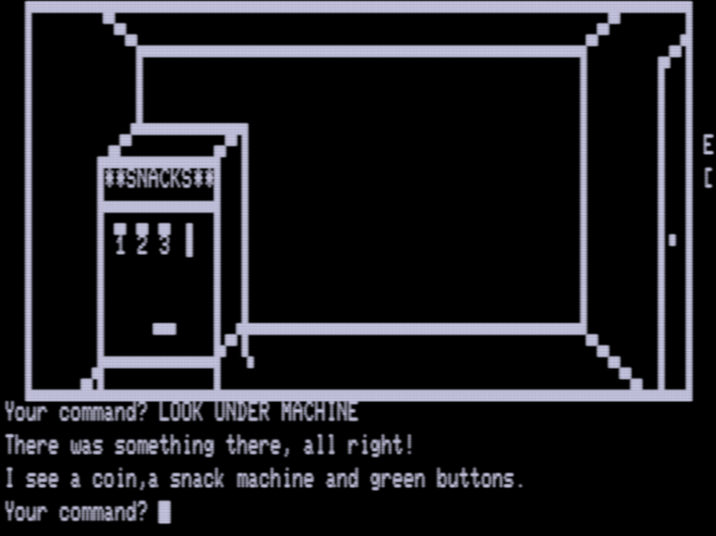
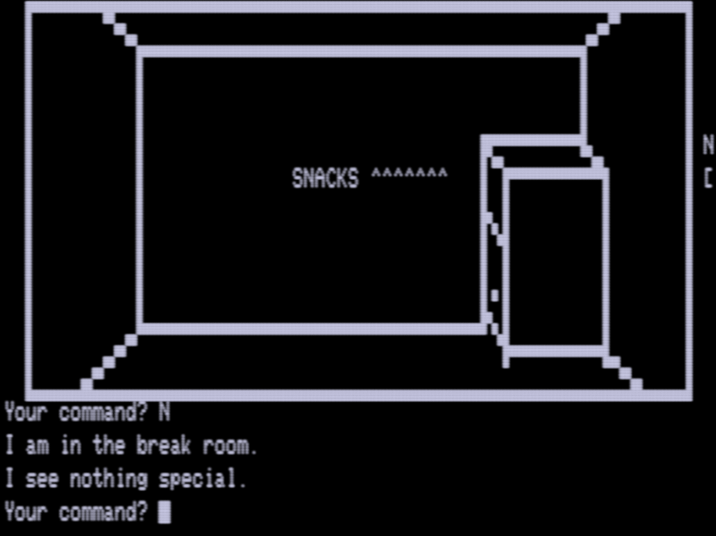
…just as a reminder, I had found a vending machine with a coin underneath. Doing SHAKE MACHINE led to a rattling sound and the “all right” message made me think the rattling was referring to the coin. But no, SHAKE still gets the sound, and as mentioned last time, inserting a coin gets it stuck.
However, it dislodged whatever happened to be stuck by a little nudge, so that SHAKE MACHINE again gets it out.

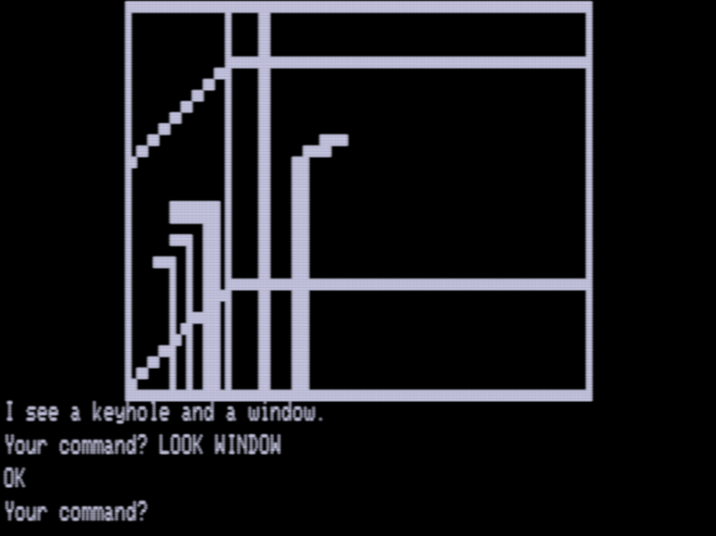
That’s a key. I then immediately tested it everywhere, find it fit in the keyhole next to the window, and turning the key leads to a click.
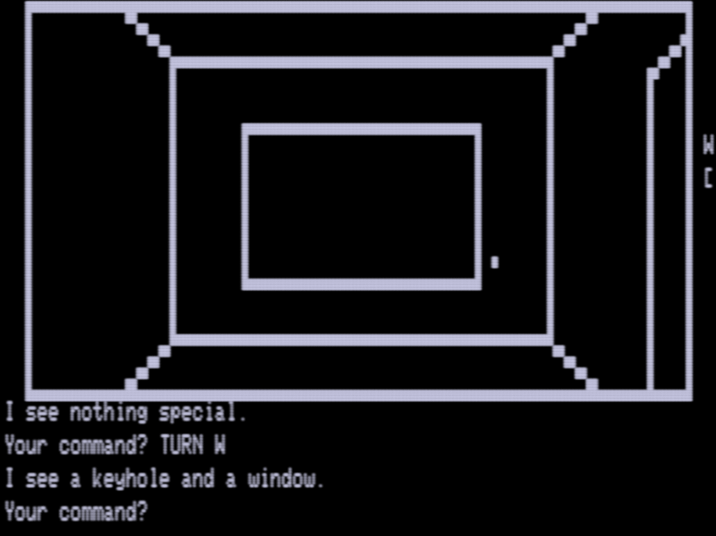
This unlocks the “control” room downstairs, but before going down there, I should mention while stumped I also managed to find a shovel. LOOK UNDER worked (without documentation or prompting); what about other prepositions?
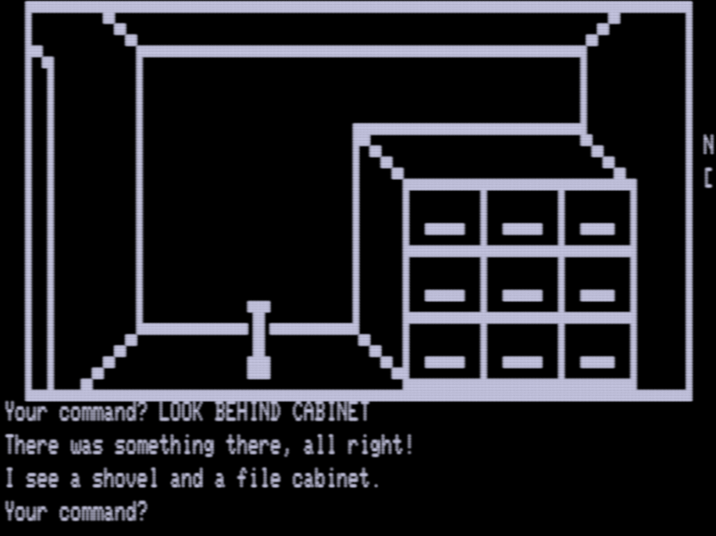
And no, SEARCH or any other verb does not find the shovel. It has to be LOOK BEHIND.
There isn’t anything intrinsically unfair about including prepositions in searches, but it has to be documented in some way they’re going to occur, especially because they were almost unused in text adventures at this time. I admit my mental logic probably ran along the way the author wanted — I thought that file cabinet is big, I wonder if anything is behind there — but I can still recognize the game is asking for a command without teaching it exists. Text adventures have the unique attribute of “technically anything in English works” but in practice as commands get rarer and rarer they need to be treated uniquely, like you have a platformer where the Z key does something essential but the game doesn’t bother to mention it and you’re just supposed to hit every key on the keyboard trying.
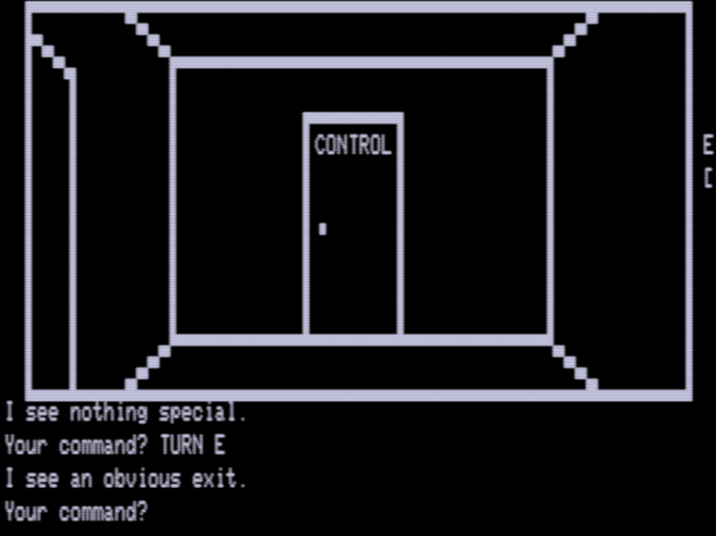
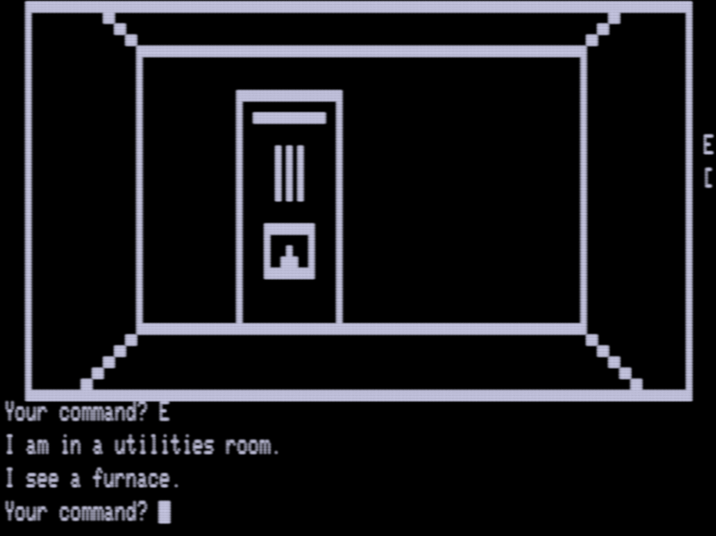
Moving on, with shovel in hand (and the control room unlocked) I headed downstairs, and found the control room was just a message with a single button.

The button unlocks a second door marked “TRANSPORT”.
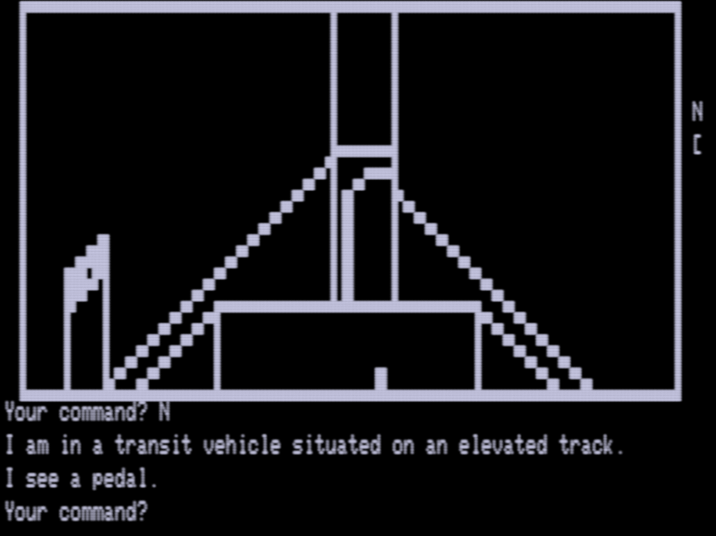
Just to the left is a button you can push to activate the cart; then pushing the pedal will lead you deeper in the mine, where you start to have trouble breathing.
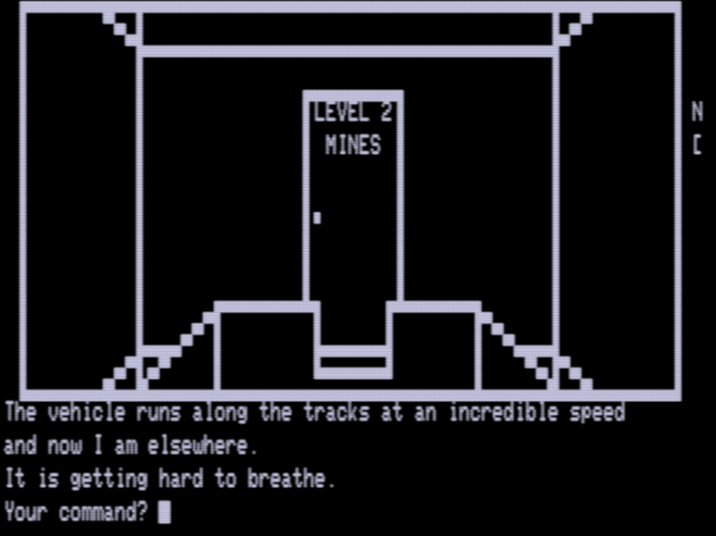
Curiously enough, the “trouble breathing” isn’t really a timer as you might expect — it means if you try to go too far deep then you die from lack of oxygen, but otherwise the “trouble breathing” state simply hovers around without consequence. Usually for one of these games when something that indicates the player’s medical condition is getting worse triggers, that’s automatically a timer that needs to be beaten.
Further in there is a purple button that can’t be reached. This will be important shortly.

You can then go in the mine, where the lantern (which I assume has been providing light through the whole transport section) is too faint to see in the darkness. You can still DIG (with that shovel from behind the file cabinet) and get an item that your player takes, then leave safely.
If you try to go deeper into the mine, that’s when the lack of oxygen kicks in:
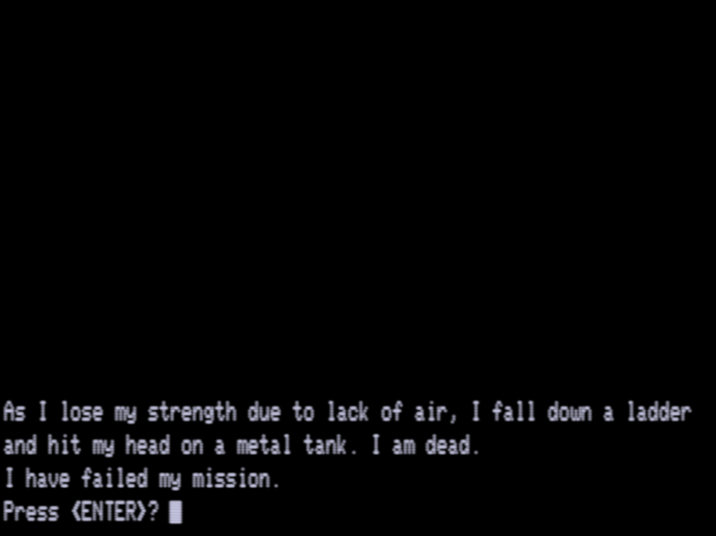
The hammer is described as lightweight which I assume is intended as a hint it can’t be used to break things (like the Office door upstairs which is still unlocked, and is a red herring at the end).
I was horribly stuck enough here that I decided I had enough and needed to poke at a walkthrough, and here we hit the puzzle of the title.
Allow me a brief side mention of a much more recent game, +=3, by Carl de Marcken and David Baggett. Going by the ifdb description:
This one-puzzle game was Dave Baggett’s response to a discussion (flame war?) in rec.arts.int-fiction and specifically to Russ Bryan’s claim that there could be no puzzles which are logical yet unsolvable.
I remember some discussions from rec.arts.int-fiction (the Usenet group) being indistinguishable from flame wars back in the day, so maybe it was both. Here’s the opening (and only) room.
On the Three Troll Bridge
You are standing on a rickety wooden bridge. A burly Three Troll blocks your passage north, across the bridge.
Something is ticking.
In any case, +=3 was essentially a thought experiment: how could you make a logical unsolvable puzzle? Now, as a one-puzzle game, you may want to skip down a bit farther to avoid my spoiling it (I’ll drop a picture of a floppy disk to mark when it is safe to come back), as I’m about to cut and paste in the walkthrough.
Ready?
This “game” is meant to illustrate the fact that “logical” and “simple” puzzles can be made arbitrarily difficult to solve. In this particular case, the puzzle exploits an assumption that experienced text adventure players will make — that things that aren’t listed in one’s inventory aren’t actually manipulable game objects.
>give shirt to troll
>give shoes to troll
>give socks to troll
>nThe solution is perfectly logical and simple. If you were standing on a bridge with a troll who clearly wanted you to give him something, and you had nothing to give him, what would you do? You’d give him the shirt off your back, of course.
Note that if you say “examine me”, you’ll see that you are in fact a clothed human. (If you’d have been naked, the game certainly would have pointed this out, right?)
Everything explicitly mentioned in this game except the troll is a red herring.
I don’t think the game really illustrates anything about logic and simplicity as much as that it is far too much to expect the player to refer to objects that aren’t listed as there (and why can’t our player have boots, instead of shoes)?
All that preface was technically a hint for the puzzle: how do you press the purple button? All the information needed is in my prior posts (or at least all the information needed according to the game itself).
From the Museum of Computer Adventure Games.
So way back at the chest next to the starting room…
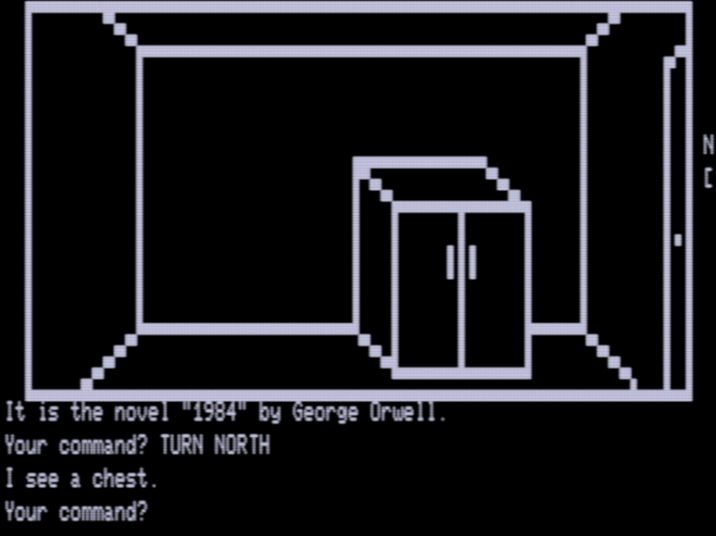
…we can REMOVE NAIL WITH HAMMER.
There is no nail in the description, and even being given a “wooden” chest, there is no reason to assume it uses nails rather than, say, screws. The only feasible way to solve the puzzle seems to be to focus entirely on the hammer and what it might be used for, and given that nothing is breakable, come up with the use of pulling nails instead, and try to guess where a nail might be and take the leap of faith.
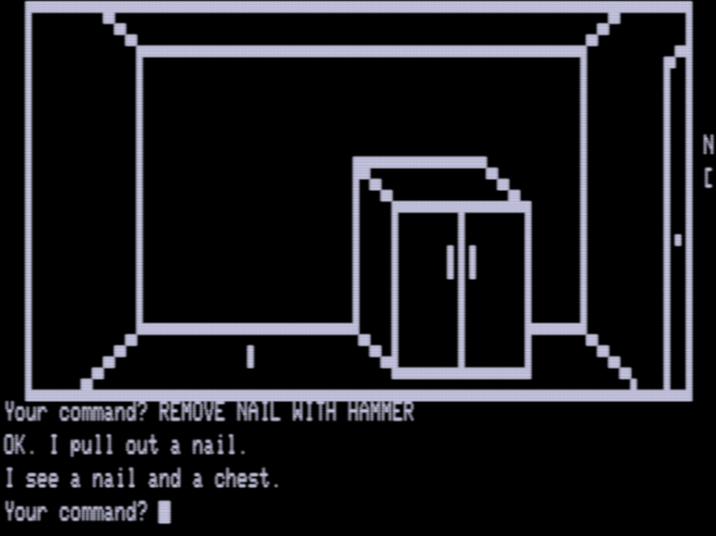
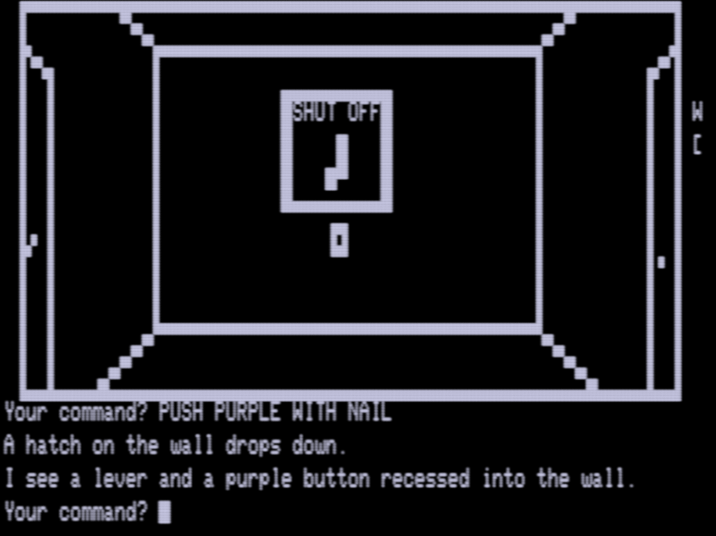
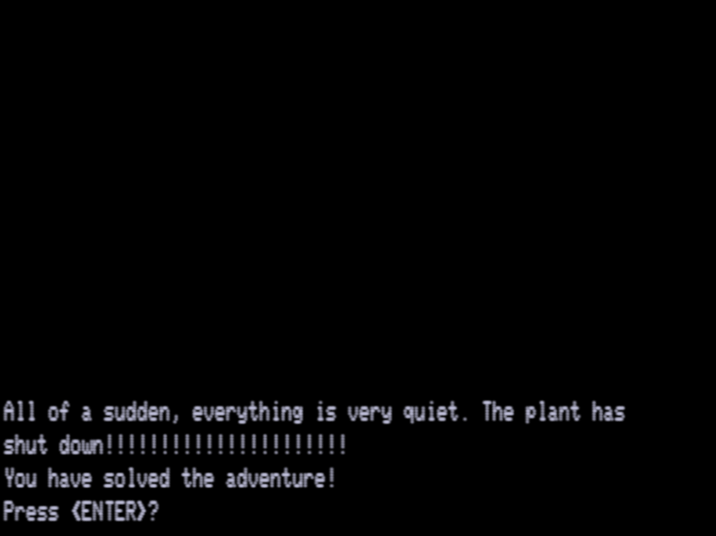
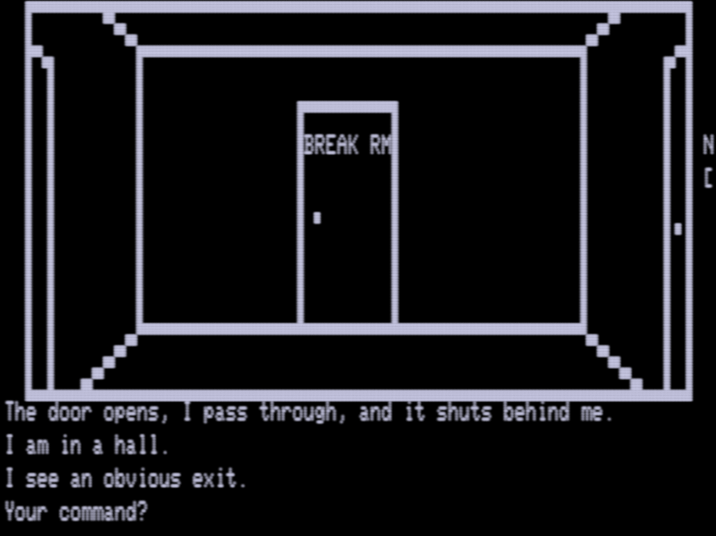
Weirdly enough, the game was well coded and there was clearly some creativity poured into this, especially given the lack of historical precedent; it’s just the game design effect was a miss. The author likely saw the Med Systems games like Deathmaze but definitely hadn’t seen the Japanese Mystery House, so this concept of a tight 3D environment was all his, and I appreciated the novel ways of stretching what turned out to be a tiny map. I’m especially curious if the graphical elements are what led the author down the road of including preposition-searches; looking at the file cabinet as a graphic did give me the primal urge to peek behind it in a way I’m fairly certain I would not have experienced with text.
Maybe the other game in the two-pack (Spook House) will go better now that I know the author’s tendencies, but I’m going to take a breather before trying it, and instead go to a game series I know very well: the Phoenix mainframe series, and the ultra-hard British game Avon.










 Renga in Blue