I’ve finished the game; this continues directly from my previous post.

Covers of the last three issues of the magazine (ending in August 1983).
I received warning on the puzzle I was stuck on from gschmidl that: “I have no idea how you’re supposed to figure it out.” The puzzle is so baffling I am coining a new term, supermoon logic.
The term moon logic has not come up as often on this blog as you might think; as I’ve mentioned before, I think the term gets applied far too widely to any kind of puzzle difficulty without any kind of care taken to if a puzzle is illogical or just difficult. Quoting myself on the game Katakombs:
I still think the term is useful, but I tend to narrow down to circumstances were cause and effect seem to be nearly at random; perhaps you understand from the animation why the bubble gum made the goat move, but the connection is one that could almost never have been predicted. There is a disjoint between action and result. Oddly, in text adventures, this shows up less than you might think, just because the requirement of a verb adds specificity to an action; you can’t just USE BUBBLEGUM ON GOAT and have the animation happen, but rather need to specify to (for sake of example) FEED BUBBLEGUM TO GOAT. The puzzle is still perhaps a bad one, but there’s at least a suspicion that something interesting might happen.
This puzzle is worse than that. Not only do cause and effect seem to be random, but even after seeing the result the sequence makes no sense. Put another way, if a game asks me to “guess what the author is thinking”, usually afterwards I can see how the author made the decision they did (even if it went spectacularly awry). Here, even knowing the particulars and combing the source code I can’t even begin to reconstruct what was going on. Perhaps you, the reader, can help demystify this, but for now I’m slotting this as the rare supermoon logic, where moon logic doesn’t even make sense after the fact.
Last time I was stuck with water in a jar (from a pond), a key (extracted from the bottom of the pond), a gold leaf, and a staff. I had dead-ended at a castle with a pit that you could use a staff to fly over and a wizard in a room with a cryptic sign.
The pit turned out to be a complete red herring; I am unclear why the flying scene was in the game. Only the wizard room is important:
? E
YOU ARE IN THE CASTLE ENTRY.
VISIBLE ITEMS:
NOTHING
? E
YOU ARE IN THE WIZARD’S ROOM.
THE WIZARD IS IN THIS ROOM.
A SIGN IS NEARBY.
VISIBLE ITEMS:
WIZARD
SIGN
? READ SIGN
IT SAYS, ‘I AM CLUTON. THROW A PIE AND YOU WILL DIE.’
? TAKE SIGN
THE WIZARD SAYS, ”LEAVE MY SHINGLE ALONE.”’
The hint that I needed to do an action I had already done was enough to get by, but only because I looked at my previous screenshots and saw an action that could be done in any room.
? DRINK WATER
O.K.
EVERYTHING BEGINS TO SPIN AROUND AND…
YOU ARE ON THE HEATH OF ORIONE’S MANOR.
TO THE NORTH IS A HOUSE, TO THE EAST, A DUMP.
VISIBLE ITEMS:
NOTHING
Anyone with an idea? I tried doing anagrams of “I AM CLUTON”; I tried poking the word (and the “throw a pie” phrase) into search engines to see if I had missed some obscure cultural reference. I tried checking the source code to see if I had missed a way of getting a hint. Drinking the water elsewhere gets the message “BOY THAT REALLY HIT THE SPOT!!!” which suggests nothing magical.
The other lesson from this is that magic is very dangerous for a game designer; it can be done to make arbitrary effects, but if a part of the game is based on that effect, it is almost certainly going to be frustrating for the player.
Moving on, as we aren’t too far from the end:
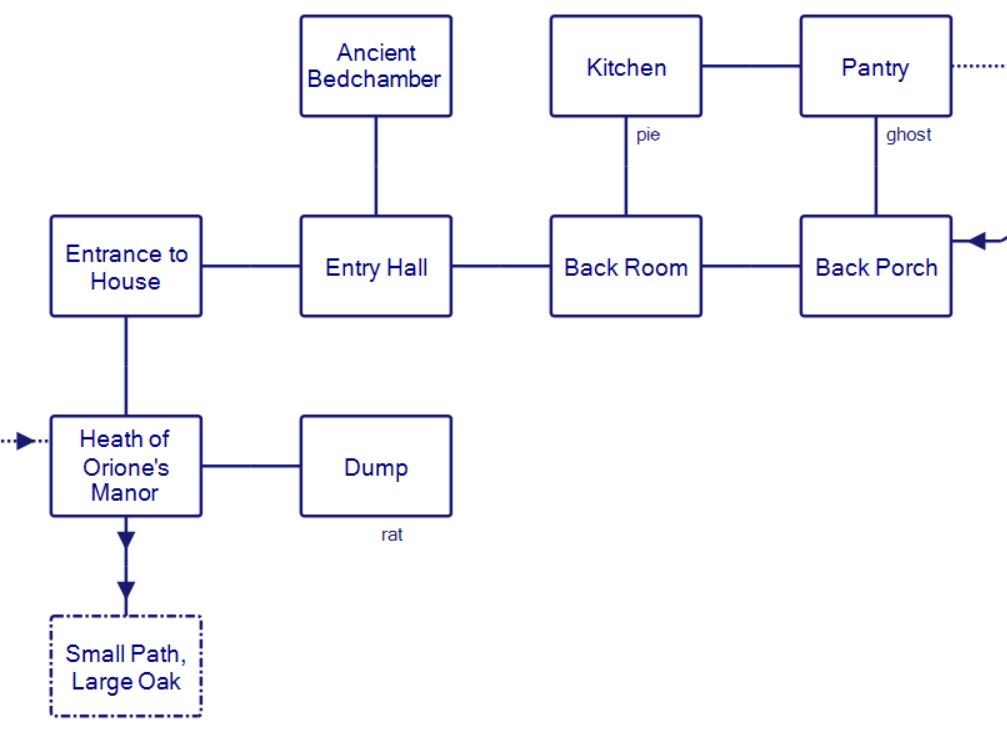
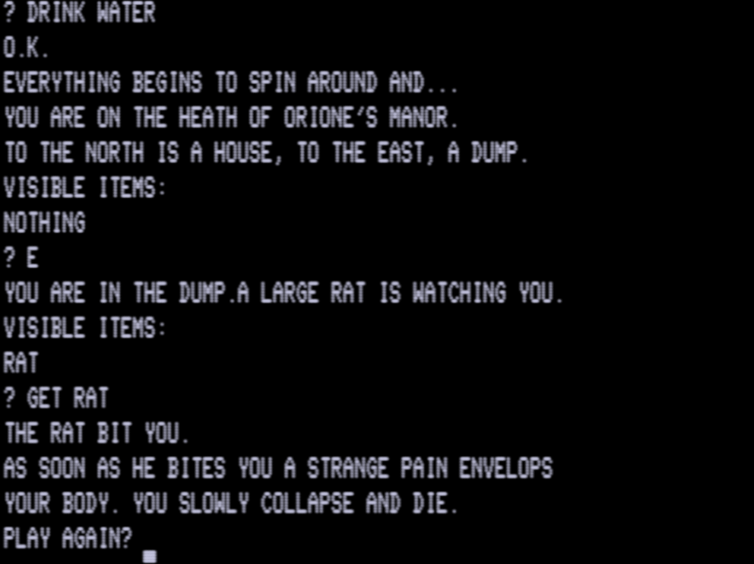
You can go south to loop back to the forest with the oak tree if for some reason you missed something; if you go east you end up at a DUMP with a RAT. This room serves only to kill you if you try to mess about with the rat.
Heading north instead into the house, there’s a series of locations that are room-name-only (YOU ARE IN THE ENTRY HALL, YOU ARE IN THE BACK ROOM, YOU ARE IN THE BACK PORCH). One side room is a kitchen with a pie, and at the end of the sequence is a ghost.
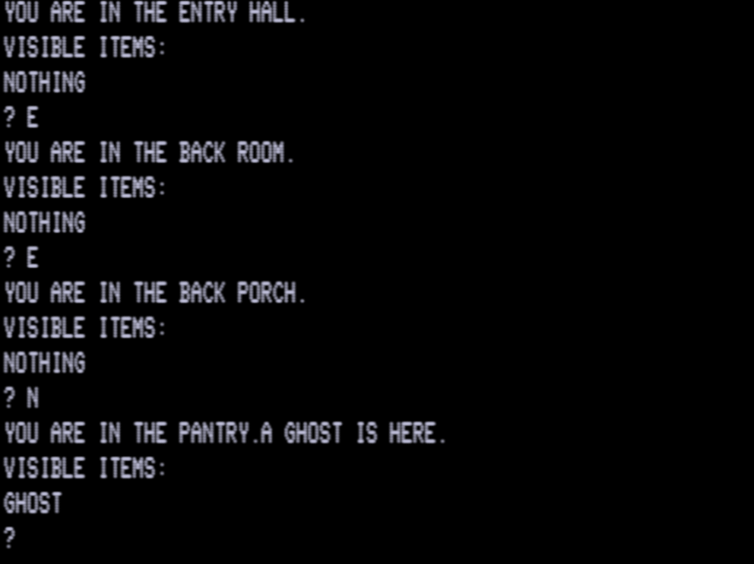
Given the sign earlier, it was impossible not to resist trying to THROW PIE while at the ghost.
YOU HIT THE GHOST WITH A PIE.
HE GETS MAD AND PUNCHES YOU, THE FORCE OF THE BLOW
IS SO GREAT THAT IT KILLS YOU.
I know people are still sore about the pie/yeti combo from one of the King’s Quest games; finally, the ghost gets revenge.
Thinking outside the box, I looped back around to the wizard Cluton and tried throwing the pie at him instead…
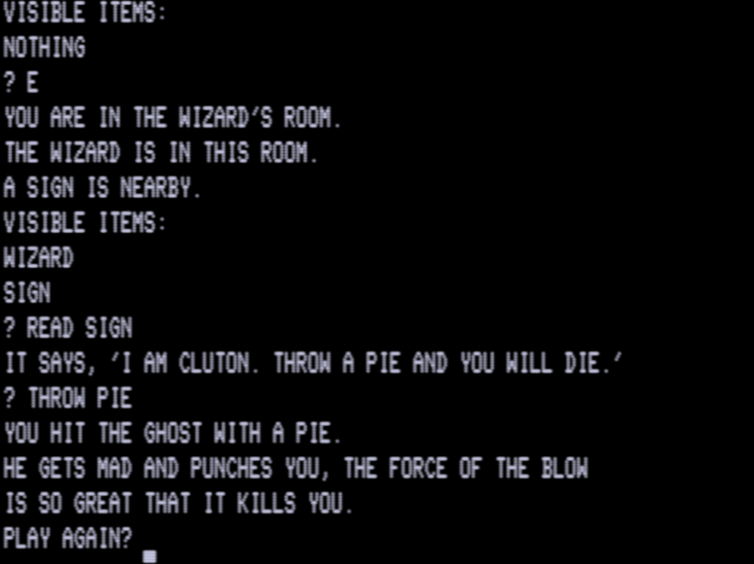
…the end result being that THROW PIE still somehow throws it at the ghost, even when you are nowhere nearby. OK, yes, the source code is a bit fragile. (I checked the late issues — see top of this post — for corrections, but couldn’t find any, but maybe the magazine ended too quickly for that.)
I tried EAT PIE instead and found a diamond. Knowing GIVE was on my verb list, I tried GIVE DIAMOND while at the ghost and it worked.
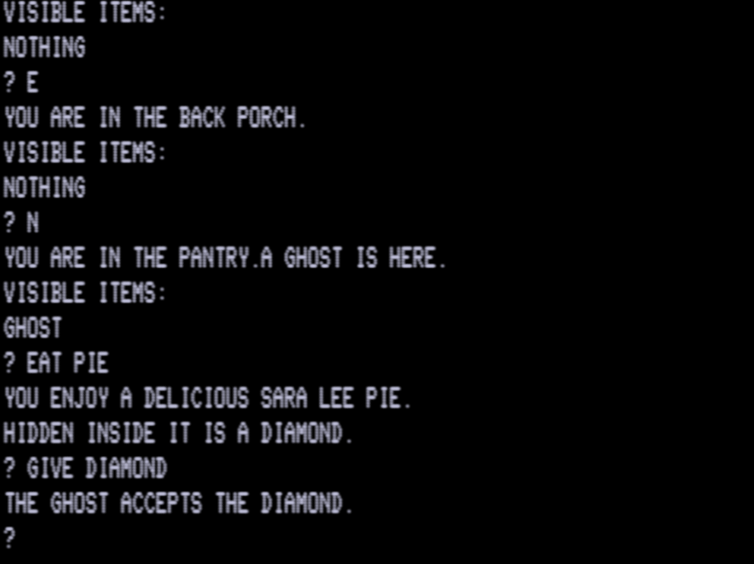
This isn’t supermoon level logic since “enemy accepts something valuable” makes retrospective sense (sort of), but I certainly didn’t use regular logic to solve; it’s just the game limits so heavily what options are available I didn’t have many choices to go through.
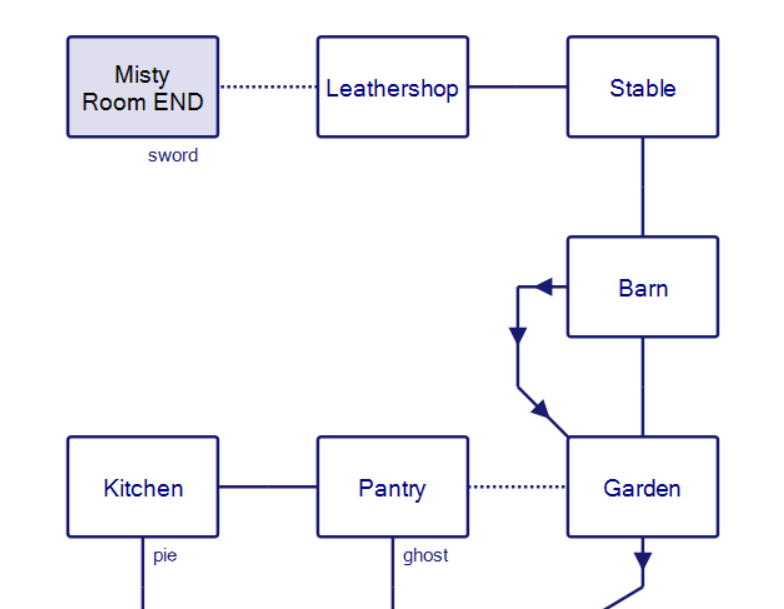
The ending had no puzzle at all because I had already found the key (if you didn’t find it earlier, you can go back and get it; you can even refill your water and do the DRINK WATER trick again).
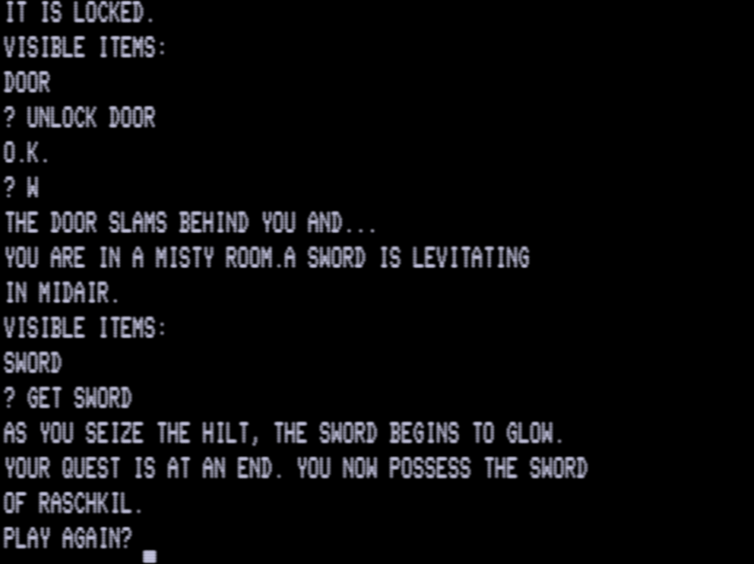
My apologies to the author if he’s here Googling himself. I did indeed hit a puzzle so baffling I had to coin a new word to describe it. I did at least appreciate the “pure” feel of the game even with the bugs and puzzle illogic, and even with minimal description I did get the scent of another world.
It was also useful to see what sort of game H & E Computronics printed (and the fact they likely did not test the game for bugs at all); as I mentioned in my last post, we’ll visit them again sometime at least once more (I have not skimmed the complete catalog to be sure nothing else is missing).
Coming up: an interview with an author giving a snapshot of the chaotic UK game publishing scene, followed by an Apple II “contest game” with buried treasure.
Written in 1981, not published until 1983. Take your pick. I didn’t have this one on any of my lists but El Explorador de RPG recently pointed it out; since it was not preserved otherwise, gschmidl then put the source of the game on his Github.
It was printed in the magazine H & E Computronics, which has barely had any mention here at all, so a brief history–

From the first issue of the newsletter (July 1978) that would eventually be the magazine called H & E Computronics.
Howard Y. Gosman, former math teacher out of New York, ran one of the first personal computer magazines kicking off in July of 1978; their June 1979 issue specifically bragged they were “the first TRS-80 PUBLICATION to last a year” as well as “the largest publication devoted to a single computer (over 16,000).”
This is an oddly specific claim meant to work around existing alongside things like PCC’s newspaper/magazine which launched in the early 70s and Kilobaud launching in January of 1977 (“The Small Computer Magazine”). One of their main competitors was Softside which was still TRS-80-only from 1978 through 1979 although it launched later (October 1978). Softside has been mentioned here now quite a few times; they printed, for instance, Dog Star Adventure, the first full-parser adventure game in a magazine.
Softside tended to be quite game-friendly; with the exception of the tax software from the February 1979 issue, every issue from ’78 through ’79 featured a game on its cover.
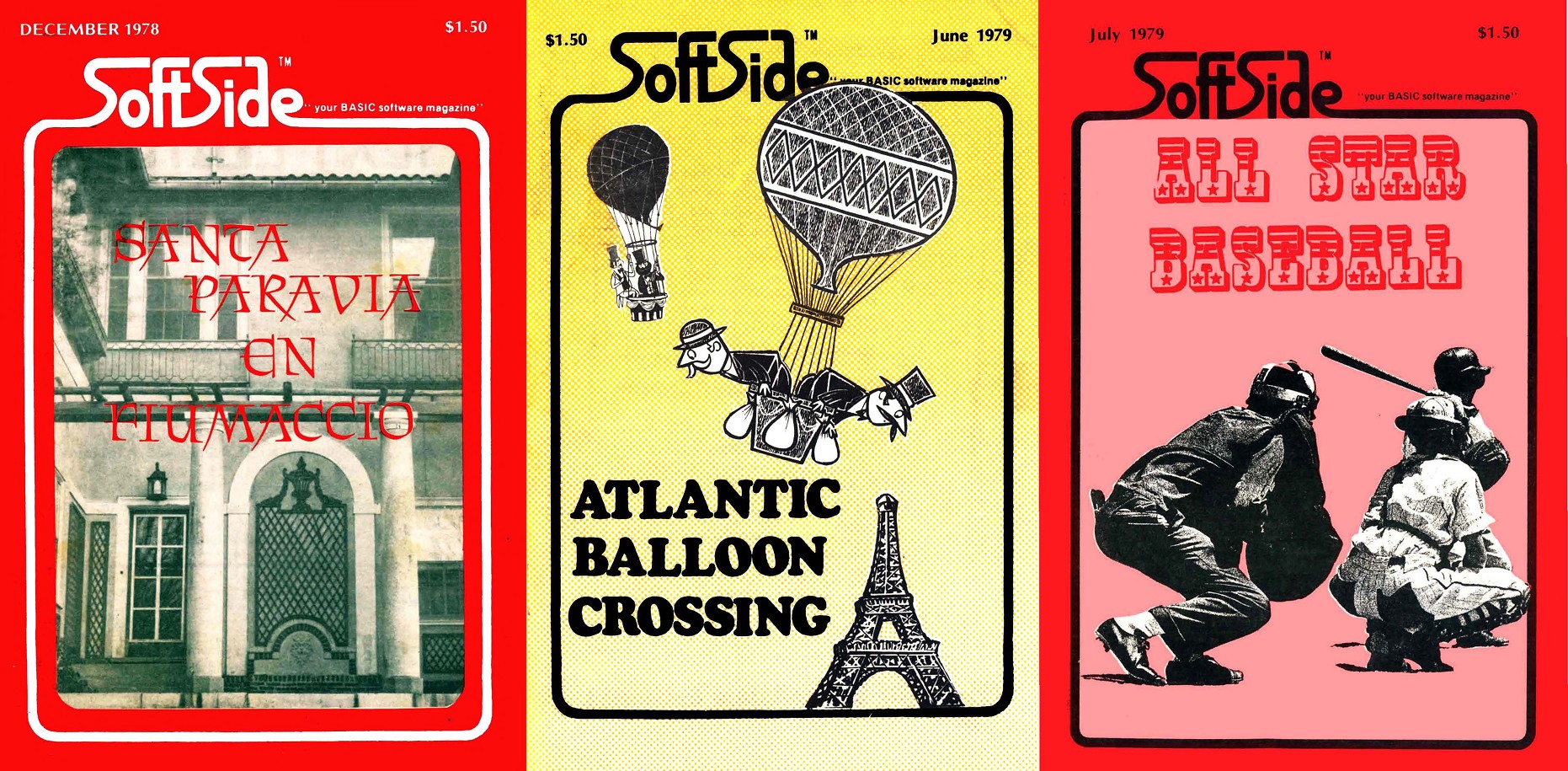
While H & E included games once in a while, they tended to be a seller of “serious” software; their catalog was heavy on the business side and they even kept this going past their own magazine’s existence, selling their own VersaBusiness software into the late 80s on a variety of platforms.
They did have one gaming landmark worth noting, possibly a side effect of their “serious” positioning: they have the first ad I can find for an adult game. Back in that June 1979 issue the company Phase-80 includes a mention of their games Strip Dice and Strip Concentration. (“Each player must follow ALL directions of the computer … The game may be played by ‘CRT’ light if desired.”) H & E Computronics later sold the infamous “activity catalog” Interlude, which you might remember from City Adventure.

The Phase-80 ad notably beats out the first commercial adult game in Japan, Yakyūken, although Yakyūken is far more significant in being a single-player erogē rather than a “party game” facilitated by the computer. (Joey Wawzonek has a terrific essay here about the game, answering the question “why are we stripping while playing rock paper scissors in the first place?”)
After their August 1983 issue, the publication (not company) of H & E merged with Basic Magazine (formerly 80-U.S. Journal, another magazine founded almost exactly the same time as H & E). Today’s game, Sword of Raschkil by Mac Vaughn, came from one of their last issues, May 1983. Comments from the code identify Vaughn as being at Henderson High School in Georgia.
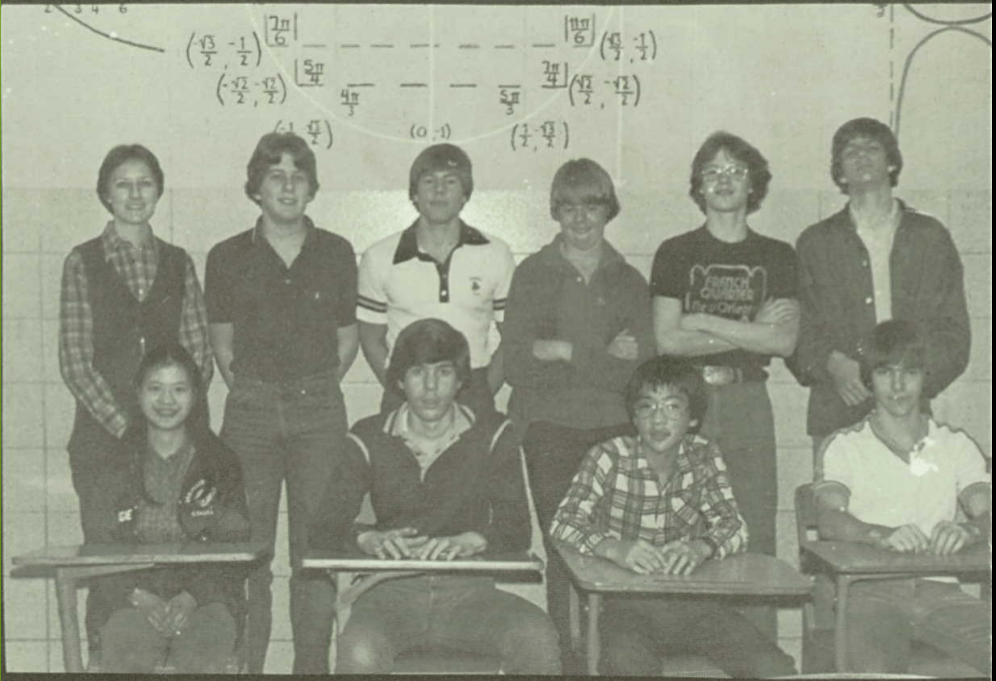
Our author is standing second from the right, clearly demonstrating that Math is Cool. Via one of his school yearbooks.
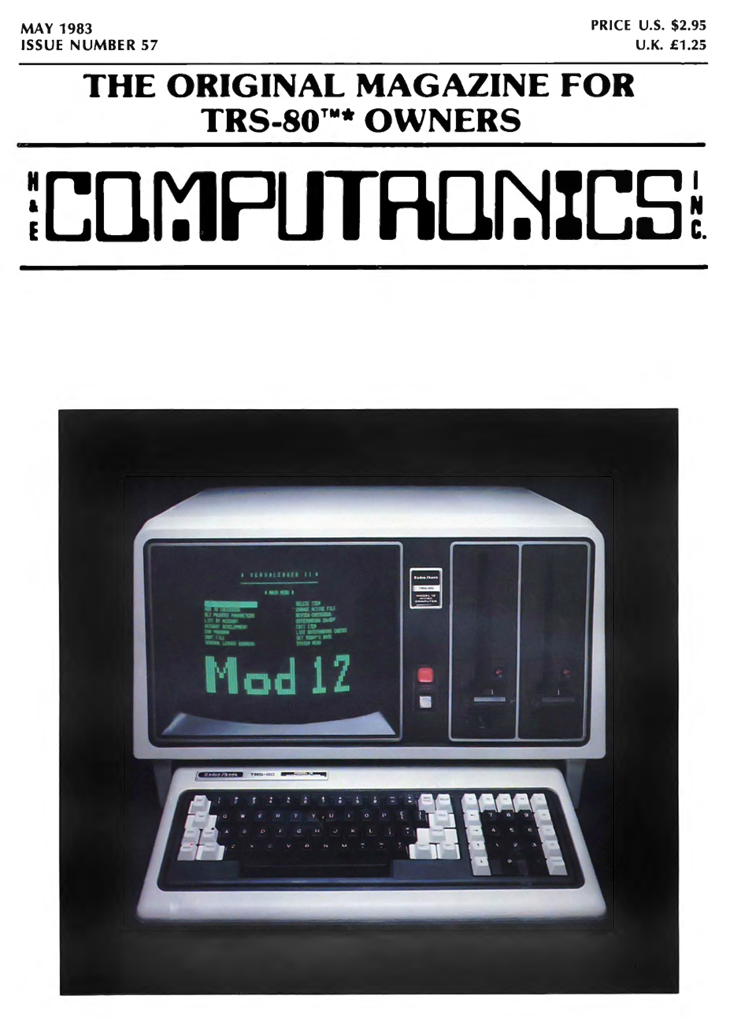
True to form, the magazine the game appears in has a super-serious cover. This seems to be why their games have generally been overlooked in the various TRS-80 archives, even though this isn’t the only game in this issue (although it is the only adventure). From a different issue, Castle Adventure is another game I need to loop back to that again seemingly was never archived.
Our objective is to find the long-lost sword of a warrior from the distant past.
Several hundred years ago, the warrior Raschkil was slain in battle. It was rumored that he had had a magical sword, but when it was not found on him, many assumed that it had never existed.
Just a few months ago, you were digging in a garden near your small house when you unearthed a small, unlocked iron box. Within it was a map giving the approximate location of the sword of Raschkil! How did it get under the soil of your garden? No one will ever know.
You decided to find the sword, and had little difficulty finding the area on the map: an area surrounding a small castle. Now, using your wits, you must find the sword within the area named. Any further instructions are included in the program. Good luck you’ll need it!
We start, as is tradition, in a forest.
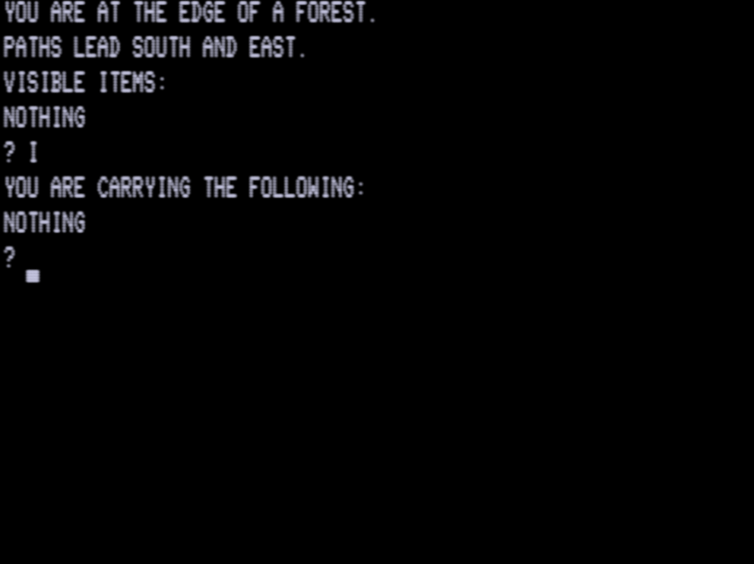
The game fortunately does not start with a maze; the forest is tiny, and it leads to an even tinier castle. The starting area map first, though:
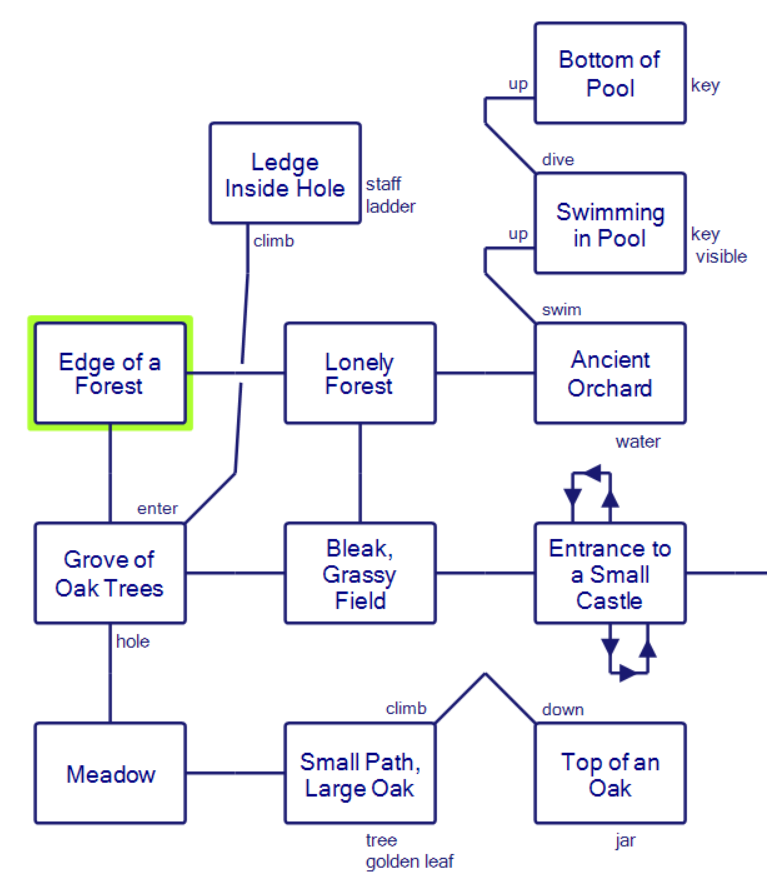
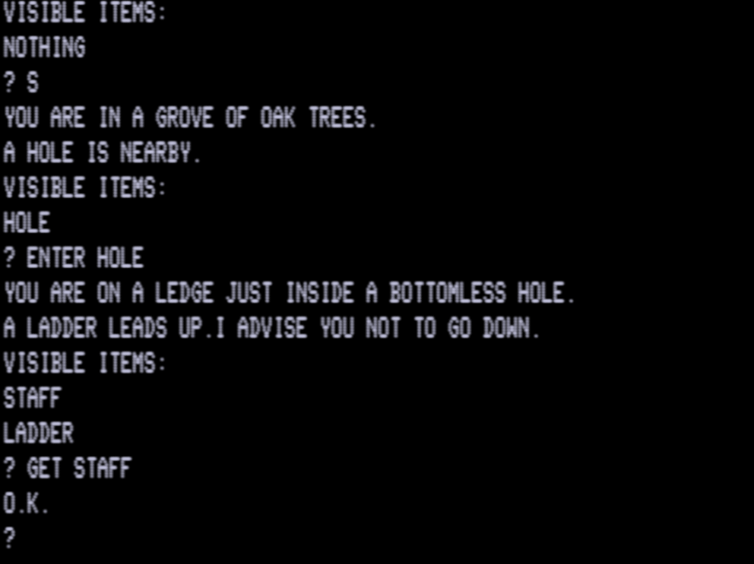
Just to the south is a “hole” where ENTER HOLE puts you on a ledge of a bottomless pit, with a staff you can take. You can only get out with CLIMB LADDER so you can’t take the ladder with you.
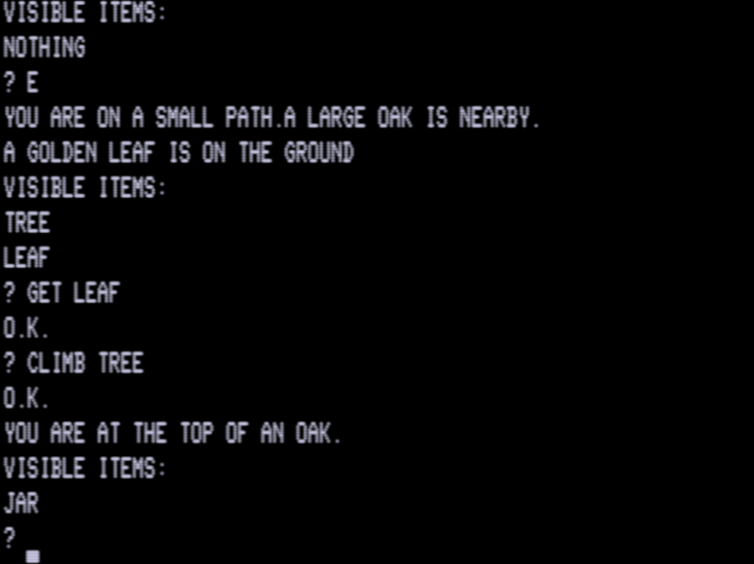
Heading further south, there’s a meadow followed by a large oak you can climb. Along the way you can pick up a “golden leaf” and the top of the tree has a jar because … squirrels need jars?
Back to the start, heading east you can find a pool; you can FILL JAR at the pool.

I was expecting the water to be toxic and kill you. I’ve been in too many death-every-corner games lately, I suppose. You can also POUR WATER in any room where it “makes a puddle on the floor.”
The game also lets you SWIM, and I was briefly worried I had a broken-code issue for a moment afterwards.
YOU ARE SWIMMING IN A POOL OF WATER.
AT THE BOTTOM OF THE POOL IS A KEY.
? GET KEY
I CAN’T DO THAT AT THIS TIME.
The reason for my concern is I had discovered by now the game has a bug: if you drop any item you can’t pick it up. DROP STAFF cheerfully gets the response of “O.K.” but then trying to GET STAFF yields the response I CAN’T DO THAT AT THIS TIME. I checked with gschmidl who assured me the game was beatable as is, before arriving at DIVE.

Just for reference, my verb list, based on typing in all my standard verbs:
CLIMB, SWIM, READ, DRINK, EAT, FILL, THROW, UNLOCK, LOCK, POUR, JUMP, GIVE, ENTER, DIVE
This was a bit fussy to get because typing CLIMB has the response
I DON’T KNOW HOW TO CLIMB SOMETHING!!!!
which is a touch deceptive. The command doesn’t work without a noun.
With all that taken care of (and shockingly, no DIG command used anywhere, not an understood verb!) let’s proceed on to the castle, which might seem a little underwhelming so far but I expect I’m missing a lot.
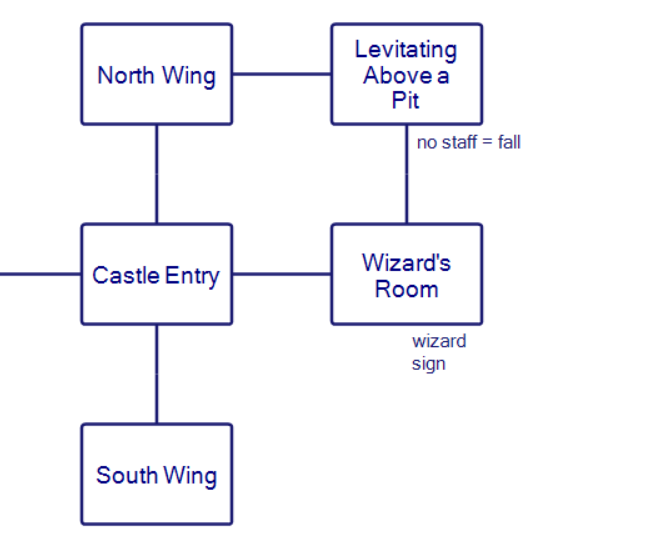
Heading into the NORTH WING indicates that you feel a DRAFT, indicating perhaps the author was familiar with Hunt the Wumpus, as to the east is a pit. If you’re holding the staff you’ll levitate; if you don’t have the staff you’ll fall.
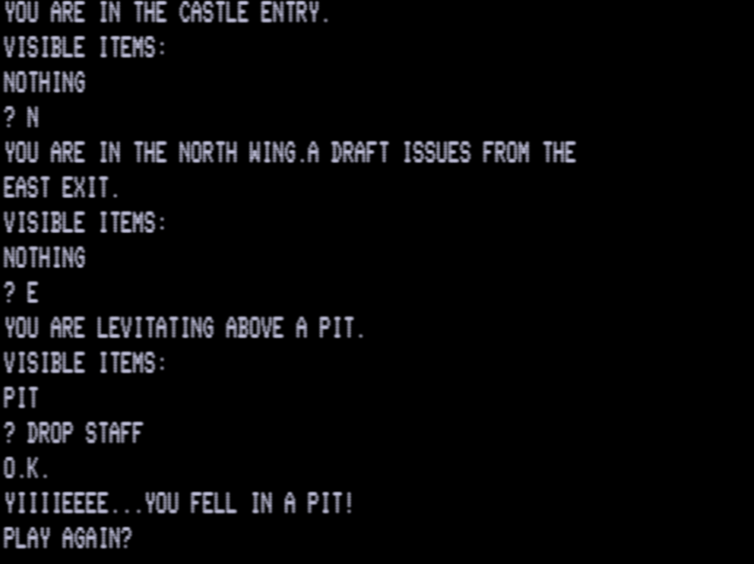
Dropping the staff is accounted for.
From the east of the start is a wizard with a sign. I haven’t gotten anything to happen here.
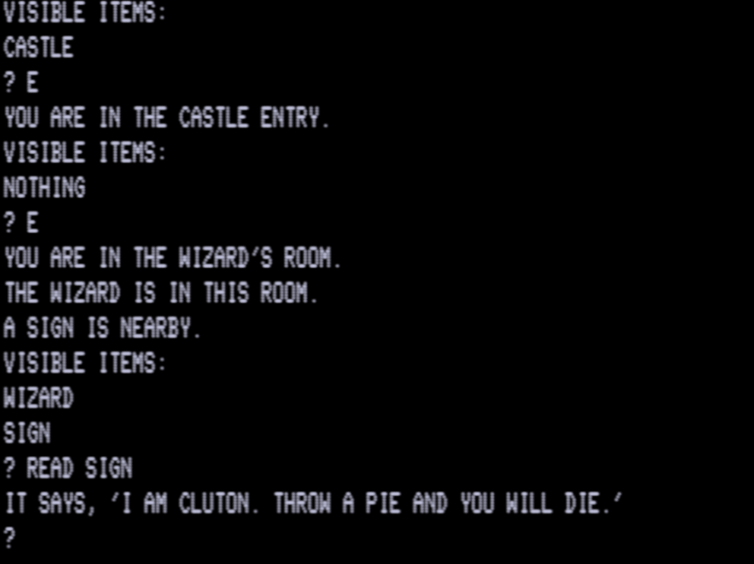
Inside joke, maybe?
Finally, to the south is … nothing. Absolutely nothing.
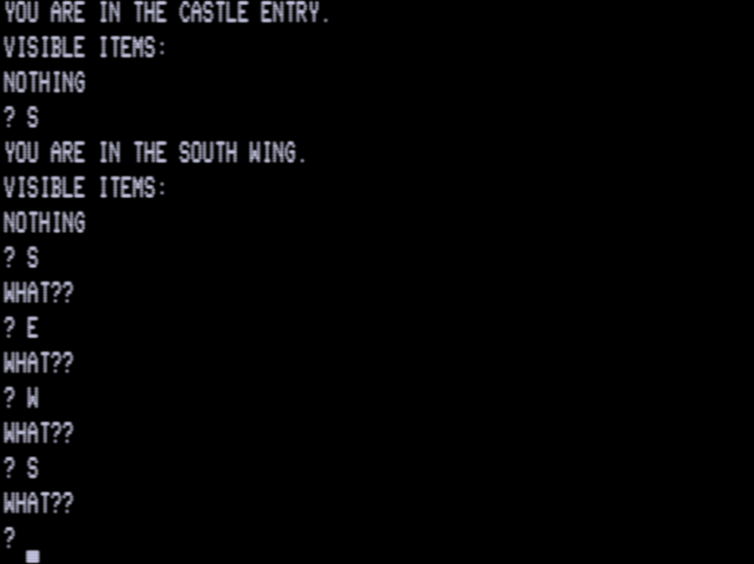
Again, I’ve been assured the game is beatable, but I’m still starting to worry (given the drop bug) I’m running into some other code-related issue. I’ll take suggestions in the comments if anyone thinks there’s something I missed.
And very special thanks to Ethan Johnson for assistance with getting the picture of our author, Mac Vaughn.



 Renga in Blue