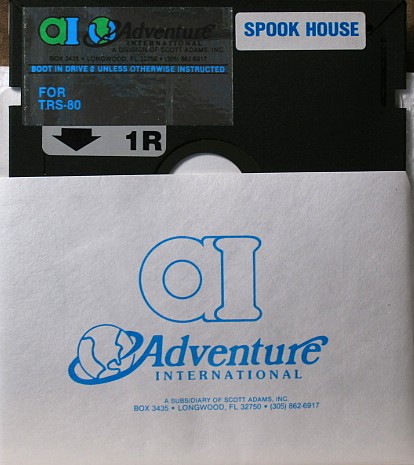
From the Museum of Computer Adventure Games.
Not too long from a finish, and fortunately not quite so absurd as assuming the existence of an unmentioned item. Still, it is pretty odd.
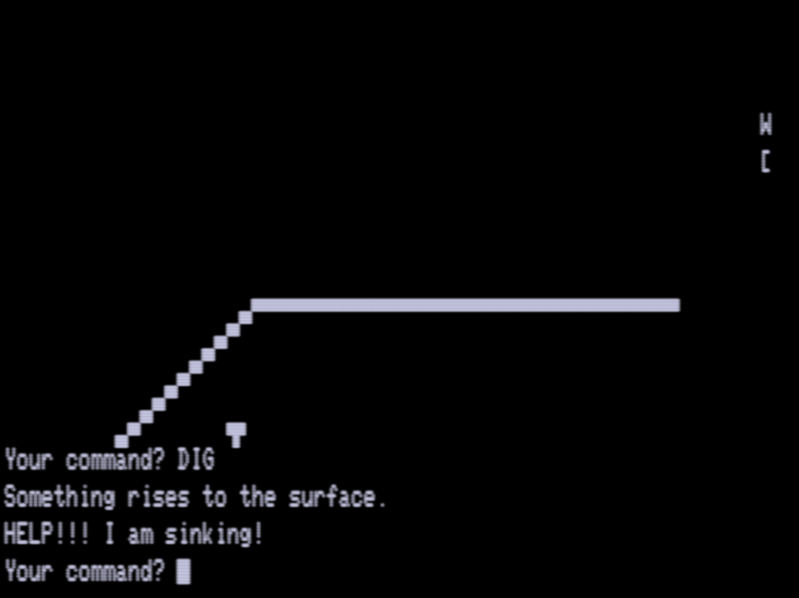
I knew DIG worked already from testing it on the sand (you find nothing). I guess it sort of makes sense in a shallow pool, but it certainly isn’t the verb I would have used (and I already tried other searching verbs which I thought would have been equivalent).
The tiny graphic is a blue key. This can be taken up to the locked door you can arrive at via rope tied to anchor.
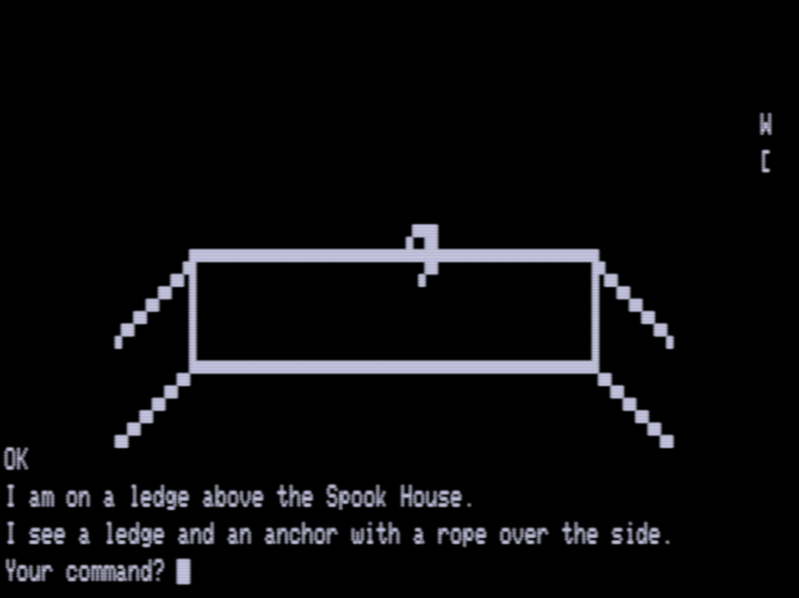
The problem is, going through the locked door takes you back to the strobe room! So it seemed nothing was gained at all from the exercise. However, you can pick up the rope and anchor again after using them, and there’s no way to jump down without them, meaning that the only way to re-use the rope and anchor is to find the blue key, and take the alternate exit after having reclaimed them from the railing.
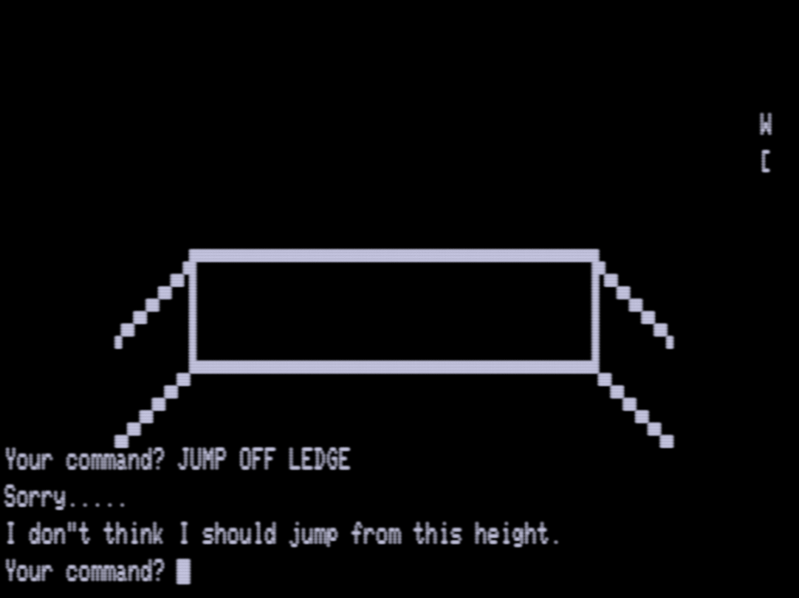
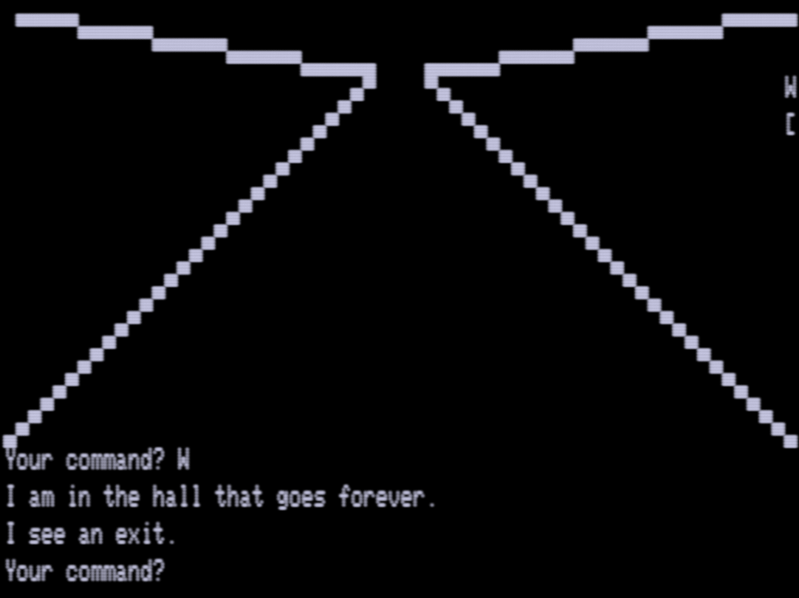
Almost there. I was stuck on an endless hall, and this was more or less a verb issue again. I tried pushing and pull and some other things on the appropriately marked wall…
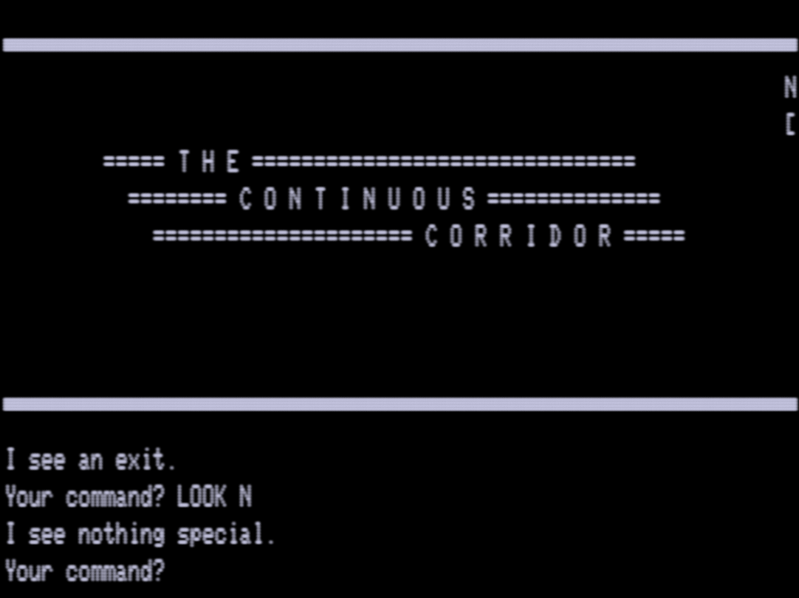
…but you’re instead supposed to just GO WALL.
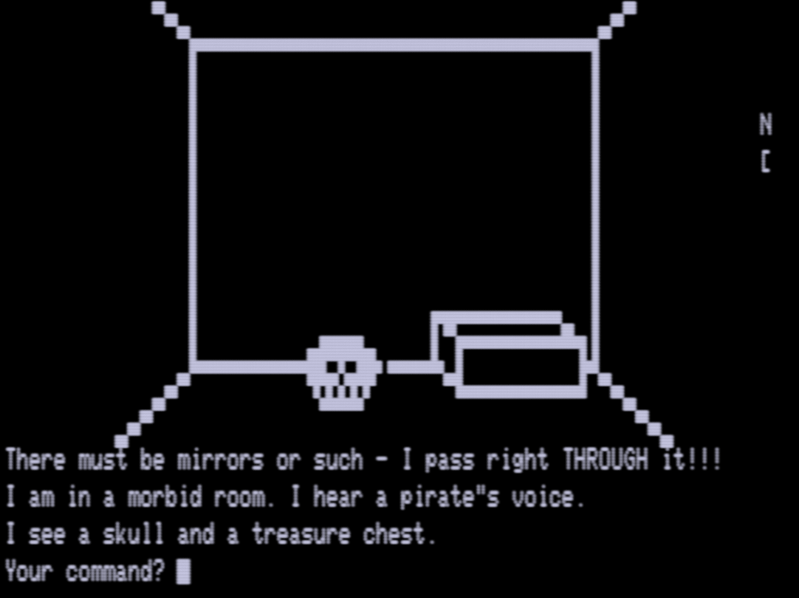
The chest is a red herring. Something about the skull nagged me so I tried smashing it, and I couldn’t do it without using the anchor. This yields a “remote control” with a button, and the only thing left to do is try pushing the button in literally every room in the game while facing every direction. (Fortunately not that many rooms.) I hit paydirt back near the start, at a wall marked “Lost”.
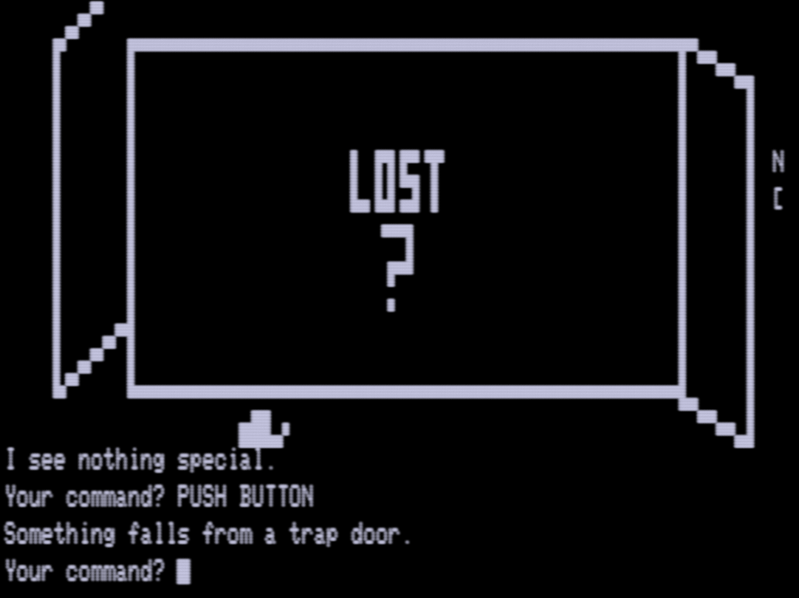
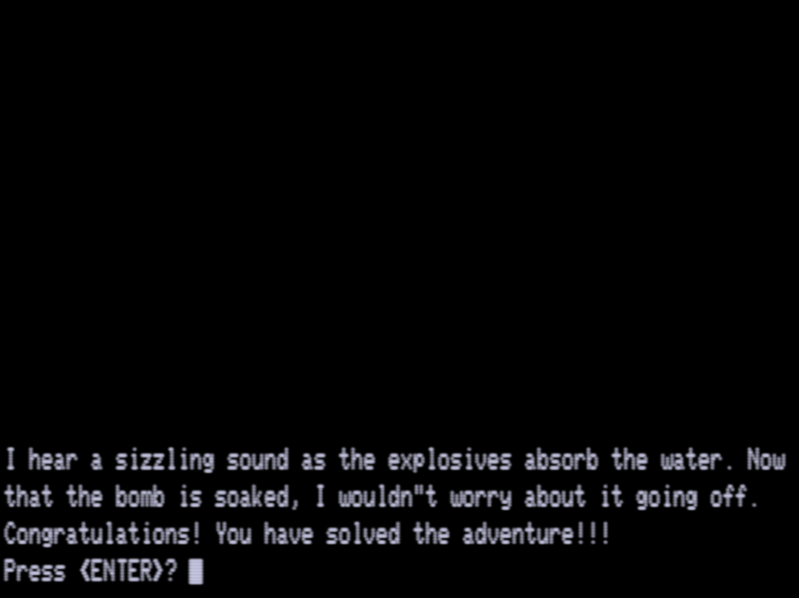
This is the time bomb that has been threatening to blow us up for 30 minutes.
Roger Jonathan Schrag will return for us in 1982 (he wrote another adventure published in a two-pack, just the other half was a different author). I will say I find it fascinating he describes himself as a “hacker” type most interest in testing the limits of coding the system.
I was a kid at the time I did all of my work for Adventure International. I wasn’t doing it for the money. I wrote these programs for the intellectual challenge and for the novelty of seeing my name in full page color ads in the magazines. Checks sort of came in whenever they came in. Sometimes there were sales reports attached. Sometimes not. Since I wasn’t doing this for the money, I really didn’t care much.
— From a portion of the interview with Roger Schrag
He incidentally went on to port the Scott Adams adventure system to Color Computer on his own initiative. While he did get royalties, it seems to have been just for the challenge.
Not every author has been of the description. We’ve had authors impressed by the concept of the parser, impressed by the idea of building a world, impressed by the idea of an interactive story, or even fascinated by the educational potential of adventure games.
What we still haven’t had much of is a business-focused type, making a plan and assembling an organized team, which is what we’ll get to next time.
(And no, I’m not counting On-Line Systems as being very organized — it was a near-miracle Time Zone got finished. This is an entirely different company.)
It wasn’t that long ago this blog visited Toxic Dumpsite, published by Adventure International in a two-pack with Spook House by Roger Jonathan Schrag, another one of our teenaged auteurs.
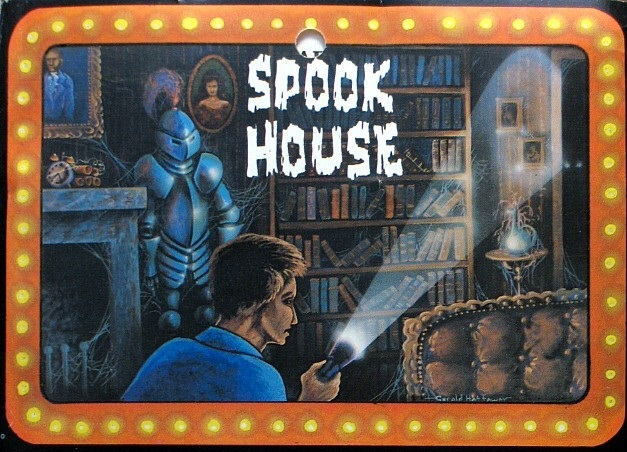
Via Giant Bomb.
I didn’t have a great time with the first game but I was misunderstanding the initial setup (that you could look in four directions in each “room”) as well as some of the author tendencies (like the ability to LOOK BEHIND and LOOK UNDER things). There are enough quirks that I didn’t want to wait for too long until tackling game number 2. Yes, I could re-read my old blog post, but there’s an author’s vibe that transcends words that’s hard to cling on to. I hope I can give this game a fairer shake than the last one.
I do have a little historical info I lacked last time. Back in 2009 Dale Dobson interviewed the author. Regarding the inclusion of graphics and the ability to look in different directions:
I think I just saw it as a natural progression. I really enjoyed the Scott Adams Adventures, but I thought it was time to turn up the volume and inject a visual aspect. Facing different directions in a room was just part of adding a dimension to the experience.
This indicates we’re talking about a completely separate thread of development than the line started by Deathmaze 5000. This is quite believable to me as the method of movement is different and the light vs. heavy density makes for very different game types, even if both games are technically in the “first person adventure” genre. I never expected the obscure-and-on-a-different-platform game The Haunted Palace to have had any influence either.
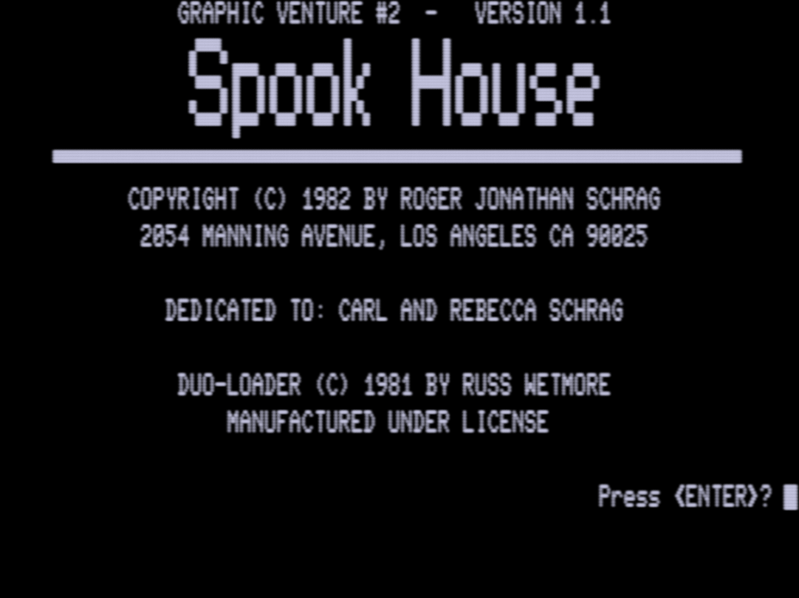
Carl and Rebecca are the author’s brother and sister.
Mr. Schrag also explains that he had no “engine” and simply added code on the fly as he went:
I believe when I went to write Spook House I took the code from Toxic Dumpsite and tweaked it. So I did a lot of code reuse.
But I don’t think I actually wrote an engine per se, probably because I didn’t sit down beforehand and spec out the functionality for an engine. Rather, I just sat down and started writing an adventure. And when I discovered I needed a widget to do X, I coded a widget to do X.
Once again we have a hard time limit, once again 30 minutes done in real time. We are trapped in a spooky house and there’s a time bomb set to explode.
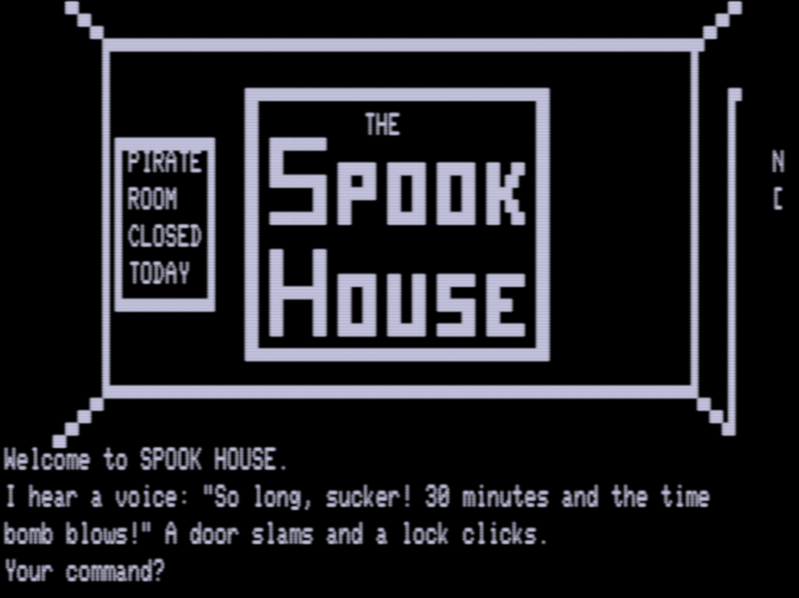
The sign is described as being nailed to the wall, which I immediately noted given the trauma I suffered through the last game.
This game has a much different feel from the previous one, which was mapped out in an “industrial” way; this map tries to be a bit more of a maze. The very first room from the start (to the east) flips around the player a bit, and I was able to explore for a while without solving any puzzles.
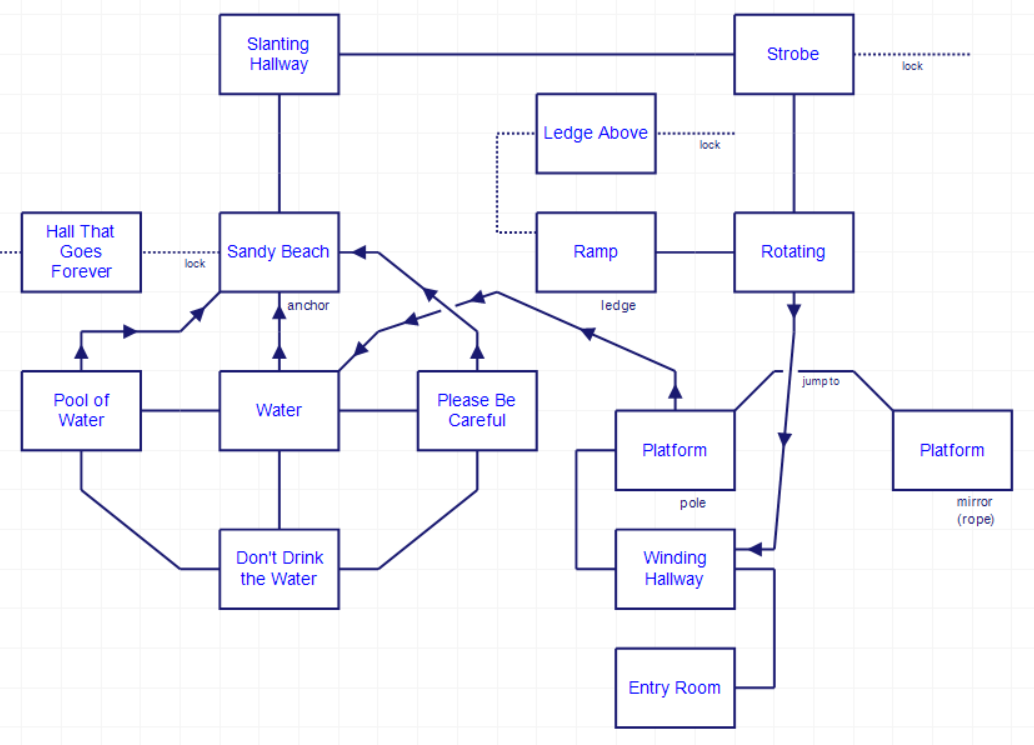
Passing through you can find a platform.
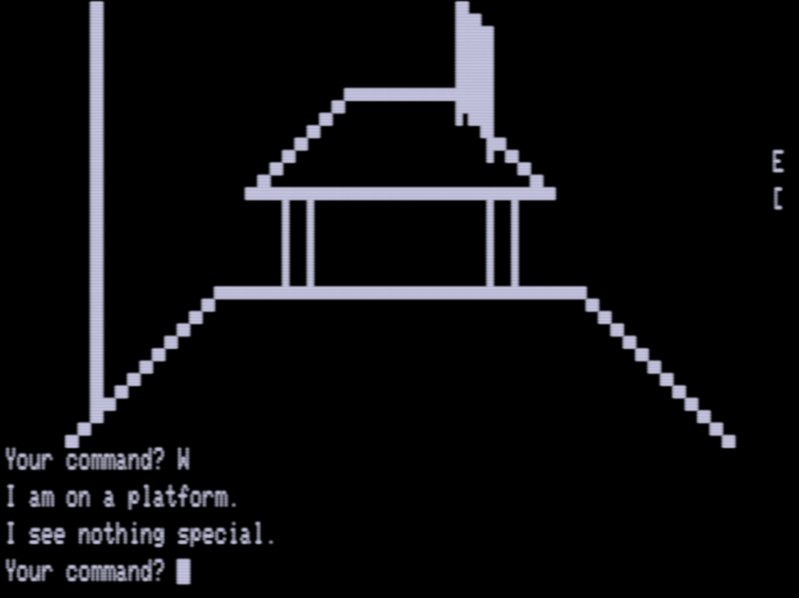
You can get to the platform in the distance easily, but I didn’t understand the graphic here at first. I’ll come back to this later.
You can turn north find a “fireman’s pole” to slide down, which lands you in some water.
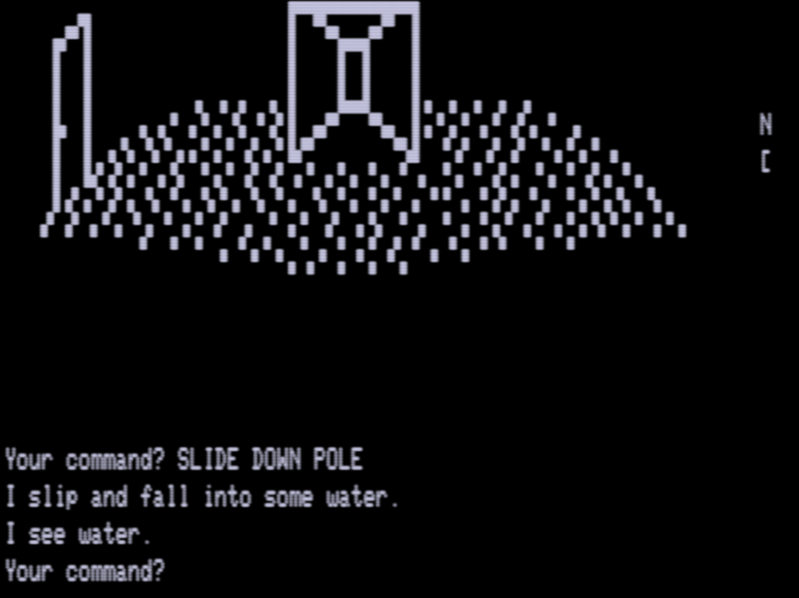
You can swim around a bit for what seems to be just atmosphere…
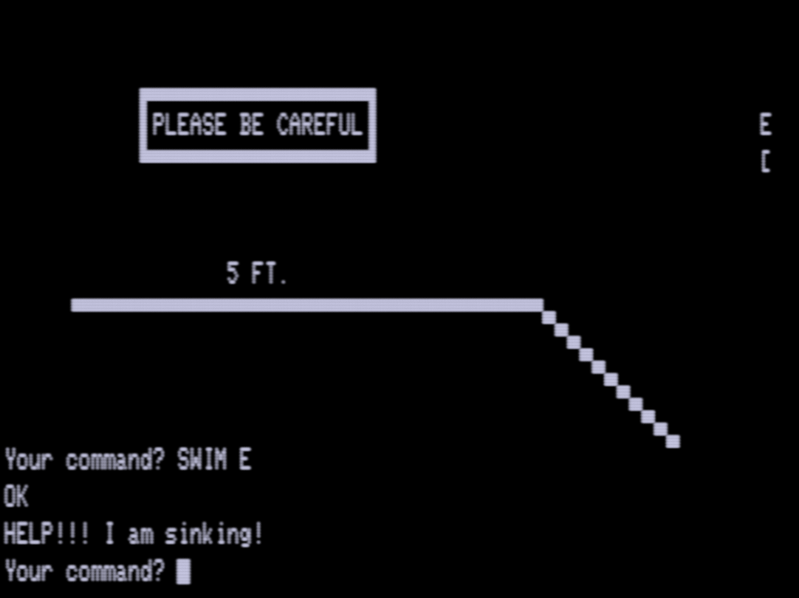
Either our character is short or being overdramatic. I wasn’t able to die by just swimming around even though the “sinking” message keeps happening.
…but eventually end up on shore, where there’s an anchor and an exit leading up. This is followed by a “strobe room” which literally flashes.
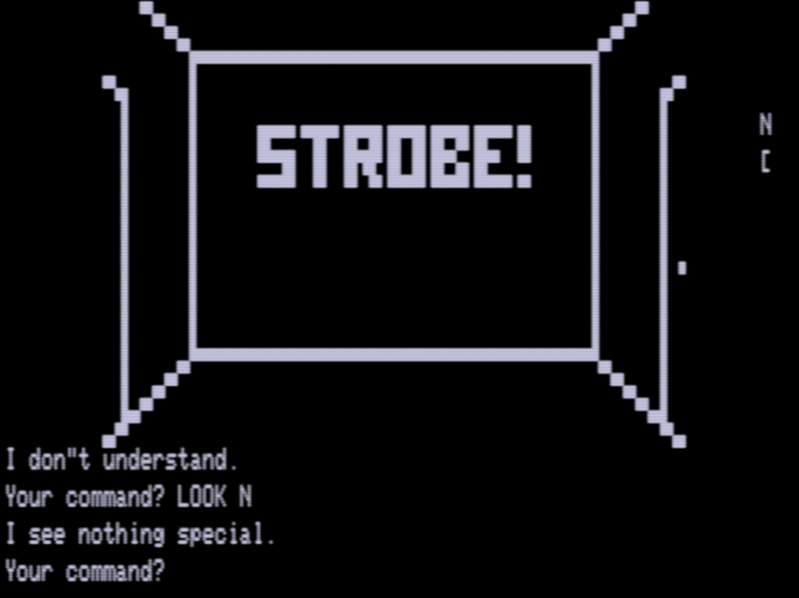
Also, locked door here to the east.
South of that there’s a rotating room which spins around in real time.
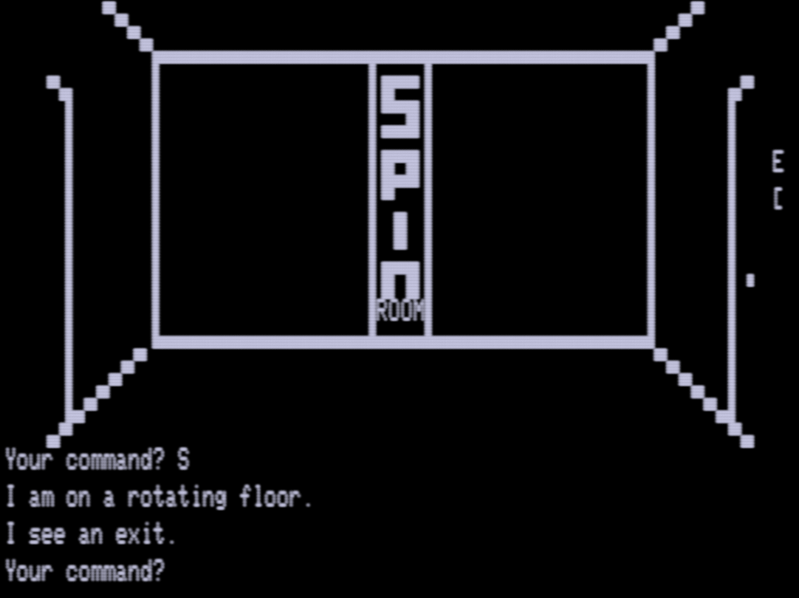
If you drop an item in this game, you can’t pick it up again unless you’re facing the same direction you dropped it at. For this spinning room (if you drop an item, with, say, DROP ANCHOR) it means you have to hit the “enter” key at the correct time (having typed GET ANCHOR or whatnot) to pick it up again.
One exit here leads to a trapdoor dropping you back to the entrance, and another one leads to a ramp with a ledge. I was stuck for a while and looped back to that platform I previously mentioned, where I realized it was meant to be the sort of distance I could jump. One JUMP TO PLATFORM later and I found myself at a dead end with a mirror.
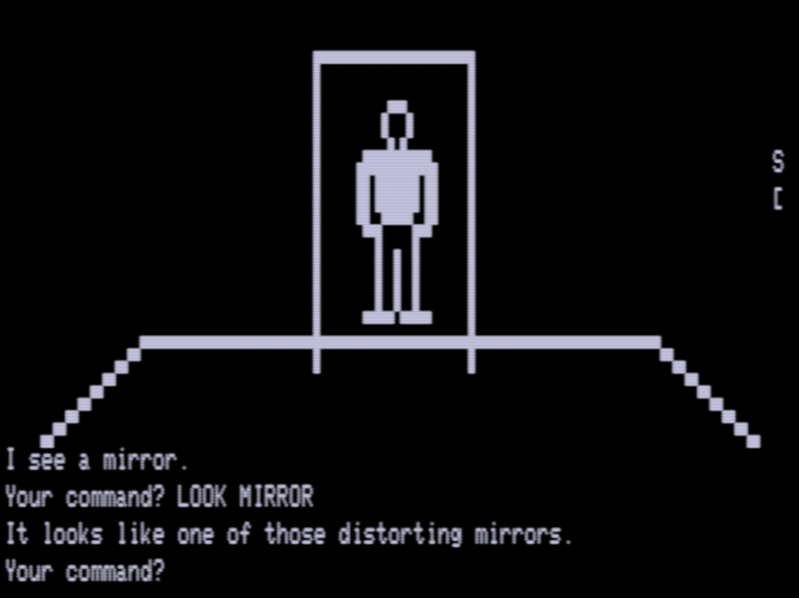
Being trained by the author’s previous game, I made sure to LOOK BEHIND the mirror, yielding a rope.
Since the only obstacle I had pending was a ledge at a ramp, and the only items I had were a rope and an anchor, I put them together to make a grappling hook.
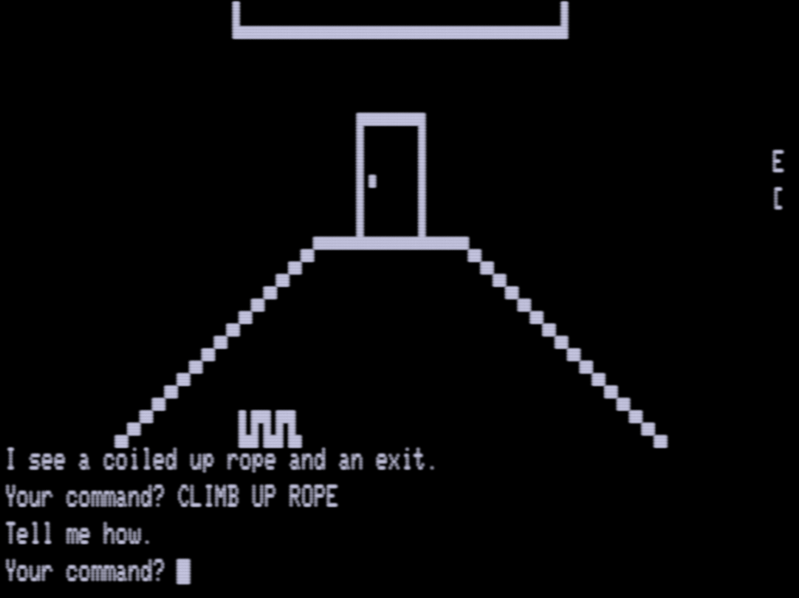

This took me only a few beats to puzzle out, but I originally thought of the anchor as much heavier and not really plausible as a grappling hook.
Once up the rope I found a locked door and a “nail file”. Remembering the sign from the start, I tested out a few attempts at using the file before I came across PULL SIGN WITH FILE.
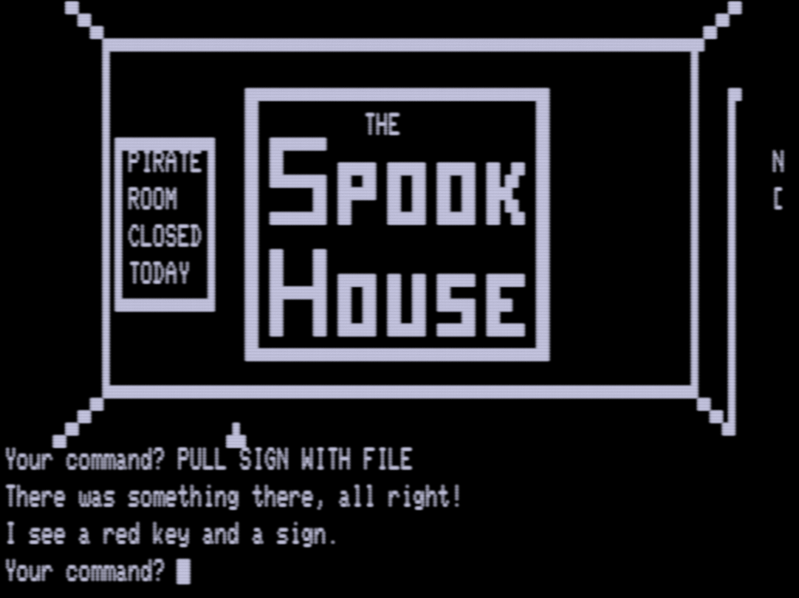
This file can then be used on the locked door by the beach to land in an endless corridor. I have not managed to get out of it.
That’s certainly an encouraging chunk of progress! The locked-door style gameplay endures here but with some more colorful traversal methods. Despite this having a less “grounded” plot than Toxic Dumpsite I’m having more fun with this one and the environment feels more tactile.


 Renga in Blue