I’ve finished, and this continues from my previous post.
First, briefly, regarding the verbs: they’re inside the machine code in plain text, but backwards. I don’t know if this is meant as a slight bit of “encryption” or if there’s some technical reason based on how input sequences are treated. It was mainly useful to find that “med” is the word to get inventory (as in “jeg har med”, “I am carrying”) and “dro” as in “drop” lets you drop stuff. (I really need to remember to test English words in foreign games, because sometimes they work.)
I also found “fjolet” and “idiot” on the list, both translating to, er, idiot; essentially this is for insulting the computer, which responds with “Det forstod jeg godt” or “I understood that!”

A book on Treasures and Treasure Hunters. One of my results while using image search for vocabulary. Via GPRIS.DK.
I needed advice from the comments (via Rob) to find one object that was tricky to get, and then the entirety of the rest involved mapping and digging in every room. I never even found the nails to build a ladder; I assume they’re somewhere because I poked at the machine code to list the nouns. The ladder points represent alternate exits from the labyrinth area but neither is needed.
For that one object, it was back in the shed:

That’s listing a shovel, an empty oil barrel (except it has a hammer if you check), a stack of boards, a garden rake, a hoe, a saw, and the door. Everything is takeable except the barrel and door, and knowing a ladder was coming I had automatically grabbed the boards and the saw. Somehow — and it doesn’t exactly make sense why this happens — you can be carting around the boards but be missing an item hidden if you examine them: a lamp. (You can find the lamp while carrying the boards, at least.)
With the lamp and matches in hand I was able to “taend lampe” (“put on the lamp”) and that vanquished the dark areas and any puzzles remaining in the game: as I said, the rest is pure map-making.
Starting with the dark place next to the kitchen, that just leads to a north/south tunnel, where the south opens out to the forest, and the north to the shed. This doesn’t really represent a shortcut, but rather just the author trying to add more connectivity to the world.

The other dark part was next to the shed, leading down to a cellar.

“Skeleton” and “matches” are marked rooms in the labyrinth after this section.
There are four marked rooms, and each has a treasure that is found by digging with the shovel (“grave”). There are five treasures total, so almost the entire rest of the game can be found without entering the labyrinth at all! (Except you are likely to enter by accident as you map things out.)
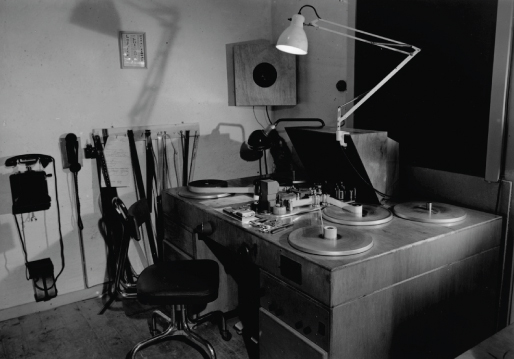
I incidentally had trouble translating “klipperum”. The pictures that I found were all editing rooms, like this one from a Danish film site…

…and the best I could find digging through dictionaries was “cloakroom” but that also doesn’t make sense to me based on the context. ADD: Petter Sjölund in the comments mentions “klippe” is stone or rock so it could be “room (carved out?) of rock”.
Leaving that behind, and heading into the labyrinth (pardon the mess, I know I’m missing a few exits)…

…it’s a fairly standard “drop items to map scenario”. One passage includes a paper at the end which suggests the treasures be dropped at the starting cottage in order to be scored. This happens to be the otherwise-inaccessible basement of the cottage; a hole is mentioned from the very start of the game, so it is a nice piece of geographic connection to mention it here.

One room also has a skull there (which serves both as decoration and a map-making marker) and another lets you dig up a skeleton of a past treasure-hunter.

The skull and skeleton are the two “sinks” of the maze (that is, random travel will more likely land in one of those two) so it makes for an interesting narrative moment to have a skeleton of a past adventurer dropped in there. However, our long expertise with Dropping Stuff makes it not hard to find the fifth and final treasure, which is right under the giant hole we found earlier outside.

(You know, I didn’t see if the treasure had the nails. I’m too exhausted to go back and check, after a while the Danish was hurting my brain.)
So all that’s left to do is make sure all the treasures are deposited followed by typing SCORE, kicking us back to the operating system prompt.

This was about the joy of exploration with an attempt at verisimilitude in environment, with the massive number of red herrings like a rake in the shed or a bottle cap buried on a random path. The “shortcuts” weren’t really needed but I’m not sure the author even thought of them in a design sense, but more in a sense that it’s logical for a realistic world to have multiple routes passing through it.
In a way this was good for a language-beginner game (that is, for me), as it didn’t in the end make horrendous demands on vocabulary. What I found most interesting was a general lack of puzzles at all; while it is essentially certain the author had experience with at least some standard adventure games, this one also harkens back to the Chaffee Quest, which when translated into Danish also was given the name Skatte Jagt.
Thanks to Mikkel Christensen who did the scans of NASCOMNYT which helped find out the year of the game.
There is allegedly another Danish game from 1983 so we’re not done with the language yet, but I’m not sure where to find it. CASA states the Christmas-themed Juleadventurespil is in the December 1983 issue of Hjemmedata magazine. This is the Norwegian issue but we don’t have the Danish one.
For now, I need to stick with English for a while anyway for a mental breather; coming up there’s one spooky game, one Tolkien game (that hasn’t been discussed here yet), and finally Urban Upstart (for real this time).
(Continued, more or less, from my previous post.)
While the Sinclair ZX-80 and ZX-81 launched computing “for the people” in Denmark (and a battle with Commodore after), today’s game is from another one of those “hobbyists” separate from the mainstream: Henrik K. Jensen, writing on a Nascom kit computer. While the home origin of the Nascom was the UK (just like the ZX-80) it managed to make inroads in both Denmark and Sweden.

NASCOM kit parts, from a video by GlassTTY. This forms in the end a “proper” computer, rather than something a little more skeletal like the KIM-1.
The “kit” aspect was a definite part of the experience which is part of what allowed the launch of the Nascom 1 in the UK (January 1978) to be at more or less half the price of competitors. However, it was still cheap even for the parts; in fact, it was too cheap, as it had “inadequate profit margins” which led to the company falling into receivership two years later, leading to it being taken over by the company Lucas. A pre-assembled Nascom did not come out until very late, 1981, with the Nascom 3, which was simply the Nascom 2 but now you didn’t have to solder. By this point the industry had already moved on.
However, that didn’t equate to cheap in Denmark! An an account of buying one in Denmark, circa 1979 notes it was 4481 DKK, “about two month’s salary”, and
… what you got was a keyboard, a circuit board and a number of plastic bags full of resistors, capacitors and integrated circuits.
Yes! You had to build it yourself.
And you have to supply your own power supply (+5V,+12V,-5V,-12V (expensive!)), and a monitor or television for screen. Not to mention a box.
Then came the fun of finding the correct place for all the components and soldering them into place.
1839 component pins!!
I wonder if anyone ever got it to work on the first try.
Enough Danes figured it out that a club was kicked off in late 1979 with a newsletter. 18 members are listed in the second newsletter, and by 1982 the list reached hundreds (note not “thousands” like the ZX80/81 club in the UK had).

Half an “invader” graphic from the October 1980 issue.
Just like most clubs at the time, there was a “library” of software for members; March 1982 includes a mention of “Skattejagt” (“Treasure Hunt”) as entry B13:

This is not today’s game! In fact, you’ve seen this game before; a catalog that includes up to the end of 1982 gives a fuller description:
You are hunting for treasure that a pirate has hidden in an underground cave system, where secret passages open and close during the game.
This is Chaffee’s Quest, a game we’ve now seen translated into Dutch (twice) based on source code from the July 1979 issue of Byte. It landed in Danish too and probably more languages we haven’t unearthed.
The game we’re instead concerned about is only listed in the later catalog, meaning it first appeared in 1982; prior to my research today’s game only had a date of 19xx.

The program requires 48K and is in machine code; the computer is turned into a robot that you give commands to like “go north”, “take shovel”, and “build ladder”. It “demands a lot of imagination and patience, and it can take a while to find the treasures.”
The catalog states “Adventure” but the title screen of the game itself gives Skatte Jagt, so despite the clash with Chaffee I’m sticking with the more distinctive name.

The instructions mention “tag skovl” (take shovel) and “gaa nord” (go north) but notice it does not mention “lav stige” (build ladder) like the user group catalog does. (Ladder supplies get loaded on the player quickly enough I was quite suspicious, but it’s still good to have the exact phrasing in Danish.) Nord, syd, oest, vest, op, ned are the words for north, south, east, west, up, and down.

I’m in a cottage with a hole in the floor. I can see: stairs, locked door, door, hatch, hatch. I can go: east, up.
I typed hjaelp (help) right away:
For at laase en doer/lem op skriv aaben.
Skatte I igger ofte nedgravet.
Det er en god ide at undersoege alle ting.
To open a door/hatch, put “open”.
Treasures are often buried underground.
It is a good idea to investigate everything.
Incidentally, Danish uses special characters (å, æ, ø) and there is a version of the Nascom system that allows for them, but this one flattens things, so “åben dør” is “aaben doer”. ø is still used once in the game but I think it’s just the “zero” symbol.
Based on the help messages and my experimentation the verbs I’ve found are
tag (take), gaa (go), lave (build), laeg (drop), grave (dig), undersoeg (examine), and aaben (open)
although only the first three letters are needed of each (so it’s useful to “und” all the nouns). “Aab” is particularly quirky as you’ll see in a moment. I didn’t say “I started the game by dumping the verb list, like I normally do with languages I’m not good at”, and that’s not because of being a Danish master, but because after heavy searching through the machine-code file I can’t find where the verbs are stored. I imagine they’re broken up somehow. The upshot is that I’m not done with the game yet:

Heading up via “gaa op” (up the stairs one of the two hatches, or both?) there is an attic with a “rode kasse” (red box). You might think that the verb “aaben” would come into use here, but instead the game wants you to examine the box, which contains a second smaller box. Then examining the smaller box reveals some keys (noegler, or nøgler if special characters were being used).
Jeg er paa er loft. Jeg kan se: Noegler. Lille aeske. Rode kasse. lem. Mulige udgange: ned
I am in an attic. I can see: keys, little box, red box, hatch. I can go: down.
With the keys in hand (“tag noe”) you can then go downstairs to unlock the locked door, and I struggled for a while since no variation of “unlock door” or “open door” worked. I finally hit upon “open” alone. That’s what the help is supposed to indicate, and maybe it’s clearer in Danish, but I was mentally translating that as it requiring a noun, plus it’s common for a separate verb to do the door-unlocking as opposed to the keys being passively used while held.
The unlocked door leads to a kitchen (with a kitchen cabinet that seemingly has nothing) and another door leading further on into darkness. I don’t have any way through the darkness.
This is despite just outside seemingly having a solution:

This is a “courtyard” (or maybe “farmyard”) with a stone trough. Searching the trough reveals a box of matches, but nothing I’ve tried has let me light a match, so the darkness has to be left behind for now. (Sometimes adventure games don’t let you light a match by itself; the matches are just a tool for lighting a lamp. I haven’t found one of those either, though.)

The most fun way I’ve found to do vocabulary is to search on Google Images. This 1895 picture by Fritz Syberg (“An Old Farmyard”) came up looking at the word “gaardsplads”.
To the south is a “graesmark” (meadow) but nothing seems to be there (other than “looping” exits to make it seem bigger than it is) so let’s head north instead.

There’s a branching path with a locked hatch and a shed at the end. (Or rather “udhus”, a literal “out-building”, which could be an “outhouse” except there’s enough stuff inside the game clearly is meaning a shed.)
Inside there’s a shovel, oil barrel (with hammer), stack of boards, saw, rake, and hoe. Those boards and saw and hammer make it tempting to start building a ladder right away but the game says we’re missing something (I assume nails). The shovel, though, can be taken out right away for some digging, and here the game gets interesting in a ludology sense.
Crystal Cave (1977) modified the original Adventure source to start the game with a cave that had “treasures” that were all breakable formations, and park ranger that would kick you out if you caused too much havoc; essentially, a satire of cave-delving that imagined what things really would be like for a treasure-hunter in the real world. In the real world, if you start digging at random, you might find a rusty iron or an old beer bottlecap; such is the same here.

That’s a zero, right? Also this is the beer bottlecap.
I would guess, just like Crystal Caves, we’ll eventually break down to a lower layer with the real treasures.
Digging also reveals a stump in the forest, but I haven’t been able to do anything useful with it; no treasures have revealed themselves. Other than the dig-fest, the north part of the map has a locked hatch leading down to darkness (again, no light) and also what’s just a big hole.
Jeg er ved et huli jorden. Jeg kan se: . Mulige udgange: nord
I am at a hole in the ground. I can see: . I can go: north
(I assume this is where the ladder gets used.)
If anyone wants to take a shot at the game, directions for getting and playing it are here; all I really want is a verb list, if I’m stuck on an actual puzzle I don’t want to hear about it yet.


 Renga in Blue