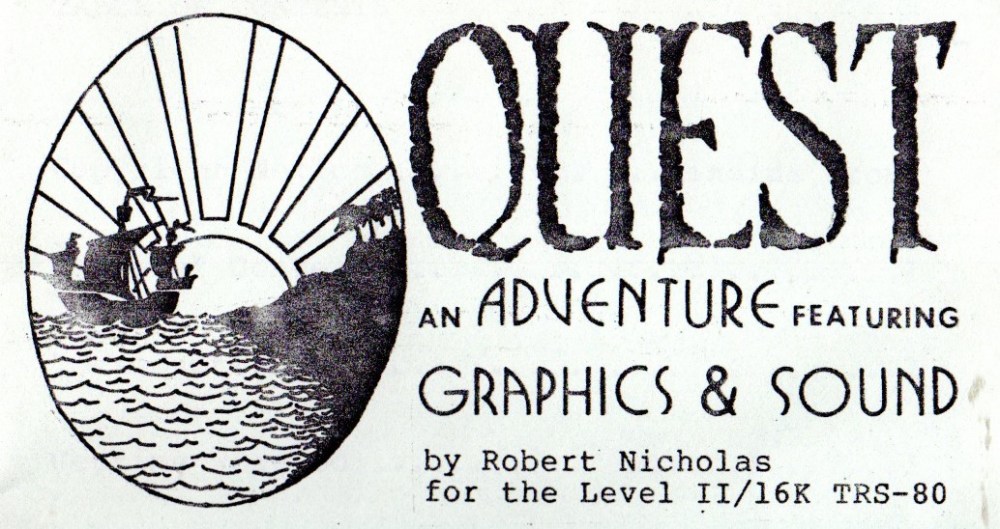
Via The Internet Archive.
This is a game I’ve technically had on my list from the very beginning of the Project but I had it marked as 19xx. It wasn’t until a reader pinged me last year that I found out about when it was made; the manual had very recently been uploaded to the Internet Archive.
The manual means it was worth the wait and makes for one of the few late artifacts from Mad Hatter Software. Mad Hatter is a company I still find mysterious. We have a summer 1979 catalog which indicates Tim Quinlan is the proprietor and it claims to be their sixth edition; the 1979 catalog sells four of the Greg Hassett games (House of Seven Gables, Journey to the Center of the Earth, King Tut’s Tomb, Sorcerer’s Castle) and Quinlan was apparently in the same circle of people as Bob Lidill (of the Captain 80 Book of Basic Adventures) who reports Tim was “a character and always wore a top hat.”
This is the sixth catalog that we have produced since our start in the summer of “78”. Our first one listed six games for the TRS-80. By the time we hit the West Coast Computer Faire last November, we were offering 36 items for the APPLE, PET and the TRS-80. The winter edition listed about 60 Items and this one rings in with over 150.
Of the six initial TRS-80 offers, I’m guessing some or maybe all are by Tim Quinlan himself, like Budget Planning Program and Othello III, both copyright 1978, taking the “variety pack” approach to development.
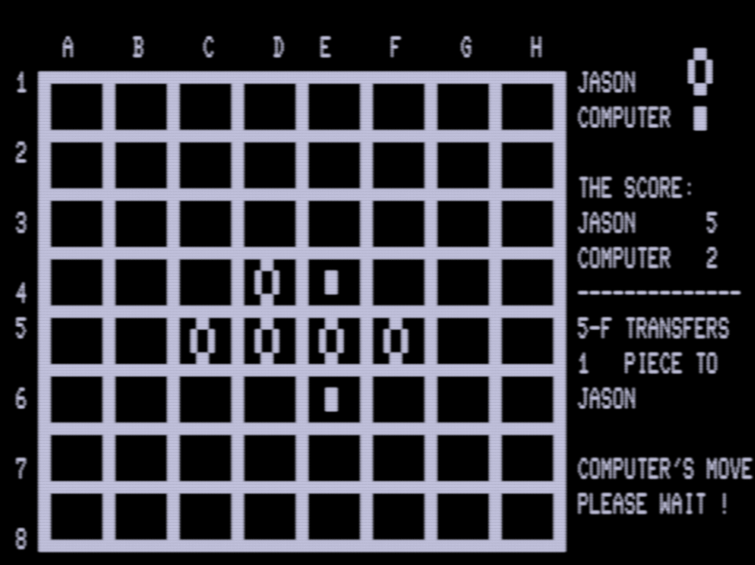
How his “star adventure writer” ended up being a 12-to-14 year old is unclear, but North Chelmsford, MA (where Greg Hassett hailed from) and Dracut (where Mad Hatter was located) are fairly close, so I assume it was just meeting locally.
But back to our concern today, Bob Nicholas. He wrote two adventure games and I’m playing game #2 immediately after this one. Both tout featuring GRAPHICS & SOUND; for the sound mainly it is a “walking sound” upon move between rooms and a dirge upon dying. I have a clip to demonstrate.
As you can see from the clip, the graphics are fairly unique; a TRS-80 character mode illustration in the upper left, objects and room name to the right, commands on the bottom.

You start at “home” and your object is to gain treasures (not unique) and fame (slightly unique). Fame is simply the game keeping track of how many monsters you’ve killed as a separate stat. You gather/kill as much you like, head home, and SAY HOME to declare you are done with the game.
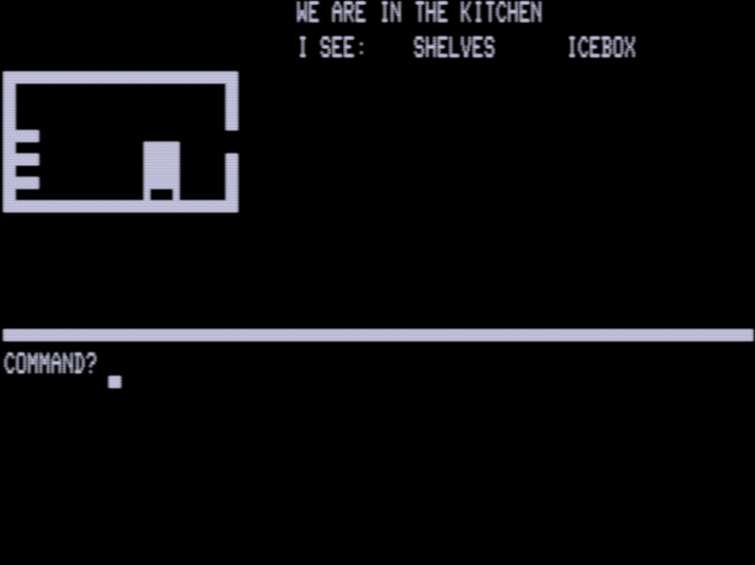
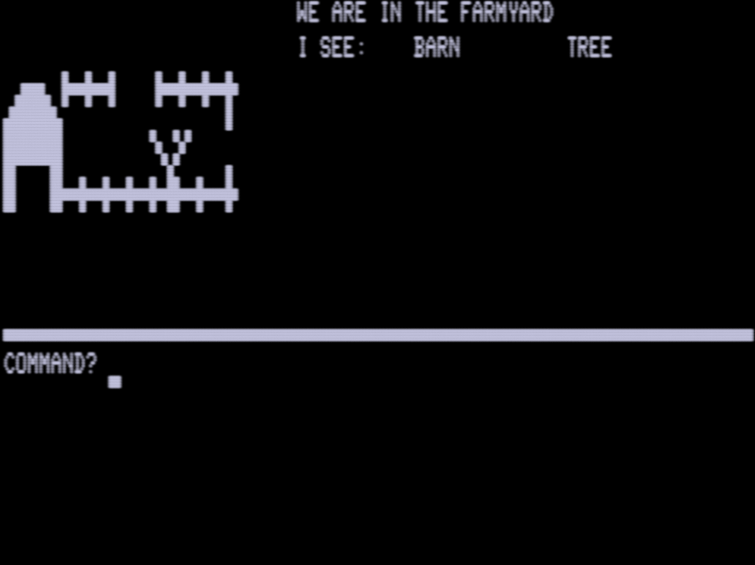
Other than giant-pixel art, the other big trick the game pulls is to have objects placed randomly. That is, the initial room always has a couch and a fireplace, but in one game the couch may conceal a coat, while in the next it may have matches.
After some initial “your house” rooms where you have to LOOK in everything and scoop up whatever random items might appear, you hit the road, visiting a store on the way:
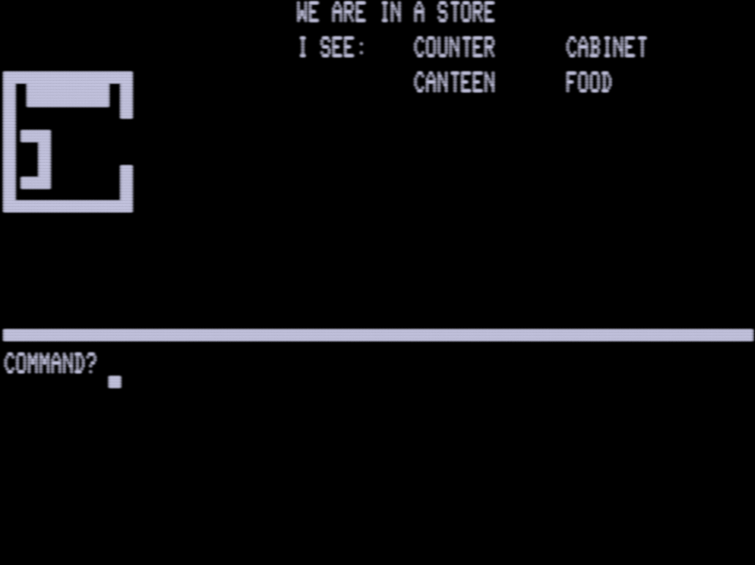
This just gives you an error if you try to GET things. Since you are in a shop, you need to BUY to pick things up, which works as long as you have your wallet with you. For this iteration the wallet was in my icebox.
There’s a cave that needs a LANTERN and MATCHES to see, and I was stuck for a while because I didn’t realize ON was a verb.
The game understands a very meagre set of verbs; directions, LOOK, KILL, ON, PULL, UNLOCK, BUY, READ. This ends up being confusing, for, say, wearing a coat — which also uses ON, and you need to do before going in the cave, otherwise you’ll freeze — or eating food. I have no idea how to eat food. If you have an OPENER and CANS you can open the cans and then you will automatically eat, but there’s a FOOD object that I never was able to use.

After typing ON COAT.
There’s not really any puzzles past this point other than “make sure you collect all the keys” and “don’t hang around near a monster without killing it, and don’t try until you have the SWORD”.

(Oh! I should talk about the MASTER that appears. The game’s “puppet” takes a “Igor from Frankenstein” like attitude and responds to every command with MASTER. There was a fair amount of hand-wringing over “who are you communicating with” in this era, with the weirdest example from 1980 being CIA Adventure pretending you are speaking with a “partner” who is doing all the actions.)
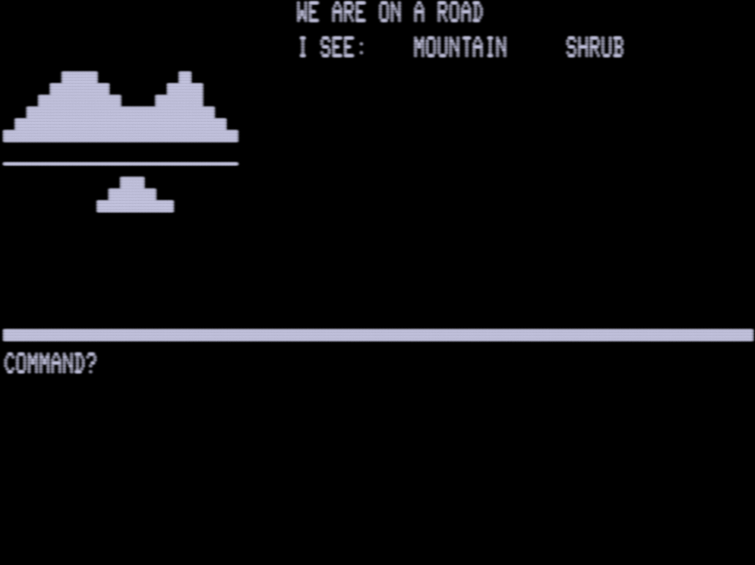
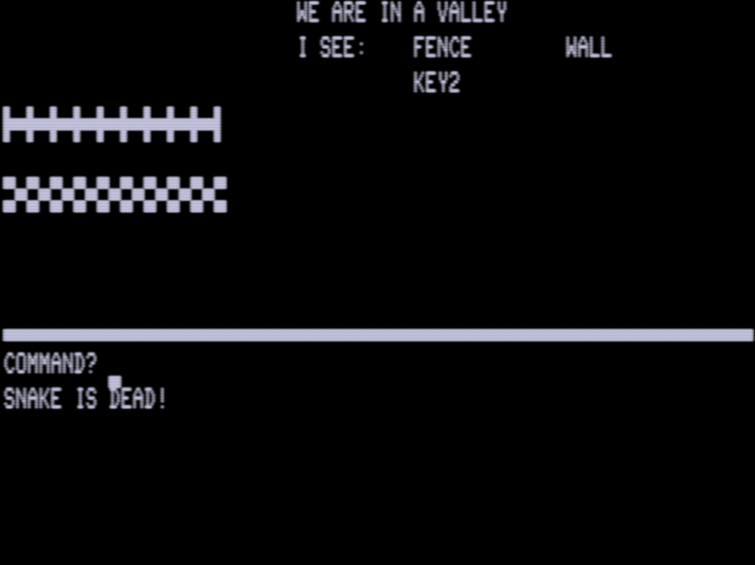
Assuming you have been doing LOOK on every item, by the time you encounter any locked things you will have found KEY1, KEY2, and KEY3.
You’ll eventually hit a small dwarven complex.
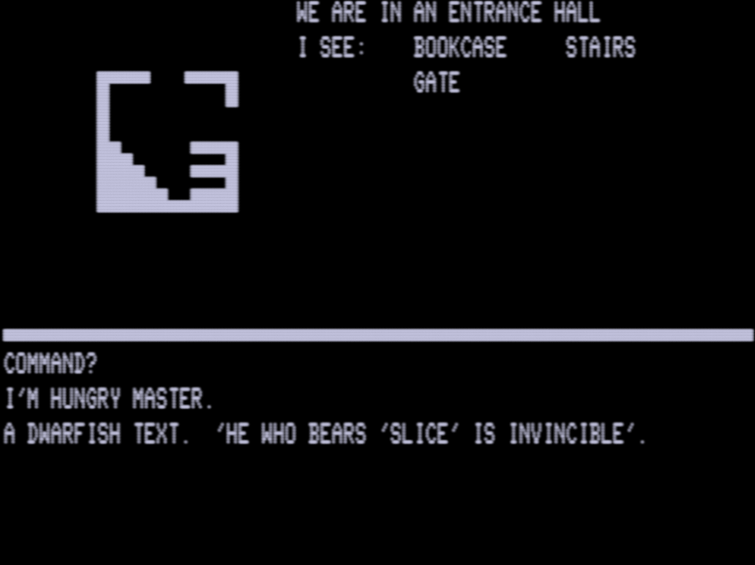
I was able to unlock the gate but never got through it. GO GATE doesn’t work. No directions work.
A few steps later you reach a dragon, and then KILL DRAGON / SWORD for glory.
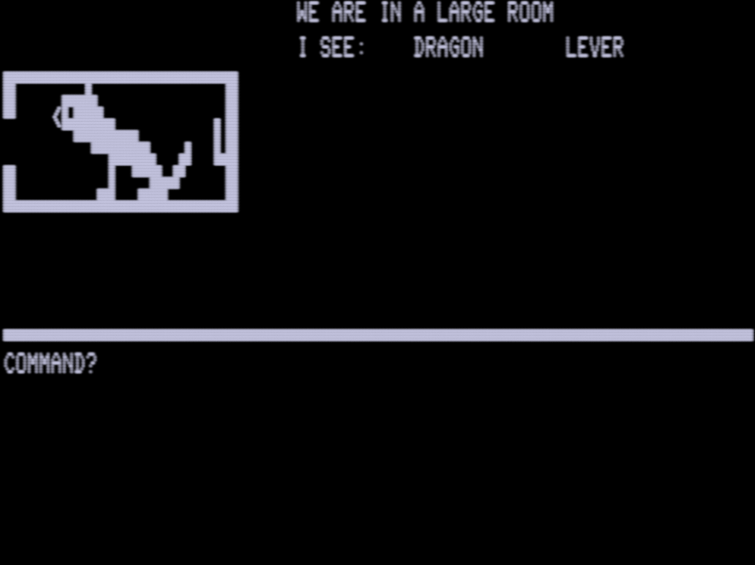
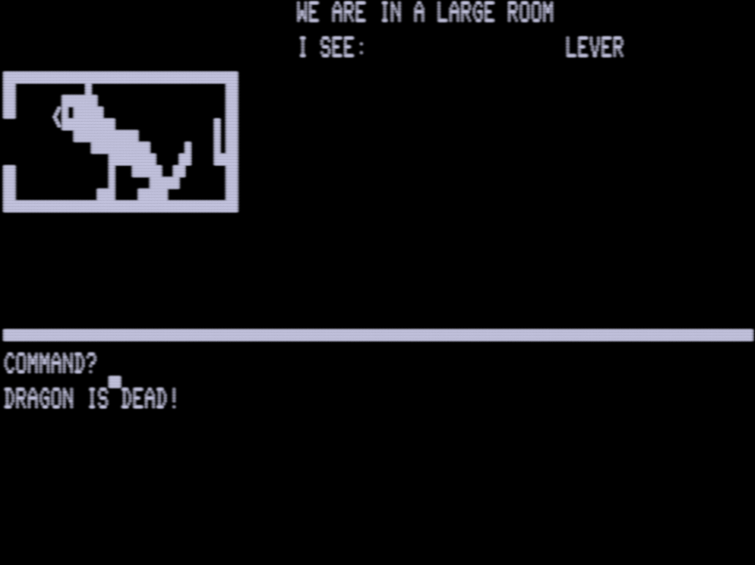
After killing the dragon you can pull a lever to land back on a mountain and on a route that you can use to backtrack to home.

I’m unclear on if sometimes the random spawning makes it literally impossible to get 100% in treasures, but I didn’t find the game enjoyable enough to repeat and find out. There’s also a difficulty level you can set which changes lamp light / number of matches / amount of time it takes before you need food, but since this is such a linear game, the only real optimizing you can do is saving your game, examining everything available to look at, restoring the save you just made, and then only examining items with secret objects.
What’s fascinating about this game is that sound, graphics, randomization are all relatively unique and ambitious for this time frame, but it ended up being more rubbish than the more slavish copies of Adventure (like Cavern of Riches). Such can be the dues of the attempted innovation.
The other Bob Nicholas adventure, incidentally, uses the same system more or less, but because it is oriented as a mystery, it works better than this one. (Not much better, but it ends up being at least kind of hilarious, as you’ll see next time.)


 Renga in Blue