I’ve finished the game, and as predicted, there was not much left to go.
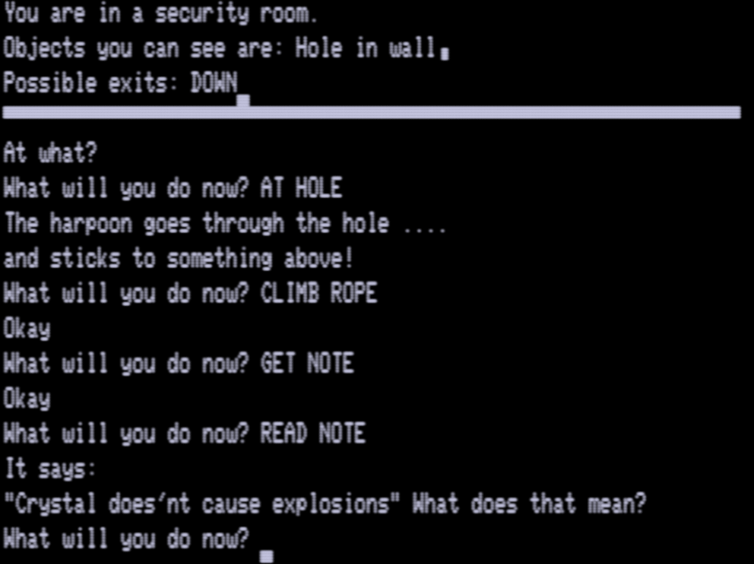
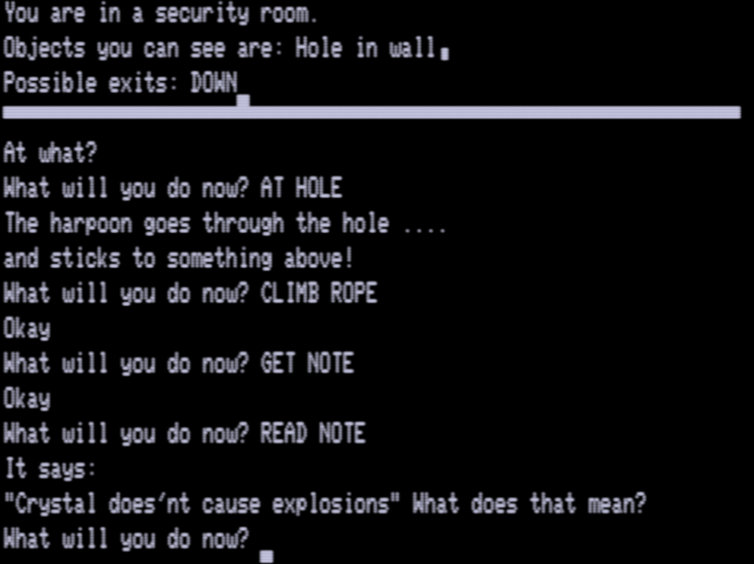
I was left before with a crystal rod and a related curious hint.
I have no idea what this hint means. What I instead was eyeballing was the “hole in wall” in the description. I was mentally equating that with the DOWN exit; there have been many games where a listed “background item” simply corresponds to a direction, but given I was horribly stuck, it was worth checking if that was really the case.
Anyone with an idea what the deal with the message was? I also was thinking in a structural-solving sense, insofar as the harpoon and rope make for one of the more elaborate puzzles in the game, yet the end result seemed to just be a relatively weak hint (like how the bottle from the ocean also just had a hint, one I didn’t even need because I had already solved the relevant puzzle!
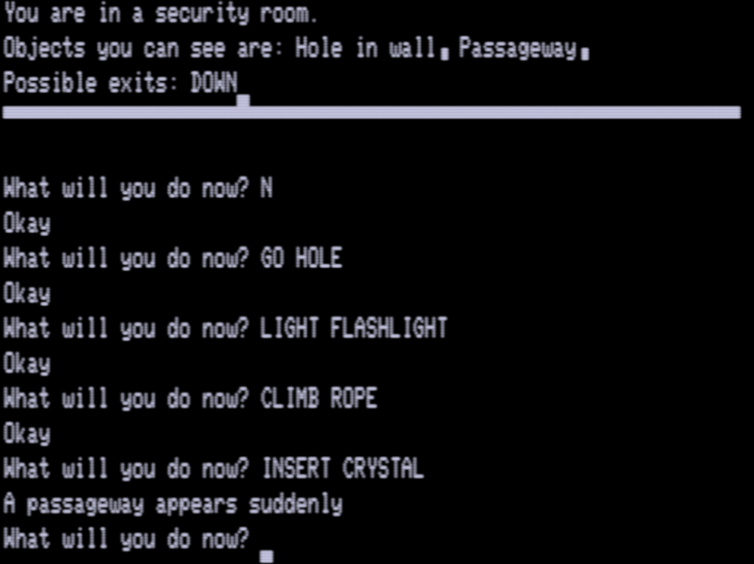
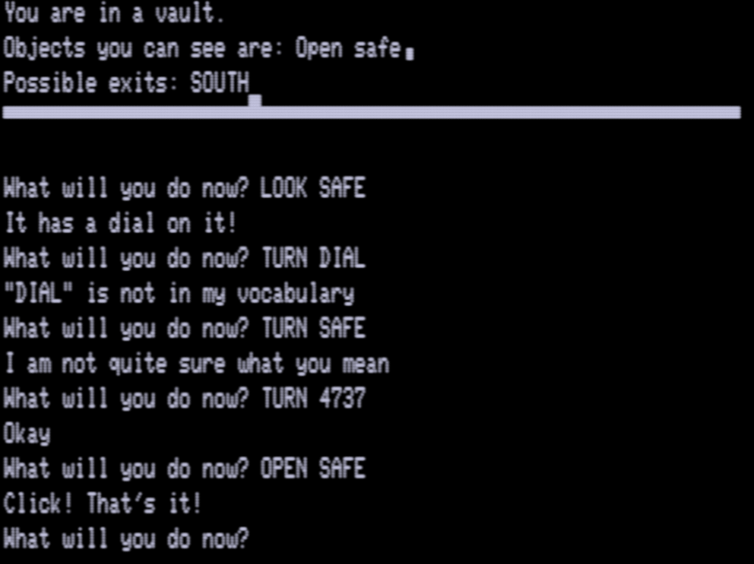
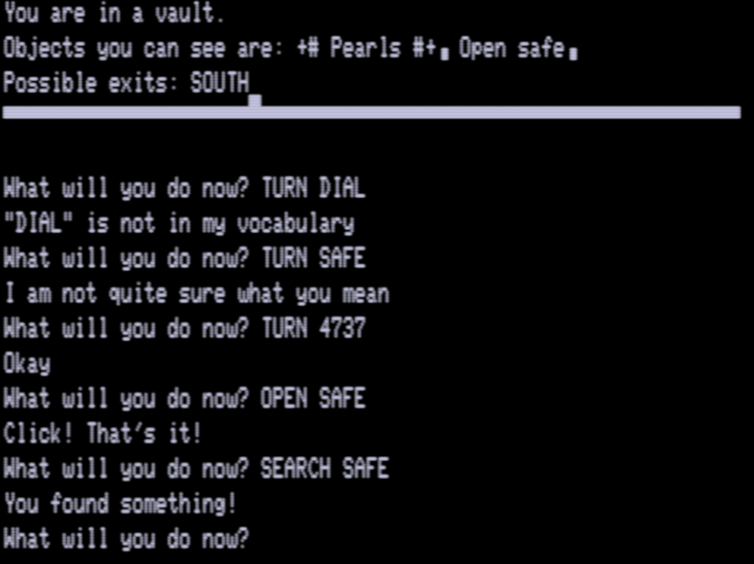
Going inside the new passage, there is a vault, and now is when that number on the island gets applied:
(Of course, there is absolutely no reason whatsoever a sunken ship would have its combination clued by numbers written on a nearby island.. This is one of those adventure-things that gets handwaved off generally, but it really is so much more absurd than “the color on the windowsill matches the combination five rooms away” here; the game is clearly detached from reality in a “gonzo” sense where anything can happen.)
Sorry, not much update even with the analysis there! That’s the risk with adventure game blogging; you sometimes end up stopping right at the end. I do have one historical update, though:
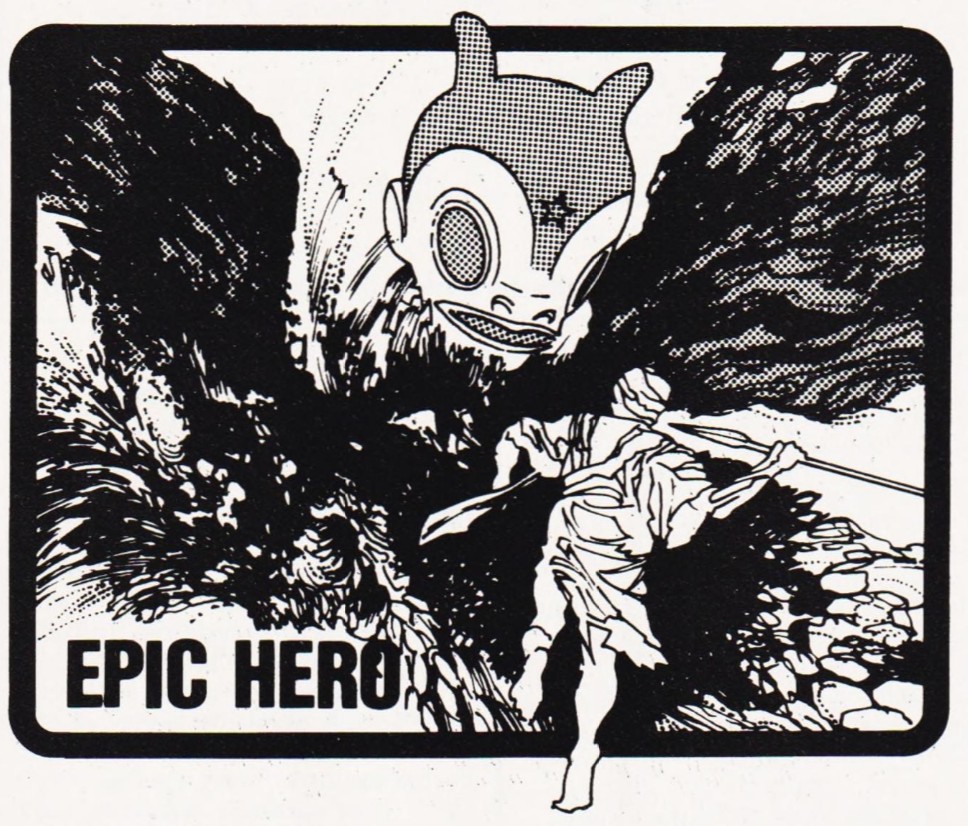
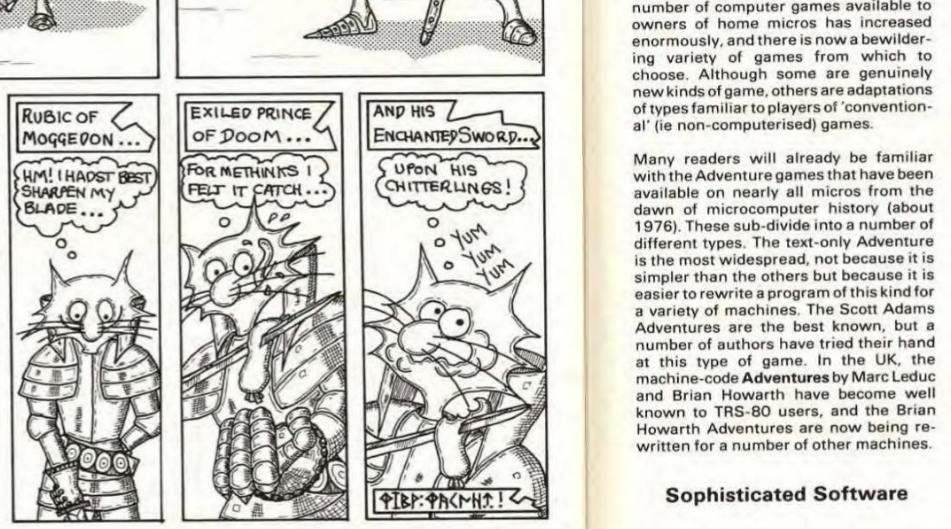
From a Molimerx ad for the Epic Hero series, Computing Today January 1983.
I found the ad above in a January 1983 magazine (which was on newsstands, so it really was up in December ’82); that means I can drop the 1982/1983 business and stick this and the other two Epic Hero games in the Year 1982.
This game did not seem much like we were being heroic or epic, though? I could see calling a series that and diverging later into less epic material, but with this as the first in the series, it’s a curious naming convention. Perhaps Epic Hero games 2 and 3 will live up to the picture.
But for now, coming up: a wildly unusual mainframe game recently rescued and unlike anything featured on this blog before.
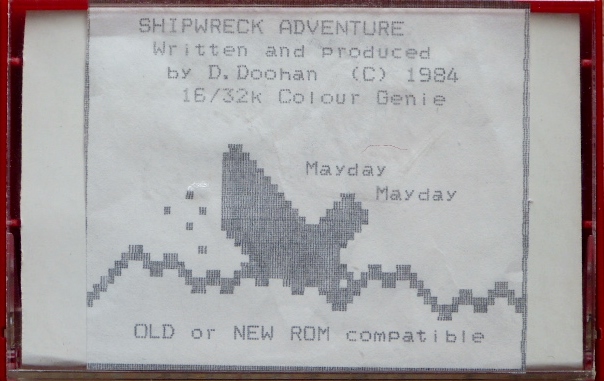
First off, some corrections to statements in my last post: two of the Colour Genie games (from the “Colour Quest” series published by Gumboot) are by Dave Doohan, not Leduc. Leduc is listed on game 4 (Camelot) as a co-author (I’m guessing as authoring the “engine”), and while I don’t have a copy of game 5 (Shipwreck) to test and check credits, I now know what the box art of a republished version looks like, and I’m using the word “republished” very loosely.
Game 6 (Fishing Quest) goes back to Leduc but seems to be a remake of Ocean Hunt. So in total he has 6 games, not counting one remake and at least one (probably two) co-authorship credits.
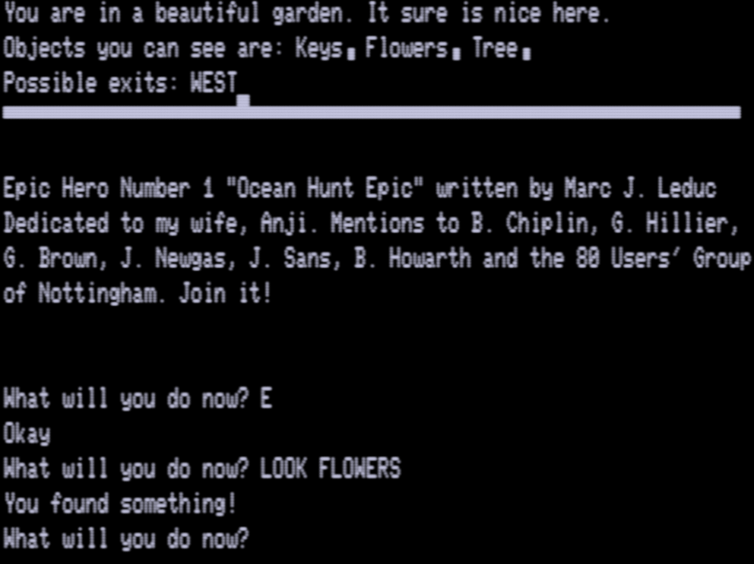
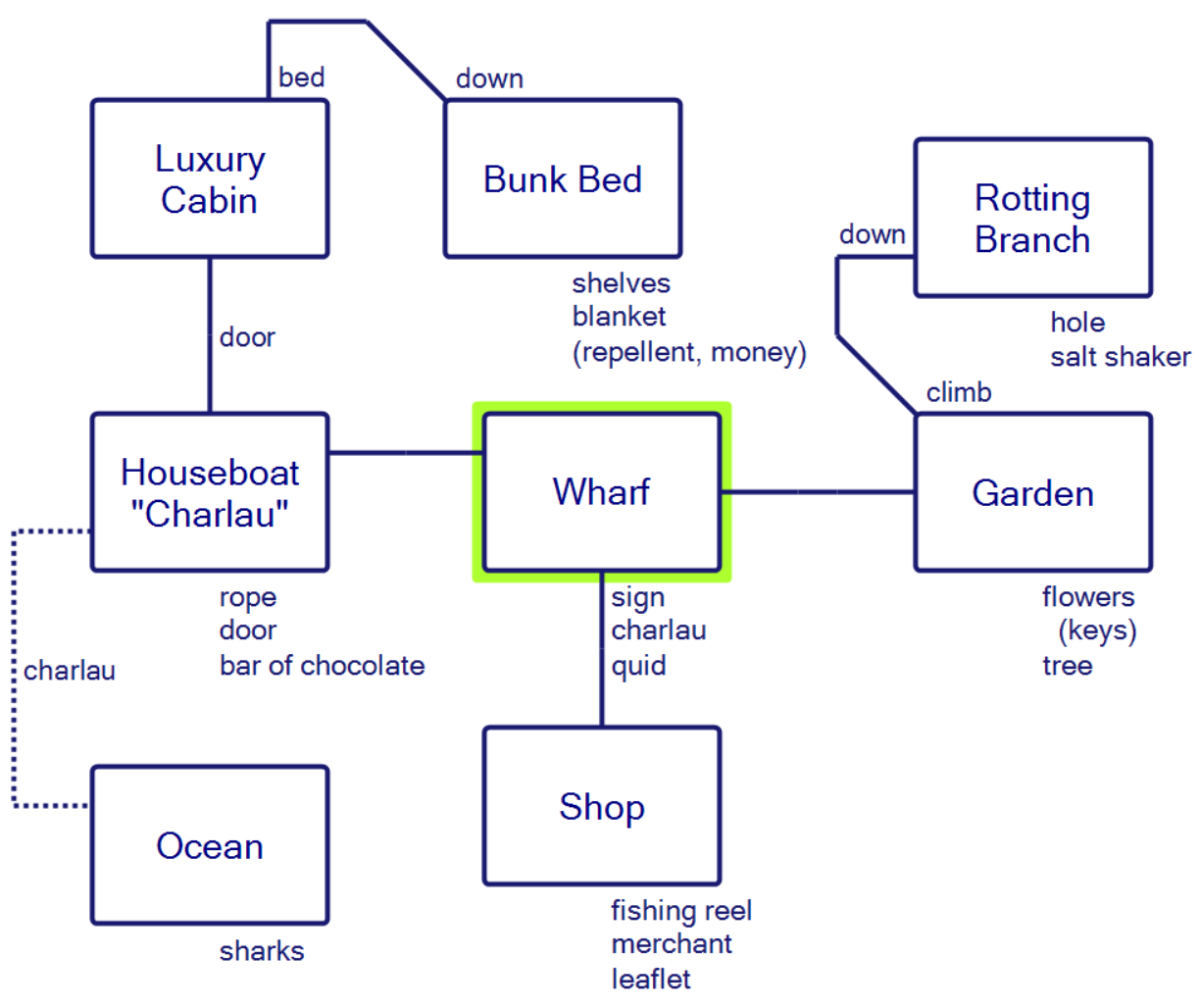
West goes to the garden and north goes to the shop.
I otherwise haven’t seen any differences up to the point where the boat ends up in the ocean.
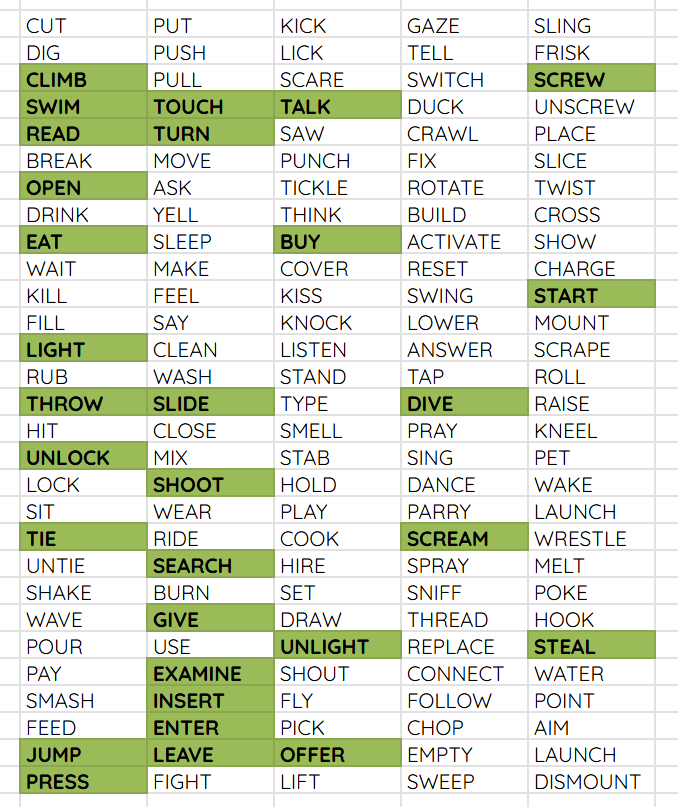
As promised last time, I whipped out the verb list and tested everything out. Fortunately, the game was pretty good about giving feedback if a word is not in its vocabulary (it explicitly says ‘”WORD” is not in my vocabulary’).
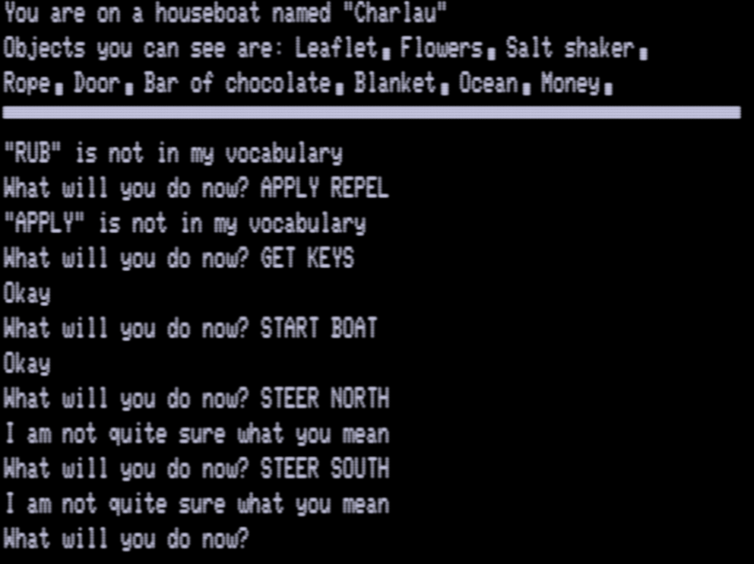
It’s a four letter parser, so the difference between SCREW and SCREAM was unclear, but otherwise the list was unambiguous. I found with TALK on the merchant that he says to drop all treasures at the shop (there’s only two we’re looking for, remember). While noodling around with START I realized it worked on the boat while holding the keys (even if you’re not standing on the boat! I guess there’s a remote keyfob, from, er, 1982).
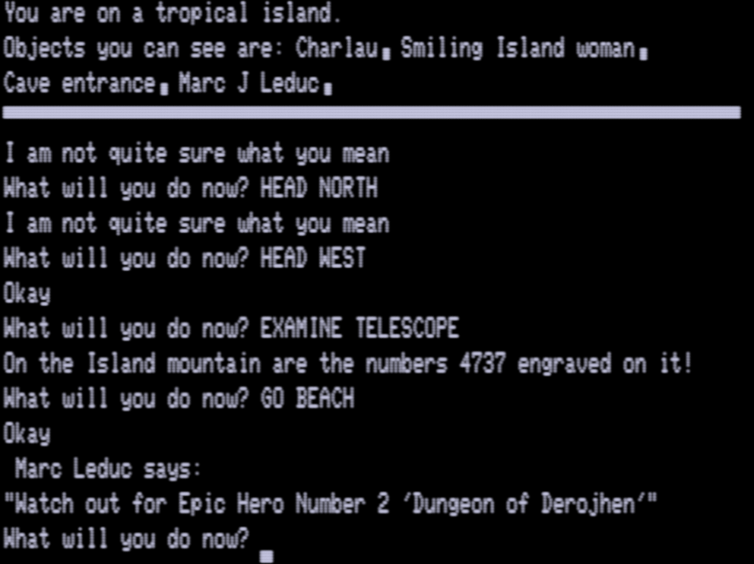
It turns out you don’t have to worry about the boat floating away, you just need to specify you want to move it somewhere. Unfortunately, that always seems to be hell in adventure games, and here is no different. I finally checked the walkthrough to realize that HEAD DIRECTION works, and later got (what I think is a more reasonable) STEER DIRECTION. The thing that makes this even more bizarre is that it does NOT work in the directions north or south.
“I am not quite sure what you mean” is the same message it gives for a complete whiff of a command that is not understood, but all that’s really going on is you can’t steer north or south! The general layout is:
island – ocean – wharf
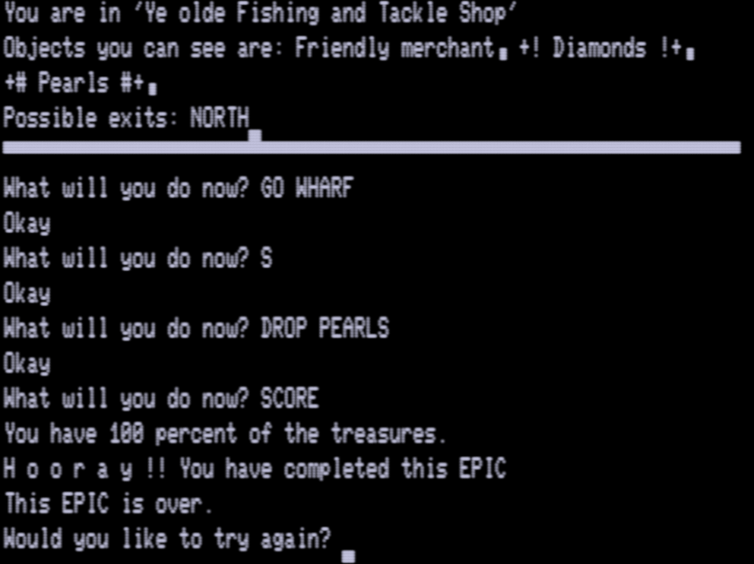
So if you want to buy the reel after the boat floats away (since getting the money causes the event to happen), just start the boat and steer east. You can then BUY REEL without getting killed by the shopkeeper, and take it back out to the ocean to THROW REEL.
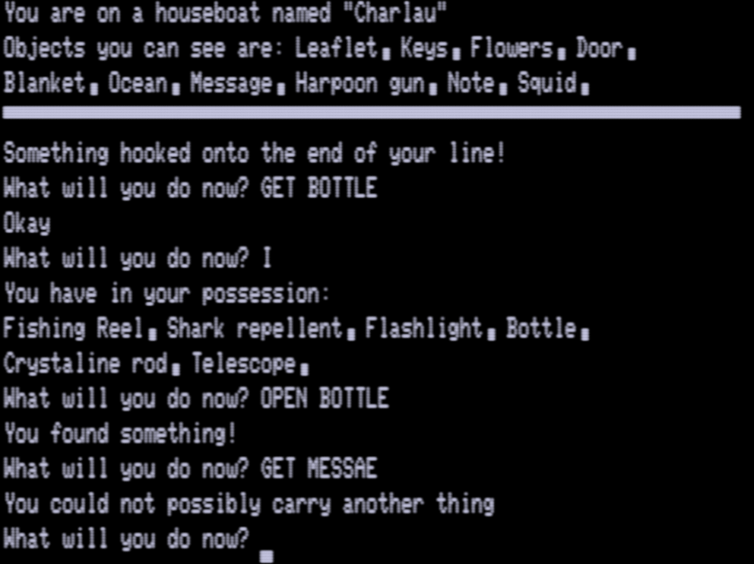
The MESSAGE has “a drawing of a man entering blue flames”, and I only found it after I got through the relevant section of the game, so buying the reel is technically optional! (I think. I’m not quite done yet with the game.)
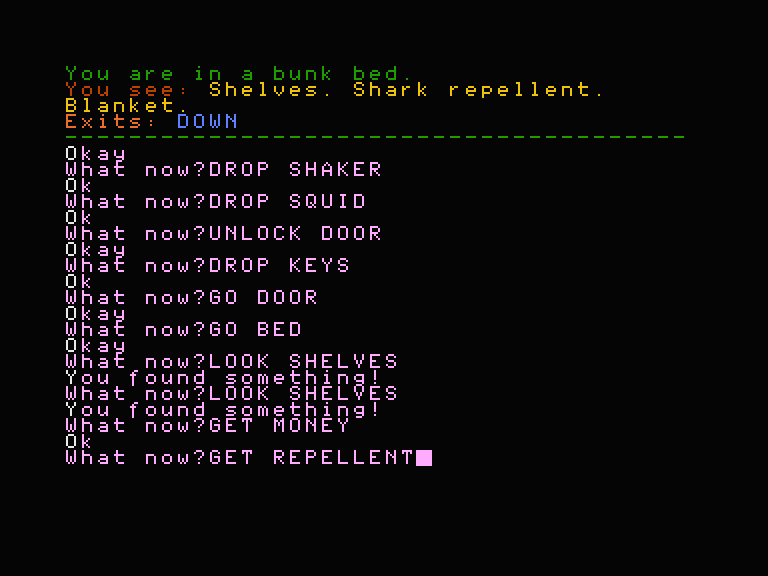
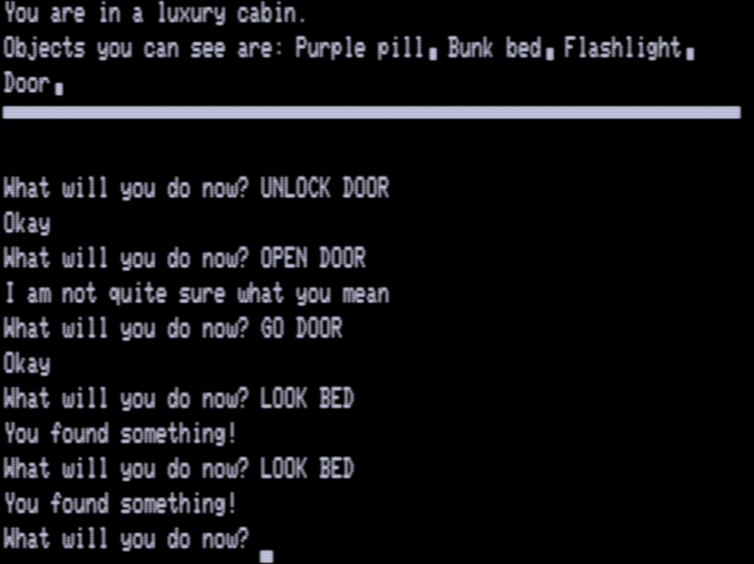
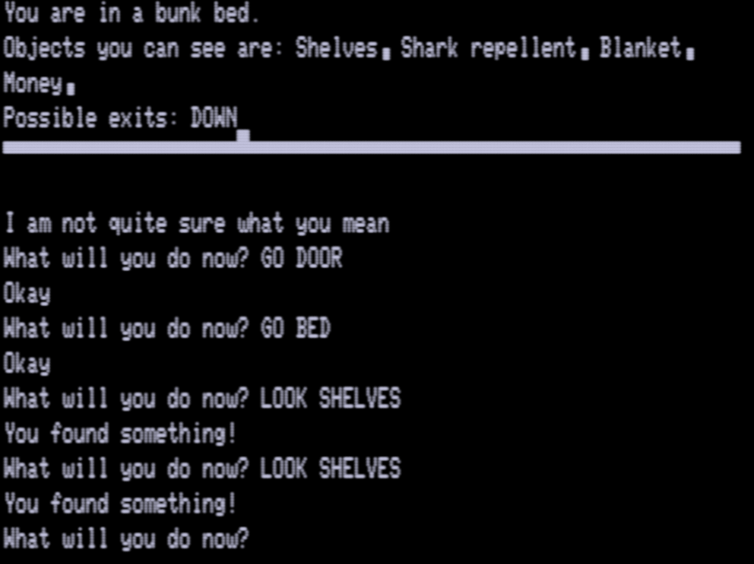
Regarding jumping in the ocean with the sharks, and drowning if I tried to SWIM DOWN: I had missed an item on the boat. Back inside where there’s a bed, I had found I could GO BED and find items on shelves, but confusingly, you can LOOK BED twice to find two more items (that you don’t see actually going on the bed, because early 80s adventure logic).
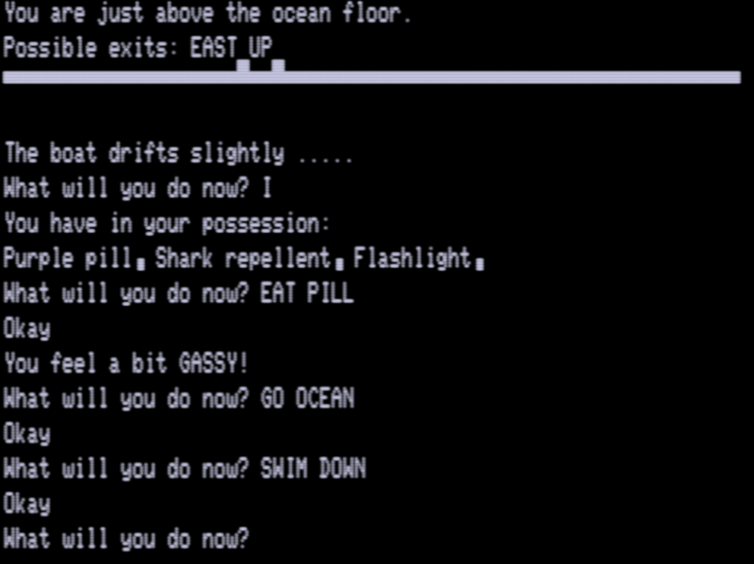
The purple pill makes you feel GASSY and allows you to swim underwater (the pill does eventually run out, but it takes a while). The flashlight is the standard LIGHT/UNLIGHT kind and I’m guessing it also eventually runs out (but again, pretty generous on the timing).
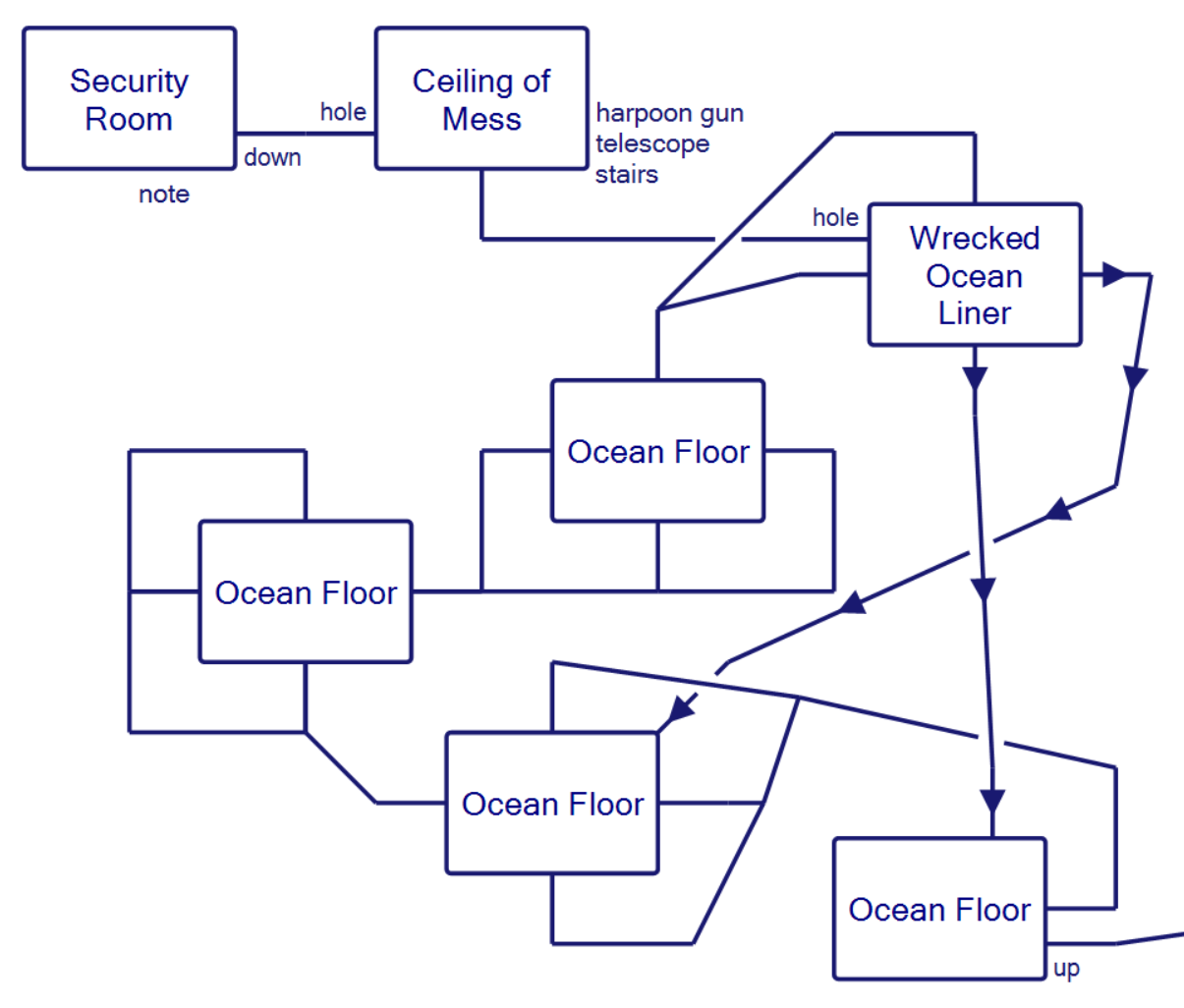
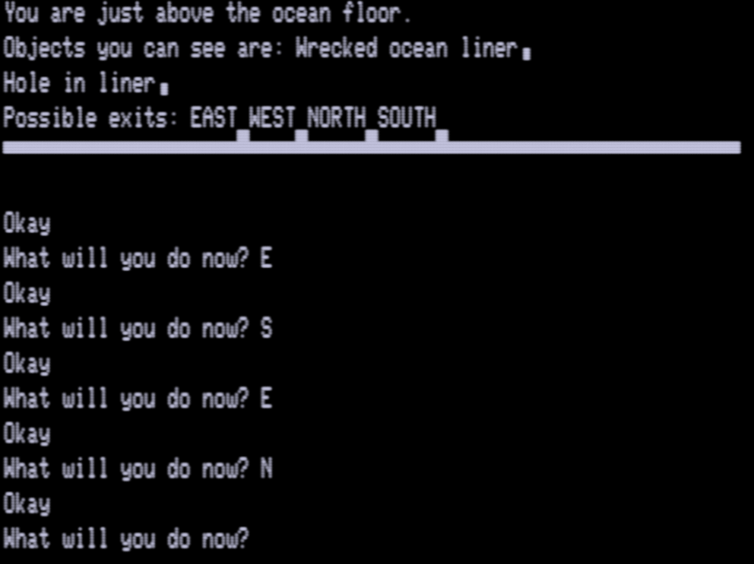
from here you can swim along some “ocean floor” rooms and it took me a while to understand I was in a maze; I’m used to underwater ocean rooms being more of a grid like The Palms, although to be fair that game had some confusing exits as well). You can map it with the standard “drop items” technique that dates all the way back to Crowther Adventure.
Just like The Palms, there’s a crashed boat, but in this case something about it doesn’t make sense (and I had to use the walkthrough again).
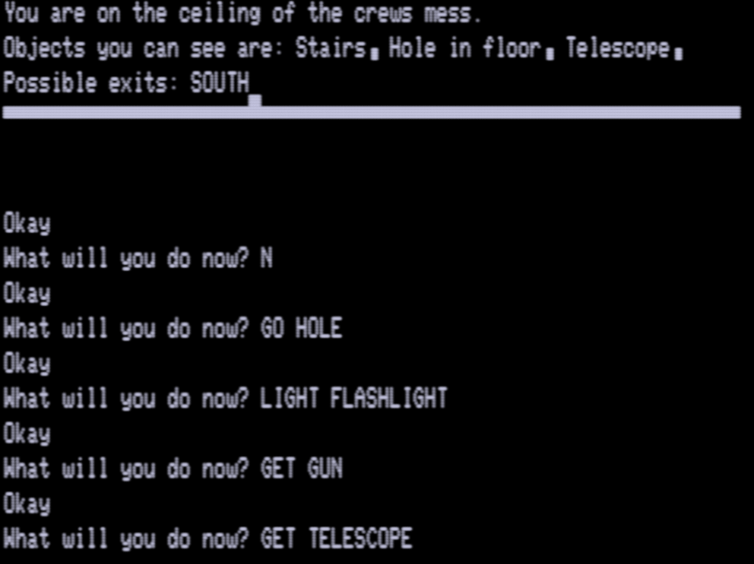
The inside has a harpoon gun and a telescope. LOOK TELESCOPE just says you see your eye; I tried taking the gun over to the sharks and shooting them but the game didn’t understand what I wanted.
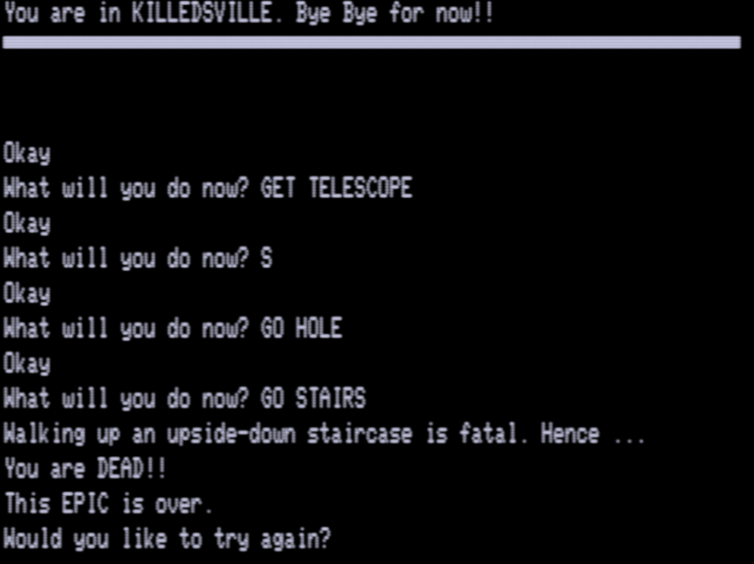
Trying to GO STAIRS kills you in a hilarious and confusing way.
What I was not understanding is that the inside of the liner is not underwater. You can’t swim to the hole, you have to actually tie the rope to the harpoon, and then fire it in the hole and climb the rope. I simply followed the walkthrough steps in bafflement, and then had to stare at what happened for a while before I realized what the game was meaning. (I haven’t needed the walkthrough on anything else, but I also haven’t finished the game yet.) I suppose the weird stairs message might have been a clue but generally this game is styled around a tenuous grasp of reality anyway (which is fine story-genre-wise, but it makes puzzles harder to solve!)
We will get back to “crystal does’nt cause explosions” later.
The fact there is only a message suggests the harpoon thing might have been optional anyway; I don’t know. But let’s move on to the island! STEER WEST while out in the ocean:
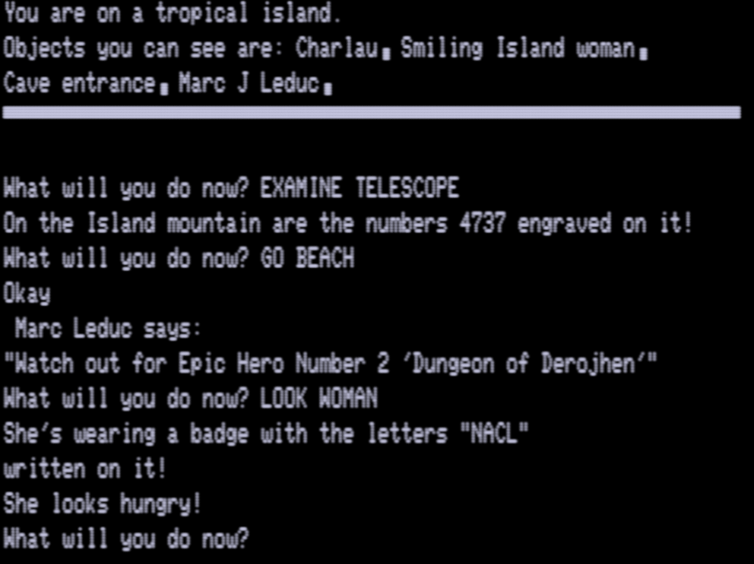
Note the 4737 you can see with the telescope. I think this use was being hinted at by the note at the shopkeeper, when it referred to looking at an island closely. I have not applied the 4737 clue yet.
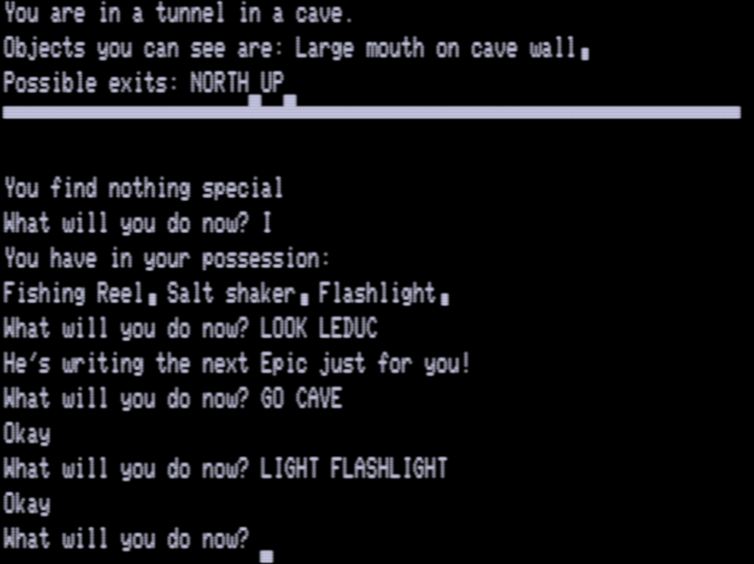
Everyone loves the self-insert. If you LOOK LEDUC:
He’s writing the next Epic just for you!
The woman is a little more trouble. She blocks the way in the cave, and “looks hungry”.
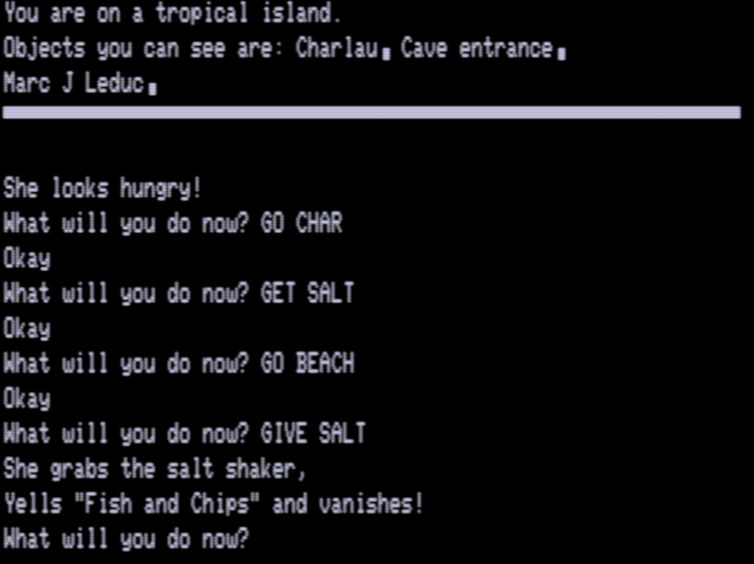
There are two food options. One — the more obvious one — I’m fairly sure is wrong. You can GIVE SALT and she’ll say “Fish and Chips!” and disappear.
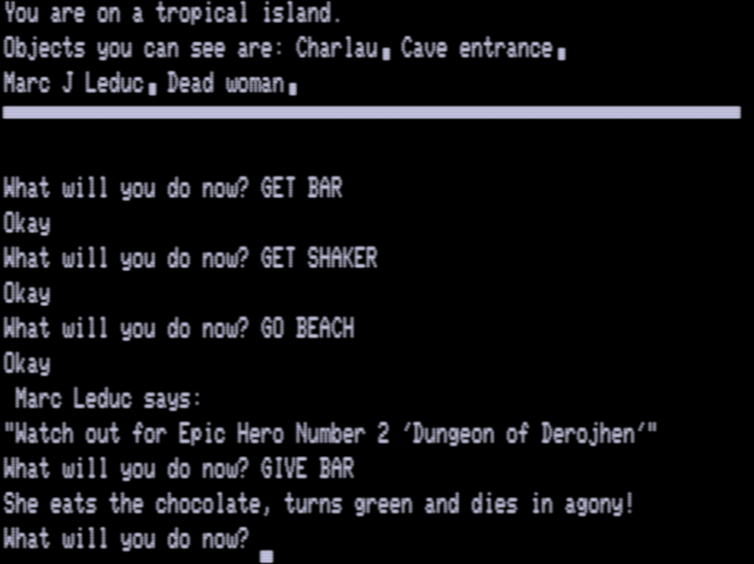
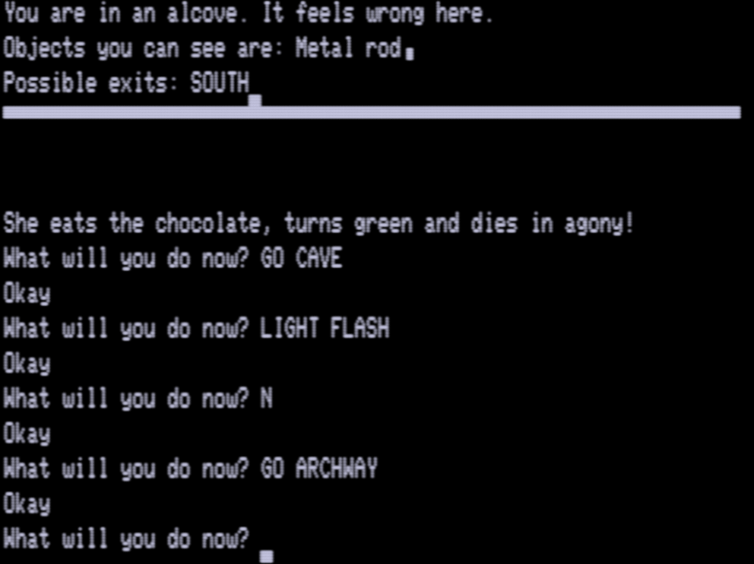
Alternatively, you can give the candy bar. She “turns green and dies in agony.”
Considering you could eat the same bar and it was delicious, I assume she’s meant to be some sort of demon. Except maybe a British demon because of the Fish and Chips reference? This feels like some sort of inside-Nottingham joke I’m missing (remember all three Epic games were made in 1982 before being published in 1983, so likely were treated more like a “private” games by the author, just like with Campbell’s Fairytale).
I think the candy bar is right because you need the salt shaker later.
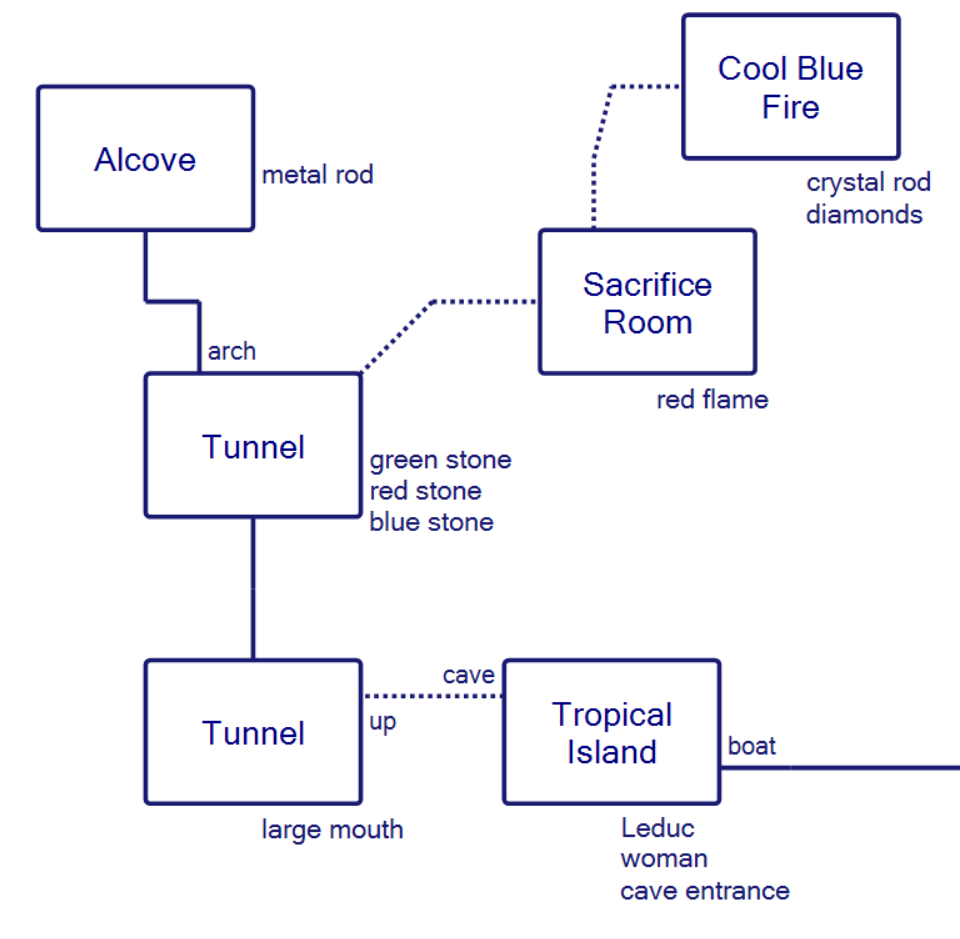
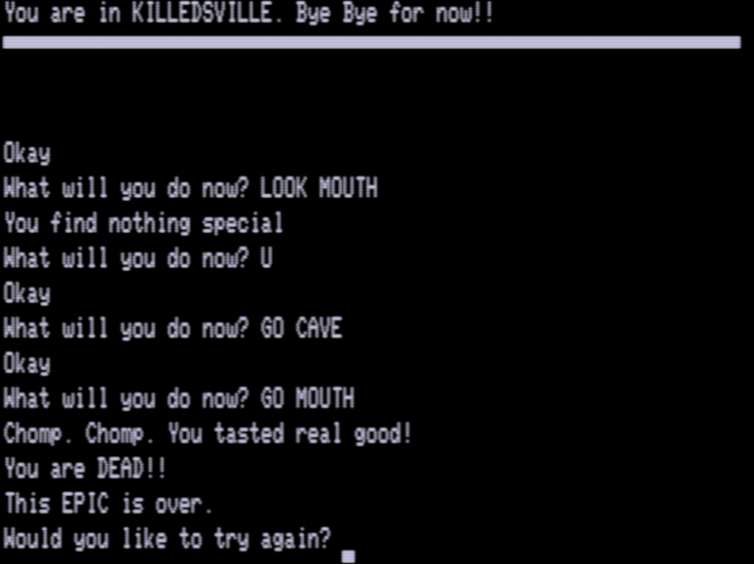
Going inside the cave, there is a “mouth”, which looks like it ought to be just a geographic feature…
…but is just an actual mouth. I don’t know if this is simply a gag like the quid/squid or something that gets used later.
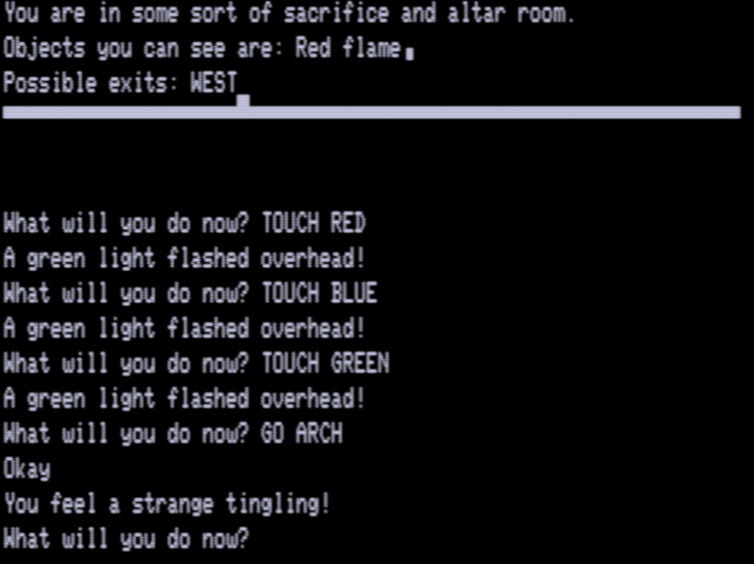
Going north instead, there’s a room with a green, red, and blue stone; the stones can’t be taken. There’s an arch, and if you go in the arch, the room “feels wrong” although you can take the metal rod there seemingly without hurting anything.
TOUCHing the stones is the answer (thank you verb list!) as they’ll glow either green or red as you touch them, suggesting a combination lock. I eventually got into a “sacrifice and altar room”.
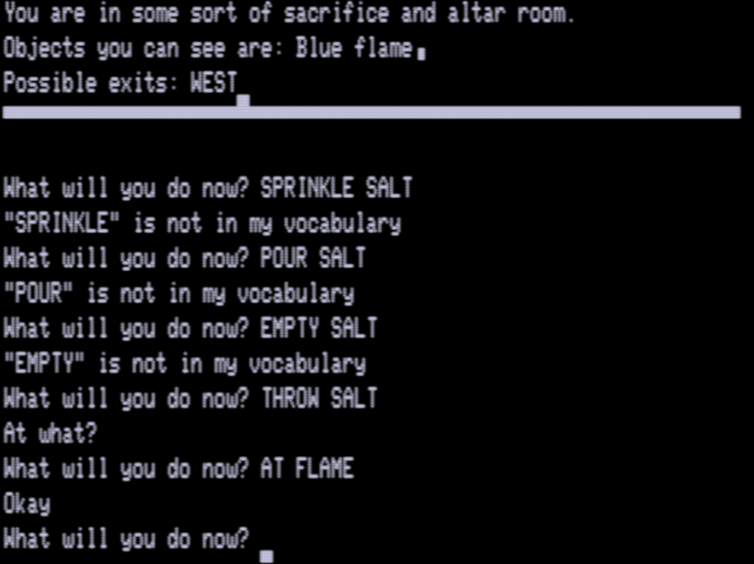
The next bit is hard to find, but the two solutions with the woman suggested (in a structural-solving sense) either the chocolate bar or the salt were still important. The salt turns out to be needed:
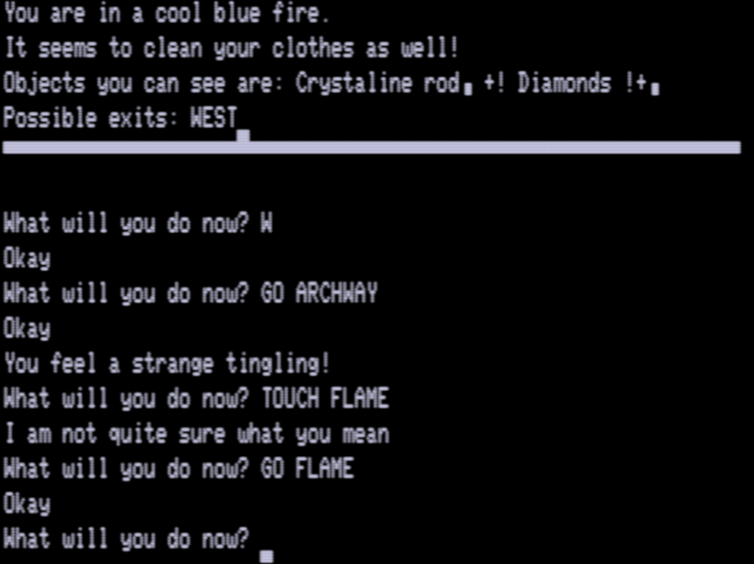
You can then GO FLAME; hinted at by the bottle in the ocean, although I want to re-emphasize I did this prior to getting the hint. The “sacrifice” thing seemed suggestive to me!
The diamonds are a regular treasure that you can deposit at the store right away; the crystal rod is not. I have no idea what to do with it. The message underground said something about it not being explosive but I haven’t been able to translate that into action.
Just to recap my items: fishing reel, shark repellent, crystal rod, telescope, metal rod (from the “bad” arch exit), keys, flowers, blanket, harpoon gun, squid, and some various messages. I suspect I just need to do the right thing with the crystal rod but I haven’t chanced upon it yet. We may get a win in a single puzzle, or it might still be a couple. Either way, I don’t think there’s too much farther to go.
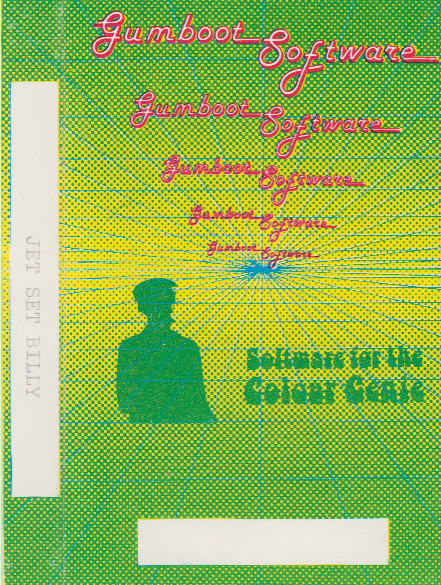
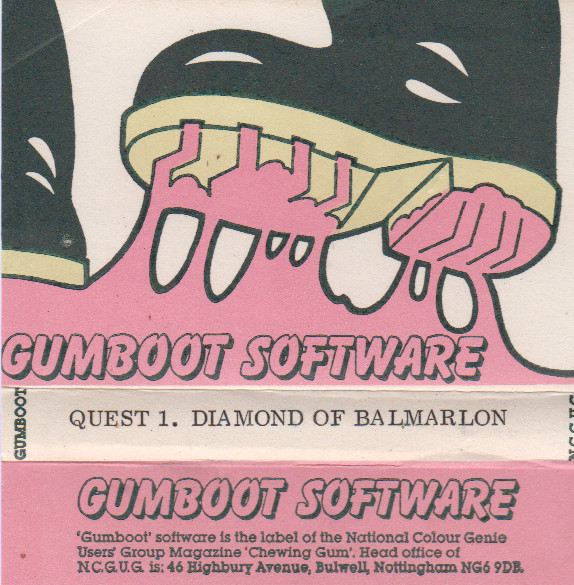
One of the more amusing tape covers from Gumboot. That’s “Jet Set Billy”, not “Jet Set Willy”. Legally distinct! From the Centre for Computing History.
In the April 1984 edition of Imagine magazine, intended mostly for tabletop gaming, Mike Costello (editor of Wargame News and Warmachine) started a column devoted to home computer gaming.
Many readers will already be familiar with the Adventure games that have been available on nearly all micros from the dawn of microcomputer history (about 1976). These sub-divide into a number of different types. The text-only Adventure is the most widespread, not because it is simpler than the others but because it is easier to rewrite a program of this kind for a variety of machines. The Scott Adams Adventures are the best known, but a number of authors have tried their hand at this type of game. In the UK, the machine-code Adventures by Marc Leduc and Brian Howarth have become well known to TRS-80 users, and the Brian Howarth Adventures are now being rewritten for a number of other machines.
Brian Howarth we’ve now seen quite a few times now (with games like The Arrow of Death and Circus); he’s given enough direct interviews that his history is mostly well-understood. (The exact story behind him switching to using the Scott Adams database format for his games is still messy, but at least we know enough about him for there to be a historical riddle in the first place.) Marc Leduc, mentioned in the same sentence, has not yet had any coverage here at all, and he’s had very little attention from modern writers.
The TRS-80/Genie Users Group of Nottingham was founded in 1980, meetings twice a month at the Wilford Moderns Rugby Club House. They had a club magazine, LPRINT, edited by Geoffrey Hillier.
Marc Leduc was the chairman; what is unusual is he was also the chair of a second group, the National Colour Genie User’s Group. They had their own distinct magazine, Chewing Gum.
THROUGHOUT THIS MONTH’S MAGAZINE, YOU WILL FIND LOTS OF PROGRAMS TO TYPE IN. WE HOPE YOU ENJOY THEM ALL, AND WOULD LIKE TO TAKE THIS OPPORTUNITY TO THANK ALL THE AUTHORS FOR THEIR TIME AND EFFORT.
I’ve gone through before how the Video Genie was a clone from EACA of the TRS-80; in Germany, the Video Genie name established itself well enough that EACA produced a color version. This was made without reference to the Tandy Color Computer. That is, even though the company started with a clone, they used that as a basis to make their own machine. Tandy’s CoCo is a hardware reset of sorts; the Colour Genie is instead more along the lines of “let’s just take a TRS-80 and add color to it”.
It is ultra-rare and mostly only known in Germany (where the Genie name held more stock than Tandy’s for historical reasons I’ve gone into detail about before). However, it did make it over to the UK, where it flopped in sales. Notice how Leduc is chair of a local TRS-80 group but a national Colour Genie group. The Colour Genie group even ended up making their own publishing label, Gumboot.
Leduc’s first Color Genie Game, via the Centre for Computing History. We’ll get back to this game in the future.
There’s a recollection from 2021 of the user group via Bernard Telemoid, who might have been the artist? Except there was a second cover from Gumboot used on their games generally, so I’m not sure which is his. Note Telemoid is not positive about Leduc’s games but I’m going to decide about that on my own (…weird to call adventure games in general “Scott Adams rip offs”…).
i used to go to the TRS-80 users group (later became the TRS-80/Video Genie user group, mainly cos my dad had started selling VG’s and he lobbied for the change) with my dad in the early/mid 80’s, held in a rugby club in wilford weekly, loads of great characters and discussions about EEPROM writing, machine language, programming the Z80 and the sublime beauty of the RS-232 interface (still a standard in many high level computing connections) of course i went for the crisps and fizzy drinks and of course the other children of electronics engineers, medical physicists and mathematicians.
It was through this i got my first paid work in the arts, designing awful cassette covers for Marc Leduc’s awful Scott Adams Adventure rip offs like ‘Find The Diamond Of Balmorlan’, i think it was he who showed me that if you press ‘break’ you could view the guts of the program and edit your own narritive into it, so i remixed a shit maze chase game into ‘Death Droid’ and gave it to people at school.
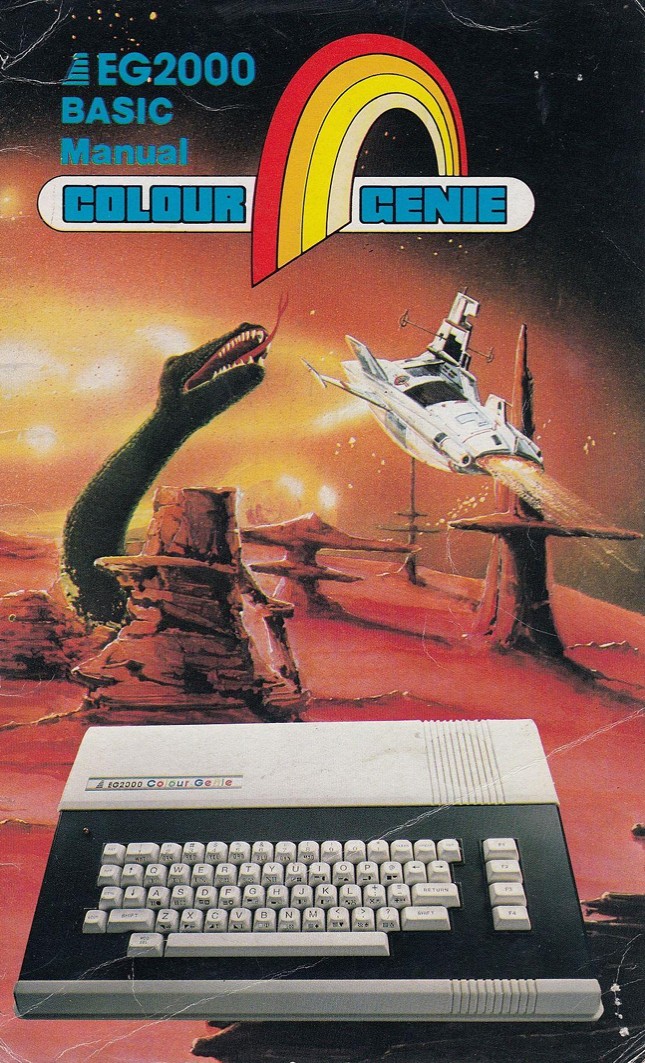
The Nottingham group was so prominent in the English-language Colour Genie space (essentially victory by default) that when EACA wrote a BASIC manual for the Colour Genie, it came with a free tape containing programs from the group.
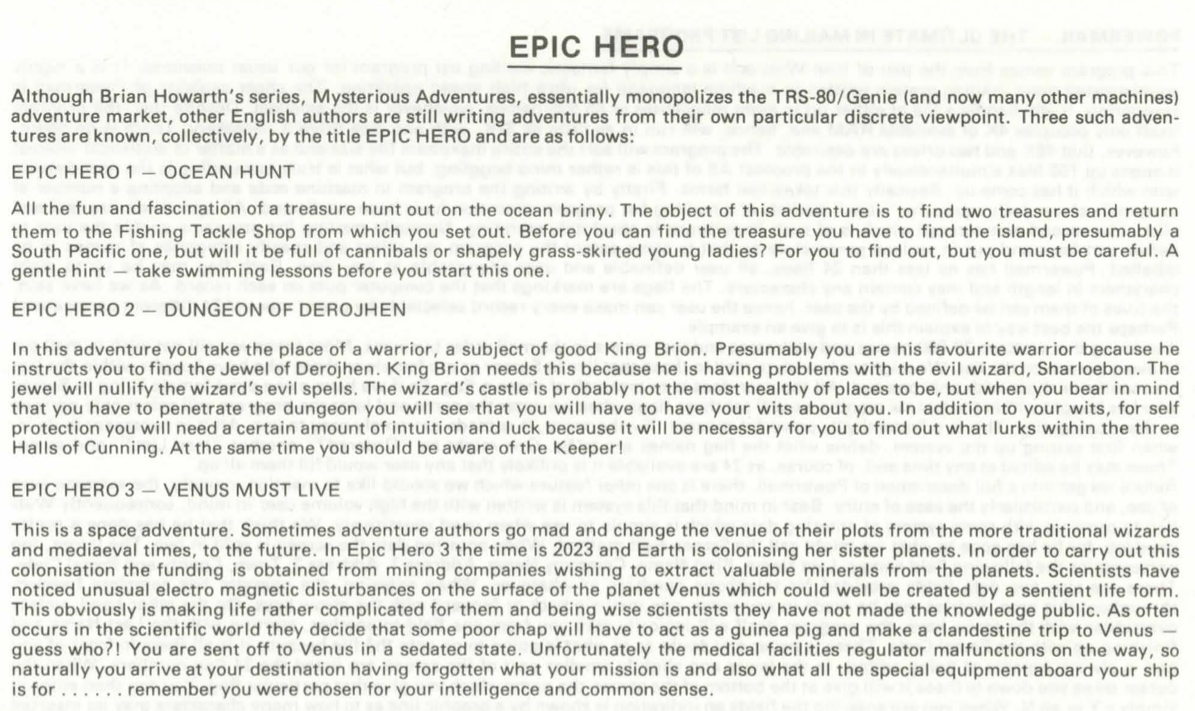
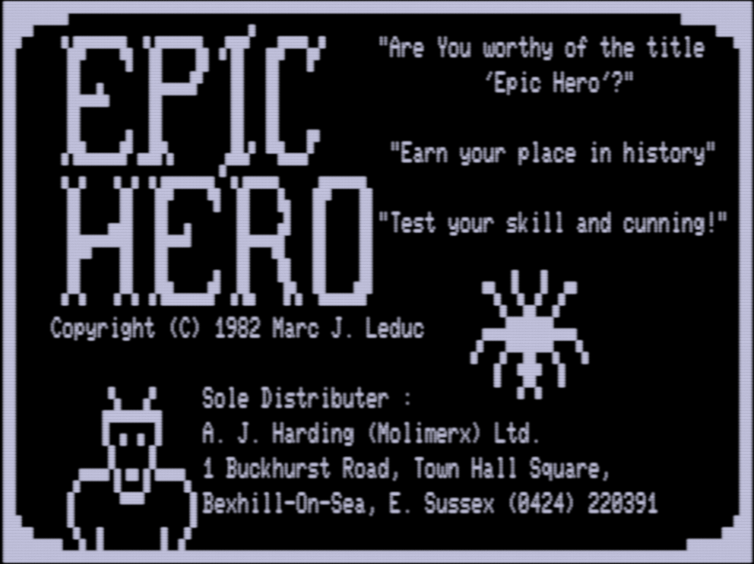
Leduc wrote three games for TRS-80/Genie and then six for Colour Genie. The three for TRS-80 eventually ended up published by Molimerx (prior background here), and Harding’s spiel about the game is in his usual style of “honesty with no attempt at marketing spin whatsoever”.
“Although Brian Howarth’s series, Mysterious Adventures, essentially monopolizes the TRS-80/Genie (and now many other machines) adventure market, other English authors are still writing adventures from their own particular discrete viewpoint.” In other words: I know who my best-selling author is, but have you considered buying an adventure game from a different author?
A December 1982 catalog does not contain the game so it appears to not have been officially published until sometime in 1983, but awkwardly, not only did Leduc finish all three Epic Hero games with a copyright of 1982, he started his new Colour Genie series in 1982 as well. Especially given the role clubs played during this era in distribution (with “libraries” of games for sharing), I think it likely Epic Hero made it out at least to the local Nottingham area before being published; adding on the fact the Colour Genie games ended up more-or-less self-published, is a date of 1982 or 1983 more appropriate? (CASA uses 1983.) I’m listing both in the title but sorting in 1983 for now, but it’s possible some issue of LPRINT will emerge that throws this for a loop (I haven’t been able to find any copies). ADD: This lands in 1982; see the last post in this series.
I don’t have anything detailed yet about Leduc himself, other than based on his dedications to his wife and kids in various games I think it is safe to say he was not one of our 15-year-old prodigies.
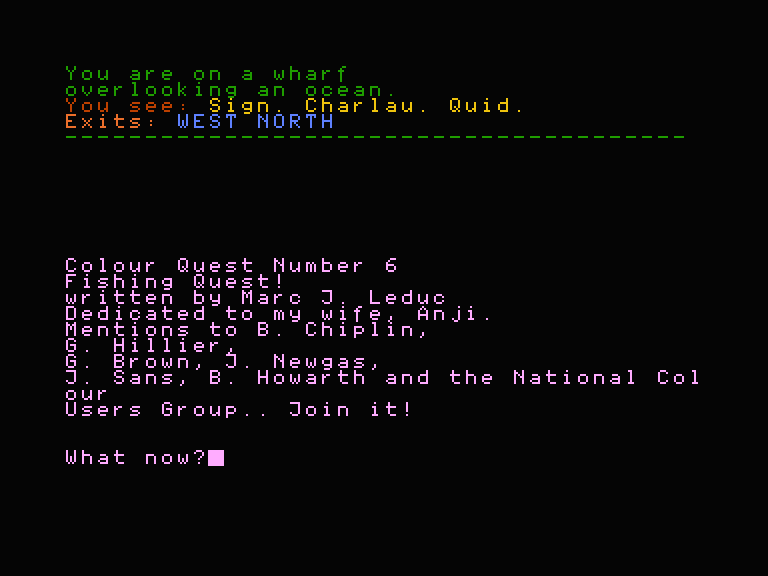
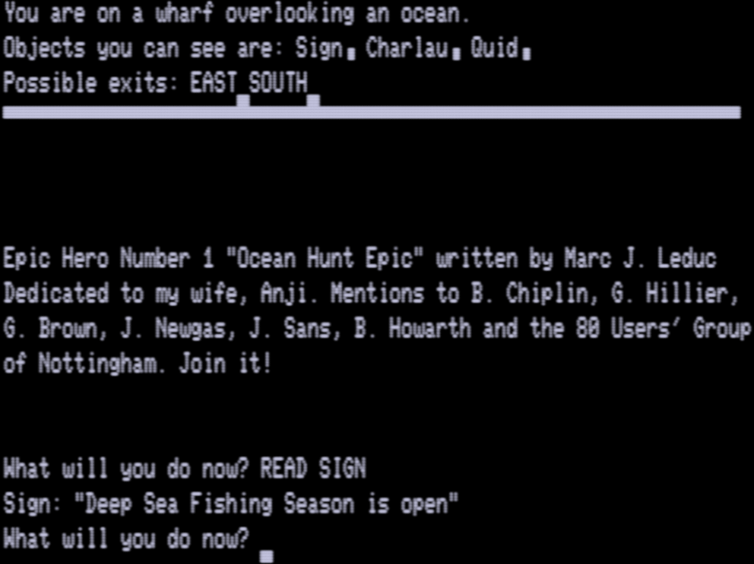
Our goal is to go to the ocean, retrieve two treasures, and come back.
The Charlau I was puzzling over for a while as it is just described as a “beaut” but it is actually the name of a houseboat. Let’s stick with land first, by going east:
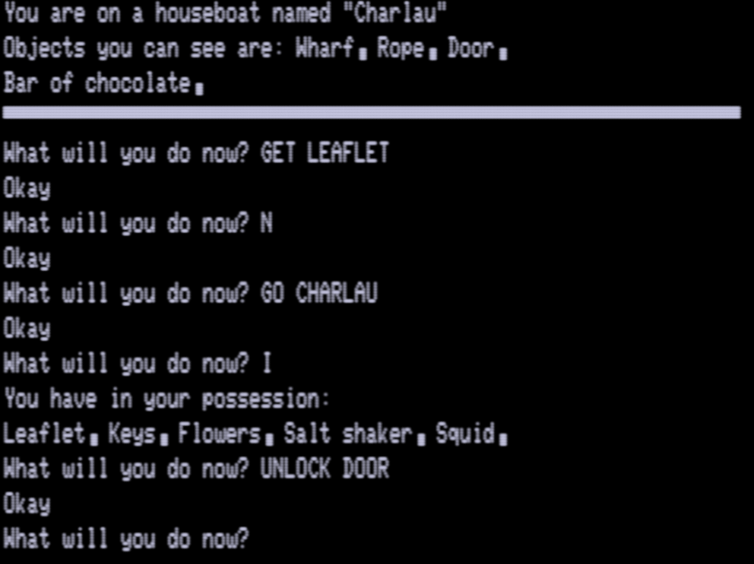
There are flowers hiding keys (your keys, I presume, since they go to the boat you end up heading to the ocean on). You can also climb the tree to find a rotten hole with a salt shaker.
From the wharf, picking up the quid and instead going south:
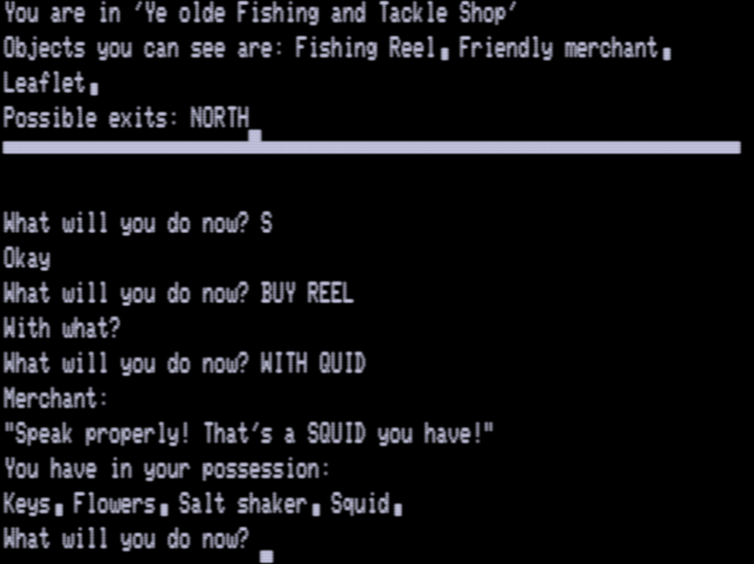
That’s not a quid, that’s a squid. Hilarious. (It likely borrowed this moment from Mystery Fun House with the “five dollar bill” but without the existential confusion of now carrying what I assume is a large squid.)
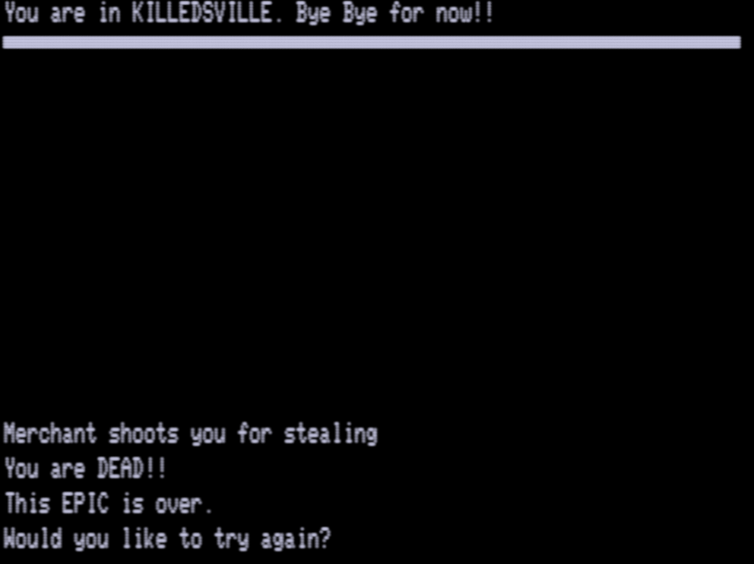
The leaflet just hints “Look closely at Kikimawa Island” which I haven’t gotten to yet; you can try to just take the reel but the merchant just shoots you. (Similar to The Golden Voyage, if we’re staying with the Scott Adams references.)
Hopping onto the boat, there’s a rope and a bar of chocolate (you can eat the chocolate, and the game says it is delicious, but with no further effect; I don’t know if this is a red herring style game yet or if everything is important). The door unlocks with the keys from the flowers.
Inside you can climb up to a bed and find shelves with some shark repellent and some money (as long as you LOOK SHELVES more than once, but that’s pretty standard for this era).
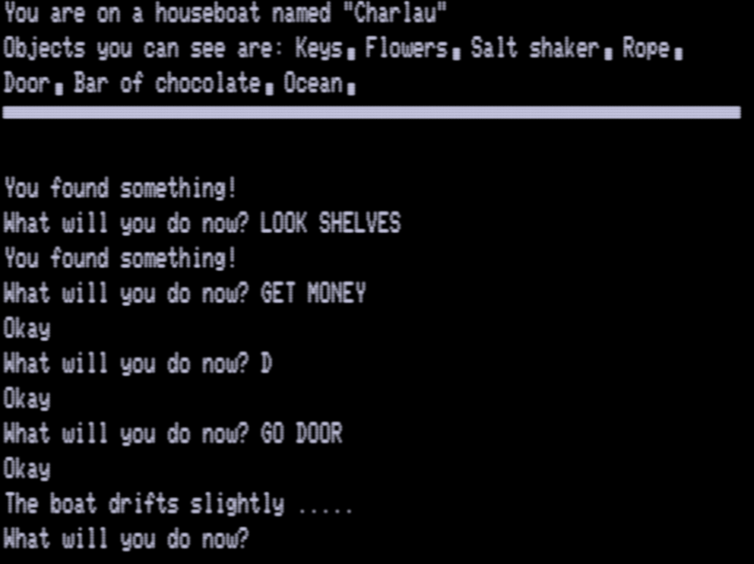
After going inside (and only after going inside, this is essentially an event-based trigger rather than a time-based one) you find that the boat has now moved and you’re in the open ocean.
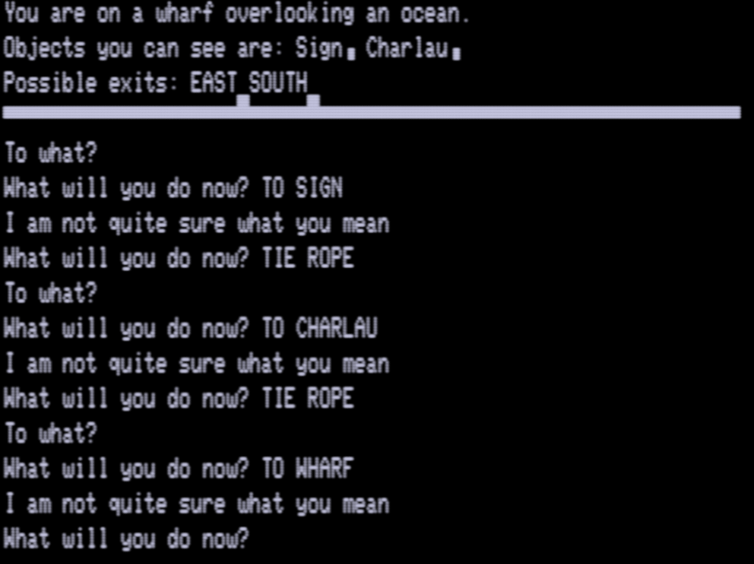
I would assume the rope could be used to tie the boat to the wharf, but I’ve tried TIE ROPE / WITH NOUN on every feasible noun both on the boat and on the wharf. I’m not sure what’s going on. The money presumably should be used to buy the reel before we take off for the ocean.
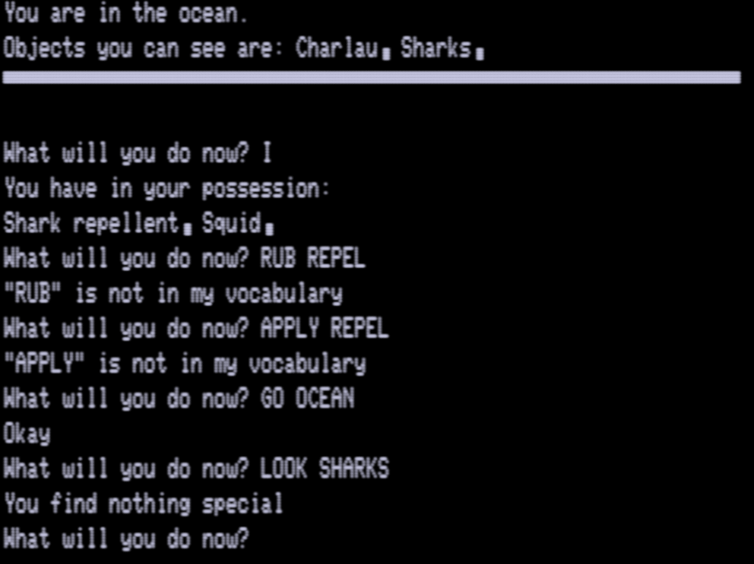
Even with the path being “wrong” we can still do a little preview of what it is like jumping into the ocean. It’s fine as long as you are holding the “shark repellent”, and I’m not sure what to visualize that as.
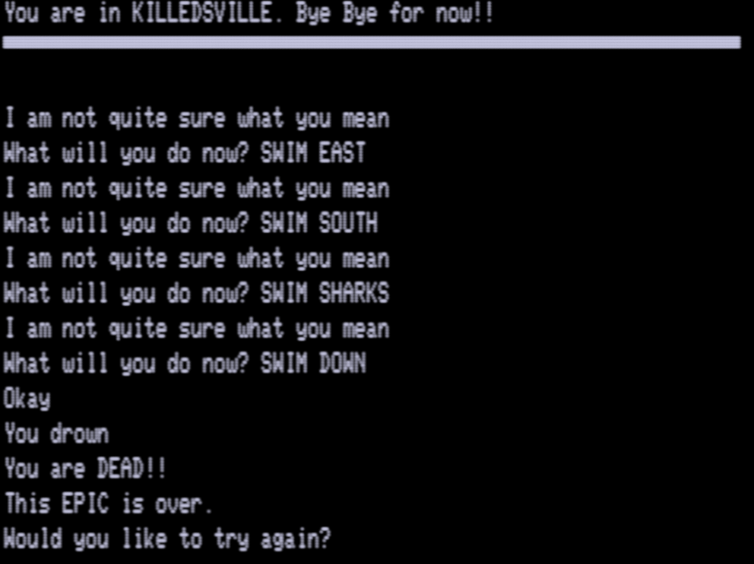
The only way (seemingly) to go is down, or more specifically SWIM DOWN, but that just causes drowning.
I think I need pull out the bigger guns on this parser to make any progress. If all else fails, there is a walkthrough, but this is the only Leduc game out of his nine that has one, so it’s better for me to try to figure out his mindset as much as possible now while I still have a fallback. Everything is in machine code so I can’t just expect to prod at BASIC source code on his later games.



 Renga in Blue