Well. I never thought I’d say this about what is in some senses a bare-bones Adventure spin-off where the only real verbs are LOCK, UNLOCK, DROP, TAKE, DIG, and THROW, but the ending sequence of this is completely badass.
In fact, I’ve got a soundtrack to play while reading once we hit the appropriate moment.
Let’s tackle the pyramid first. Part of my issue was a misunderstanding of the game’s (admittedly sparse) feedback system. I got the impression the “you are thirsty” messages in the desert started a little later if you had water with you, so the water was being drunk automatically. This is not the case.
I’ll tell you right now this is enough to get up to and inside the pyramid, but you’ll die on the way out unless you take a quick trip to a “dry water hole” that’s also near. The spade comes in handy:
With some extra refreshment for the walk back, we can plunge into the pyramid itself.
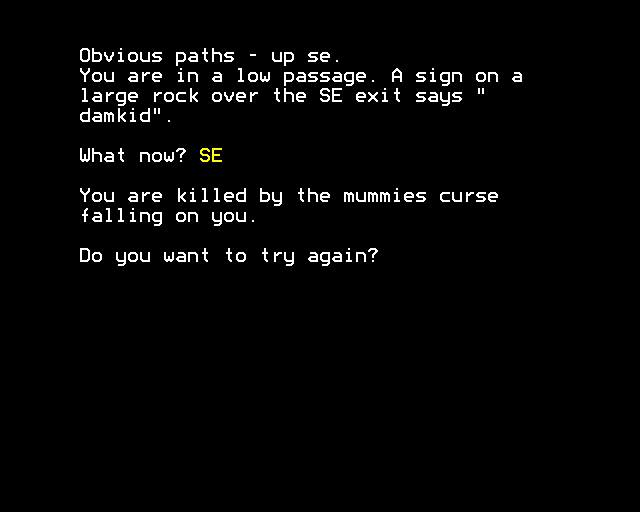
No trick here, just don’t go southeast.
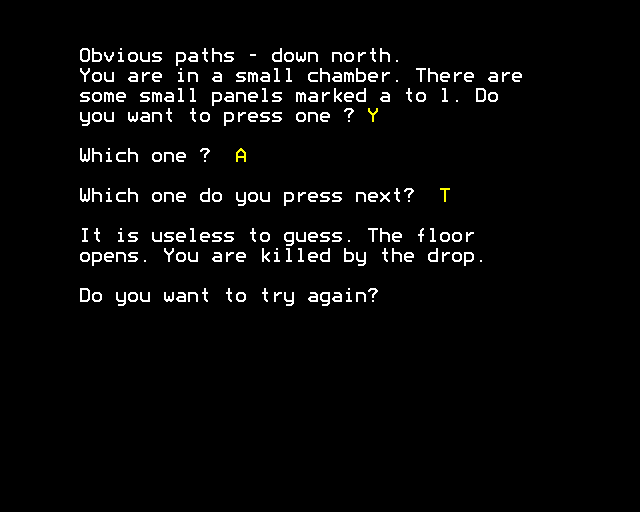
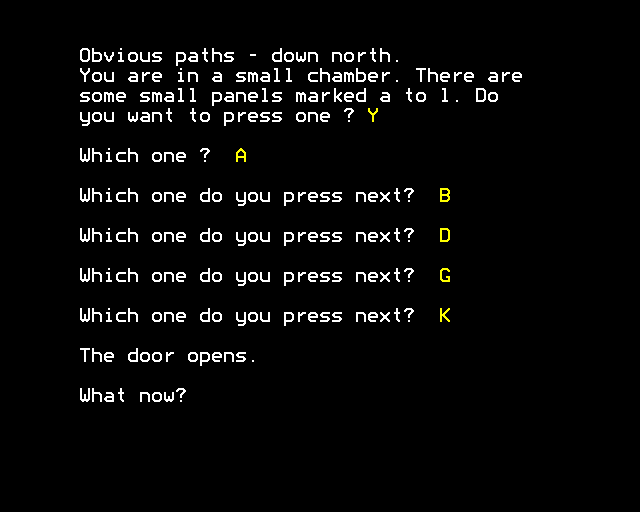
After two straightforward levels clearly meaning to match the geography of the pyramid, you get into a room with panels you need to push.
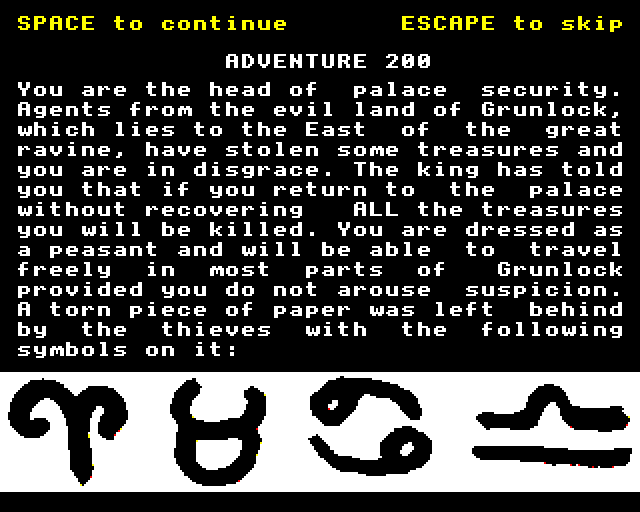
Remember those symbols from the torn paper? This is where they come into play.
I confess I solved the puzzle, and then back-solved the clue’s relation. The game needs a five letter sequence. I got lucky and picked A as my first letter, then quickly found by just doing brute force that B needed to be the second letter and D the third. Giving it some thought I assumed sequence going on (1, 2, 4, 7, 11, etc.) with +1, +2, +3, +4 and so forth so I put G and then K as the letters and got through.
What happened is that the symbols are Zodiac signs, and they correspond to the first, second, fourth, and seventh months of the typical sequence (in letters, A, B, D, G). You’re still supposed to spot the sequence for the 5th letter so I guess I didn’t bypass the intended solution by too much.
The rest of the pyramid is a maze, and then a seal by a sleeping guard. I assume there is some thing that will cause the guard to wake up and kill you (the bird?) but I just grabbed the seal safely and left. The big trick is the water on the way back, and like the diamonds, this time you don’t get a chase from stealing the treasure.
Having resolved the pyramid I was able to deal with the dogs (as from my last post) using the side-route in the forest to evade them.
Then came the mace, which despite my glib dismissal last time, turned out — for purposes of escape — to be the most interesting treasure of all.
Now is when to cue the music.
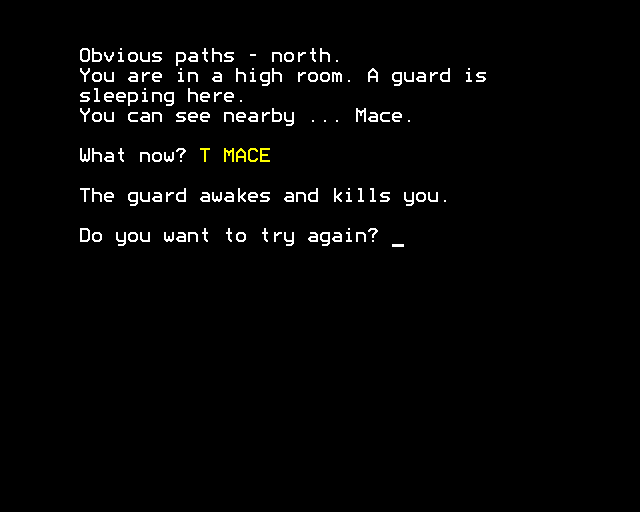
So you can safely go into the mace-maze and grab the mace without trouble. However, as soon as you step out of the maze, the guard you stole from is awake.
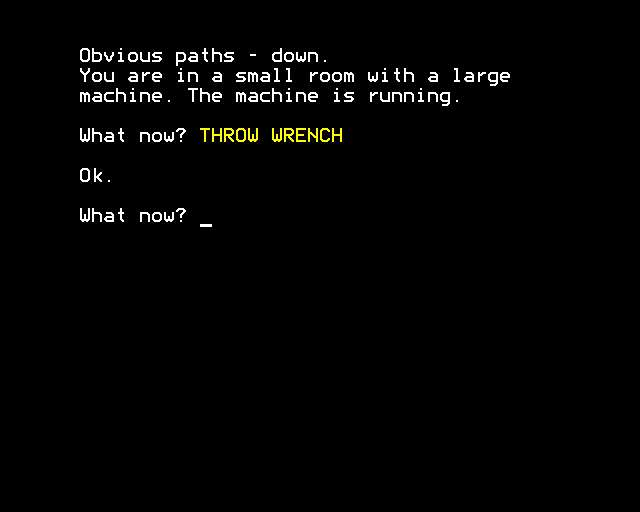
If you try to make a run for it you won’t make it. The guard gets you at the exit to the coal mine. However, keep in mind we had deactivated the dangerous-gas-cleaning mechanism by removing a wrench. There’s nothing stopping us from throwing the wrench back in.
Now, when we leave the mine, the whole thing blows up, including the guard chasing us, and we snatch our sunglasses mid-air and walk slowly away.
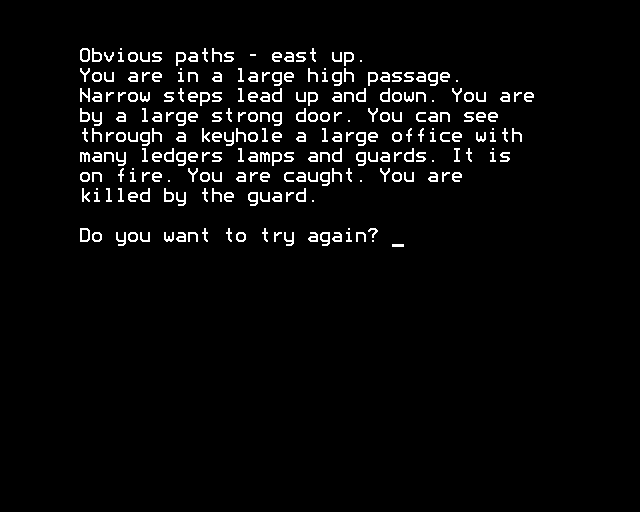
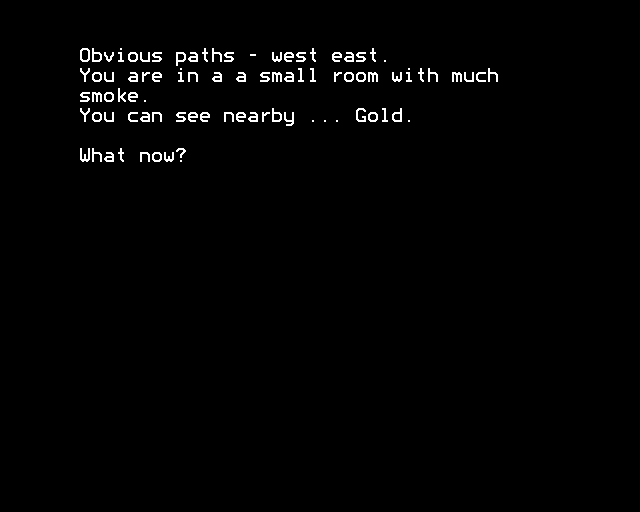
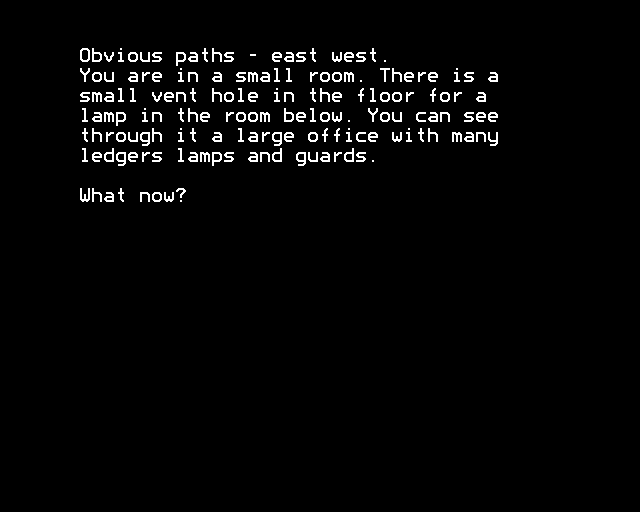
We still have the room of many guards to deal with, but our pyromaniac journey has not ended. Our jug is now empty of drinking water and we can go fill up with brandy, then return to the vent above the room. The room is described as having many lamps, and, well:
This results in absolute chaos and a lot of ways to die.
The main thing to observe here — which you can see from the screenshot above — is that the main office has keyholes, on both sides. Before you even start the fire going you lock the west side. Then you still have time to go into the east side and grab a treasure from there.
But if you just try to run away then, the guards catch you, so you also lock that door upon leaving too, leaving the guards completely trapped and crispy.
This gives you all the treasures: gold, diamonds, ring, seal, and mace. The mace is oversized (I think the rest can be hidden in our clothes, but not the mace), so that guard in the tower I was worried about spots it.
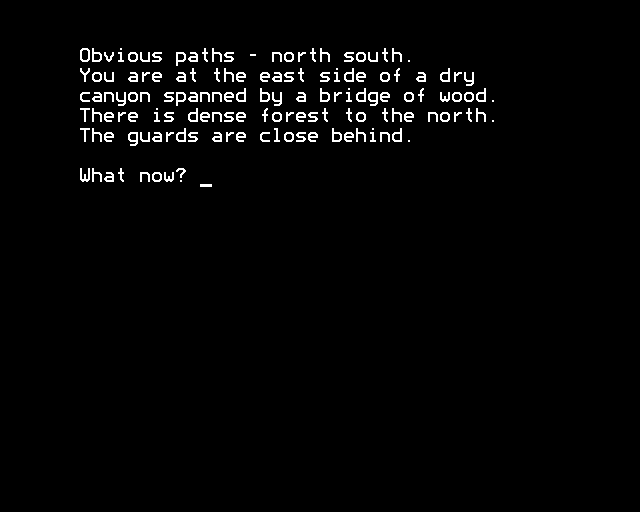
Now we’re on the run (if you hang out at the tower, the guard straight kills you). So you make a beeline to the west, but as you reach the wooden bridge there are guards right behind you.
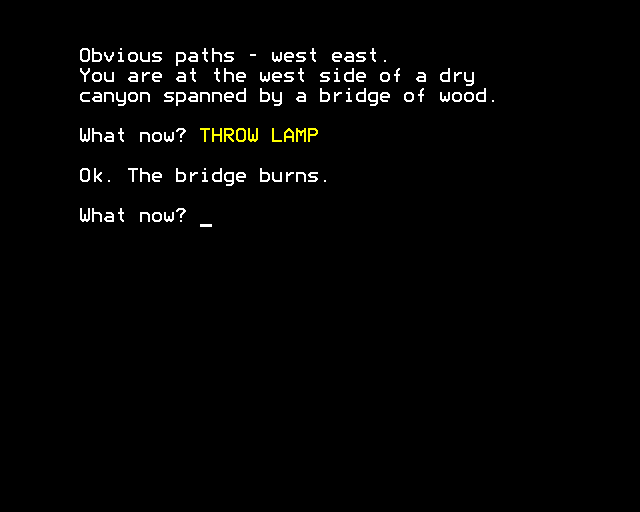
The … wooden bridge … can you guess what’s going to happen next?
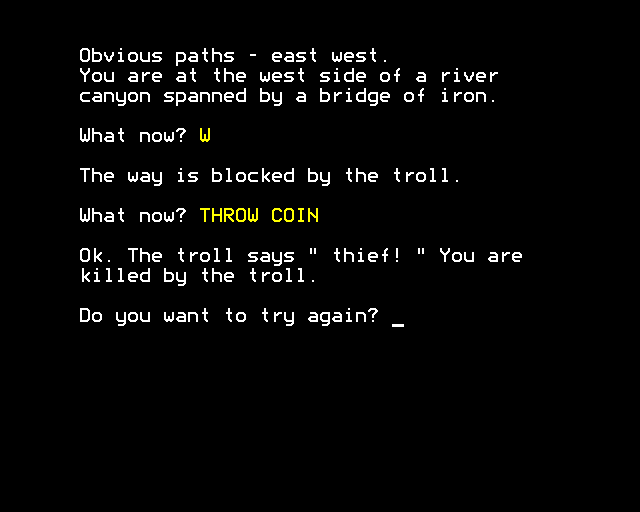
Fortunately this doesn’t destroy the lamp and we can pick it up again and still use it as a life source. Still making a run for it, there’s no troll visible on the east side of the bridge so we go across to the west side and die.
Oops! This turned out to be pretty hard and I had to check for hints. The problem here is that the troll spots your mace if you have it, and decides to just kill you and take it rather than deal with asking for a paltry offering. So you cannot take the mace across the bridge. What to do?
Back near the very beginning, we found the jug at a “narrow dry canyon” that was blocked by rubble. It turns out on the east side of the canyon you can find the matching room that goes with above the same room!
Now after crossing the bridge we can just retrieve the mace from the other side. But the troll still wants a treasure.
That jug we’ve been carrying around smashes if we try to drop it. Now we want to drop it, because it makes crystals that the troll likes (fortunately for my momentum in the game, I had figured this out before this moment, the troll killing us because of the mace was the hard part).
With all five treasures we can finally arrive back home in victory.
OK you can stop the music if you want.
Yeah. Phew. That was some elaborate sequencing. The author really took the idea of “easy to get in, tough to get out” and managed to run with it. I find this game violated most of my general rules for complex puzzles. Namely, that without timer daemons or player status effects, they tend to require either hard-to-find verbs or things hidden in obscure ways. This game had neither, but rather had complex location effects.
That is, consider the moment where the guards are chasing at the wooden bridge. There’s technically no timer running. When you try to move on, the game checks if you’ve burned the bridge, and if not, it kills you. This almost plays a little bit like “drama time” (a game like Colonel’s Bequest where some events wait for you to be physically present before they happen) because the verb list is so short there isn’t strong motivation to hang around in a particular location, so it feels natural to have time move forward along with movement.
In the desert, where you’re thirsty, you can do as many commands within an individual room as you like without getting thirstier; it is only moving to another desert room that increases the thirst. (Other than the digging, it isn’t like the time is proportional. If you think about it, a lot of text adventures that have effect X trigger in five turns can be a little nonsensical, as running down a long hall is considered the same amount of time as examining five things.)
One other game design wrinkle is the use of a technique which is not recommended at all for a modern game, but nonetheless gets a unique effect. (See: the text version of Cranston Manor compared with the graphical one, where the maze-like town opening led to a much greater sense of place, but it was still an awful maze.) Here, there’s some “hidden effects” where the game is willing to silently check if you have a particular item. For example, the guard at the diamonds wakes up if you have the bird. The game doesn’t even tell you why the guard woke up, so it leads to a strong paranoia where you are thinking not only about what items you should be carrying but what items you should not be carrying. This adds a second combinatorial level of puzzle complexity, but — well, it really is also genuinely unfair.
The mace/troll puzzle at the end particularly hit this hard. The behavior of the troll changing was non-obvious enough I was concerned I had hit a genuine bug. On the other hand, it is a.) logical the troll would change behavior if they see you with the massive treasure and b.) logical they would just spring up on you unawares. Working this out the “normal” way requires a lateral leap that isn’t really achievable any other way. Yet, I would personally never include the puzzle as-is in a modern game design. (It also isn’t 100% clear from the geography that the canyon edge you throw the mace at is the same canyon on the other side, it would have been a better puzzle had the geography been rigorous enough — that is, where distances are clear and exact — to allow seeing this naturally.)
Despite all that (and the endless mazes) this ended up being one of my highlights of 1982, if nothing else for the technical high-wire act. The author C.J. Coombs was clearly running up against the edge of what was possible (with only enough space, for example, to casually describe a room of guards being set on fire in a few words) so I had extra anticipation seeing just how complex he could take things with such simple foundations.
Coming up next: Il est un peu plus de 21 heures, la nuit est noire … BONNE CHANCE!
I’m as puzzled as you are and any speculations on what the picture is meant to depict are welcome.
One of the puzzles I left off on last time involved a farmer very, very, upset at our theft of a spade.
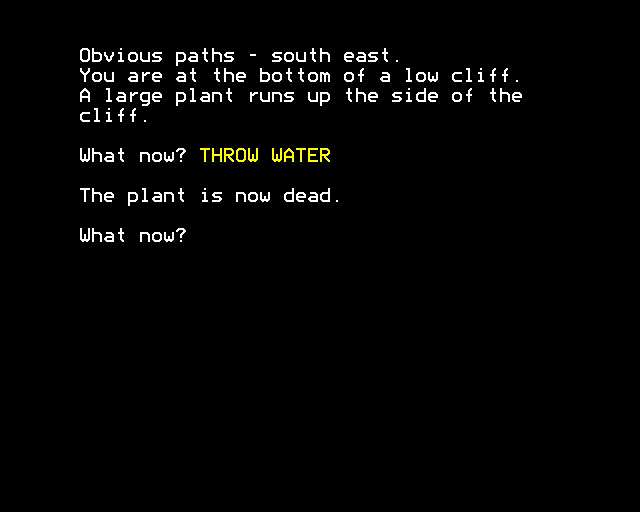
K speculated about chopping down the plant, which didn’t work. However, nearby there’s a “beach section” which has some brandy, and I tried refilling the jug with that and tossing to no effect. It was rather later that I realized that the beach also has access to a completely different kind of water which might be hurtful rather than helpful.
I like how the saltwater is still “water” but it has an opposite effect.
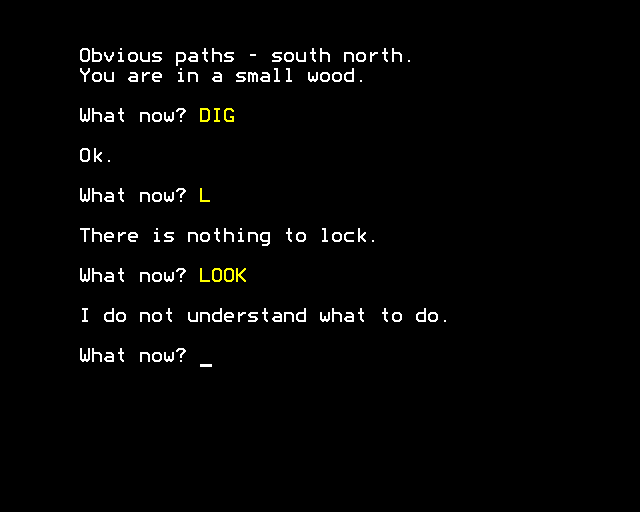
After killing the plant it was safe to tote the spade away. I fortunately zeroed in fairly quickly on a good place to take it, as there was a “flower” in a “small wood” which seemed like it could have other plants.
The game’s weird lack of feedback here is hiding the fact I dug up some garlic.
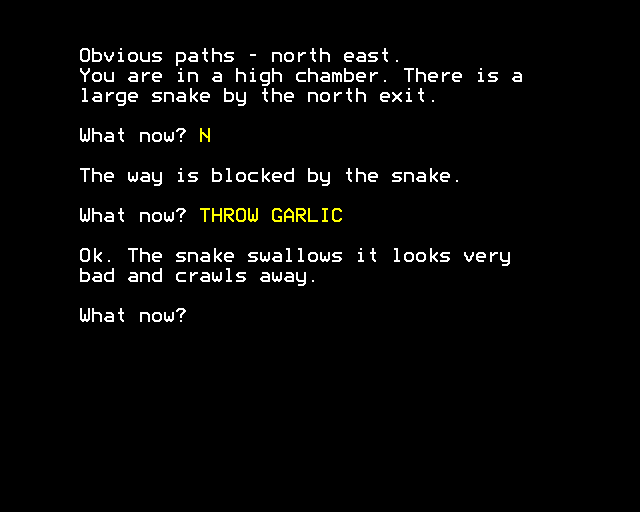
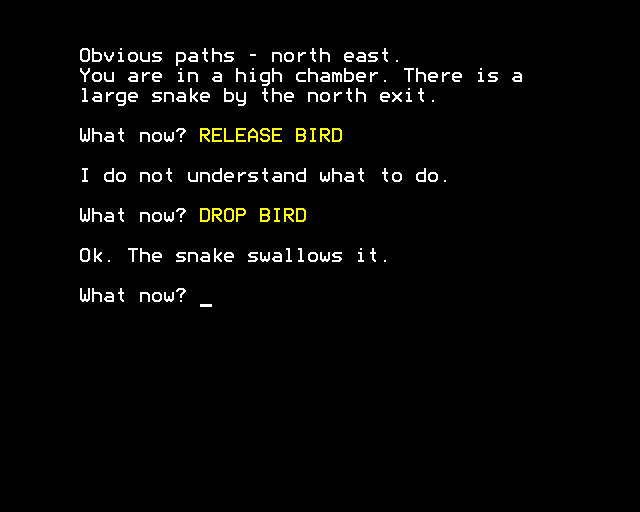
One of the other things I had been experimenting with is the snake; since I knew it ate the bird, I tried poisoning various things and essentially chucking my entire inventory to see what would happen. Behold:
This leads to a “maze” which is just a single room that goes nowhere. Hmmm.
I rewound a bit and kept the garlic in case that was a softlock. Fortunately, there’s a bit later garlic is quite obviously helpful, so I guess it was. (One of the common themes in the game is having bits of the map change in their nature, so I can’t say the snake is entirely useless to deal with. Maybe, even, on the final escape from the kingdom, the snake will be moved as guard duty, and we’ll have needed to take it out earlier, and the room behind it is unneeded.)
Both Voltgloss and K also sharply observed how the dust covered bird is like the “canary in the coal mine”, and I should try taking it back with me to the maze to see what happened. I tried to do so and … nothing happened. By nothing I mean no explosions. I briefly thought perhaps the bird was preventing them somehow (??). A brief show of what going boom looks like:
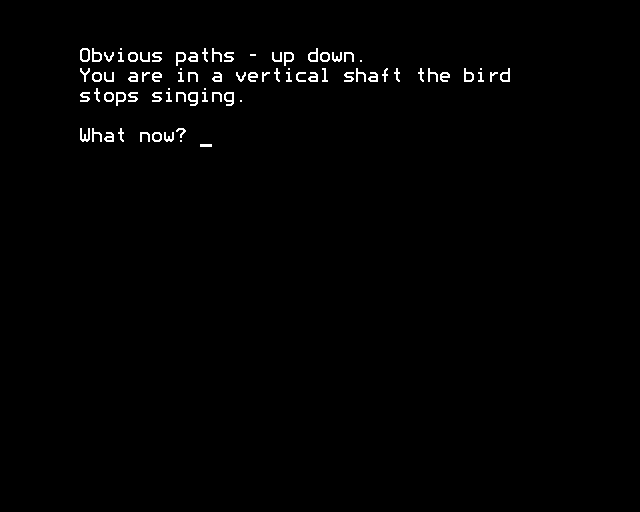
On a later run (I was experimenting with a few things) I tried to go in again with the bird and found this time an entirely different reaction. Sometimes it would sing, and sometimes it would stop singing.
In the “stop singing” rooms, those are the places where most or all of the exits are deadly. After some more puzzling, I realized the only thing significant that changed between the runs is in one I had nabbed the wrench from the broken machine, and in the other I didn’t. Going back in the broken machine room after taking the wrench along served to clarify: the machine (I assume pumping out the dangerous gases) starts working again once you take the wrench.
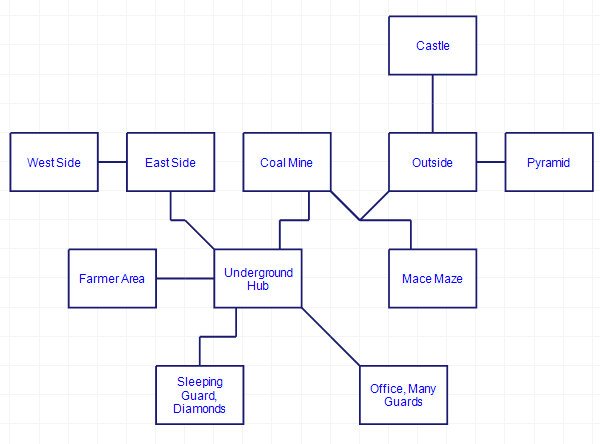
With that cleared up, I went back over all the rooms that killed me before to look for exits, and I found an entirely new area, in fact multiple new areas. Here’s a meta-map:
To be clear, this is meant to show the interconnectivity of the various regions, and isn’t exact about directions. Once getting by the coal maze you get into a “mace maze”, a small outdoors section, a castle, and a pyramid. (Well, theoretically a pyramid. I haven’t solved that part yet, but I have dealt with the others.)
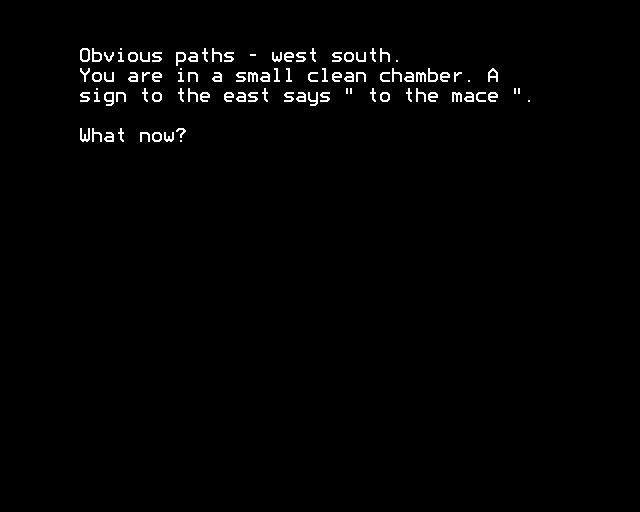
The mace maze is prefaced by a room with a simple sign.
The maze itself is a nightmare. Remember what I said about maybe the author not being interested in mazes? They’re interested, they just saved the pain for this section.
I confess, after realizing there was zero gimmick and I just needed to not only drop objects in rooms but tote them along to places farther in the maze (because I didn’t have enough objects for every single place) that I just looked up the route. I’ll suffer for your entertainment if it seems necessary but there just was no new point being made here.
I’m not entirely sure what causes the guard of the mace to wake up, but a second visit with a minimal inventory allowed me to grab the mace safely.
For the pyramid, well, it’s in a desert, and I die of thirst. That’s even having water being toted along in a jug. I’m wondering if I can somehow scrounge a second container.
As far as I’ve gotten. One more step kills.
The castle I’ve been able to both tackle and (probably) finish.
That’s because the castle seems to be almost entirely abandoned.
There’s at least a semi-logical reason, because if you follow the path all the way through, you reach a vampire.
If you’re holding a garlic (I told you it was obvious) you can enter safely, and retrieve a ring, I presume one of the treasures we’re trying to rescue. However, now the game’s theme kicks in. We aren’t in the clear yet.
Ominous! But this isn’t a timed thing, rather there are two locations where the dogs can show up. One is if you try to head east to the Pyramid.
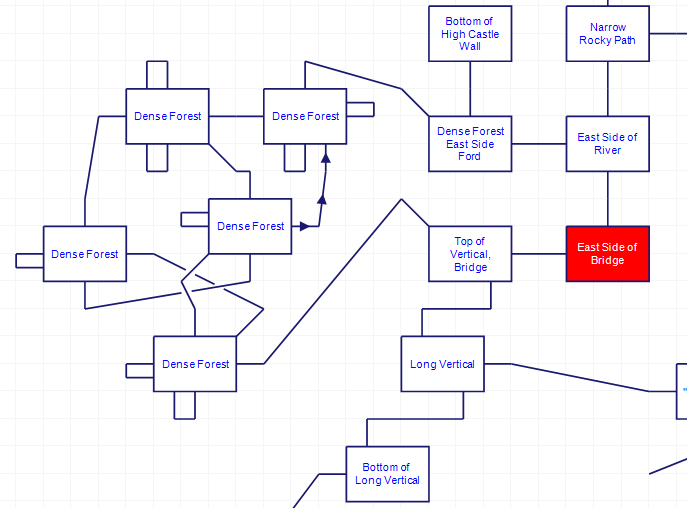
The other is if you try to head south to the bridge and get back to the mine. Fortunately, you can use another semi-maze section and pass through a forest the long way to evade the dogs.
(The red spot is death, but the Dense Forest lets you take the long way around.)
The bad thing is that having the ring means the pyramid is now closed off. So that’s another softlock. At least in this case the treasures need to be gathered in a particular sequence.
I do suspect (just based on my room count) I’m starting to close in on the ending. I need to work out how to make it in the pyramid, drive off the people in the room under heavy guard, and then somehow make it out safely with all the treasures. I have a suspicion the last task will be the most difficult.
So, despite this game doing heavy borrowing from Crowther/Woods Adventure (troll at bridge, plant you water to make big, giant snake) it manages to pull a very interesting high concept. It gets somewhat hinted at in the manual:
It is best to explore well before attempting to take anything back as this often raises the alarm and causes you no end of trouble as various people chase you. THERE ARE NO RANDOM FACTORS – if you are killed you did something to cause it – there will be a sensible explanation and a solution.
Remember, the premise is that we are entering an “enemy kingdom” in disguise to retrieve the treasures. This means there are parts of the game that are easy to get in, but hard to get out. In other words, this is as if rather than just being in the classic adventure genre, this is a heist.
I’ll give some examples along the way. Let’s tour the evil land of Grunlock:
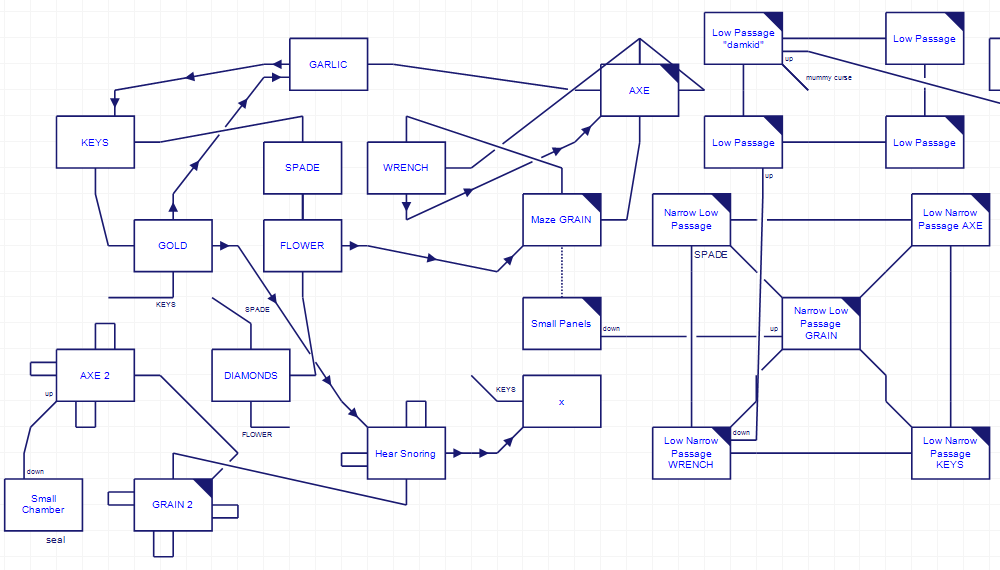
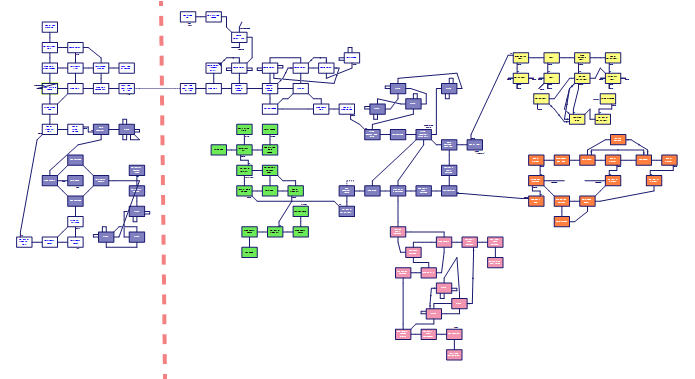
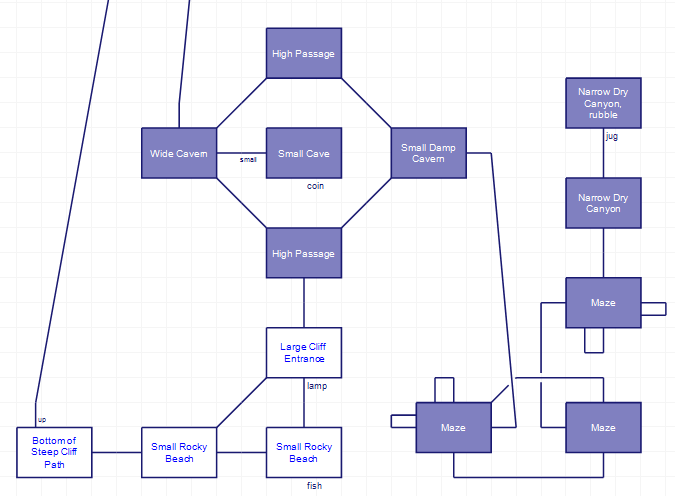
My map so far. Based on room count I’ve only seen half of them. The boundary between the kingdoms is marked with a red dotted line.
I count six areas in the eastern section (this is kind of arbitrary, but it makes sense somewhat). First off is the above-ground portion, the first part reached:
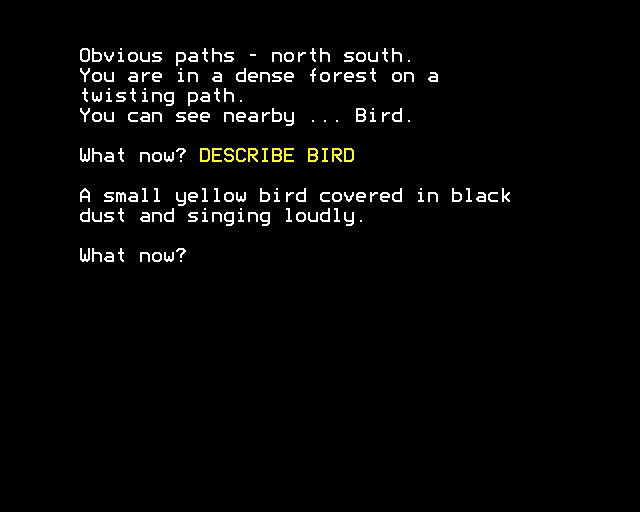
Most of this area is “dense forest”, although there’s a canyon crossed by a wooden bridge that seems ominous (it isn’t an obstacle, but I could easily see something causing it to burn/collapse if our adventures go awry). There’s also a classic Adventure bird:
DESCRIBE is the game’s version of EXAMINE. This is the first game since Journey I think we’ve had where DESCRIBE stands in for EXAMINE. It can be shortened to DE.
There’s also a small building, although it is not the Adventure Special.
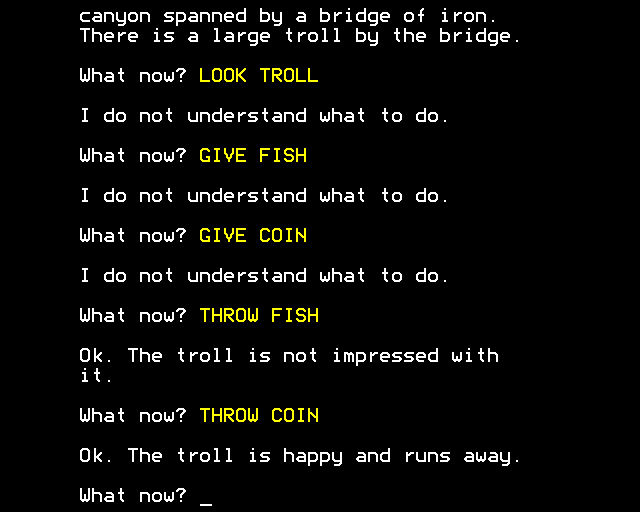
This is where the troll lives. That’s the same coin that we tossed him before crossing the bridge, and if we try to go back, and use the coin for a toll, he kills us.
This is very similar to how you can throw the eggs and reclaim them via magic in original Adventure — the troll will be mad we frustrated the toll. I’m wondering if this moment is how the author got the conceptual theming I was talking about earlier.
(The upshot is I don’t think I’ve softlocked the game by tossing the coin earlier in the game to the troll, but there needs to be some trickery in order to get back over the river. Still, maybe there’s a sneaky way to get from the west to the east side in a one-way fashion, and the coin gets used on the way back? Since we found the coin on the west side, not in the evil kingdom, I don’t think it counts as one of the stolen treasures.)
Other than that there’s a flower (“A small white flower with a strong smell”) and a “pothole” to go down deeper.
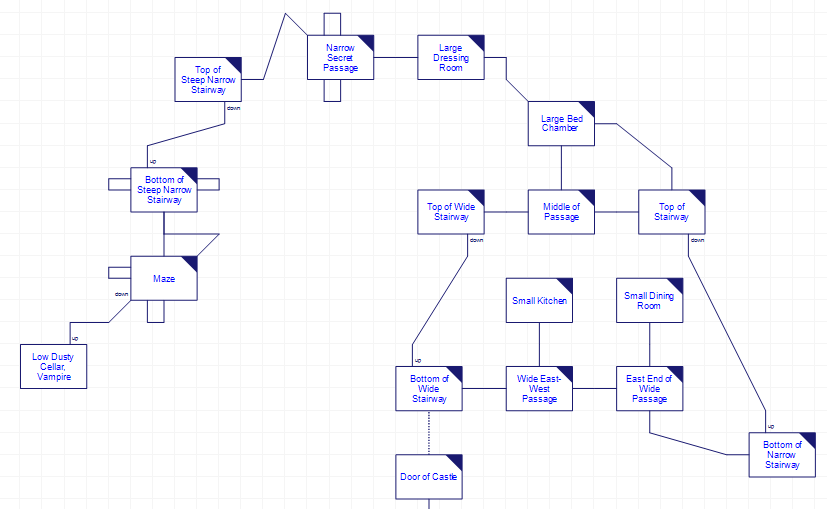
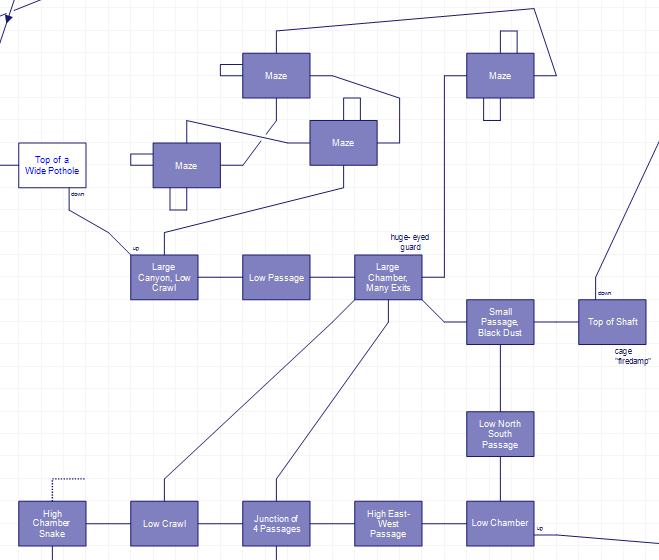
These are mostly straightforward junctions and passages, except for the “huge eyed guard” which you have to go by to go in or out. The guard does not react … yet.
This will mostly definitely be a problem later.
There’s also a classic “snake blocking a door” that looks like the one from Adventure.
I should also point out there’s another one of the odd “maze” sections the game has been putting in. Rather than the game putting one big tough maze to map, there’s just been little ones.
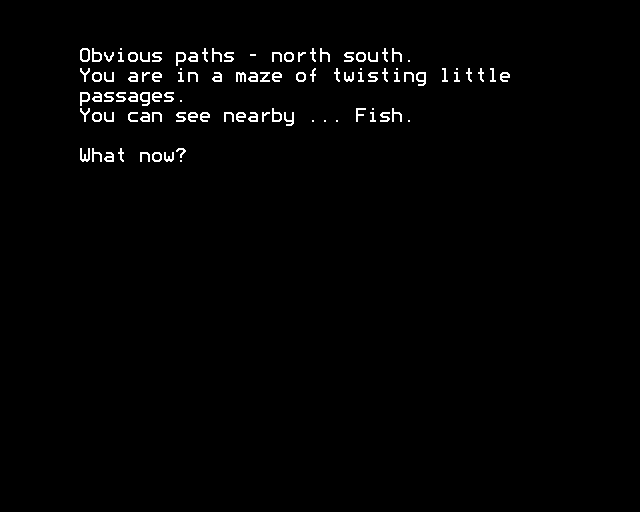
Using a Fish to map things out. Incidentally, if you take the fish from its original spot it gets described as a “dead fish”, which suggests another way I may have already softlocked the game.
Moving on to an area with a spring where I have solved a genuine puzzle:
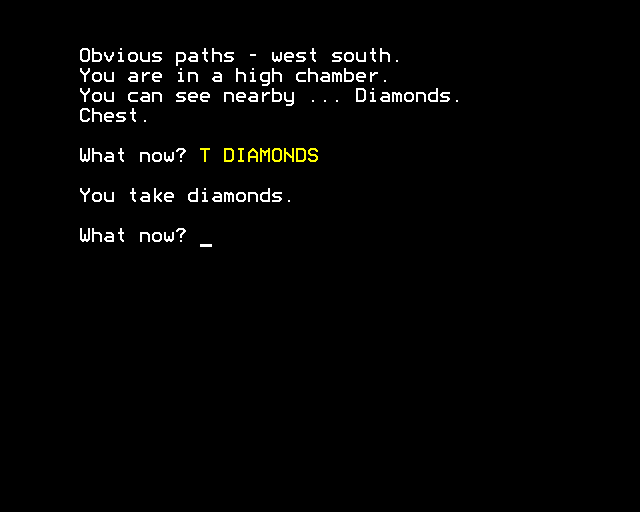
Other than the spring (where you can load up on water, although that’s true a couple places) the useful part is past a sleeping guard, where there’s a chest.
I am proud to say I nailed this puzzle first time.
Specifically, I locked the chest back again, then ran to the south where there’s a room that’s otherwise empty and not useful. Then, after the guard had left, I was able to scarf away with the diamonds, this time without making any noise.
Heist complete! The diamonds don’t attract the attention of the “huge eyed guard” incidentally, so it isn’t just holding a treasure that activates them.
Off to the northeast, there’s a small genuine maze.
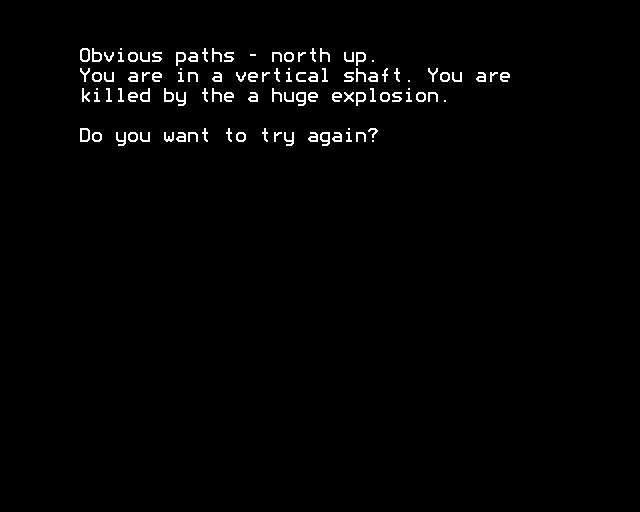
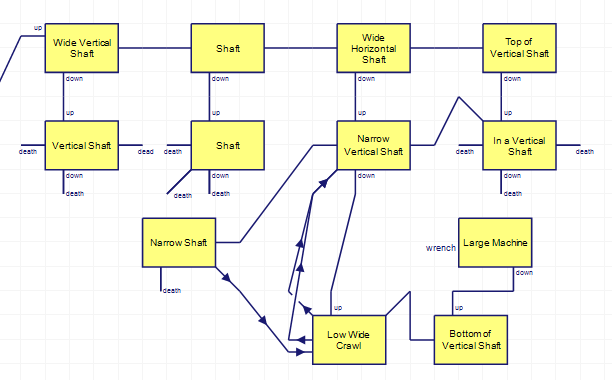
Specifically, you’re in an area with “shafts” where some of the exits explode and kill you. This seems to be consistent and just a matter of mapping things out.
You get a wrench at the end (by a non-functional machine which the game doesn’t let you noodle with), so maybe that’s it.
Going to the southeast, there’s a “kitchen” a “dining room”, and a room with a lot of guards.
You can make your way around and above the room itself. I have a feeling I’m supposed to drop something in on them that will cause them either to run away or pass out.
The last section I’ll call the “farmer area”.
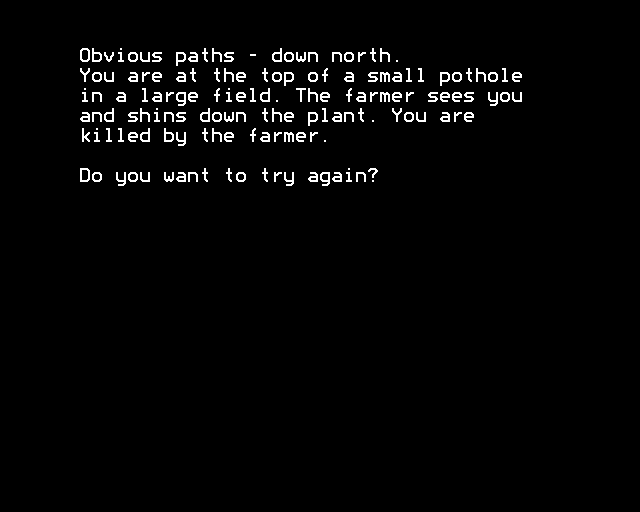
There’s the classic plant you need to water to get higher, where you can find a grainery (where you can safely grab the grain) and a small building (which is locked, and has a spade). If you try to get away with the spade, though, you get stopped at the “Top of Small Pothole” room.
The spade enables the verb DIG which I’m sure will be necessary somewhere, but isn’t helpful anywhere in the farmer area.
With the grain absconded with you can go back and feed the bird way back in the dense forest area and capture it in a cage.
Then you can take it to the snake, where you might expect it to chase the snake away.
Sorry, it isn’t going to be that easy!
I have some theories to test and things to prod at, but I’m fairly confident I’ve got this set of areas thoroughly mapped. Other than the snake I need to deal with the guard room and the farmer, so it doesn’t seem like a lot of hanging obstacles; there may also be obstacles (the wooden bridge, the guard in the tower) I just haven’t activated yet.
One last thing to mention: I did go through my standard verb list looking to see what the game understands.
This is an extremely small list. In may in fact be a record for a game that has a parser and no USE command. Just DIG, DRINK, LIGHT, THROW, LOCK, UNLOCK. I guess in some sense that’s all you need? For watering a plant, that’s throw. I assume you attack with the axe with throw as well. No need for OPEN when anything that needs opening is locked. It’s fascinating that there’s some very complicated depths upcoming using such simple communication (not even USE covering for the lack of verbs!)
Normally on this blog when we’ve seen the word “adventure” followed by a number, it is meant to designate one of the many modifications of Crowther/Woods Adventure, like Adventure 448. That’s not the case here. The author wanted to brag about the number of rooms. They might even be right to brag.
Yate, near Bristol, where today’s company comes from.
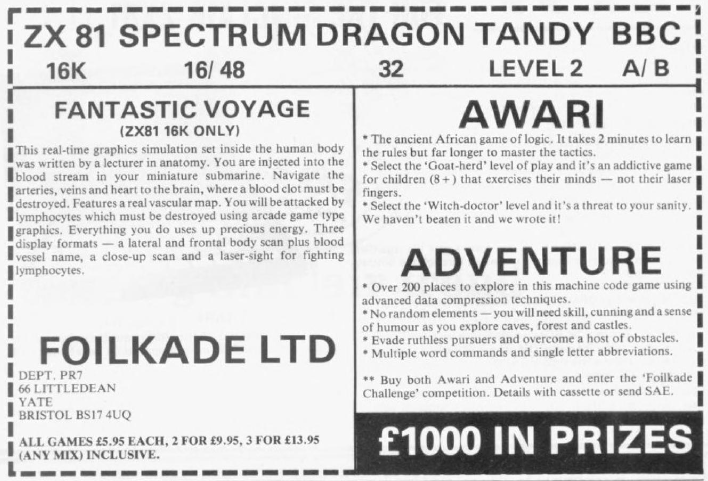
But to back up: this involves yet another one of those flash-in-the-pan UK companies founded around 1982, in this case a company named Foilkade Ltd., which seems to be by all evidence run solely by one person, C.J. Coombs. Starting in the December 1982 issue of Sinclair User, they advertised three games, Fantastic Voyage, Awari and Adventure 200, with a tack-on to the contest craze: an award for the first person who gives a correct solution to both Awari and Adventure.
I don’t know what a correct solution to the board game Awari would be like (maybe the game is completely non-random, so a procedure that beats the highest difficulty would work every time? isn’t that a game flaw?) Adventure is mentioned as having “over 200 places to explore in this machine code game using advanced data compression technique” and honestly, it really is impressive: we’re talking 16K of capacity, the same amount of space Scott Adams had to work with. (Also, the actual number according to the BBC Micro intro is 230 rooms.)
It wasn’t that silly to point to number of rooms as a metric in 1982, as while Level 9 managed dense worlds as well, it was hard technically for authors to provide the mainframe experience of a “world to get lost in” on the smaller machines.
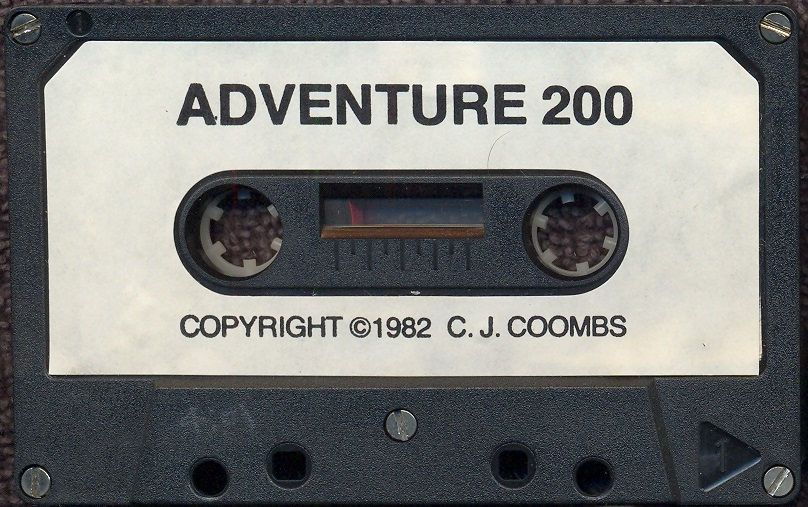
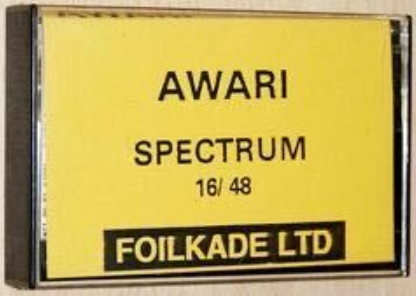
I never found a picture of the Adventure 200 case, but I think this Awari case is pretty indicative of the look. Via Pricecharting.
Despite some heavy advertising throughout 1983 (and decently positive mentions, like here in the book Sinclair QL Adventures) they poofed from history after that point. At least we can enjoy this one shot into the sands of history by Coombs.
At the very least, this one is allegedly long and complicated; Exemptus from CASA calls it “surprisingly vast and difficult” and there’s even a letter from a 1984 issue of Micro Adventurer which states roughly the same, as “Irene Feeney, of Basildon in Essex” gives an open offer for help for anyone sending a self-addressed envelope.
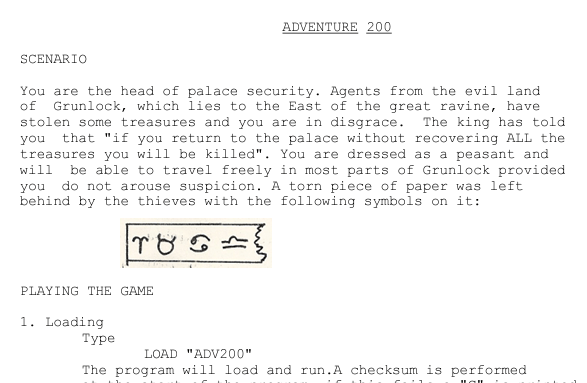
I’m playing on BBC Micro which has enough capacity to stuff the intro material without needing an extra instruction sheet. The premise is that all the treasures of your kingdom have been stolen and you are tasked with finding them while incognito. The only clue left behind is set of four symbols shown. I don’t know if this is meant to be Crowther/Woods style with gathering treasures from multiple rooms and this is just a creative way to kick things off, or if the treasures are realistically stored in a thieves’ hideout we need to infiltrate (like how Dragon Adventure only had treasure in the dragon’s lair). The “ALL the treasures” warning suggests the former to me.
You start just outside the palace, and going west kills you if you don’t have the treasures. I don’t think we’re using a trophy case room this time.
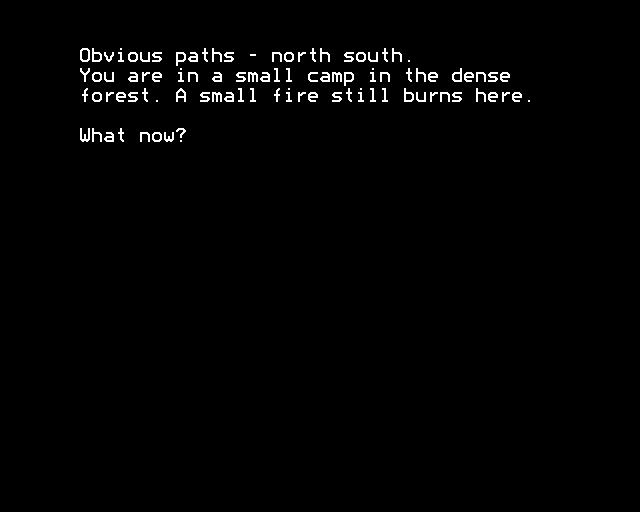
The thing that threw me most early off was the way exits are displayed. I’ve never seen this behavior before. Each room will always list a maximum of two exits as “obvious”. However, this is a perfectly regular map where rooms can most definitely have more than two exits. The campfire screenshot above only has exits north and south listed, but you can also go east and west. I only discovered this by arriving from the west, thinking it was odd for an open forest to have a one-way route, and tested going back even though it wasn’t listed as an exit.
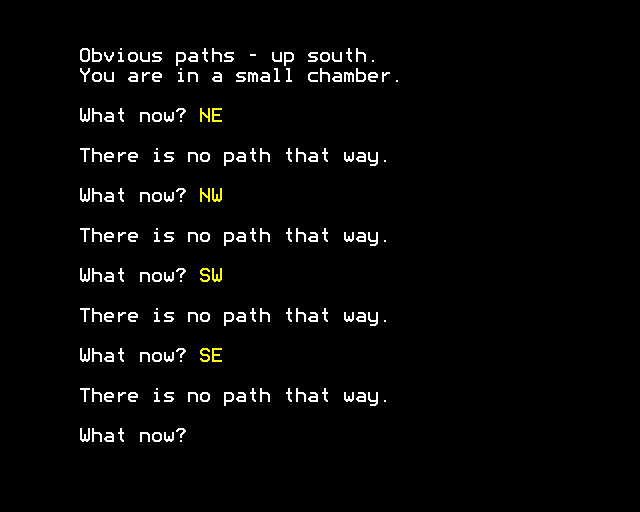
The upshot is, when making the map (first part above) I have to test every single exit in every single room. I’ve certainly had games like this before, but it is quite odd on a game that has a mechanism for listing exits. I’m not “working from scratch” at least, and in rooms which really do only have two exits, it makes things much faster since I can just plow through typing NW / N / NE etc. getting “There is no path that way” messages. Where path-searching is slow is when you find an exit, and then have to add it in, and go back to the original room and keep looking — but which exits did you already test? are you sure? better check all of them over again.
There’s one room in the early area that gives a “landscape view”. This is surprisingly common in early text adventures and I probably should give this sort of room an official moniker. Island Adventure had a tree you could climb to see there was a cave past a river. This kind of room gives a preview of what the journey of the game will be like.
I also wonder if the symbols given at the start just represent the “biome journey” we need to take through the game.
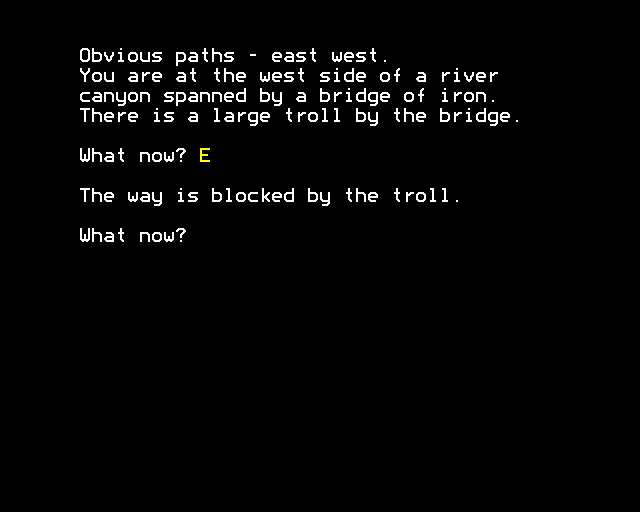
The only real item outside you find early is an axe and the only real obstacle is a straightforward troll. No talking or anything, all business.
To satisfy the troll, you need an item from underground. Underground isn’t a large area, or at least not yet.
You need the lamp (conveniently at the mouth of the cave) to provide light to explore, but it requires a light source. Fortunately, that campfire I gave a screenshot of earlier works. (It is important to note this moment, as it means the game isn’t purely about doing actions on objects listed as separate from the “main text”, so I need to pay attention to room descriptions.)
The mazes are particularly curious. It almost felt like the even the author didn’t like mapping mazes but only included some rooms out of obligation.
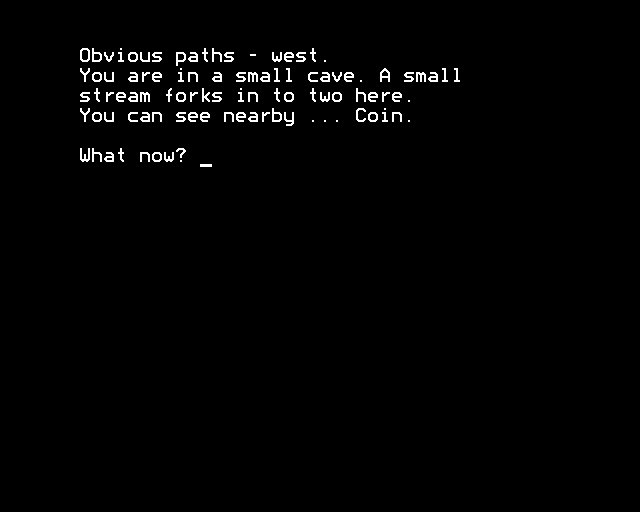
One exit is described as too small for you to squeeze through, so you need to drop your items except your lamp (this technically counts as a puzzle, I guess) to find a coin within.
Other than that, there’s a fish and a jug lying around, and the jug breaks if you drop it. Not too exciting yet.
With the troll satisfied, this leads to a large landscape, one I haven’t fully mapped out yet, so I’ll save it for next time. I will say if this is truly in the “nightmarishly hard” category of works like Acheton the author clearly is trying for the slow-burn approach, and building with easier puzzles until giving harder ones. (Like, y’know, a normal modern game designer.) Of course maybe I already softlocked the game giving away the coin (could it be one of the treasures?) and I’ve already fallen into the author’s trap. We’ll see!
One of the places I found searching in the lands beyond the troll.






























 Renga in Blue