One side effect of the All the Adventures project has been to get me to prowl through old computer publications, like one of Australia’s first devoted to computers, Micro-80 (Issue 1: December 1979).
One of the common elements in these publications — other than including source code to be typed up on your handy machine of choice — is that early issues especially rely on public domain material, or variations thereof. The December 1979 issue of Micro-80 included Snake and Super Mastermind; January 1980 has Hangman and Game of Life; February 1980 has Hangman (again, but designed for a different computer model) and Biorhythm. Most games could be found in some form in the David Ahl 101 Computer Games collection or be famous from some other avenue, like the Game of Life. This wasn’t necessarily due to a lack of creativity as much as needing to crank a new issue out each month, and especially with a small publication the public domain well was an easy place to scrabble.
Or… in the case of today’s selection, maybe scrabble from something not public domain at all, but just hope the original author wouldn’t make a hassle. Mighty Mormar by Charlie Bartlett is a barely-disguised version of Dog Star Adventure (1979) by Lance Micklus, also known as the first full-parser adventure to make it into magazine print.
What makes Mighty Mormar notable is that, as I already mentioned, Micro-80 is Australian, and we don’t have any confirmed Australian text adventures from earlier, so for the moment, this holds the record for First Australian Adventure Game.
My post on Dog Star is here, although out of all my early writeups it is the one I’m most sheepish about; it is extremely short and yet on an important game. In some sense I didn’t have some of the later context to go into depth, but I also hadn’t settled on a “style” for my blog posts yet. I’ll try to rectify my sins with this post, as this is really almost exactly the same game as Dog Star. If it weren’t for the skeletal post I made first time through, I’d probably just make an addendum and be done with it. This game gives me a second chance. I’m making a new map and not checking any notes. I do remember one major puzzle but I’ll point it out when I get there.
Now, there is one important difference from what I played the Early Blog Days and what I’m doing now. Mighty Mormar is based on the original type-in; I played a later port. This original has a moment (in a supply depot) where you have to guess what items are there and try to look for them. This was a feature of Escape from Colditz but nothing else I’ve played. I don’t actually quite remember what was in the depot, so I got to experience the moment for real, more or less.
Micro-80, November 1980.
It’s worth spending time on the game’s text intro from the magazine, the only real original part.
Oh! my Mighty Mormar, you were on your way to our home planet of Hartley with Princess Aleaya on board when the evil General Vagg’s Battle Cruiser caught us with a tractor beam and brought us aboard. He then disarmed you, put out your eyes, took the princess and left you for dead in your starship, which he has drained of fuel and left sitting on the flight deck of his battle cruiser. But, my Mighty Mormar he did not see me, your little Robot, stowed away in the corner as he did not count on the courage of you my master, who even though unarmed and blinded will use me as your eyes to rescue the Princess. Being a small robot I only understand a few words so you may need to ask your questions in a different way if I do not understand. We will be rewarded with points for anything we steal along the way and together we will prevent the evil General Vaag from destroying our home planet of Hartley and once again prove that evil does not PAAY.
Yes, you read that correctly: even though this is nearly the same game as Dog Star Adventure, in this iteration our protagonist is blind. Additionally, we are giving commands to a robot, as an in-universe explanation of the lack of understanding of the parser. There’s shades of Galactic Hitchhiker and a few other games from this era that try hard to explain the moments of parser-fumbling; this is the only one I know of that blinds the protagonist so “I am your eyes and hands” from Adventure and the Scott Adams games becomes quite literal.
Time to save Princess LeiaLeya Aleaya!
This is indeed a dull title screen, although it is interesting how many authors felt obliged to make one like this. The idea there needed to be a title with a cinematic pause was embedded early.
You start in your spaceship and you have a pretty open map to work with. There is very little that is “gated” other than a vault (with some crystals which count as treasure), a tractor beam you need to de-activate, and the Princess, who is locked in a jail. This is reflective of the gameplay itself, which is really quite open. You definitely need to
a.) get some fuel
b.) get some “turbo” to go with the fuel
c.) get a communicator which you can use to open the starship doors
d.) get the Princess
but any treasures besides essentially count as point bonuses.
However, you first point of order is to get a blaster. Guards randomly appear and will kill you if you don’t have anything to defend yourself; additionally there is a scientist you need to shoot and an extra guard that is always found near the tractor beam. It is not obvious you need a blaster; you can find a “laser gun” out in a “lab” maze…
…and if you try to then use that to shoot anyone, the game says, “BUT I’M NOT CARRYING A BLASTER.” This is a clue regarding the supply depot.
The blaster incidentally only has 4 shots, and two of them need to be use on the fixed places (the scientist and extra guard) so it really only helps to fend off two random guards. If you run out of ammo, the next guard is the end of the game:
One of the other things you can get in the supply depot is “ammunition”, but it gets loaded in your gun right away (at least in this version) so if you have a full blaster, you don’t get any benefit at all. I found after some experimentation the best bet is to head back to the depot when you have only one shot remaining (instead of waiting for zero) because it is too risk to go without protection.
The whole wrangling-with-deadly-guards setup is one of those curious elements from old-school games which I think adds a necessary bit of spice — other than one nasty-to-find supply room item I haven’t got to yet, and one truly bizarre puzzle with a robot, everything is straightforward — and without the wandering guards the supposedly dangerous ship feels truly abandoned. Thinking in terms of a modern game, I can’t think of a good replacement that doesn’t overhaul the game as a whole.
With blaster in hand, you want to hit a scientist’s lab…
…and a “strategy planning room”.
The strategy room is useful for both the keys (which go to the room of the Princess) and the helpfully marked button that turns off the tractor beam.
To get to the Princess with the aforementioned keys, you travel through a minor maze and need to scoop up a hamburger on the way.
I would have thought he’d talk about what possessed him to create such an odd puzzle in the first place; I’m pretty sure Star Wars did not have any robot-eating-food gags. (At least it is notable: this was the puzzle I remembered from my last playthrough.) These Very Early Era games were, despite the occasional strong theming, not hell-bent on verisimilitude (this was also the time with Journey to the Center of the Earth’s Coke machine).
The robot is guarding the Princess, incidentally, who can be scooped up and taken to the ship. Grabbing all the various items seen is essentially good enough for escaping; the communicator at the strategy room has a voice that says “SESAME” when you pick it up, and what that is meant to indicate is that you say SESAME to it while at the landing deck to cause the doors to open for an escape.
There are two other optional bits. Both were easy to get on my original playthrough and hard to get on this version, for different reasons.
One is a clued at in a “computer room” with a TRS-80 and a screen that says CSAVE TAPE. While I’ve read my five-year-old-post before typing this, I was playing fresh so entirely forgot that I had found the tape in the supply depot. In the version I played (a later commercial port) all items in the supply depot are visible so the location of the tape isn’t much of a puzzle. Here, you’re supposed to just take the leap and GET TAPE while you’re in the room! This lets you make a copy of battle plans:
Technically speaking, this puzzle is “fair” if you’ve understood the mechanics in the first place already (which you need to do early with the blaster anyway). The general mechanics behind the room where you GET uncertain objects is still not a good puzzle for the verb-hunting (if you’re GETting something in a room where the object is not described, multiple actions are being implied — since you have to FIND the object first, except that verb is not understood) but I will say it changes the too-easy balance of the game slightly. At my last writing I put “The puzzles are either too hard (hamburger, original supply room) or too easy (most everything else)” which is still quite true, but I was only able to assess that by eyeballing; the balance feels slightly better with the original puzzle.
The other optional bit is the vault, which is supposed to be easy, but Mighty Mormar throws in a twist:
The twist being: the author broke the source code. In addition to changing names the author Charlie Bartlett also did line renumbering. The original BASIC source code goes into the 5000s, but here everything is changed to be a maximum of 3 digits (to save memory, I guess, cutting out the typical “number jumps” between lines that happens in original BASIC).
206 IFVB13ORNO30THEN104
207 PRINTNI$
208 GOSUB211
209 X=31:GOSUB224:IFY-1THEN104
210 IFVB17ORNO31THEN5575:ELSE182
211 INPUT”WHAT SHOULD I DO”;CM$
212 VB$(0)=””:NO$(0)=””:VB=0:NO=0:IFLEN(CM$)=0RETURN
Line 210 has the “THEN5575” in there — that’s the old version of the line number. Bartlett forgot to renumber it (or the auto-renumber-program he was using did). Hence the crash. 5575 is the “death” portion of the game where you get captured, although it wasn’t clear to me until I spent a fair amount of time studying source code and comparing. There’s also supposed to be a prompt with an identification terminal
On the screen it says: >> SHOW I.D. <<
and there’s something in broken in the source code that removes that as well. So for the Mighty Mormar version (and this version only) you are supposed to realize, unprompted, to SHOW I.D, letting you into the vault with the crystals.
With everything in place (optional or otherwise) you can escape to glory, and one last bug, as a treat.
I did double check — the typing of the source code accurately represents what is in the print of the magazine.
So, despite it (Dog Star original) still not being a fantastic game, I’m glad I got to revisit this milestone. I do appreciate, despite the quite close distance to Crowther/Woods adventure, a fair number of attempts to be different: changing the genre, making treasures optional, adding some main objectives (where all the objectives are subsumed under “escape” so it isn’t clear immediately, for instance, that getting the doors open is a goal), and having a general hub structure which is quite open.
Computer and Video Games Magazine, June 1982; a reprint of the original Dog Star, with the original author credited correctly.
Mighty Mormar on the other hand … while it was common for the time to remove names of authors and claim some sort of public domain status, and studying printed games as a base for new ones was a quite typical practice, it could have at least used a “based on Dog Star Adventure” or some other language. I’m happy to put an asterisk here and hand back the title of First Australian Adventure to the current champions, Secret of Flagstone Manor (with a parser) and Adventure in Murkle (without a parser).
In the offices of the building I left off at last time there is a “shining silver disc”. This is an audio disc, which you can place in a “drawer” in one of the offices:
-> push red
The shallow drawer slides out from the wall.
-> put disc in drawer
Done.
-> push green
The shallow drawer slides back into the wall.
There a brief squeaky noise from within the wall, followed by the emission of a
metallic sounding voice of outstanding quality and clarity.
-> listen
You can hear a metallic voice constantly repeating:
Greetings from Ferrivan Incorporated. We are delighted to be able to introduce you, the discerning Business user, to the world of advanced aeronautical transportation. In a world of ever shortening communication links and travel times, Ferrivan Incorporated are proud to announce the Ferricopter, the latest addition to our line of vehicles for the Business person.
Based on the traditional, and now obsolete, helicopter of the twentieth century, the Ferricopter is a highly automated, safety-conscious, vehicle for the modern Business user and up-market commuter. The Ferricopter has used the latest computer-aided techniques to overcome the requirement for any advanced flying licenses, in order that you may experience the joy and incredible convenience of self-drive airborne conveyance.
We most strongly recommend that you, or your company, invest in this extremely cost-effective method of transportation. Fly-drive a Ferricopter today and experience for yourself the true Business economy of the latest developments in high-tech conveyance.
The Ferricopter – your passport to true Business economy in today’s cost-conscious transport arena.
This message has been brought to you by Ferrivan Incorporated, the Business transport managers friend.
At least it wasn’t repeating for 50 years?
CIO Magazine, July 1989.
My major breakthrough had been unlocking a computer, with a long list of commands.
This is, curiously, much simpler than many of the button-based mechanisms from the game; there’s no mystery in working out what red and green do and how orange is a special button that works to activate something entirely different than the red and green buttons.
-> type status
Typed.
The screen displays:
Unit Status:
Unit 3 Brake Fault.
Unit selected = 1.
Unit Direction: Reverse.
-> type display
Typed.
The screen displays:
Local Circuit:
       O__

          \

           \

       O____\___+______O
The Os represent subway cars, 1 is in the upper left, 2 the lower left, and 3 the lower right. You can switch between them by typing Select, then cause them to move by typing Activate. Direction can switch from forward to reverse, Open/Close can mess with their doors. There are a number of wrong sequences where you can get the cars into an amusing jam, but the right move is to start with Unit 3 which (due to the brake fault, I suppose) jumps the track, which is what we want.
       O__

          \

           \

       O___*\___+______
Then Unit 1 can be moved forward and will arrive at the Subway Station below the building (marked + on the map above), where it can be boarded. (Make sure you Open the doors as well!)
Subway Station
You are standing on a long subway platform. There is a subway train standing on the railway tracks to the west of the room.
The train doors are open.
The subway has a keyhole (where a silver key you find elsewhere works, you need to TURN it after inserting the key) as well as red, orange, and green buttons and a lever. Yes, we are back to mystical button presses, and I’m not actually totally sure what’s going on with the sequence, I just kept hitting buttons until something useful happened. The upshot is there are two accessible subway stations from here
-> pull lever
The train moves off and starts to gather speed before the brakes are applied automatically by the train’s control circuitry. The train grinds to a halt and the lever springs back to its original position.
-> push green
Click.
There is a brief rumbling noise from somewhere behind you, followed by the sound of a short emission of compressed air.
-> s
In a Train
You are aboard a gutted subway train. All of the normal fittings and fixtures appear to have been removed.
The train doors are open.
The first is short and mysterious. There’s a series of five rooms with letters on the floor spelling POINT, then two “triangle” rooms which cap either end. I’d almost suspect it was another riddle. The only useful (?) thing I’ve found is a bronze bullet (and no gun).
The other station is long and mysterious. It is one long corridor I have broken up in the map below into four chunks.
The four marked rooms have a broken exit, where going “north” jumps to the slanted room on the other side of the corridor.
Starting with the stuff I’m stuck on first, there’s a glass wall…
Subway Corridor
You are in a long corridor.
Exits: –EW ——– —
The north wall of the room is made from armoured glass.
-> look through glass
You can vaguely discern a room through the thick armoured glass.
…and a locked door (and while I have unused gold key, the key doesn’t work).
Subway Corridor
You are in a long corridor with a door in the north wall.
Exits: –EW ——– —
-> unlock door with gold key
“Shan’t” returned Algy, teasingly.
Possibly representing a puzzle and possibly representing Ferret just being its usual confusing self, there’s a whole series of seven rooms with “tilted” rooms on either side.
Slanting Room
You are in a rectangular room. The floor slants from west to east.
Exits: N— ——– —
-> n
Slanting Room
You are in a rectangular room. The floor slants from east to west.
Exits: -S– ——– —
(This is the “geography bug” from the map — going north from the first slanting room should go to the corridor, but it instead jumps a step.)
At the very end of the corridor is an “orbital environment” with a “pretty envelope” containing a letter.
I have yet to find the map being referenced, but I have to stop to say I love the moment of humanity here. For the most part, any textual expression we’ve seen in the game has been written in corporate language, not by humans for humans; this is the first evidence in the game of such a thing existing.
I’ve wrangled one actual puzzle in the corridor. Close to the subway station there’s a “waiting room”.
Waiting Room
You are in a small room. Set in the wall near the exit is a circular pressure
pad. There is something stuck to the ceiling.
Exits: -S– ——– —
Doing PRESS PAD (not PUSH!) causes anti-gravity to activate and for you to fly to the ceiling, where there is aviator passcard.
Floating back down is a problem (especially for those struggling with the parser) but there’s a “long rod” from back in the office building; PRESS PAD WITH ROD does the trick of making a landing.
-> press pad with rod
You are suddenly overcome by a most weird sensation. You momentarily feel totally disoriented.
Waiting Room
You can hop between subway stations, so there might be some jockeying between the three places (office building, POINT corridor, long corridor). Just to be complete on what I’m stuck with, there’s also the drongoid at the office building I mentioned last time.
-> look at drongoid
The drongoid is truly a most awesome creature. It has the build of a brick shithouse, is coloured a disgusting shade of putrid green, has two heads and eight beady little eyes. Most probably the product of some horrible radioactive mutation the creature oozes slime and smegma over its molten skin. Of its many limbs some appear to have been derived from traditional arms and legs, but their uses are apparently interchangeable as it occasionally shifts its weight from one combination of appendages to another. As the saying goes, ‘I would steer well clear of that one’.
-> kick drongoid
You must understand that the drongoid is a highly developed killing machine, with an armoury of deadly tactics at its disposal. The strategy employed to remove a minor irritation (i.e. you) is both swift and deadly. A punch with the force of a flying sledgehammer is delivered to your solar-plexus, both winding you and causing acute muscle failure in your heart.
You are in urgent need of an organ donor.
You can give the drongoid items that it “toys with for a short time” before discarding, so it is possible you could hand something that it would be distracted by (or is weaponized to blow up) but no luck so far. I’d put 50%+ odds on the drongoid being a red herring (like so much of Ferret) except that all the Ferricopter material suggests our next destination is on the roof.
(Next post will be another one-shot, but I’ll keep doing Ferret updates in the comments here if there’s anything to update.)
The subtitle of this post comes from one of the most famous of Ray Bradbury’s short stories. It first appeared in Collier’s in 1950, later being printed in his collection The Martian Chronicles.
From art by Douglas Chaffee.
The Earth has been destroyed in nuclear war, but a small house in California still keeps working.
“Today is August 4, 2026,” said a second voice from the kitchen ceiling, “in the city of Allendale, California.” It repeated the date three times for memory’s sake. “Today is Mr. Featherstone’s birthday. Today is the anniversary of Tilita’s marriage. Insurance is payable, as are the water, gas, and light bills.”
There are, essentially, no characters, except the house itself: pure setting as story. Despite its unusual structure, it unfolds a story through the ghost presence of the people it implies.
The entire west face of the house was black, save for five places. Here the silhouette in paint of a man mowing a lawn. Here, as in a photograph, a woman bent to pick flowers. Still farther over, their images burned on wood in one titanic instant, a small boy, hands flung into the air; higher up, the image of a thrown ball, and opposite him a girl, hands raised to catch a ball which never came down.
Apocalypse is uniquely suited for adventure purposes; people are hard to code, and scrounging up materials (and improvising based on whatever is at hand) both makes sense naturally for the genre and makes for an organic combination of plot and action. Even setting itself, like the Bradbury tale, can tell a tragic story.
Despite Ferret being, at its essence, a random “biome journey”, every time there is a sort of human presence it has felt much stronger and more poignant than it might otherwise. Zork itself was set in a post-apocalypse of sorts (of an Empire, rather than an entire world), but the fantastical crumbling aspects gave the appearance of abandonment more than death, a ghost town rather than a nuclear memorial.
My latest progress in Ferret mostly went through a series of buildings with clear function that have been abandoned; there is something of the same poignance, even though the prose isn’t attempting for Bradbury-level artistry. For example, there’s a telephone you can find at one point where a phone number (given way back at the cathedral) works to get a recorded message:
You can hear a thin metallic voice constantly repeating:
Greetings from Ferrivan Incorporated. A Business that aims to please. Thank you for dialling our automatic reception centre, a service specially designed for you, the discerning personal or fleet Business operator of vehicular transportation. In our continual quest to provide the ultimate in mobile conveyance, we will occasionally upgrade our product line and consequently the automobile you desire may be replaced by a new, improved model. Please accept our heart-felt apologies if this causes you the smallest inconvenience. Ferrivan Incorporated, a Business that aims to please, can provide you with the following range of superb, modern, clean, up to the minute, high-tech and desirable vehicles:
The Ferricart: a sleek modern saloon of outstanding economy
The Ferrichariot: a sporty conveyance of incredible performance
The Ferridrone: an automatic carrier for the Business user
The Ferricomfort: supreme comfort for the chauffeur class
The Ferriwheel: a low maintenance carrier for the Business section
The Ferrivator: an all-purpose electrical small-load carrier
The Ferrifour: all-wheel drive transportation for any terrain
See your nearest dealer for the full detail scan of all these robust, reliable and raunchy horizontal-mode ground-carriages.
Remember, Ferrivan Incorporated, a Business that aims to please, wants you to have the ultimate conveyance, so make the right decision, go for the company that rates you as numero uno, contact your Ferrivan dealer now! All Ferrivan dealers are listed on your personal terminal, under Vehicular Conveyances.
According to the game’s “info” command the bombs dropped 50 years ago, so this recording extolling the virtue of Ferrivan Incorporated has been playing on repeat for 50 years. The fact it is corporate gobbledygook, rather than an automated house trying to nurture a dead family, adds a bit of Zork-style satire to the circumstance.
From 1950, Government Printing Office, Washington.
Picking up from last time, I was stuck on a “White Room”; there was a series of colored rooms with riddle-inscriptions, but this room had no such inscription.
White Room
You are in a room where the walls, floor and ceiling have been carved from beautiful white rock.
There is a brown pin here
-> read inscription
I can’t see anything like that around here.
-> hint
Go down on it.
I theorized that the lack of inscription meant this wasn’t a regular riddle, but indicating some holistic action meant to be done across all the rainbow rooms. This was entirely a wrong theory.
This is just another regular riddle, even without the inscription. Where I got really befuddled was the use of the HINT command. Prior riddle rooms had fairly explicit hints given by the riddles (so much so that the puzzles were essentially given away) but they augmented the existing inscription. Here, there was no inscription to be augmenting. Additionally, the hint is essentially required to solve this riddle. While the game has been willing to stretch meta-aspects before (remember when I had to change my computer’s timer?) but the inconsistency with hint treatment really led me astray here.
“Go down on it” is just a clue to SAY DESCEND.
-> e
As you pass out of the room there is a tremendous rumbling under the floor beneath you as some great and ancient force comes to life. The whole room begins to shake showering you in sand and dust. Just as the rumbling begins to subside, the whole of the west wall starts to rise gradually, and the rumbling continues afresh. The wall slowly slides up until it comes to rest with a jolt, its top now level with the surrounding wall. The sand and dust are blown out of the room by a slight draught. It is now quiet.
Distribution Matrix
You are in a room that forms the southwestern corner of a vast open area.
There are four stopcocks here, marked N, S, E and W.
Exits: N-E- NE—— —
This is a large 6 by 5 area, thankfully not in any form a maze.
All the rooms of the large area have stopcocks; there’s also a long pole and a canoe (with a hook) sitting around. The canoe is too big to carry but you can take the ever useful wire and attach it to drag the canoe around. More on that in a second.
The plaque above is nestled in the northwest corner; there’s also a window showing a view of a pipeline.
Through the carefully constructed window you can see a beautiful seascape. Below you is a sheer cliff with a lovely golden beach at its base.
Unfortunately the idyllic scene is marred by a huge pipeline that emanates from the bottom of the cliff, runs over the beach and out into the sea.
The goal here is to open stopcocks, forming a path from the northwest corner to the northeast corner. There are no doubt multiple ways of doing so. Once at the southeast corner you can push a button leading to a “courtyard” and a “slipway” which will (if you’ve let the water flow”) be a “canal awash with a torrent of water.” Then you can tie the wire to a stake, push the canoe off into the water, and untie the wire (goodbye, helpful wire!) to go on a brief rapids ride:
-> untie wire
As the canoe is unleashed from its restraint it is caught by the raging
torrent of water and forced out into the canal.
In a Canoe
You are in a canoe charging down a canal on a torrent of swirling water. The
air seems deceptively cooler here.
[…several turns later…]
As you surge onward down the canal the banks narrow to a width where the pole wedges itself between the banks. As you were holding it at the time you are physically lifted out of the canoe which charges off down the canal.
The flow of the canal reduces to a mere trickle and then to nothing.
Swinging on a Pole
You are swinging on a pole above a dry area of canal bed. It’s very cold here.
Exits: —- ——– -D
The whole sequence was pleasantly simple to figure out compared to some of the previous brain-busters; I figured out the stopcock-turning sequence on essentially the first try and while it took me a bit of fiddling to get the canoe to work (I originally didn’t tie it to the stake; if you do that it bobbles in the water, but it seems like you should still be able to move?) the whole sequence felt suitably dramatic.
Also, this is yet another “item reset” as you can’t carry heavy items in the canoe (so the weird titanium orb and so forth from the rainbow corridor are yet more red herrings). You are once again reduced to just the colored pins, which will finally see some use.
Swinging on a Pole
You are swinging on a pole above a dry area of canal bed. It’s very cold here.
Exits: —- ——– -D
-> d
Canal Bed
You are standing on a dry area of the canal bed. The canal bed continues to the north and south and looks very muddy. There is a stairway leading up cut into the west bank. High above your head a long pole is wedged between the banks of the canal. It is very cold here.
Exits: NS-W ——– U-
-> w
Tundra
You are in an area cut from frozen rock. The rock walls to the north, east and west rise out of sight above you. Cut into the east wall is a stairway leading down onto a dry canal bed. The rock to the south slopes away out of sight and appears to be made of ice. It is bloody freezing here.
Exits: -SE- ——– -D
Straight from a desert to a tundra. Just a few more steps takes you to a warmer place; a “glacial channel” with a steel door and a “minute hole in a chromium disc set in the rock next to the door”. The orange pin goes in (and pops out) unlocking the door.
Facing Passage
You are in a narrow passage cut into solid rock. The room is lit by a strange irridescent glow from the rock walls and ceiling. To the north is a steel door, to the south is a square arch set in the rock. There is a sign on the east wall and a digital clock on the west wall. It is quite warm here.
Exits: -S– ——– —
-> examine clock
The clock appears to be broken, but is showing a time of five past one.
The clock is not intended as a tragic piece of set-building, but rather a hint for the mechanism that is to come. A few rooms away is a “control centre” (which you can enter via white pin) which is a little hard to process.
Control Centre
You are in a brightly lit, partially derelict control centre set in solid rock. Most of the apparatus has been destroyed, however some still appears viable. There are three buttons, coloured red, orange and green; two switches, coloured blue and yellow; two knobs, one green, the other red; one lever and two digital gauges, one orange, the other blue. There is a steel door to the east.
It took me a while to get comfy, and a good hour was spent just with me pushing buttons in various combinations and taking notes on if things changed, but:
a.) the green and red knobs do nothing; there’s some dark rooms which they might presumably light up but the mechanism is no longer working
b.) the lever lets you press the “orange button” which activates a pad I’ll show off in a moment
c.) the red and green buttons connect to the orange and blue gauges and run through the numbers 1 through 9 (or sometimes 10) and 1 through 20
d.) the blue switch gives off a mechanism grinding sound, and the yellow one does as well (as long as the number settings haven’t changed since you’ve set off the blue switch)
-> turn blue switch
You hear the distant sounds of hydraulic machinery moving into action, followed by a brief grinding noise, and finally a reverberating clunk.
If you play around with different gauge settings and using the blue switch quite a lot, you can die in an amusing way.
Click.
You hear the distant sounds of hydraulic machinery moving into action, followed
by a brief grinding noise, and finally a reverberating clunk.
There is a tremendous rise in temperature, accompanied by a deafening bang and a huge emission of gases. Modern-day research scientists use the term ‘explosion’ for such an event.
You’ve been Chernobbled.
Phase 6 (Radiation)
Mode: Expert
You have scored 525 (out of 1670) points in 1929 moves.
Rooms visited: 301. Rank achieved: Mega-galactic Genius.
Oops! At least this makes clear where you are. If you press the red button four times, setting the gauges to 5 and 1 respectively (5 past 1) you get something useful — a passage opens up that was previously closed.
End Passage
You are in a narrow passage cut into solid rock. There is a narrow exit to the south. The room is lit by a strange irridescent glow from the rock walls and ceiling. It is warm here.
Exits: NS– ——– —
-> s
Nuclear Core
You are in a very warm room.
Exits: N— ——– —
There is a hand-held receiver here
The receiver has a touch screen which is normally blank unless you’ve activated the orange button, as I’ve mentioned before. It gives a map.
|-O-|-O-|-O-|-O-|- -|-O-|-O-|-O-|-O-|

O   O   O   O   O   O   O   O   O   O

|-O-|-O-|-O-|-O-|-O-|-O-|-O-|-O-|-O-|

O   O   O   O   O   O   O   O   O   O

|-O-|-O-|-O-|-O-|-O-|-O-|-O-|-O-|-O-|

O   O   O   O   O   O   O   O   O   O

|-O-|-O-|-O-|-O-|-O-|-O-|-O-|-O-|-O-|

O   O   O   O   O   O   O   O   O   O

|-O-|-O-|-O-|-O-|-O-|-O-|-O-|-O-|-O-|

O   O   O   O   O   O   O   O   O   O

|-O-|-O-|-O-|-O-|-O-|-O-|-O-|-O-|-O-|

O   O   O   O   O   O   O   O   O   O

|-O-|-O-|-O-|-O-|-O-|-O-|-O-|-O-|-O-|

O   O   O   O   O   O   O   O   O   O

|-O-|-O-|-O-|-O-|-O-|-O-|-O-|-O-|-O-|

O   O   O   O   O   O   O   O   O   O

|-O-|-O-|-O-|-O-|-O-|-O-|-O-|-O-|-O-|

O   O   O   O   O   O   O   O   O   O

|-O-|-O-|-O-|-O-|-O-|-O-|-O-|-O-|-O-|
The gap at the top is the room you’ve just opened. You opened the passage designated (5, 1). You can press the green button to increment the second number; what happens is like this:
Each of the green numbers (changed by pushing the green button) indicates a different exit; you can switch the mechanism to the particular exit and then open it with the blue switch (but remember you can’t open too many or the whole thing explodes!) You can incidentally go “off the grid” and find a dark room, but there’s nothing I found any of the dark rooms, so I’m guessing they’re a red herring. The touchpad map fortunately updates whenever you make a change so it is easy to work out what’s going on (once you know to start checking the touchpad!)
The red button (and corresponding number) match with what column you’re at. I dutifully mapped the entire thing out just in case, finding a violet pin (absolutely useless) and a lead box with a uranium rod. The rod is useful; there’s another one of those “locked doors with a small holes” nearby, except none of the pins (including the recently-found violet one) work. No, you have to use the uranium rod, which pops the exit open to Phase 7 (Inversion).
Decontamination Chamber
You are in a small antisceptic room. The room is devoid of any fixtures or fittings other than a ladder fixed to one wall. A few feet above the top of the ladder is a hole in the ceiling. There is an overpowering smell of disinfectant.
Exits: —W ——– U-
-> diagnose
You are feeling a bit off colour.
I’m a little worried about the diagnosis, but I did go back and try optimizing steps and so forth; you lose some health in the desert (even if you go at maximum speed and ignore the skeleton) and you lose some health in the radiation area (again, even at max speed).
At the top of the ladder is the telephone with the odd repeating message. Going a bit farther finds an office building asking for a security code, which you can helpfully extract from information quite a ways back in the game, phase 2 to be exact:
Having everything catalogued on a blog can be helpful sometimes!
Voila:
Catwalk
You are on a high, fenced catwalk. At the eastern end of the catwalk is a building with a door. Set in the wall next to the door is an intercom, which has a orange button on it.
Exits: —W ——– —
-> push button
Click.
The button illuminates. A metallic voice emanates from the intercom and says
‘Photoscan completed. State your ID’. The light in the button goes out.
-> say 8371235483183271
‘8371235483183271’
There is a muted click from behind the door.
The inside of the building has a “derelict landing” which goes a long way both up and down; the way up is blocked by a creature I haven’t dealt with yet.
-> look at drongoid
The drongoid is truly a most awesome creature. It has the build of a brick shithouse, is coloured a disgusting shade of putrid green, has two heads and eight beady little eyes. Most probably the product of some horrible radioactive mutation the creature oozes slime and smegma over its molten skin. Of its many limbs some appear to have been derived from traditional arms and legs, but their uses are apparently interchangeable as it occasionally shifts its weight from one combination of appendages to another. As the saying goes, ‘I would steer well clear of that one’.
I’ve still not fully explored everything — going all the way down hits a subway system — but I do want to mention one more item in the office building, a security computer. It asks for a password.
With no other clues as to the password, I checked with HINT and found it was a word I’d heard an awful lot. Thinking back to that repeating message, I typed BUSINESS.
> type business
Typed.
A tinny voice is emitted from the terminal, it says:
“Invoking security scan. Please answer the following questions.”
The screen is displaying:
Type in the notional square root of -1.
Then what follows is a very long trivia quiz/riddle sequence. Some questions are easy…
Shakespearian play set in Scotland, the name of the play being regarded as unlucky in theatrical circles.
…and some questions are ridiculous.
8200, obtained by writing a C program which checked every numerical value from 1 to 9999. The variable f isn’t even defined, so I’m a little baffled here.
For anyone playing along and struggling, I’ve got a full list of solutions in ROT13 here for the entire sequence. The end result is the ability to enter text commands on the terminal, which I think have something to do with the subway system underground.
-> type help
Typed.
The screen displays:
The permitted commands are:
Select
Activate
Direction
Open
Close
Display
Status
Help
Autostatus
Autodisplay
-> type status
Typed.
The screen displays:
Unit Status:
Unit 3 Brake Fault.
Unit selected = 1.
Unit Direction: Reverse.
-> type display
Typed.
The screen displays:
Local Circuit:
       O__

          \

           \

       O____\___+______O
I’ll puzzle this out a bit more next time.
I do want to make one final observation that while those colored pins we’ve been toting around finally were useful, two of them were not, and the split-in-two card additionally seems to be a complete bust. Ferret really tries hard to set up its red herrings far beyond any other game I’ve ever played.
You could have missed the second half of this card back at the horrid maze and it wouldn’t have mattered.
One of the reactions I’ve had from others to the All the Adventures project is that “the Brits would kill me”. I don’t know if the pessimists were meaning volume or meaning in terms of all of the games starting to blur together like mud, but at least with the latter that hasn’t happened yet. Every game has had something notable. In the case of the Devil’s Island, the opening puzzle alone qualifies, not even counting the bit later where a guard murdered me while standing in front of a BBC film crew.
Apex Trading, the publisher, is still enigmatic and I haven’t figured out their complete catalog. I think this adventure is one of five. It was run by Vince Apps (as the inside of this book indicates), who may have wrote all their products himself. It first came out for Dragon 32 (with similar hardware to the TRS-80 Color Computer; Madness and the Minotaur ran on both) and later for the TI-99/4A.
Computer and Videogames Magazine #15, January 1983; the printing delay means all of these can be considered 1982 games. Brighton is just a little east of Worthing where JRS Software was.
It would nice to say DG1 through DG3 are also adventures, but no, DG2 is “Caterpillar + Space Attack”; Devil’s Island is hiding at DG10. The system (and listing of games at random) is fuzzy enough I’m not sure if there’s any chronological sense to the order; I picked this game to start with at random.
From World of Dragon.
It is ambiguous why you are trapped on Devil’s Island (“YOU ARE TRAPPED ON THE NOTORIOUS DEVIL’S ISLAND AND MUST FIND A WAY TO ESCAPE.”) You start in a cell with no explanation.
And this is where the incredible puzzle comes in. You have no items. You have no leeway to do much of anything. If you type HELP the game just says “ONLY TIME WILL TELL!”
So … you have to wait. And I don’t mean type the WAIT command. I mean wait nearly 2 real-time minutes, at which point a guard will appear that you can knock out to escape.
Now, there is such a thing as real-time text adventures (Infocom’s Border Zone was one). I’ve never seen, in a game that appears to be turn based, a real time element added as a puzzle (that is, the puzzle is working out that real time is happening!) Mystery Mansion does have a moment where you have to use a secret passage swiftly enough, but that’s the closest anyone else has gotten to the idea.
Moving on:
This is the south portion of the map area, which is extremely open. Past the opening cell there are only a few rooms that are sealed off in a puzzly way; the obstacles, generally, are the random death rooms (marked in red). They kept up a good enough sense of humor they didn’t come of as annoying, although I feel for the person who didn’t save their game and had to restart and wait two more real-time minutes for the action to get going.
The other primary deadly obstacle is guards, which spawn randomly pretty much anywhere on the island; they don’t seem to have a determined location, it is just if a random number generator hits the right (wrong) way. You then get a chance to FIGHT or RUN. For a while, the initial success with the first guard, the only thing I found that worked is to run. Even when I was at a village with a BBC film crew:
I was busily trying to signal “hey I’m a prisoner here!” Maybe this is meant to be like that Derren Brown special Apocalypse (“Derren Brown makes him realize how important life is by tricking him into believing that a meteor has hit the earth which is now populated by zombies.”)
I eventually found some bread that I was able to trade to a prisoner for a gun, and in combination with 6 bullets it was possible 100% of the time to fight guards (but of course you only have 6 shots).
This puts a sort of “implicit time limit” to the game and is very similar to the setup from Dog Star Adventure, but the running adds a random-chance ability to extend the time limit (you will eventually die trying to run, but this gives an indeterminate amount of life extension).
Once mapped, the game is simple enough the time limit is mostly irrelevant, though. You can find a bucket in a well with a key; the key lets you unlock a hut.
The hut has a rope which lets you climb down a cliff; there you can find a seagull nest with an egg and a coin.
The egg is not safe, you’ll get murdered by gulls.
With gold coin in hand, elsewhere on the map you can find a woodcutter in a forest with an axe who will trade the coin for the axe.
Oddly, the woodcutter may or not may appear the first time you enter; it’s just a random chance. On one of my playthroughs I had to re-enter the room about 14 times to see the woodcutter, so I could see someone getting stumped by just bad luck.
Axe in hand, you can make your way north through a set of caves…
…making sure not to take some treasure along the way…
This is in a “pirate lair” with emeralds. Since this is another Escape game, we intentionally avoid the Treasure, just like in Lost Island.
…eventually arriving at a boat. USE AXE while in the boat cuts the boat away from the jetty and you can row away.
The basic elements here we’ve seen before, but the combination is odd and different enough this really did feel like a different game rather than part of the indistinguishable mass of ’82-era Britventures. There’s something about each element — the deaths particularly, but also the wide-open map (odd for an escape game! you can walk right to the boat from the cell without being stopped) and the cardinal-directions-only structure that gave it its own flavor. It’d be the sort of feeling I’d have trouble capturing had I dipped into 1982 at random, but becomes very clear when compared against all the games that came before it.
The inscription appears to be a mixture of ancient and modern English:
Round (3nm + 3f + 4c + 2y) m
I had previously sussed out “y” might be “yards” and “nm” might be “nautical miles” and that this was a simple length calculation (where you round the number to the closest integer at the end) but I was having trouble with “f” and “c”, which turned out to be “furlongs” and “chains” specifically.
This comes out to be 6242 meters, so the password is “6242”.
-> say 6242
‘6242’
There is a tremendous rumbling under the floor beneath you as some great and ancient force comes to life. The whole room begins to shake showering you in sand and dust. Just as the rumbling begins to subside, the whole of the east wall starts to descend gradually, and the rumbling continues afresh. The wall slowly slips down until it comes to rest with a jolt, its top now level with the surrounding floor. The sand and dust are blown out of the room by a slight draught. It is now quiet.
-> e
Blue Room
You are in a room where the walls, floor and ceiling have been carved from beautiful blue rock.
Exits: —W ——– —
There is a strange inscription on the east wall.
There is a platinum sphere here
from binary to text (“THE NUMBER OF THE BEAST”), followed by another riddle that asks you to convert
54 48 45 4E 41 4D 45 4F 46 54 48 45 47 41 4D 45
from hexadecimal to text (“FERRET”). The next riddle was a little less of a breeze:
This inscription appears to be a bit of a period piece and looks like this:
                              5  8 86

                                 7

                              15   64
I did manage to realize “period piece” was referring to the periodic table, and the 5 and 86 are referring to Boron (Bo) and Radon (Rn) respectively and their positions on the table, and 7 probably meant Nitrogen (N). But the 15 and 64 don’t lead to anything sensible; the trick here is to not convert the last portion, so the whole text reads as “BORN N 1564”, which leads to the answer SHAKESPEARE.
‘shakespeare’
There is a tremendous rumbling under the floor beneath you as some great and ancient force comes to life. The whole room begins to shake showering you in sand and dust. Just as the rumbling begins to subside, the whole of the east wall starts to descend gradually, and the rumbling continues afresh. The wall slowly slips down until it comes to rest with a jolt, its top now level with the surrounding floor. The sand and dust are blown out of the room by a slight draught. It is now quiet.
-> e
White Room
You are in a room where the walls, floor and ceiling have been carved from beautiful white rock.
Exits: —W ——– —
There is a brown pin here
At last, the final pin! To recap, I’d been finding colored pins since phase 2, and there was a suggestive card that indicated there would be four of them:
The pieces of this card are also spread out over two phases.
With items picked up along the way, my inventory was now:
an orange pin
a white pin
a black pin
a brown pin
a length of steel wire
a curved wooden splint
a steel bolt
a plastic sheet
a titanium orb
a ferrite ball
a platinum sphere
Getting to the white room (which has no inscription and no new exits) required reaching a red room, orange room, grey room, tangerine room, blue room, indigo room, and violet room in order. The blue room has a “platinum sphere”, the indigo room has a “ferrite ball”, and the violet room has a “titanium orb”.
This is highly suggestive that the colored pins need to be dropped in the right rainbow rooms (and maybe the metal balls too?) which will cause something to unlock.
Trivial, right? The “gap” in the rainbow seems to be grey, so brown goes there. Maybe opposite of black is white? Where does white and orange go then? That’s only two pins to test, surely it won’t be too hard to test all the possibilities and finish this off and —
— well, no, that didn’t work. Nor did any other combination I tried. The “hint” feature (which previously never worked, and now magically gives hints once the riddles start) just says
Go down on it.
which I’ve only been able to parse as “go down in frequency on the visible spectrum”, that is, from red down to violet. I’m still quite close to just ramming every single possibility into a Python script and letting it do the work.
The big issue here, game-design wise, is similar to one with the desert. With the desert, you have to comb many, many, empty rooms, enough to make most players question if they’re taking the right approach, only to find an important location in a random direction. Here, despite my guesswork “feeling” right, it’s unclear if I’m even heading in the right direction. This is quite similar to my complaints about second-order puzzles, where two “reasonable” puzzle manipulations become much harder to work out when they are required in combination without intermediate feedback.
My next post is going to be another one-shot, but don’t worry, I’m stubbornly hanging on Ferret for now, even if the next portion of the game only falls via brute force.
This is another one of those “audience participation” posts; even if you’re just reading about Ferret rather than playing along, you might be able to contribute to this one.
To continue from last time, I was lost in a desert. I had surmised, based on being able to drop an item and find it stayed in the room, that there was only one desert room repeated over and over.
-> fire bolt at sand
Twang!
The bolt bounces off, causing no damage.
-> l
Desert
You are in a hot and dry desert. You can see nothing around except sand and
more sand.
There is a steel bolt here
-> ne
Desert
You are in a hot and dry desert. You can see nothing around except sand, and
more sand.
-> l
Desert
You are in a hot and dry desert. You can see nothing around except sand and
more sand.
There is a steel bolt here
This maybe was 80% of what led me astray, but the other 20% was not anticipating the sheer chutzpah of the challenge posed ahead. Even though there is only one “room”, the game keeps track of where the player avatar is and getting further in the game requires finding the right coordinates. Hence the task: map the desert looking for special locations, square by square.
Since you die after 31 steps, there was a lot of systematic save/restore cycle going. I also started heavily using the up-arrow feature (where you can skip back to previous commands) and the ability to use long streams of commands (like e;e;e;e;e;e;e;e;e;e meaning to go east ten times in a row). Once I got a pattern going it wasn’t too bad trying to fill in a grid, and once I expanded to 10 steps in all directions I finally found something (to give credit, Damian Murphy got there first).
Desert
You are in a hot and dry desert. Half buried in the shifting sands you can see the remains of a previous explorer, whose bones have been bleached white by the oppresive sun.
There is a skeleton here
This is official 10 steps east and 6 steps north of the starting room, although you can shortcut NE so it takes less than 16 steps to get there.
Moving the skeleton reveals a tin containing a plastic sheet; assuming this is a useful item, it meant that the skeleton required a visit, so the “range of exploration” became much smaller. I decided to focus on the northeast quadrant relative to the starting point.
Eventually I hit onto the fact if you take 10 more steps east and 6 more steps north you arrive at another new location:
Desert
You are in a hot and dry desert. There are some steps to the northeast which lead down.
You momentarily feel a little faint.
-> ne
Top of Steps
You are standing at the top of a set of steps which have been carved into the ancient sandstone. All around you is desert as far as your eyes can see. You can vaguely see something at the bottom of the steps glinting in the light of overhead sun. Go on, go for it.
Exits: NSEW NENWSESW -D
You momentarily feel a little faint.
-> d
Bottom of Steps
You are at the bottom of some steps carved into the ancient sandstone. Above you, you can see the blinding sun shining down. There is a tarnished bronze plate set into the west wall at an angle of exactly 45 degrees. There is a dark and gloomy exit to the east.
Exits: –E- ——– U-
The “feeling faint” part is from walking out in the desert sun long enough to start dying; fortunately, the messages stop once at the bottom of the steps.
From the east of the steps there is a dark place. The “angle of exactly 45 degrees” signaled quite strongly to me that the sun was meant to be a resource here, and one CLEAN PLATE later the passage was illuminated:
Red Room
You are in a room where the walls, floor and ceiling have been carved from beautiful red rock.
There is a strange inscription on the east wall.
The inscription is the first riddle. I’m going to avoid putting the solution here and let people try in the comments.
Getting the riddle correct dramatically opens a second room.
There is a tremendous rumbling under the floor beneath you as some great and ancient force comes to life. The whole room begins to shake showering you in sand and dust. Just as the rumbling begins to subside, the whole of the east wall starts to descend gradually, and the rumbling continues afresh. The wall slowly slips down until it comes to rest with a jolt, its top now level with the surrounding floor. The sand and dust are blown out of the room by a slight draught. It is now quiet.
The second room has another riddle; answering that one correctly leads to a third riddle.
+-------------------------------+
| I XII XII |
| XX VIII I XX |
| VII XII -- --- XX V ----- --- |
| IX XIX |
| XIV XV XX |
| VII XV XII IV |
+-------------------------------+
It’s the fourth riddle where I (and Damian) are now stuck. I do have some theories but I’m going to hold off on them because I don’t want to pre-dispose people down the wrong path if it turns out my thinking is wrong. I will make further discussion in the comments, though. (For this post, don’t bother with ROT13 — I know some people would rather not fuss about with it, and I’d like anyone who comes by to be welcome to give a stab at the puzzle.)
The inscription appears to be a mixture of ancient and modern English:
Our tale today is focused on A.J.T Colin, aka Professor Andrew Colin, who started with an engineering degree from the University of Oxford (“The lectures were dull and required lots of note-taking, and I dropped them altogether after three weeks”), went to an assistant lectureship at Birkbeck College, and eventually became the first professor of Computer Science at Strathclyde in Glasgow.
He taught programming using an ICL 1904A mainframe with punchcards, which had to go through the standard batch processing: students submitted their cards (or cribbed off someone else’s) to be run with a large stack and hoped they didn’t make a mistake.
When personal computers first starting coming on the scene, they were not necessarily well-regarded by academics with access to large mainframes, but Andrew Colin realized that they would allow for much better learning experience. According to Andrew Colin himself:
Although most of my colleagues regarded personal computers as children’s toys, I still managed to get the University to buy and install 105 Commodore PETs.
He wrote a tutorial text — pushing away from his past experience with painful lectures — which allowed “students to learn at their own rate, without frustrating waits to get their results back”. His text for student learning eventually got converted into An Introduction to BASIC by Commodore.
Commodore got hold of my text, and decided that something similar would be useful for their VIC 20 and C64 computers. Always happy to write, I tried to negotiate a fixed price, but they insisted on paying me by the number of copies sold.
In the event the books did extremely well. They were translated into many languages, and I was paid much more than I expected. I should say that Commodore was always a good firm to deal with, and the machine (for its time) an exceptionally good design.
The book/tape package sold in Part 1 and Part 2 for both machines.
The VIC-20 aspect is important; if you recall from my prior writings, it was not by any means a powerful computer, and the focus of our interest — Dungeon, a simple text adventure from part 2 — did have a version in the VIC-20 book, with the base machine augmented 8K of memory to a mere 11,775 bytes available (typical TRS-80 games or anything by Scott Adams use 16K). For the purposes of the Project I was unable to locate the C64 version so played on VIC-20 instead.
With “learning games” the whole point is not necessarily to make a “fun game” but to demonstrate a program with easy lessons to extract and the ability to mod it further. “Success” of one of these game/article hybrids might be considered simply how many games clearly were derived from it; for example, the Ken Reed article from August 1980 ended up having a significant lineage after, even though the demo game wasn’t even complete!
Before Dungeon comes a multiple choice game, Graff. I was not able to get the game working but it just is a choice game with the entire structure shown here.
Having said all that, the Introduction to BASIC game Dungeon is kind of dodgy even for a test game.
It doesn’t have a parser. All you can do is choose to pick an item up when you see one (see above) or pick a direction. If you exceed 3 items in inventory you drop your longest-held item.
Quite randomly — they don’t move around the map or stay in consistent positions or anything — various monsters appear. There is a random chance, first of all, that you may be able to run away. This drops you into a random spot on the map (from places 1-11). After running away, there may be another encounter, so I’ve had it happen where I get multiple “teleports” across the map from running away from things.
If you aren’t able to run, you have to fight. If you don’t have the right item in your inventory to engage with the particular enemy, you die.
If you do have the right weapon, you have defeated the monster and it can no longer randomly appear. (I should emphasize that running takes priority, even when you have the right weapon, which can be quite frustrating since running might land you with a monster that you don’t have the right weapon for.) The spider is killed with a stave, the dragon is killed with a sword (which you start the game with), the enchantress is defeated via magic potion, wasps are defeated via flyspray, the slimy belly-fish needs a flamegun.
In addition to the monsters appearing at random, the weapons are distributed at random.
The way to win is to get up to room 13, so the princess will start following you, then walk all the way back to the start (room 1) and go south. This is very hard to do.
There is no control over monster appearances, and whatever weapon being held is also generally random. You do get a modicum of choice if you have three weapons and you want to drop the one you’ve held onto the longest, but the only reason to do that is if you’ve already used that weapon, and in practice that is rare. Since all monsters appear with the same frequency there is thus no real reason to prefer one weapon or another, and no real choices.
Because of the randomness, the best bet is to simply hang around as little as possible — don’t explore the side rooms — and make a beeline for the princess and the exit, hoping you get lucky. I finally managed after about 50 tries.
I discussed, with Conquest of Memory Alpha, an adventure game being like Solitaire where there is only a random chance of winning, and skillful play can tweak your odds but not make a win 100% possible. Here, there aren’t really any ways of tweaking the odds at all. Playing this game is a slot machine. I do see how it illustrates various coding structures, so I’m not going to rake it over any coals, but I sincerely doubt this game was copied in the same manner as Conquest of Memory Alpha.
Professor Andrew Colin, sadly, died recently. And I feel odd focusing on just a handful of pages when the books as a whole are clear and well done. So I want to end on a positive note: the sound tutorial portions are excellent, with an interesting library of sound effects and music that plays to the strengths of the Commodore sound chip. The video below is a rendition of The Entrance of the Queen of Sheba from the C64 version of the book.
It’s odd, given the complexities of before, to get stuck on what amounts to a one-room puzzle, but that’s what is happening here. I made it to a desert…
Desert
You are in a hot and dry desert. You can see nothing around except sand and
more sand.
-> move sand
You should be so lucky, try to move Everest Mohammed.
-> look up
You are nearly blinded by the light.
…and that’s been it. Nothing I’ve tried has resulted in anything useful.
From Computerworld, 15 January 1979.
It could be, of course, there was some sort of inadequate setup in the past, like a missing item or such in phase 1. However, the various “inventory reset” points have kept the phases from passing off too much to each other. While, perhaps, there was some exceedingly abstruse way to keep, say, the sphere from the opening of the game (that when you break it causes you to die of toxic case) and that somehow it will do something useful in a large desert … I register low odds here.
But there’s always the possibility of missing something from phase 4; the teleport doesn’t let you bring heavy objects, but there could be a missing light one, like a special item that can be used to find a route through the desert.
Phase 4 in particular had a “long plank” that was never used and feels suspicious in terms of visiting a new area (which might have the aforementioned light item):
Bedroom
You are in, what apparently was once, a bedroom. However, the east side of the
room has subsided into a deep ravine, leaving only a ledge for you to stand on.
Beyond the ravine you can see the remains of the east side of the bedroom, also
with a ledge.
Exits: –EW ——– -D
There are some interesting objects here:
a shabby mattress
a long plank
an aquamarine tile
-> get plank
You’re not strong enough.
The “you’re not strong enough” I’ve seen before, when my health was merely “ok” (as opposed to “fine”) and my inventory capacity was reduced. Health can fall when you make a big fall or when you drink bad water or you get pummeled by the monk or you spend time in the desert. There’s “mouth-watering food” that restores health…
-> eat food
Hmmm…. That was delicious.
…but there’s only one, and it is too heavy to carry it and the laser cannon at the same time (which is necessary to do even for making it to the jungle section). Unless I’m missing some resource I don’t think this is the problem. I did spend some time back in phase 1 trying to juggle my food forward (the thing that restores health) just in case but it really is set in the game as too heavy.
Another possible past-issue might be closer to the moment of jumping into the teleporter. In order to arrive there, you fill a pool with water, dive in, and then wait a very long time for the pool to run out of water.
Swimming Pool
You are in a room lit by a suffuse glow. The room contains a swimming pool, with a small ledge along the eastern edge.
Exits: —- ——– —
You are wallowing in the water.
The swimming pool contains:
some water
The level of the water in the pool is going down.
-> wait
Time passes (yawn).
The level of the water in the pool is going down.
-> wait
Time passes (yawn).
The level of the water in the pool is going down.
-> wait
Time passes (yawn).
The level of the water in the pool is going down.
-> wait
Time passes (yawn).
The level of the water in the pool is going down.
-> wait
Time passes (yawn).
The level of the water in the pool is going down.
It is possible to put an item in the pool and have it get sucked down to the hidden chamber. I’ve tried leaving wire tied to the splint (formerly a bow) and climbing down the wire somehow to get into the hidden chamber early while it is still watery, but no luck.
-> tie wire to splint
The wire is tied to one end of the splint.
The level of the water in the pool is going down.
-> put splint in pool
Done.
It falls to the floor of the pool, rolls around for a bit on the steeply
inclined floor and then disappears out of sight.
The level of the water in the pool is going down.
A third possibility might that the teleporter setting is just wrong somehow. The score goes up by arriving at the Inner Sanctum, but there isn’t another score increase by entering the teleporter. The touchscreen which shows the Inner Sanctum might present some opportunity here but all my attempts at fiddling with it (and moving it around and rotating the wall) have had no influence on the teleporter destination.
A fourth possibility is that I really do have enough to reckon with the desert already, and I need some … magic verb or action or something? When I first arrived at the cathedral I was stuck for a while before finding I could PUSH (direction) WALL to move around, and pretty much any other command gave nothing useful, so there might still be some special trick I’m missing. My odds are still currently on a missing item from phase 4, though.
(My next post, by the way, will be on a one-shot post on a different adventure — I and possibly you could use a little variety. Definitely not giving up on this one, though!)
ADD: There’s a version 10.01 of Ferret up at the website. It seems to be compatible with prior save game files. The authors also have their own “minimal” version now so you don’t need to bother with mine.
From bitsavers. Ferret is the only adventure I’ve played that’s been written in PL/I (usually it has been Fortran, Pascal, or BASIC).
I have reached Phase 5! Doing so required a giant leap of faith, and catching a general structural vibe from the game overall.
By “general structural vibe” let me refer back to Time Zone, the other Gigantogame™ that I played in 2022. About halfway through I was hitting a wall, and almost ready to jump to hints (unlike this game, I was trying my best to play entirely solo) when I realized that you could break into Benjamin Franklin’s shop while he was out and steal his stuff. If you don’t break in, you can visit him peacefully but he doesn’t let you into his back room; I assumed some sort of diplomacy or quid pro quo. But no: you’re here to save the universe, just break and enter, don’t worry about Mr. Franklin, he can get another kite from elsewhere.
The structural vibe of Ferret is:
a.) anything can be a red herring, and it might even be elaborate and have multiple items designed to “feel” like a puzzle
b.) there is no expectation of a “single plausible continuous narrative”
The latter is one of those unspoken rules in adventure games where you might have many, many, deaths, but the “winner” avatar could at least have plausibly achieved victory without reference to the many dead bodies in the background. There might have been a lot of luck in maze navigation or time management, but if we imagine the player has Plot Armor in the television show of your choice, they could reach from the start of the end of the story without a plot hole.
Ferret doesn’t care about that. Any information from anywhere and any timeline is fair game. In particular, the monk from inside the Cathedral drops a magazine:
This gives the clues for navigating a maze outside of the cathedral. Specifically, you fall down onto a mattress, walk into a dark cave, and then take the directions mentioned with the knowledge that the spaces are meant to be deceptive, and that the directions aren’t just the cardinal directions. That is:
NEWS SWEN W
clues the steps
NE, W, S, SW, E, NW
-> e
Triasic Cave
You are in a dark cave.
-> nw
Lower Path
You are on a narrow fenced path cut into an inclined grass bank. There is a secluded cave entrance to the southeast. To the south the steeply inclined grass bank rises above you, while to north the bank continues downwards.
Exits: —W —-SE– —
I’d seen this path earlier; when you go down from the Cathedral to the east portion of the map, it gets described in the text:
Foot of slope
You are standing at the foot of a grassy slope. At the top of the slope is a fence with a gap in it, through which trails a length of wire. The north and south sides of the path are fenced, beyond which are steep grass banks inclined downwards. On the northern side there is another fenced path some distance down the slope.
The map placement is important enough that I’ve marked the two paths in orange and blue here:
The path after the maze leads to another dark cave which doesn’t seem to go anywhere at all. The whole section is mysterious, and for a long time we speculated that something in the Cathedral would cause the next section (with the second dark cave) to open up. But no: the Cathedral has to be done second, so even though there’s a magazine giving a route to a maze, that information is considered fair game for whatever avatar in a different universe navigated the maze without having seen the magazine first.
So what’s the whole point of going to the second dark cave? Well, there’s a “Room of Descent” leading to an empty “Base of Ramp” room in the northeast corner of the cathedral.
As you enter the room the floor splits laterally about one third of the way from the far wall. The furthest section lowers and comes to rest in a vertical position. The middle section then lowers to form a ramp leading downwards.
Room of Descent
You are in a room lit by a suffuse glow. You are standing on a horizontal section of floor that stretches into the room for about a third of the room’s length. The floor then slopes to form a ramp leading downwards from the level area of floor.
-> D
Base of Ramp
You are in a dimly-lit room with walls of solid rock and no obvious roof. There are no exits other than a ramp leading upwards to the west.
The game takes a lot of care to establish the “moving sections” idea here — the trick is that the base of the ramp moves down to the second dark cave! Any items left there can be picked up. That means a heavy hammer and some pins which normally could not be carried in can be left in the dark cave, in order to be nabbed later.
The other thing that had us stumped (that’s me and the crew in the commentors — all this is definitely a collab job) was that the sequence with the mattress in the ravine is
a.) you fall in the ravine, saved by a mattress
b.) you push a boulder to the north, letting you climb back up
c.) only after climbing up do you find a “heavy hammer” which is absolutely needed for the cathedral, and there’s no way to climb back down the boulder
What you can do is simply: after you fall down, move the mattress a bit more to the south. Then you can jump off from a slightly different location (the Sitting Room rather than the Lounge) and fall on the mattress safely for a second time, this time while holding the hammer.
Geronimo!
As you plummet headlong toward the rocky floor of the ravine you silently debate with yourself about the need to consult with a brain doctor. Your final conclusion is that it doesn’t matter anyway as you attempt to pile-drive the rocks at the base of the ravine.
The last thing that passes through your mind is your arse.
(Oops, that’s with the mattress placed wrong.)
Once the hammer is safely in the cathedral, most of everything I mentioned in the last post applies. The difference is that there’s a valve you can now turn.
Room of Water
You are in a room lit by a suffuse glow. There is a pipe running along the western edge of the floor, mounted on the pipe is a circular valve.
There is a black pin here
-> get all
Taken : a black pin.
-> hit valve with hammer
Clang!
-> turn valve
You hear a brief gushing sound.
After the valve is turned, you can go back, shoot the monk (there’s no reason not to, for reasons I’ll get to in a second) and get to the keypad to enter the codes 560, 262, and 423. 560 unlocks a touchpad screen, and is meant to be a “hidden room hint”…
-> touch screen
The video screen activates.
-> examine screen
The video screen is displaying a picture of an empty room hewn from solid rock. The room is lit by a suffuse light and by a shimmering curtain of light rising conically from the centre of the floor and up through the ceiling. There is a dark passage leading from the room.
…262 unlocks the swimming pool (which now will fill with water if you turned the valve beforehand), and 423 gets the teleportation curtain up, with the death involving being disassembled into particles if you try to jump back in the Outer Sanctum. Here’s a quick reminder of that death:
As you enter the curtain you begin to feel really spaced out. This could be due to the fact that all of the molecules in your body have been converted to a digital signal to be beamed to another place. Unfortunately the process does not appear to have completed properly and you are left eternally spread across the space-time continuum.
You’ve taken an inter-galactic overdose.
Heading back to the valve and the swimming pool, where the water is slowly depleting away:
Swimming Pool
You are in a room lit by a suffuse glow. The room contains a swimming pool,
with a small ledge along the eastern edge.
You are wallowing in the water.
The swimming pool contains:
some water
You can safely DIVE INTO POOL now and WAIT (many, many, turns) until the water runs out.
All of the water is the pool has drained away and washed you down the plughole on the way out. You tumble headlong down the drain and land in a sodden mess.
Subterranean Passage
You are in a tunnel cut through sheer rock. There is a hole in the roof. The tunnel floor is quite damp and covered with many fine cracks.
This lets you enter the Inner Sanctum, where the curtain of light from the Outer Sanctum is also accessible.
Inner Sanctum
You are in the Holy of Holies, a room cut in sheer rock. There is a conically shaped shimmering curtain of light rising out of the centre of the floor.
-> enter curtain
As you enter the curtain you begin to feel really spaced out. This could be due to the fact that all of the molecules in your body and possessions have been converted to a digital signal to be beamed to another place. Unfortunately the process does not appear to have been designed as an inter-galactic removals service as only part of your total mass has been digitally encoded. On reassembly various bits of you are absent.
You’ve qualified for the knackers yard in space.
Notice that the death is slightly different here; some of your mass is missing. In short: you can only carry a limited amount of stuff. I haven’t experimented fully, but I believe the colored pins (black, white, orange) might be the only items that will transport safely.
-> enter curtain
As you enter the curtain you begin to feel really spaced out. This could be due to the fact that all of the molecules in your body have been converted to a digital signal to be beamed to another place. Luckily, your ethereal message is in tune with the space-time continuum and after feeling a little nauseous on reassembly, you feel really together.
Desert
You are in a hot and dry desert. You can see nothing around except sand and more sand.
-> score
Phase 5 (Inquisition)
Mode: Expert
You have scored 345 (out of 1670) points in 1491 moves.
Rooms visited: 234. Rank achieved: Hot Shot.
I do want to emphasize how fascinating the breakthrough was. I realized the moment that I was able to successfully tote the hammer into the ravine what the solution had to be, even though there wasn’t any strict reason the second dark cave had to connect to the room of descent. Despite the clearly intentional fog of red herrings (like five colored tiles and a wooden door, which can be entirely ignored) the game did a good enough job of setting up the geography and overall patterns that this genuinely felt like an exhilarating solve rather than just luck.
(This directly continues my prior posts, especially my last two.)
I was hoping for the Cathedral to have fallen, but alas. We do have some interesting codes for the lock from last time as well as some good stabs at riddle-unraveling by Ilmari Jauhiainen and Voltgloss, but actually breaking out is still a problem.
Ad from New Scientist, 16 June 1977.
To be totally clear on the layout (and to recap a little from two posts ago):
The electric vehicle (from two posts ago) busts in the “cathedral” area where you can climb up a pipe, but the only thing you can be holding is a wire. You can also use the wire to get into the eastern “monstery” area.
In this second area four of the rooms have a “ravine” shearing off part.
You are in, what apparently was once, a lounge. However, the west side of the room has subsided into a deep ravine, leaving only a small ledge for you to stand on. Beyond the ravine you can see the remains of the west side of the lounge, also with a small ledge.
In the lounge above you can drop a mattress into the ravine and fall onto it safely, eventually reaching a dark cave which I have yet to tackle (it’s a “trick” maze, I’m not just in the mood for another maze yet even when it doesn’t need mapping).
Geronimo!
As you plummet headlong toward the rocky floor of the ravine you silently congratulate yourself for having the foresight to provide yourself with a soft landing. An expertly executed arm roll leaves you standing in the ravine.
Ravine
You are standing in a ravine between two sheer rockfaces. The ravine narrows to the north and widens to the south.
Exits: NS– ——– —
There is a shabby mattress here
By all appearances (from the wire being the only thing that can be brought in) the cathedral to the west needs to be finished first.
The inside starts you off in a 4 by 4 grid (the unshaded portion above) where to travel anywhere you need to push on walls that revolve.
Waaaaaaaaghhh!
You most unceremoniously hurl yourself down the shaft, and after much bumping
and boring, are deposited on a hard floor with a sickening thump.
Room of Abstenance
You are in a room lit by a suffuse glow.
-> push east
As you lean your weight against the wall it revolves on a central axis, taking
you with it.
Room of Passion
You are in a room lit by a suffuse glow.
This has notable implications in at least two places. In the southwest corner of the map there’s a video touchscreen on one wall (it starts blank, but it does show something later) and if you “spin through” the wall the touchscreen will also travel and so technically gets moved to a new room.
Additionally, there’s a spot where a monk is sleeping by a north wall. You can ignore the monk to start, but to go by the monk you need to wake him up.
Room of Apocalypse
You are in a room lit by a suffuse glow.
There is a fat monk lying asleep against the north wall.
-> wake monk
A gentle tap on the shoulder wakes the monk who stirs and slowly opens his eyes. After a good stretch he appears to be fully awake.
He will then start causing some mischief and most notably will thwack you:
The monk whacks you around the head, pushes a wall, and runs laughing from the room.
This hurts you, according to the DIAGNOSE command. (You start to go from feeling “fine” to “ok”.) Based on earlier solving, this means your inventory capacity starts to drop, and I suspect it might be not possible to win if you get injured enough times (at random).
Laying out “in the open” (as far as things lay out in the open with the odd “pushing” structure are a wooden splint and a metal bolt. You can tie the wire to the wooden splint (which I first tried to make into a flail of some sort) but the game specifically says you can tie it to “one end”. This means you can tie the wire to the splint again and have it tied on both ends, then use the bolt, which is described just as ASCII art…
…as a weapon. This is a bow and arrow, and you can FIRE BOLT AT stuff. The most obvious piece of stuff is a mirror in the lower right corner of the map.
-> fire bolt at east wall
Twang!
The mirror breaks into a number of pieces.
-> e
Room of War
You are in a room lit by a suffuse glow.
Exits: N–W ——– —
This opens the blue-shaded portion of the map I put earlier, leading to either to a pipe with a wheel (the wheel doesn’t want to turn or react in any way) or a swimming pool.
Swimming Pool
You are in a room lit by a suffuse glow. The room contains a swimming pool, with a small ledge along the eastern edge.
You are standing on the ledge. The pool is empty.
The choice of which one is dependent on the lock I mentioned last time. One code makes the pool appear, sans water. There might be some complicated way to get the water from the roof into the empty pool, but I don’t know how.
Another code makes that video screen from the lower left of the map (the one that spins around with a wall) show something that nobody has been able to get to yet:
-> examine screen
The video screen is displaying a picture of an empty room hewn from solid rock. The room is lit by a suffuse light. There is a dark passage leading from the room.
I’m sorry, there’s so much going on it is hard to organize sensibly! I was hoping to wait until the cathedral was solved and I could trace together a coherent narrative, but I don’t even know what to focus on. Some bits may be red herrings for atmosphere. One last area, though, in the upper right of the four by four portion:
Room of Hell
You are in a room lit by a suffuse glow.
-> push east
As you lean your weight against the wall it revolves on a central axis, taking you with it.
Room of Descent
You are in a room lit by a suffuse glow. You are standing on a horizontal section of floor that stretches into the room for about a third of the room’s length. The floor then slopes to form a ramp leading downwards from the level area of floor.
Exits: –EW ——– -D
-> d
Base of Ramp
You are in a dimly-lit room with walls of solid rock and no obvious roof. There are no exits other than a ramp leading upwards to the west.
Exits: —W ——– U-
-> u
Room of Descent
You are in a room lit by a suffuse glow. You are standing on a horizontal section of floor that stretches into the room for about a third of the room’s length. The floor then slopes to form a ramp leading downwards from the level area of floor.
Exits: –EW ——– -D
-> push west
As you lean your weight against the wall it revolves on a central axis, taking you with it.
You hear a dull thud.
Important is the “dull thud” at the end — that doesn’t appear anywhere else. I don’t know what it is but it likely is an item on the other side of the wall. I’ve tried to get the monk to filch it but somehow it hasn’t been happening.



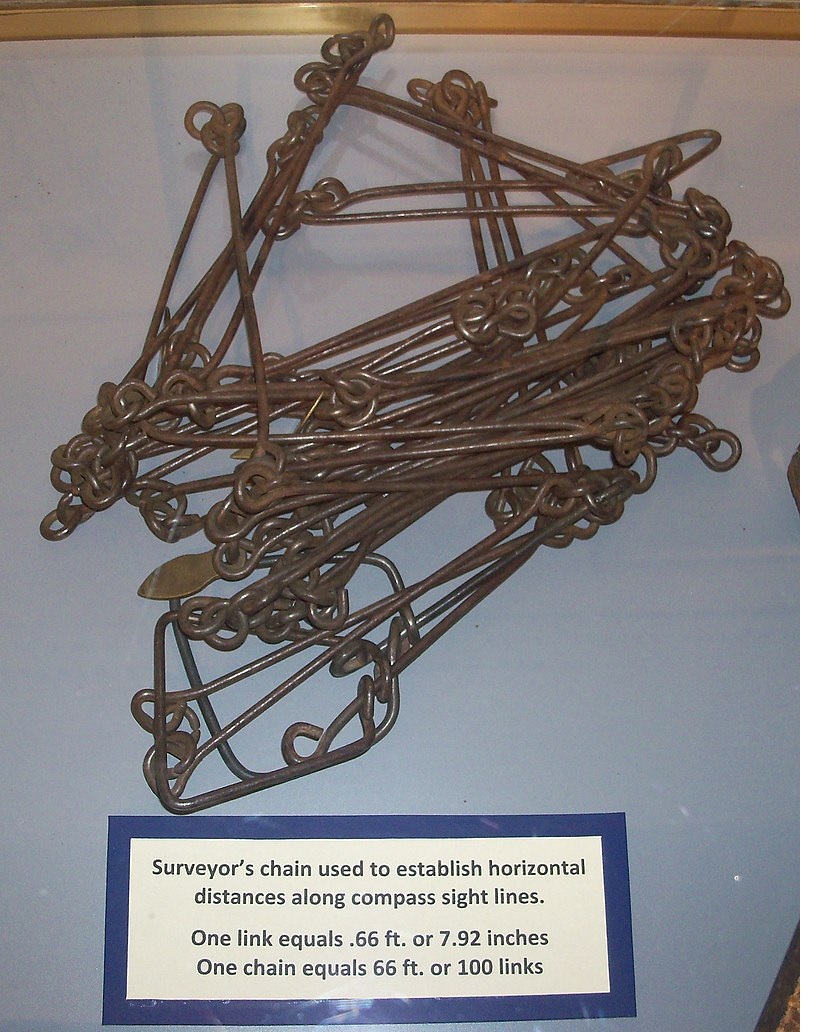



 Renga in Blue
