In the April 1984 edition of Imagine magazine, intended mostly for tabletop gaming, Mike Costello (editor of Wargame News and Warmachine) started a column devoted to home computer gaming.
Many readers will already be familiar with the Adventure games that have been available on nearly all micros from the dawn of microcomputer history (about 1976). These sub-divide into a number of different types. The text-only Adventure is the most widespread, not because it is simpler than the others but because it is easier to rewrite a program of this kind for a variety of machines. The Scott Adams Adventures are the best known, but a number of authors have tried their hand at this type of game. In the UK, the machine-code Adventures by Marc Leduc and Brian Howarth have become well known to TRS-80 users, and the Brian Howarth Adventures are now being rewritten for a number of other machines.
Brian Howarth we’ve now seen quite a few times now (with games like The Arrow of Death and Circus); he’s given enough direct interviews that his history is mostly well-understood. (The exact story behind him switching to using the Scott Adams database format for his games is still messy, but at least we know enough about him for there to be a historical riddle in the first place.) Marc Leduc, mentioned in the same sentence, has not yet had any coverage here at all, and he’s had very little attention from modern writers.
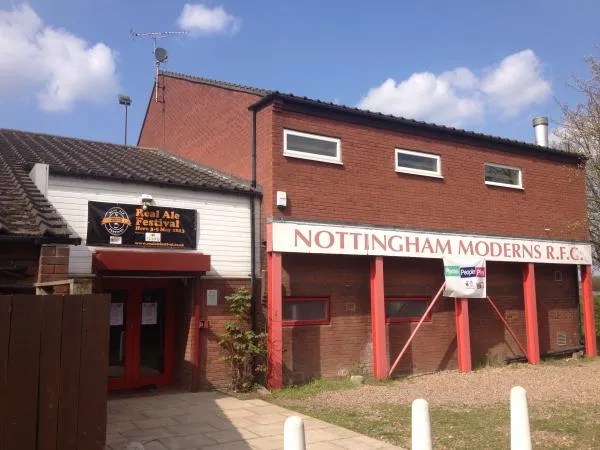
The TRS-80/Genie Users Group of Nottingham was founded in 1980, meetings twice a month at the Wilford Moderns Rugby Club House. They had a club magazine, LPRINT, edited by Geoffrey Hillier.
Marc Leduc was the chairman; what is unusual is he was also the chair of a second group, the National Colour Genie User’s Group. They had their own distinct magazine, Chewing Gum.
THROUGHOUT THIS MONTH’S MAGAZINE, YOU WILL FIND LOTS OF PROGRAMS TO TYPE IN. WE HOPE YOU ENJOY THEM ALL, AND WOULD LIKE TO TAKE THIS OPPORTUNITY TO THANK ALL THE AUTHORS FOR THEIR TIME AND EFFORT.
I’ve gone through before how the Video Genie was a clone from EACA of the TRS-80; in Germany, the Video Genie name established itself well enough that EACA produced a color version. This was made without reference to the Tandy Color Computer. That is, even though the company started with a clone, they used that as a basis to make their own machine. Tandy’s CoCo is a hardware reset of sorts; the Colour Genie is instead more along the lines of “let’s just take a TRS-80 and add color to it”.
It is ultra-rare and mostly only known in Germany (where the Genie name held more stock than Tandy’s for historical reasons I’ve gone into detail about before). However, it did make it over to the UK, where it flopped in sales. Notice how Leduc is chair of a local TRS-80 group but a national Colour Genie group. The Colour Genie group even ended up making their own publishing label, Gumboot.
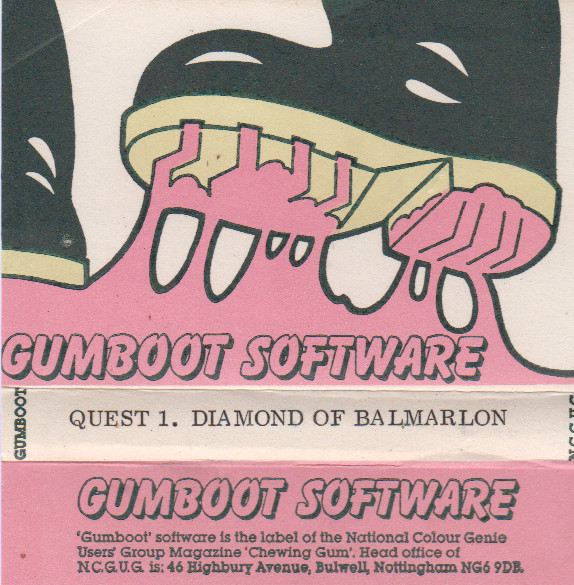
Leduc’s first Color Genie Game, via the Centre for Computing History. We’ll get back to this game in the future.
There’s a recollection from 2021 of the user group via Bernard Telemoid, who might have been the artist? Except there was a second cover from Gumboot used on their games generally, so I’m not sure which is his. Note Telemoid is not positive about Leduc’s games but I’m going to decide about that on my own (…weird to call adventure games in general “Scott Adams rip offs”…).
i used to go to the TRS-80 users group (later became the TRS-80/Video Genie user group, mainly cos my dad had started selling VG’s and he lobbied for the change) with my dad in the early/mid 80’s, held in a rugby club in wilford weekly, loads of great characters and discussions about EEPROM writing, machine language, programming the Z80 and the sublime beauty of the RS-232 interface (still a standard in many high level computing connections) of course i went for the crisps and fizzy drinks and of course the other children of electronics engineers, medical physicists and mathematicians.
It was through this i got my first paid work in the arts, designing awful cassette covers for Marc Leduc’s awful Scott Adams Adventure rip offs like ‘Find The Diamond Of Balmorlan’, i think it was he who showed me that if you press ‘break’ you could view the guts of the program and edit your own narritive into it, so i remixed a shit maze chase game into ‘Death Droid’ and gave it to people at school.
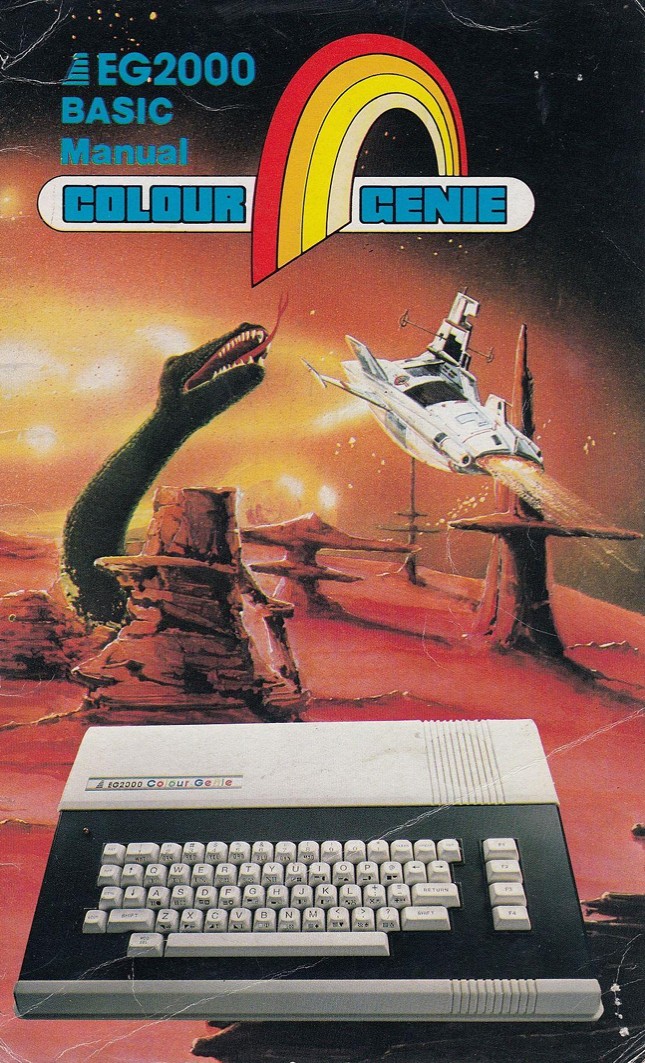
The Nottingham group was so prominent in the English-language Colour Genie space (essentially victory by default) that when EACA wrote a BASIC manual for the Colour Genie, it came with a free tape containing programs from the group.
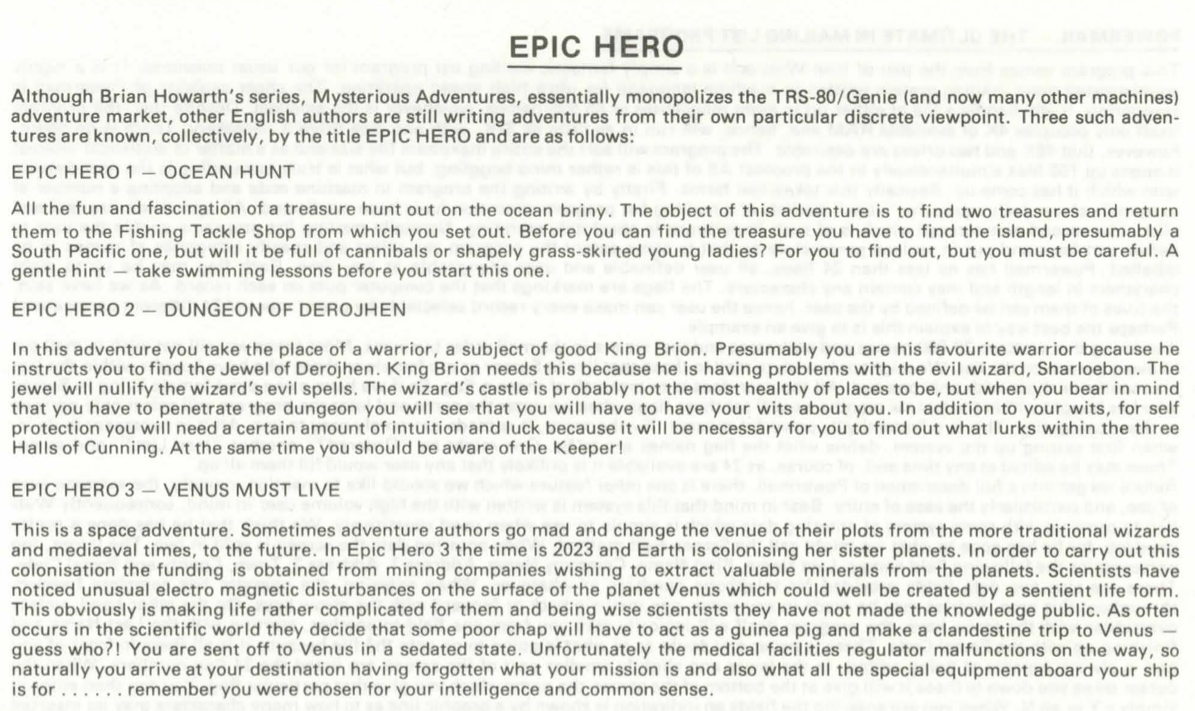
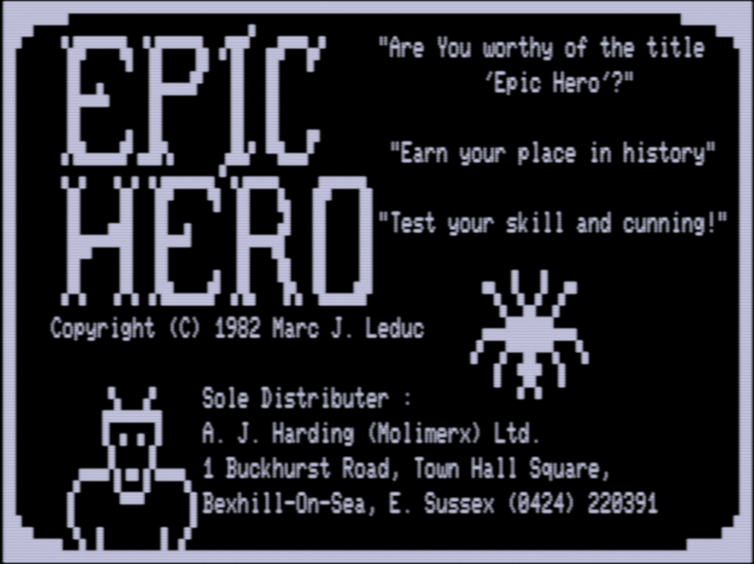
Leduc wrote three games for TRS-80/Genie and then six for Colour Genie. The three for TRS-80 eventually ended up published by Molimerx (prior background here), and Harding’s spiel about the game is in his usual style of “honesty with no attempt at marketing spin whatsoever”.
“Although Brian Howarth’s series, Mysterious Adventures, essentially monopolizes the TRS-80/Genie (and now many other machines) adventure market, other English authors are still writing adventures from their own particular discrete viewpoint.” In other words: I know who my best-selling author is, but have you considered buying an adventure game from a different author?
A December 1982 catalog does not contain the game so it appears to not have been officially published until sometime in 1983, but awkwardly, not only did Leduc finish all three Epic Hero games with a copyright of 1982, he started his new Colour Genie series in 1982 as well. Especially given the role clubs played during this era in distribution (with “libraries” of games for sharing), I think it likely Epic Hero made it out at least to the local Nottingham area before being published; adding on the fact the Colour Genie games ended up more-or-less self-published, is a date of 1982 or 1983 more appropriate? (CASA uses 1983.) I’m listing both in the title but sorting in 1983 for now, but it’s possible some issue of LPRINT will emerge that throws this for a loop (I haven’t been able to find any copies). ADD: This lands in 1982; see the last post in this series.
I don’t have anything detailed yet about Leduc himself, other than based on his dedications to his wife and kids in various games I think it is safe to say he was not one of our 15-year-old prodigies.
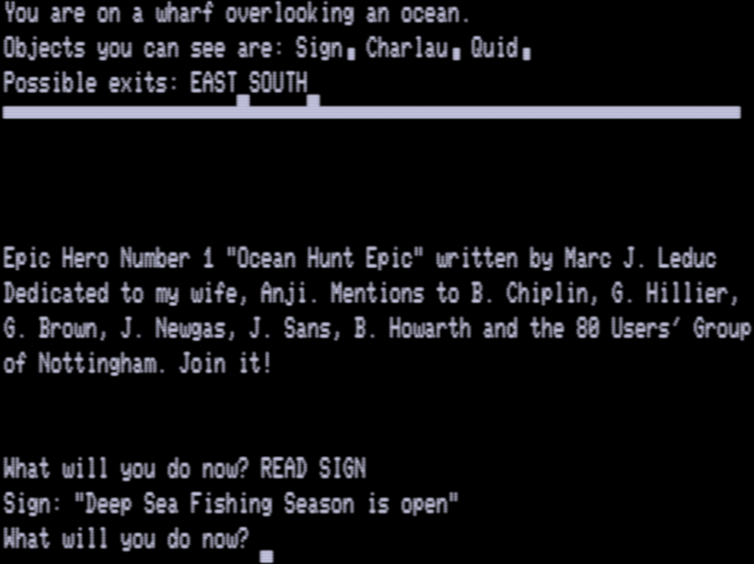
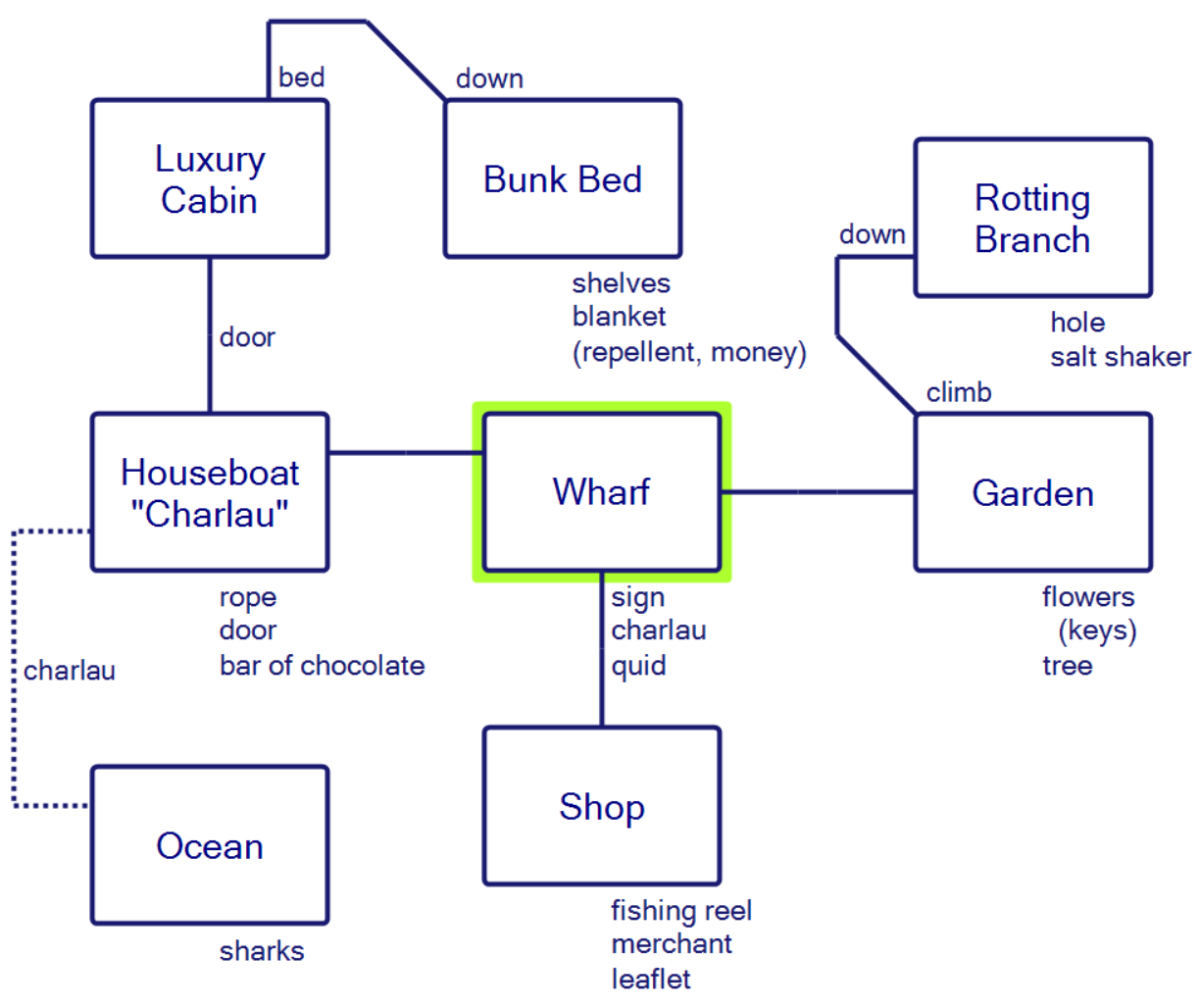
Our goal is to go to the ocean, retrieve two treasures, and come back.
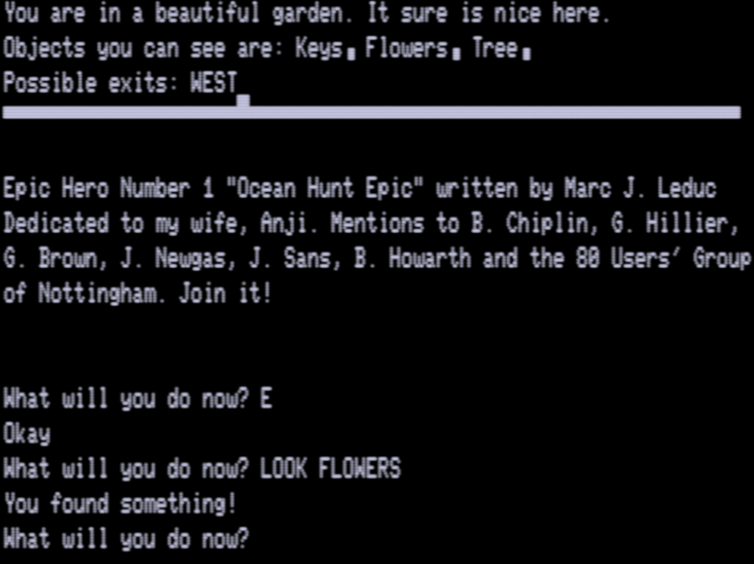
The Charlau I was puzzling over for a while as it is just described as a “beaut” but it is actually the name of a houseboat. Let’s stick with land first, by going east:
There are flowers hiding keys (your keys, I presume, since they go to the boat you end up heading to the ocean on). You can also climb the tree to find a rotten hole with a salt shaker.
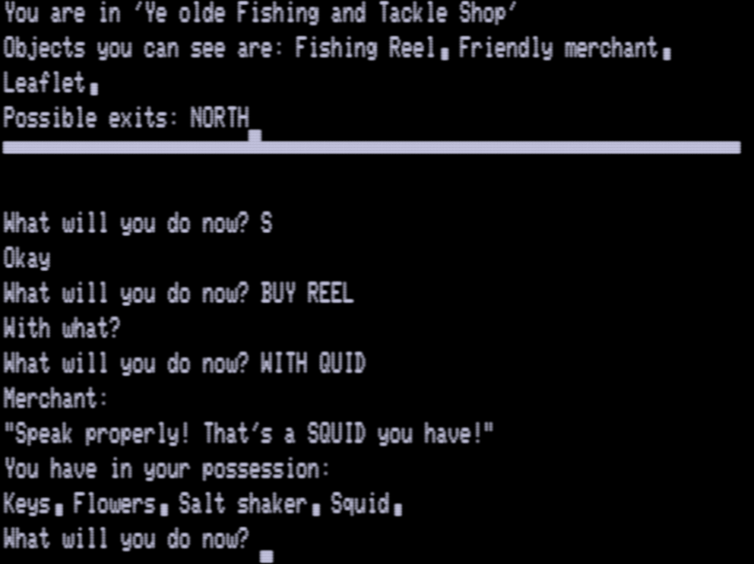
From the wharf, picking up the quid and instead going south:
That’s not a quid, that’s a squid. Hilarious. (It likely borrowed this moment from Mystery Fun House with the “five dollar bill” but without the existential confusion of now carrying what I assume is a large squid.)
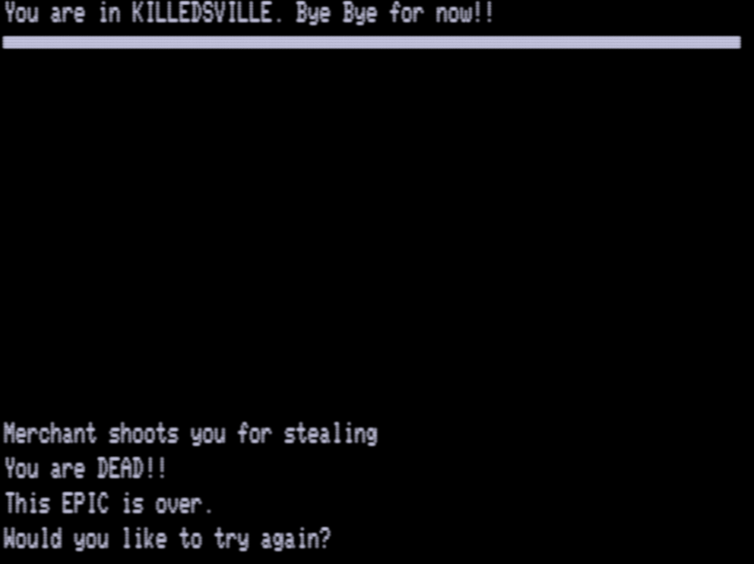
The leaflet just hints “Look closely at Kikimawa Island” which I haven’t gotten to yet; you can try to just take the reel but the merchant just shoots you. (Similar to The Golden Voyage, if we’re staying with the Scott Adams references.)
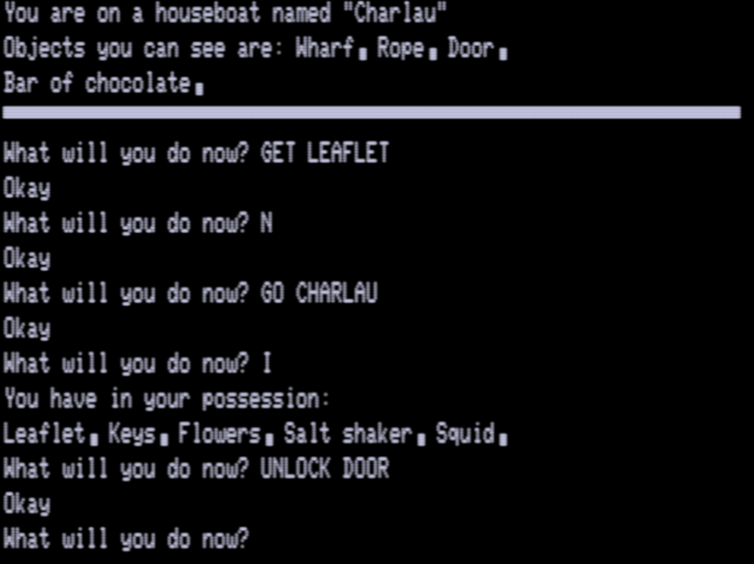
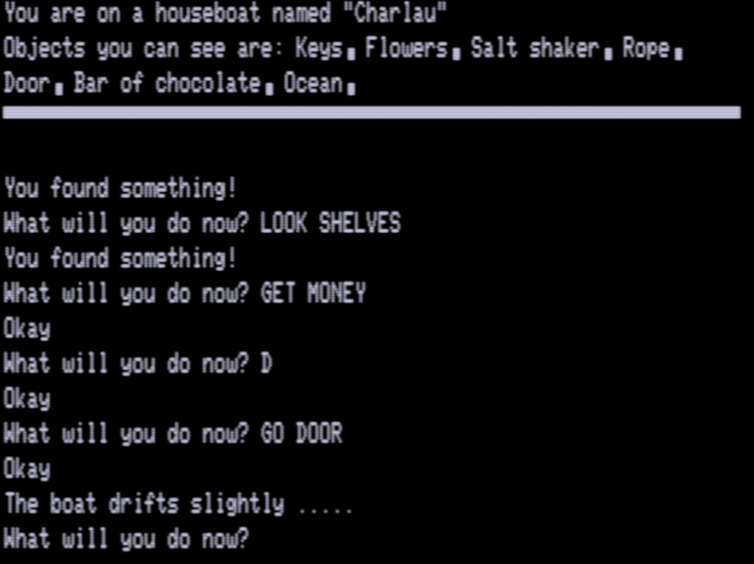
Hopping onto the boat, there’s a rope and a bar of chocolate (you can eat the chocolate, and the game says it is delicious, but with no further effect; I don’t know if this is a red herring style game yet or if everything is important). The door unlocks with the keys from the flowers.
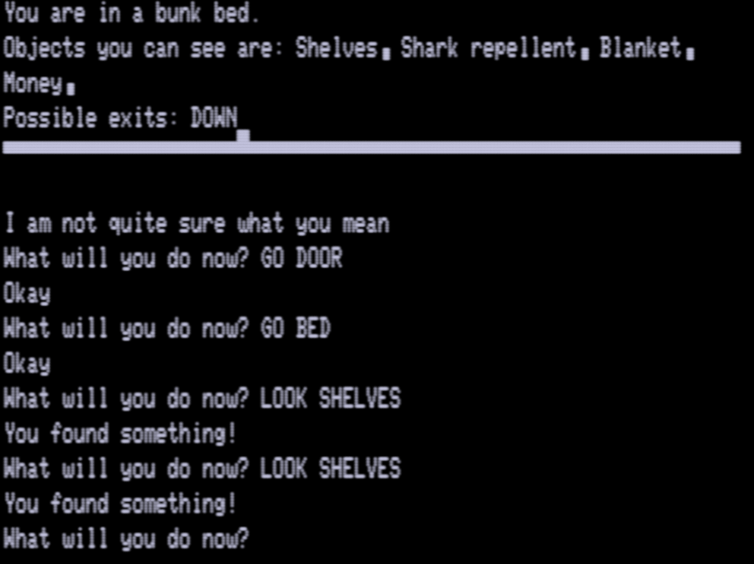
Inside you can climb up to a bed and find shelves with some shark repellent and some money (as long as you LOOK SHELVES more than once, but that’s pretty standard for this era).
After going inside (and only after going inside, this is essentially an event-based trigger rather than a time-based one) you find that the boat has now moved and you’re in the open ocean.
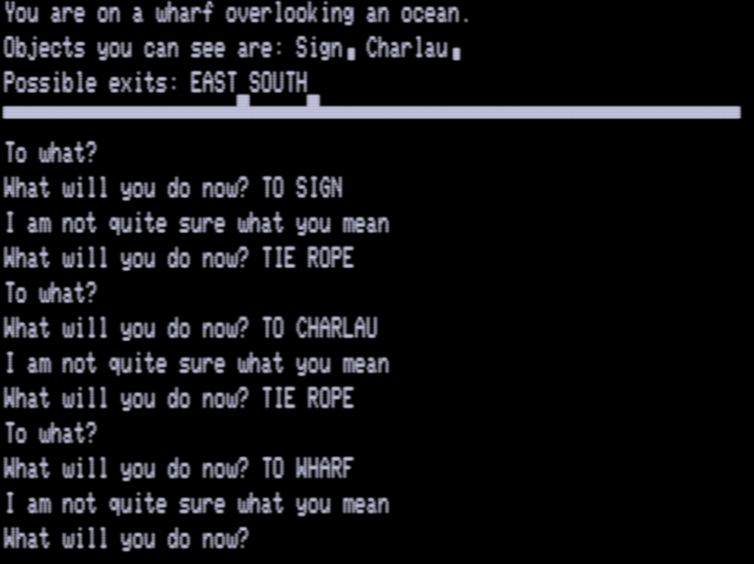
I would assume the rope could be used to tie the boat to the wharf, but I’ve tried TIE ROPE / WITH NOUN on every feasible noun both on the boat and on the wharf. I’m not sure what’s going on. The money presumably should be used to buy the reel before we take off for the ocean.
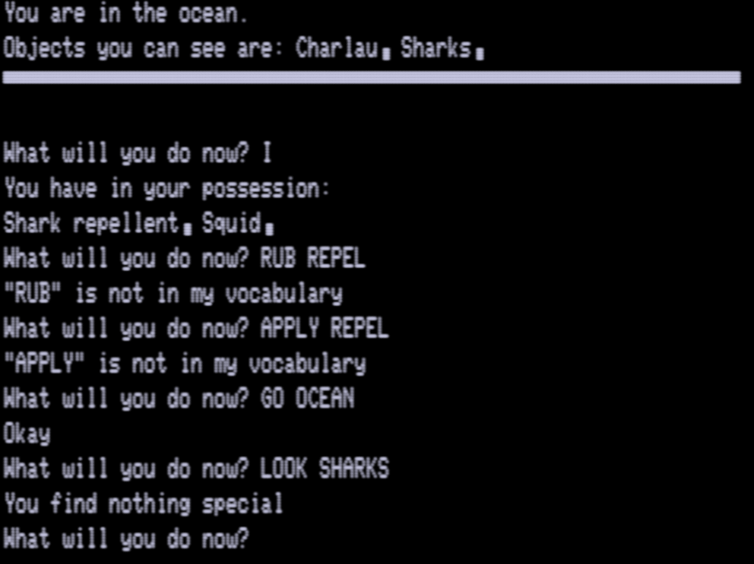
Even with the path being “wrong” we can still do a little preview of what it is like jumping into the ocean. It’s fine as long as you are holding the “shark repellent”, and I’m not sure what to visualize that as.
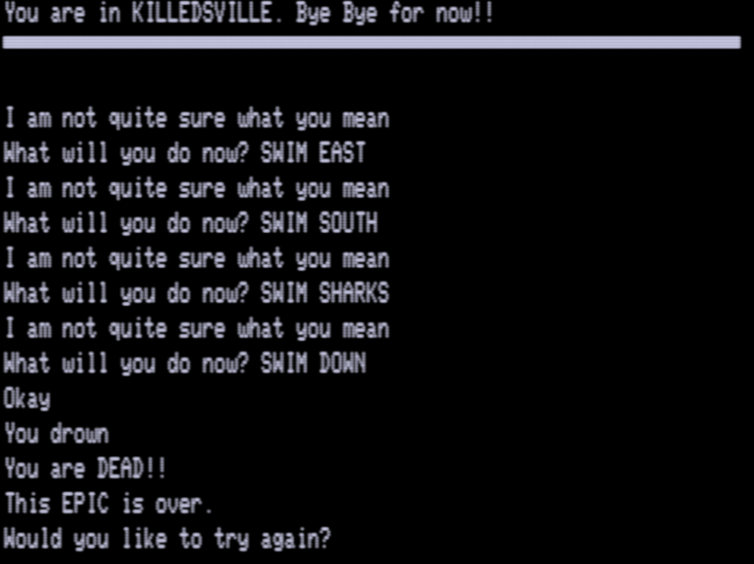
The only way (seemingly) to go is down, or more specifically SWIM DOWN, but that just causes drowning.
I think I need pull out the bigger guns on this parser to make any progress. If all else fails, there is a walkthrough, but this is the only Leduc game out of his nine that has one, so it’s better for me to try to figure out his mindset as much as possible now while I still have a fallback. Everything is in machine code so I can’t just expect to prod at BASIC source code on his later games.
I was missing one reasonably simple (but still hard to find) action in order to escape with the Bluestone; I did try the next part of the game but it didn’t go well.
Just as a reminder, I had found a key, the bluestone, a gun, and a memo, and I was now looking for a way out of the base on the planet of Ariosferia. I received the verbs USE, TAKE, SHOOT, and PUSH from pressing the HELP key.
Kazuma Satou informed me in the comments that I had missed a feature; if you are being prompted for a noun, you can hit HELP in order to get them listed by the game. Hence you don’t have the guess that the GUN is a GUN (assuming you’ve understood this aspect from the instructions).
I went around every surface of the game trying to apply USE, SHOOT, and PUSH in order to see if I could get some kind of reaction. It turns out the end-hallway figures are very different.
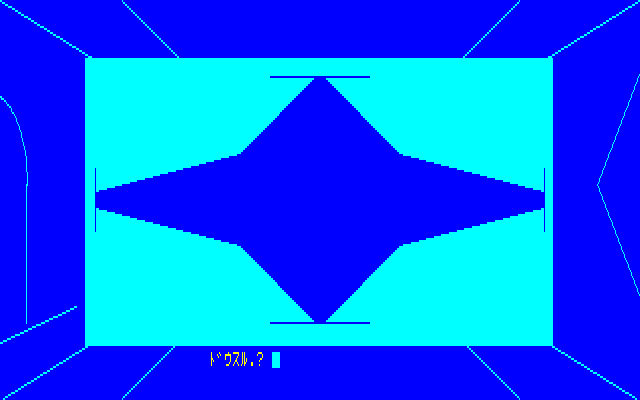
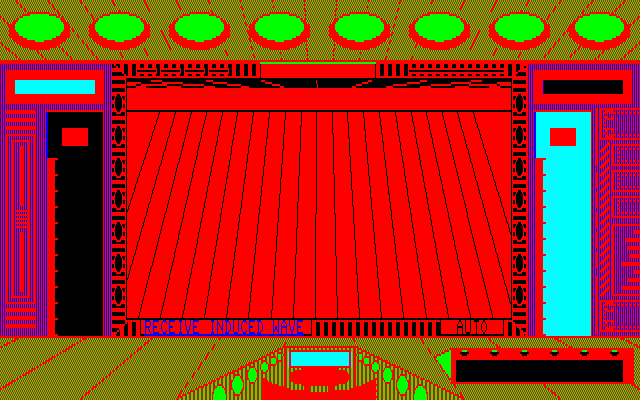
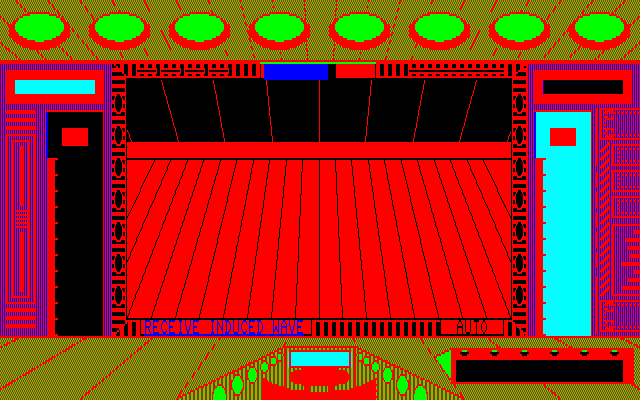
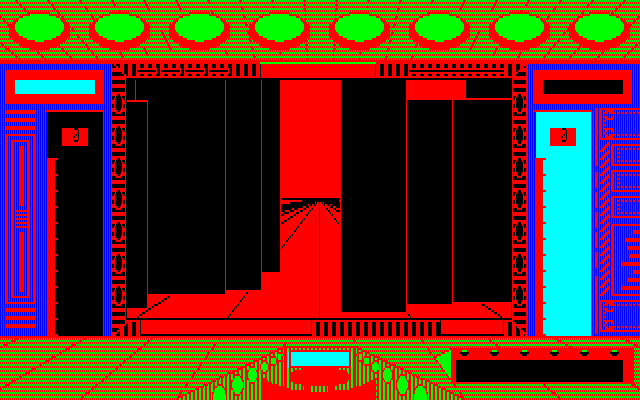
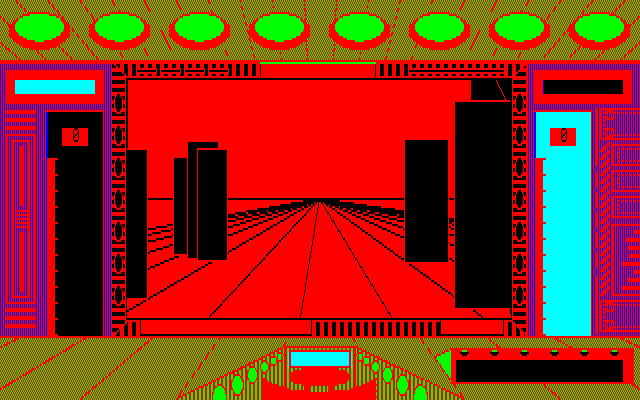
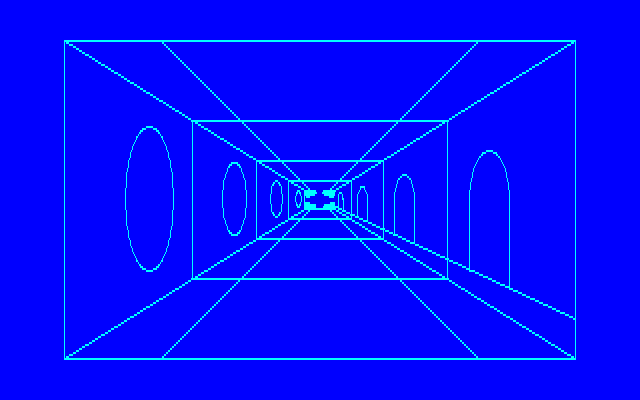
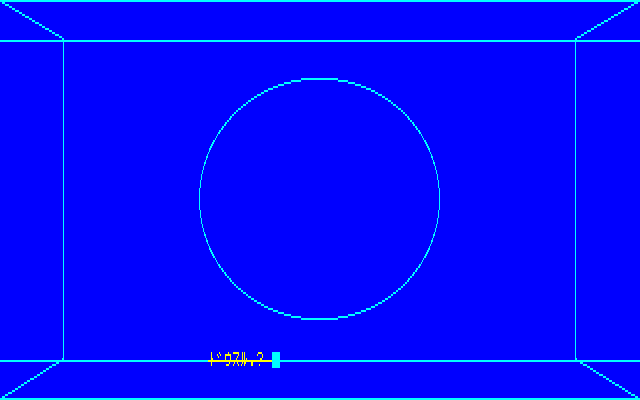
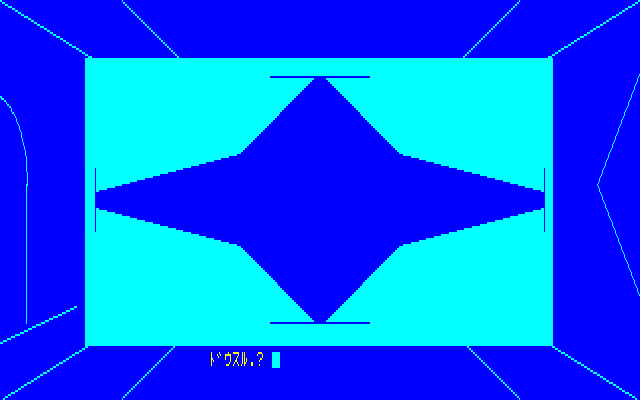
This is the end of the hallway on the left.
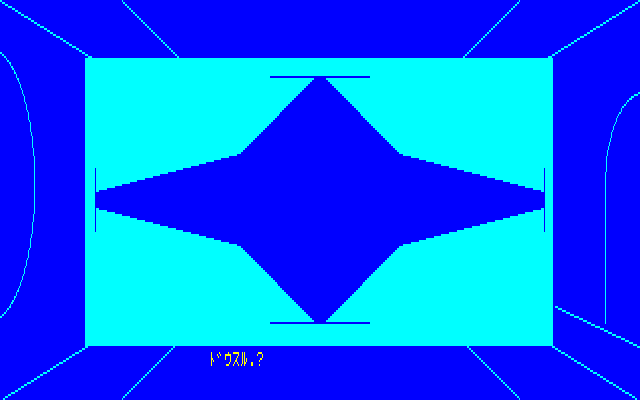
This is the similar-looking end of the hallway to the right.
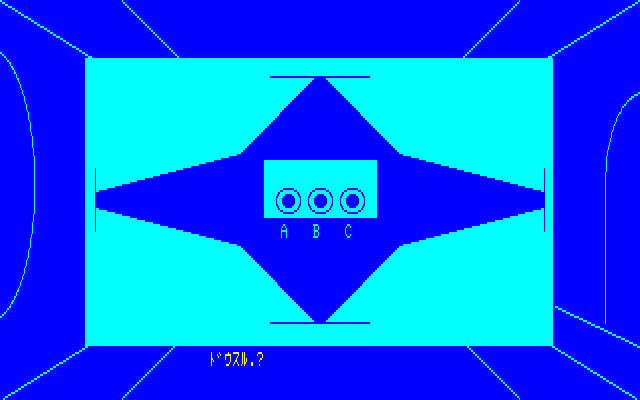
If I tried USE on the right side (and only the right side) the game was asking me for a noun. I went through my held items and found that using the KEY then went back to asking me for a verb again, and I was very confused since it didn’t seem like anything happened, and in fact the game is prompting you for your next turn a specific action, and if you don’t that it resets the variable (that is, you go back to needing to USE KEY again). If you type OPEN right after using the key you reveal hidden switches.
This is an entirely random choice, and there’s no save feature to the game, so after struggling through the combat and going through the sluggish adventure session you now have a one-third chance of just dying. Good luck!
(For me the correct switch was SWITCHA.)
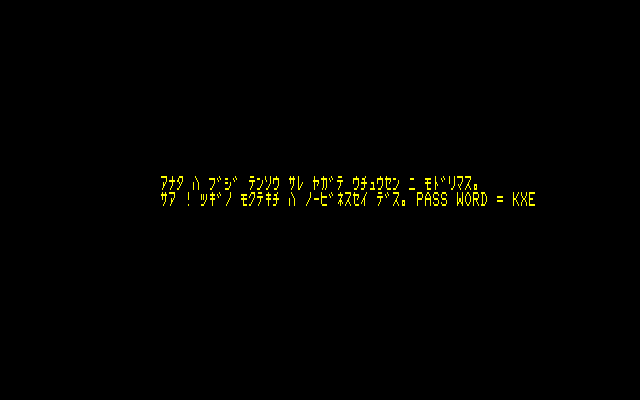
(Immediately after this scene, the game does a LOAD”CAS:” to open the next part of the game. You can theoretically LOAD”CAS:” twice from the start to jump to part 2; only not knowing the password is stopping you.)
We’ve been teleported back to the ship and are ready to go onto the next phase. Unfortunately, the ships are just as irritating and deadly as before. (At least not invisible; the comment in the Oh! MZ guide said something about this but it meant that their movement is invisible; that is, you don’t see sprites smoothly changing places but rather “jumping” between points like an old LCD handheld game.)
Reader, I tried. I tried for far longer than I really ought to have. I tried using Antimicro to map my gamepad to the right keys; while this made playing a little more comfortable, but it didn’t change the fact that the laser movement is outrageously slow compared to how quickly you get destroyed, and this level has the downside of it not being as obvious which planet you’re aiming at (you’re going for something red … I think).
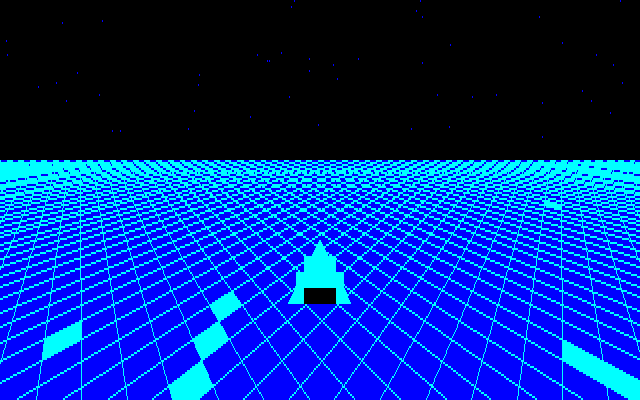
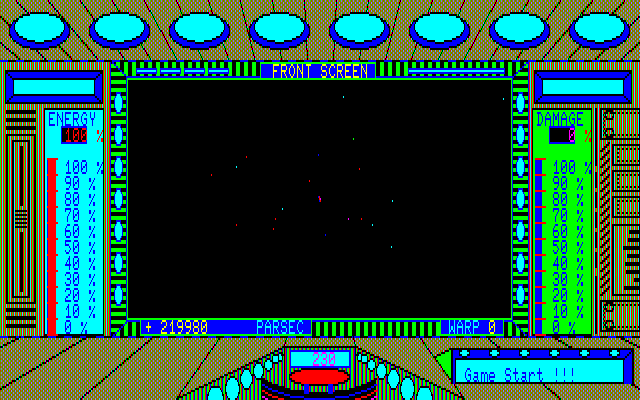
Mid-warp.
Attacked. This enemy is in a good spot, but that’s no guarantee for the next five enemies.
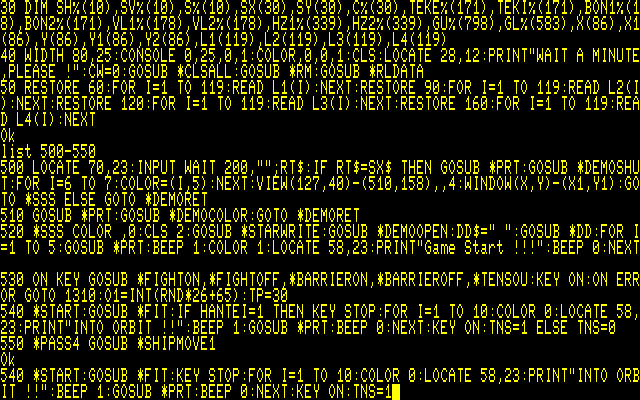
It was time to resort again to hacking.
This is me typing in a replacement line. Compare it with the original two lines up.
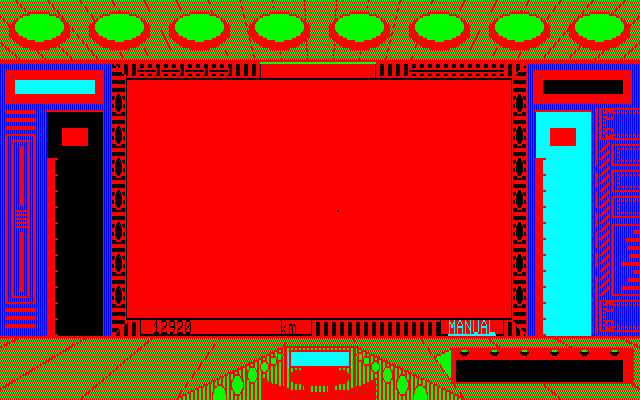
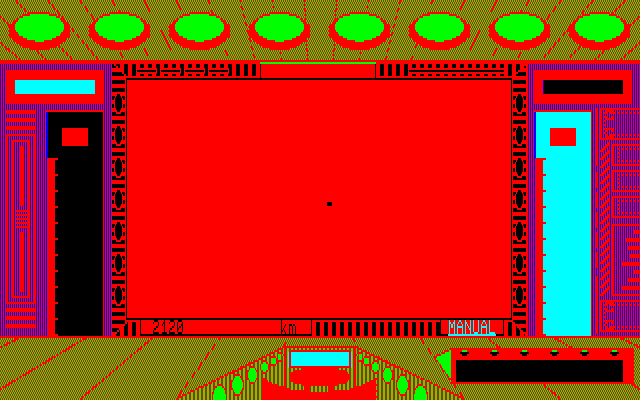
After the game had a moment of confusion it brought me INTO ORBIT, closed the spaceship window, and opened it again on a red environment with a dot in the background. I could use warp to get closer and aim but without any enemies around.
The dot was constantly moving to the right so I kept having to adjust my center aiming every few steps of warp.
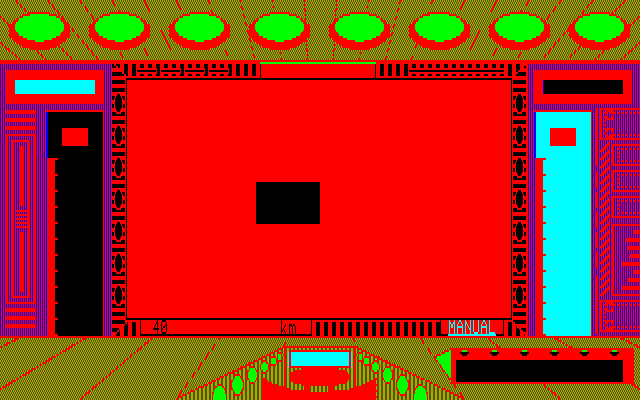
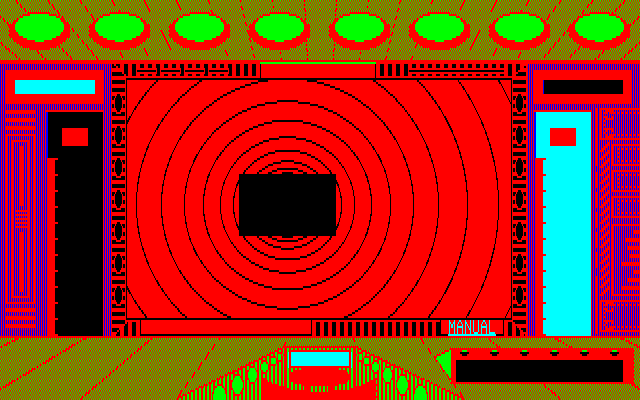
The controller for the planet launcher is supposed to be a black rectangle.
Once I reached the screen above (and pressed F5, although I am unclear if I needed to do that), a very very long cutscene started. It is long in that it is being drawn on a PC-88 and I found in the end weirdly magnificent and impressive. I would probably not find it so impressive if I died in the scene after and had to redo the entire thing.
I’m showing far more screenshots than usual. Keep in mind each frame lasts about two seconds, and I’ve still cut many of the in-between frames.
And then…
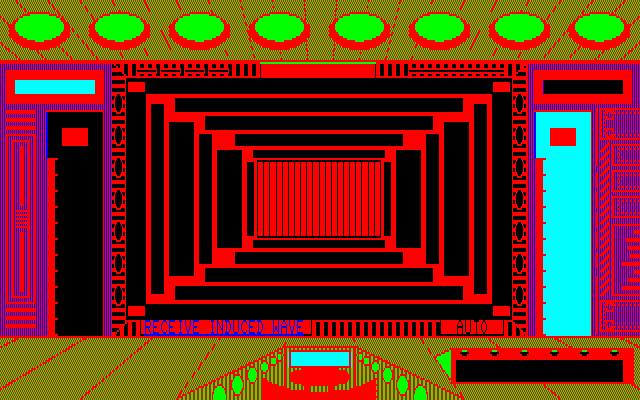
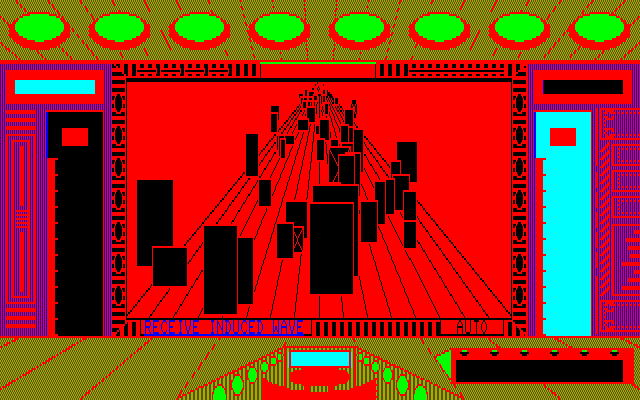
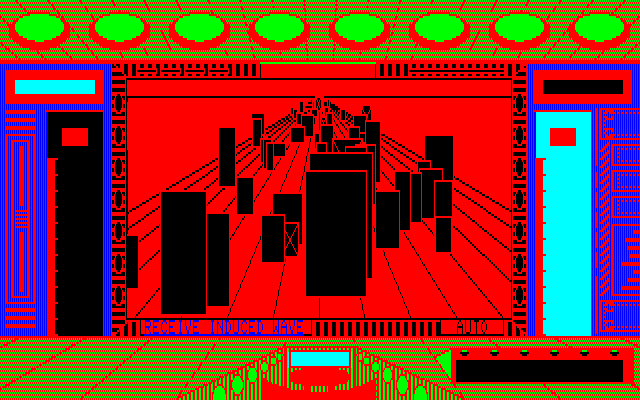
…a sea of monoliths. You now can control movement, using up/down/left/right, with it being agonizingly slow as a bar fills at each step.
Midway filling a “charge” that will turn us a step to the left.
Pressing F1 will show either an arrow left, arrow right, or double-arrow (which I think indicates “you’re pointed the right way”). The problem is you need to navigate the monoliths without hitting things.
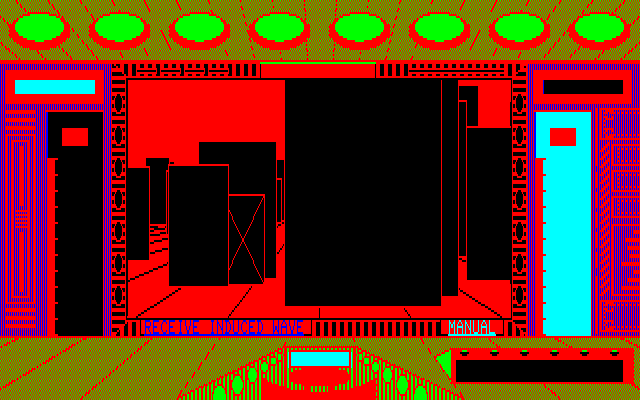
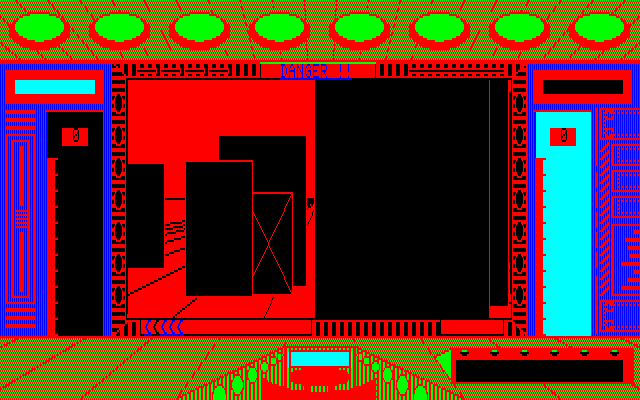
My spaceship being destroyed because it collided with one of the monoliths.
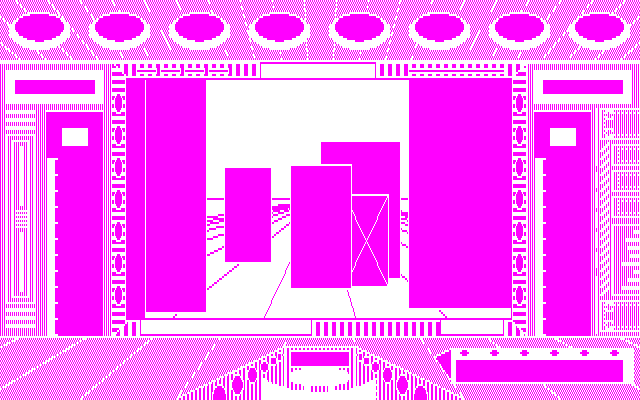
I found this section terribly confusing as it doesn’t appear like the things you hit are the monoliths? Or at least you can sometimes steer towards what appears to be an empty path, move forward, and crash.
Moving forward here crashes into apparently nothing.
The goal, according to the manual, is to find a series of six rectangles that you shoot with the Revival Ray (powered by the Bluestone) and you’ll be able to escape. Oddly enough, it appears to be impossible to crash moving backwards, so the way to position yourself is to slide far to the right (past whatever hitboxes the game thinks are there, visible and invisible) and slide forward the right amount, then slide back into place. At least I think this is the strategy, as I haven’t found a single one of the rectangles, and this is with occasionally hitting the “speedup” key to keep the sluggish movement from being so sluggish.
I’m far past adventure territory so I can consider this one done. The cinematic ambition is impressive and I found the imagination of both “act 2” sections I experienced to be exciting, just janky and undercooked for BASIC source code on an ancient system. The “ship docking” section with giant monoliths made me think the author was trying to make cinema more than a game. Not only thinking of 2001 here, but the long special effect sections of Star Trek: The Motion Picture.
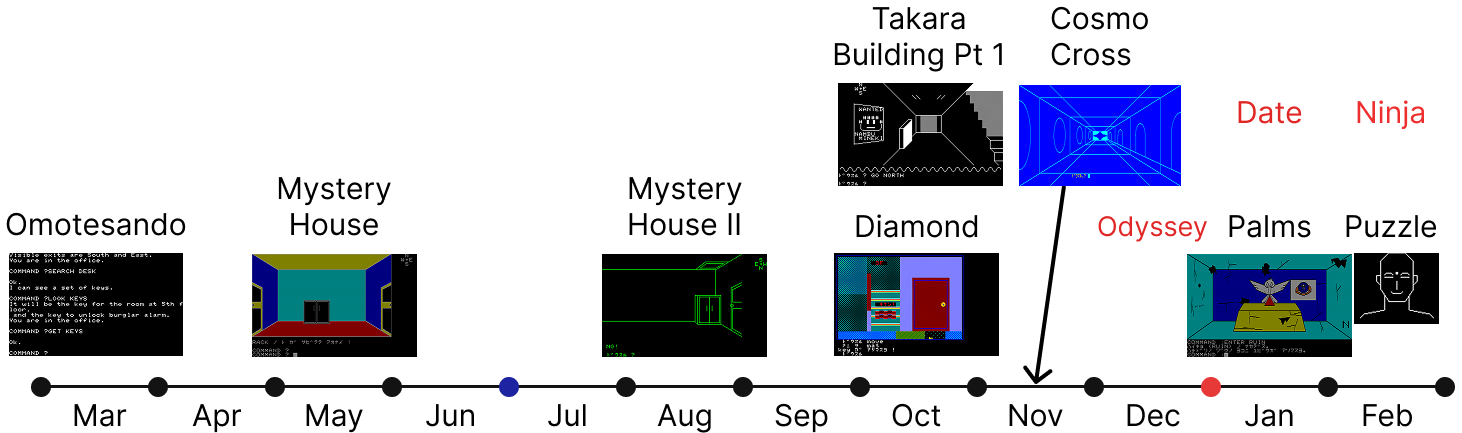
On my timeline of early Japanese adventure games, this technically lands somewhere in November of 1982, as the earliest ad that Rob found was in December of 1982.
Given the by-hand local distribution early in Osaka, I’m inclined to think that month might bump back a little, after Mystery House II but before Diamond Adventure. However, other games (like Diamond Adventure) may have ended up in displays in local computer stores early as well, so for consistency I’ll place in November against the ones we’ve played:
Xtal will return with more adventures, so if nothing else, this gives a preview of what their kind of thinking might lead to. There’s even a sequel to Cosmo Cross by the name of Grand Cross, sorted as “ADV/RPG” although I’ll worry about what sort of genre it really falls into once I get past 1983.
I’ve made progress on but haven’t yet finished the ADV part of Cosmo Cross; while I suspect the section is short, I made it through enough content to report in.
To continue from last time, I had found some difficulty beating the space combat portion that starts Cosmo Cross, so used the raw power of editing the BASIC code to jump to the part most relevant to this blog, the adventure. Once reaching orbit you activate a signal device and get a text message about getting teleported to Ariosferia.
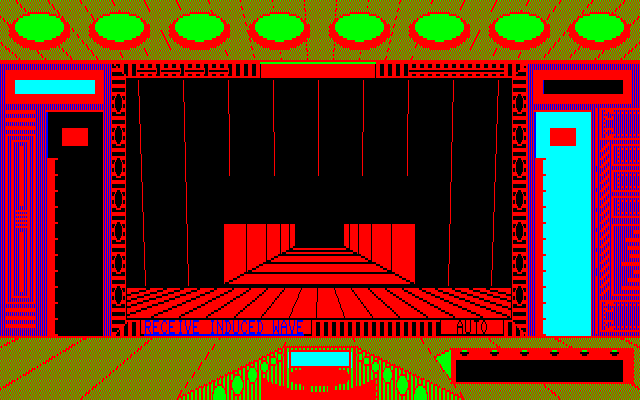
Soon you will see the surface of the planet, and arrive at the entrance to the base at its center.
The instructions also warn “you must never look behind you.” You’ll see what’s going on with that shortly.
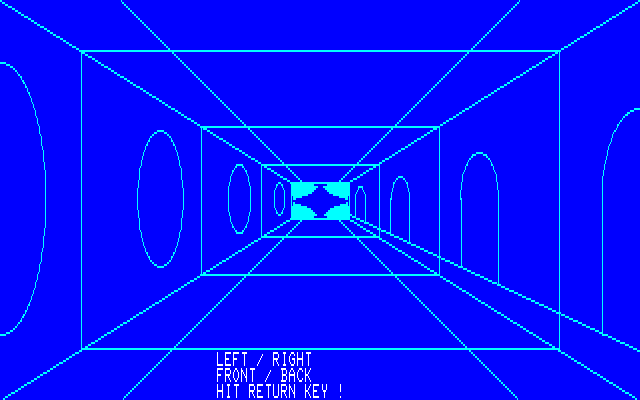
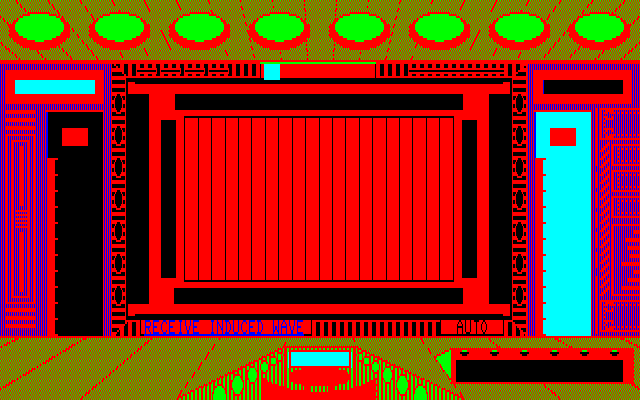
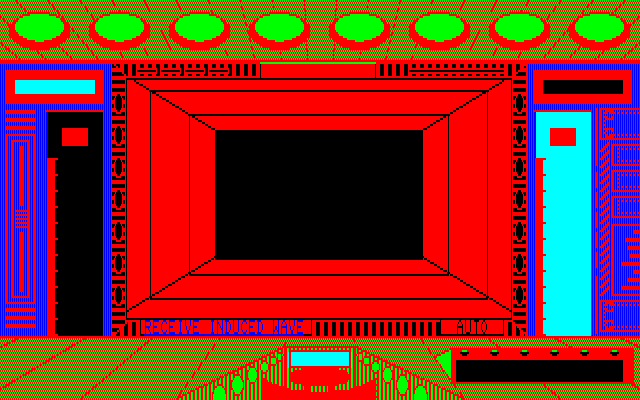
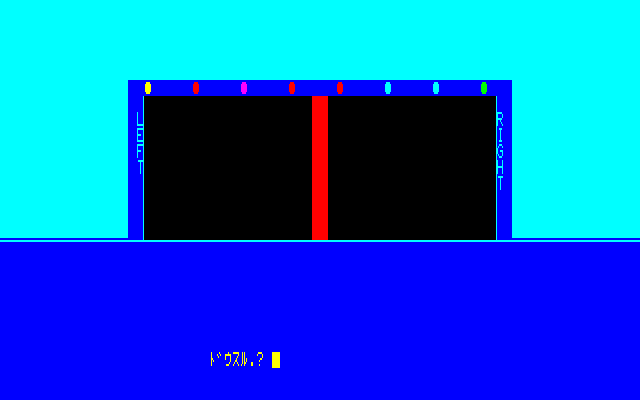
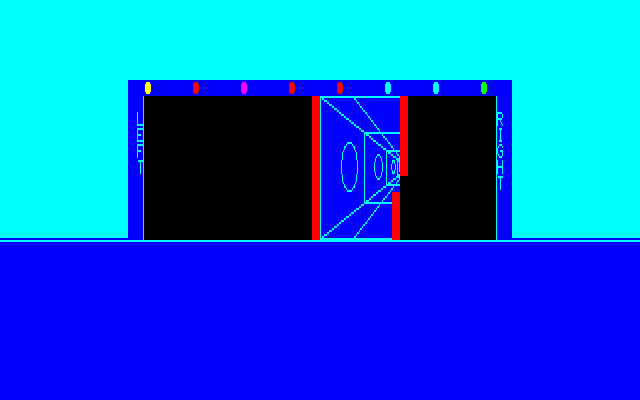
The parser is the kind (like original Mystery House) that asks verb and noun to be typed on separate lines; confusingly, sometimes a modifier is also requested. Here, you need TO OPEN / DOOR / LEFT or OPEN / DOOR / RIGHT. This will cause an animation showing one side or the other opening, and then GO / FRONT (not FORWARD or the like) will advance inside.
The left and right side consist of a series of four doors, and a series of four … windows? decorations? On the shot above when facing one of the windows I haven’t been able to do anything. After TURN / LEFT:
The game gives a full list of verbs if you press the HELP button on the keyboard. Other than OPEN, GO, and TURN which we’ve already used, there’s USE, TAKE, SHOOT, and PUSH. Helpfully, if you type one of these verbs and it doesn’t apply, the game will just prompt you for a verb again; at the “window” or whatever that is, I tried all four, indicating either some other condition needs to hold or they really are just decoration.
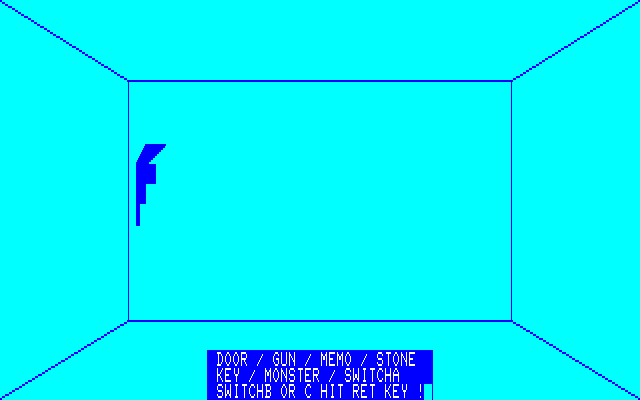
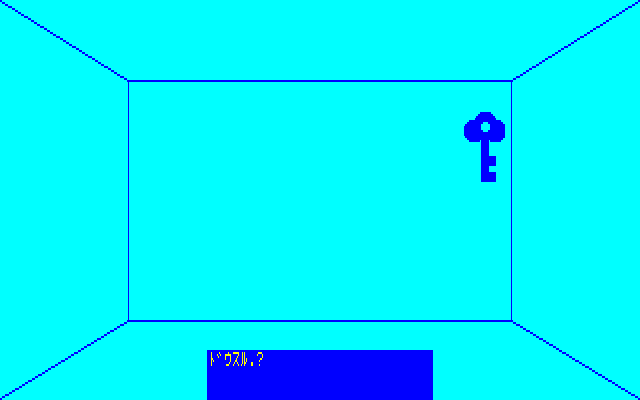
Opposite the symbols are doors leading to single rooms. Some are empty, some have items. The big issue has been identifying what the items are. While this one is clearly a KEY…
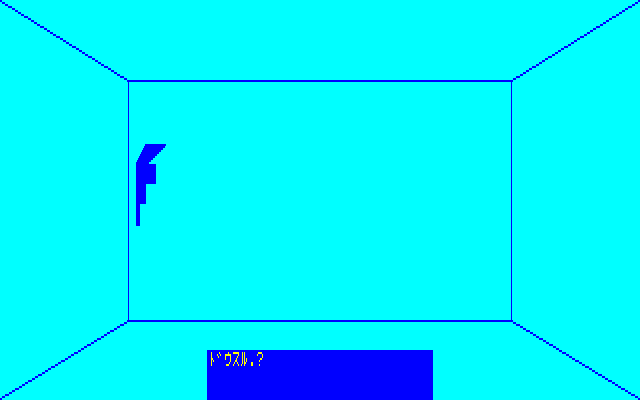
…what about this item?
After some squinting and thinking about the word SHOOT on the verb list, I decided (correctly) it was a GUN.
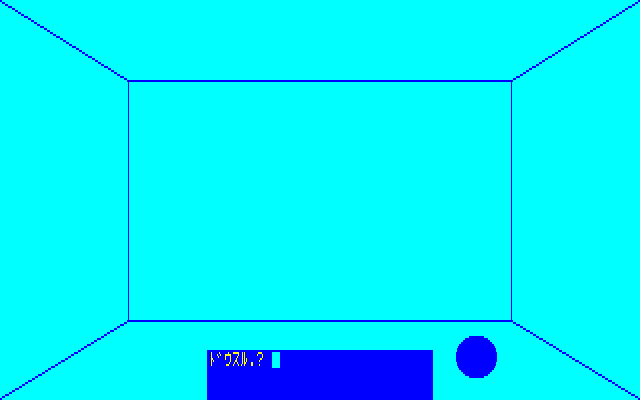
It was a bit harder for me to realize with the screen above I was dealing with the STONE (that is, the Bluestone we’ve been trying to find).
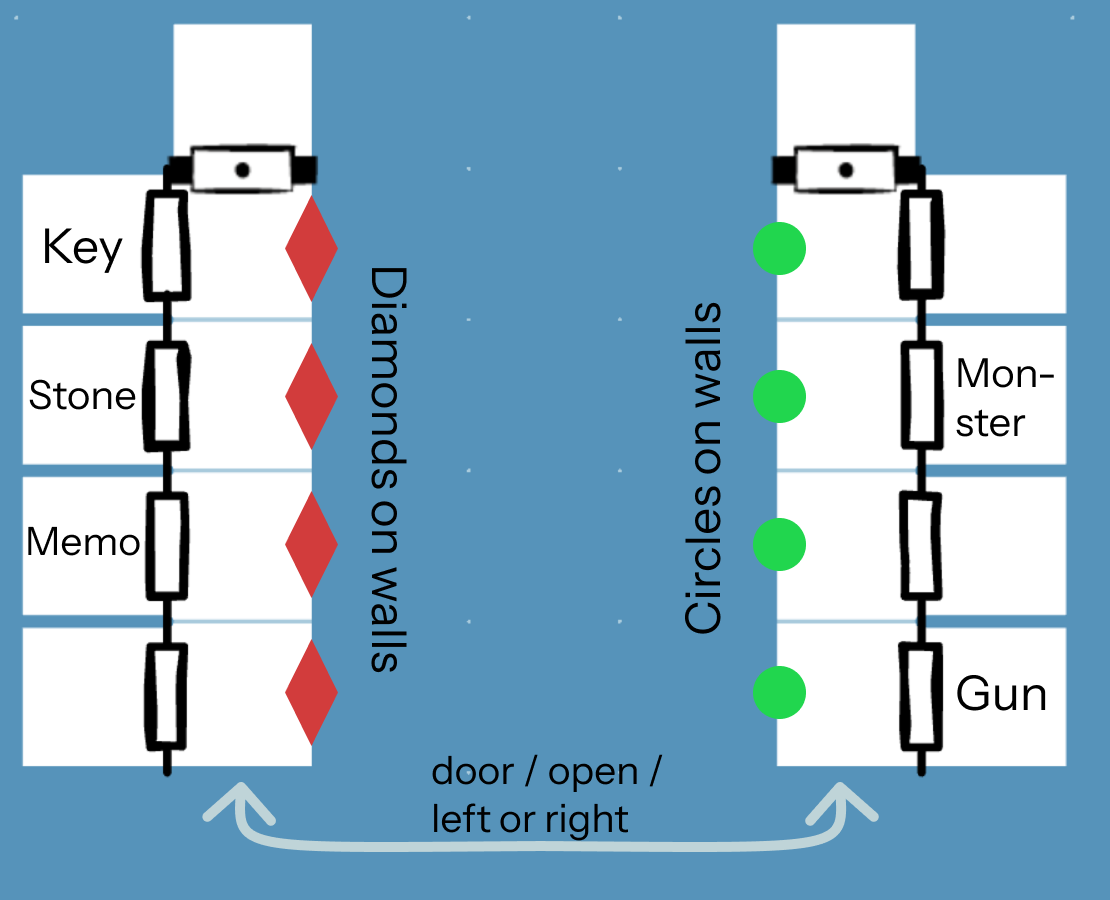
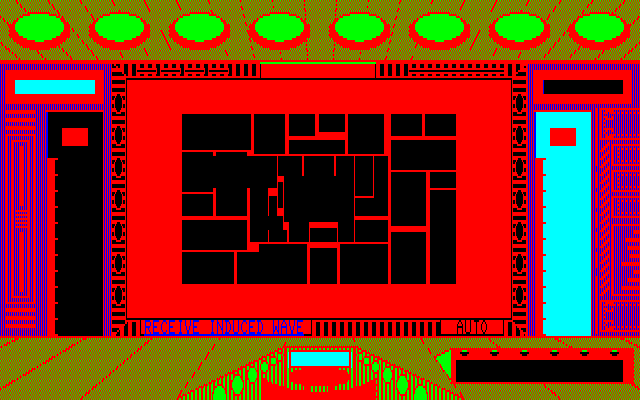
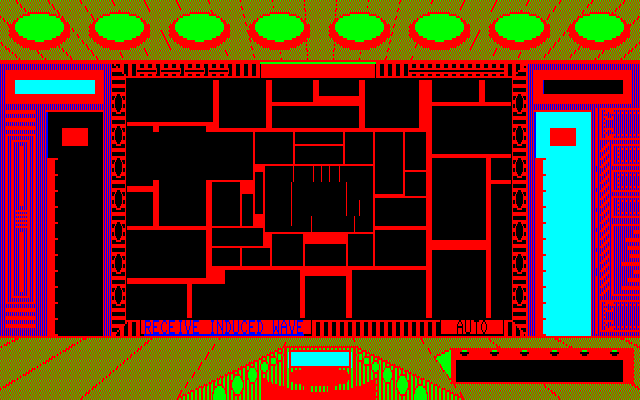
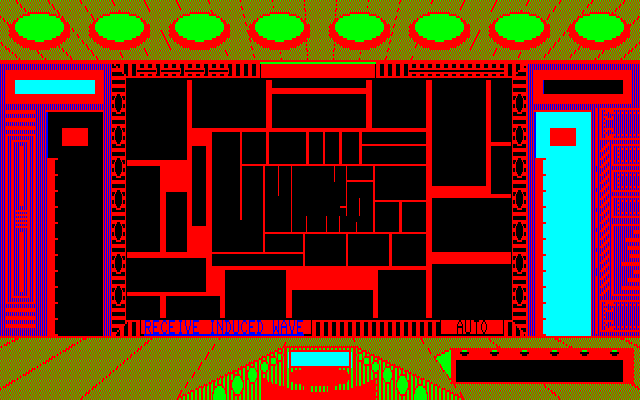
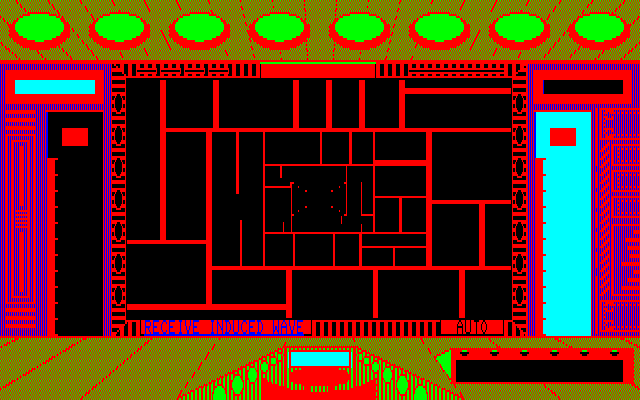
Here is the complete map of the two sections (at least in my playthrough – I’m fairly sure everything seen can shift around):
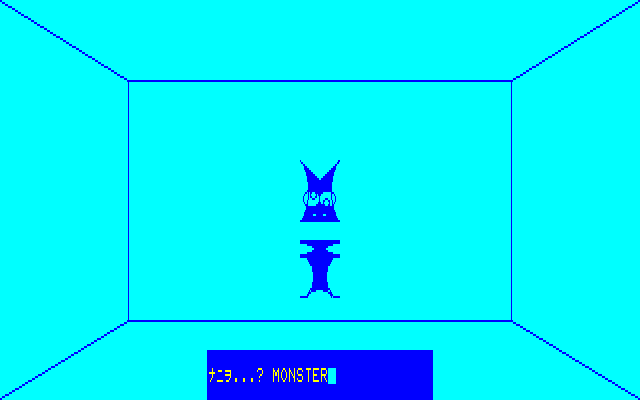
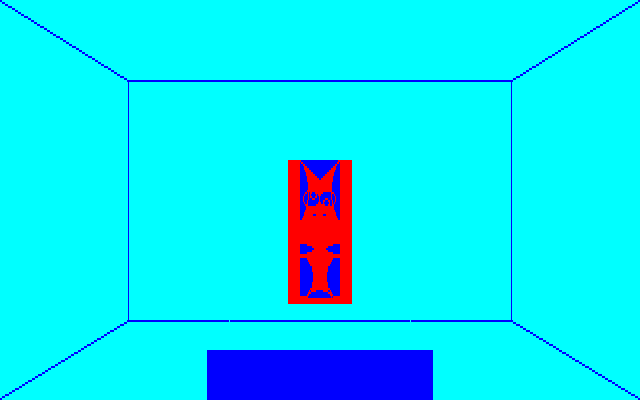
The “monster” is the one oddity; a creature moves around when you walk in, and it took a lot of noun-hunting before I decided to SHOOT / MONSTER. There doesn’t seem to be any positive effect. I may be in a situation like the squid in The Palms where the encounter is “optional”.
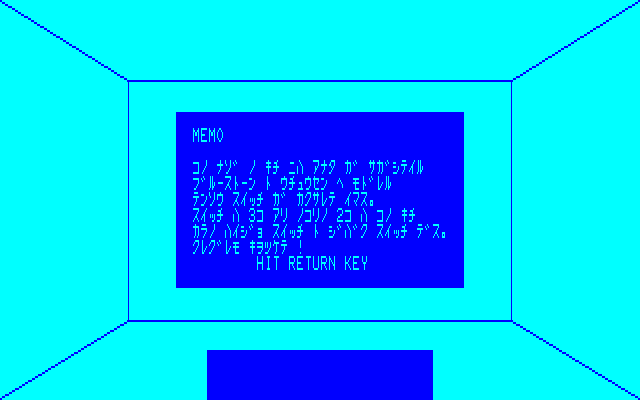
One room has a rectangle where the only reason I could come up with MEMO was the suspicion the author had played Mystery House 2. Taking the memo reads it automatically.
The memo indicates the Bluestone and the teleport switch to return to the spaceship are both hidden, and that there are three switches, including a “self-destruct” switch.
Two more details: the end of each hall has a figure which may or may not be passable. Via testing verbs I found the game was wanting USE, yet none of my items — and I apparently had all of them available — did anything useful.
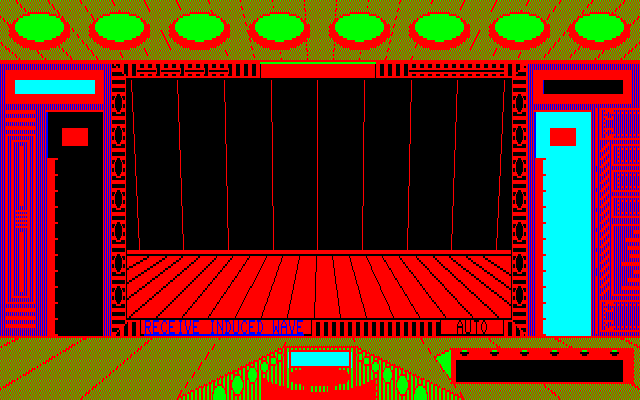
Finally, there’s the ominous “don’t turn around” message. If you turn to face “south” on my map you will outright die. This might have been a dodge to get out of drawing the opening room, but it’s a wonderfully atmospheric way to do it. I always felt a small bit of pressure while walking around even though this isn’t an intense/time based area like the first section of the game was.
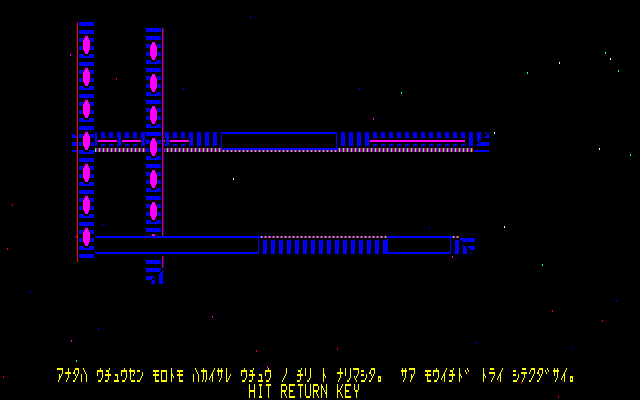
Sent to another dimension!
My guess is at least one of the “windows” or whatever those are have some extra secrets, so I need to laboriously test each one; the game tries to animate movement as much as it can so every step is sluggish. I still expect an escape with the Bluestone next time, and I’ll at least try the later sections; no promises I’ll get that far, though.
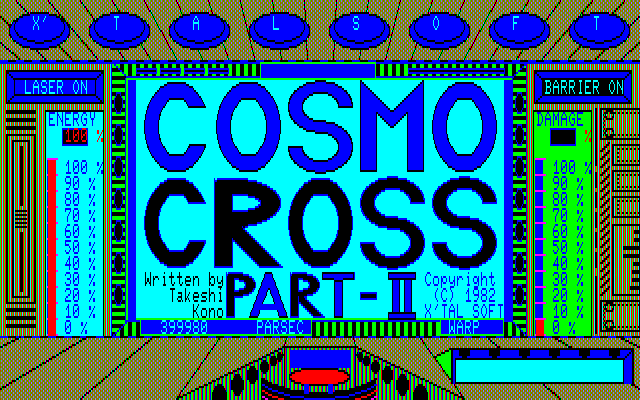
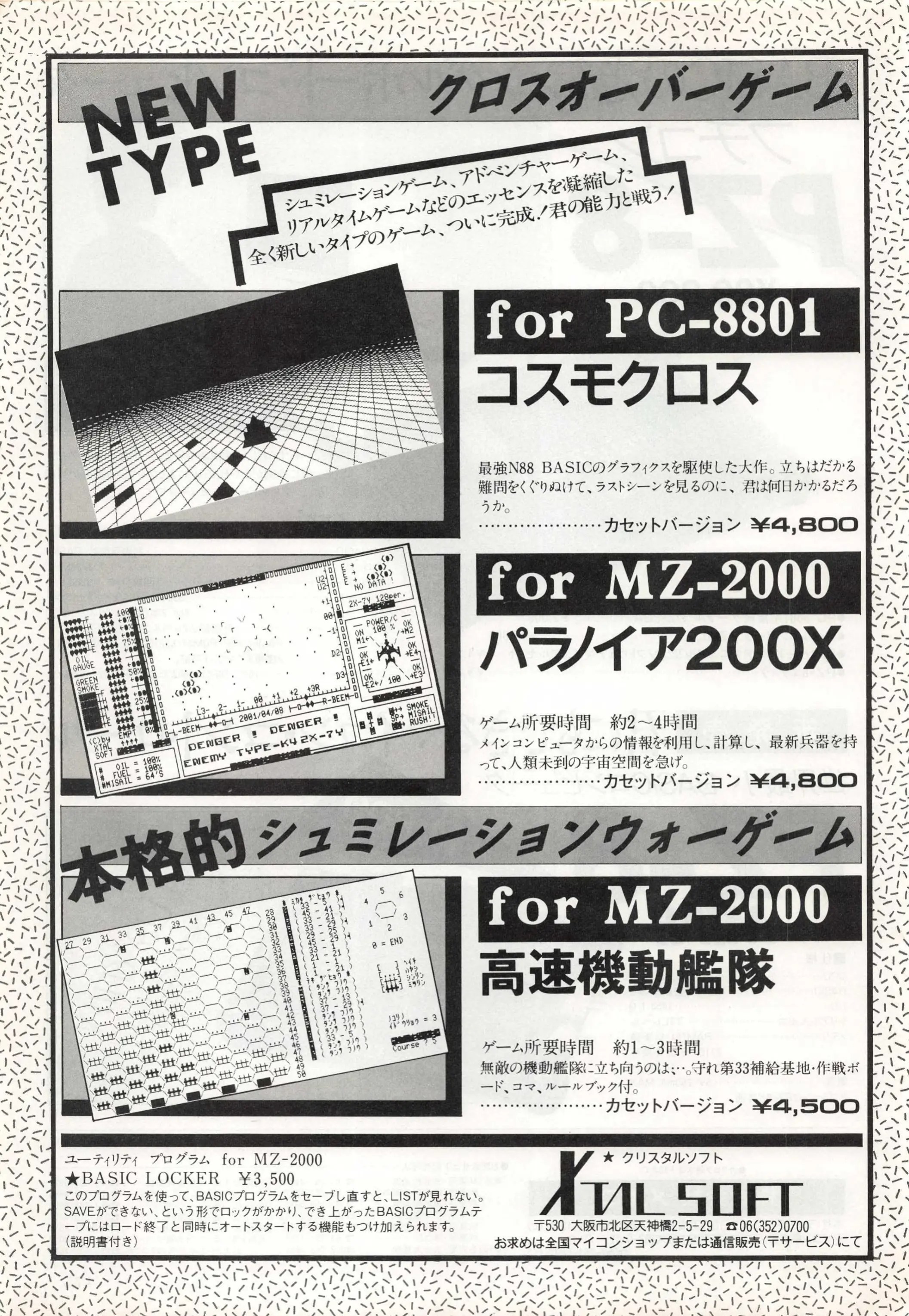
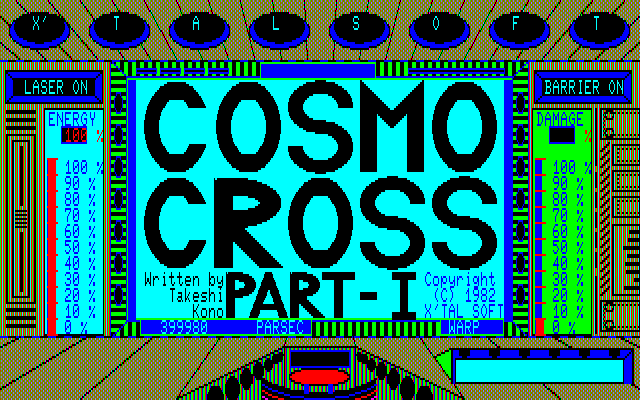
The company for today’s game, confusingly, goes by X’TAL SOFT, XTAL SOFT, or CRYSTAL SOFT depending on what document you are looking at. At least the title of the game is straightforward:
Except for the “Part-I”, thing, but that’s not part of the title; the game was sold as one whole but the three different parts are accessible with different passwords. Part-I is reached with XTAL.
The founding president, Yoshiyuki Morita, was a music fan in high school (along with Takeshi Kono, who he discussed rock and guitars with) and after graduating from university he founded the music studio “SKY SOUND” in Osaka. I found a 1982 recording from the studio, if you want to hear what sort of work they did:
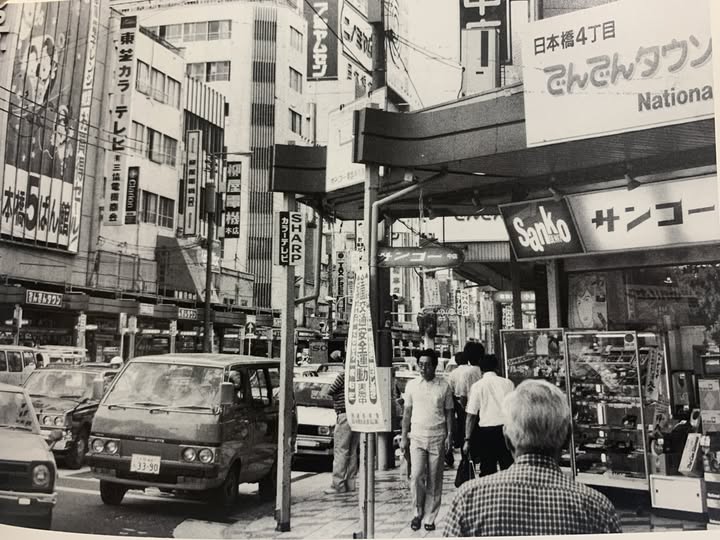
In 1980, he saw a PC-8001 in Nipponbashi (aka “Den Den Town”, the second big electronics haven in Japan after Akihabara), and bought a MZ-80B for his studio “under the guise” of customer management.
Den Den Town in the 1980s. Via @carllin117464 on Twitter.
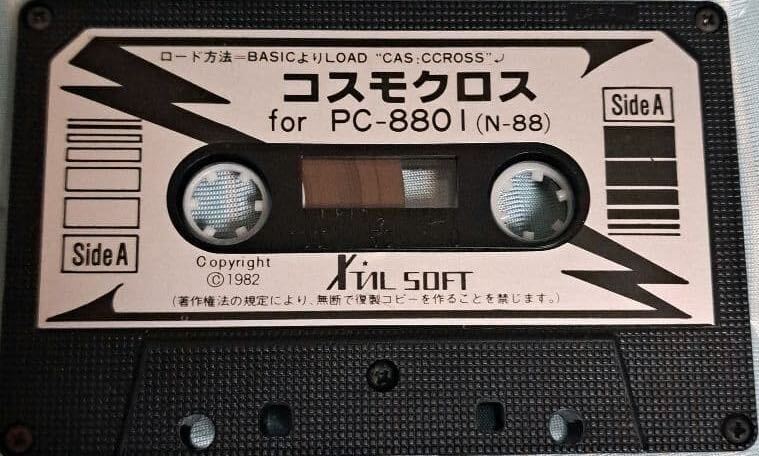
He found the management software terrible and learned programming by modifying it to be usable. This experience gave him enough of a taste of software development he wanted to work on his own. Because of the tape-based nature of computers at this time, it was not that unusual to switch from music to games; he founded Xtal Soft in April 1982 and the company’s first product (Cosmo Cross) was written by his old acquaintance Takeshi Kono, who left his job to join. Initial copies were made manually for the local Osaka area, one by one.
Cosmo Cross eventually sold a solid 10,000 tapes and was enough to kickstart the company to life, although where they really established their credibility was the RPG Mugen no Shinzou (translated either as “Heart of Fantasy” or “Heart of Illusion”). Quoting the composer Chihiro Fujioka (who had joined the company in 1983), the game was “a bit hard to explain” and they were “anxious about whether it would actually sell” but “the game decided the fate of Crystal Soft.”
While they have multiple early adventures, they became mostly known for their RPGs; both Lizard and Crimson are available to play on Switch (Japanese language only, they never sold in English). Noteworthy is that the music for Crimson includes Sky Sound in the credits so they were still operating the same time as the software company.
For the purposes of today’s game specifically, I want to jump ahead a bit to 1990: Xtal Soft does a merger with T&E Soft, the latter most famous for the seminal RPG Hydlide. Takeshi Kono is still around as a game director. Mitsuto Nagashima is hired right before the merger as a programmer; his first project is the Japan-only (and technically impressive) vertical shooter Chikyuu Kaihou Gun ZAS…
…which he follows up with a game for Virtual Boy, one of the most famous for the system: Red Alarm. While Mitsuto Nagashima wore quite a few hats, according to an interview…
I was in charge of the game’s content, balance, enemy positions, and even parts of the story.
…the director of the game was Takeshi Kono, the author of Cosmo Cross.
ASIDE: Of the two top videos on Youtube, one calls it one of the very best Virtual Boy games and one calls it the worst. The reactions seem dependent on how people are able to handle the wireframe graphics, and this may be a case where the 3D looks different to different brains. Gunpei Yokoi, designer of the Virtual Boy, is quoted as saying, “when playing, you completely forget it’s all just lines” but that clearly wasn’t true for everyone. Digging into the Youtube comments: “in the actual game, it [the wireframe design] can actually make it difficult to focus your eyes because there is no surface to focus to.”
Cosmo Cross is part space shooter, part adventure game. It was originally for PC-88 (the version I’m playing) and later got a Sharp X1 port. It isn’t quite like Probe One: The Transmitter with both running simultaneously forcing the player to leap between joystick and keyboard rapidly; a better comparison is The Desecration, which switches between “arcade segment” and “adventure segment”. The Desecration’s arrangement is:
action (in space) – adventure – action (in space) – action – action (in space) – action
(I’m basing this off both the manual which describes Act 2 of Part I as “kind of an adventure”, but also the guide from a 1984 issue of Oh! MZ. “Action” is more like “simulation” but I’m being handwavy here.)
There’s hence only a little adventure going on, but it’s unusual and early enough in Japanese adventure history to be worth a play even if I skip by the other parts. The problem is getting to it! I spent a long time deciphering what was going on with Part I Act 1.
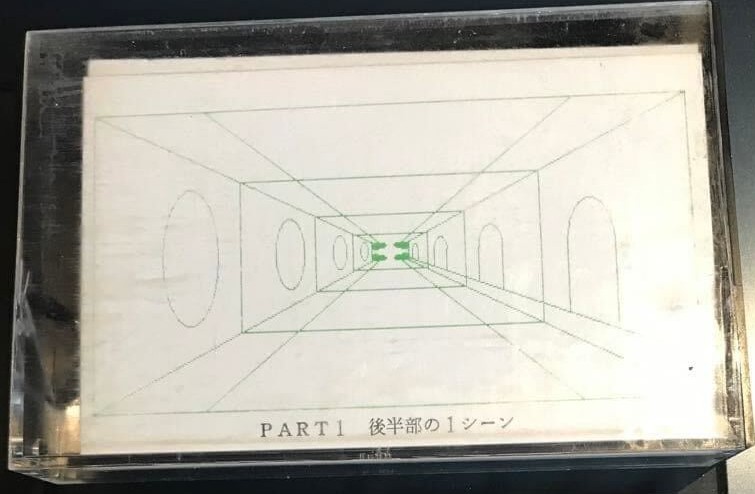
The game came with “instruction cards” showing each of the scenes. This is a scene from the “adventure” part of the game.
Plot: in the year 259 on the Octam calendar, humanity was expanding their space colonies, and started to have constant battles with the Zagros. While most humans had moved from Earth, they still regarded it with fondness, and so the Zagros came up with an evil plan: tamper with a device installed by ancient aliens — intended to keep planets stable — to instead fling a planet into Earth and destroy it.
Humanity pooled their resources to build a single spaceship, the Saint Cosmo, piloted by… you! Your mission is to
a.) fly to the “clear blue” planet of Ariosferia (アリオスフェリア) to retrieve a Bluestone (ブルーストーンを); note that “the Zagros have anticipated this and have set many traps on Ariosferia.”
b.) use that Bluestone to power a “Revival Ray” and fix the sabotaged planetary-stability unit.
There’s a lot of keys going on; there’s a summary here and the more full manual text here. The big issue is that there are three kinds of steering:
◆ The number pad is used to generally change which direction your ship is pointing at.
◆ While floating in space with no enemies, you can press up plus a number (1 through 4) to activate Warp at different speeds. You can backwards-Warp by pressing down and a number.
◆ You can press F1 to activate a laser (F2 to turn it off); then holding down arrow keys will move a “crosshair” around. You cannot do any other kind of movement with the laser on.
I often was befuddled trying to rapidly switch from one to another, and since any kind of stalling can result in being attacked by ships, the result of pressing F2 a little too slow for the umpteenth time can be deadly.
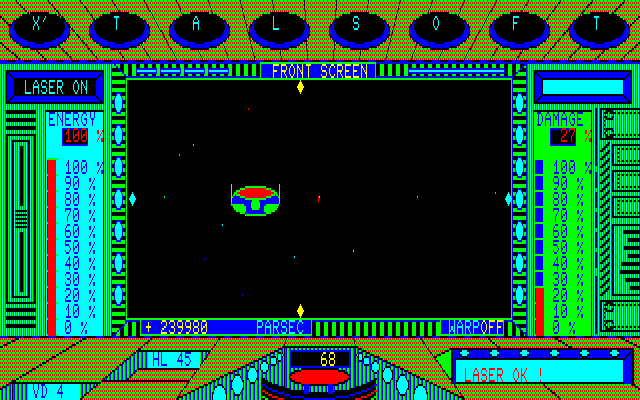
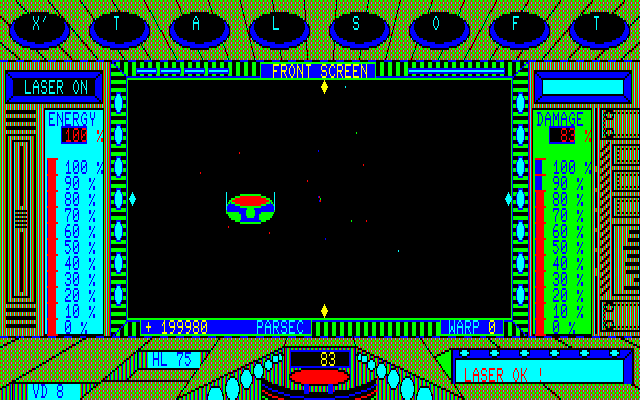
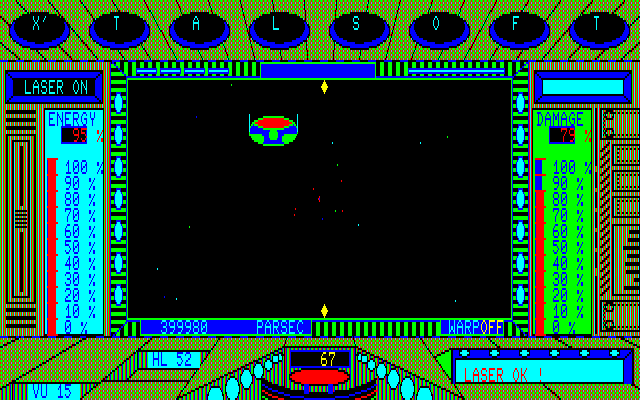
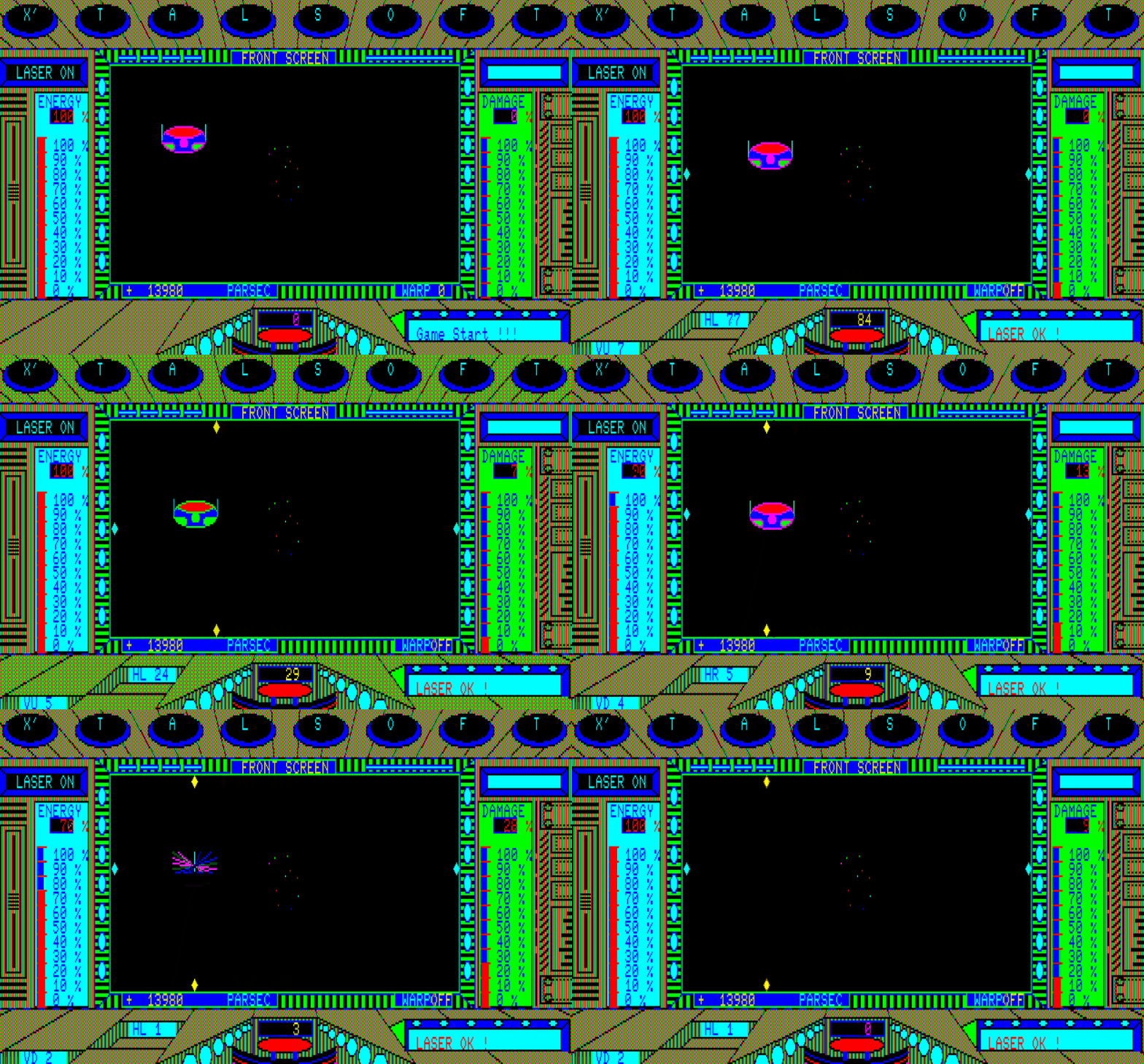
Facing a Zagros ship, with the laser active.
There’s also a “barrier” that the player can activate with F3 (and turn off with F4) which will absorb some enemy shots; there’s a lot of details and rules about what you can do with particular amounts of enemy damage (like reduced warp) but the important points are that killing an enemy gains you 30% energy, and in general if you start to get serious damage (past about 50%) it is almost inevitable that you are going to die.
Suffering major damage. Notice that the laser crosshairs no longer show on the right and left side; this is one of the results of the damage.
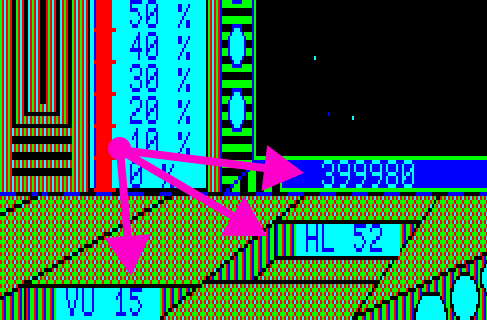
The numbers in the bottom left corner end up being important.
VU and HL refer to how far off you are from an enemy vertically and horizontally. If you get these numbers down to 0 you are dead center and your shot will automatically kill. (You can still cause damage and eventually kill if you aren’t direct on center.) These become super important later (in a section I haven’t reached yet, and will probably decline to play) when there are invisible enemy ships to contend with.
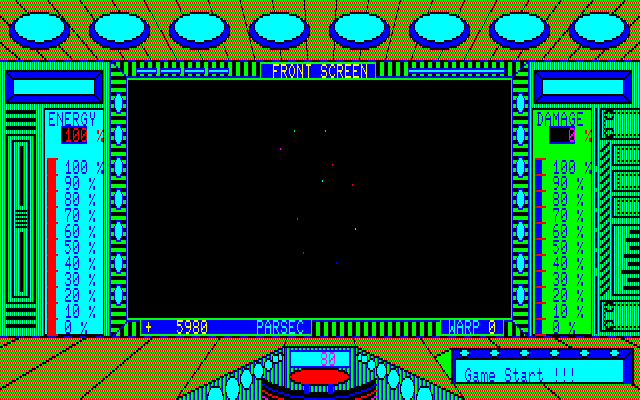
The PARSEC display indicates shows how close you are to the destination planets. There’s a whole set of planets off in the distance you can try to get closer and closer to, and you point to the right one with your number pad movement; if you aren’t pointing at any planet, the display saying 0 PARSEC will be black space. You need to be pointing directly at a planet to see it at 0, and the goal of each of the space sections is to fly to the correct planet.
Ariosferia (the initial goal) is the clear blue one as the instructions say; later sections apparently can have the colors change when up closer.
Closer to the planets, close enough that if you try warp speed 4 you’ll overshoot and the game will automatically switch to rear camera and you’ll need to use warp backwards. The blue one is in the lower right. It’s not true 3D space and you’re essentially on a “track” like the one in Red Alarm or Star Fox, just the way you point your ship matters when you get up to the <2000 parsec range.
I found this section extremely frustrating to play. You start almost like a game of Lunar Lander where you’re just watching a number (the PARSEC count) in the corner, first holding up and Warp speed 4 and watching the counter tick down, then switching at the right moment to warp 3, 2, and 1 as you get closer and closer. Somewhere along the line you need to stop and steer, and that’s when an enemy will almost definitely appear (they can catch you at low warp, but it’s less likely).
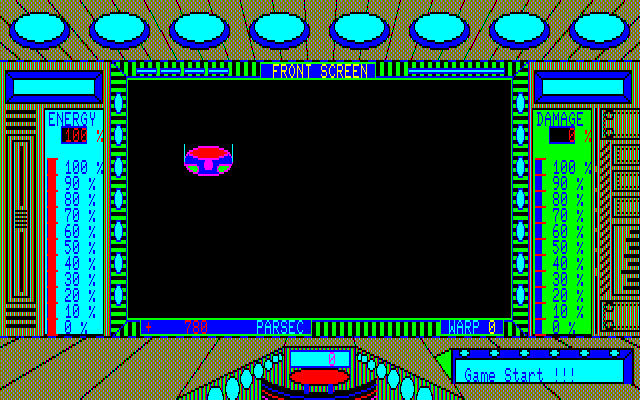
The big problem is that often ships will appear in a position like this…
…and the laser is very slow at moving. (You can’t do number-pad steering in combat.) You can take many hits just from moving to shooting position. Here’s a battle (with the barrier shields off) that went relatively lucky; often the ships aren’t as well behaved and you need to adjust multiple times:
I constantly found myself in a situation where I would sustain rapid-fire from an enemy ship and even with my attempt at moving the laser over as “fast” as possible eventually I just would die.
I finally threw in the towel, as this is All the Adventures, not All the Space Simulators. I have here a video of the game played on Sharp X1 cued to start right at “0 PARSECS” with the planet in view. Once pointed the right direction, your ship will enter orbit and you press F5 to activate the next section of the game.
The video above keeps going into the adventure part but does not finish it. Things get a bit complicated so I’m going to wait on delving into there next time. (The game is in BASIC, and I have a setup from gschmidl that will skip straight to the adventure.) I will try a few more jabs at the space combat, but unless I’m missing something I’ll say finding the Bluestone will stay as my ultimate goal, because I really don’t want to deal with shooting down invisible enemies in space.
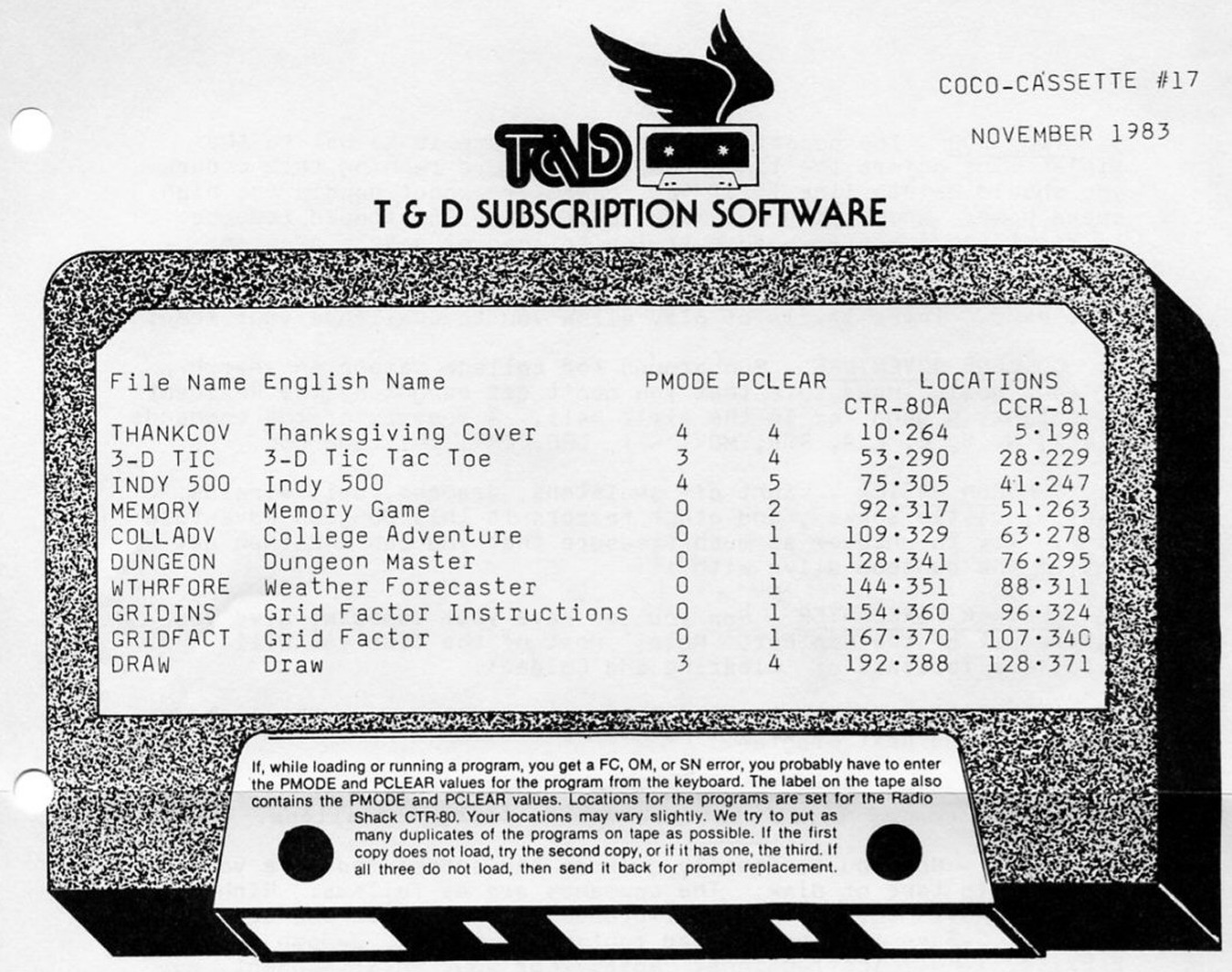
Today sees the return of the tapemag T&D Subscription Software, which we last saw with the game Killer Mansion. The tapemag was started in 1982 by Tom Dykema to distribute Tandy Color Computer tapes monthly and was successful enough to last until 1991.
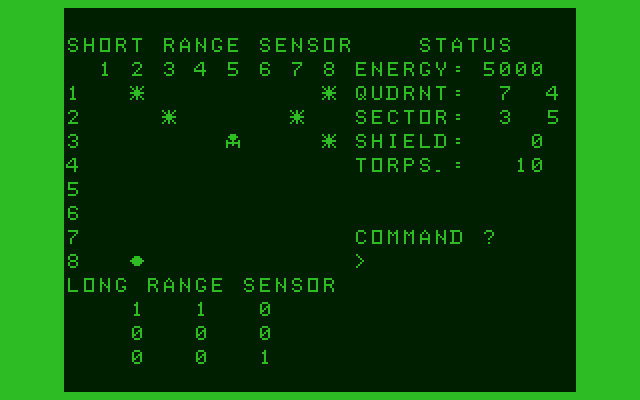
Tom wrote a great deal of the software himself (“at the rate of about four programs a week”) but had a “programming genius down the street” help him and accepted contributions otherwise. A Facebook post by Youngstown Ken talks about several games of his taken in on the tapemag, including a clone of Trek that was published in the September 1983 issue.
The publication as a whole lands on CASA as having 77 adventure games (!!) so we’ll eventually be seeing a lot more of them. Just to be thorough I checked the T & D catalog for anything they described as in the “adventure” genre after Killer Mansion. There are two tagged from 1982, Quest for Lenore (Issue 2)…
…and Terrestrial Adventure (Issue 4).
Neither quite fits what I’m calling an adventure, although Terrestrial Adventure is sort of a top-down “choose your own adventure” style game with mild action elements; you control a little green dot and if you run into anything on the map you die. (This almost feels like it is meant to parody the gameplay of the Atari 2600 game E.T. with the infamous pits, but Issue 4 was in October 1982 which is before the Atari game came out.)
The controls make a room like this perilous.
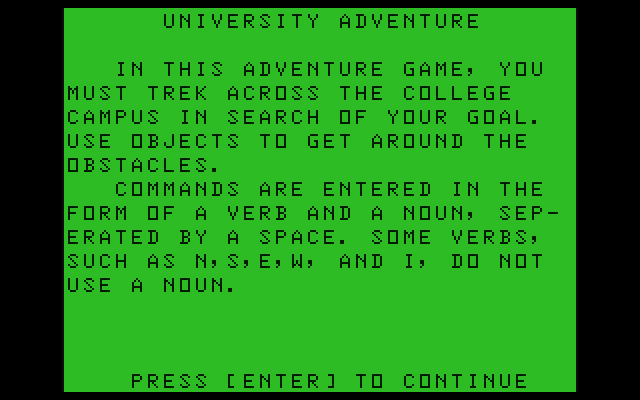
After that, there’s a long gap until the next adventure, which the listing guide calls College Adventure but the game itself calls University Adventure. Confusingly, the file is called COLLADV/BAS.
YOU MUST TREK ACROSS THE COLLEGE CAMPUS IN SEARCH OF YOUR GOAL, with no clarity what that goal might be.
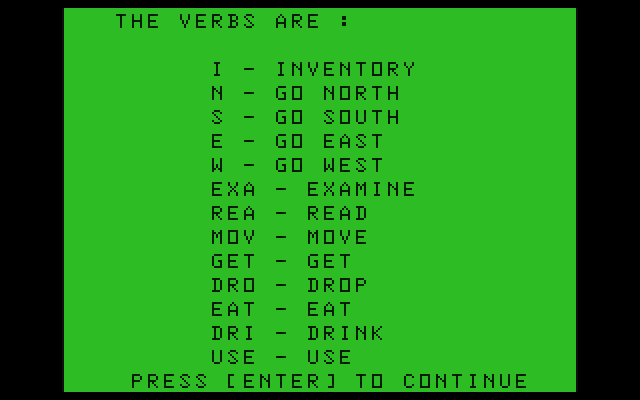
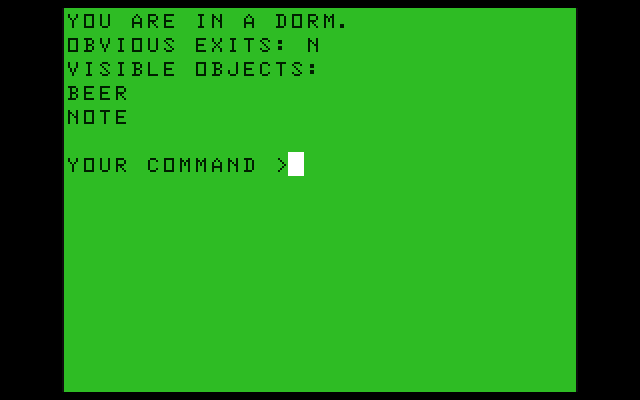
The verb list is unusual in that only the first three letters from the applicable verbs can be used. That is, from the starting room…
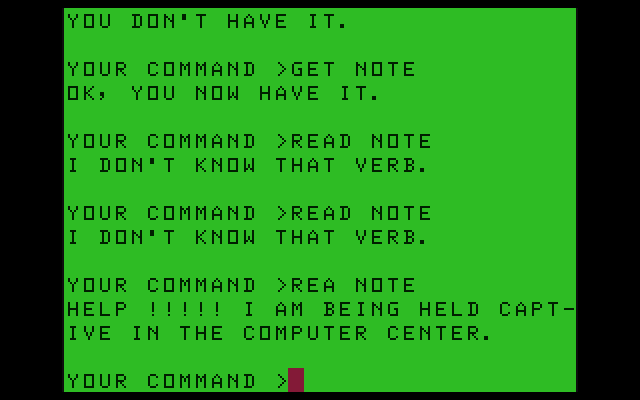
…and you can type GET NOTE just fine, in order to read it you must type REA NOTE, not READ NOTE. I’ve never seen this particular piece of jank before, indicating this is an author we haven’t met yet.
I’m so unused to the “shortened verbs only” setup that I accidentally typed READ in full twice.
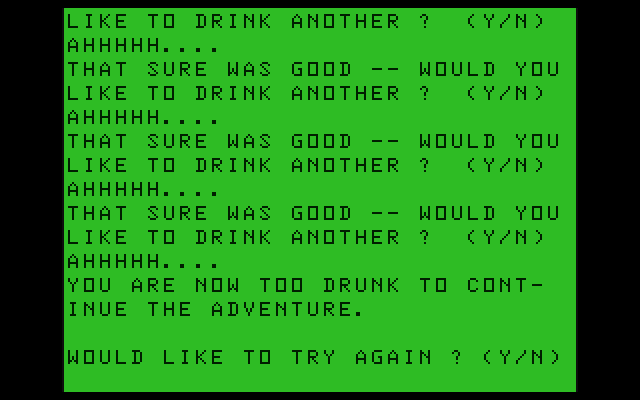
As the note indicates, someone is being held captive in the computer center. With the beer, you can DRI (not DRINK) it until you finally end up drunk.
We’re definitely on a University Adventure now! This moment where you could keep hitting Y made me laugh out loud.
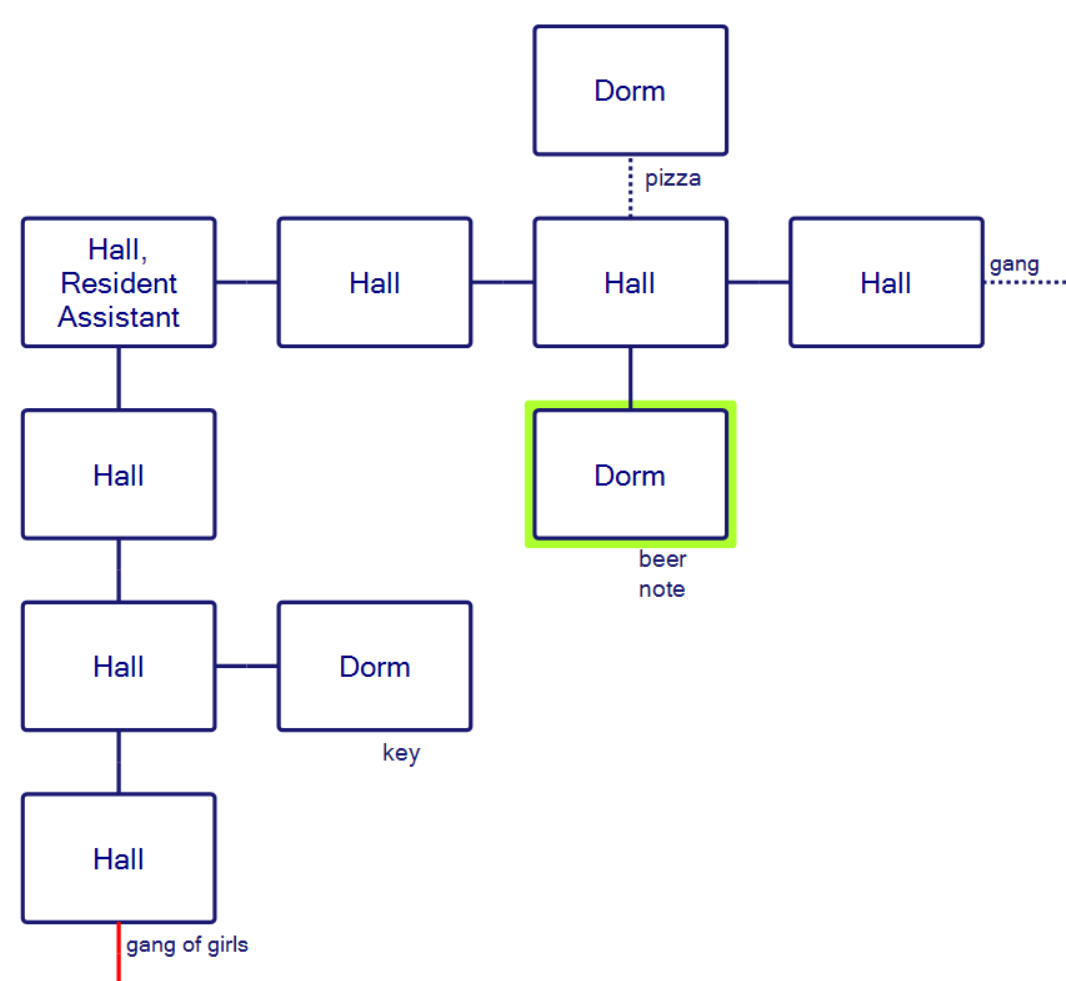
If you pick up the beer and take it to the west, a resident assistant will stop you and end your adventure prematurely.
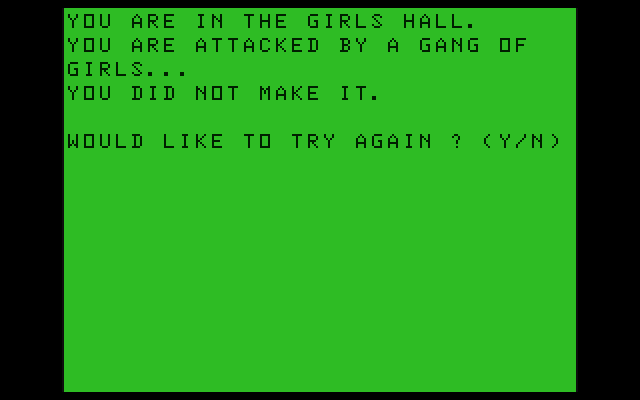
The trick is to not pick up the beer, walk on past, slip into another dorm and grab a key, avoid meeting the gang of girls down the south hall…
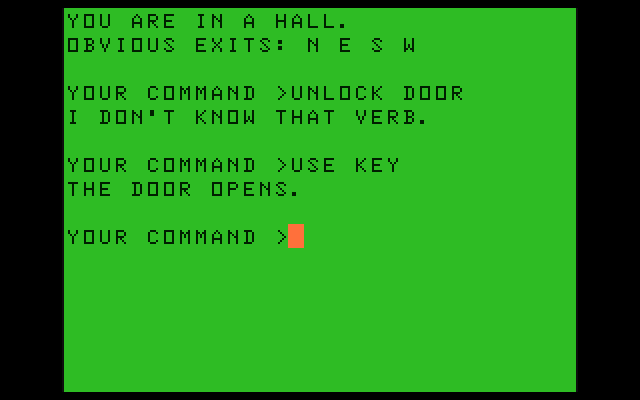
…and then unlock a closed door across your own dorm room…
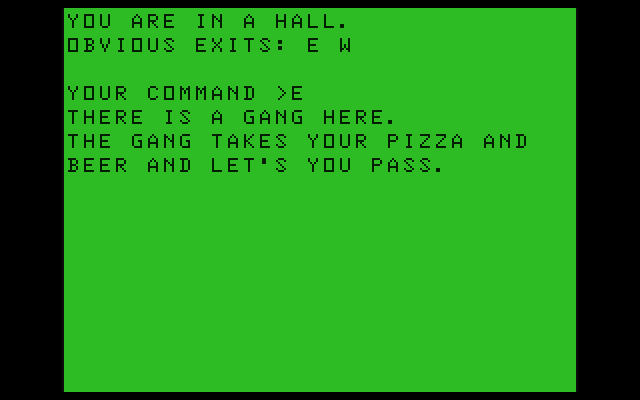
…and pick up a pizza. While the pizza and beer are held, there is a different gang (presumably of men) who will let you pass.
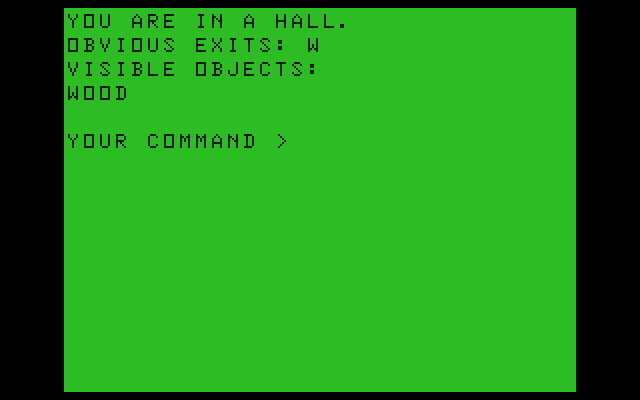
Go east for long enough and you’ll find a random piece of wood.
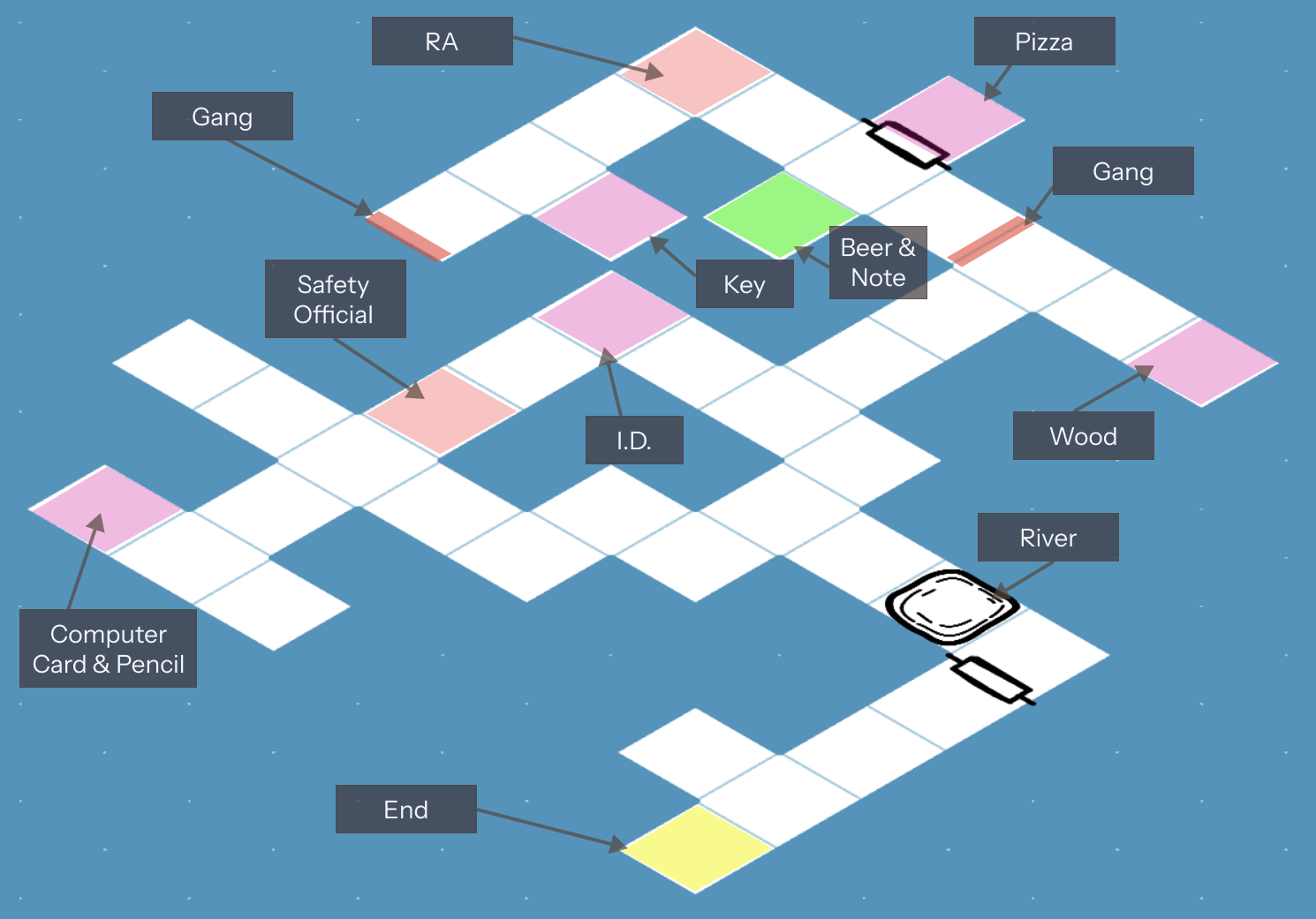
From here the only way to go is outside, and I’m going to switch to isometric mode!
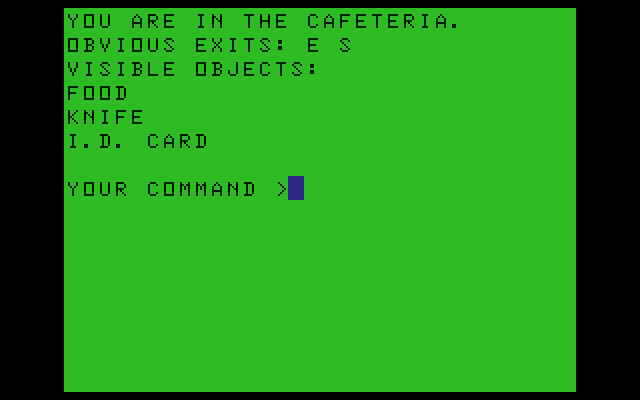
I’ve left items off as the remainder of the map is mostly a red herring. There is, for instance, a cafeteria.
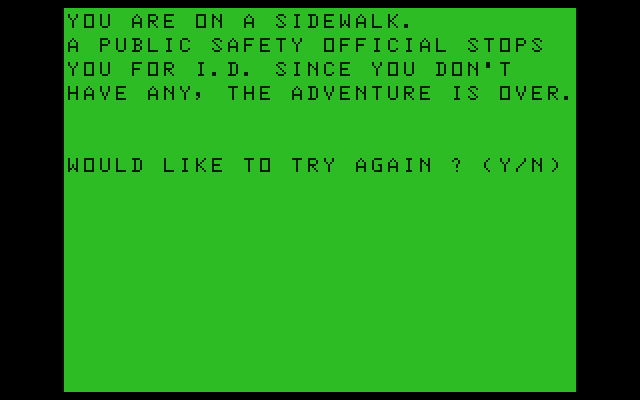
None of these items are useful except technically the I.D. card, where if you go south you’ll run into a safety official who will cause a game over.
However, this encounter isn’t necessary at all, because you can just avoid that spot on the map! (Not like it matters too much — the game has no inventory limit so you can scoop up everything. The only moment where this causes a problem is with the beer.)
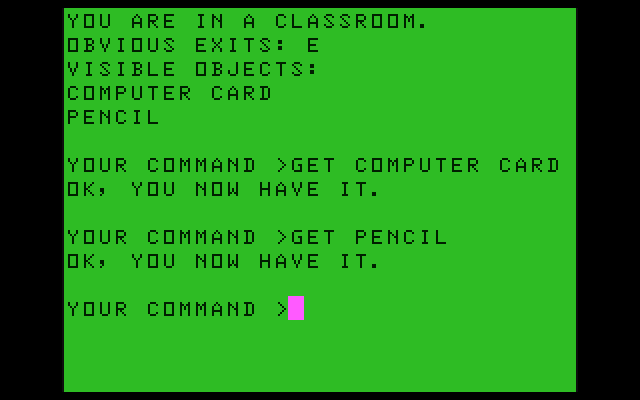
The important item is instead down in a classroom where you can find a computer card in a classroom.
Scooping up the pencil too, because why not.
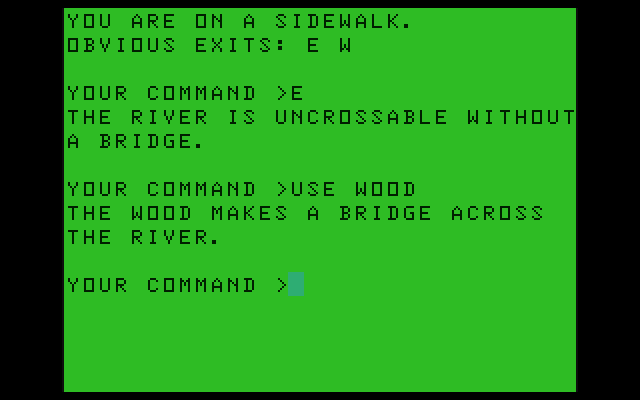
This can be taken over to the east where there’s a river that you need to USE WOOD in order to pass over…
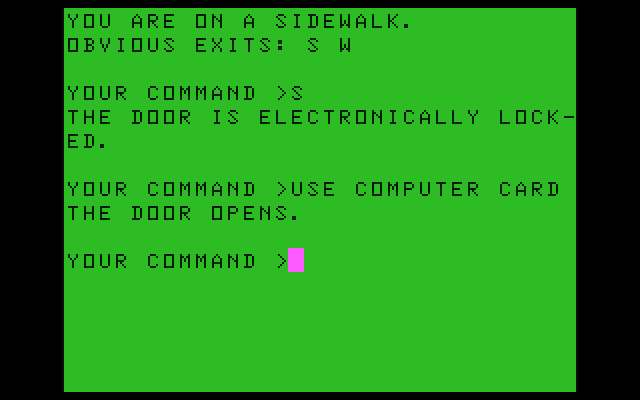
…followed by the computer card which gets applied to a security door.
Head south and you’ll win, with no further plot explanation of who needed rescuing or if the note was just some kind of prank.
I get the impression the author was aiming for something a little more dense. The opening made me hopeful we were going to get a “my university” satire with lots of obscure references; that’s not a bad thing in this context because it means the author would be aiming at a particular target and trying to say something, even if that something is an observation on the overzealousness of campus patrol. However, they clearly gave up by the end and the red herrings start to feel more like parts of the game the author never finished with (potentially due to lack of memory space). The opening spiel to the T&D newsletter for this issue even says
WOW! The programs on this month’s tape are so long that we could barely put two copies of each on the tape…
…indicating the game couldn’t have been longer even if the author wanted it to be. At least “every verb must be written in three letters” is an odd enough aspect it will be clear if they pop up again.
Coming up: assuming I get the tech issues resolved, an early hybrid action/text adventure game in Japanese.
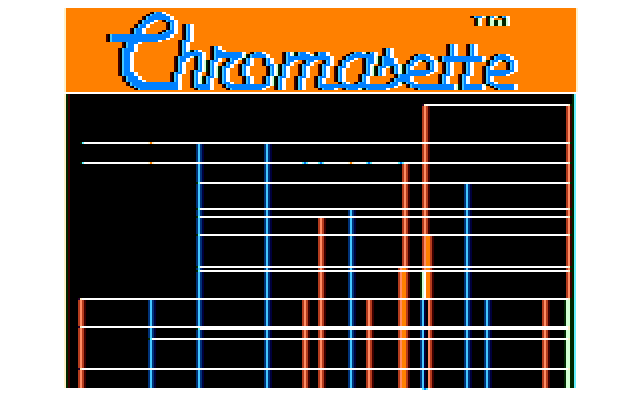
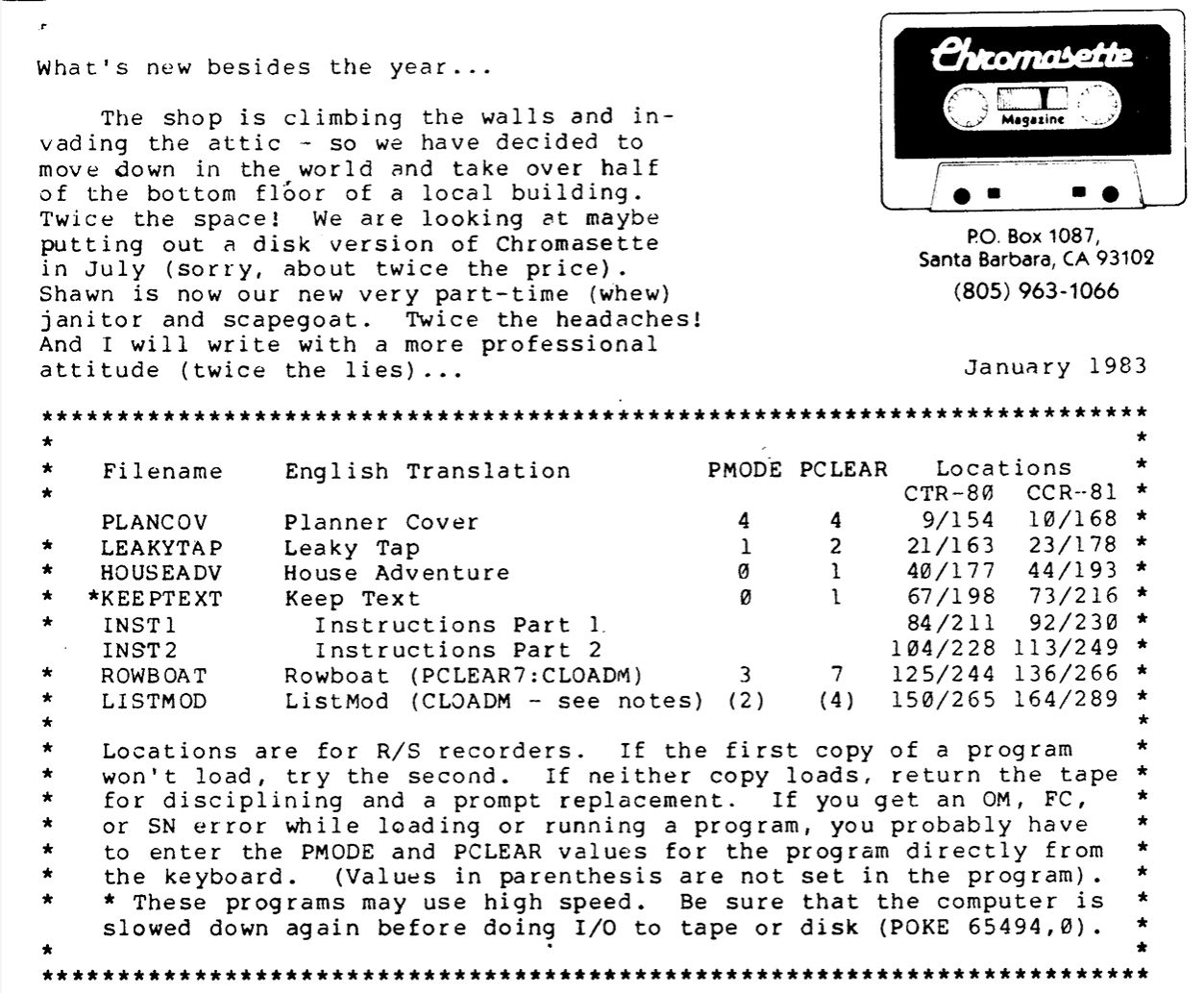
House Adventure first appeared in the “tape magazine” Chromasette, the January 1983 issue. We’ve seen Chromasette before with games like Williamsburg Adventure that were republished by Microdeal in the UK for the Dragon; this game was not given a similar treatment.
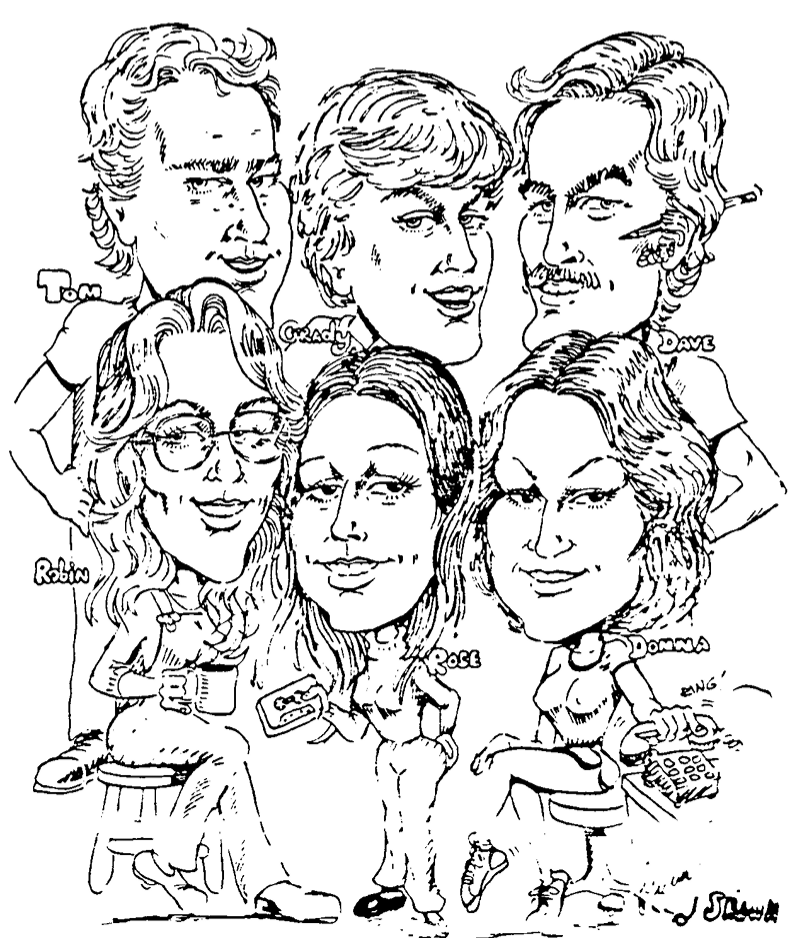
The Chromasette team, on the back page of the January 1983 letter.
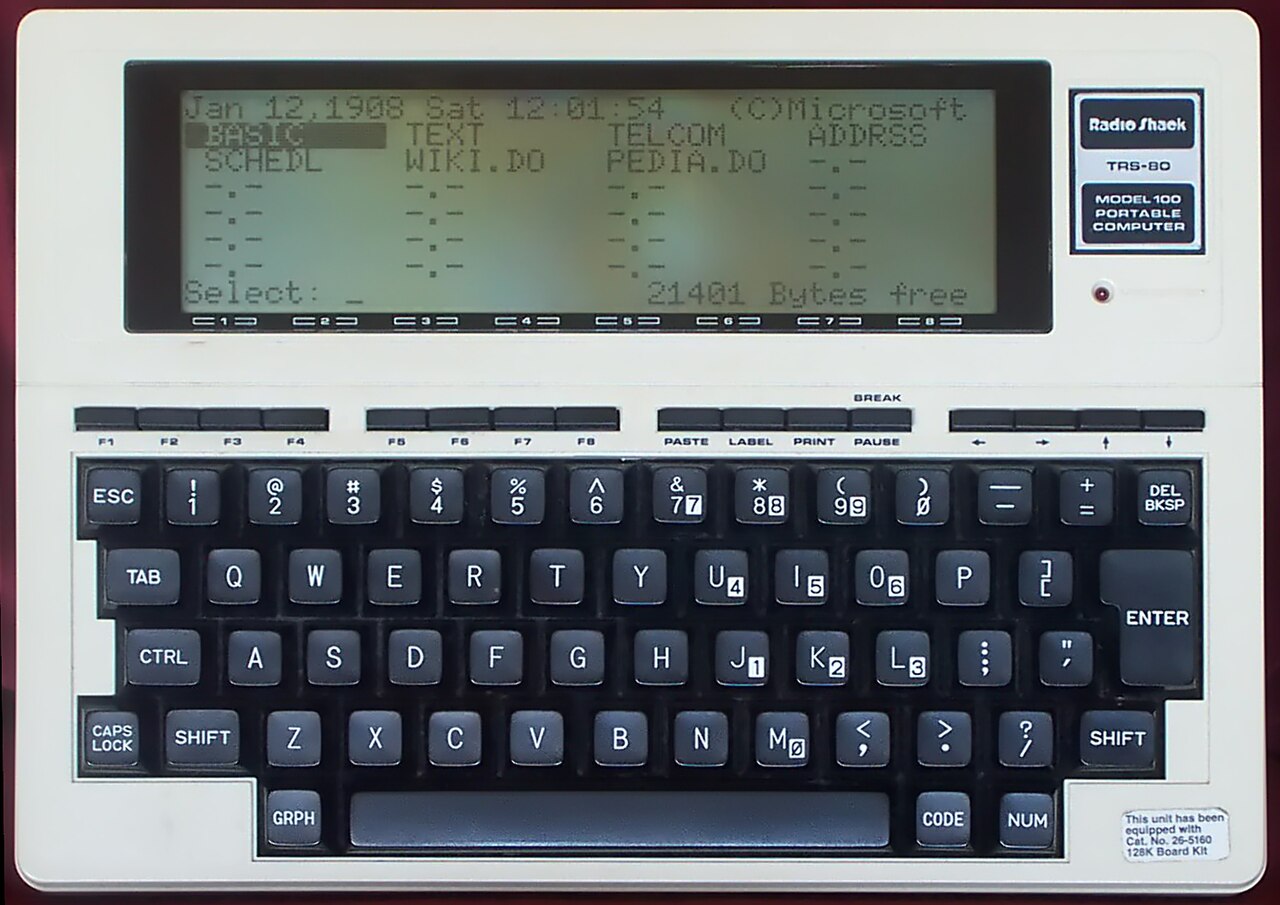
What’s unusual about the distribution history of this game is that it is now better-known for its port to the Tandy 100, the “first commercially successful notebook computer”.
CASA has the game but does not mention the origins in Chromasette; the year is listed as “unknown” because the version in archives (from “Club 100”) has no date. Jim Gerrie then ported the game to TRS-80 MC-10, meaning he essentially took a game for Tandy CoCo that was ported to Tandy 100 and ported it back to Tandy CoCo without realizing that was the original platform. (The MC-10 technically predates the CoCo, but: close enough.) Gerrie included a number of bug fixes which is worrying but I started out by playing the original and hoping these aforementioned bugs slipped into the portable version of the game.
From the newsletter:
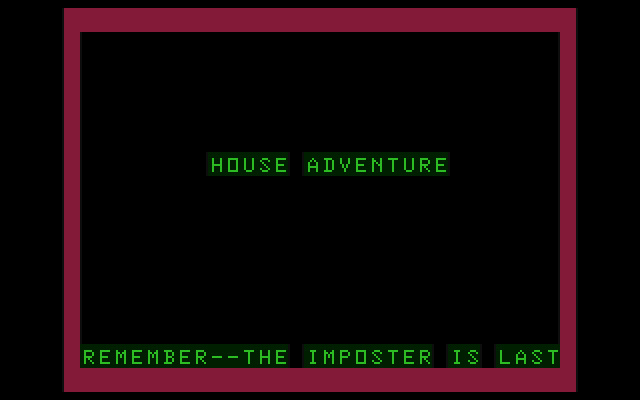
“Remember, the imposter is last”. Yes, that is a clue to solving House Adventure. And no, won’t tell you anymore. It took us a few times to figure out what the clue meant (we still haven’t solved the adventure, though). For you new adventurers, you are searching for 20 items located in the house.
“20 items” literally just means everything you can pick up. There are no “treasures” specifically (even though some items are valuable); your goal is: grab everything that isn’t nailed down.
The “we still haven’t solved the adventure” implies both a.) this was not done in-house, but via outside submission and b.) they were willing to publish the game without bug-testing all the way through. (Again, worrying!)
I do like the enigmatic aura of “the imposter is last” being given without further instructions, though.
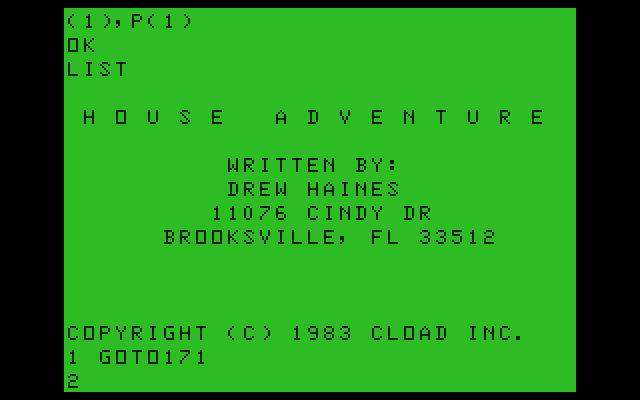
Despite the game previously having no author — the Model 100 copy took out the credit — it exists in the CoCo version. The game is by Drew Haines of Brooksville, Florida. He has another adventure coming for 1983 (also published in Chromasette) with over 1500 rooms. This game is not nearly as large.
Could a Tandy CoCo maven explain how this is done? If you start listing from 1 you won’t see the credit.
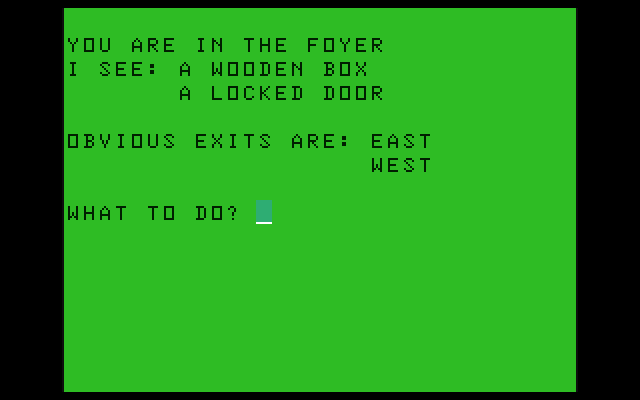
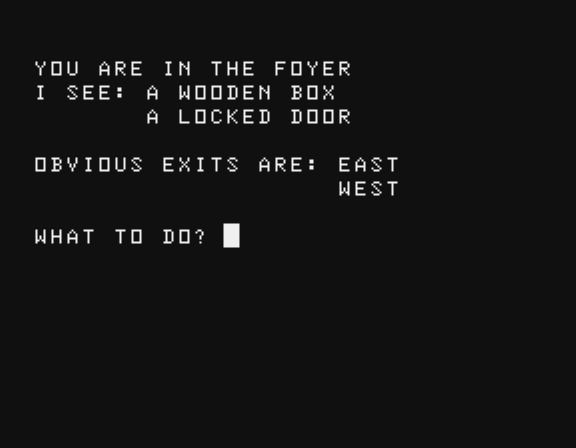
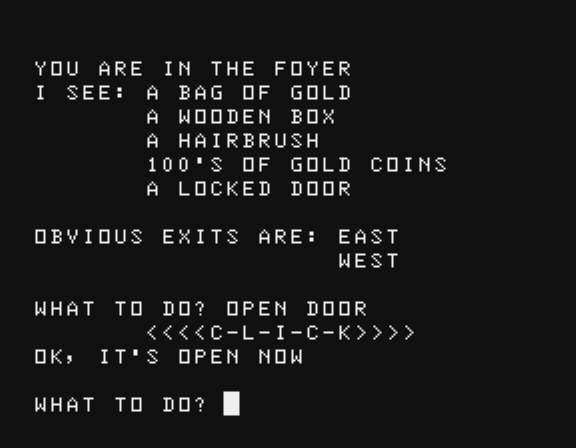
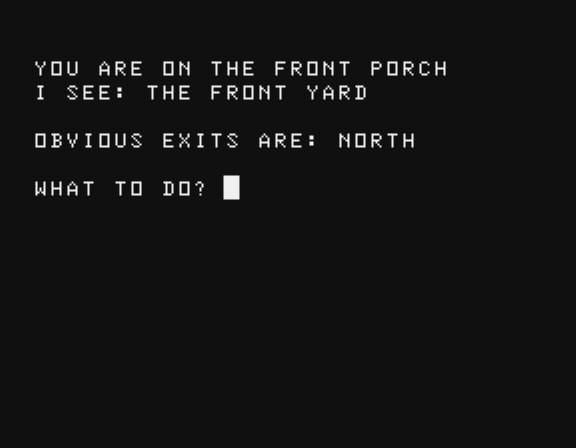
You start inside the house, in a foyer at a “locked door”. (In a haunted house game it’d typically start you on the porch and then have the door slam locked as you walk in; this isn’t really a haunted house as much as a fantasy-adjacent one.) Since the objective is to get objects out of the house you need to unlock the door first before getting any points.
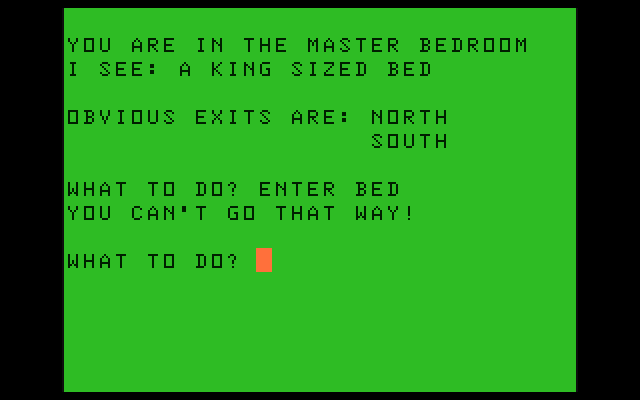
In addition to the placement and wording of screens being a “signature” of sorts, the parser itself can be distinctive. In this case, if you type SEARCH BOX you’ll get the message YOU CAN’T GO THAT WAY! Any verb that starts with N, S, E, W, U, or D is counted as a direction. I’ve never seen this exact behavior before, and it certainly can be deceptive in practice.
This is really trying to go EAST.
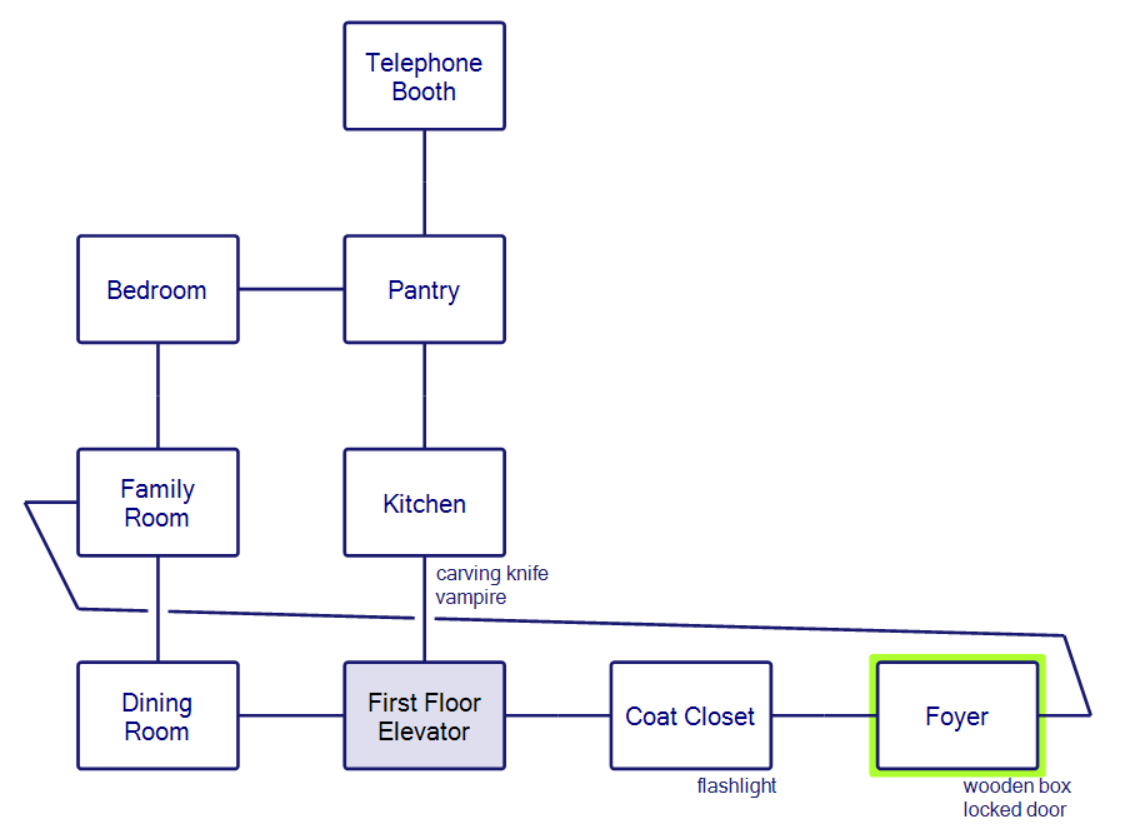
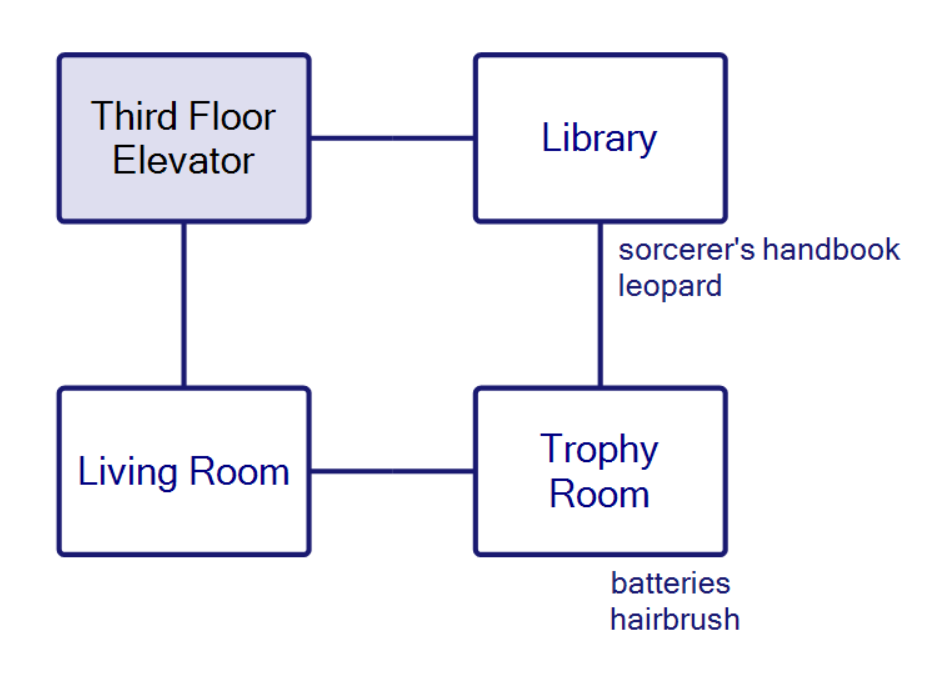
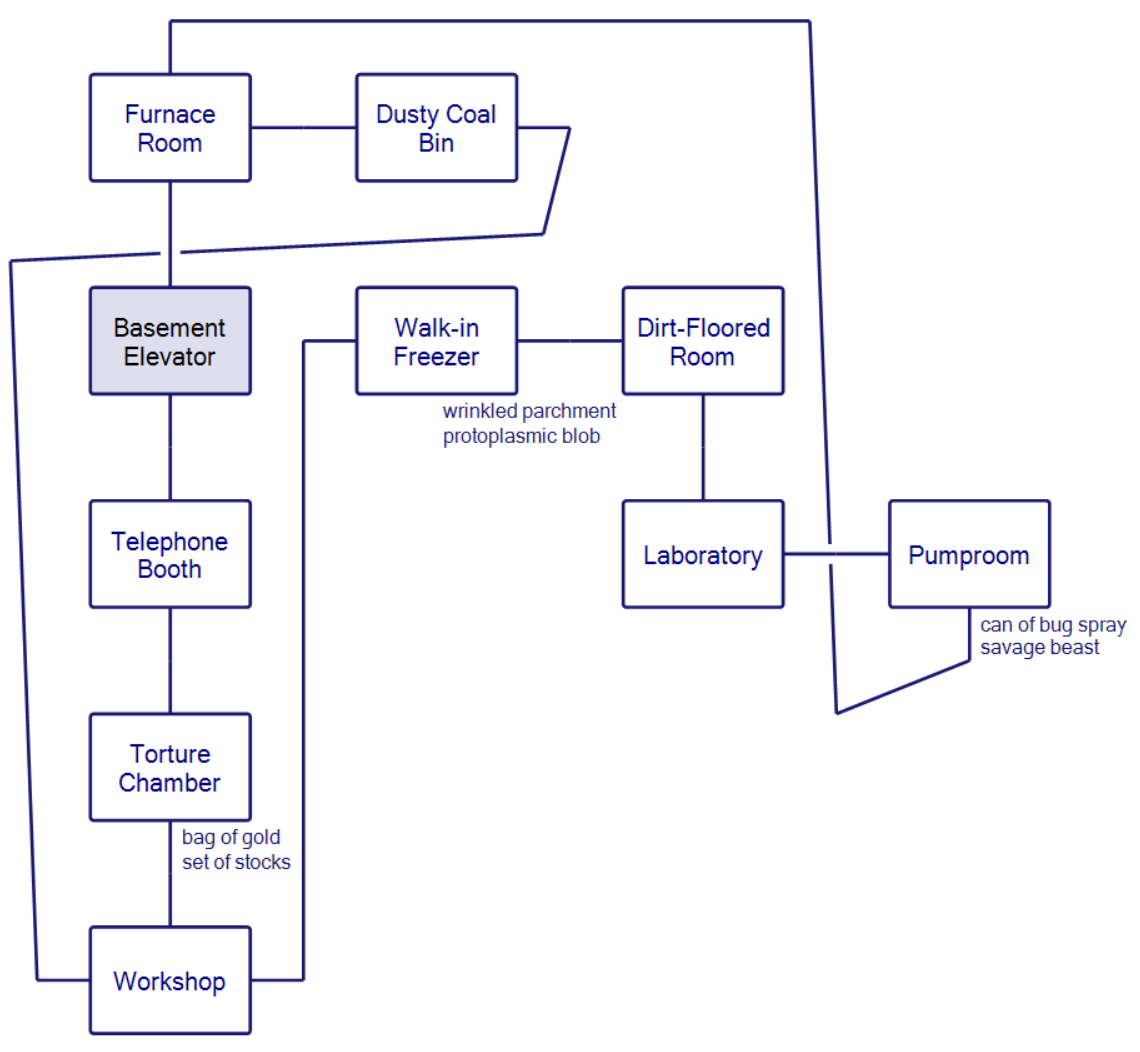
At first glance, the house of the adventure is divided into four floors, that you can hop between via an elevator. (You might notice a phone booth on the map. There’s a booth on some of the floors, and they’ll be important later. Additionally the “at first glance” is there because there’s a secret fifth floor.)
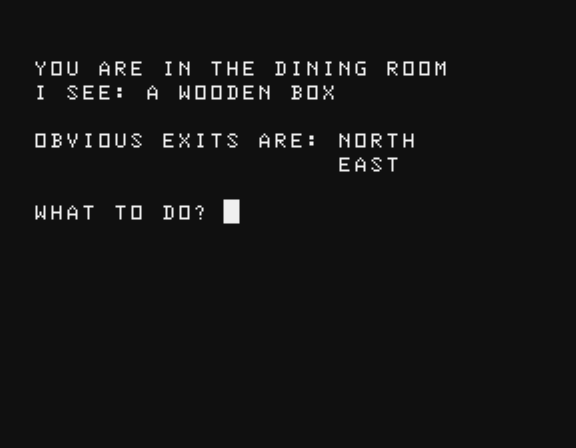
Rooms are otherwise straightforward (YOU ARE IN A DINING ROOM, YOU ARE IN A FAMILY ROOM, YOU ARE IN A BEDROOM)…
This does have the advantage of giving the right amount of text for a Model 100 screen.
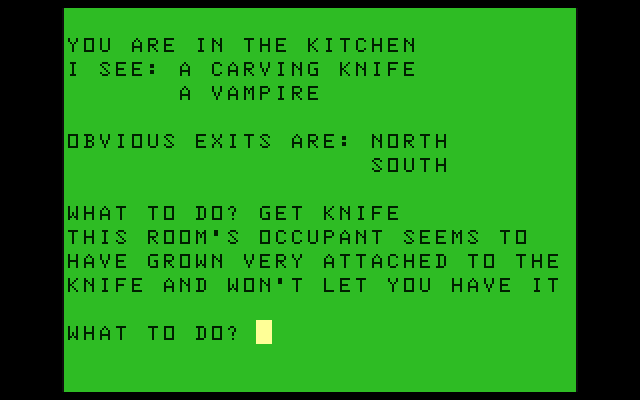
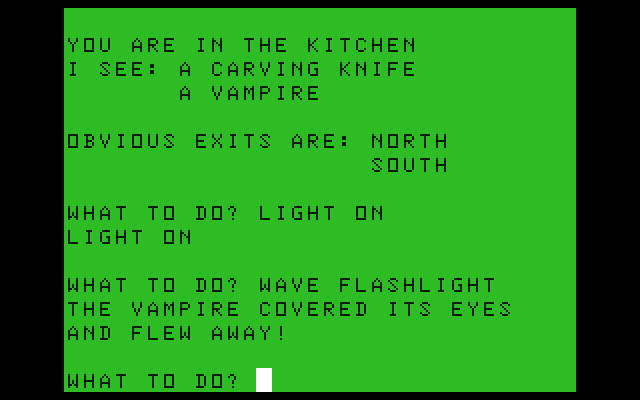
…with only a few items “in the open” to grab right away. Floor 1 you can get a wooden box and a flashlight, but you cannot get the carving knife on the same floor due to a pesky vampire.
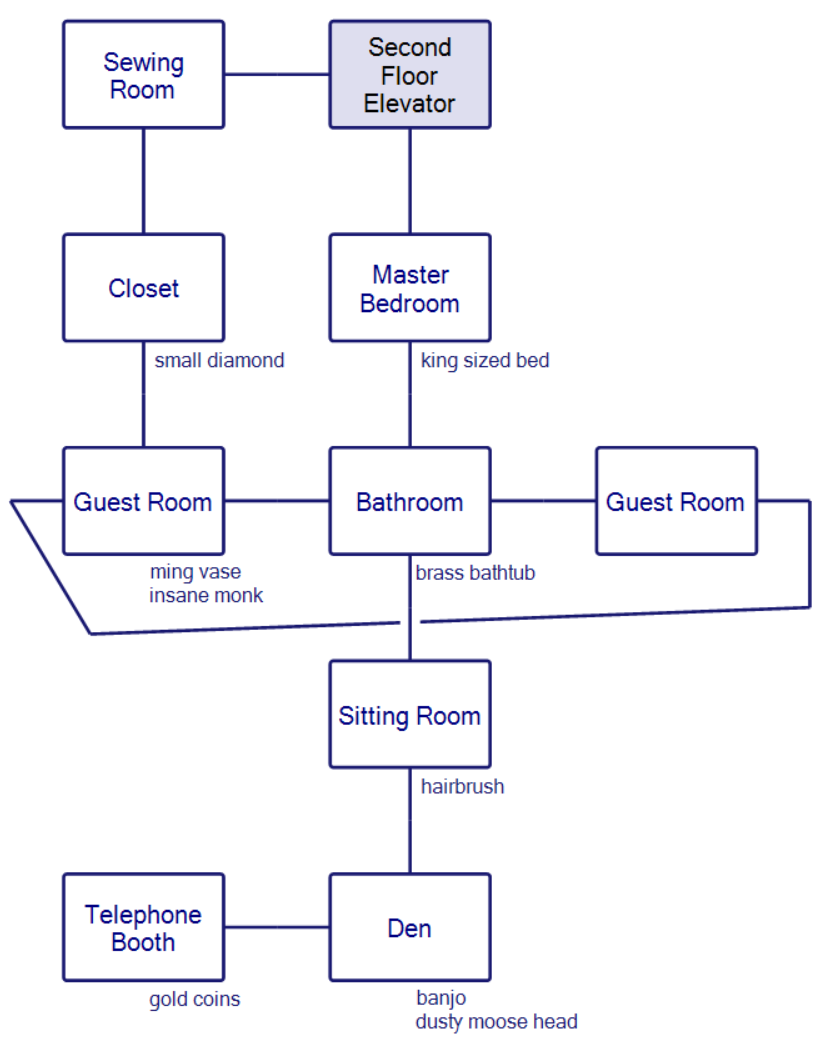
In general, the other floors are similar. While the second floor has some diamonds out in the open…
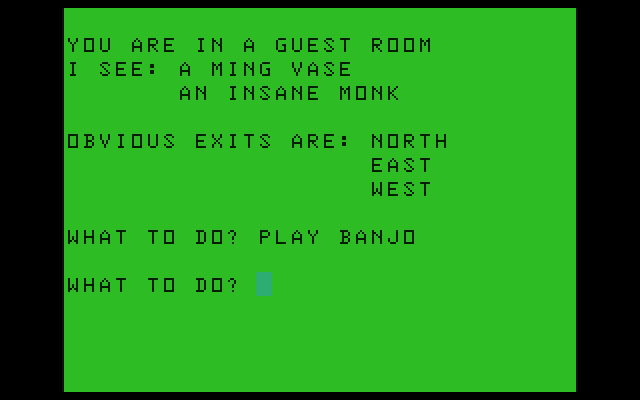
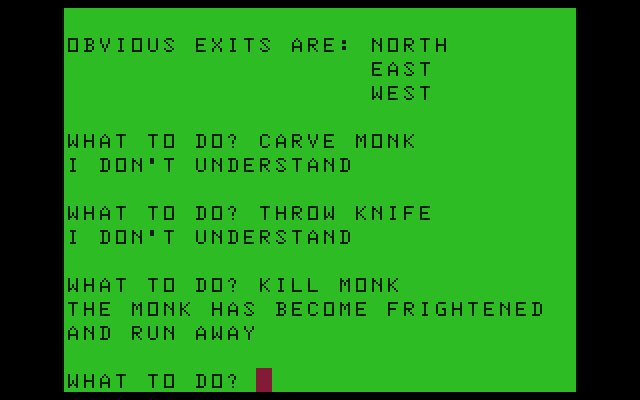
…as well as a hairbrush and a banjo, those are the only items you can take easily, as the ming vase that you undoubtedly need is being guarded by an insane monk.
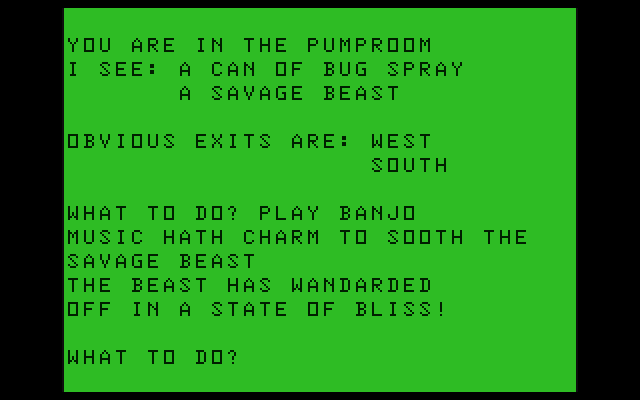
The monk is unimpressed by banjo music. The blank link response is because the feedback response to PLAY BANJO is audio.
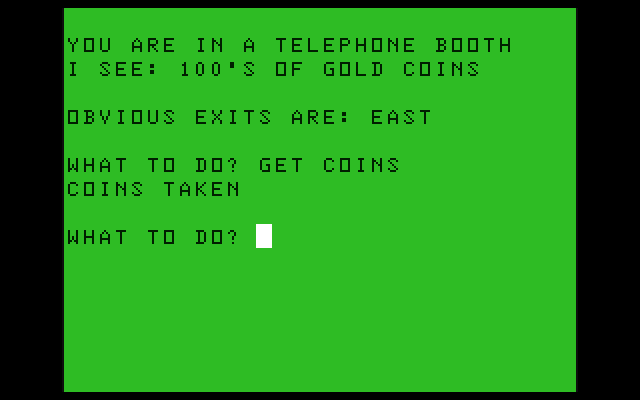
There are also “100’s” [sic] of gold coins, which is too many to take unless you are holding the wooden box from the starting room.
For the top floor…
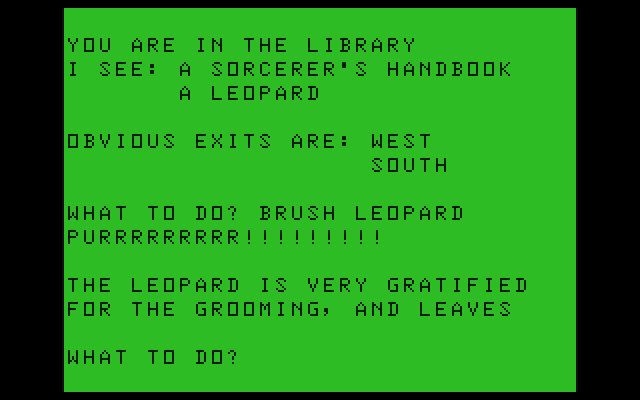
…there’s even less to look at, as a sorcerer’s handbook is guarded by a leopard, and a room just to the south of the leopard has batteries and another hairbrush. In case you are wondering why there’s a second hairbrush, that’s the “imposter”:
Finally there’s the basement. You need both the flashlight from the starting floor and the batteries from the top floor to explore; while holding both you can then use the syntax LIGHT ON or LIGHT OFF. (I tried INSERT BATTERIES, FIX BATTERIES, etc. first; they just need to be held along with the flashlight.)
The dirt floor east of the freezer will come into play later.
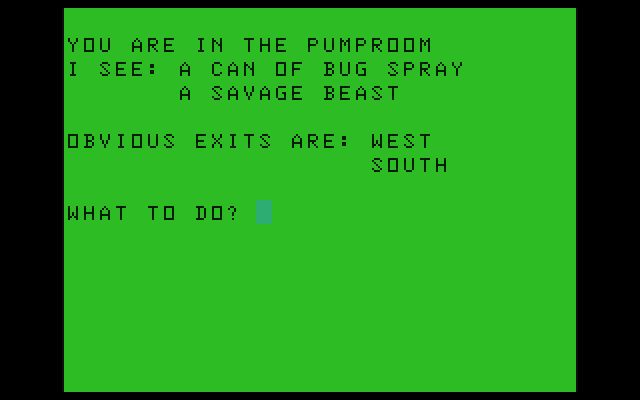
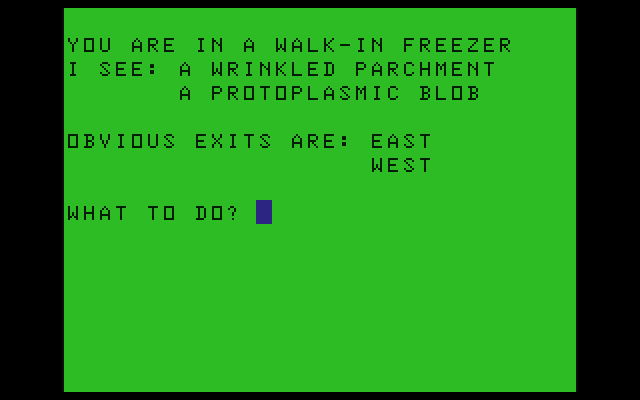
While there’s a BAG OF GOLD down at a TORTURE ROOM with a SET OF STOCKS, the other two objects (wrinkled parchment, can of bug spray) are both guarded.
to summarize, we have…
A vampire guarding a knife
An insane monk guarding a ming vase
A leopard guarding a sorcerer’s handbook
A protoplasmic blob guarding a parchment
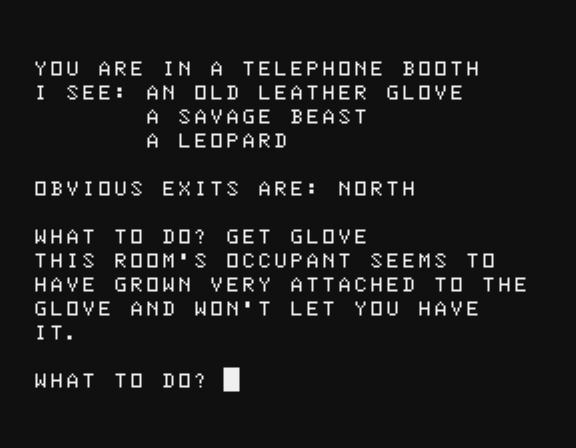
A savage beast guarding a can of bug spray
…with a banjo, a flashlight with batteries, and a hairbrush as our only real tools. All three of them have pairings with the foes listed. Two of the pairings kind of make sense, one of them ramps up to nonsense.
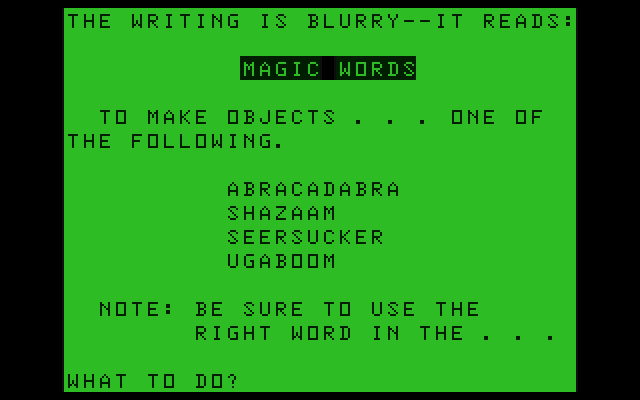
The book left behind provides some magic words.
We’ll worry about those momentarily. For the second pairing, the banjo is enough to calm the “savage beast” (which at least is explicitly described that way to get the cliche phrase; I’m not used to thinking at the level of individual word choice with a tapemag game, that’d be more expected in something pun-heavy like Quondam).
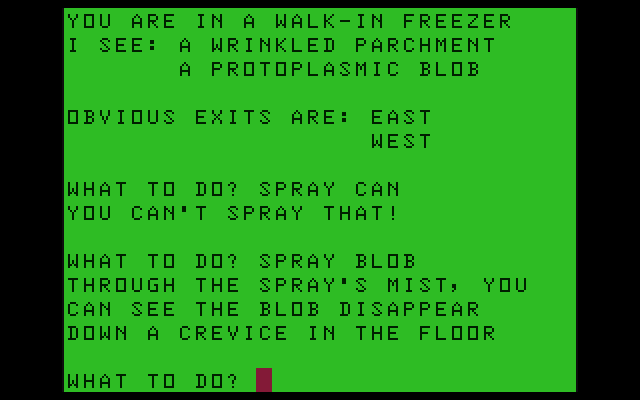
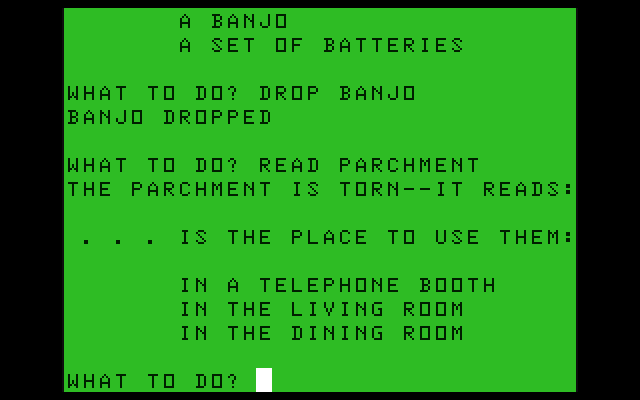
That bug spray you get from the beast then goes to the protoplasmic blob. The parchment then left behind is the second part of the book (letting you know the magic words get used in the telephone booth, living room, and dining room).
Again, we’ll save dealing with the magic words for a little bit later, as let’s take out the last obstacles (the vampire and monk). The vampire takedown is the one that doesn’t make sense.
I guess it’s a sunlight-providing flashlight? Or maybe the vampire has some alternate lore? (The problem with using the “fan fiction shortcut” as I’ve called it is that there’s enough fan fiction universes it can be hard to tell which one the game is in.) You can then KILL MONK while holding the knife at the monk.
The monk reappeared for me in the basement elevator. It’s random, and it’s only a problem if he reappears somewhere where there’s an item, and then like ADV.CAVES — which had a kitten that scared a dragon — you have to re-do a puzzle solve.
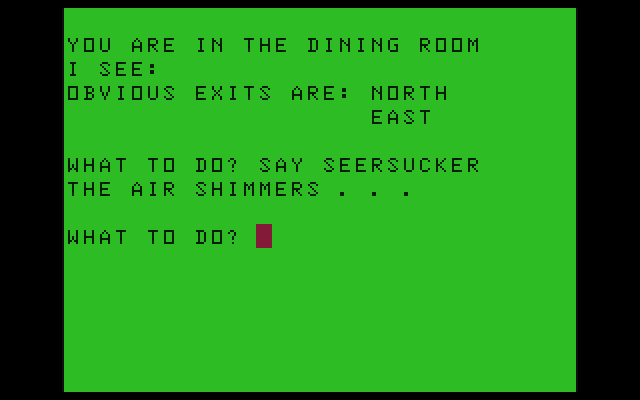
Now it’s time for the magic! The words were ABRACADABRA, SHAZAAM, SEERSUCKER, and UGABOON, and the locations were TELEPHONE BOOTH, LIVING ROOM, and DINING ROOM. There is no particular logic which goes where; if you get one wrong you will be “disoriented” and get teleported to a different room, but it won’t end the game or anything like that.
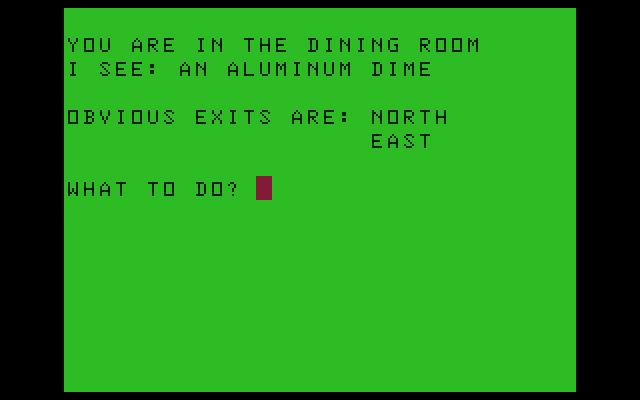
There might be some random assignment, but for me, SEERSUCKER in the living room gave me a dime…
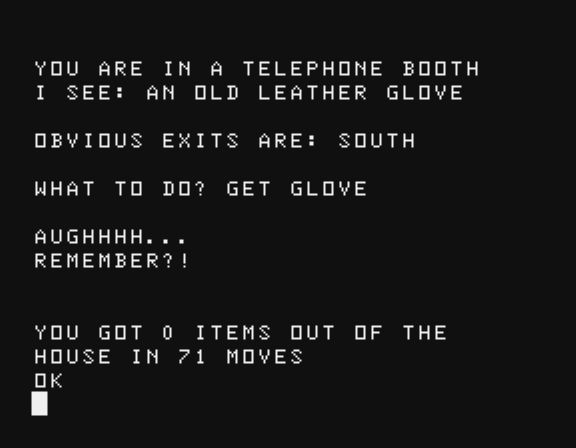
…and from there I was not able to get anything else to happen in any of the telephone booths or in the dining room. I started to get worried enough to check the walkthrough by Dale Dobson in case the bugs were not just in the Tandy 100 port.
The walkthrough mentions getting a leather glove in the basement phone booth somehow. I tried on a different save state and it worked (SEERSUCKER again); it seems to work and not work at random. Dale’s next step is to hack the inventory to give himself a shovel, and after enough fiddling I am able to report that the folks at Chromasette really should have tested the game to the end before publishing it. Dale’s playthrough is pure chaos and arguably is the buggiest I’ve ever seen in a published game. For example, holding the dime is supposed to cause teleportation with the telephone booths (I think I got it to happen once by accident, but otherwise I never got anything to trigger). Letting Dale take over:
What’s going on with the telephone booth rooms? They seem a lot more stable since I restarted. Do they react to having the dime in inventory? Yes! Now they start teleporting us randomly around again. But while the design intends for it to be possible to reach a “secret” fourth telephone booth in a separate section of the third floor we can’t otherwise reach, it’s nearly impossible for this to happen given the random number algorithm used in line 7. This can be patched imperfectly by changing the code to randomly pick a number between 0 and 5, instead of 0 and 4; the odds of it being greater than or equal to 4 are much better now. (After the fact, I realize that multiplying the random number by 4.999 would prevent a bad value of 5 from coming up without substantially altering the odds of it being 4.)
The whole thing is worth a read, but for my purposes I swerved over to Jim Gerrie’s version of the game. I also swapped my screen colors to be white on black just to change things up (and to be able to tell the two versions of the game apart).
I proceeded to try to speedrun up to the point I was, although I got foiled a little by a.) the map being slightly different (Gerrie removed some of the “wraparound” exits) and b.) the presence of the glove on the first floor, the one I previously got via magic word.
This is how I found out “the imposter” can be something other than a hairbrush. The idea is that some item in the house chosen at random has a duplicate somewhere, and that item is the imposter; since I already had the game mapped out I could simply note down if an item was in a place where it wasn’t supposed to be, but that wouldn’t have been as doable the first time around. (That is, I could map everything and find the duplicate, but as far as I can tell there’s no intrinsic way to tell which one of the duplicates isn’t real!)
On a reboot I found the wooden box here, when the regular wooden box is in the starting room with the locked door.
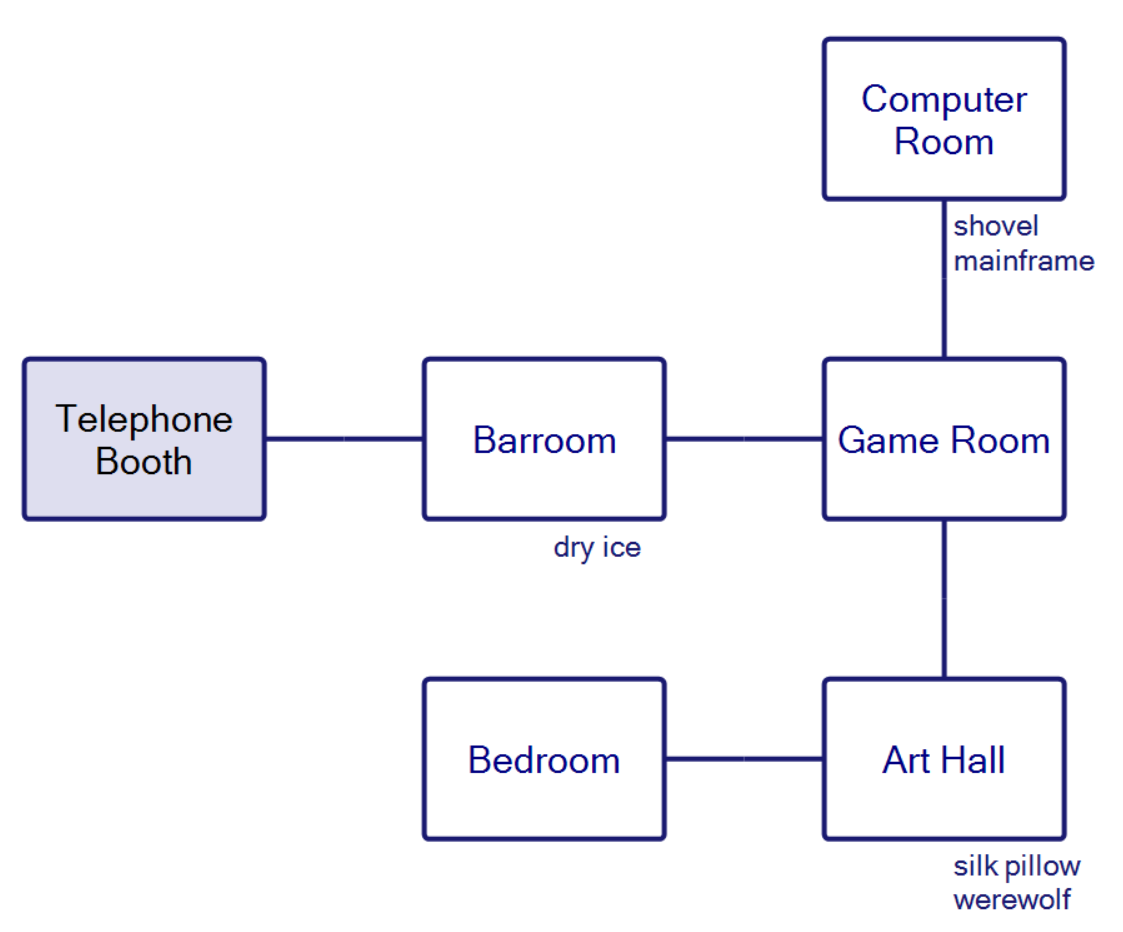
Proceeding through again, I got the dime, and tried taking it to the telephone booth, where this time I was teleported to a new area. (This is dark, so you need the flashlight again.)
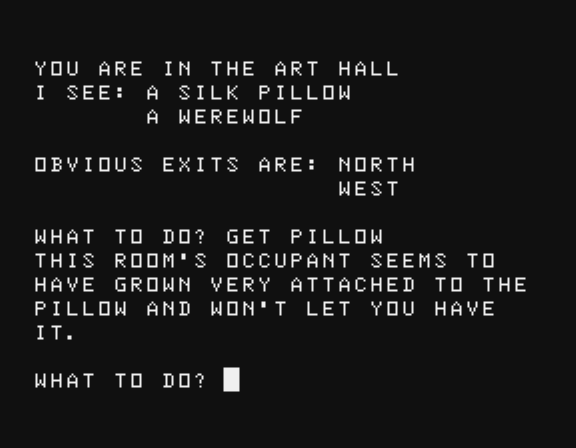
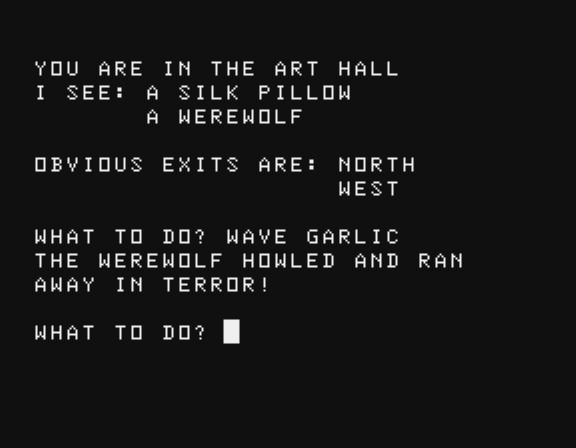
The dry ice needs the glove (the one appearing from magic word, not the imposter-glove that kills you); a werewolf guards a pillow…
The werewolf really needs that 800 thread count.
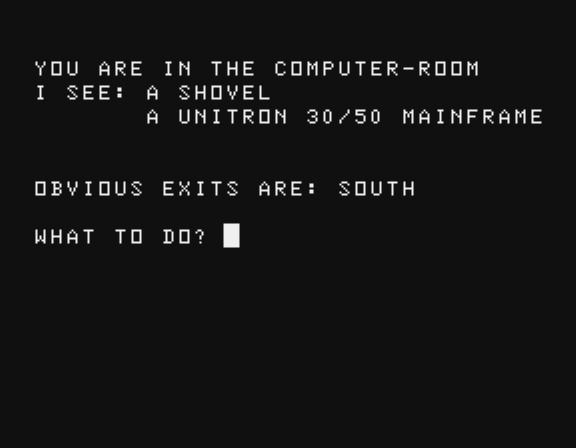
…and you can nab a shovel in a room with a mainframe.
The mainframe is oddly specific and possibly a clue about the author’s background; I haven’t found anything more than the name and address.
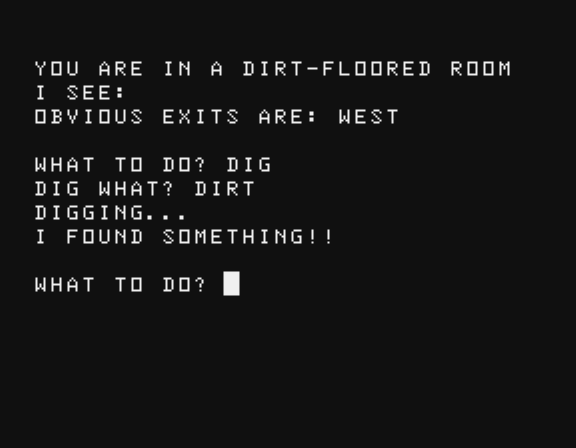
I wasn’t sure how to deal with the werewolf, but I figured the shovel needed to go back to the basement and the dirt floor.
You have to dig twice (as is the grand old tradition), unearthing a rusty key and some garlic. This took care of my last two obstacles, the front door of the house and the werewolf. (I mean, I normally would use garlic on the vampire, but the vampire already was driven away by a flashlight.)
It’s not quite trivial to get to the end; the logistics are irritating, and there’s enough random aspects it’s not hard to end up having your flashlight run out of power. (This is true even though Jim Gerrie bumped up the number of turns it lasted!) I mentioned earlier how the monk moved around; I later found myself wanting to get the leather glove (magic word in the basement phonebooth, same as before, but a random magic word) and found two of the house’s critters now had moved in.
I had to get the banjo and the hairbrush in order to get the glove. What makes this even “better” is that if you drop an item outside, it disappears, so it is quite easy to have your game softlocked at this point.
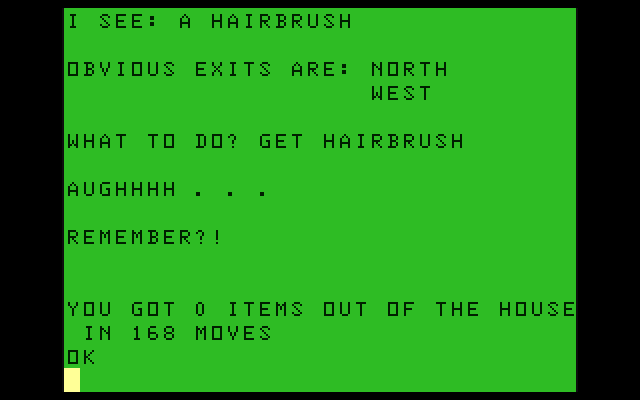
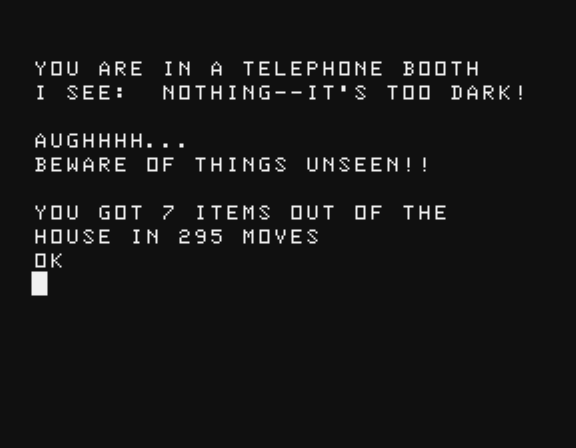
While dealing with these annoyances, I had taken what I thought were all the objects, but I guess not, because I grabbed the “imposter” box and died!
I gave it all one more try from the top, this time trying to avoid disturbing any of the enemies until I absolutely had to (you can use the magic words without finding the book/parchment first) but still found myself teleporting from a lit telephone booth into a dark one and–
Now the 3rd floor phone booth will always transfer you to another phone booth, even without having the dime, so you can’t get trapped on the 3rd floor before getting the dime. This can happen if you get there by discovering and testing out the magical words, which can zap you to random rooms. Text adventures shouldn’t just be about meticulously recreating movement patterns learned after continuous arbitrary failures. They should be about figuring out clues and solving puzzles while exploring.
Coming up: what is hopefully a less buggy CoCo game. At least this one the editor didn’t make the grand announcement they didn’t beat the game before publishing it.
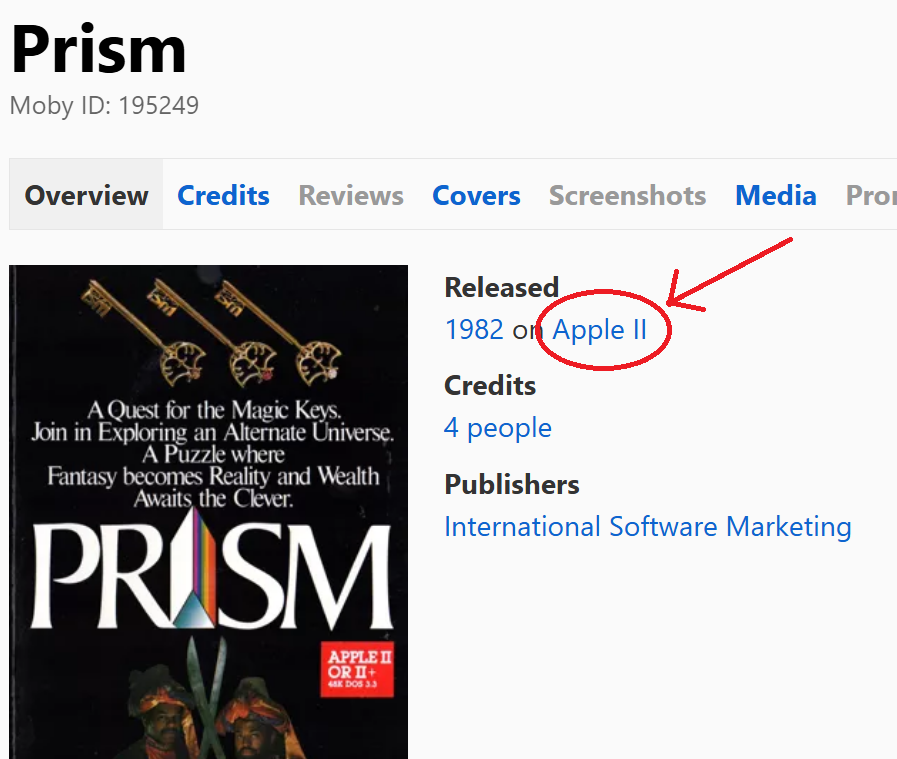
The review that mentions PRISM (Creative Computing, May 1983) only lists the game for Apple II, and PRISM barely got any mentions later, so I didn’t even think about a second port until Atarimania asked in the comments about it. To be fair, that version is rare enough it gets a perfect 10 from its Atarimania listing. Given there are three eBay listings of the Apple II version right now as of this writing (one, two, three) I think it likely the Atari version didn’t sell as well.
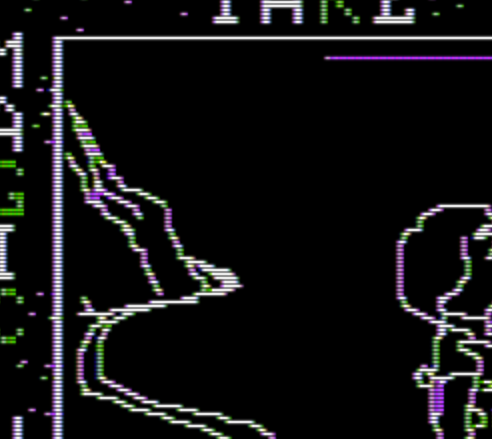
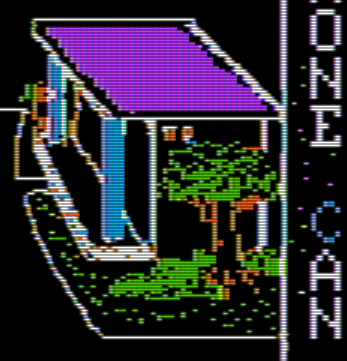
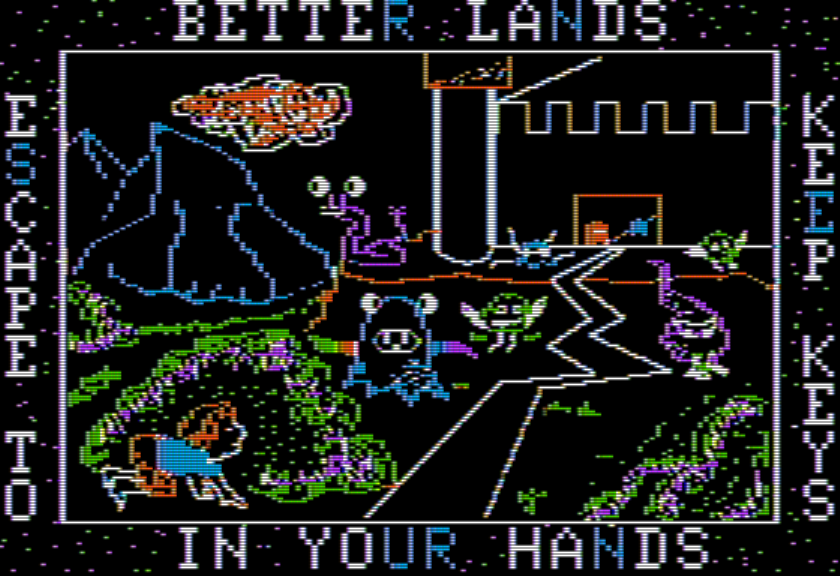
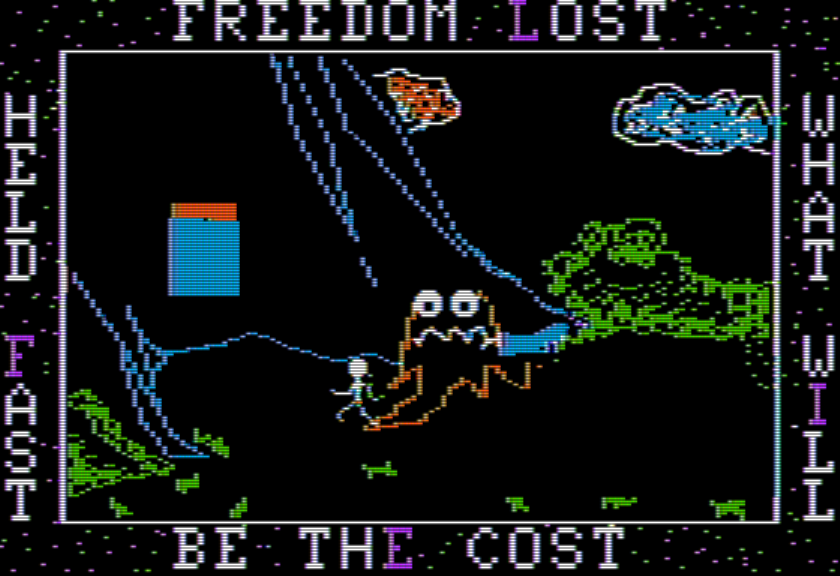
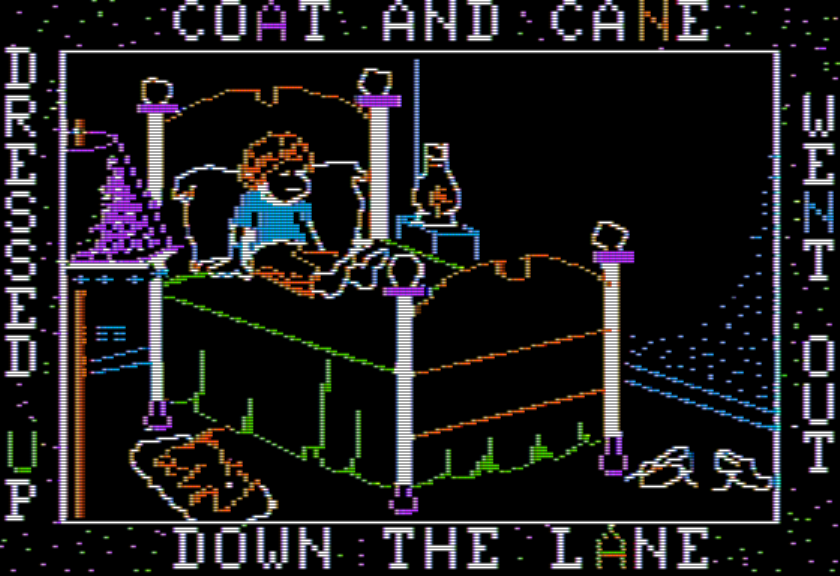
After some emulator issues I did get the game to work, and there are enough differences it’s worth downloading the set if you’re trying to work out PRISM in earnest. For now, I’m going to put all the art-screenshots (but not the text-screenshots, which you can find in the file if you want to delve for cryptograms or whatnot).
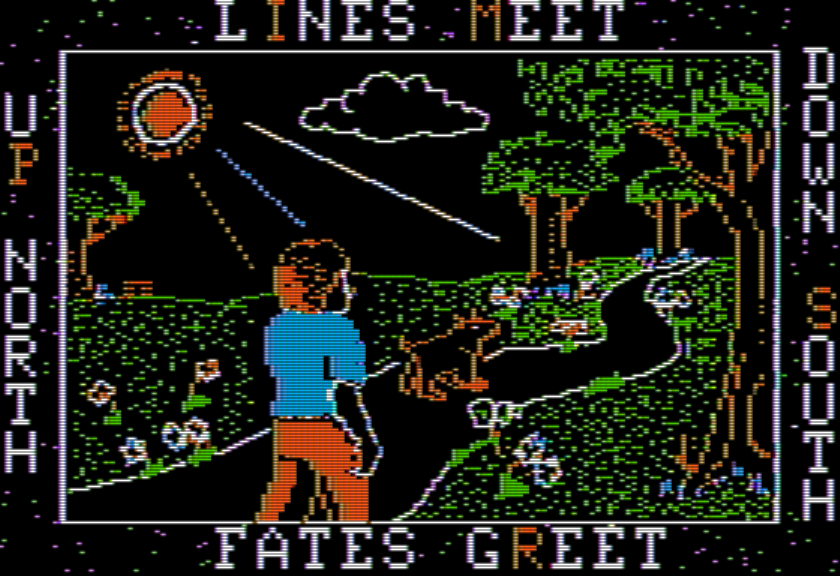
Just to make clear what I mean by differences, here’s the first screen of the Apple version…
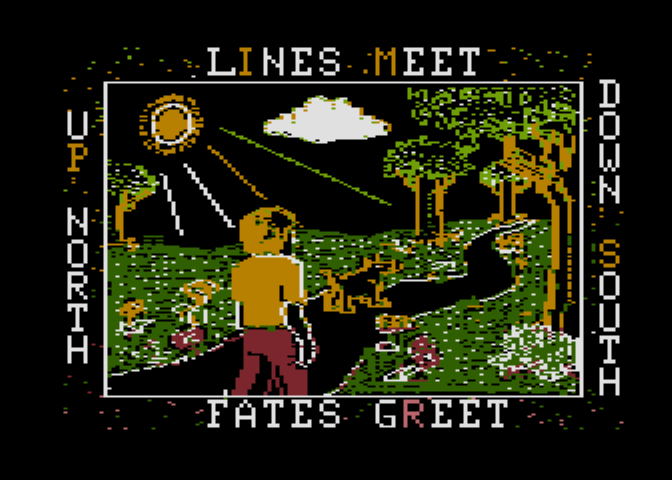
…and the first of the Atari version.
PIMS are a different color than the R, which is not the case for the Apple II version. I had been thinking of the exact colors of the letters as highly significant, but maybe not. (Or the puzzle is broken on one platform but not the other!)
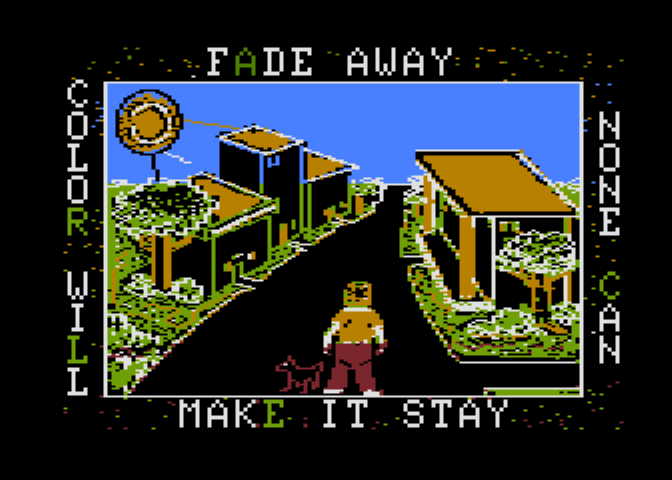
Here’s the remainder of the images, including a brand-new image for Atari (you’ll know it when you see it).
One last observation is the sound is different. The opening of the Atari version has a better melody, and there’s no “random music” going on at the XXXVI picture.
If nothing else, this clears up the squinting I was doing at some of the Apple II screens trying to see if the “noise” meant anything (that doesn’t even appear in the Atari shots). I don’t know what to think about the color changes. Look at the tree: it’s TRE + T now! If you consider just the blue letters, you get T from that page plus UNA from the last page. The only time red appears is the “R” at the start.
Coming up: some TRS-80 Color Computer games which should hopefully be less trouble!
This is my last post on PRISM for now; just like with Alkemstone, if something comes up worth posting about I may return.
Some things to get out of the way first: I have a set of screenshots downloadable here and a video here (I’ve also embedded it below). This is for anyone who wants to check the actual letters of the text or check frames of the color cycling as suggested in the comments. I haven’t had luck with either but I also haven’t pushed that hard.
There is sound but most of it is irritating. The one interesting part (in a treasure hunt sense) starts at 3:06 in the video where there is “music” which seems to be generated completely at random. That could of course signal some kind of coded information. (More on this later.)
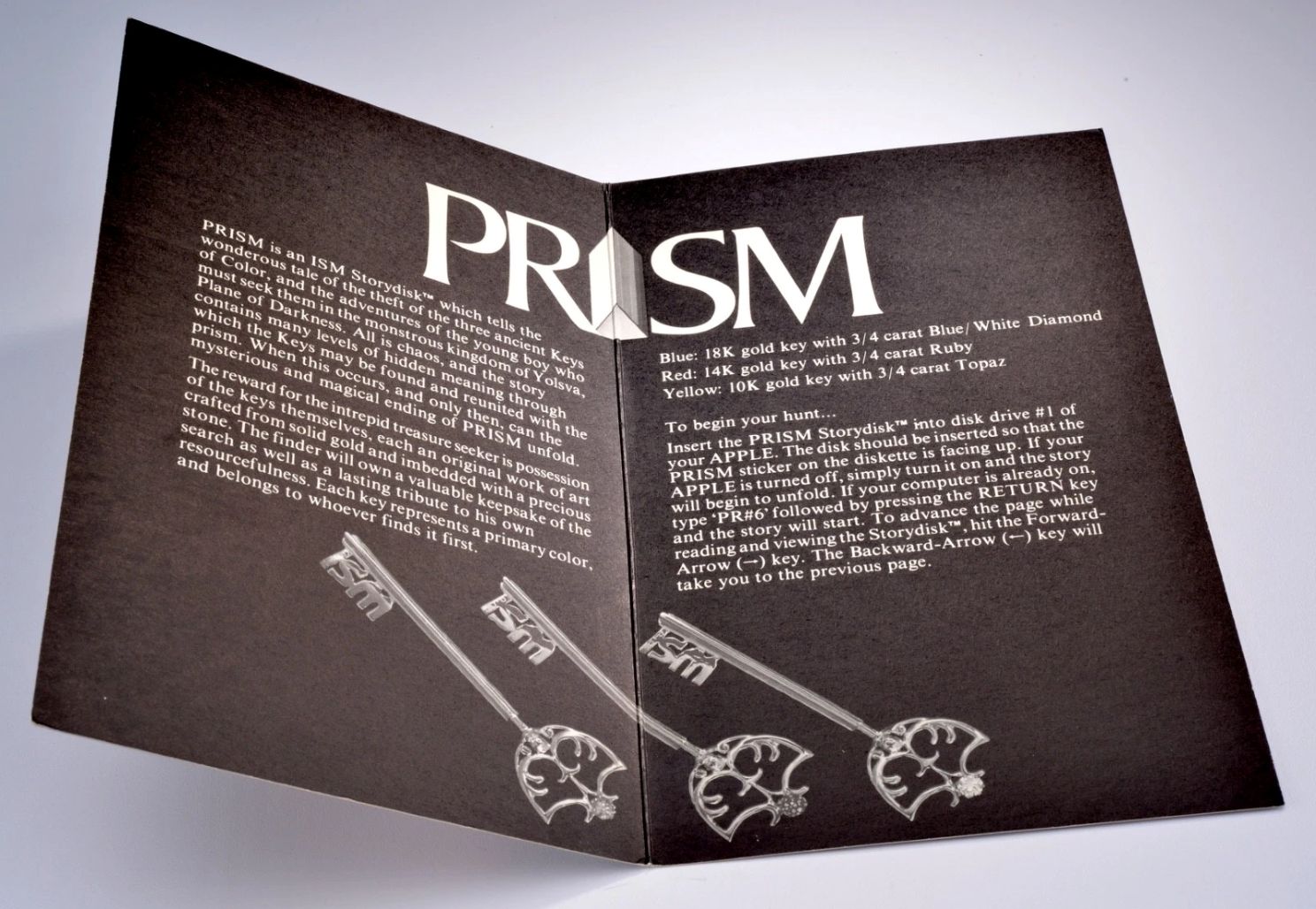
I also had the question (brought up by Arthur O’Dwyer) what I thought the chances are the game is “broken”. I certainly don’t think it is intentionally so (this is a business software company that had four people make the game, they’d be risk-adverse about making a complete ruse) but it is still possible unfortunate typos slipped in which wreck something. For example, from the packaging that I quoted at the very start:
PRISM is an ISM Storydisk which tells the wonderous tale of the theft of the three ancient Keys of Color, and the adventures of the young boy who must seek them in the monstrous kingdom of Yolsva, Plane of Darkness. All is chaos, and the story contains many levels of hidden meaning through which the Keys may be found and reunited with the prism. When this occurs, and only then, can the mysterious and magical ending of PRISM unfold.
Yolsva is spelled Yolvsa in the game! This worries me both at a general level (if that’s a mistake, what else might be?) but also at the level of this specific name being odd enough it might be part of a clue. (Alkemstone had a typo in a clue where Jo was spelled Joe, so there’s precedent at least.)
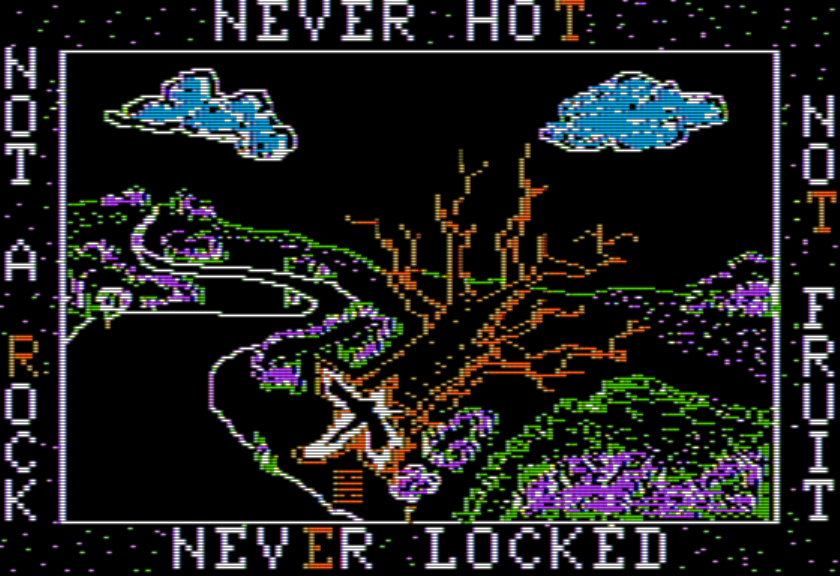
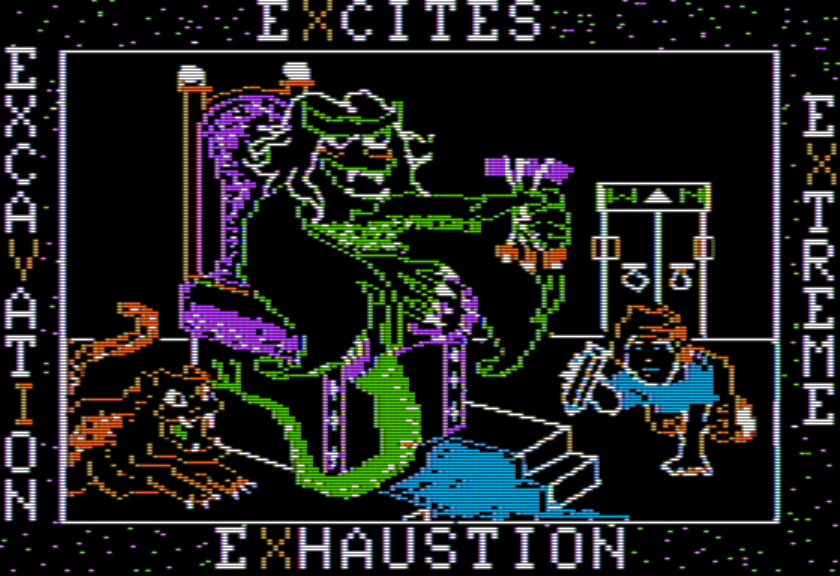
I tried focusing my efforts on one page in particular, which feels quite central to the puzzle.
shamhat pointed out in the comments the part of the tree next to the double-fire symbol looks like a phoenix.
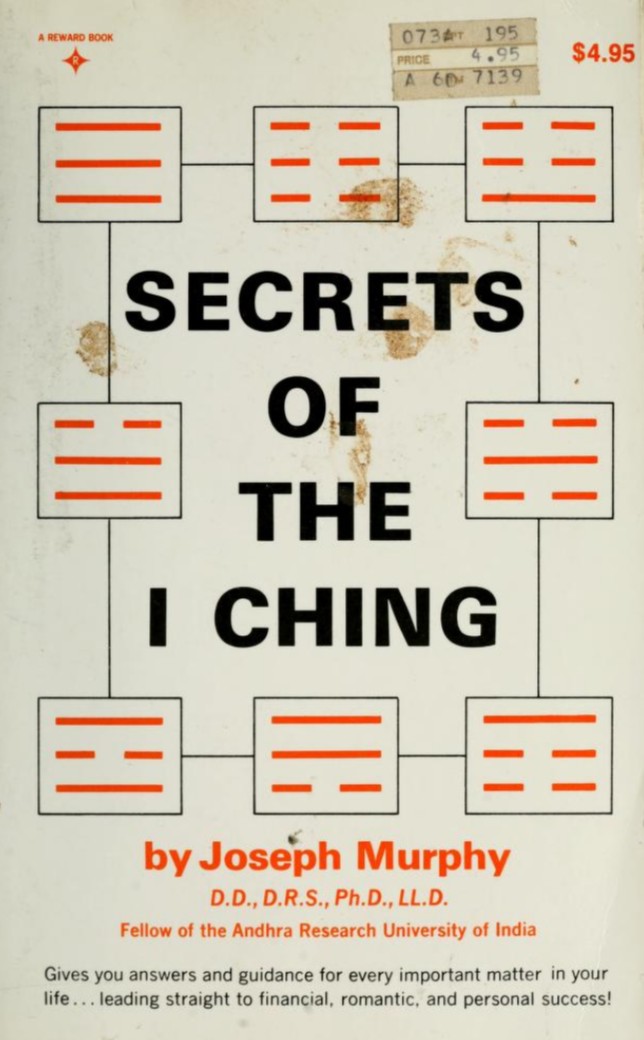
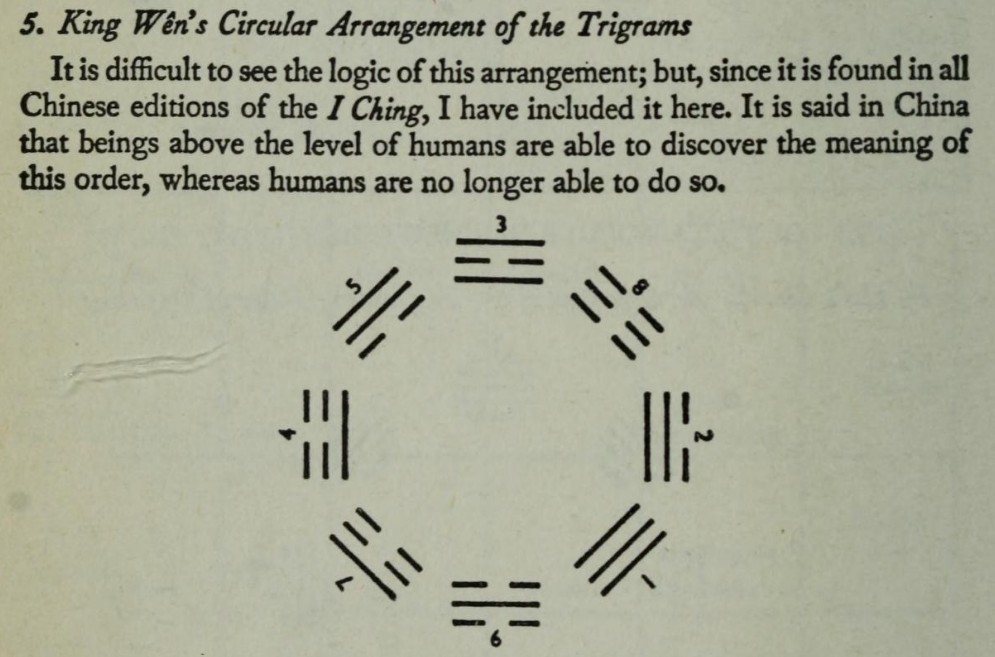
I spent a while researching the I Ching, or more specifically, the I Ching as understood by the authors in New York in 1982. There were a lot of “new age” style books from the 1970s so they could have been drawing from them.
From the 1970 book Secrets of the I Ching by Joseph Murphy, “one of the world’s best known authorities on helping people with mystic methods.”
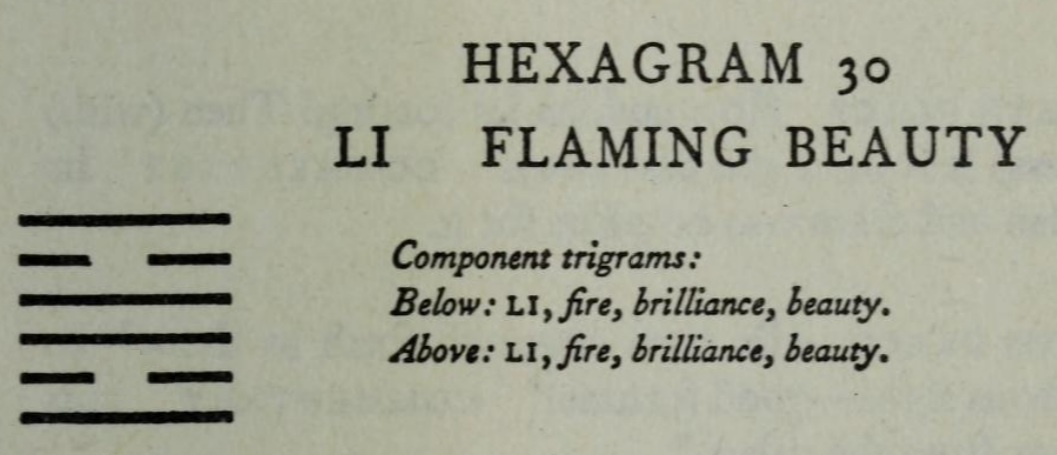
The reason I say the particular slide I highlighted is central is that it has the double-fire symbol, also known (in the 1927 translation by Wilhelm) as The Clinging.
This hexagram is another double sign. The trigram Li means “to cling to something,” and also “brightness.” A dark line clings to two light lines, one above and one below— the image of an empty space between two strong lines, whereby the two strong lines are made bright. The trigram represents the middle daughter. The Creative has incorporated the central line of the Receptive, and thus Li develops. As an image, it is fire. Fire has no definite form but clings to the burning object and thus is bright. As water pours down from heaven, so fire flames up from the earth. While K’an means the soul shut within the body, Li stands for nature in its radiance.
Later Wilhelm writes:
What is dark clings to what is light and so enhances the brightness of the latter. A luminous thing giving out light must have within itself something that perseveres; otherwise it will in time burn itself out. Everything that gives light is dependent on something to which it clings, in order that it may continue to shine.
A more scholarly breakdown from 1979 by Iulian K. Shchutskii (Researches on the I Ching, Princeton University Press) mentions a translation of “Supreme Success”. Many books vary — which is unfortunate for getting into the heads of our authors, who may have been referring to some lost hippie zine — but both “success” and “perseverance” seem fairly universal.
Another common interpretation I found (not universal, but common enough it’s a safe assumption the authors were thinking of it) is that I Ching symbols refer both to directions and to times of year.
Unfortunately, interpretations again vary, but it generally seems to be earth is east and fire is south (earth I’ve seen northeast, also, or even at “center”); the important part also is that north/south/east/west are simultaneously associated with the various equinoxes. That means we can use the shadow method to find a digging spot. While I could see getting lucky with hiding one item by using some very distinct landscape clue (like a particular rock at a cave over a patch of dirt) with three items I find “dig where the shadow’s tip is at the _____ equinox” to be much more likely.
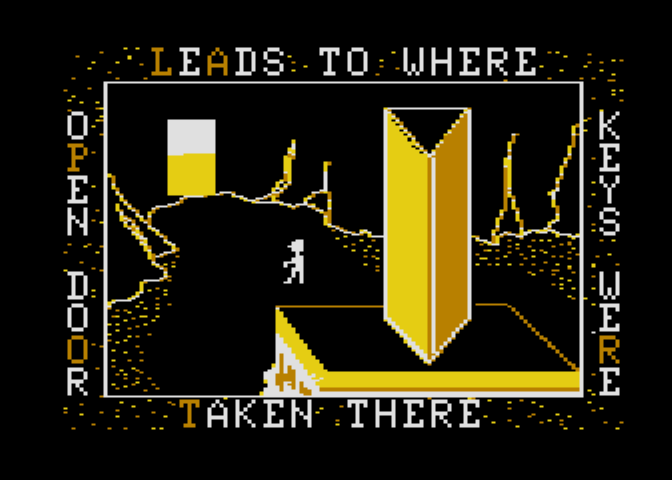
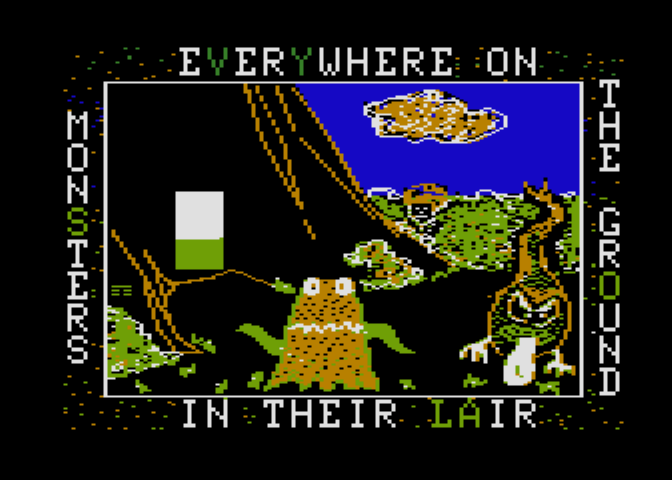
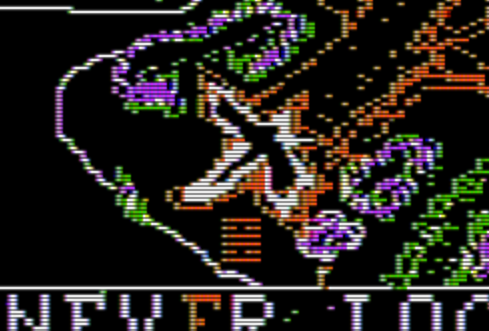
Going back to that fallen tree, my guess for NOT A ROCK / NEVER HOT / NOT FRUIT / NEVER LOCKED is that the answers are drawn from I Ching elements.
Heaven, the Creative
Lake, the Joyous
Fire, the Clinging
Thunder, the Arousing
Wind, the Gentle (Wood)
Water, the Abysmal
Mountain, Keeping Still
Earth, the Receptive
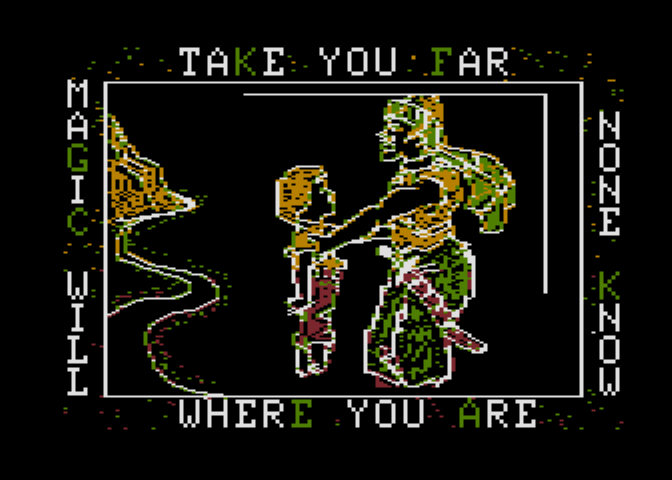
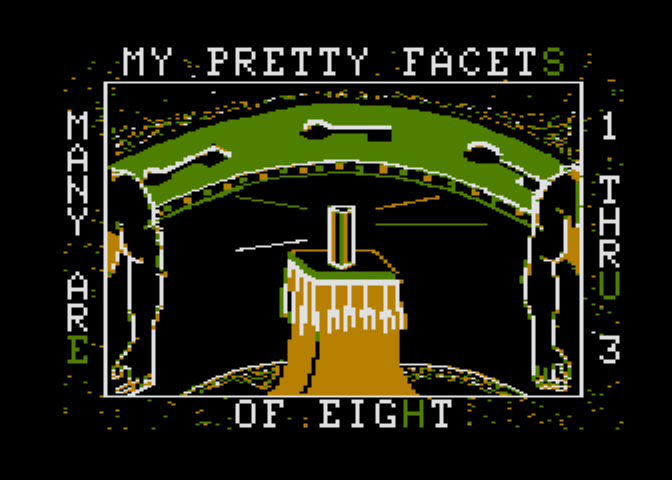
1 THRU 3 OF EIGHT could also be referring to these eight in particular (it may be the I Ching elements are associated in the game with a color as well).
I tried fitting the mysterious letters CGKFKEA as well. I had less luck (even looking at Chinese transliteration). It could refer to the composer Cage, who was very much into the I Ching, and the “random music” I referenced earlier could actually be a clue to him. His Book of Changes (1951) was formed via aleatory methods directly from the Chinese text.
Special thanks to everyone who contributed theories; and of course you are welcome to continue! I did manage to do multiple updates on Alkemstone after I “finished” so it quite easily can happen here as well. Additional thanks to Jeremy Salkeld for advice on I Ching translations.
Nobody is easy. Almost nobody, that’s the tricky part.
On the night of August 7th, 1979, I set off with Bamber Gascoigne, who was chosen to witness the burial. Once at the right spot, I cut a turf about ten inches square with my knife, then dug down until I’d made a hole to the depth of my elbow. There was a moment of panic when my trowel hit rock, but it turned out to be just a small stone. In went the pot with the gold, then the earth and the turf. I watered the spot to encourage the grass to grow again. As Bamber and I shook hands over the burial ground, the moon came out from behind a cloud and, I like to think, shone down a blessing on us.
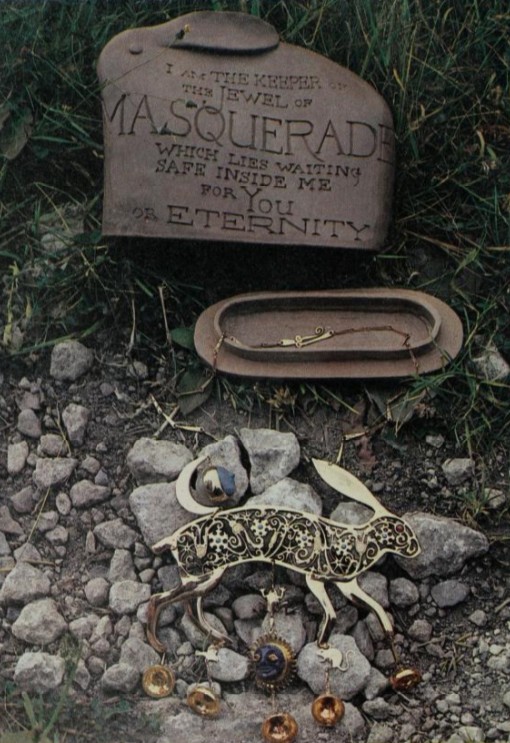
The grand “thousands (or or tens of thousands, or more) participants / only one winner” treasure hunt seems particularly daunting to manage if it is meant to go over a large chunk of time. It is unclear if Masquerade’s multi-year span was accidental or intentional. Certainly, when Williams designed the puzzles and hid his hare, he fretted over the puzzle being too simple, as explained by the witness Bamber Gascoigne:
Kit had explained to me the basis of his puzzle, but even with that privileged information I was unable to make it work out. The cause of my growing uneasiness was the thought that if it was in fact impossibly difficult, then I was the only person in the world in a position to form that opinion. Kit considered it very possible, even perhaps dangerously easy, because he had invented it.
The game had the right density of red herrings to baffle the public; more than “he had invented it”, I think the reason Williams thought the puzzle was easy is he knew exactly which elements were red herrings. The excess of extra text and riddles (including hiding a hare in every picture) made it easy to project almost any answer whatsoever.
They are far more complex than anything I had imagined, yet they fit the book. It’s a scientific principle that if you want something to work badly enough, you organize the facts so that it does. I watch people allowing themselves to be twisted round and round. In the long run, solving the book is a matter of trial and error.
— Kit Williams quoted in The New York Times, The Legend of the Golden Hare, November 15, 1981, while the hare was still buried
One issue (which applies also to Alkemstone and PRISM) is that the puzzle requires indicating an exact spot. This was long before public GPS use. Even getting somewhere in the ballpark isn’t good enough; a small field is too hard to dig without more information. Williams managed this (possibly with incorrect measurements) by using a particular day and a particular time and the exact position of a shadow. Based on what we know about Alkemstone, I’m guessing a similar idea. With PRISM, I’m not sure; PRISM’s job is made more onerous by having to give the location of three items.
People have been using clues to guess states (and I’ll get to that) but somewhere, somehow, there has to be something at a numerical level. Perhaps it is the shadow trick again (given the product’s theme of light). Is there some other way to do it?
Or it could be the puzzle is broken by unclear directions, like the stereotypical pirate map “forward 50 paces, then right 60 paces” which isn’t very exact at all. I had at least vague concern that this screen might be like that, although there’s a theory from the comments I’ll get to later that treats the puzzle as wordplay.
All this relates to another issue: how close are the keys to each other? There is no rule that says they need to be spread out across different states, and in the review I referenced last week the author asked specifically that question (with no answer received). I could see some particular landmark being marked which then gets re-used three times for three different shadow points, for instance.
I think part of the reason Pimania had a superior puzzle from what we’ve seen so far is it did not require an exact location; it was able to use fairly general symbolic language without getting into the nitty gritty of exactly how many meters forward from spot X to get.
I bring all this up not just because theorizing is part of the point of this blog, but also because it may help in forming a solution. Thinking backwards, we know three exact locations have to be clued somehow. (Maybe in a flawed way, but even the most self-deluded of puzzle-setters would know they can’t just indicate a particular park somewhere.) There’s not a lot of emphasis on time of year (like there was on Alkemstone — which is why I suspect that game was using the shadow method); if a game was not using the shadow method, is there some other compact way to represent three entirely different digging spots?
I note that the majority of the “twisted round and round” answers that I’ve seen referenced for Masquerade fail the criterion of giving an actual spot to dig. (From the NYT article: “Among the most common ‘solutions’ Williams receives are: Stonehenge, the Greenwich Observatory and the Hill of Tara in County Meath, Ireland.” I suppose you could claim you meant the “high spot” of a hill but even that would tend to be ambiguous. To be fair, some of these were sent to the author trying to go “fishing” for information with the hope they’d get feedback that they had the right area, just they needed to refine down to an exact spot.
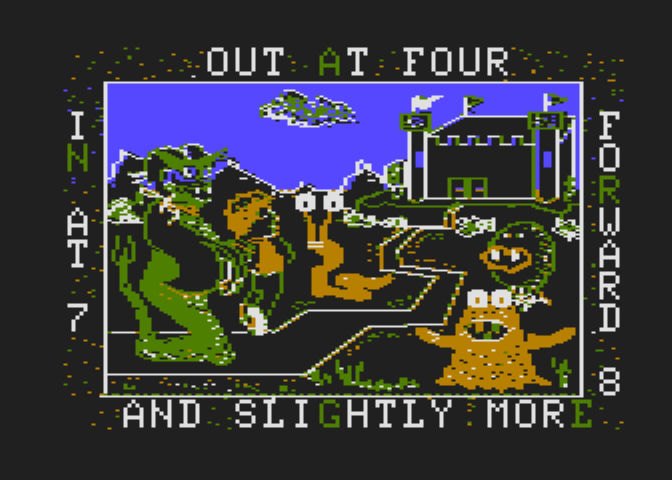
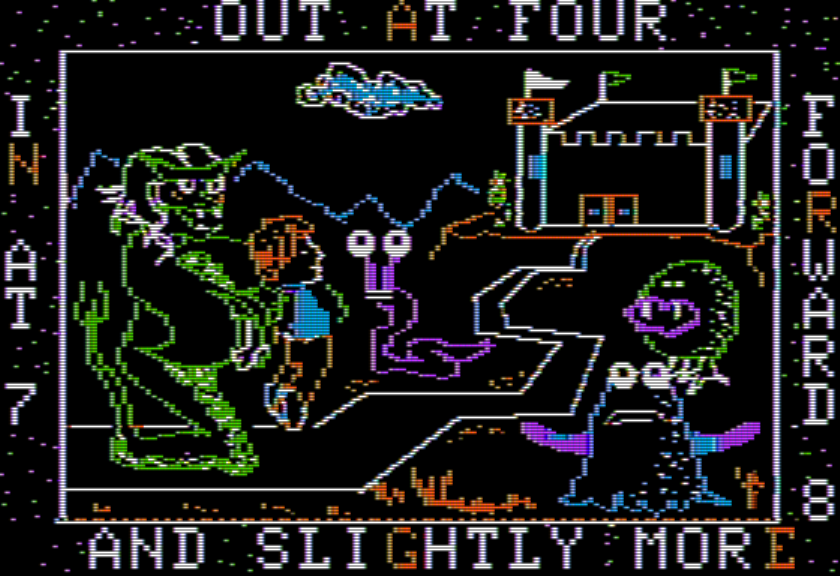
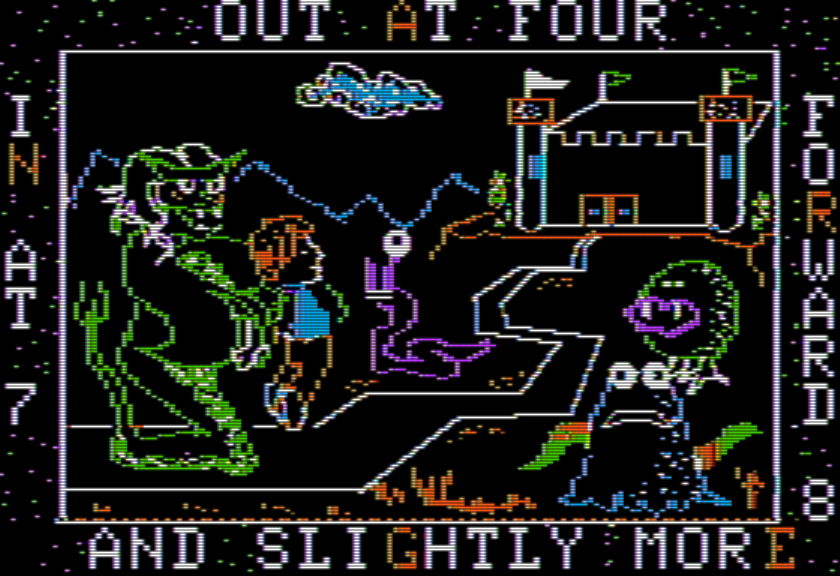
Swerving back to looking at the actual content, we had various theories trying to interpret the different side messages. Regarding that “In at 7…” message, John Myers had a promising theory:
The word “rerouting” has “out” at position 4, “in” at 7 and means “forward” (as in to forward mail) and is slightly more than 8 letters. No idea how this fits into the puzzle if it is correct though.
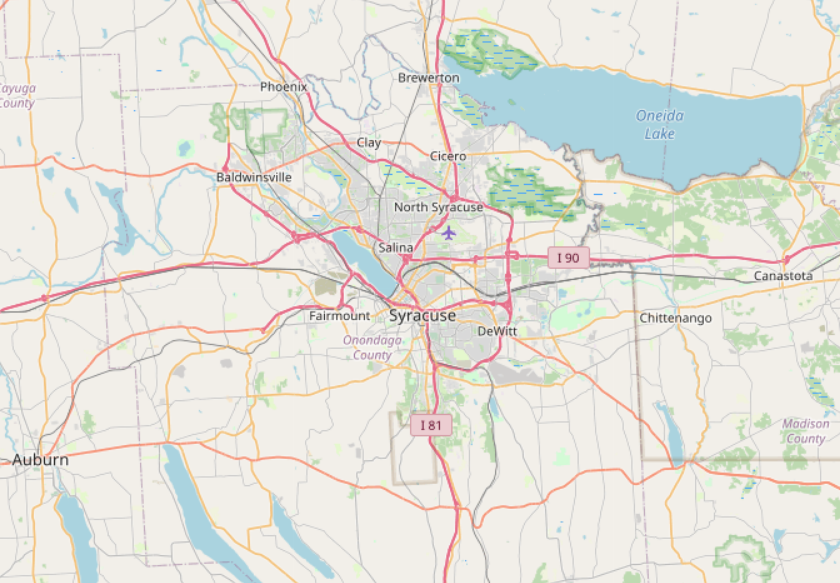
That is, the word being built is _ _ _ O U T I N _ like a cryptic crossword clue. I’m not sure where to go with this information, though; it might suggest US map routes, but not what to do with them. Syracuse is incidentally at the intersection of I81 and I90:
Aula and Aspeon tried to interpret messages as US states:
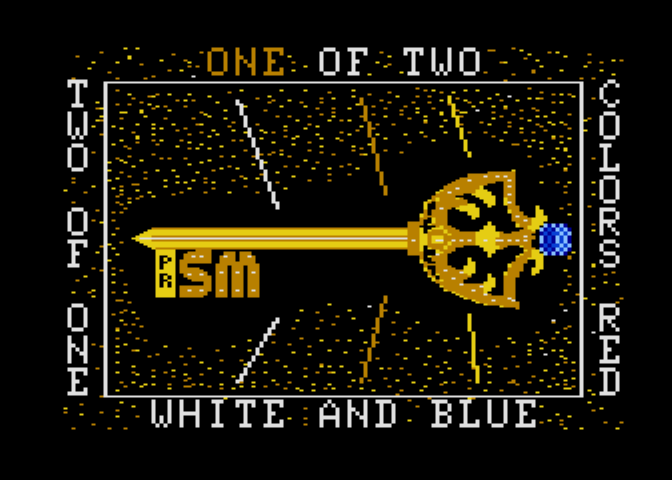
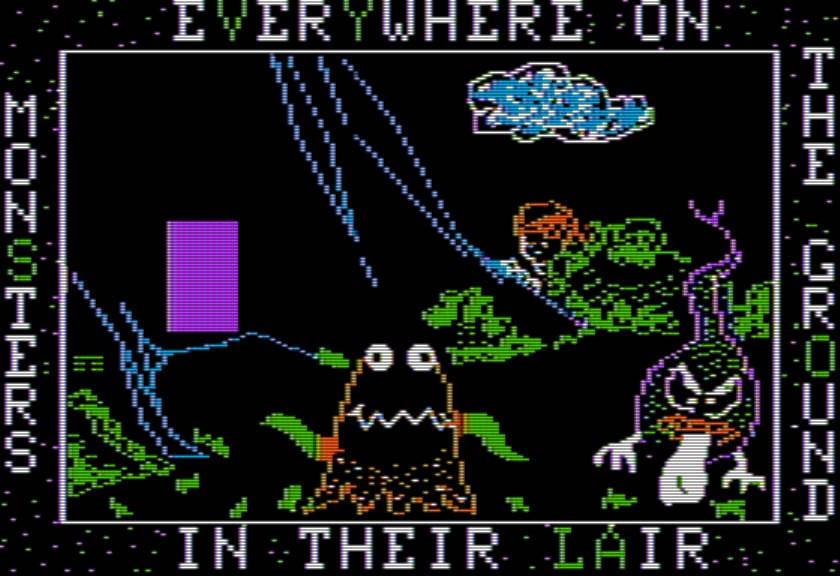
Also, “TWO OF ONE” comes before “ONE OF TWO” because the only always-sensible reading order is left/top/right/bottom. This makes the text rhyme at the halfway point and end (here TWO/BLUE) with the only exception on the page with “1 THRU 3 / OF EIGHT”. There are several states with eight-letter names, but only in “Oklahoma” all of the first three letters can point to other states; O for Ohio, K for Kansas (34th state, so XXXIV) and L for Louisiana.
“IN AT 7 / OUT AT FOUR / FORWARD 8 / AND SLIGHTLY MORE” is probably cluing South Carolina in a similar way: letters 6-7 of Carolina are IN, letters 2-4 of South are OUT, letters 6-8 of the full name is CAR, and there are a few leftover letters. (S/H/OL/A)
In more expansion of the “maybe some clues indicate states” idea, Rob suggested that “Up north / Lines meet / Down south / Fates greet” was in reference to some kind of state lines (like the “four corners” area around Arizona/New Mexico/Colorado/Utah) and Matt W. though perhaps “Fates greet” could be Truth and Consequences, New Mexico.
Morpheus Kitami tried to organize the letters based on color (using, as Aula points out, the proper order of starting left and going clockwise):
Red: PIMSRNESUHRTTENAREGVIXXX
Blue: RLACENONESRNENUR
Green: GCKFKAEUASVYOLA
Purple: APOLARTFLIE
With anagrams of
Red: PRISM HUES GRANE XXXVI (NRTTE extra)
Blue: CLEAR ONE RUNNERS (N extra)
Green: YOLSVA
Purple: POLAR LIFE
(The green is excluding the “GCKFKEA” text.)
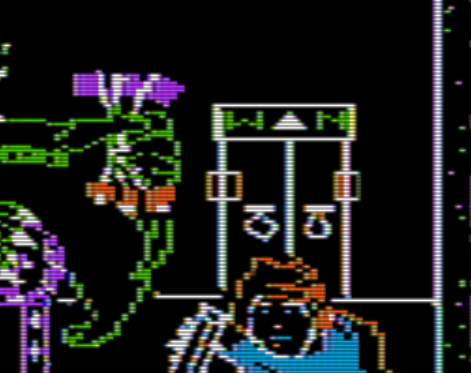
He also highlighted what he calls an “elevator”…
…although I admit I just thought of it as a door with the text over it. Intuitively, I do think there’s a fair chance this is a real clue, perhaps indicating whatever we find will have “west” amount indicated first and then “north” amount after. Or perhaps the up-arrow can be interpreted as a mountain, because there’s a few I Ching symbols scattered throughout, all of them referring to Gen (Mountain).
There’s a similar symbol at the fallen-tree picture. (It could be two versions of Li or Fire stacked on top of each other.)
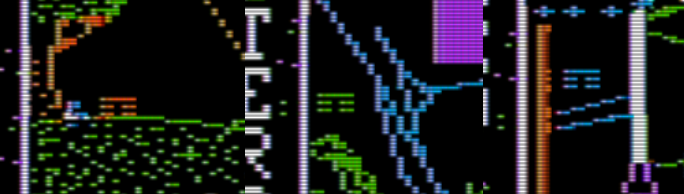
There’s enough mountain references in the art I got suspicious, but other than my guesswork going nowhere, it was failing the basic question of how do you indicate three exact spots? One could imagine very expensive surveying gear somehow being placed at particular heights but it seems like you’d need to still convey a large amount of information in order to mark where X is.
Even the “mystery anagram” page which is fairly sparse has part of a mountain in the picture.
I’m definitely going to be making at least one more post — I am determined to organize the information into some sort of (likely spectacularly wrong) theory so I can at least encapsulate what the authors may have been up to. More ideas in general are of course welcome.
In the meantime, anyone with a theory on NOT A ROCK, NEVER HOT, NOT FRUIT, NEVER LOCKED? I might throw this one out to social media because it seems plausibly standalone. It doesn’t work like a “riddle” since there are plenty of things that fulfill all four categories, but is there something themed around the contents of PRISM that would work best? Or maybe a set of five things (or more), where four out of the things are excluded neatly by the “rock/hot/fruit/locked” phrases?
The colored letters have different kinds of colors. Maybe instead of one word per page, it’s one sentence from all the differently colored letters. All the purple, blue, green, etc. This could be for each key, maybe this connects to the words on-screen?
…
There are some pictures in real world locations, perhaps this is intended to be a clue? Is there a building that looks like the two pillar building in Syracuse?
Morpheus is referring specifically to this one:
From ern2150:
33 letters? 3 keys, is that enough to spell city/state abbreviations?
From Alastair:
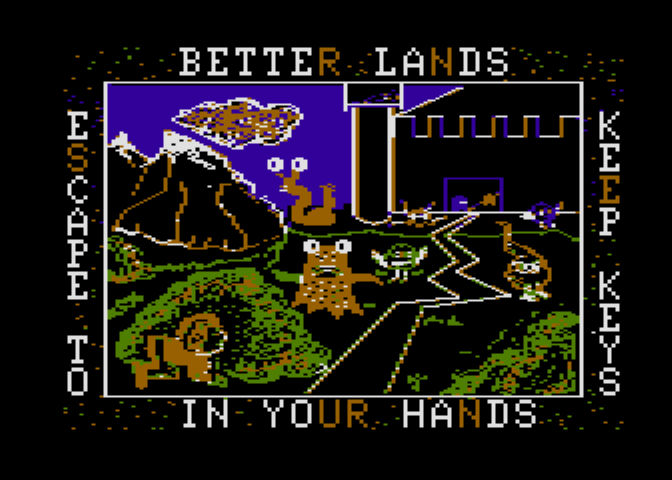
Up north / Lines meet / Down south / Fates greet.
Is there a northern US state (or state or town) where lines of some sort (roads, railway lines, whatever) meet, and for a southern state where “fates greet” makes sense?
I think a good approach is to think of “small” mysteries, individual questions that might be answered or theorized about even if we don’t have a good approach to finding keys yet.
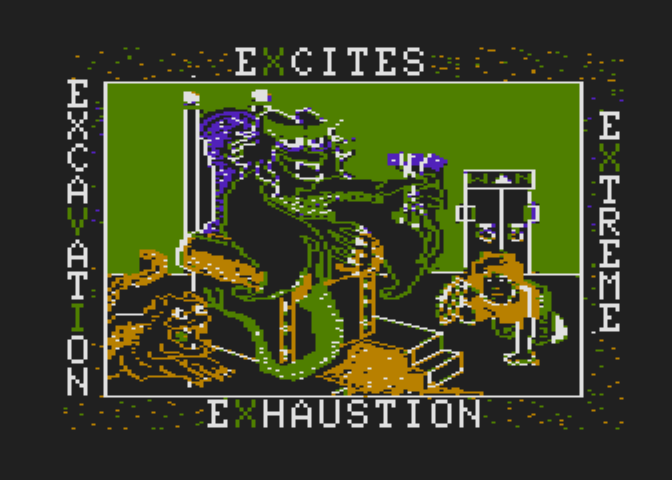
a.) What are the green letters KFGCEAK from the third image used for?
Most of the pages easily anagram. This one doesn’t, and another page you’ll see today doesn’t.
b.) What does 1 THRU 3 / OF EIGHT refer to?
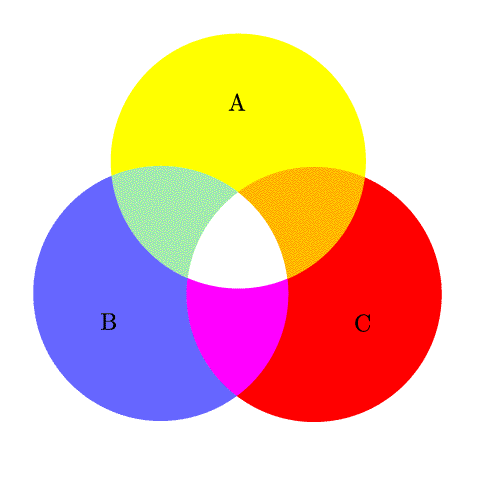
I would guess the “standard” Venn diagram with red, green, and yellow circles overlapping. (Especially given the packaging says “each represents a primary color” in regard to the keys.) This makes seven colors, eight if you include black. The list (red, blue, yellow, green, magenta, orange, white, black) does seem to represent the full color spectrum of the game.
Perhaps something that’s colored in green (like the mystery-anagram) refers to blue and yellow keys specifically, but not red?
c) What does ONE OF TWO / TWO OF ONE / COLORS RED / WHITE AND BLUE refer to specifically?
Maybe the magenta part of the Venn diagram?
I want to do some big-picture analysis in my next post, so rather than waiting I’m giving the entire rest of the story. Get ready:
Yolvsa, Plane of Darkness. A hot, silent wind blew over the desolate landscape, and colors more hideous than the boy had ever imagined painted the cruel specter.
Rising from the bleak surroundings, Hubert discerned a reptilian tangle resembling nothing in his experience except a grotesquely upturned tree. Waving above its misshapen body, he beheld a vision of wildly twisting purple tentacles… monstrously flashing green teeth… yellow tongues flapping wordlessly in an impossible world of terror.
YOLVSA.
Now, Hubert’s only contact with his familiar, secure world was the PRISM he had so hastily thrust into his pocket. Sensing more than feeling the heat now emanating from it, he pulled it out and held it in his hand. From the mysterious crystal now came a pale, pulsating light.
Instinctively, Hubert knew that he was nearing his goal, and that the PRISM was guiding him inexorably toward it. Determined now to meet with success or accept his fate, the lad prepared to follow the all-compelling crystal wherever it led.
At that instant, the parched torrid wind arose with a roar, sweeping before it every pebble, jot of earth, and the hapless Hubert. Desperate, with no other shelter visible, he reached out to grasp a limb lashing in the tempest. He had found concealment behind the torturously twisted limbs of a mutant tree where he made himself as small as possible and inwardly quaked as he waited.
TRET? This is the other one that fails to anagram. The side text also doesn’t match the story or picture at all, suggesting a stand-alone riddle.
Huberts efforts were to no avail. A creature of unfathomable deformity, grotesque in feature and limb, materialized at his side and cast him to the ground. Grane, prince of Yolvsa, keeper of the thousand names of horror, gazed redly at the small, prone human.
With a malignant sound that the boy could only compare to laughter, the creature stared down at Hubert and, at last, spoke. ‘The Protectors send a mere child to do their bidding. O, powerless being, we of the darkness will teach you to confront the forces of Yolvsa. Away to my stronghold, where you will meet your inescapable destiny.’
The entrance to the stronghold of evil; a seething, snarling mass of unspeakable forms crying out for a share of the treat. Hubert could not mistake the fact that he was to form the basis of a savage ceremony. How they howled in the throes of unwholesome ecstacy!
(Note: “Huberts”, “gazed redly”, and “ecstacy” are transcribed correctly. Gazing redly could of course be a clue.)
GRANE, the name of the prince. Again the side text is more irregular than normal.
With monstrous majesty, Grane led the boy through a labyrinth of chambers and corridors into a vast, cold space. In it stood a twisted throne of immense magnitude upon which Grane seated himself. His red eyes stared down from his sinister face.
‘Resign yourself, whelp. Although you are an insignificant figure, you may yet furnish an interesting tidbit for my extremely large fangkat. Come, my lovely. . .
From the recesses of the darkest corner of the chamber slinked an indescribable apparition, a being of incredible hideousness and all too apparent appetite. Brave as Hubert was determined to appear, he quavered under the malicious stare of the creature.
With little hope of escape, Hubert’s glance darted wildly about the throne room, alert to any means of salvation. Transfixed with terror, he was still aware of the PRISM, now burning in his pocket. Its ancient purpose aroused at the nearness of the keys. Like a thing alive, it demanded to be set free! Hubert drew it forth, and like an extension of himself, flourished it in the faces of the Yolvsa horde.
XXXVI, that is, the number 36. (Or 34!)
As if with a will of its own, the PRISM whirred above their heads in the hands of the intrepid lad. The Keys were near, and Hubert would have them whatever! As swiftly as the thought had come, a glint of bright metal struck his eye.
‘A mere talisman — that trinket — will avail you not,’ raged Grane, ‘and we taunt you as you stand before us. Behold! The Keys are here in my hand — your first and last sight of them.’ He raised the keys in his twisted hand, daring the boy to marshall his last spark of courage and make a futile attempt to defend himself.
Hubert knew not what he did, but the PRISM guided his hand in a flashing arc. As he brandished it in Grane’s face, it glowed with a white-hot force which seemed to be drawn from the Keys the monster held. Enraged in the face of the burning crystal, Grane gave a mighty roar. . . and an eruption of color — the brilliance of the spectrum — burst upon the assemblage. Half blinded by the intensity, Hubert nonetheless heard the clatter of metal tinkling at his feet as Grane swayed on his throne of terror.
Hubert, his hands sprawled along the floor, felt desperately around him for the keys, trying to retain the direction of their ringing in his ears. After what seemed an eternity, his groping fingers felt a small metal object and, suddenly, Hubert had the magic keys of color grasped firmly in his trembling hands.
I still find interesting the notable lack of yellow.
Driven only by instinct, the boy crawled around the chamber, seeking the great iron doors which meant a passage to freedom. The PRISM, its colors shining with brutal intensity, masked his intent as he made his hurried way through the anarchy of Grane’s throne room.
Hubert reached the doors shakily, drawing great gulps of the fetid air into his aching chest. Quickly realizing he needed his sight, he pocketed the PRISM, extinguishing its blinding brilliance. As his eyes adjusted to the relative darkness, he hastily scanned the maze of corridors confronting him, struggling to recall Grane’s course when they entered. The awful sound of naked claws scraping and clattering on stone, spurred him to action.
He ran! He ran with a speed as great as his terror. First left, then right, then right again and miraculously, the great doors of the stronghold loomed up before him.
Out the door he flew, eyes wild and lungs burning from the noxious air. From within the loathsome building came the sound of a mighty bell, sounding the alarm to the minions of Yolvsa. Hubert jumped from the path and skittered down the embankment just as the pursuing creatures burst through the gates howling their terrible curses.
RUNNERS?
His forward motion carrying him, Hubert lunged–but in the same instant was pulled back sharply. Around his ankle wound a hot, purple tentacle dragging him relentlessly, remorselessly, back into the Plane of Darkness!
LIFE.
With his overtired mind and body reaching their utter limits, Hubert made the most important decision of his young life: If he could not survive, he would, at least, cheat Grane and his malignant forces of their victory.
Drawing back his arm, he hurled the Keys and the PRISM together, with all his might, through the rapidly narrowing space. The world he, himself, would never again behold would yet have its beauty restored.
Even as he swooned, a mightily sinewed arm reached through the prortal and pulled the boy across the threshold. A rush of cool, sweet air, and the darkness closed about him…
(Note: “prortal” correct.)
In the quiet of his own room, in his parent’s humble home, Hubert awoke as from a dream. There were no Keys, no sign of the glowing PRISM. Was it, then, a dream, or had he really seen and done the fantastic deeds he remembered now? And yet, as he roused himself wearily from his bed and silently pulled on his shoes — a single blade of grass, colored in a loathsome shade of purple, dropped from a shoelace. Hubert acknowledged his playful puppy’s kisses and, his face set in a mask of determination, finished dressing and headed out the door, Uanna barking and following close behind.
In a sequestered cavern, beyond mortal reckoning of time and space, a PRISM still glows quietly in the semi-dark.
Color of an uncertain brightness has returned to the world, but the rich tints and intense hues of a bygone time are only the stuff of legends, living in the memories of the very old.
Is the quest unfinished? Does the PRISM still burn to be reunited with the Keys of the spectrum, lost by Hubert’s heroic throw? You and I know, that somewhere on this terrestrial plane, the answer lies hidden. Will you follow the fearless Hubert and complete the task? To the Protectors of the PRISM falls the duty and honor of reuniting the keys with the PRISM and reaping their colorful reward.
With a little animating on the letters.
Hopefully there’s enough to chew on now! If nothing else the pages with “non-sequitur” phrases could really use some speculation. I’ll get into wild-analysis mode next time and try to sort things; one big question is “are the three keys all hidden by the same code, or are they clued in three entirely different ways?”
(OK, if you combine the two “unanagrams” you get KFGCEAKTRET which can make “keg fact trek” or “tack fret keg”. I don’t think either of those are intended.)









 Renga in Blue
