Back when I wrote about my favorite games of Tlön — essentially, imagining games from an imaginary universe where the usual rules may or may not apply — one of the ideas I tried to play with was the usual definition of a game. (Fun exercise for game designers: take a set of definitions of a game, and make a counterexample-game for each one, as Wittgenstein cackles in the background.)
Such definitions try hard to exclude, say, spreadsheets. So how could a spreadsheet (not something made in one, but the actual application itself) be a game? Theoretically, by making the operation of the software itself a puzzle to figure out; have unconventional UI tricks, and maybe convey everything in an invented language, and to even do your quarterly report you’d need to “solve” how the program works. Perhaps it could be inspired with elements from bad UI competitions.
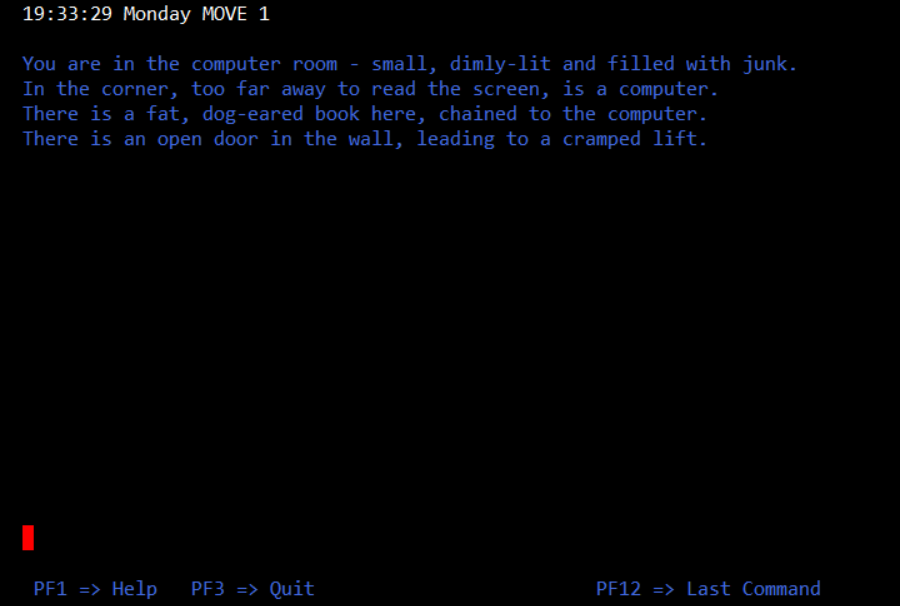
I preface with this because operating ZENO is a little like my theoretical spreadsheet; puzzling out the editor especially (as in a text editor, for changing source code) has required dealing with cryptic documentation, and some of the documentation is tore off and located in other places on our space station/base.
(Or maybe spaceship; I think we’re “static”, like in geostationary orbit, but there’s enough weirdness going on I might be wrong.)
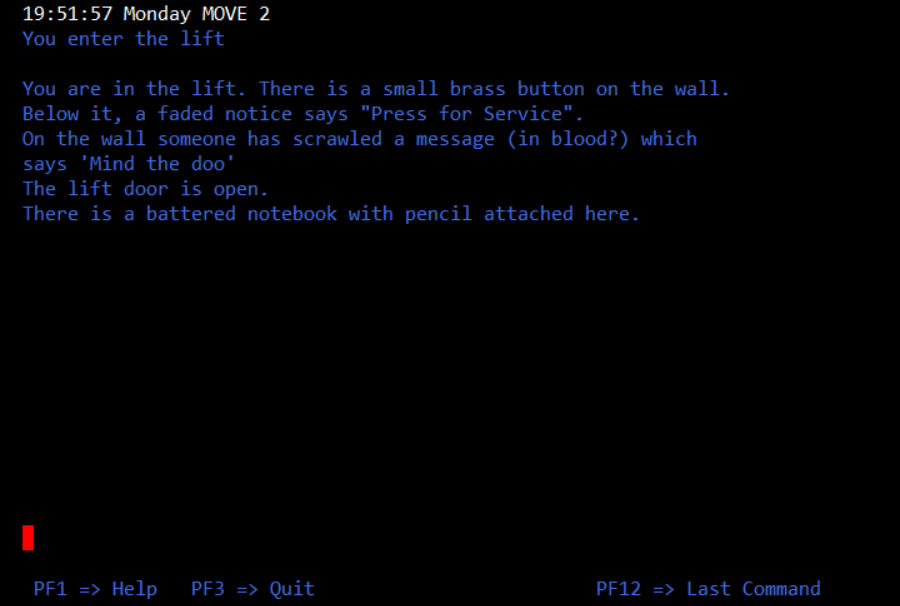
Consider the lift. I knew there was a “lift” program that you could run on the computer (by just typing “lift”) but I knew it only went to one other floor and back. The instructions are suggestive that there’s more floors.
Screenshot from last time.
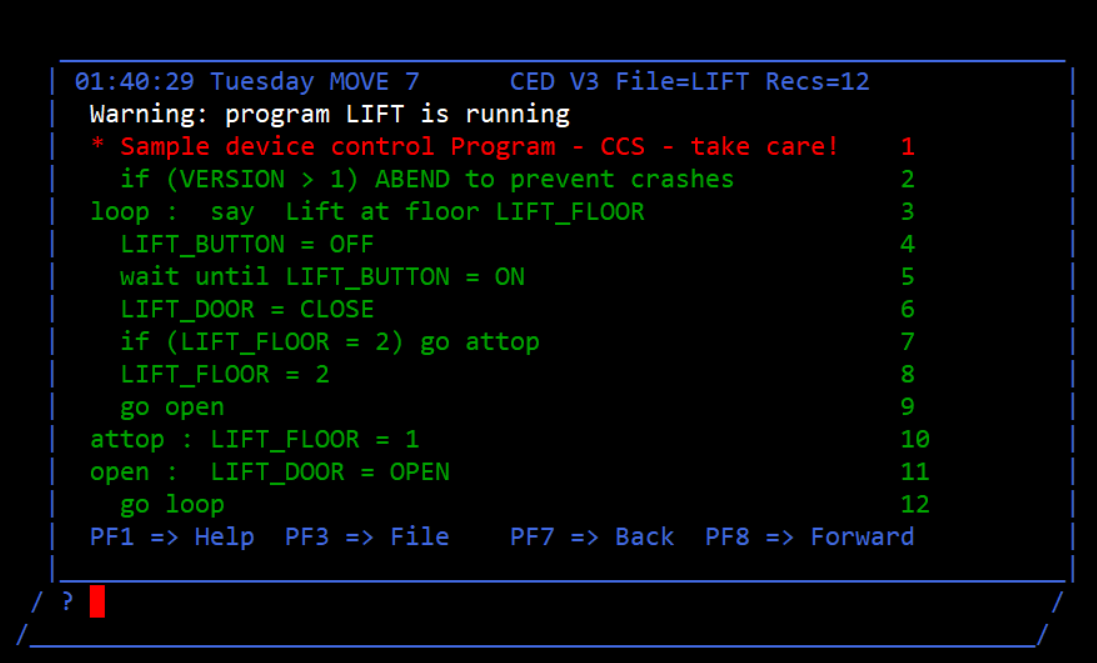
After a bit of back-and-forth I realized I could type “edit lift” at the prompt and see all the code.
Here’s the first part of instructions for the editor:
line commands:
nnA adds nn blank lines (default nn is 1)
nnD deletes nn lines (including this one – default nn is 1)
nn” copies this line nn times (default is 1)
/ makes this the current line
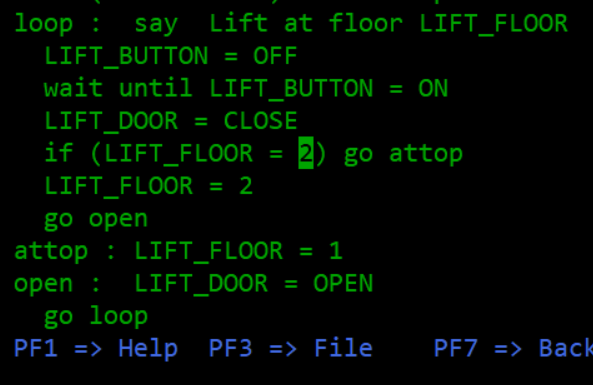
I have no idea how to enact any of these. I had to just ignore them and move on to a second page, which has more instructions with different ways of doing the same operations. For example, I can type :5 to jump to line 5, then type DEL to delete it. The important thing I had to pick up on is that pressing TAB switches between what part of the screen your cursor is on, so you can hop directly to particular lines and edit them (as opposed to retype something, using the command INPUT INSERT_TEXT_HERE). For example, I can hit TAB until reaching line 7, and right-arrow over a bit…
…and then change the 2 to a larger number. What this does is check the floor number, and if the lift is out of floors, it will jump to the part of the routine where it switches the floor back to 1. By making the number bigger, you can now have access to floors 3 and 4. (While you’re at it, you need to change the next line to LIFT_FLOOR = LIFT_FLOOR + 1 which will roll through the possibilities rather than just setting the floor outright to 2.)
Of course, realizing that you can do this in the first place is a puzzle, but the editor itself ended up being one too! While some of what it is doing resembles editors like EMACS, some aspects (like forcing the whole word INPUT before typing in text) are unique to the world of ZENO, so genuinely make a spreadsheet-game of sorts.
It doesn’t help that the game always seems on the verge of crashing. If you open up the help but go to a page that doesn’t exist, the game crashes and you need to restart; I don’t think this is an emulator bug.
With the lift fixed, I was free to explore what turned out to be four floors. (Trying to get to 5+ just has the door stay closed, and before anyone asks, the same thing happens if you try for a “floor 0”. Now that I think of it, I haven’t tried every floor, so it’s still possible there’s a secret floor 32 or some such. There’s also another potential trick later that I’ll explain with the LIFT_DOOR variable.)
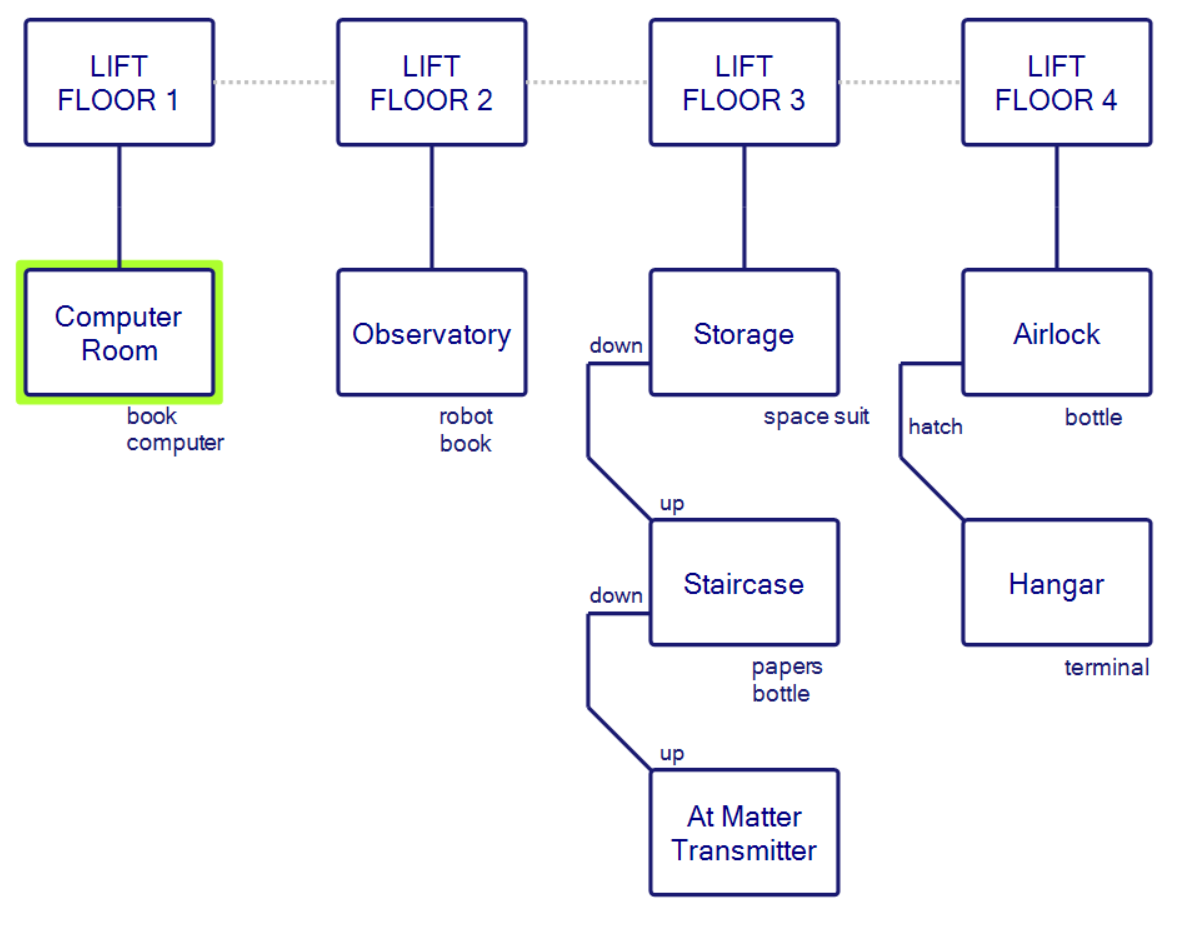
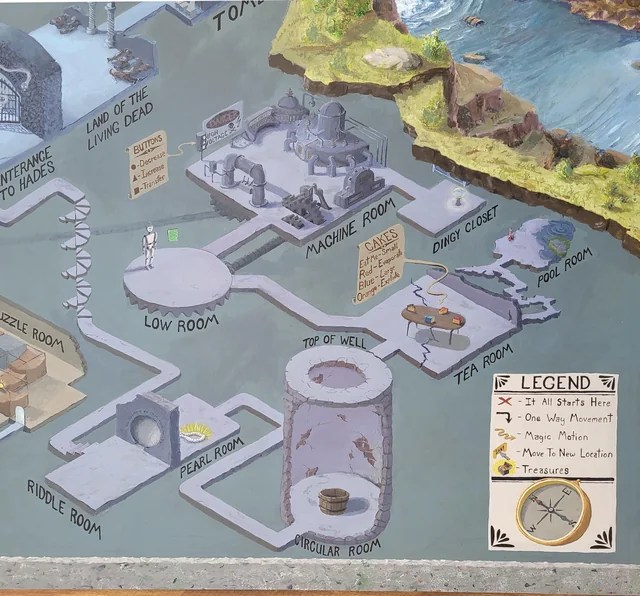
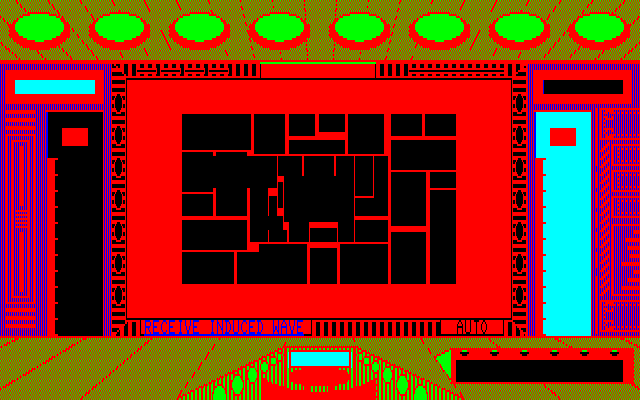
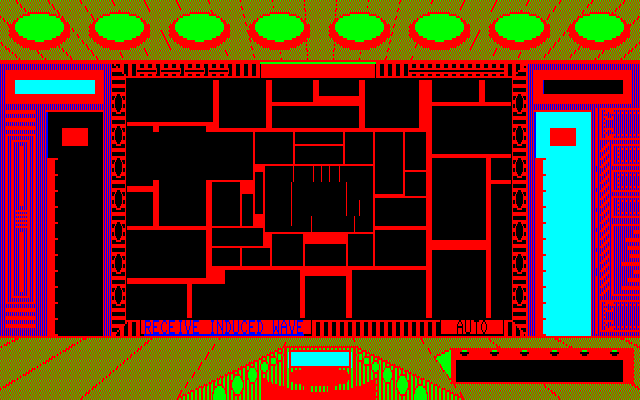
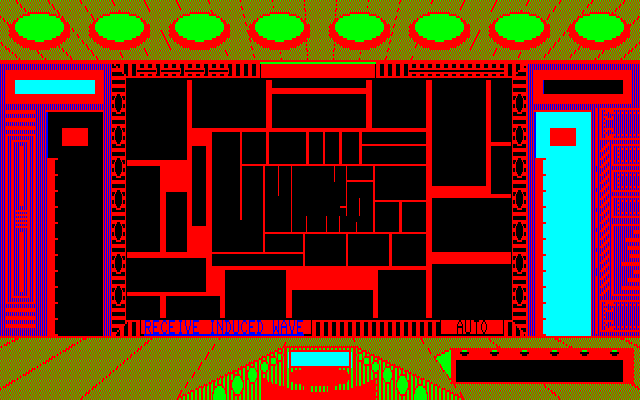
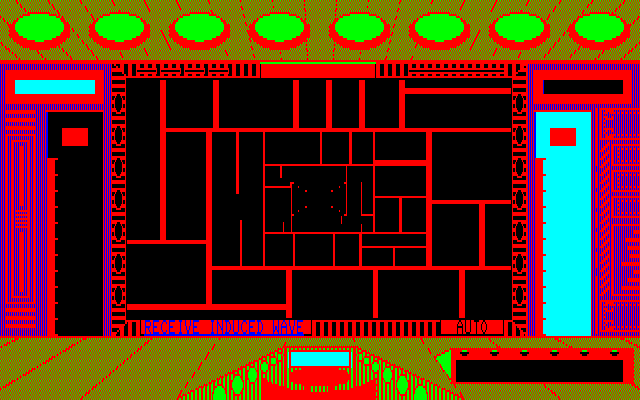
My map, so far:
More sections are predicated on secret things I’m missing, or the ability to use the matter transporter, which I haven’t been able to use yet. But let’s tour the floors in order:
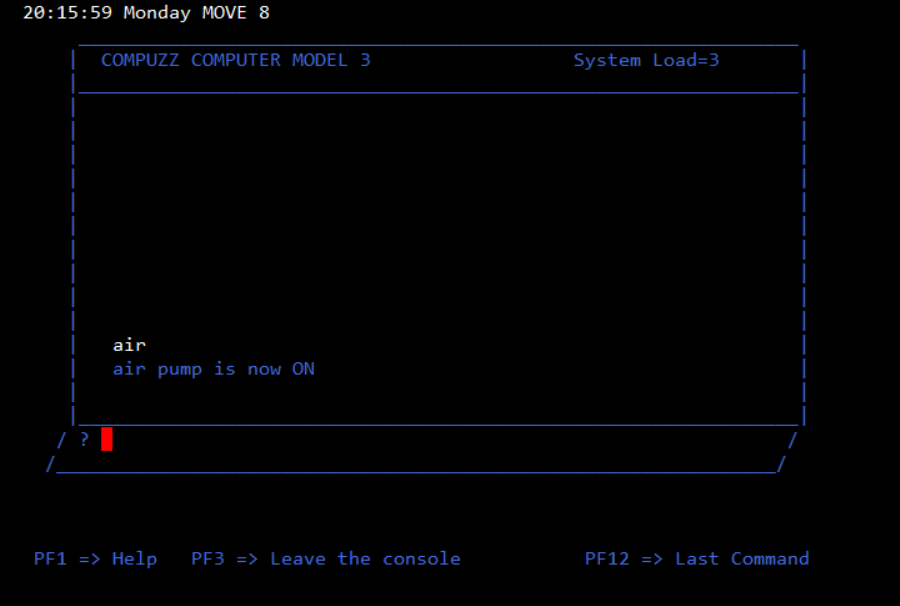
FLOOR 1: Where everything starts, and the location of the main computer. (First order of business: log on to the computer and type “air” to get the air pump working, otherwise you will suffocate and die.) The main “User Guide” is here and there are references to a “System Guide”, “Editor Guide”, “Programming Manual”, “Robot Programming Guide”, and “Matter Transmitter Operator’s Guide”. The Guide has some pages ripped out: 13, 15, 17, 18, and 19, and the last page warns that
A full list is included as an appendix in the COMPUZZ System Guide. Please read this carefully. Since COMPUZZ computers are typically used to control powerful and potentially dangerous devices such as lifts, burglar alarms, lasers etc, failure to observe the recommended procedures can be fatal.
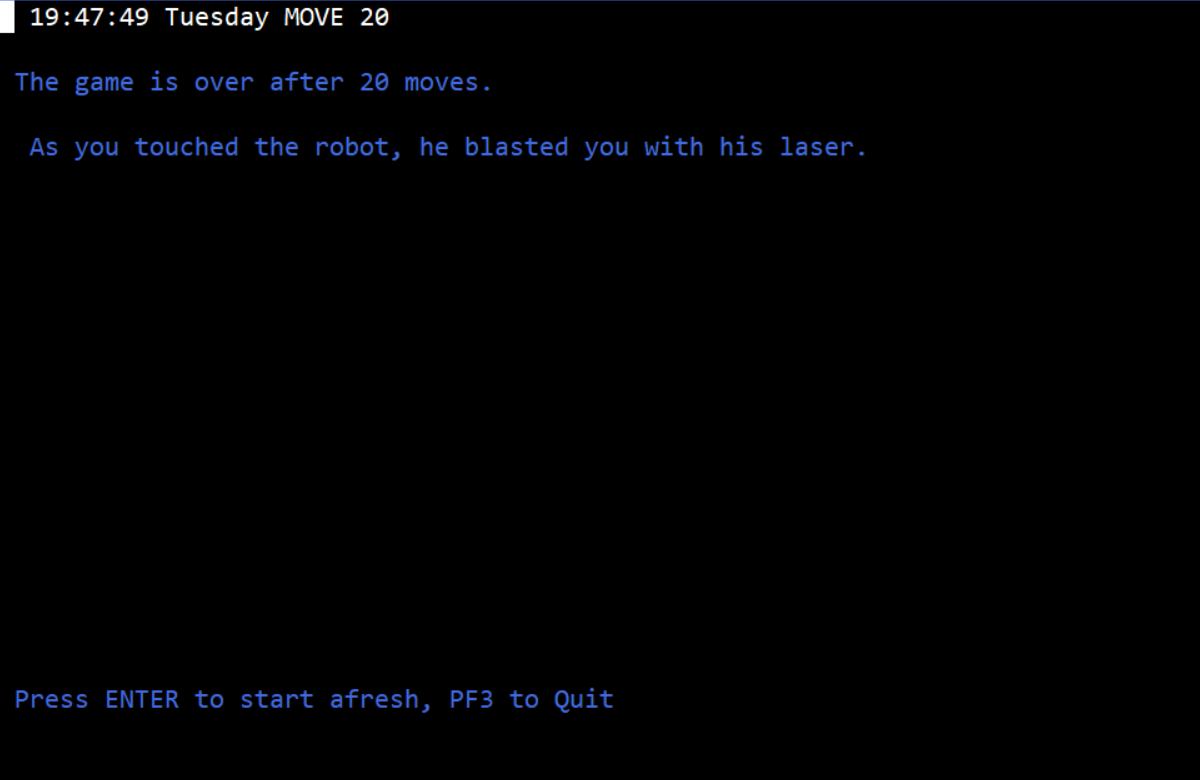
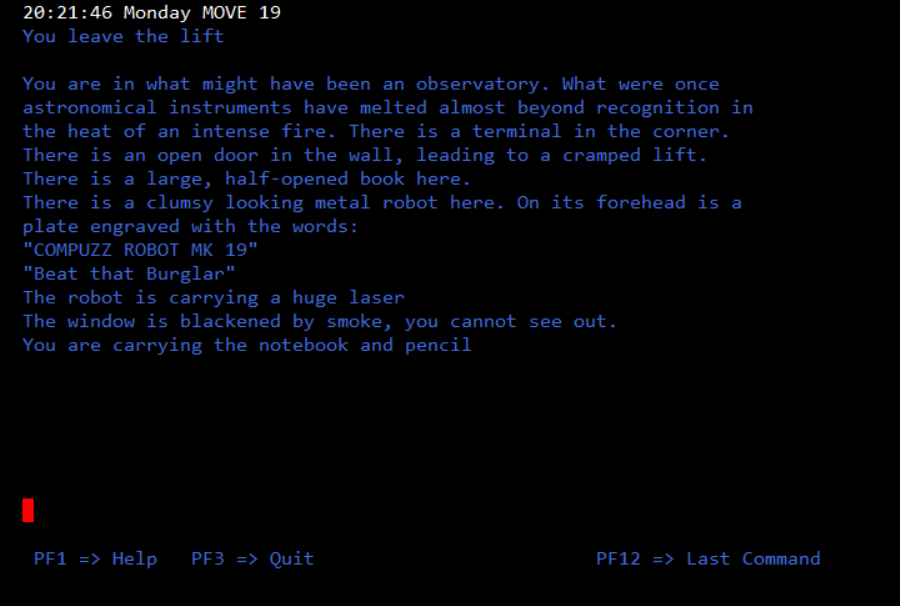
FLOOR 2: Observatory, with a COMPUZZ ROBOT. The only robot I’ve found so far (parts of the text imply there are others). Trying to touch the robot gets you killed by a laser.
I was actually intending to look more closely at the robot; this is one of the problems with an object-only interface.
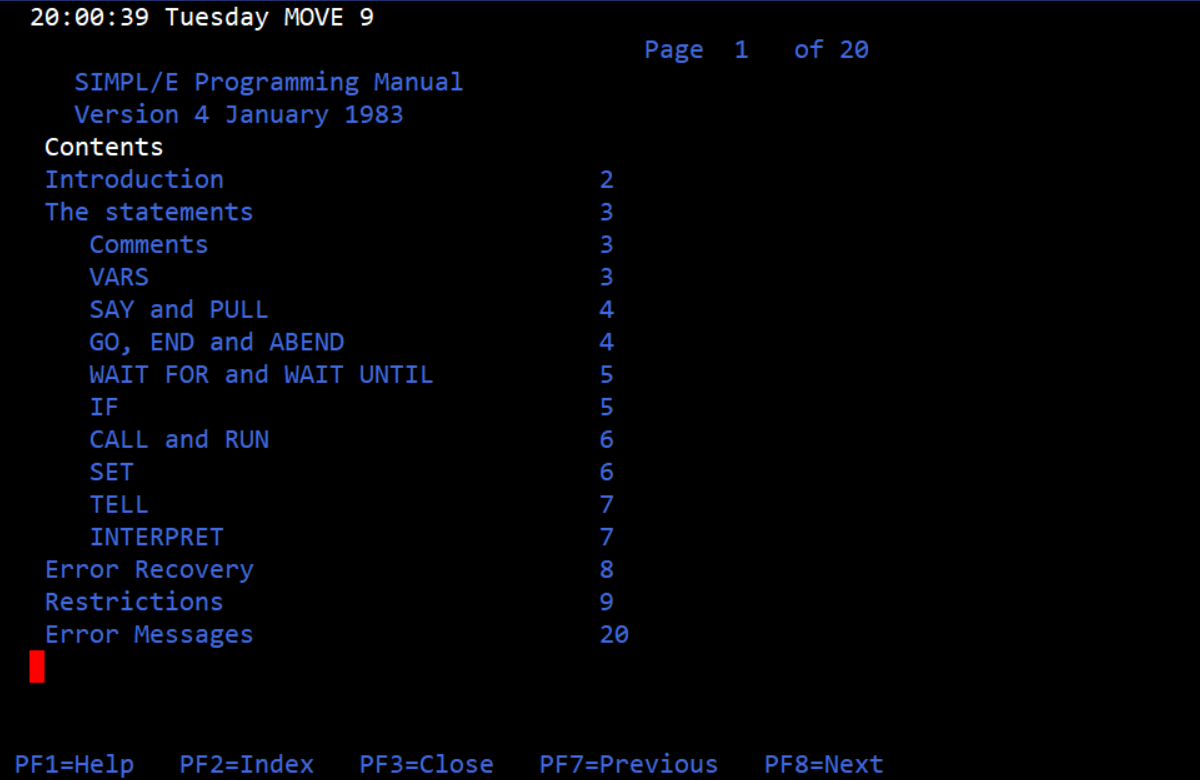
The book is the Programming Manual. While there’s an index that indicates a complete book…
…most of the pages are gone. The only ones present are 2, 8, and 20, although there’s a bit of a joke on 16 and 17
The next page is intentionally left blank. This page is blank apart from this message.
(I’m pretty sure this is a joke on IBM manuals, which I remember being infamous for lots of INTENTIONALLY LEFT BLANK pages.)
I still haven’t tried playing around with the robot yet, although there is a sample program in the computer with two command lines:
robot = go to the door
robot = come into room please
(I think I accidentally ran this while in the room, which is why the robot ran into the elevator; if I waited another turn it would come back.)
There’s also a terminal in the observatory, but trying to use it gets the response that the terminal is disabled. There’s a program to enable it, but it doesn’t seem to work; it asks if you want the terminal enabled or disabled, and you type “enabled”, and the game responds that the terminal is disabled. I assume there’s an intentional bug here (“puzzle”) and I haven’t dug further.
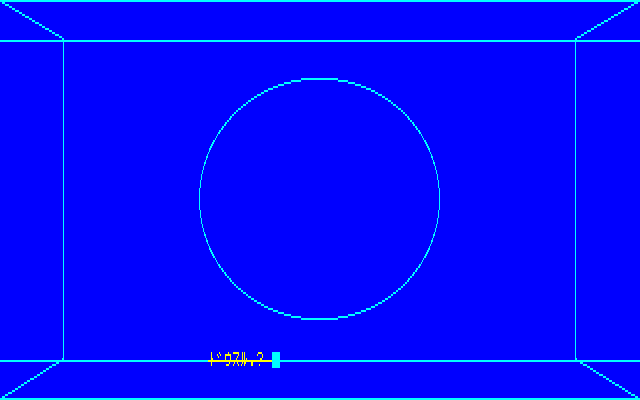
FLOOR 3: You leave out to a storeroom…
You are in the storeroom. There is a staircase spiraling down.
There is a bulky space suit here, just your size.
There is an open door in the wall, leading to a cramped lift.
…and picking up the space suit wears it automatically. Note that this uses up air and if you run out of air you die, so unlike the notebook typing SUIT again will drop the suit. (The simplification makes sense, but the inconsistency still makes me grumble.)
Going DOWN the staircase you find a metal bottle on the stairs (this will swap with whatever air is on the suit), and two torn papers. The two papers are from the robot programming guide, with some highlights being: a.) they all have good vision and position sensors b.) they do not follow anything like Asimov’s laws c.) using speech with a ROBOT_VOICE command takes 1 turn and d.) you can overlap multiple commands all at the same time but it can lead to unpredictable effects.
Every other page of the robot manual is missing.
Heading down the stairs further is a matter transmitter desk.
You are at the foot of the stairs, which lead up from here.
Partly hidden by a pillar there is a large desk. An illuminated sign over the desk says. “COMPUZZ MATTER TRANSMITTER: OFF”
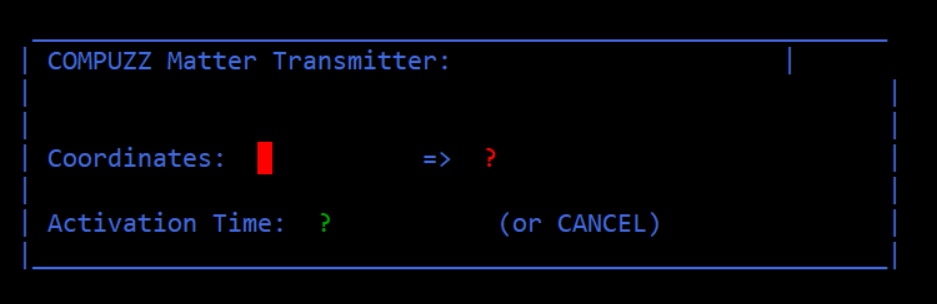
The prompt looks like this:
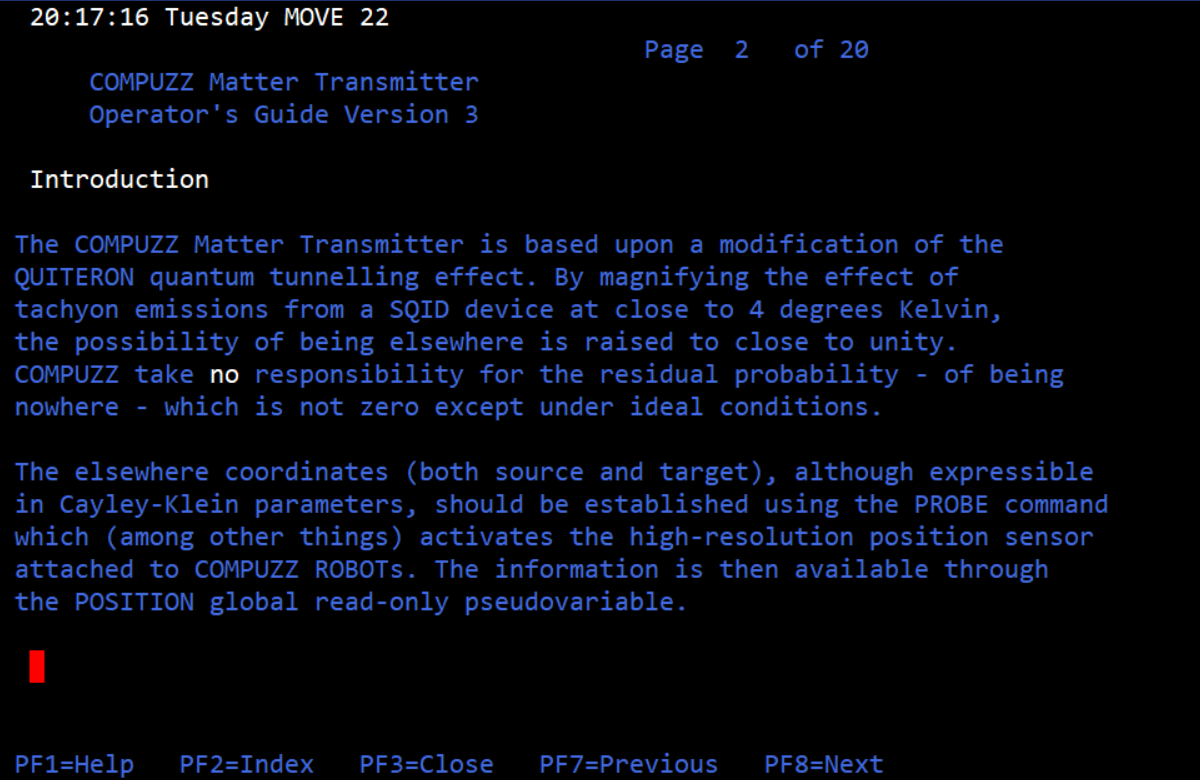
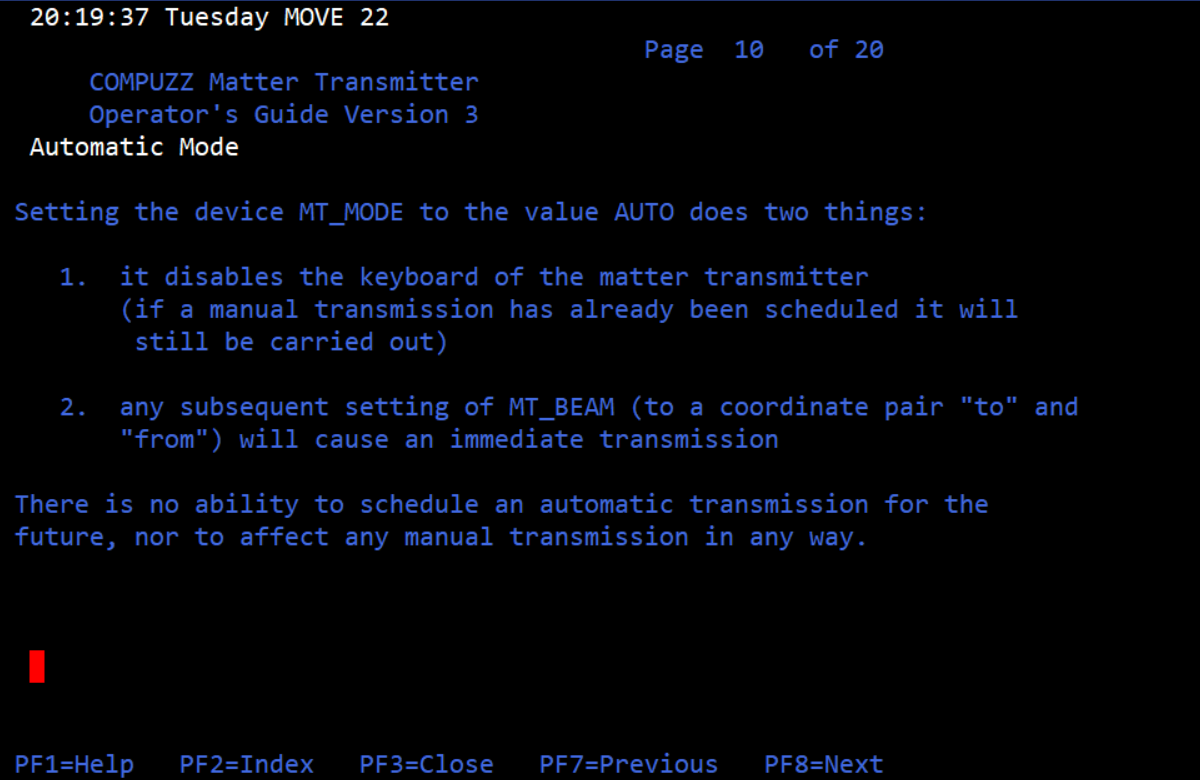
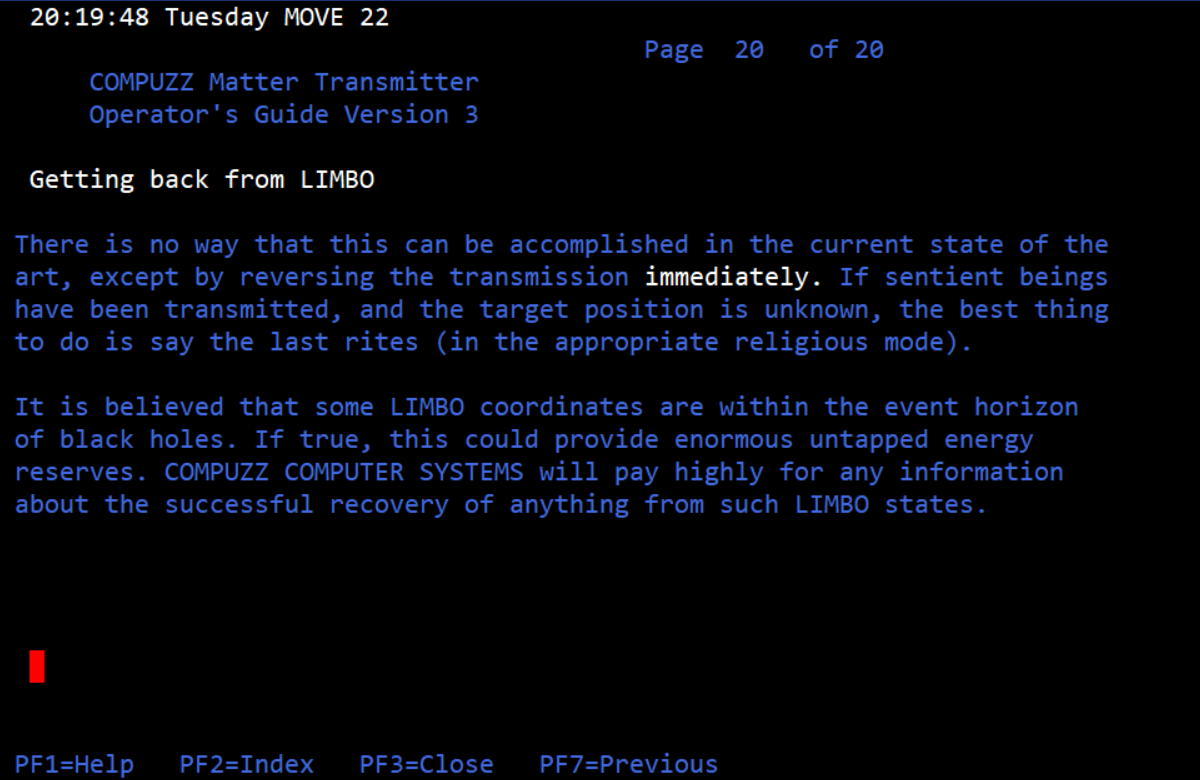
Pressing “help” here opens a matter transmitter guide, which has a page of technobabble, two extra pages of details, and mostly missing pages in between. I’ll give every single page this time:
I have not got things working yet. Even testing a small thing can take a while because it generally has to be implemented in the form of a program.
FLOOR 4: This has a hatch with a warning not to go through without a spacesuit. The hatch leads to an airlock.
You are in the hangar – an enormous cavern of a room.
To your left is the hatch of the airlock.
At the far end, the remains of the vast hangar door hang open, probably blasted by a hadronic beam.
There is a shuttle, large enough for two, parked here.
A sign on the side reads “Cardboard Mockup – DO NOT TOUCH” .
A small leaflet is posted on the wall.
There is a terminal here
Through the door you can see a corner of the Mare Imbrium, at its edge, hanging 200 klicks away.
You are wearing the space suit
The leaflet explains that the space shuttle is a “coming soon” feature and the intent is for ZENO to eventually let you travel through space and land on the moon. (This never happens, although Mitchell revisits ZENO in a printed book form — more on that when I eventually wrap up on the mainframe version.) The leaflet also implies that this version of the game is “deterministic”, that is, this isn’t a strategy game; there are particular things that will consistently happen.
The leaflet also gives a list of objectives, which is good because I believe there is no set “ending”. I’m not putting myself on the hook for any objective in particular, other than fighting off aliens.
determine the coordinates of all the places the robot can get to
write a program to detect and recover from power surges automatically
write a program to restart programs that fail
allow editing at terminals
kill off all aliens as soon as they get aboard
fill up all the disks
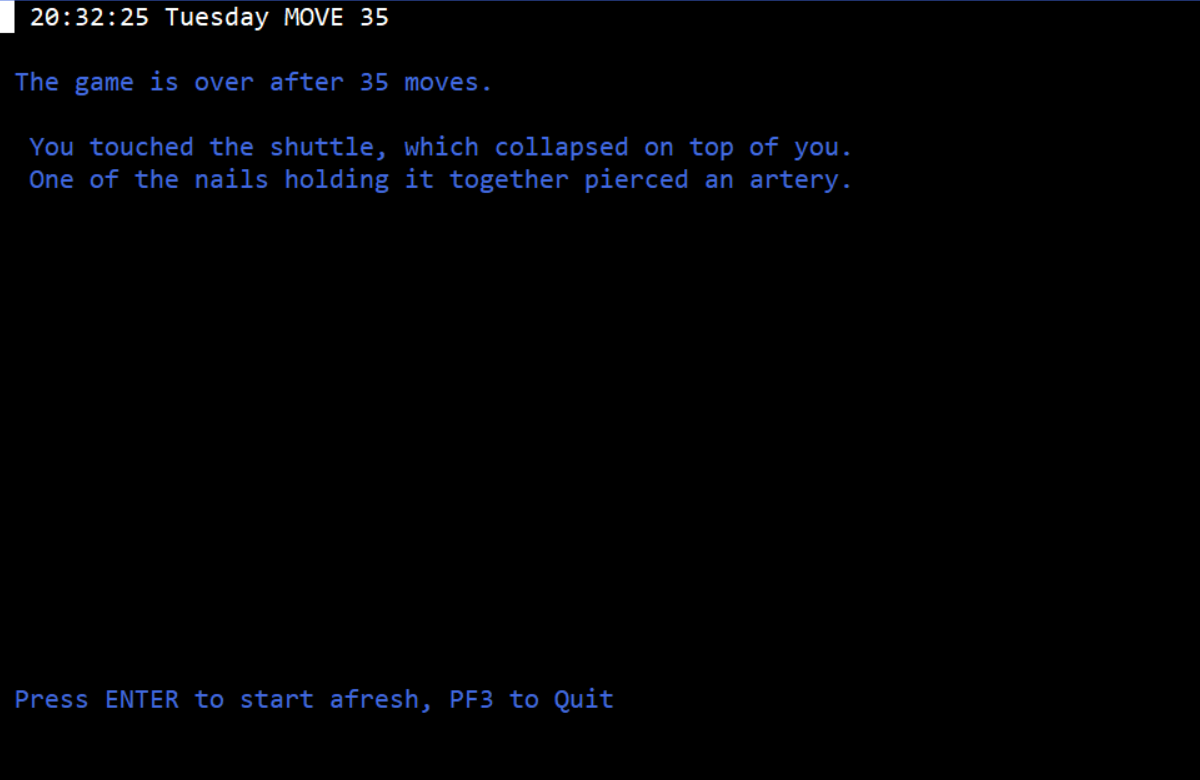
If you’re tempted to mess with the shuttle (despite it being cardboard) it kills you.
Next time I’ll discuss the robot control, the alien invasion, and hopefully use the former to fight off the latter. This might be not too far from the end, or (due to the programming taking so long to wade through, and the potential vistas the matter transmitter might open up) I might still need another two weeks to chew through everything.
The objective is to survive as long as possible against an increasingly hostile environment
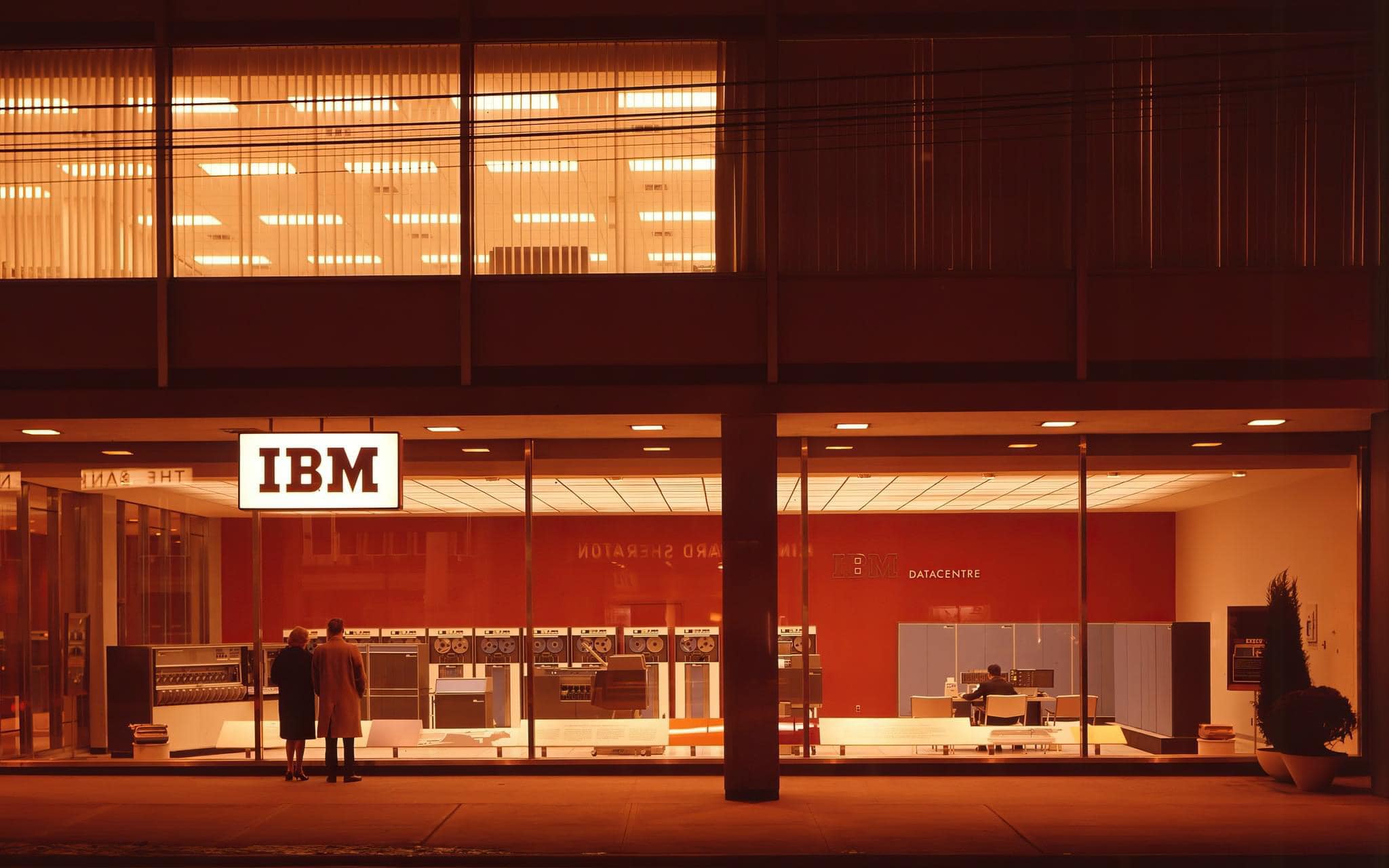
IBM as a company has only come up here so far in passing, as a competitor to other companies like ICL or General Electric. Today’s game deals with IBM quite directly in a way that requires going back in time–
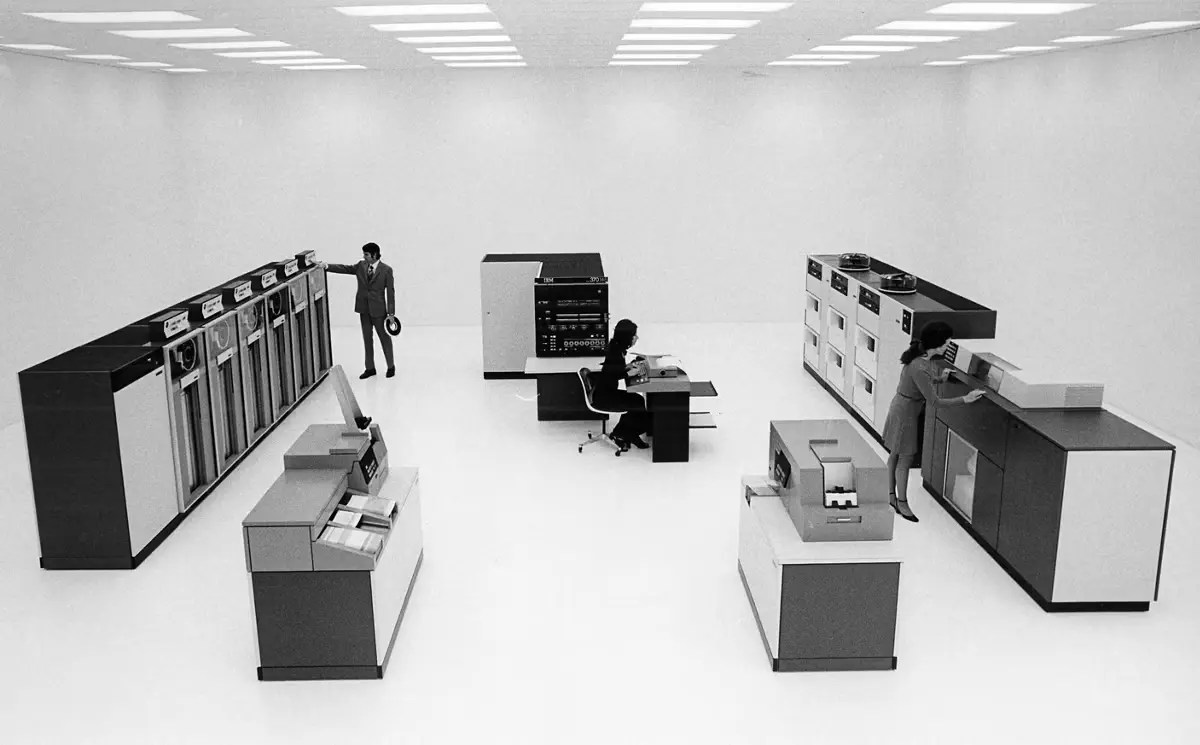
1963 photo of an IBM 1401, from George Dunbar in Toronto with more pictures here.
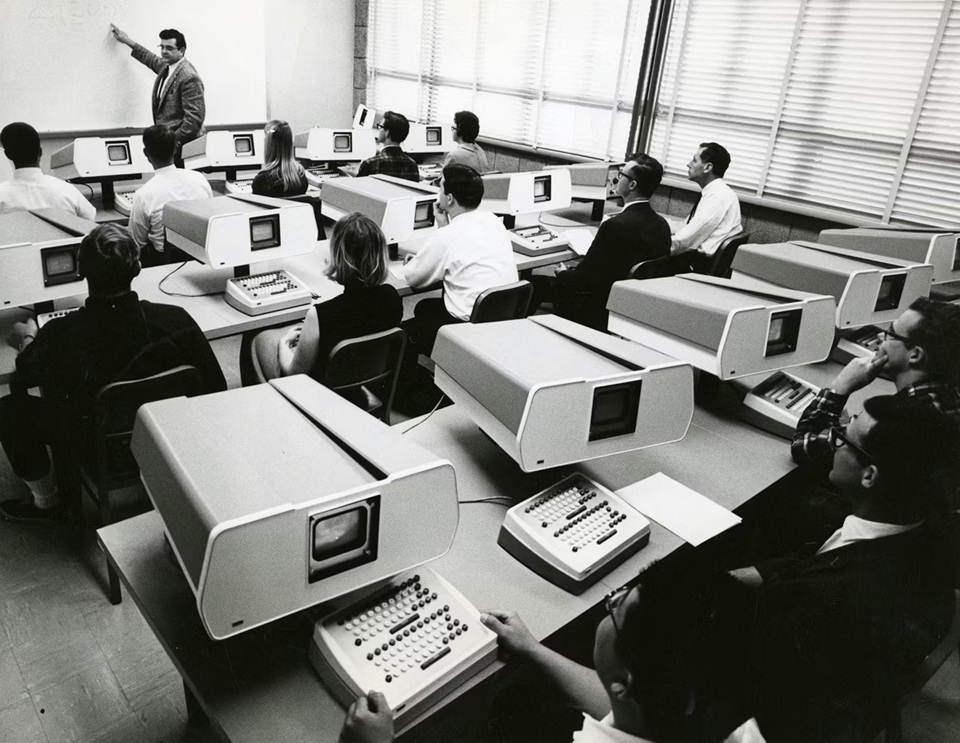
1954, MIT: in a discussion about a future where more people could use computers (that were at the time room-sized and used for one thing at a time) the legends Grace Hopper and John Backus (later famous for COBOL and FORTRAN respectively, amongst other things) brought up two opposing views. Hopper endorsed the idea of computers in parallel, many small computers linked together, while Backus instead promoted the concept of “a big computer” used as “several smaller ones”. John McCarthy, one of the time-sharing pioneers, already was thinking of the idea in 1955 and he made his first proposal in 1957, eventually using the current hardware available at MIT to implement what he called a lesser version of the idea:
This demonstration was called time-stealing, and was regarded as a mere prelude to proper time-sharing. It involved a fixed program in the bottom of memory that collected characters from the Flexowriter in a buffer while an ordinary batch job was running. It was only after each job was run that a job that would deal with the characters typed in would be read in from the drum. This job would do what it could until more input was wanted and would then let the operating system go back to the batch stream. This worked for the demonstration, because at certain hours, the M.I.T. Computation Center operated at certain hours a batch stream with a time limit of one minute on any job.
This was in 1959; the same year, Christopher Strachey (who created one of the candidates for “world’s first videogame”, see picture above) published a patent for his own time-sharing concept.
When I wrote the paper in 1959 I, in common with everyone else, had no idea of the difficulties which would arise in writing the software to control either the time-sharing or multi-programming. If I had I should not have have been so enthusiastic about them.
Hence, the idea was in the air: the technology just needed to catch up. The first actual working system was started in 1961 (based on McCarthy’s work) using an IBM mainframe. So while Dartmouth (with GE) was at the vanguard of computer time-sharing (1964), it is hardly surprising that IBM reached commercial time-sharing at essentially the same time, with the IBM System/360.
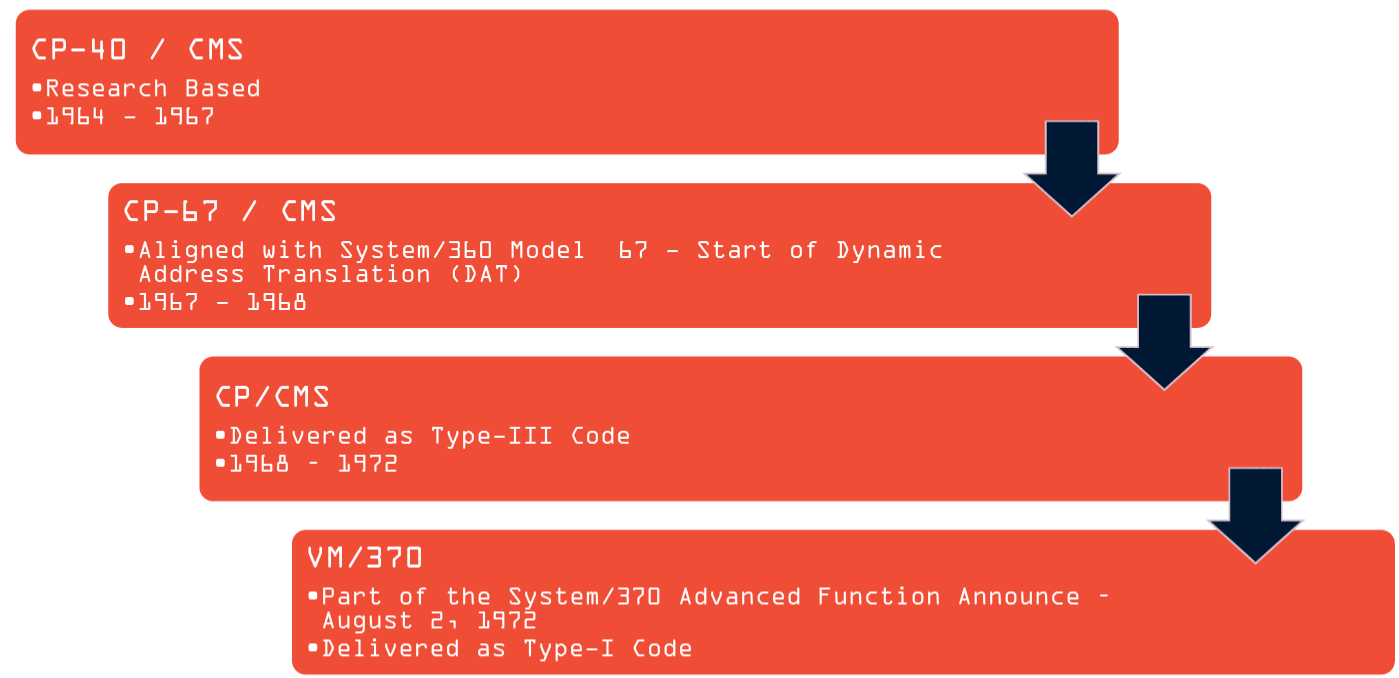
The original System/360 had a “Virtual Machine Monitor”; this was the overarching master system that made contact with the “metal” of the mainframe. Within this was built a CMS (Conversational Monitor System) which essentially appeared to the user like a “personal computer”; this was a way to do timesharing in a way that was essentially seamless. The user could treat the device in front of them as their own.
A young Stuart Madnick started work on the CMS at the IBM Cambridge Scientific Center in June of 1966 while still a student at MIT. He started with developing the file system, basing it on MIT and Dartmouth’s time-sharing work, then (part-time during the school year) developed the EXEC system (originally called COMMAND). EXEC was a scripting system meant to manage computer commands in sequence; a program to run other programs.
You can create simple EXEC procedures that execute several frequently used commands or you can devise complex EXEC procedures that test several logical conditions before deciding whether or not to execute a command. The logical capabilities in the EXEC processor are controlled with statements similar to the IF/THEN, GOTO, DO, and LOOP statements familiar to high-level language users.
For example, this sample from IBM compiles and runs COBOL code:
* RUNCOB2 EXEC *
&CONTROL OFF NOMSG
&IF &INDEX LT 1 &GOTO -ERR1
COBOL2 &1
&IF &RETCODE NE 0 &EXIT
GLOBAL TXTLIB VSC2LTXT CMSLIB
&IF &RETCODE NE 0 &EXIT
LOAD &1 (START
&IF &RETCODE NE 0 &EXIT
&TYPE RUNCOB2 EXEC FINISHED
&EXIT
-ERR1
&TYPE PROGRAM NAME NOT GIVEN
&EXIT
This was followed in the 70s by EXEC 2, which had more flexibility and user-defined functions; essentially, it took EXEC’s more practical approach and tried to make an all-purpose scripting language. However, it was still designed with the assumption that most lines were intended to run other programs (like COBOL compilers) and while it was possible to apply if-then logic and the like the notation in such cases was relatively cryptic.
Hence, another follow-up: the language Rex (later renamed Rexx), work started in 1979. To compare the change, here’s some EXEC 2 code…
‘COPYFILE’ fname ftype fmode ‘= BACKUP =’
if rc>0 then say ‘Copy failed with return code’ rc
The second “if” statement is more natural. Rex(x) prioritizes readability and is considered one of the predecessors to the ultra-popular Python language.
My first implementation of Rexx was made freely available over IBM’s world-wide internal network in late 1979 and rapidly became popular. The network made it easy for people to exchange ideas and make suggestions for improvements. Also, because the language was limited to one (large) organization, it was possible to make some rather large changes in response to these suggestions. For example, one change, in which the ARG instruction replaced an earlier ARGS instruction, required updating hundreds of thousands of Rexx programs.
As a result of this direct feedback, the language quickly evolved to meet the needs of its users through a number of releases over the next few years. By 1982 it had become essentially the language known in OS/2 2.1 today; its name gained an “X” to avoid any confusion with other products. Rexx was included in the third release of IBM’s VM/System Product, shipped in 1983.
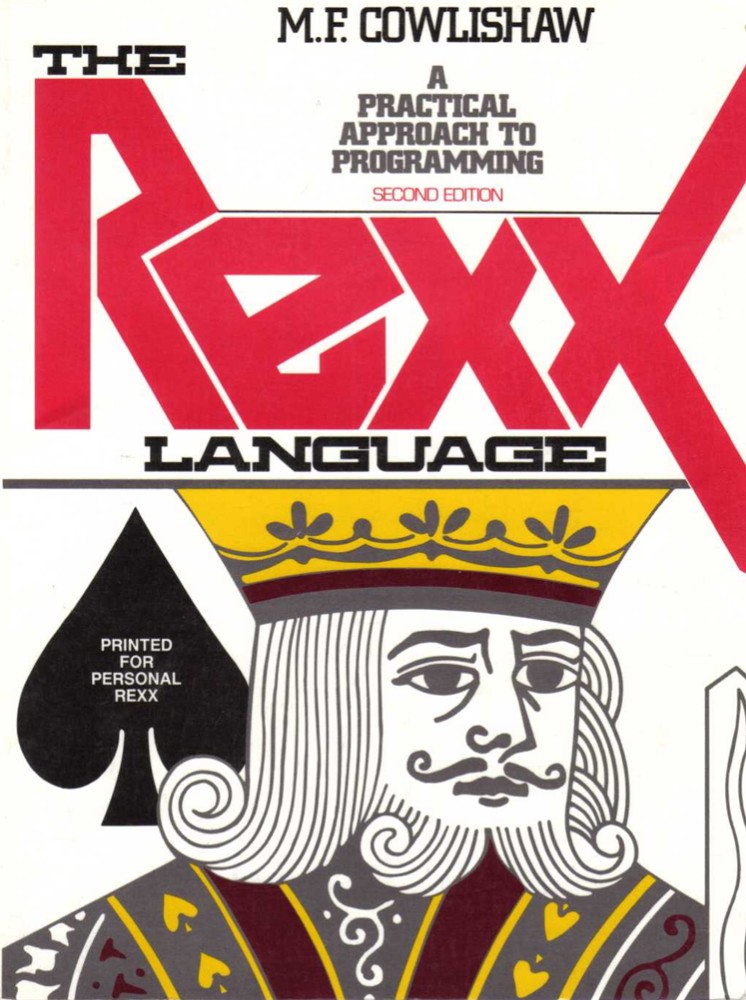
Cover of a 1990 edition of the Rexx user guide written by Cowlishaw.
(The three languages — EXEC, EXEC 2, Rexx — are still maintained to work with modern IBM systems. Corporate mainframe code can have legacy code dating back to the 70s in active use; this is why COBOL programmers are still in demand.)
All this is relevant today because not only is today’s game ZENO written in Rexx (back when the language was still internal to IBM), ZENO is a “programming game”; you are at a central computer controlling robots with programming. Regarding programming games in general, I briefly touched upon the game OMEGA in my writeup of Pillage Village; I also recommend Data-Driven Gamer’s series on the classic (and extremely difficult) Robot Odyssey. We’ve never had any that are also adventure games. (There’s some linkage to Suspended, but ZENO ends up being very different.) I’ll give the details on how ZENO works in a moment, but let me jump back to the 60s again and follow our author, hopping geographically over the Atlantic.
Dave Mitchell first went academically down a very different path than he ended up in; he got a BA in Theoretical Physics at Oxford in 1963 before doing postgraduate work in Psychology. He joined IBM in 1968, only two years after EXEC started development, although his original work was in the language PL/I. (See my writeup on Ferret for more on the PL/I language.) He spent the 1970s mostly working on “programmer training”.
Like many mainframe programmers in the 1970s, he came across Zork, becoming very interested in how “tools” were used in the game; also note that original mainframe Zork includes a section where you give commands to a robot.
As a programming teacher, he decided to riff off Zork but use it to create a programming language for robots. You are in a central base and your job is to protect it; while you can’t leave the base, you can interact with the outside world with a variety of robots.
This game generally speaking hasn’t been available for ages; it was designed to work on an IBM mainframe which was only running a short time, and it only re-appeared on the internet 5 years ago when the author (Mitchell) got the game up and running with Hercules (an emulator for running old IBM virtual machines). The part of his website that held the download is now defunct but it was rescued by Robert Robichaud (Rob in our comments); getting it running was also a Herculean feat but Gunther Schmidl managed to create a package you can download here. (As a word of warning, your virus detector may not like the setup as it runs an open port; I had to turn it off to play the game.)
Before moving on, I should emphasize that ZENO and Suspended landed on roughly the same concept from roughly the same source. Infocom’s ideas around commendable NPCs first appeared in the Zork robot, and they advanced their system with Deadline that was then re-used for Suspended. Mitchell was working independently, landing on a more esoteric outcome in being a full programming game.
ZENO is an experimental REX exec (currently in version 1, the initial prototype). It was written (in the author’s own time) in 1983:
(i) to provide an interactive environment to stimulate the learning of problem-solving skills (debugging etc)
(ii) to demonstrate the expressive power of REX (though the prototype should NOT be taken as illustrating good programming style)
(iii) to show that an interpreted language CAN provide adequate performance, even for a large complex application
(iv) to prototype a number of “Personal Computer” characteristics (e.g. a VDU scroller, command language, full-screen editor etc)
(v) to experiment with the computer control of a variety of complex devices (lifts, robots etc)
(vi) for entertainment (outside business hours)
The language being used in the game is not a “real” language but one made for the game he calls SIMPL/E (as a parody of PL/I).
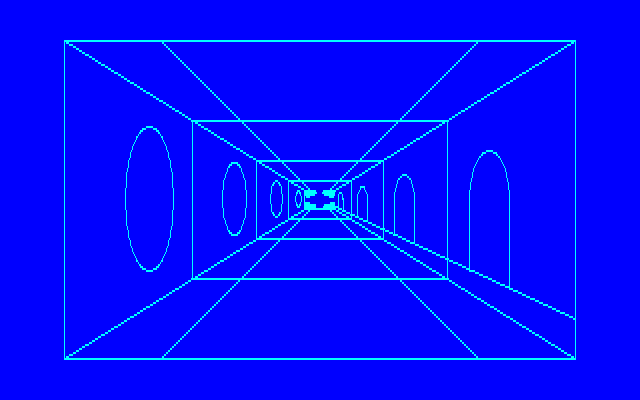
While the game technically accepts parser commands, it does so with a major simplification: it really cares about single objects, like a textual version of a point-and-click game. That is, while you can start the game with “go lift”, you really just need to type “lift” to enter it. (Or “computer” to use the computer, or “book” to use the book.)
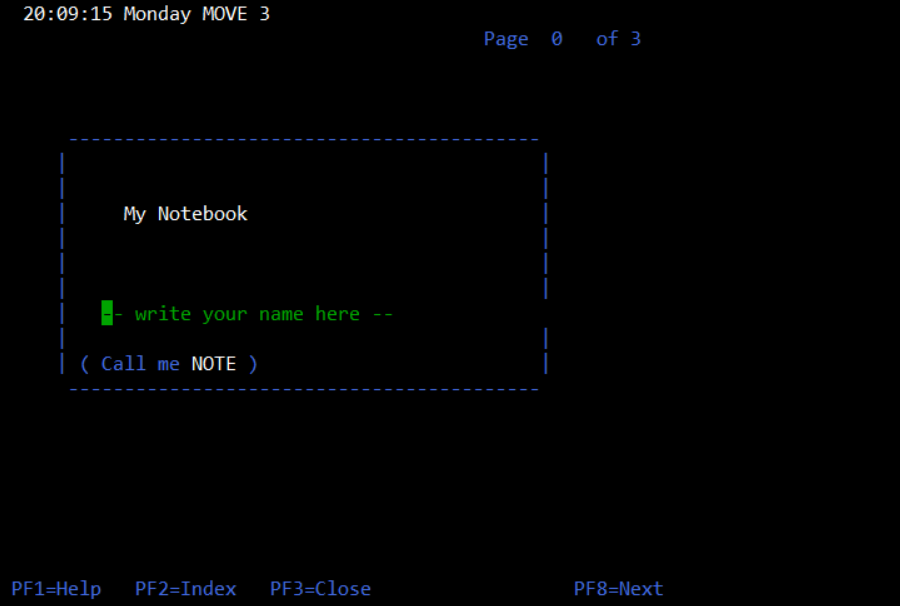
The button in the lift is broken (pressing it causes nothing to happen). Typing “notebook” will automatically pick it up and use it (your avatar will subsequently keep it on hand for taking notes). Because of the parser simplification, typing “drop notebook” will just open it again; there’s no way to drop the notebook once you have it.
Early on messages start like “the air here is a bit stuffy”. Like Suspended (and Starcross) there are environmental problems going on, and the first thing to do is to start the air pump (this is mentioned explicitly in the directions).
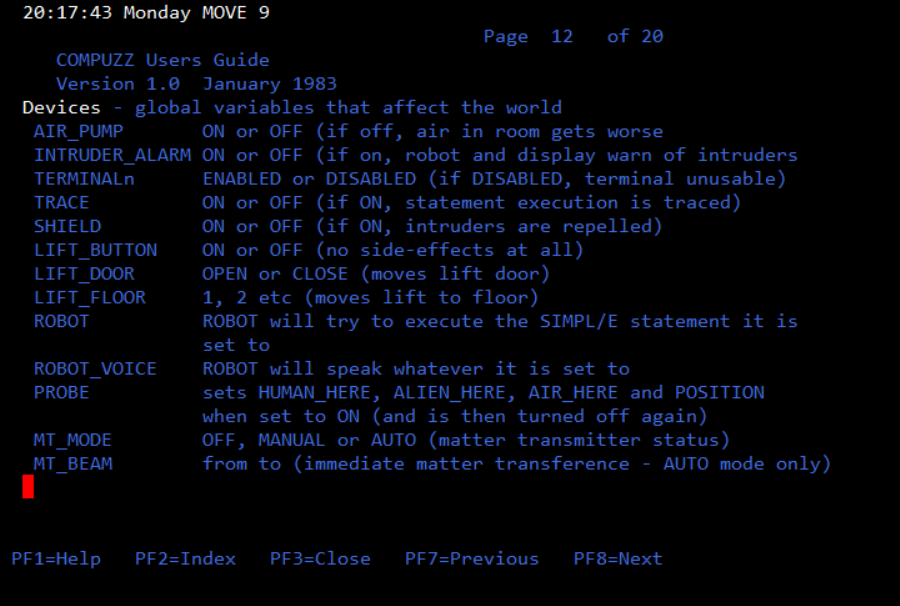
My first time through I struggled for a while to figure out the air pump as the “book” that’s in-world is rather long and esoteric, but I’m pretty sure you’re intended to use the guide the game comes with for starter commands; it’s hard to figure out how to even get going with the robots otherwise. The relevant page from the book, for reference:
The lift needs to be turned on with the computer just like the air pump; once on, the button inside works to take you to an observatory.
If you try to go to the computer and type a command, you get pulled out as
You are distracted from the keyboard because:
The robot enters the lift
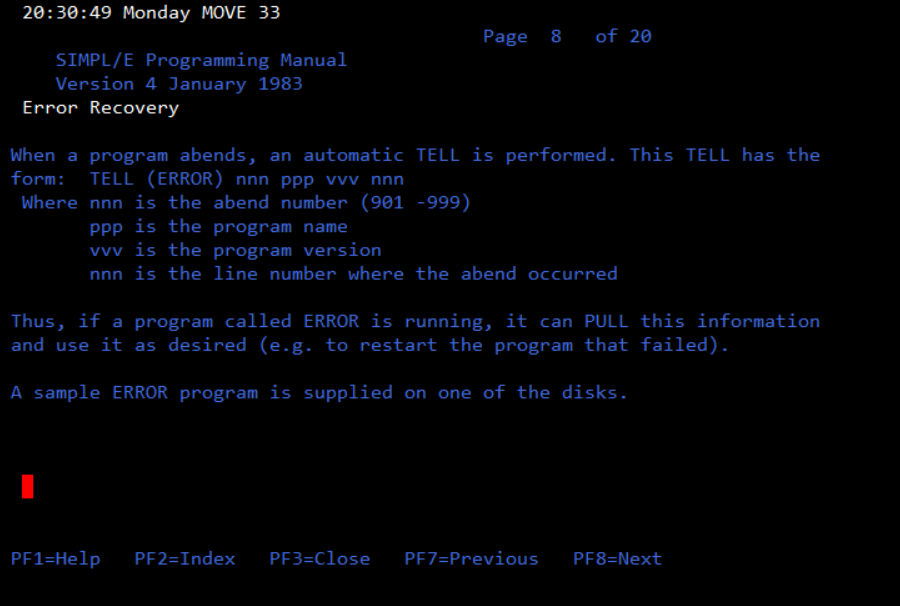
The book on this floor, ominously, has many pages ripped out, but keeps information on how to handle errors from source code:
This gets extremely complicated fast, so I’ll explain the various computer features and what can be done with robots next time. In the meantime, here’s the result of typing “window”:
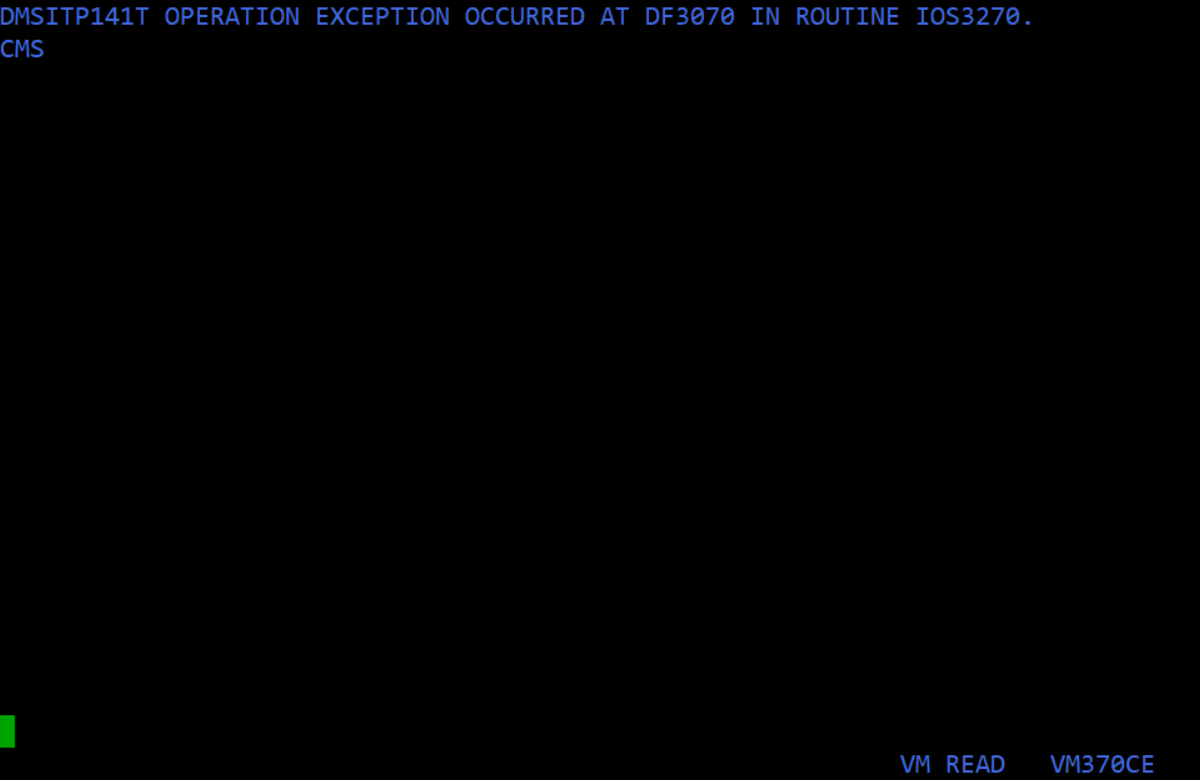
After you touched the window it shattered, and you are sucked into the vacuum of empty space.
This is about as niche as a post of mine can get. What happened is I’ve been deep at work on my next game, which requires some history going back to the 1950s, and more specifically, Christopher Strachey makes a cameo appearance.
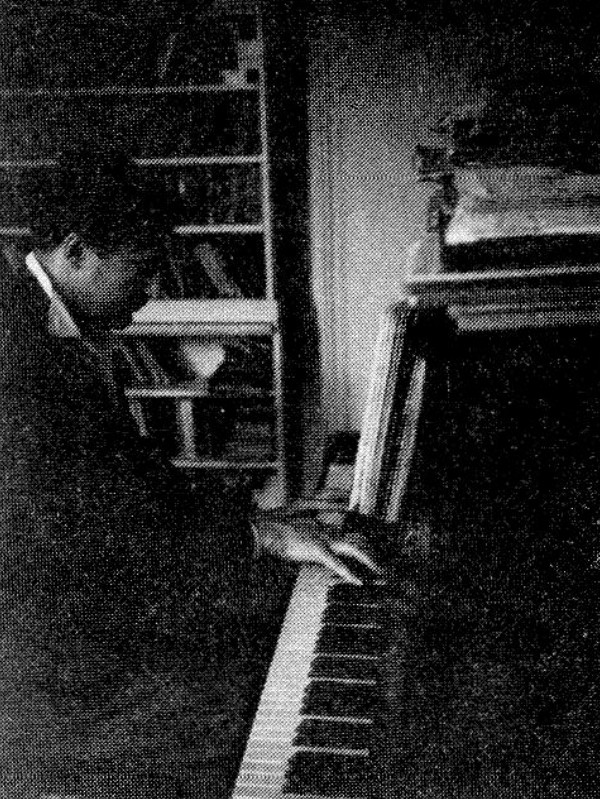
Strachey at the piano, date unknown. From Christopher Strachey, 1916-1975: A Biographical Note. Annals of the History of Computing, Volume 7, Number 1, January 1985.
For gaming history he is particularly known for a draughts (checkers) program that sometimes gets designated as the “first videogame”. There’s a lot of conditionals to that, including if a program called Bouncing Ball counts once a hole is added (and when that happened), but I’ll defer to the discussion here for details. I instead want to discuss what the game looks like. This it the picture most commonly seen (including on Wikipedia):
I wanted to mention Strachey’s videogame-pioneer status as aside before I went into his totally different part to play in my upcoming story, and as my way of compressing this information, I wanted to drop the image above with a descriptive caption and be done with it. However, I had the nagging feeling something was wrong.
After some expert consultation (specifically with Quarter Past and Ethan Johnson) I realized what the problem was. Quarter Past pointed to A Biography of the Pixel by Alvy Ray Smith as having good coverage.
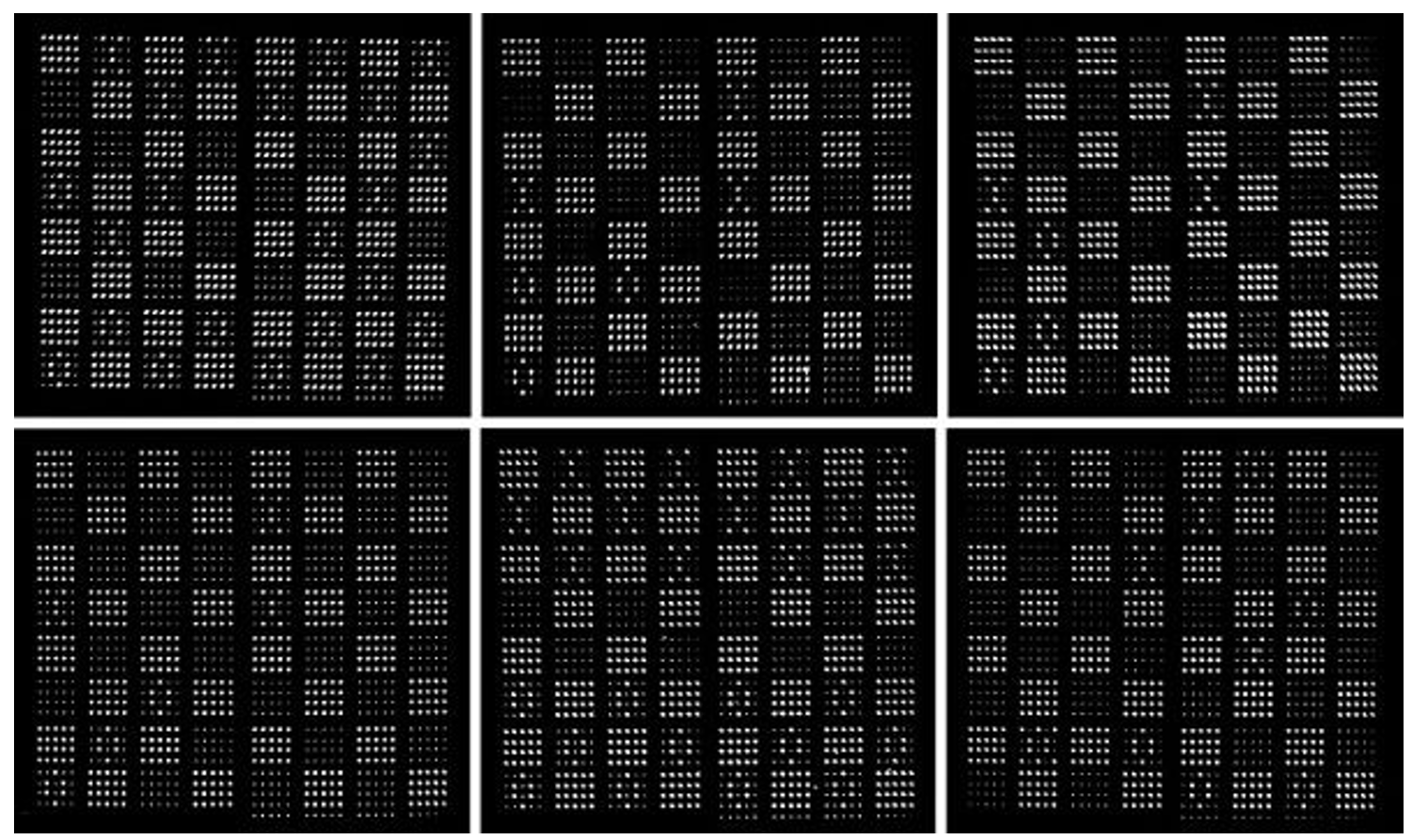
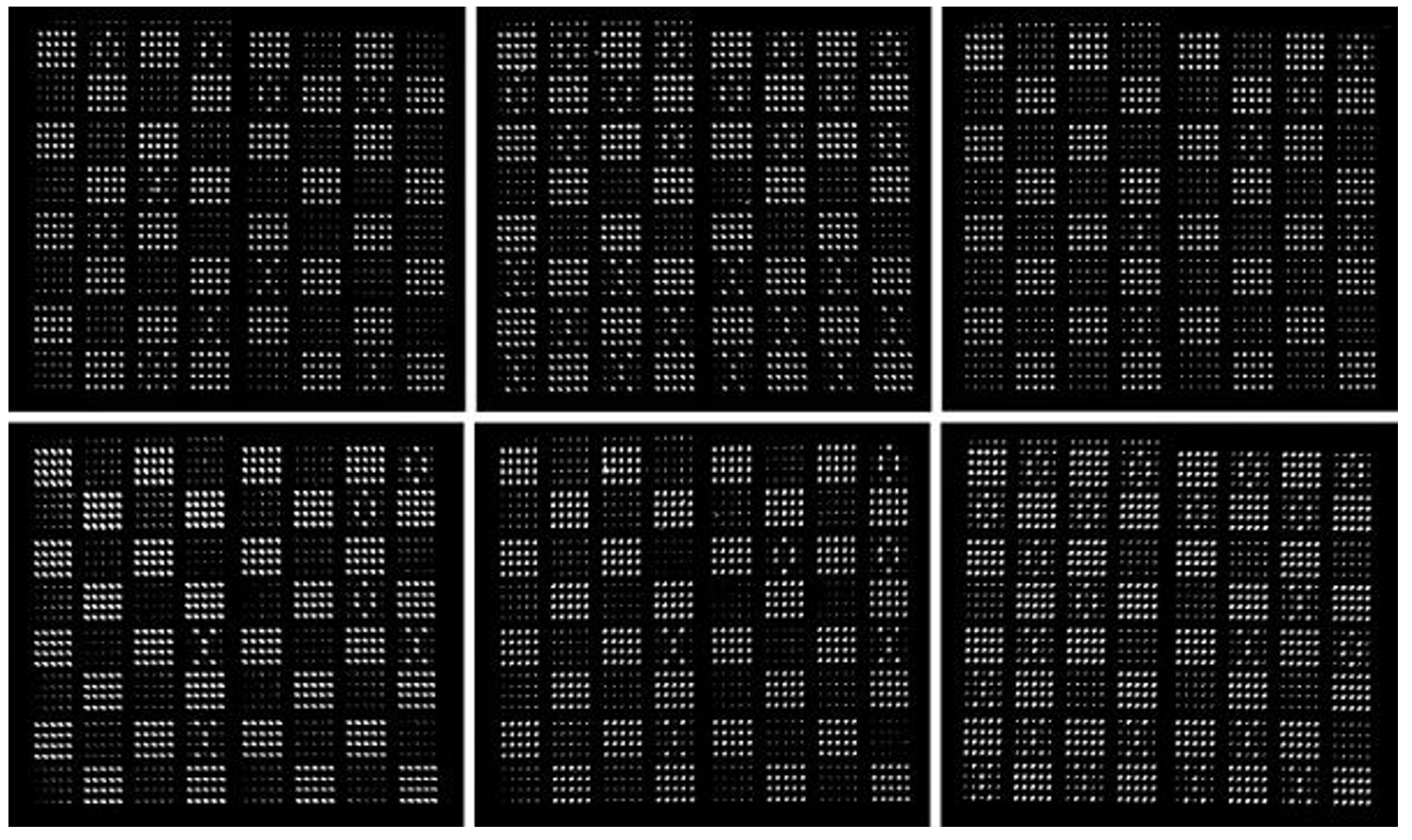
Strachey was working on the Pilot Ace at Teddington, one of the first computers built in the UK (based on a more complex design of Turing’s). He wrote a letter to Turing about how he got a draughts (checkers) program to work, then found out that the Ferranti Mark I computer at Manchester had not only more memory but visible memory. He managed to re-do his program for the system, and used Turing’s “incomprehensible” manual to get it working. This led to an actual checkboard display on an arbitrary video system (hence “video”game). A figure from Smith’s book gives pictures:
These photos were found in Oxford’s archive of Strachey’s work, and Smith specifically mentions a folder number, C30, as containing photographs from Strachey. He gave a presentation with lantern slides of an actual game being played by the computer (at a conference in Toronto, where a new Mark I had just been installed) and these seem to have been part of that.
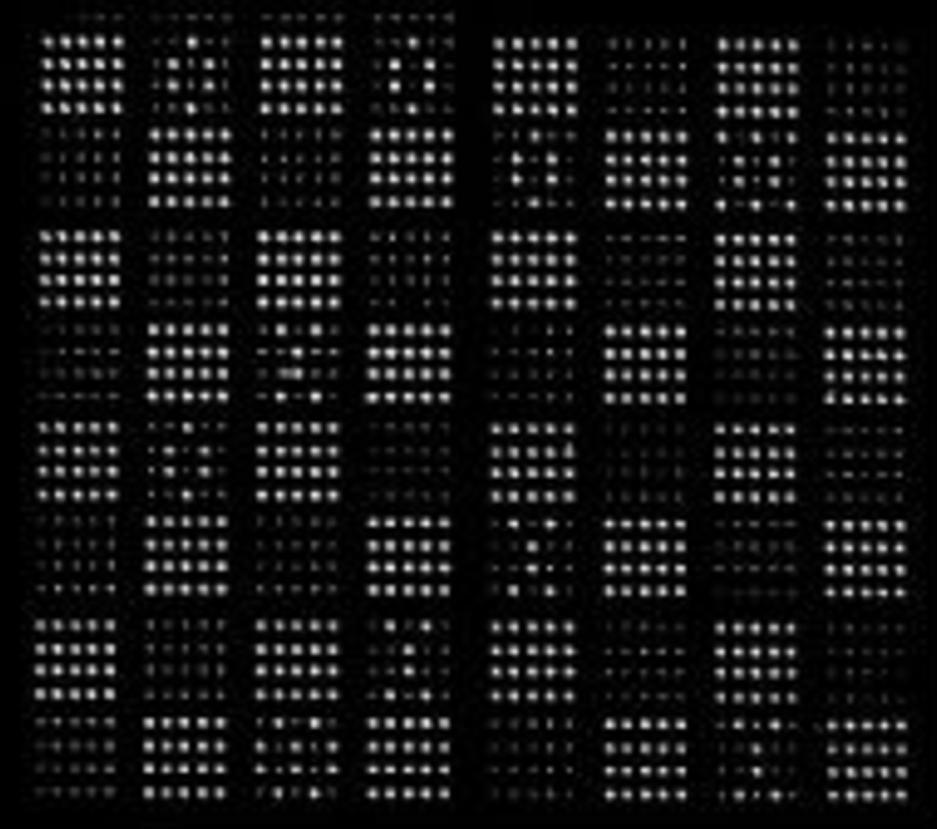
So, what’s wrong? If you don’t see it yet, let me zoom into one of the photos, and then give the one from Wikipedia (and elsewhere, including Ahoy’s video with 2.5 million+ views).
The Wikipedia board is left-right flipped! There should be a checker in the lower left corner. Wikipedia has a second error because it states it is a “A modern reproduction of Checkers, as it would have appeared on a Ferranti Mark 1” which isn’t true at all; it’s more like a scrubbed version of the photo from the real Mark I, reversed the wrong way. (ADD: I’m buying Aula’s argument in the comments there had to be cutting-pasting involved, so “modern reproduction” still works.) We’re not just talking Wikipedia; an academic paper here from 2012 also has the wrong view.
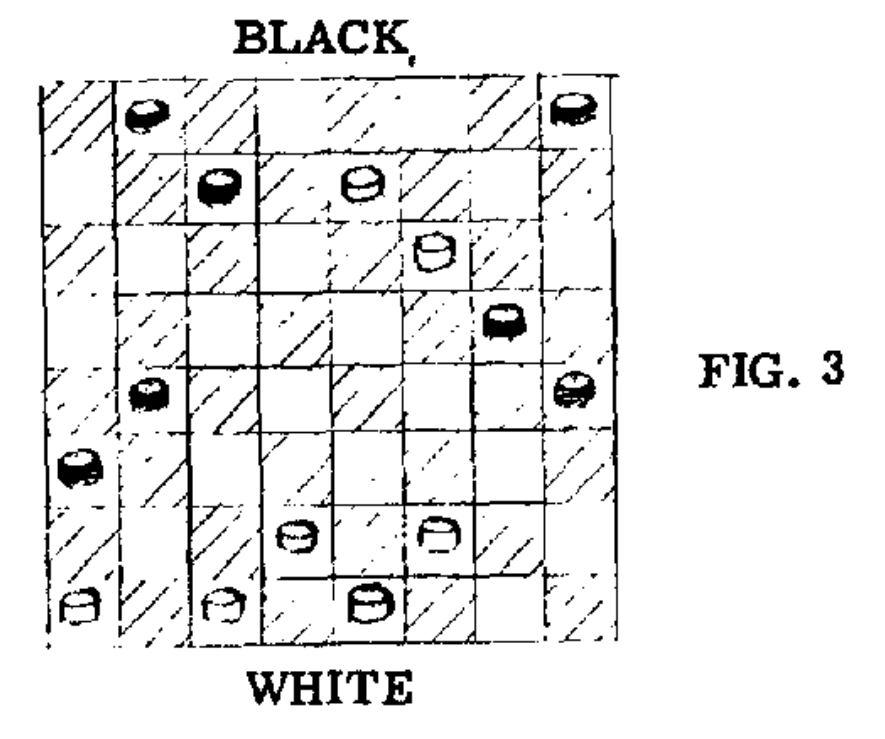
The figures in Strachey’s own paper (“Logical or non-mathematical programmes” from 1952) confirms he intended for checkers to be in the lower left corner.
However, I’m not quite done yet, as there’s still the question: is the picture rotated upside down?
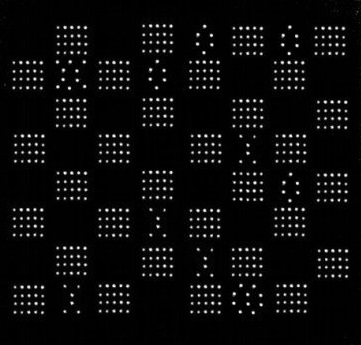
This is from the biography article I mentioned at the top (with the picture of Strachey playing the piano). You’ll notice this time O is on bottom and X is on top. The book on pixels has this flipped over. Which one is right?
Strachey puts White at the bottom, and generally speaking Black is X and White is O. So it looks like all the book photos might need a 180 degree flip:
I haven’t been able to confirm this, but I figured I needed to share all this with you. (Also, the next post is going to be complicated, so likely it won’t be up until at least Monday.)
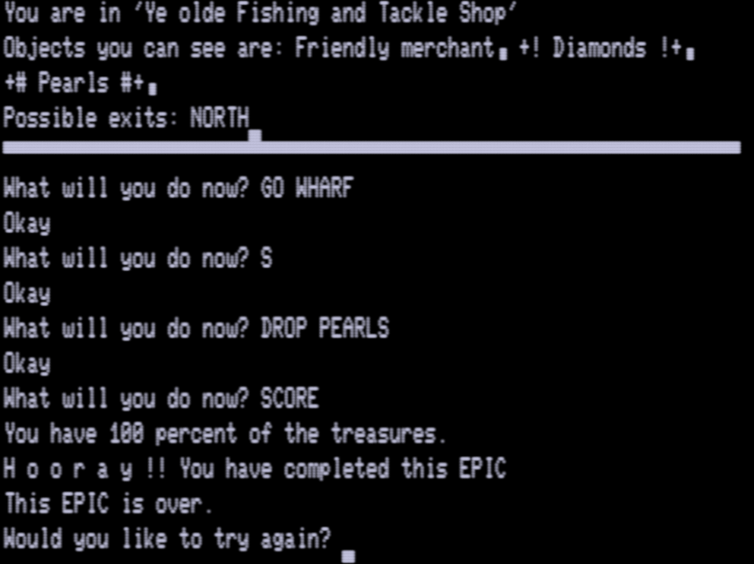
I’ve finished the game, and as predicted, there was not much left to go.
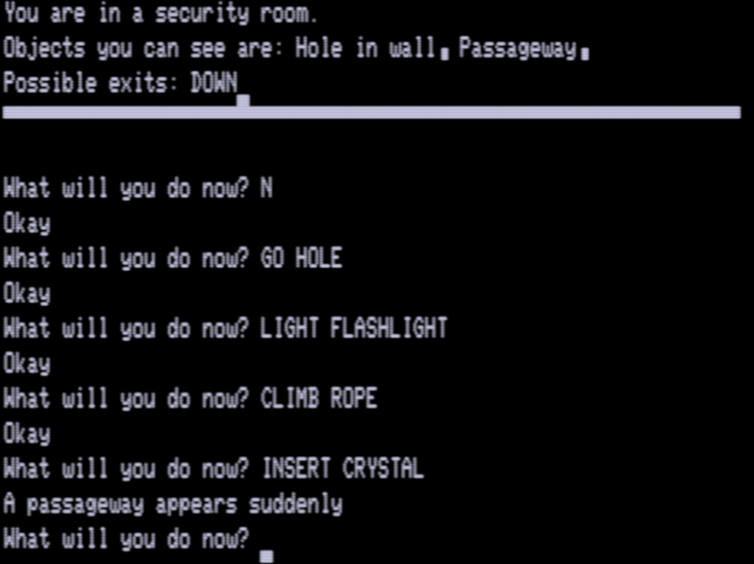
I was left before with a crystal rod and a related curious hint.
I have no idea what this hint means. What I instead was eyeballing was the “hole in wall” in the description. I was mentally equating that with the DOWN exit; there have been many games where a listed “background item” simply corresponds to a direction, but given I was horribly stuck, it was worth checking if that was really the case.
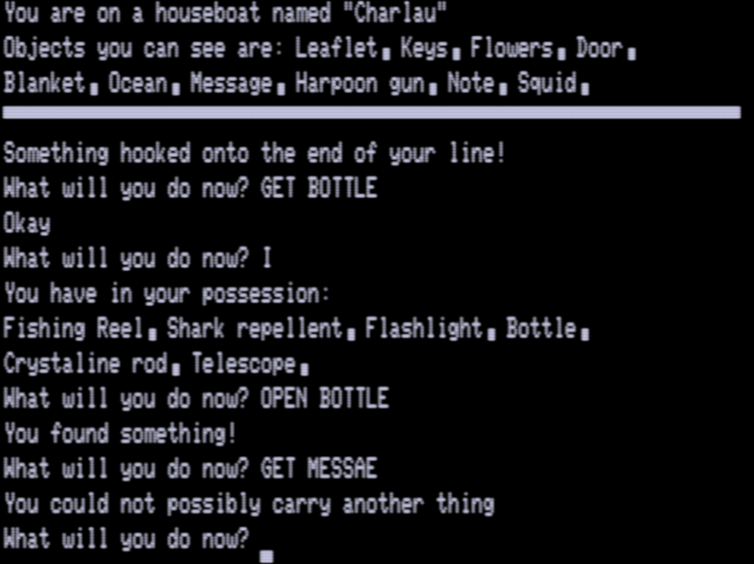
Anyone with an idea what the deal with the message was? I also was thinking in a structural-solving sense, insofar as the harpoon and rope make for one of the more elaborate puzzles in the game, yet the end result seemed to just be a relatively weak hint (like how the bottle from the ocean also just had a hint, one I didn’t even need because I had already solved the relevant puzzle!
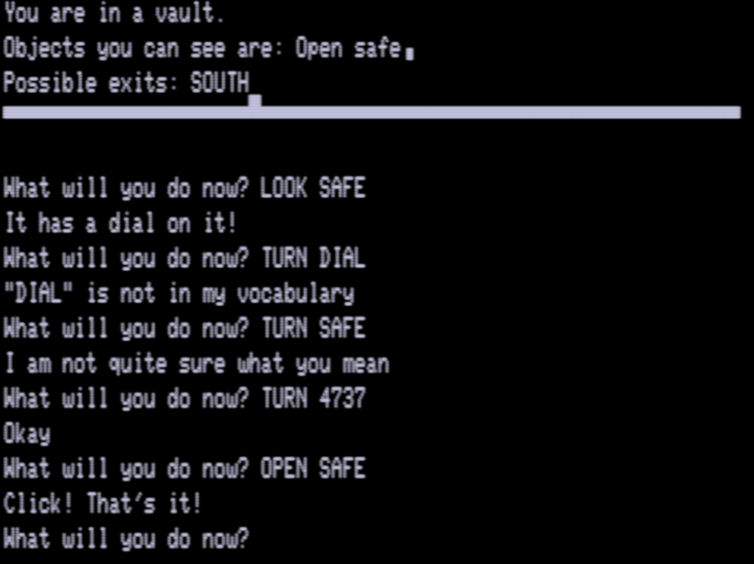
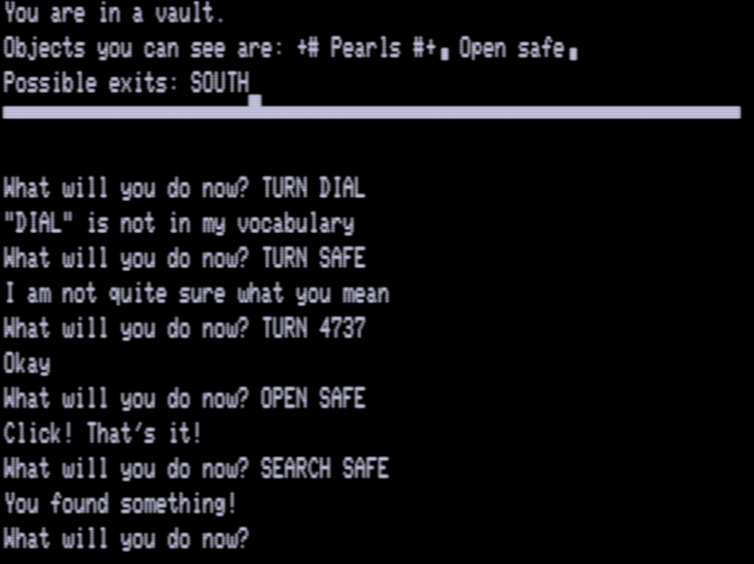
Going inside the new passage, there is a vault, and now is when that number on the island gets applied:
(Of course, there is absolutely no reason whatsoever a sunken ship would have its combination clued by numbers written on a nearby island.. This is one of those adventure-things that gets handwaved off generally, but it really is so much more absurd than “the color on the windowsill matches the combination five rooms away” here; the game is clearly detached from reality in a “gonzo” sense where anything can happen.)
Sorry, not much update even with the analysis there! That’s the risk with adventure game blogging; you sometimes end up stopping right at the end. I do have one historical update, though:
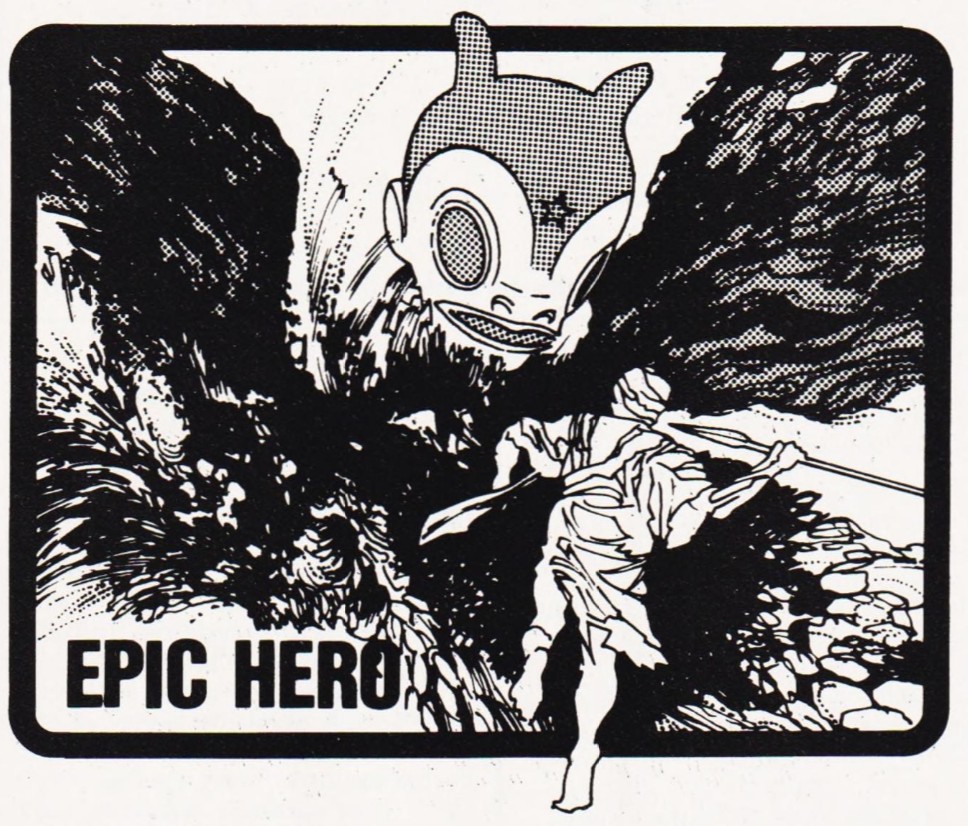
From a Molimerx ad for the Epic Hero series, Computing Today January 1983.
I found the ad above in a January 1983 magazine (which was on newsstands, so it really was up in December ’82); that means I can drop the 1982/1983 business and stick this and the other two Epic Hero games in the Year 1982.
This game did not seem much like we were being heroic or epic, though? I could see calling a series that and diverging later into less epic material, but with this as the first in the series, it’s a curious naming convention. Perhaps Epic Hero games 2 and 3 will live up to the picture.
But for now, coming up: a wildly unusual mainframe game recently rescued and unlike anything featured on this blog before.
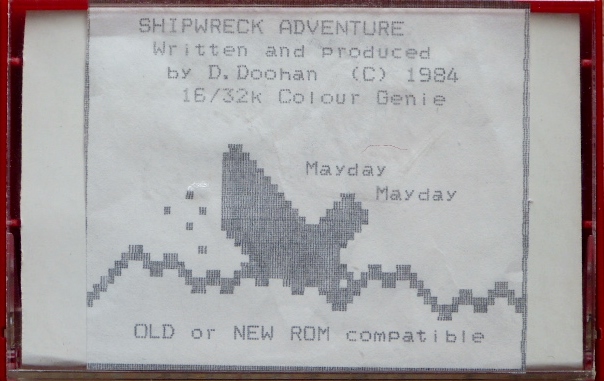
First off, some corrections to statements in my last post: two of the Colour Genie games (from the “Colour Quest” series published by Gumboot) are by Dave Doohan, not Leduc. Leduc is listed on game 4 (Camelot) as a co-author (I’m guessing as authoring the “engine”), and while I don’t have a copy of game 5 (Shipwreck) to test and check credits, I now know what the box art of a republished version looks like, and I’m using the word “republished” very loosely.
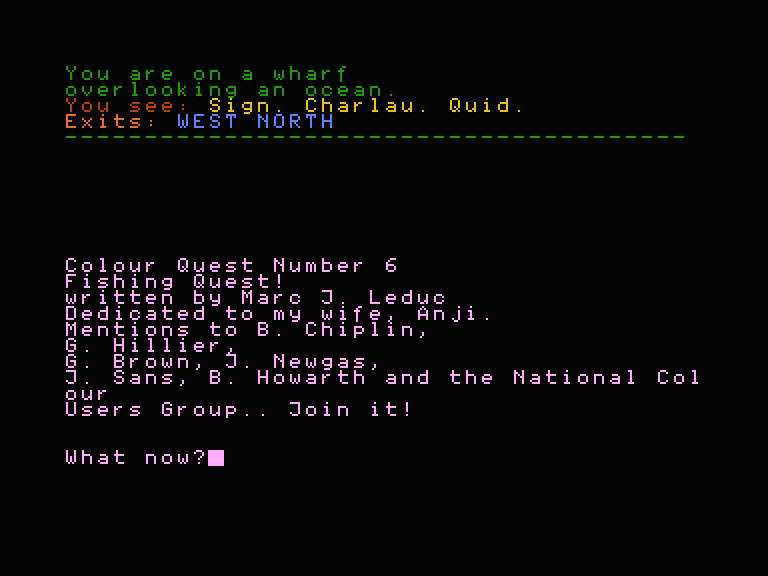
Game 6 (Fishing Quest) goes back to Leduc but seems to be a remake of Ocean Hunt. So in total he has 6 games, not counting one remake and at least one (probably two) co-authorship credits.
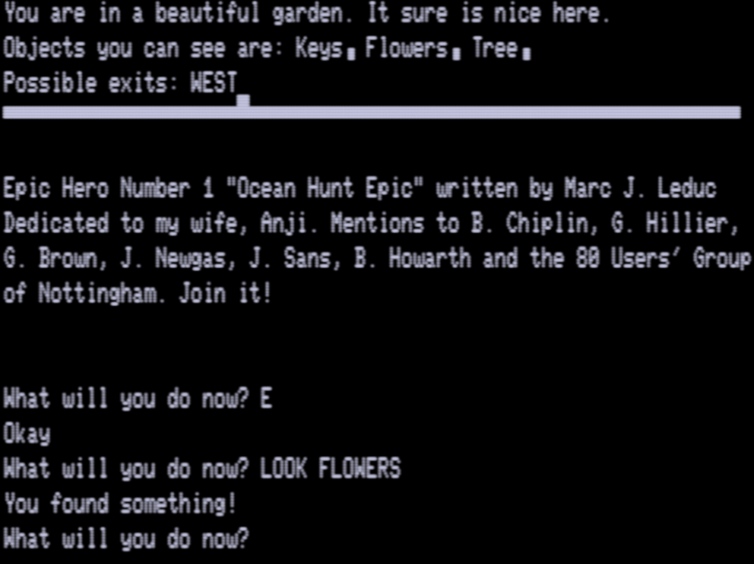
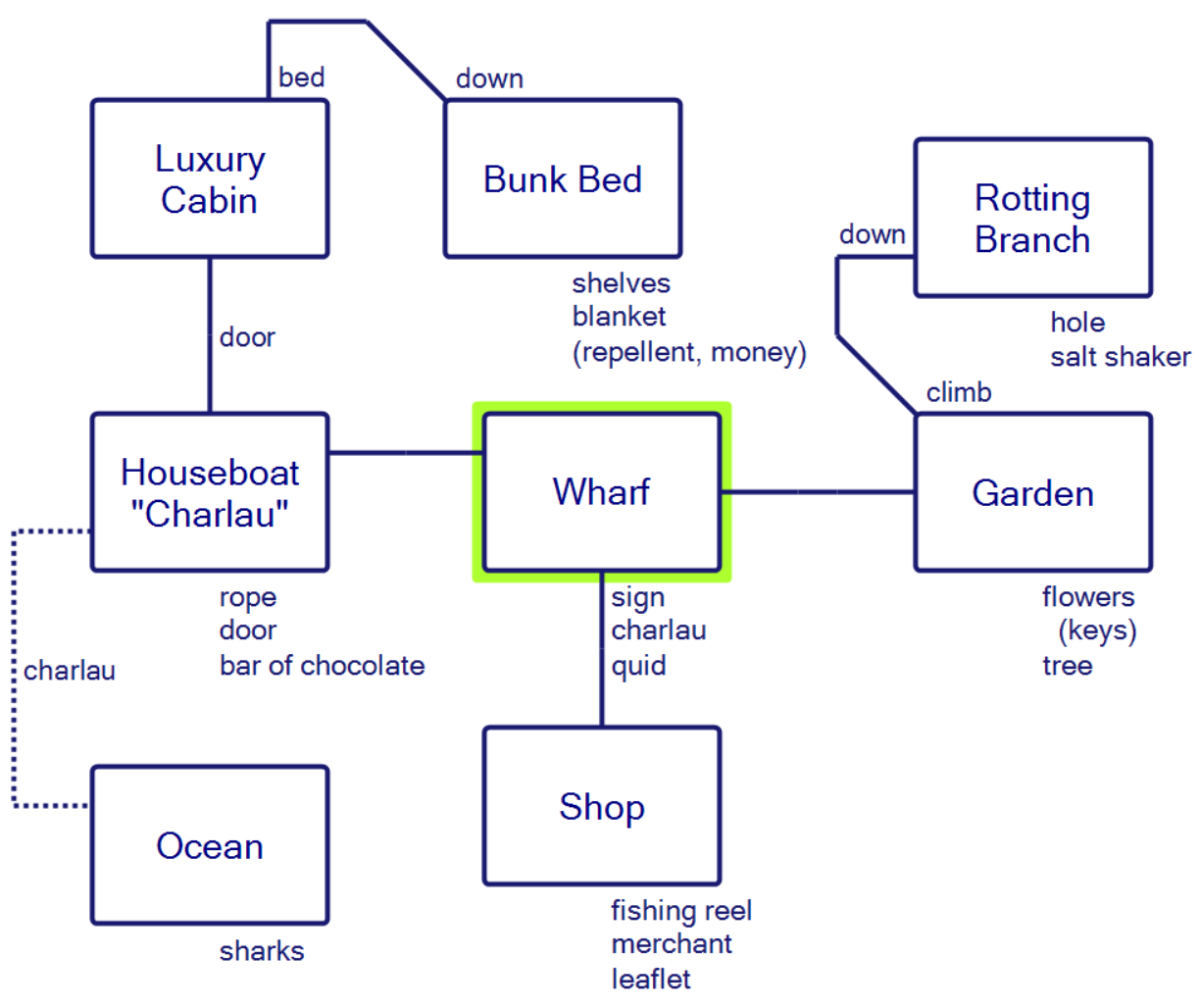
West goes to the garden and north goes to the shop.
I otherwise haven’t seen any differences up to the point where the boat ends up in the ocean.
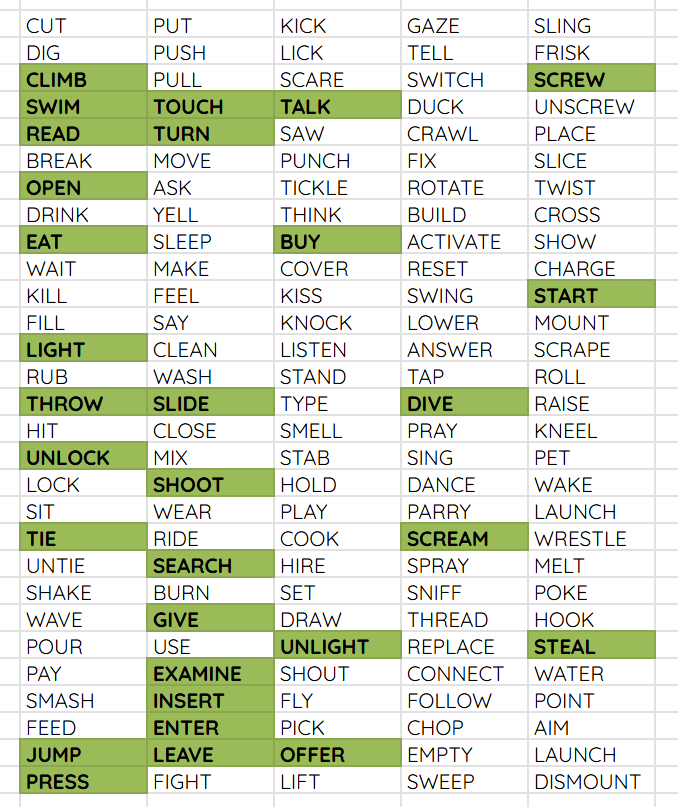
As promised last time, I whipped out the verb list and tested everything out. Fortunately, the game was pretty good about giving feedback if a word is not in its vocabulary (it explicitly says ‘”WORD” is not in my vocabulary’).
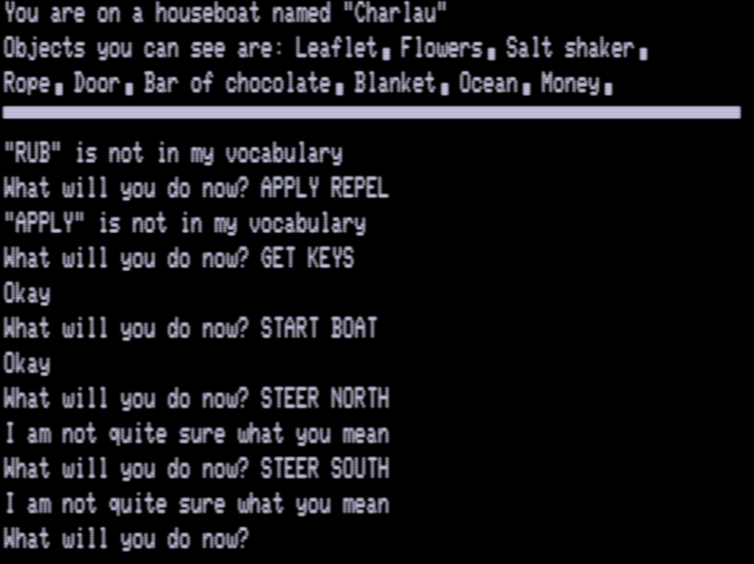
It’s a four letter parser, so the difference between SCREW and SCREAM was unclear, but otherwise the list was unambiguous. I found with TALK on the merchant that he says to drop all treasures at the shop (there’s only two we’re looking for, remember). While noodling around with START I realized it worked on the boat while holding the keys (even if you’re not standing on the boat! I guess there’s a remote keyfob, from, er, 1982).
It turns out you don’t have to worry about the boat floating away, you just need to specify you want to move it somewhere. Unfortunately, that always seems to be hell in adventure games, and here is no different. I finally checked the walkthrough to realize that HEAD DIRECTION works, and later got (what I think is a more reasonable) STEER DIRECTION. The thing that makes this even more bizarre is that it does NOT work in the directions north or south.
“I am not quite sure what you mean” is the same message it gives for a complete whiff of a command that is not understood, but all that’s really going on is you can’t steer north or south! The general layout is:
island – ocean – wharf
So if you want to buy the reel after the boat floats away (since getting the money causes the event to happen), just start the boat and steer east. You can then BUY REEL without getting killed by the shopkeeper, and take it back out to the ocean to THROW REEL.
The MESSAGE has “a drawing of a man entering blue flames”, and I only found it after I got through the relevant section of the game, so buying the reel is technically optional! (I think. I’m not quite done yet with the game.)
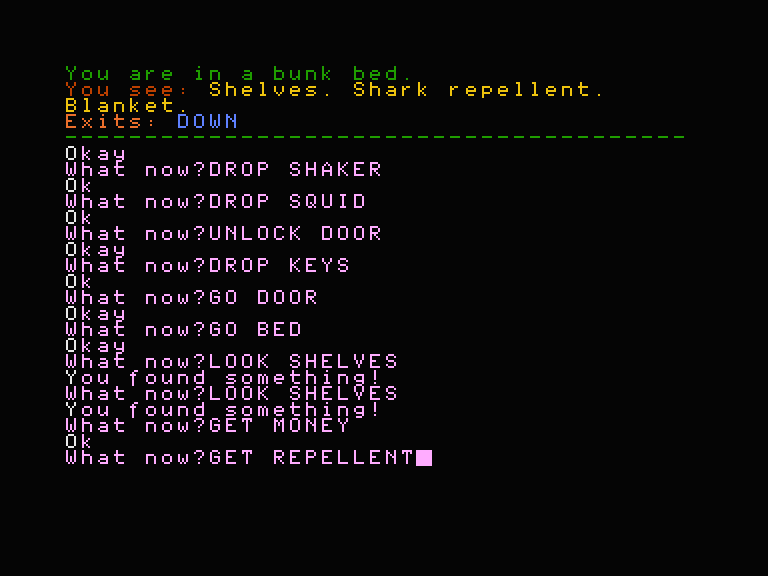
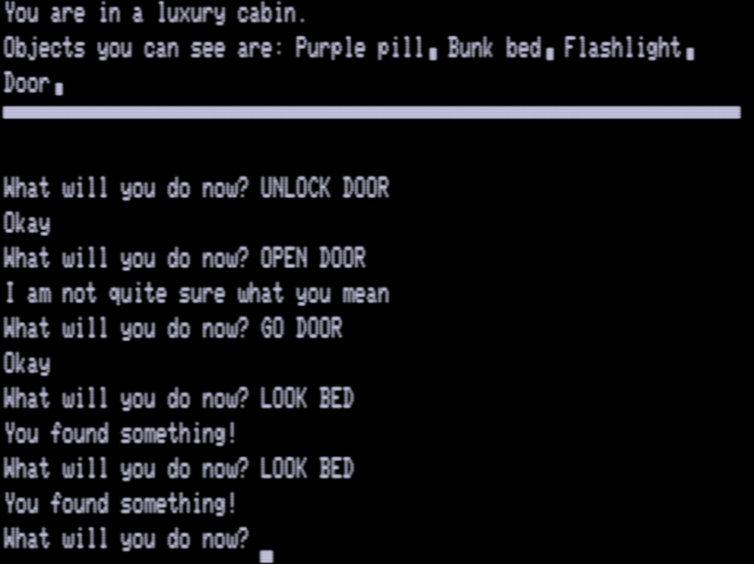
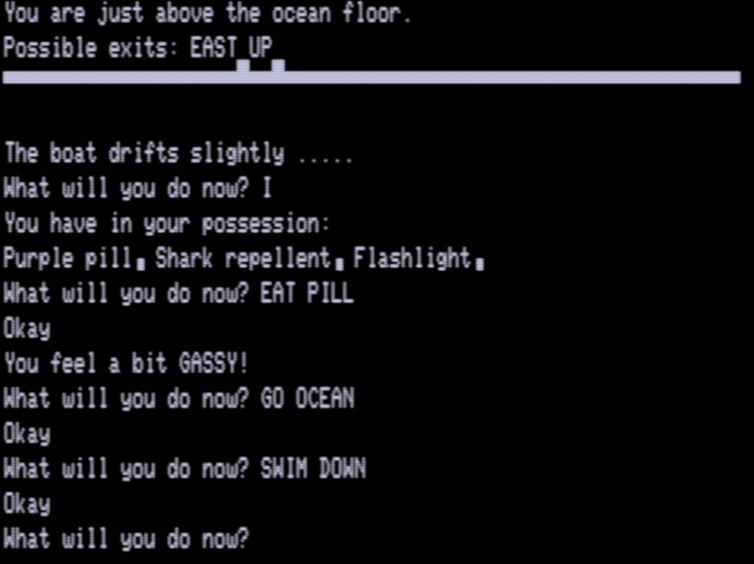
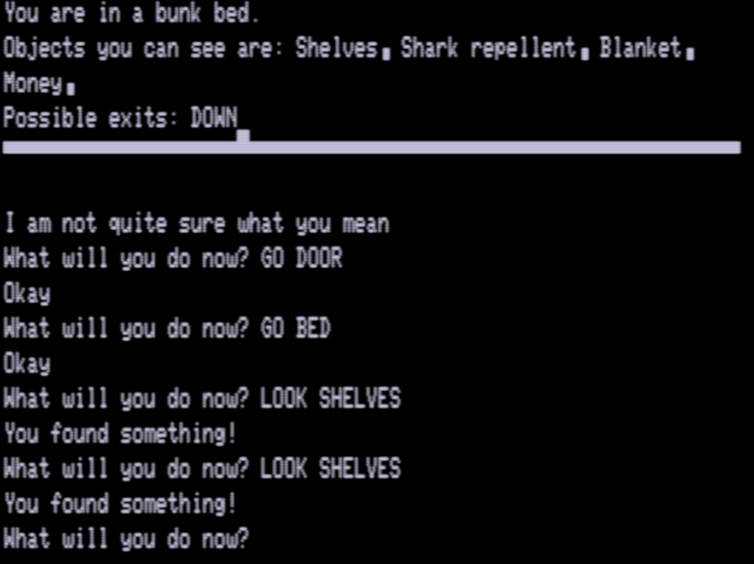
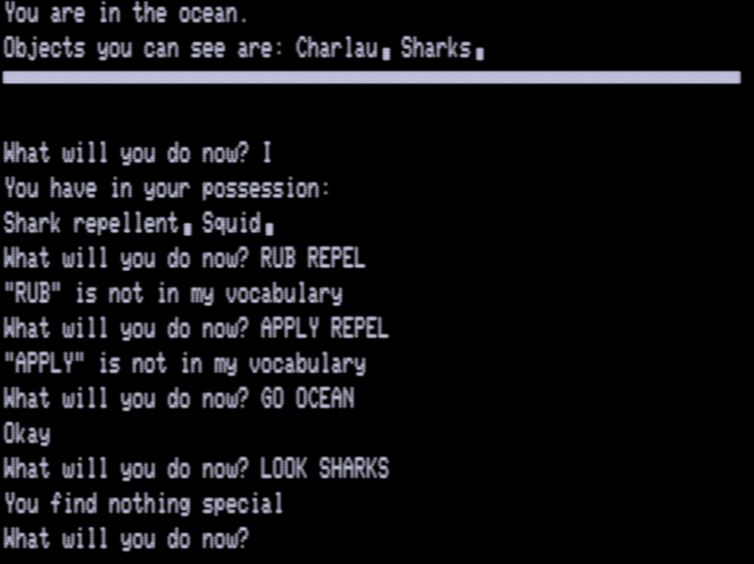
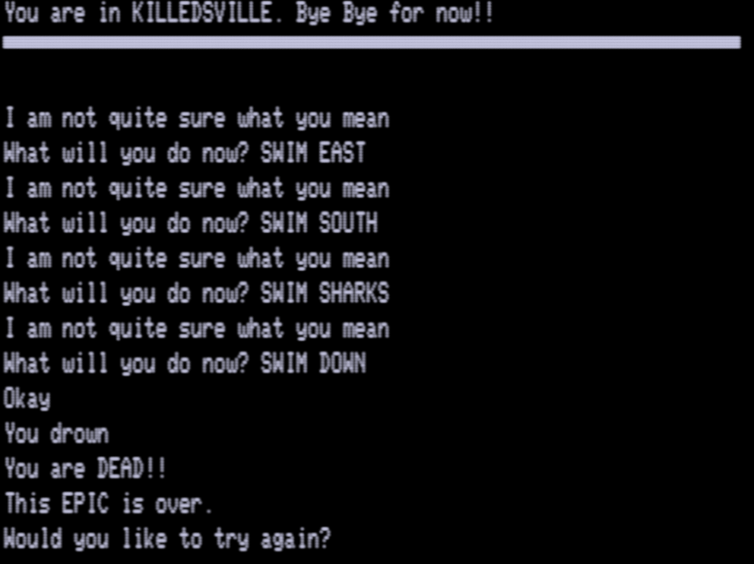
Regarding jumping in the ocean with the sharks, and drowning if I tried to SWIM DOWN: I had missed an item on the boat. Back inside where there’s a bed, I had found I could GO BED and find items on shelves, but confusingly, you can LOOK BED twice to find two more items (that you don’t see actually going on the bed, because early 80s adventure logic).
The purple pill makes you feel GASSY and allows you to swim underwater (the pill does eventually run out, but it takes a while). The flashlight is the standard LIGHT/UNLIGHT kind and I’m guessing it also eventually runs out (but again, pretty generous on the timing).
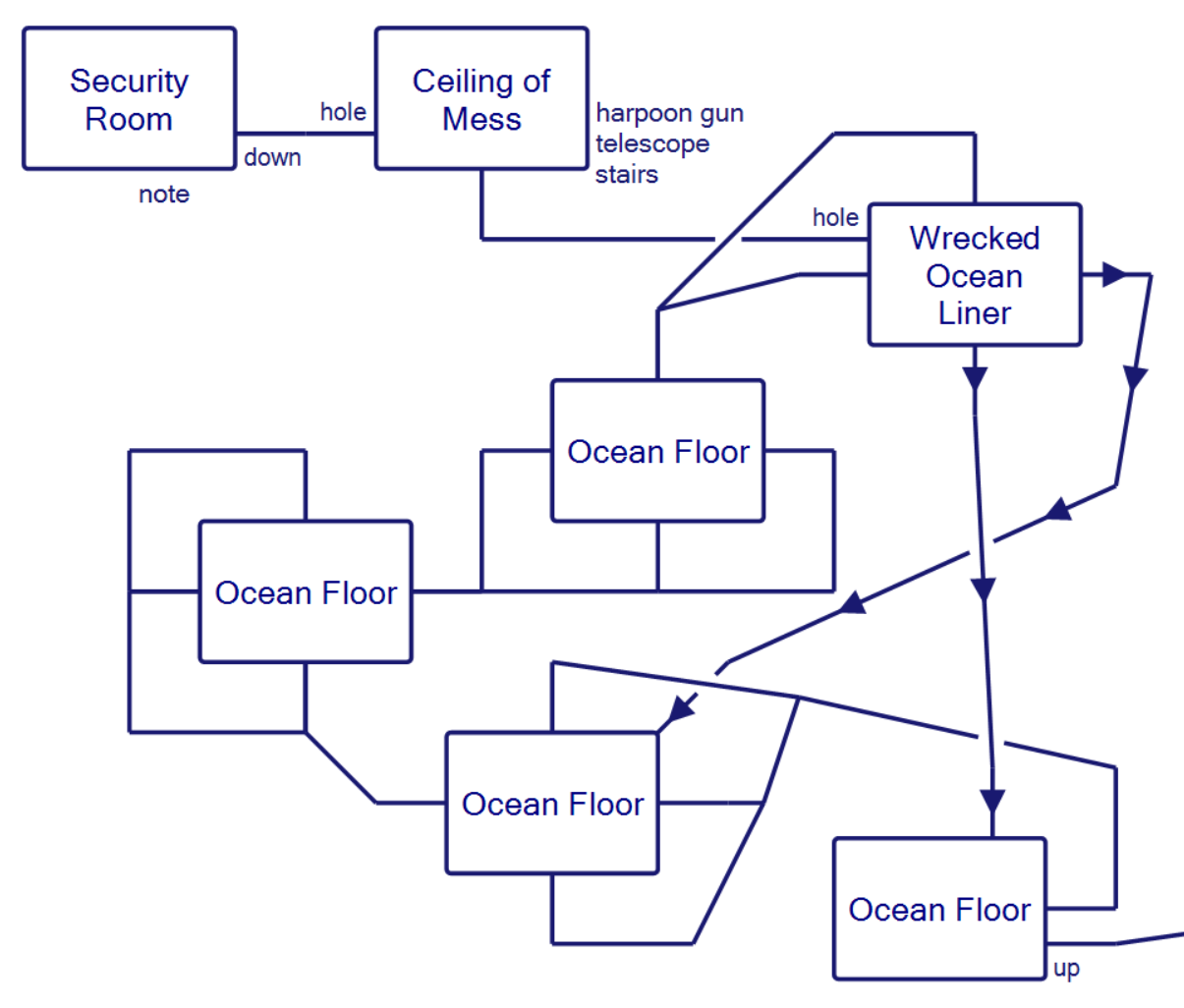
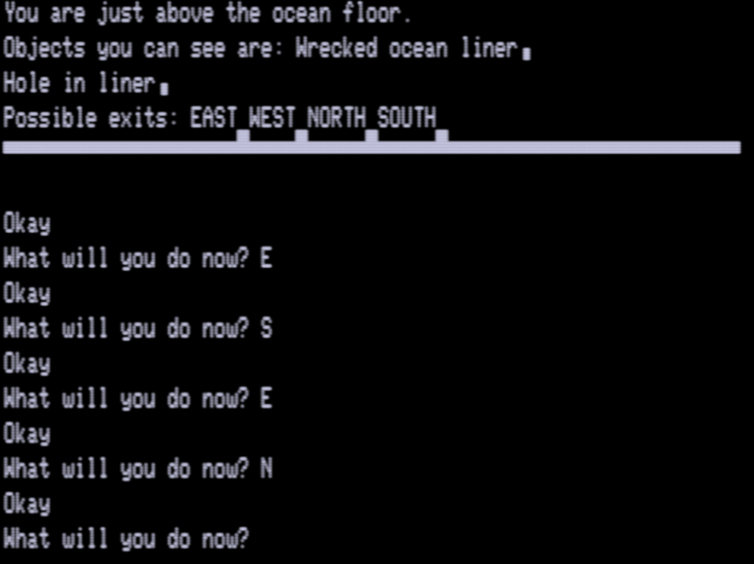
from here you can swim along some “ocean floor” rooms and it took me a while to understand I was in a maze; I’m used to underwater ocean rooms being more of a grid like The Palms, although to be fair that game had some confusing exits as well). You can map it with the standard “drop items” technique that dates all the way back to Crowther Adventure.
Just like The Palms, there’s a crashed boat, but in this case something about it doesn’t make sense (and I had to use the walkthrough again).
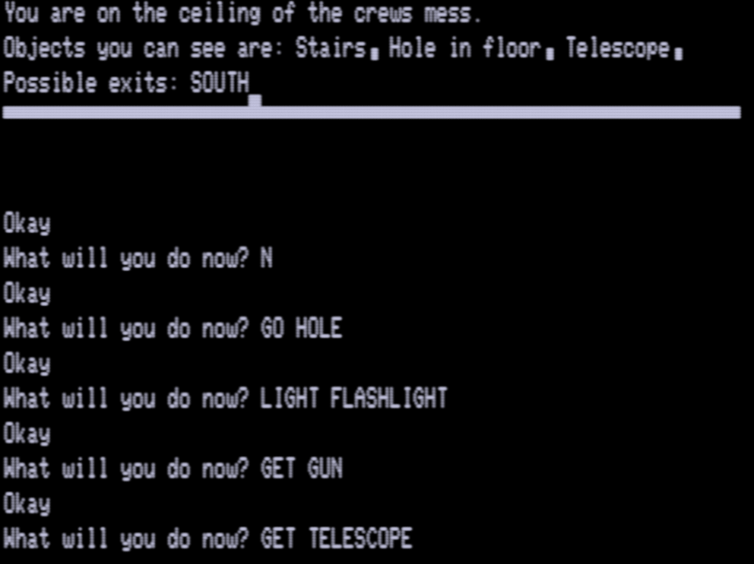
The inside has a harpoon gun and a telescope. LOOK TELESCOPE just says you see your eye; I tried taking the gun over to the sharks and shooting them but the game didn’t understand what I wanted.
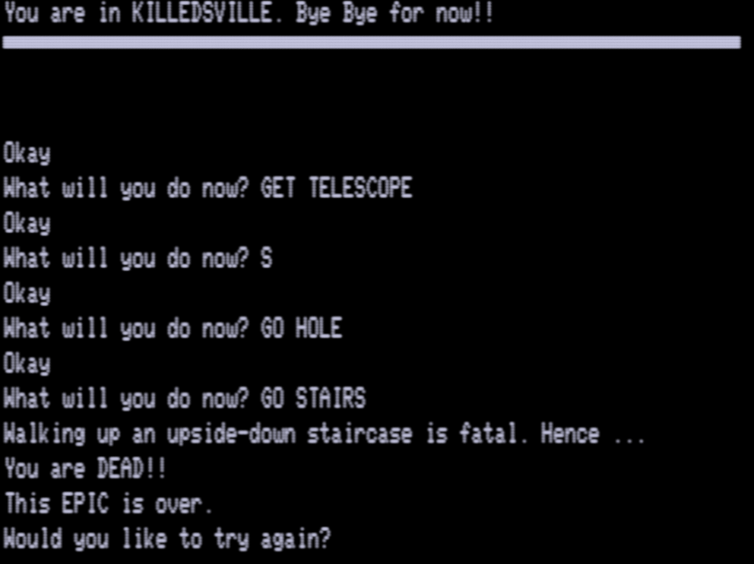
Trying to GO STAIRS kills you in a hilarious and confusing way.
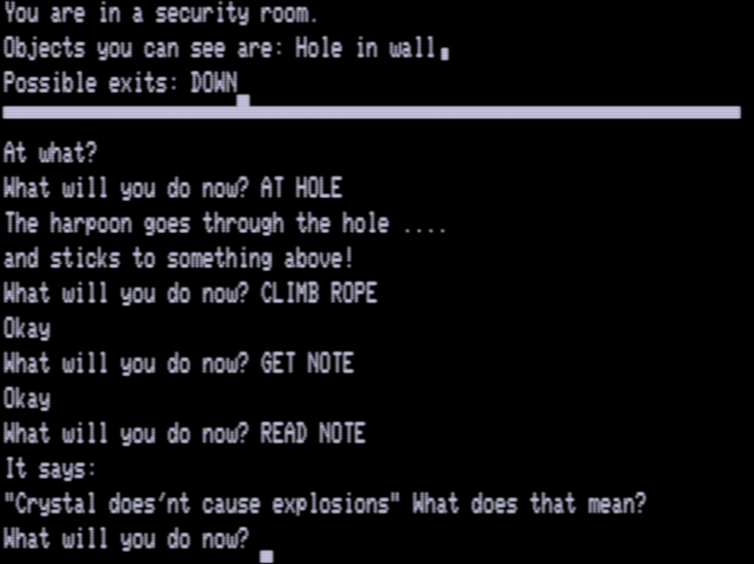
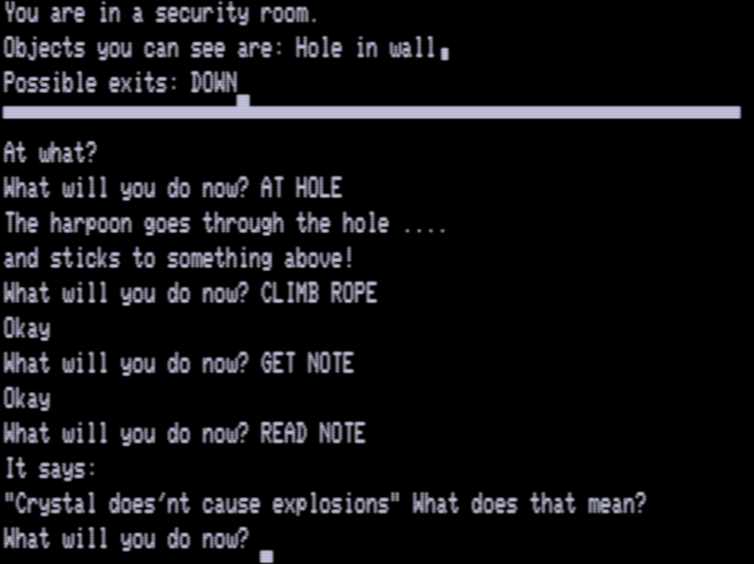
What I was not understanding is that the inside of the liner is not underwater. You can’t swim to the hole, you have to actually tie the rope to the harpoon, and then fire it in the hole and climb the rope. I simply followed the walkthrough steps in bafflement, and then had to stare at what happened for a while before I realized what the game was meaning. (I haven’t needed the walkthrough on anything else, but I also haven’t finished the game yet.) I suppose the weird stairs message might have been a clue but generally this game is styled around a tenuous grasp of reality anyway (which is fine story-genre-wise, but it makes puzzles harder to solve!)
We will get back to “crystal does’nt cause explosions” later.
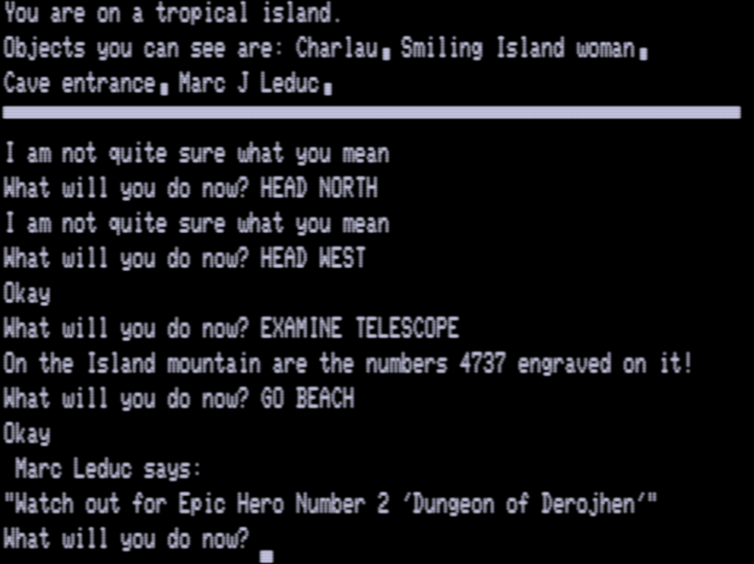
The fact there is only a message suggests the harpoon thing might have been optional anyway; I don’t know. But let’s move on to the island! STEER WEST while out in the ocean:
Note the 4737 you can see with the telescope. I think this use was being hinted at by the note at the shopkeeper, when it referred to looking at an island closely. I have not applied the 4737 clue yet.
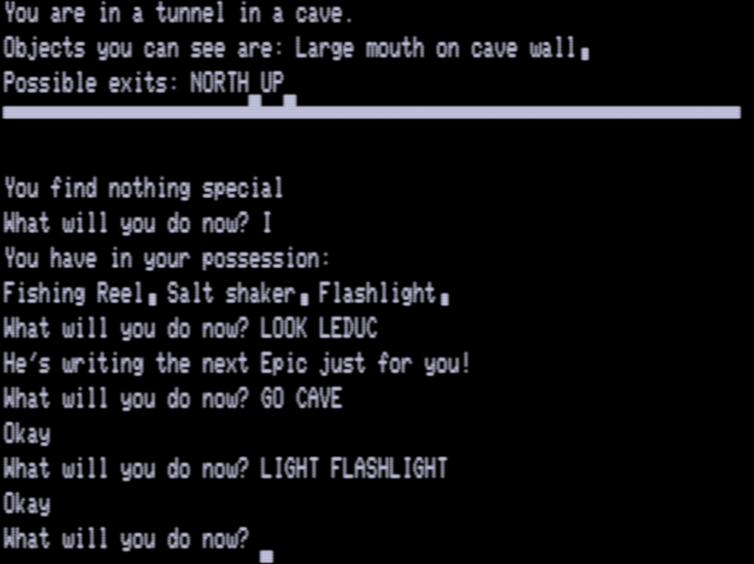
Everyone loves the self-insert. If you LOOK LEDUC:
He’s writing the next Epic just for you!
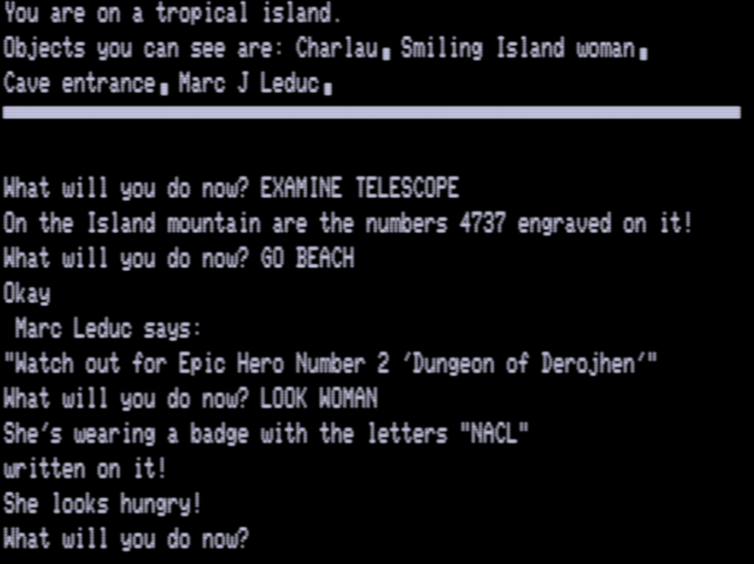
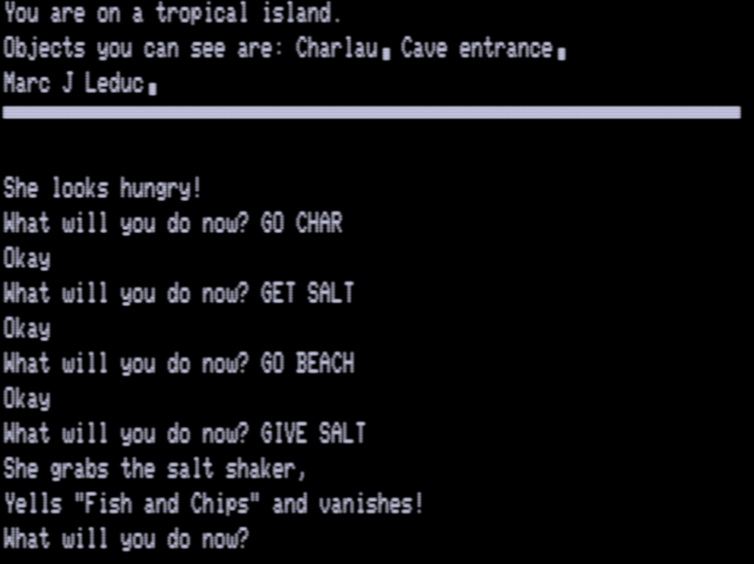
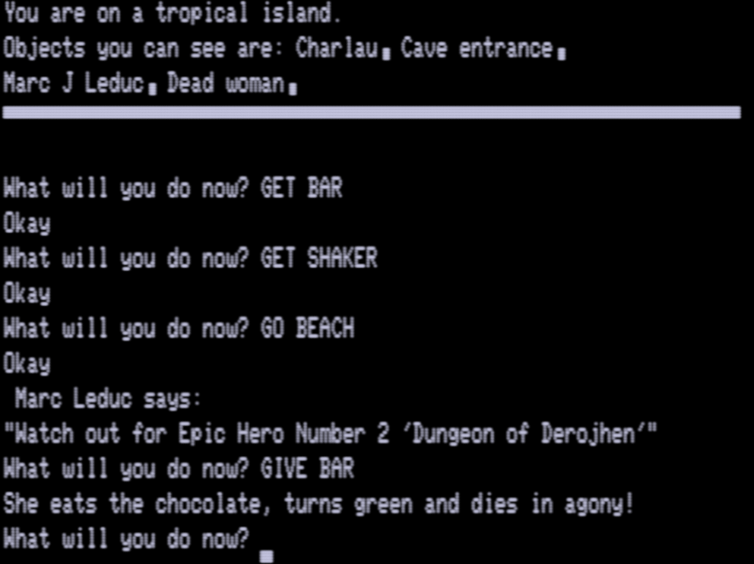
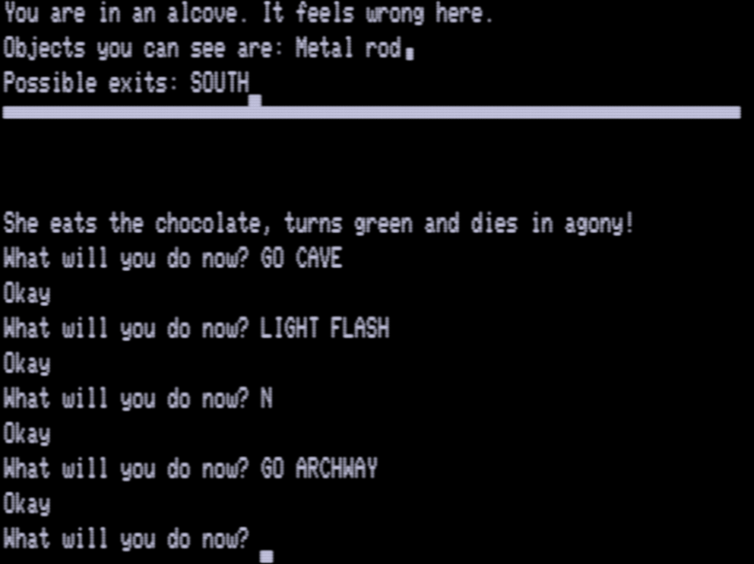
The woman is a little more trouble. She blocks the way in the cave, and “looks hungry”.
There are two food options. One — the more obvious one — I’m fairly sure is wrong. You can GIVE SALT and she’ll say “Fish and Chips!” and disappear.
Alternatively, you can give the candy bar. She “turns green and dies in agony.”
Considering you could eat the same bar and it was delicious, I assume she’s meant to be some sort of demon. Except maybe a British demon because of the Fish and Chips reference? This feels like some sort of inside-Nottingham joke I’m missing (remember all three Epic games were made in 1982 before being published in 1983, so likely were treated more like a “private” games by the author, just like with Campbell’s Fairytale).
I think the candy bar is right because you need the salt shaker later.
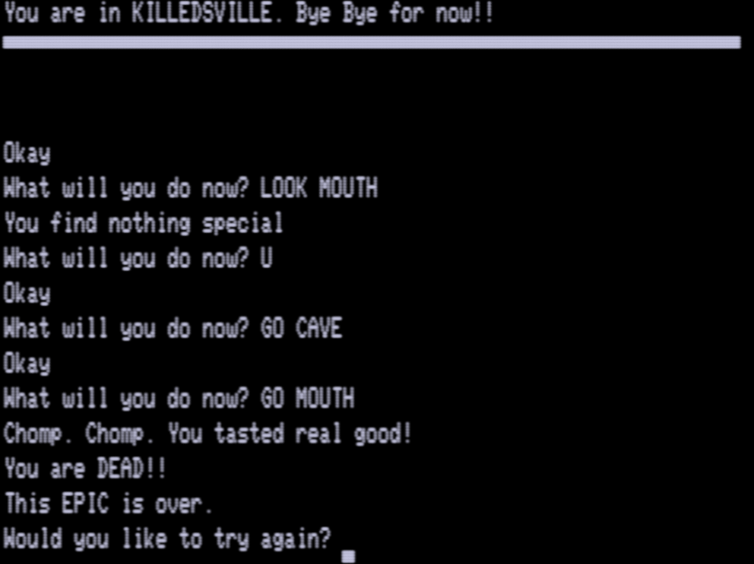
Going inside the cave, there is a “mouth”, which looks like it ought to be just a geographic feature…
…but is just an actual mouth. I don’t know if this is simply a gag like the quid/squid or something that gets used later.
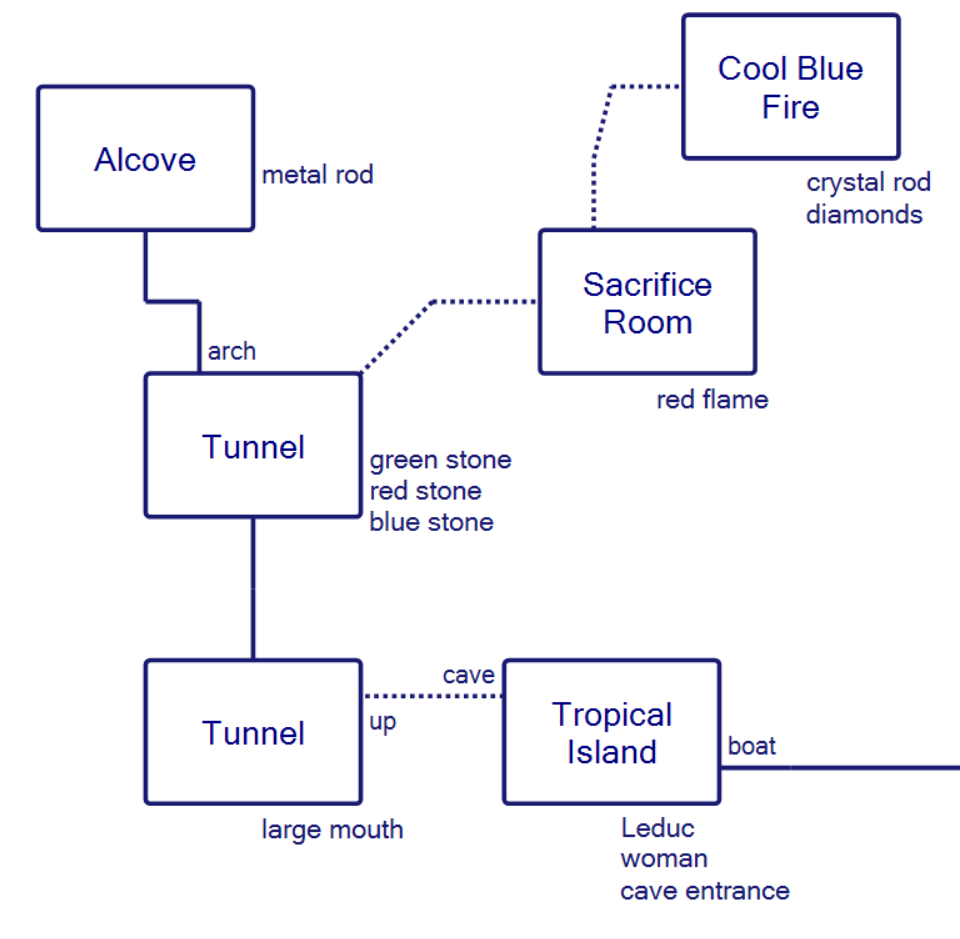
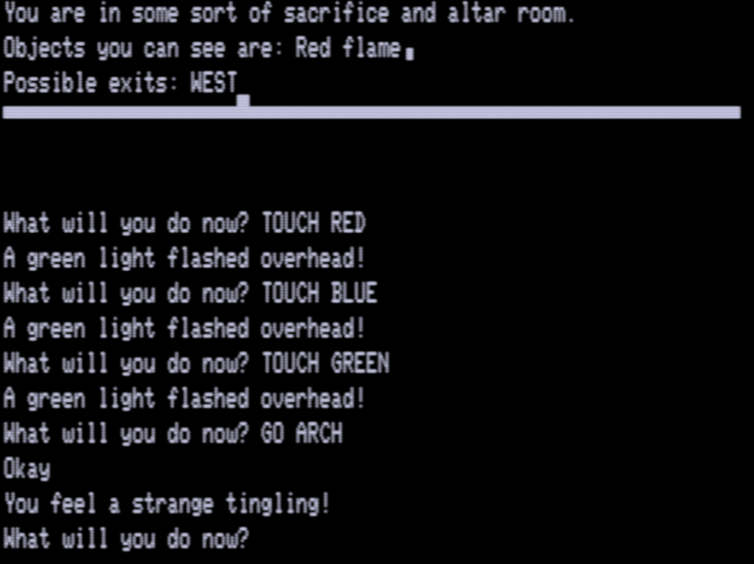
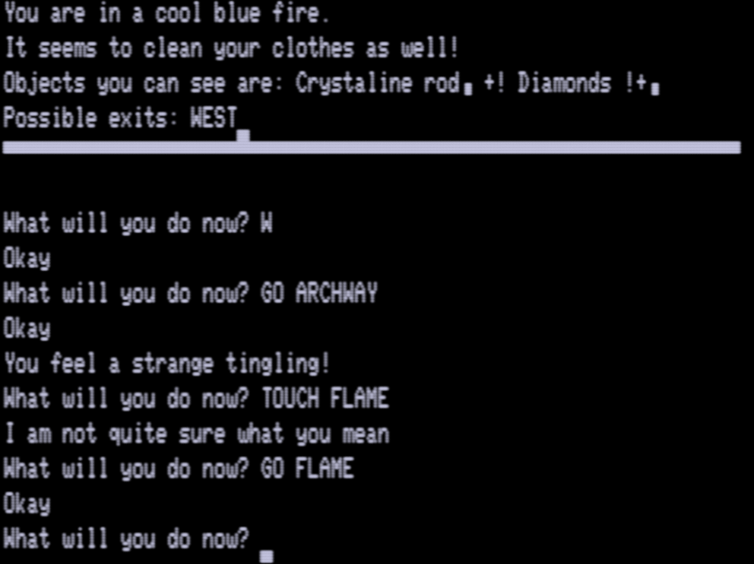
Going north instead, there’s a room with a green, red, and blue stone; the stones can’t be taken. There’s an arch, and if you go in the arch, the room “feels wrong” although you can take the metal rod there seemingly without hurting anything.
TOUCHing the stones is the answer (thank you verb list!) as they’ll glow either green or red as you touch them, suggesting a combination lock. I eventually got into a “sacrifice and altar room”.
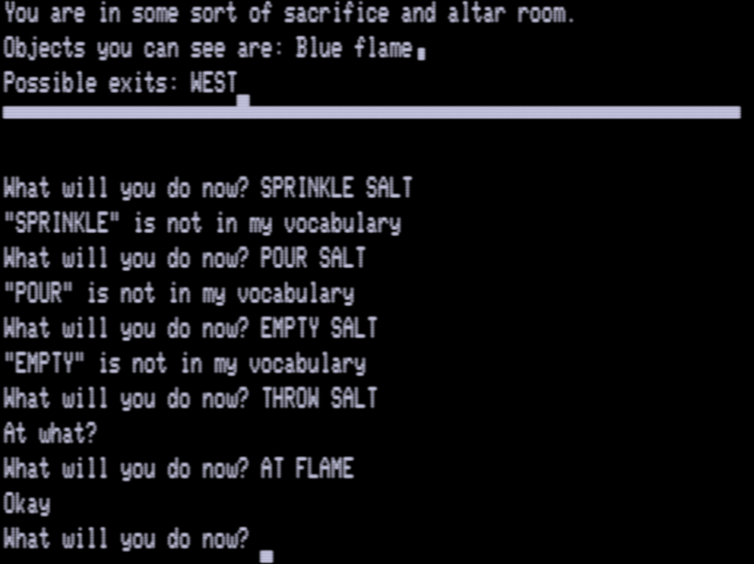
The next bit is hard to find, but the two solutions with the woman suggested (in a structural-solving sense) either the chocolate bar or the salt were still important. The salt turns out to be needed:
You can then GO FLAME; hinted at by the bottle in the ocean, although I want to re-emphasize I did this prior to getting the hint. The “sacrifice” thing seemed suggestive to me!
The diamonds are a regular treasure that you can deposit at the store right away; the crystal rod is not. I have no idea what to do with it. The message underground said something about it not being explosive but I haven’t been able to translate that into action.
Just to recap my items: fishing reel, shark repellent, crystal rod, telescope, metal rod (from the “bad” arch exit), keys, flowers, blanket, harpoon gun, squid, and some various messages. I suspect I just need to do the right thing with the crystal rod but I haven’t chanced upon it yet. We may get a win in a single puzzle, or it might still be a couple. Either way, I don’t think there’s too much farther to go.
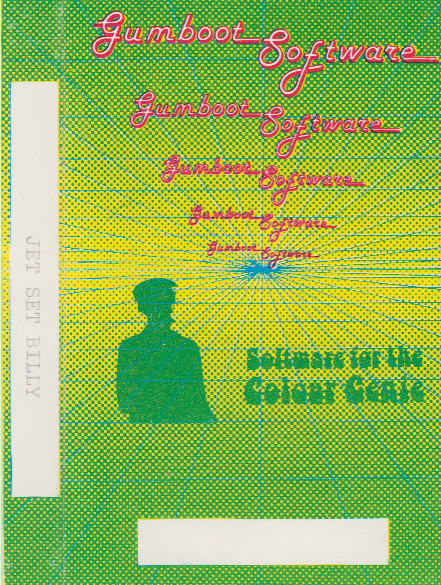
One of the more amusing tape covers from Gumboot. That’s “Jet Set Billy”, not “Jet Set Willy”. Legally distinct! From the Centre for Computing History.
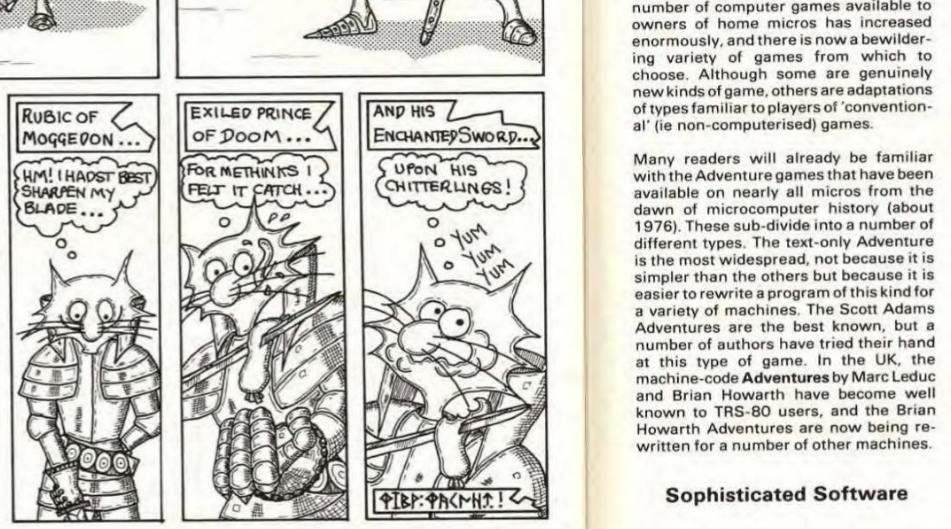
In the April 1984 edition of Imagine magazine, intended mostly for tabletop gaming, Mike Costello (editor of Wargame News and Warmachine) started a column devoted to home computer gaming.
Many readers will already be familiar with the Adventure games that have been available on nearly all micros from the dawn of microcomputer history (about 1976). These sub-divide into a number of different types. The text-only Adventure is the most widespread, not because it is simpler than the others but because it is easier to rewrite a program of this kind for a variety of machines. The Scott Adams Adventures are the best known, but a number of authors have tried their hand at this type of game. In the UK, the machine-code Adventures by Marc Leduc and Brian Howarth have become well known to TRS-80 users, and the Brian Howarth Adventures are now being rewritten for a number of other machines.
Brian Howarth we’ve now seen quite a few times now (with games like The Arrow of Death and Circus); he’s given enough direct interviews that his history is mostly well-understood. (The exact story behind him switching to using the Scott Adams database format for his games is still messy, but at least we know enough about him for there to be a historical riddle in the first place.) Marc Leduc, mentioned in the same sentence, has not yet had any coverage here at all, and he’s had very little attention from modern writers.
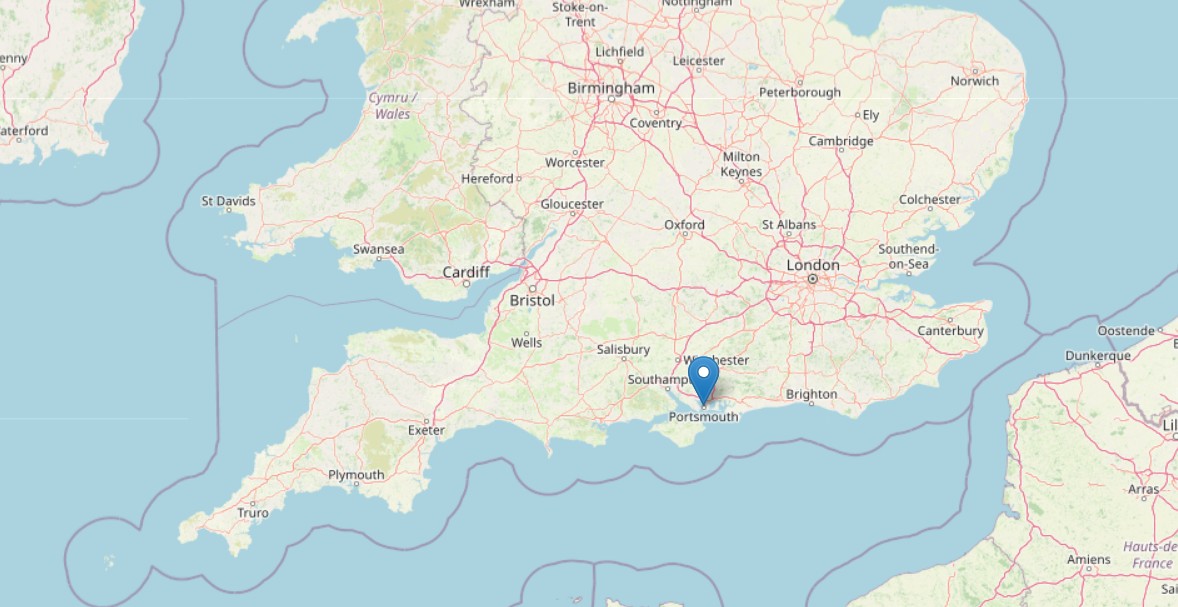
The TRS-80/Genie Users Group of Nottingham was founded in 1980, meetings twice a month at the Wilford Moderns Rugby Club House. They had a club magazine, LPRINT, edited by Geoffrey Hillier.
Marc Leduc was the chairman; what is unusual is he was also the chair of a second group, the National Colour Genie User’s Group. They had their own distinct magazine, Chewing Gum.
THROUGHOUT THIS MONTH’S MAGAZINE, YOU WILL FIND LOTS OF PROGRAMS TO TYPE IN. WE HOPE YOU ENJOY THEM ALL, AND WOULD LIKE TO TAKE THIS OPPORTUNITY TO THANK ALL THE AUTHORS FOR THEIR TIME AND EFFORT.
I’ve gone through before how the Video Genie was a clone from EACA of the TRS-80; in Germany, the Video Genie name established itself well enough that EACA produced a color version. This was made without reference to the Tandy Color Computer. That is, even though the company started with a clone, they used that as a basis to make their own machine. Tandy’s CoCo is a hardware reset of sorts; the Colour Genie is instead more along the lines of “let’s just take a TRS-80 and add color to it”.
It is ultra-rare and mostly only known in Germany (where the Genie name held more stock than Tandy’s for historical reasons I’ve gone into detail about before). However, it did make it over to the UK, where it flopped in sales. Notice how Leduc is chair of a local TRS-80 group but a national Colour Genie group. The Colour Genie group even ended up making their own publishing label, Gumboot.
Leduc’s first Color Genie Game, via the Centre for Computing History. We’ll get back to this game in the future.
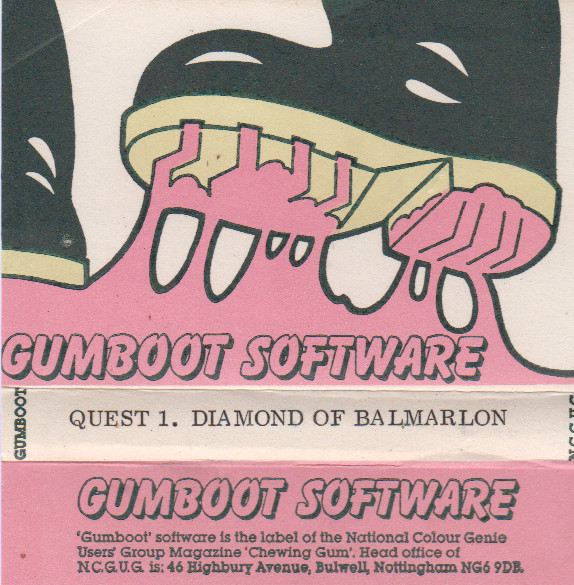
There’s a recollection from 2021 of the user group via Bernard Telemoid, who might have been the artist? Except there was a second cover from Gumboot used on their games generally, so I’m not sure which is his. Note Telemoid is not positive about Leduc’s games but I’m going to decide about that on my own (…weird to call adventure games in general “Scott Adams rip offs”…).
i used to go to the TRS-80 users group (later became the TRS-80/Video Genie user group, mainly cos my dad had started selling VG’s and he lobbied for the change) with my dad in the early/mid 80’s, held in a rugby club in wilford weekly, loads of great characters and discussions about EEPROM writing, machine language, programming the Z80 and the sublime beauty of the RS-232 interface (still a standard in many high level computing connections) of course i went for the crisps and fizzy drinks and of course the other children of electronics engineers, medical physicists and mathematicians.
It was through this i got my first paid work in the arts, designing awful cassette covers for Marc Leduc’s awful Scott Adams Adventure rip offs like ‘Find The Diamond Of Balmorlan’, i think it was he who showed me that if you press ‘break’ you could view the guts of the program and edit your own narritive into it, so i remixed a shit maze chase game into ‘Death Droid’ and gave it to people at school.
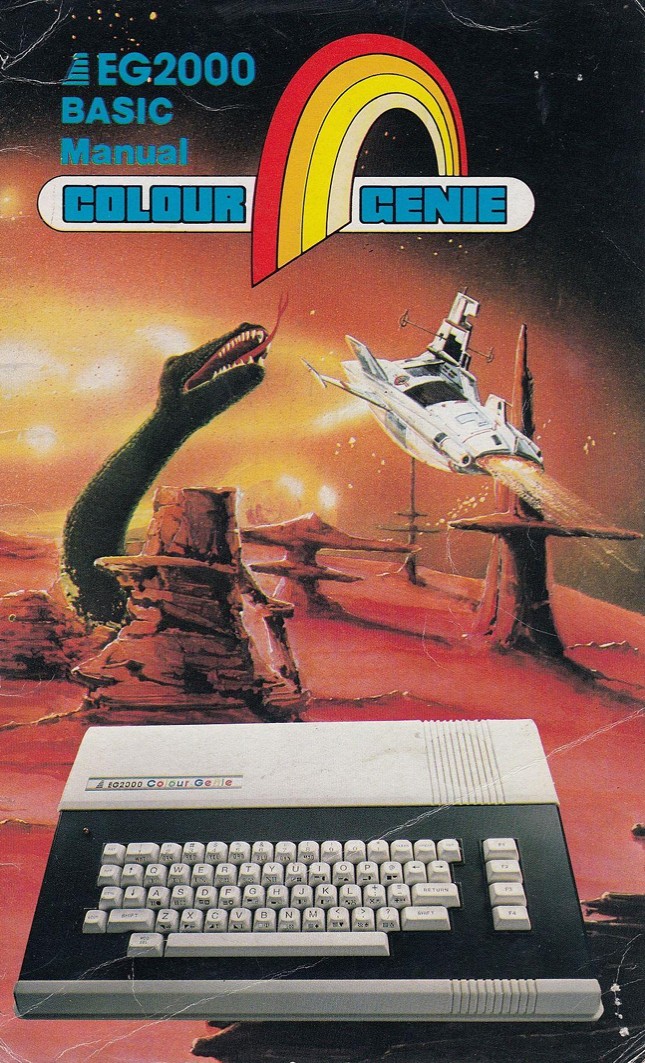
The Nottingham group was so prominent in the English-language Colour Genie space (essentially victory by default) that when EACA wrote a BASIC manual for the Colour Genie, it came with a free tape containing programs from the group.
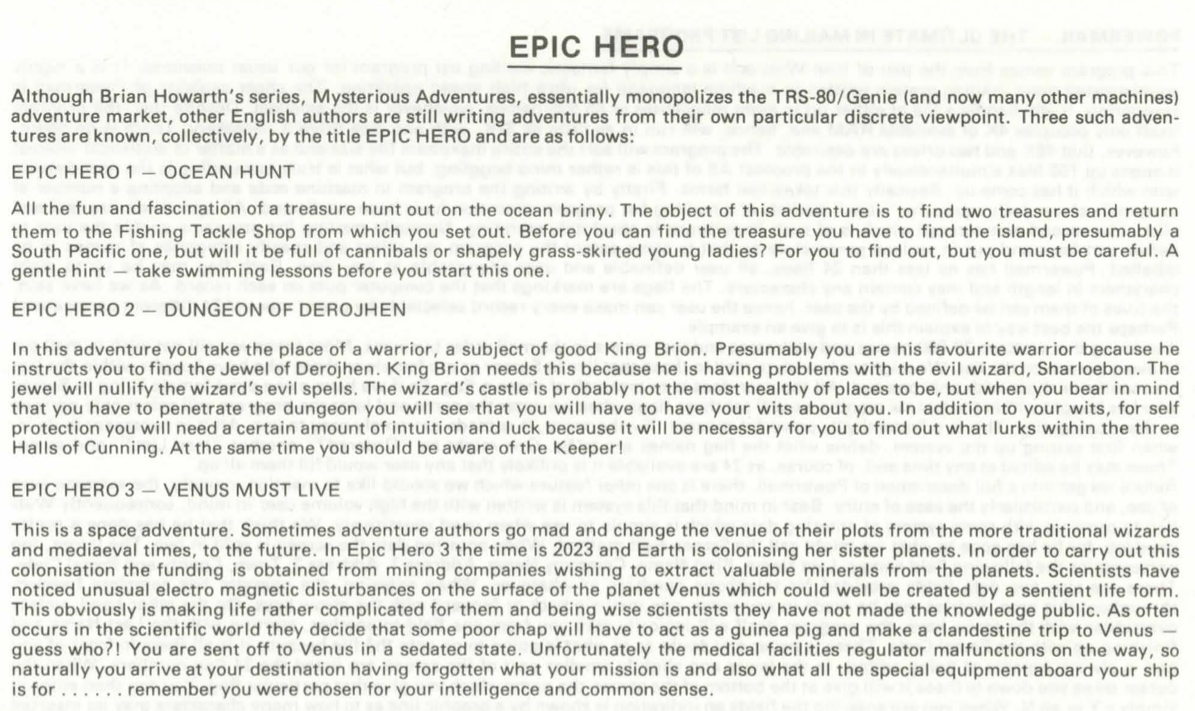
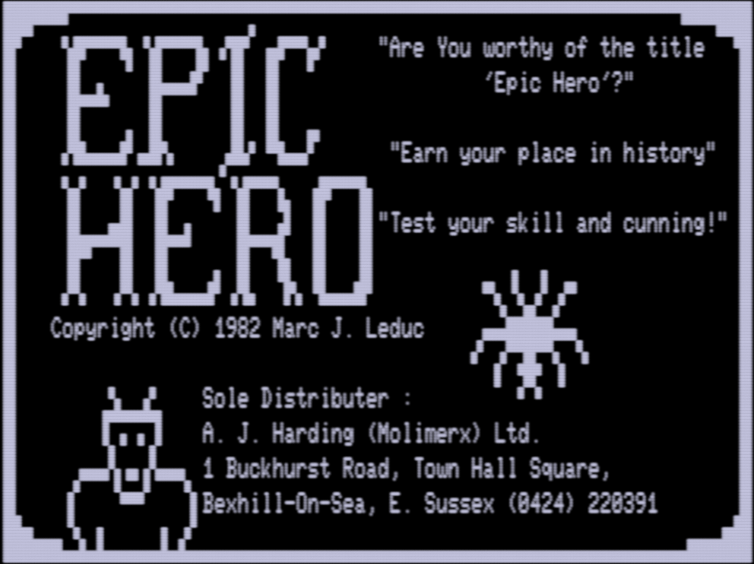
Leduc wrote three games for TRS-80/Genie and then six for Colour Genie. The three for TRS-80 eventually ended up published by Molimerx (prior background here), and Harding’s spiel about the game is in his usual style of “honesty with no attempt at marketing spin whatsoever”.
“Although Brian Howarth’s series, Mysterious Adventures, essentially monopolizes the TRS-80/Genie (and now many other machines) adventure market, other English authors are still writing adventures from their own particular discrete viewpoint.” In other words: I know who my best-selling author is, but have you considered buying an adventure game from a different author?
A December 1982 catalog does not contain the game so it appears to not have been officially published until sometime in 1983, but awkwardly, not only did Leduc finish all three Epic Hero games with a copyright of 1982, he started his new Colour Genie series in 1982 as well. Especially given the role clubs played during this era in distribution (with “libraries” of games for sharing), I think it likely Epic Hero made it out at least to the local Nottingham area before being published; adding on the fact the Colour Genie games ended up more-or-less self-published, is a date of 1982 or 1983 more appropriate? (CASA uses 1983.) I’m listing both in the title but sorting in 1983 for now, but it’s possible some issue of LPRINT will emerge that throws this for a loop (I haven’t been able to find any copies). ADD: This lands in 1982; see the last post in this series.
I don’t have anything detailed yet about Leduc himself, other than based on his dedications to his wife and kids in various games I think it is safe to say he was not one of our 15-year-old prodigies.
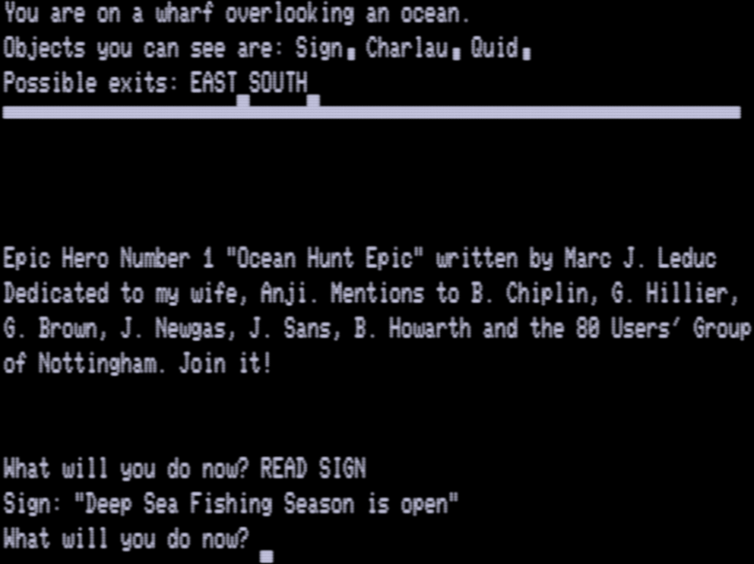
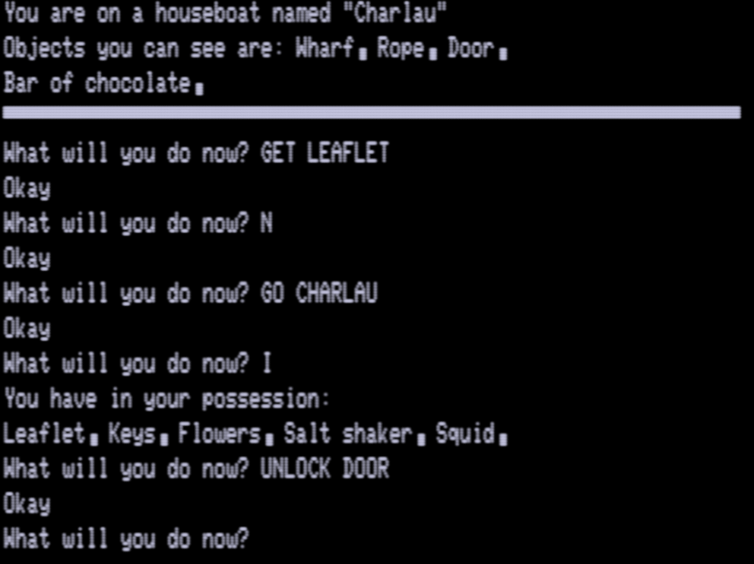
Our goal is to go to the ocean, retrieve two treasures, and come back.
The Charlau I was puzzling over for a while as it is just described as a “beaut” but it is actually the name of a houseboat. Let’s stick with land first, by going east:
There are flowers hiding keys (your keys, I presume, since they go to the boat you end up heading to the ocean on). You can also climb the tree to find a rotten hole with a salt shaker.
From the wharf, picking up the quid and instead going south:
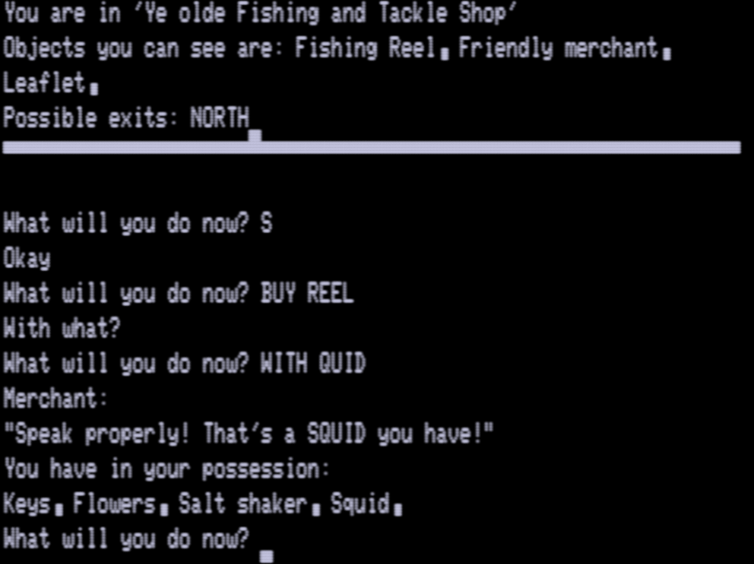
That’s not a quid, that’s a squid. Hilarious. (It likely borrowed this moment from Mystery Fun House with the “five dollar bill” but without the existential confusion of now carrying what I assume is a large squid.)
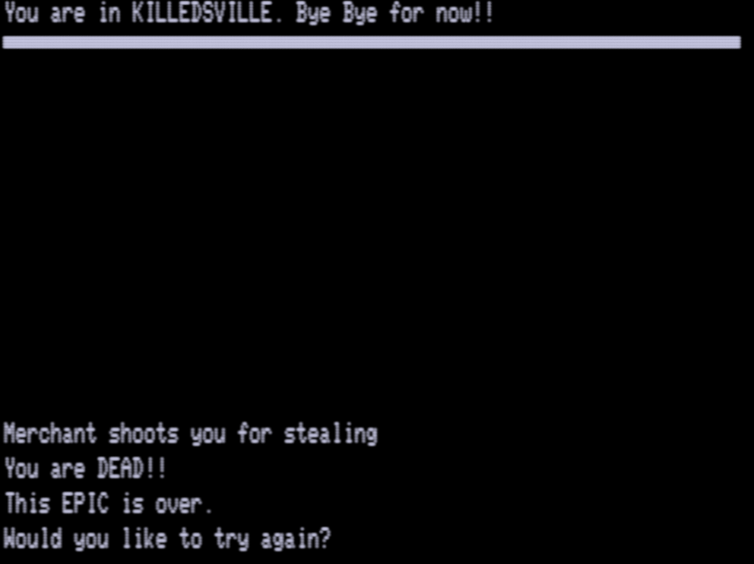
The leaflet just hints “Look closely at Kikimawa Island” which I haven’t gotten to yet; you can try to just take the reel but the merchant just shoots you. (Similar to The Golden Voyage, if we’re staying with the Scott Adams references.)
Hopping onto the boat, there’s a rope and a bar of chocolate (you can eat the chocolate, and the game says it is delicious, but with no further effect; I don’t know if this is a red herring style game yet or if everything is important). The door unlocks with the keys from the flowers.
Inside you can climb up to a bed and find shelves with some shark repellent and some money (as long as you LOOK SHELVES more than once, but that’s pretty standard for this era).
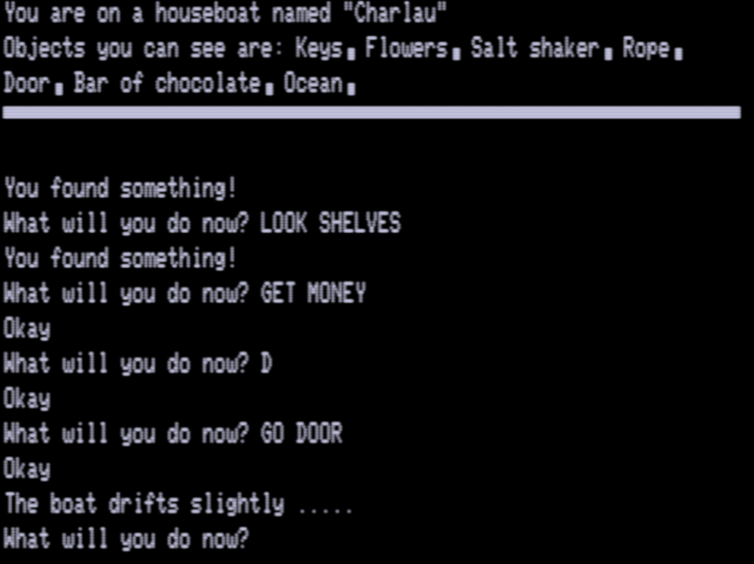
After going inside (and only after going inside, this is essentially an event-based trigger rather than a time-based one) you find that the boat has now moved and you’re in the open ocean.
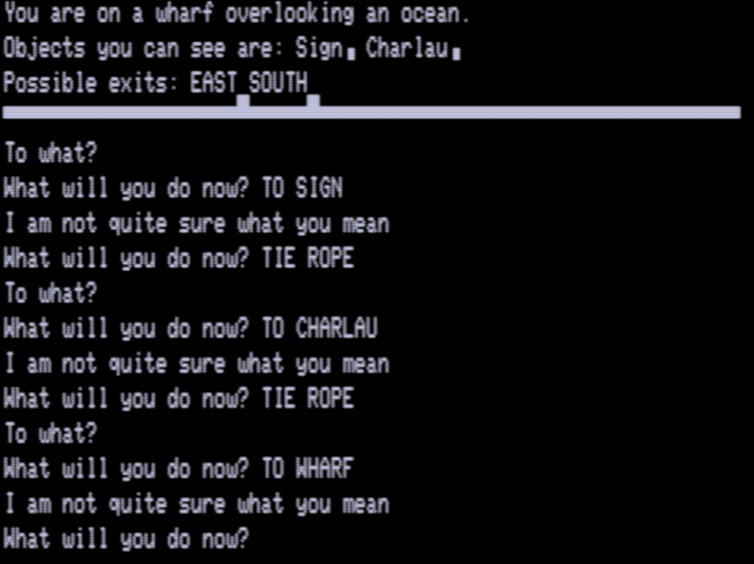
I would assume the rope could be used to tie the boat to the wharf, but I’ve tried TIE ROPE / WITH NOUN on every feasible noun both on the boat and on the wharf. I’m not sure what’s going on. The money presumably should be used to buy the reel before we take off for the ocean.
Even with the path being “wrong” we can still do a little preview of what it is like jumping into the ocean. It’s fine as long as you are holding the “shark repellent”, and I’m not sure what to visualize that as.
The only way (seemingly) to go is down, or more specifically SWIM DOWN, but that just causes drowning.
I think I need pull out the bigger guns on this parser to make any progress. If all else fails, there is a walkthrough, but this is the only Leduc game out of his nine that has one, so it’s better for me to try to figure out his mindset as much as possible now while I still have a fallback. Everything is in machine code so I can’t just expect to prod at BASIC source code on his later games.
I was missing one reasonably simple (but still hard to find) action in order to escape with the Bluestone; I did try the next part of the game but it didn’t go well.
Just as a reminder, I had found a key, the bluestone, a gun, and a memo, and I was now looking for a way out of the base on the planet of Ariosferia. I received the verbs USE, TAKE, SHOOT, and PUSH from pressing the HELP key.
Kazuma Satou informed me in the comments that I had missed a feature; if you are being prompted for a noun, you can hit HELP in order to get them listed by the game. Hence you don’t have the guess that the GUN is a GUN (assuming you’ve understood this aspect from the instructions).
I went around every surface of the game trying to apply USE, SHOOT, and PUSH in order to see if I could get some kind of reaction. It turns out the end-hallway figures are very different.
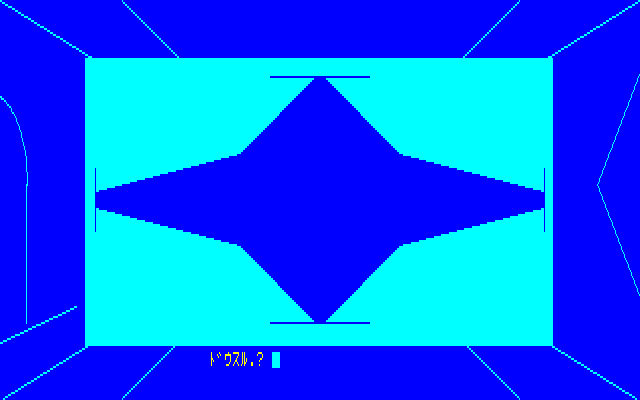
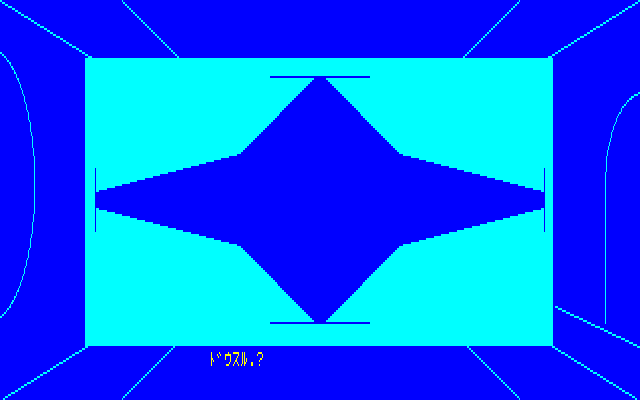
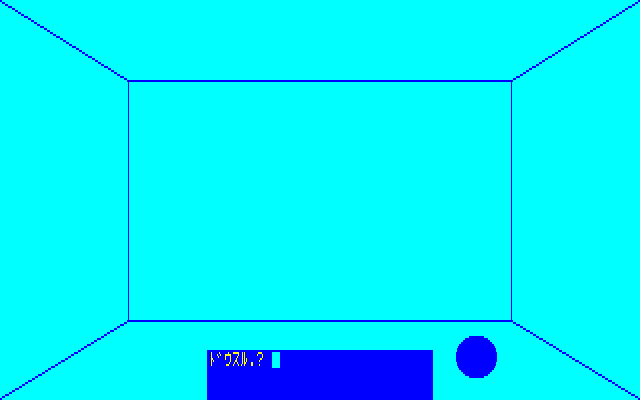
This is the end of the hallway on the left.
This is the similar-looking end of the hallway to the right.
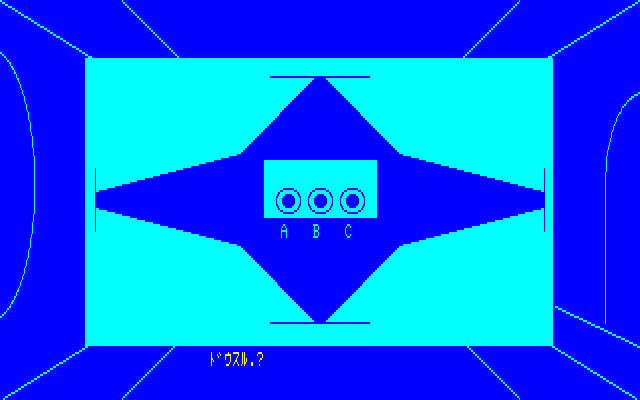
If I tried USE on the right side (and only the right side) the game was asking me for a noun. I went through my held items and found that using the KEY then went back to asking me for a verb again, and I was very confused since it didn’t seem like anything happened, and in fact the game is prompting you for your next turn a specific action, and if you don’t that it resets the variable (that is, you go back to needing to USE KEY again). If you type OPEN right after using the key you reveal hidden switches.
This is an entirely random choice, and there’s no save feature to the game, so after struggling through the combat and going through the sluggish adventure session you now have a one-third chance of just dying. Good luck!
(For me the correct switch was SWITCHA.)
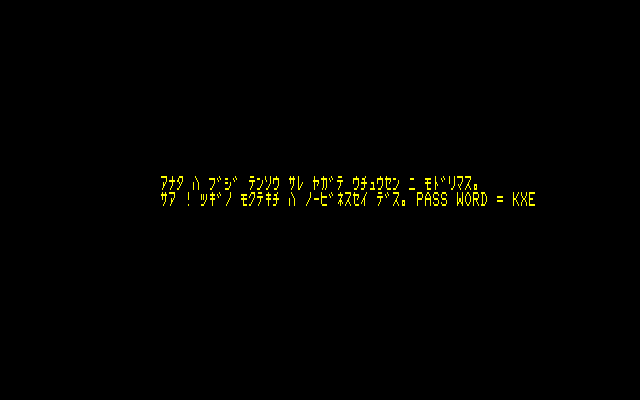
(Immediately after this scene, the game does a LOAD”CAS:” to open the next part of the game. You can theoretically LOAD”CAS:” twice from the start to jump to part 2; only not knowing the password is stopping you.)
We’ve been teleported back to the ship and are ready to go onto the next phase. Unfortunately, the ships are just as irritating and deadly as before. (At least not invisible; the comment in the Oh! MZ guide said something about this but it meant that their movement is invisible; that is, you don’t see sprites smoothly changing places but rather “jumping” between points like an old LCD handheld game.)
Reader, I tried. I tried for far longer than I really ought to have. I tried using Antimicro to map my gamepad to the right keys; while this made playing a little more comfortable, but it didn’t change the fact that the laser movement is outrageously slow compared to how quickly you get destroyed, and this level has the downside of it not being as obvious which planet you’re aiming at (you’re going for something red … I think).
Mid-warp.
Attacked. This enemy is in a good spot, but that’s no guarantee for the next five enemies.
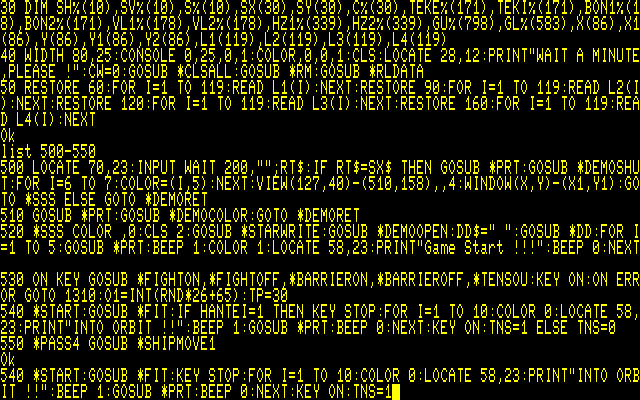
It was time to resort again to hacking.
This is me typing in a replacement line. Compare it with the original two lines up.
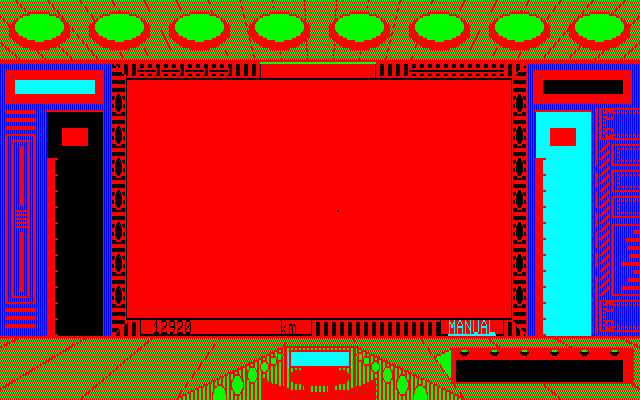
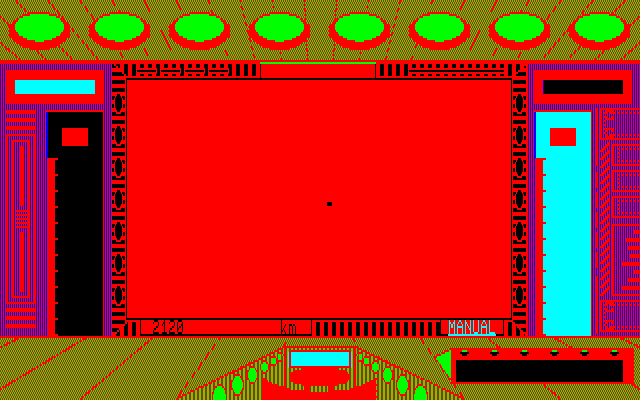
After the game had a moment of confusion it brought me INTO ORBIT, closed the spaceship window, and opened it again on a red environment with a dot in the background. I could use warp to get closer and aim but without any enemies around.
The dot was constantly moving to the right so I kept having to adjust my center aiming every few steps of warp.
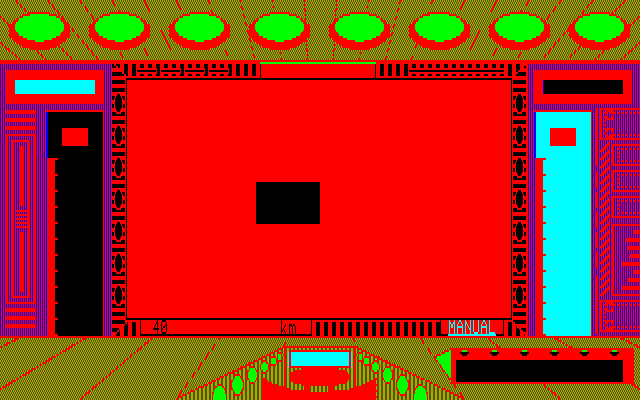
The controller for the planet launcher is supposed to be a black rectangle.
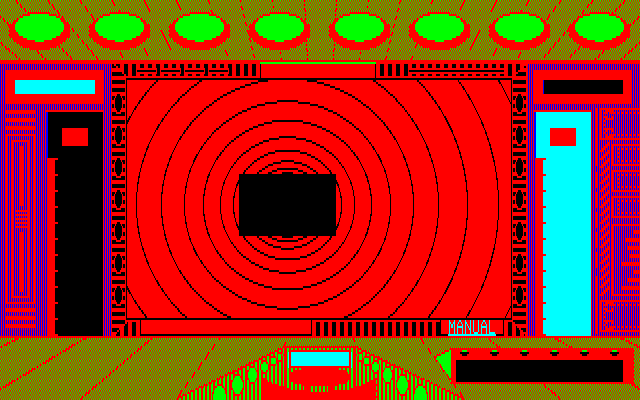
Once I reached the screen above (and pressed F5, although I am unclear if I needed to do that), a very very long cutscene started. It is long in that it is being drawn on a PC-88 and I found in the end weirdly magnificent and impressive. I would probably not find it so impressive if I died in the scene after and had to redo the entire thing.
I’m showing far more screenshots than usual. Keep in mind each frame lasts about two seconds, and I’ve still cut many of the in-between frames.
And then…
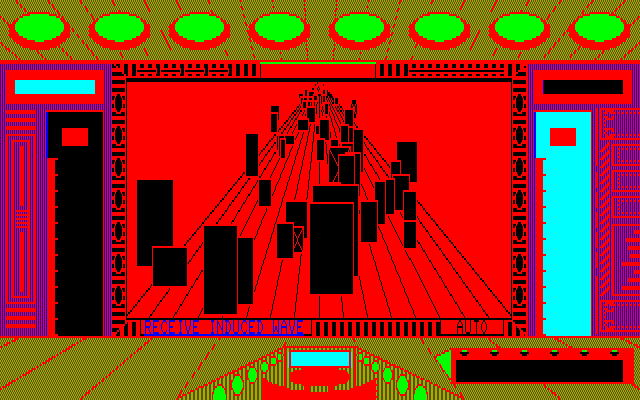
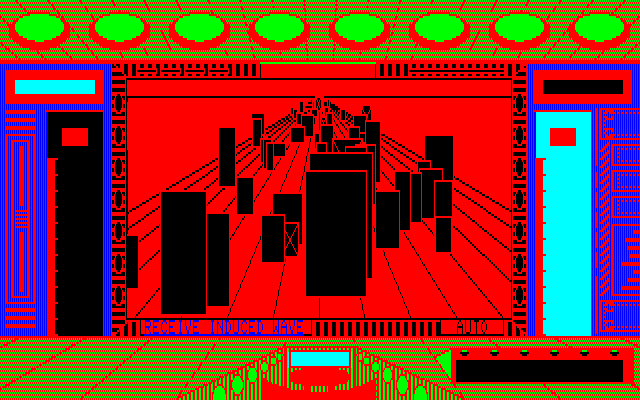
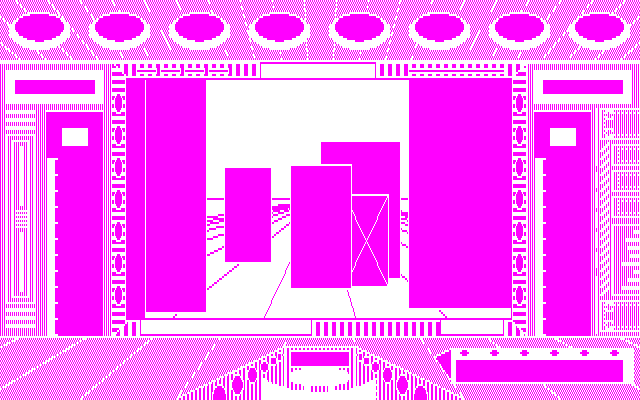
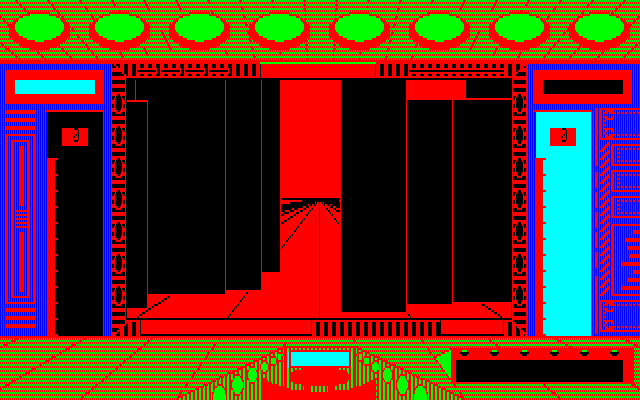
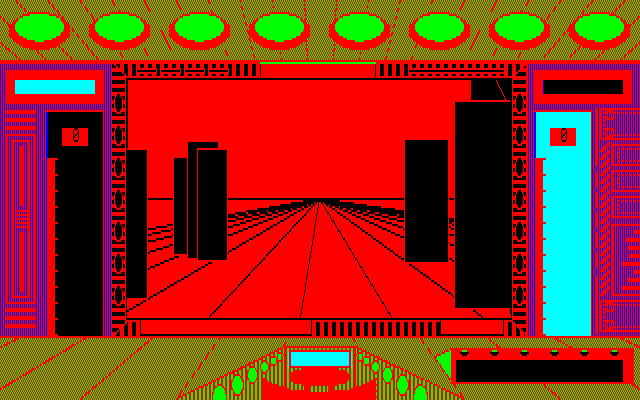
…a sea of monoliths. You now can control movement, using up/down/left/right, with it being agonizingly slow as a bar fills at each step.
Midway filling a “charge” that will turn us a step to the left.
Pressing F1 will show either an arrow left, arrow right, or double-arrow (which I think indicates “you’re pointed the right way”). The problem is you need to navigate the monoliths without hitting things.
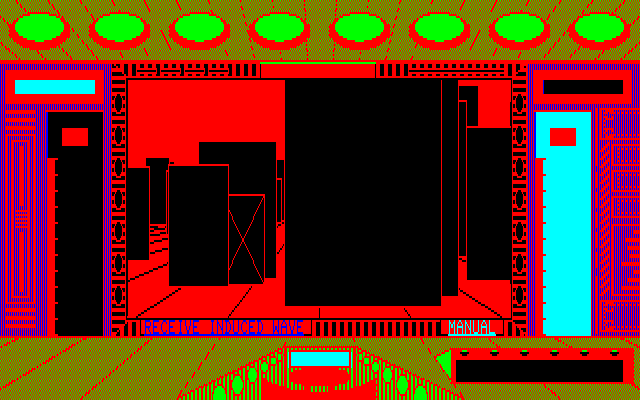
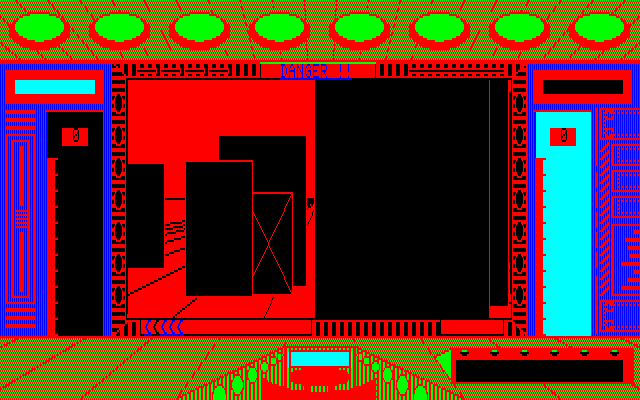
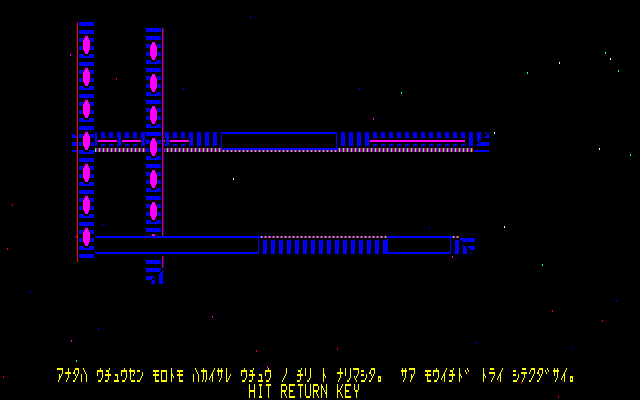
My spaceship being destroyed because it collided with one of the monoliths.
I found this section terribly confusing as it doesn’t appear like the things you hit are the monoliths? Or at least you can sometimes steer towards what appears to be an empty path, move forward, and crash.
Moving forward here crashes into apparently nothing.
The goal, according to the manual, is to find a series of six rectangles that you shoot with the Revival Ray (powered by the Bluestone) and you’ll be able to escape. Oddly enough, it appears to be impossible to crash moving backwards, so the way to position yourself is to slide far to the right (past whatever hitboxes the game thinks are there, visible and invisible) and slide forward the right amount, then slide back into place. At least I think this is the strategy, as I haven’t found a single one of the rectangles, and this is with occasionally hitting the “speedup” key to keep the sluggish movement from being so sluggish.
I’m far past adventure territory so I can consider this one done. The cinematic ambition is impressive and I found the imagination of both “act 2” sections I experienced to be exciting, just janky and undercooked for BASIC source code on an ancient system. The “ship docking” section with giant monoliths made me think the author was trying to make cinema more than a game. Not only thinking of 2001 here, but the long special effect sections of Star Trek: The Motion Picture.
On my timeline of early Japanese adventure games, this technically lands somewhere in November of 1982, as the earliest ad that Rob found was in December of 1982.
Given the by-hand local distribution early in Osaka, I’m inclined to think that month might bump back a little, after Mystery House II but before Diamond Adventure. However, other games (like Diamond Adventure) may have ended up in displays in local computer stores early as well, so for consistency I’ll place in November against the ones we’ve played:
Xtal will return with more adventures, so if nothing else, this gives a preview of what their kind of thinking might lead to. There’s even a sequel to Cosmo Cross by the name of Grand Cross, sorted as “ADV/RPG” although I’ll worry about what sort of genre it really falls into once I get past 1983.
I’ve made progress on but haven’t yet finished the ADV part of Cosmo Cross; while I suspect the section is short, I made it through enough content to report in.
To continue from last time, I had found some difficulty beating the space combat portion that starts Cosmo Cross, so used the raw power of editing the BASIC code to jump to the part most relevant to this blog, the adventure. Once reaching orbit you activate a signal device and get a text message about getting teleported to Ariosferia.
Soon you will see the surface of the planet, and arrive at the entrance to the base at its center.
The instructions also warn “you must never look behind you.” You’ll see what’s going on with that shortly.
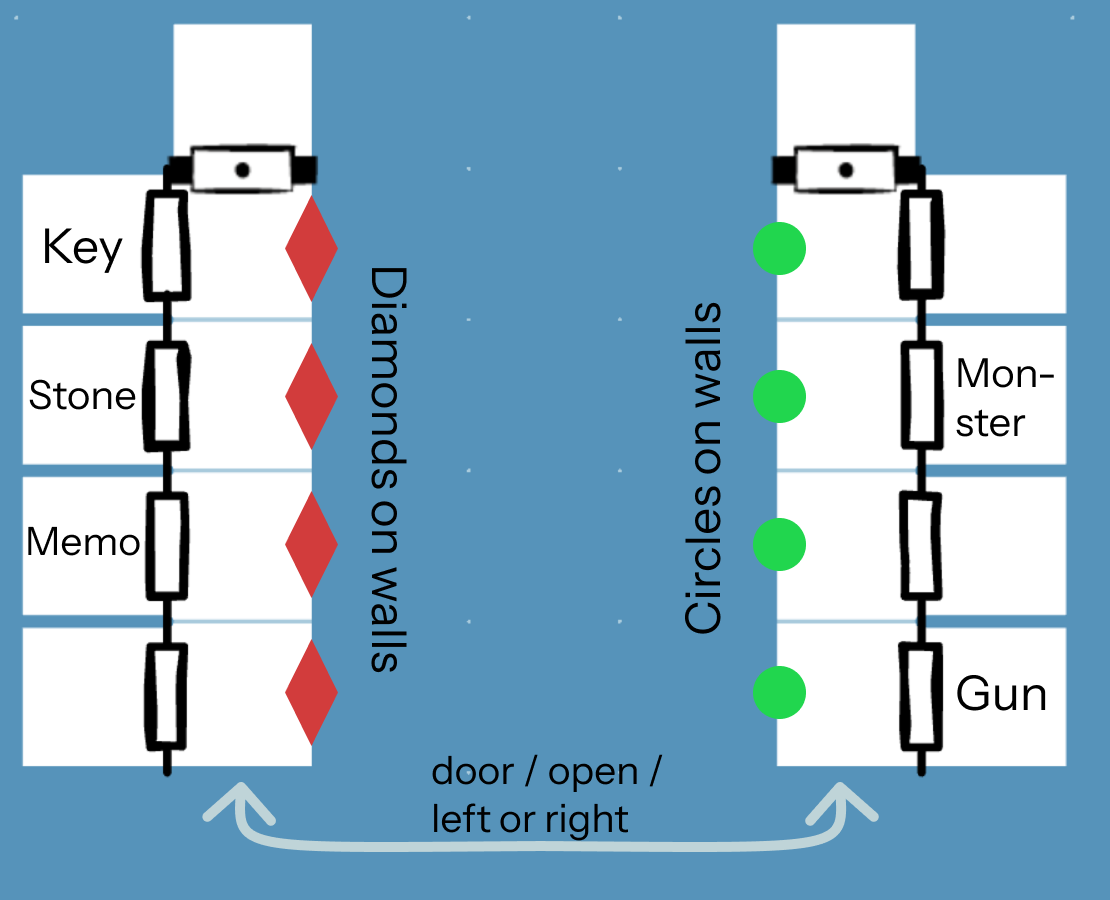
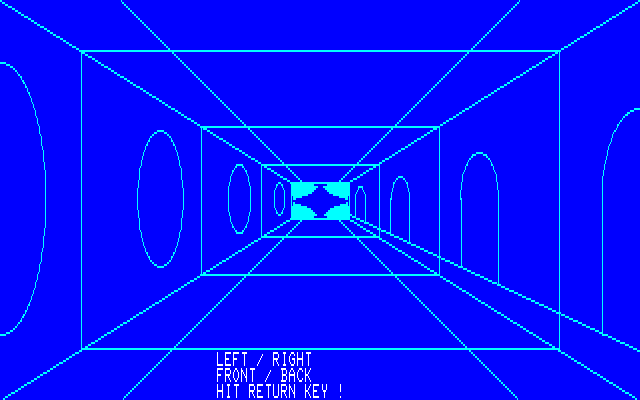
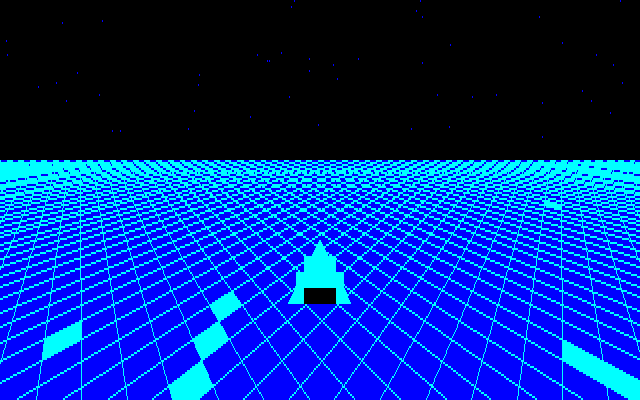
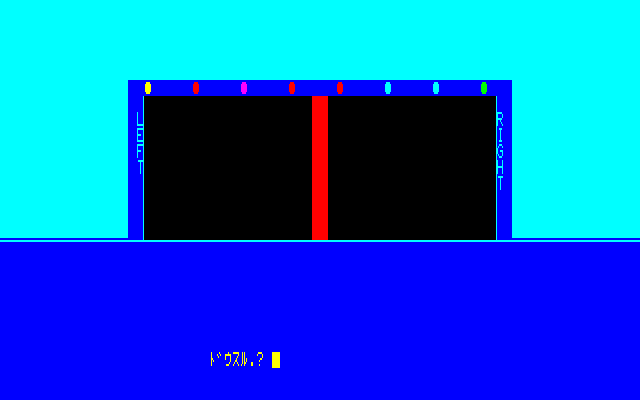
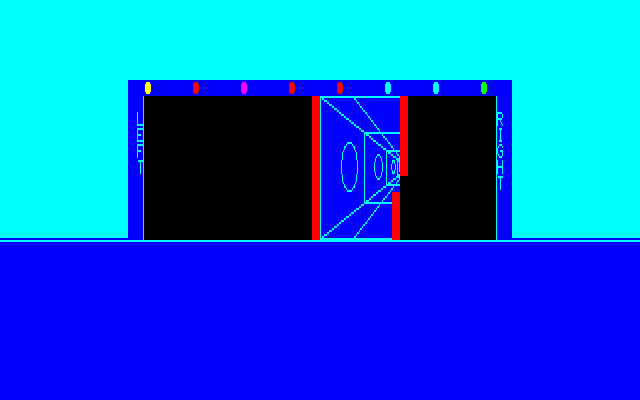
The parser is the kind (like original Mystery House) that asks verb and noun to be typed on separate lines; confusingly, sometimes a modifier is also requested. Here, you need TO OPEN / DOOR / LEFT or OPEN / DOOR / RIGHT. This will cause an animation showing one side or the other opening, and then GO / FRONT (not FORWARD or the like) will advance inside.
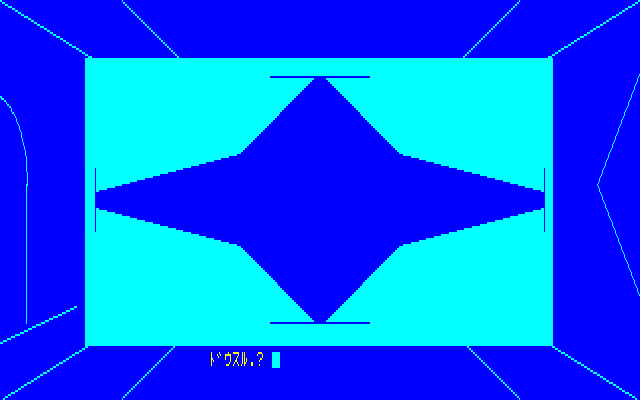
The left and right side consist of a series of four doors, and a series of four … windows? decorations? On the shot above when facing one of the windows I haven’t been able to do anything. After TURN / LEFT:
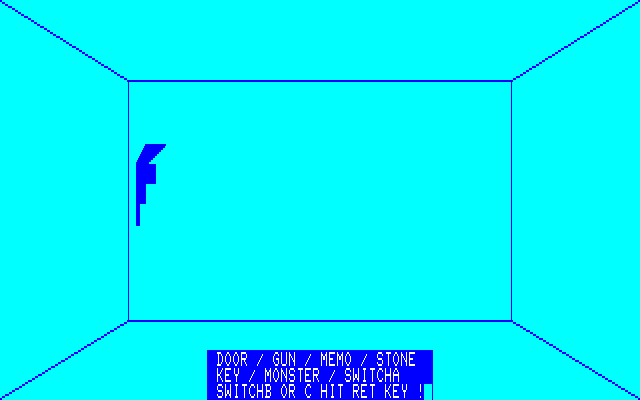
The game gives a full list of verbs if you press the HELP button on the keyboard. Other than OPEN, GO, and TURN which we’ve already used, there’s USE, TAKE, SHOOT, and PUSH. Helpfully, if you type one of these verbs and it doesn’t apply, the game will just prompt you for a verb again; at the “window” or whatever that is, I tried all four, indicating either some other condition needs to hold or they really are just decoration.
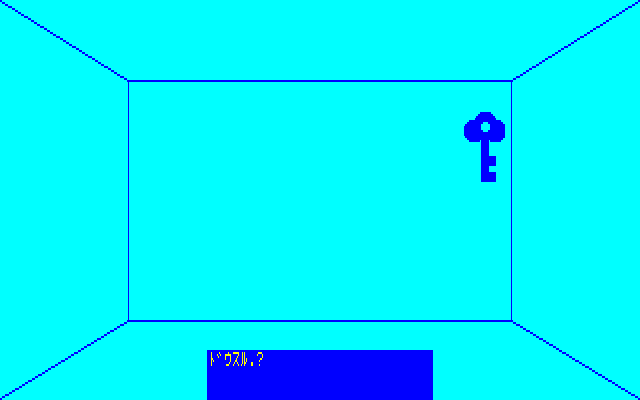
Opposite the symbols are doors leading to single rooms. Some are empty, some have items. The big issue has been identifying what the items are. While this one is clearly a KEY…
…what about this item?
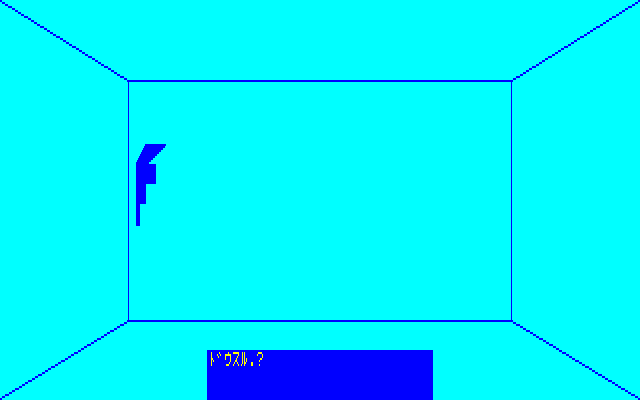
After some squinting and thinking about the word SHOOT on the verb list, I decided (correctly) it was a GUN.
It was a bit harder for me to realize with the screen above I was dealing with the STONE (that is, the Bluestone we’ve been trying to find).
Here is the complete map of the two sections (at least in my playthrough – I’m fairly sure everything seen can shift around):
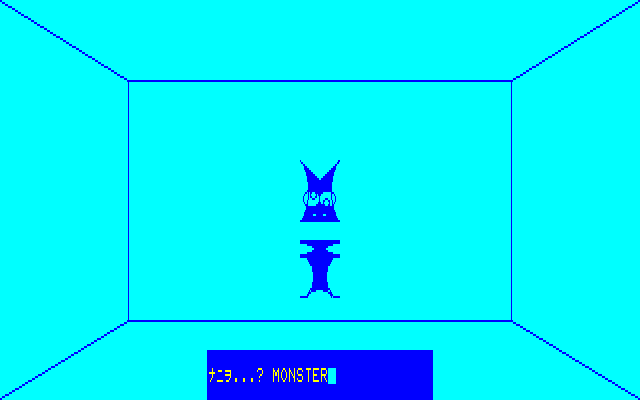
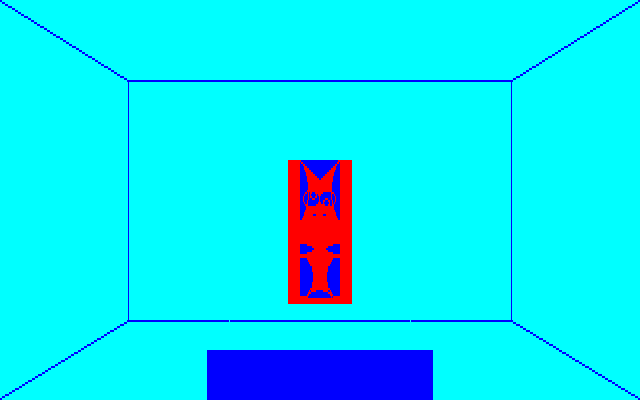
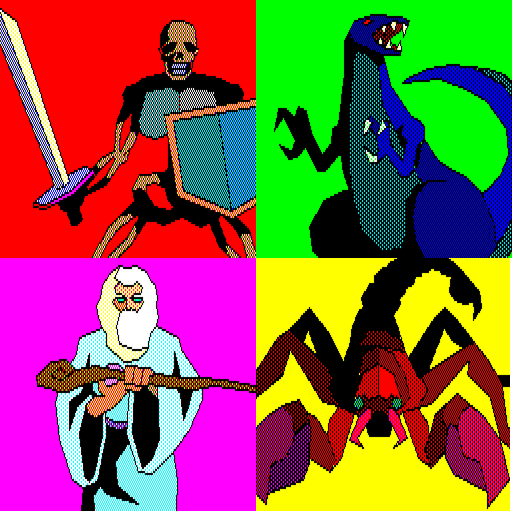
The “monster” is the one oddity; a creature moves around when you walk in, and it took a lot of noun-hunting before I decided to SHOOT / MONSTER. There doesn’t seem to be any positive effect. I may be in a situation like the squid in The Palms where the encounter is “optional”.
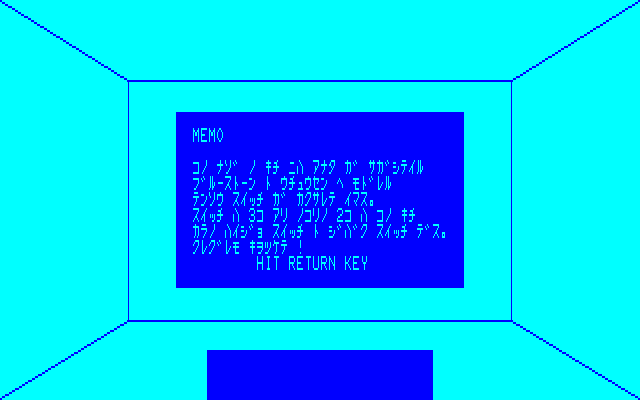
One room has a rectangle where the only reason I could come up with MEMO was the suspicion the author had played Mystery House 2. Taking the memo reads it automatically.
The memo indicates the Bluestone and the teleport switch to return to the spaceship are both hidden, and that there are three switches, including a “self-destruct” switch.
Two more details: the end of each hall has a figure which may or may not be passable. Via testing verbs I found the game was wanting USE, yet none of my items — and I apparently had all of them available — did anything useful.
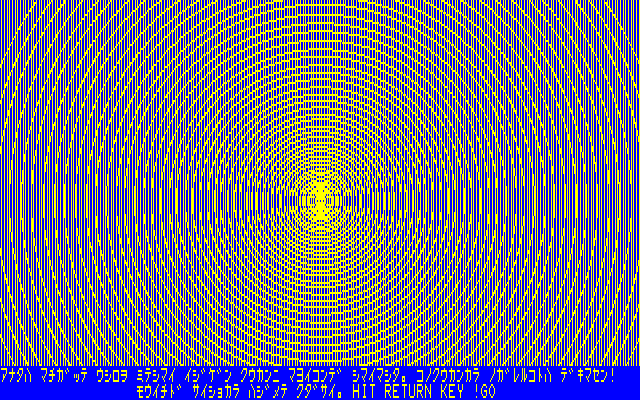
Finally, there’s the ominous “don’t turn around” message. If you turn to face “south” on my map you will outright die. This might have been a dodge to get out of drawing the opening room, but it’s a wonderfully atmospheric way to do it. I always felt a small bit of pressure while walking around even though this isn’t an intense/time based area like the first section of the game was.
Sent to another dimension!
My guess is at least one of the “windows” or whatever those are have some extra secrets, so I need to laboriously test each one; the game tries to animate movement as much as it can so every step is sluggish. I still expect an escape with the Bluestone next time, and I’ll at least try the later sections; no promises I’ll get that far, though.
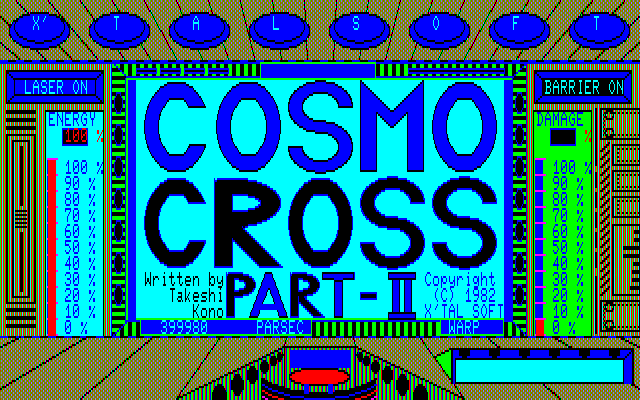
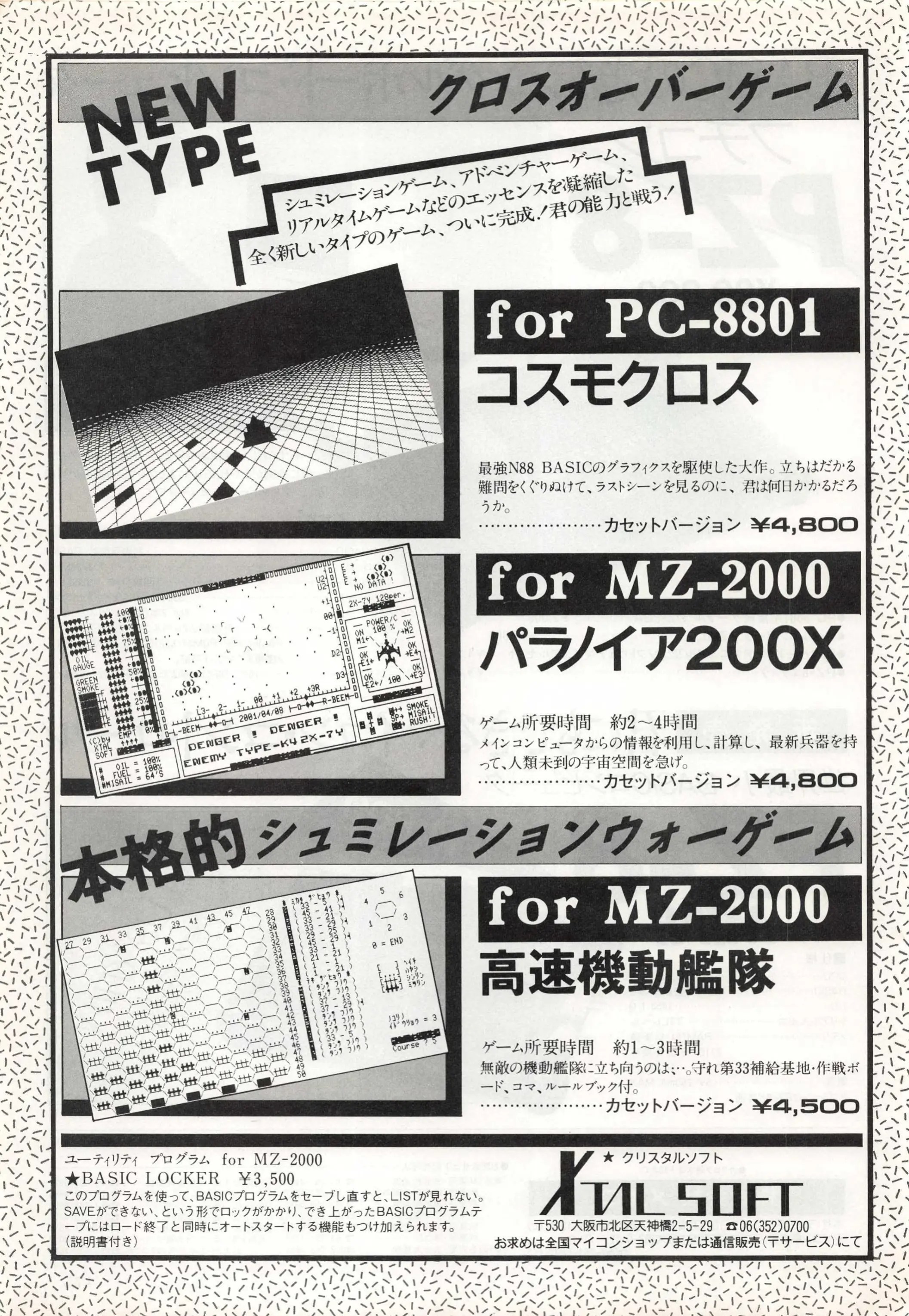
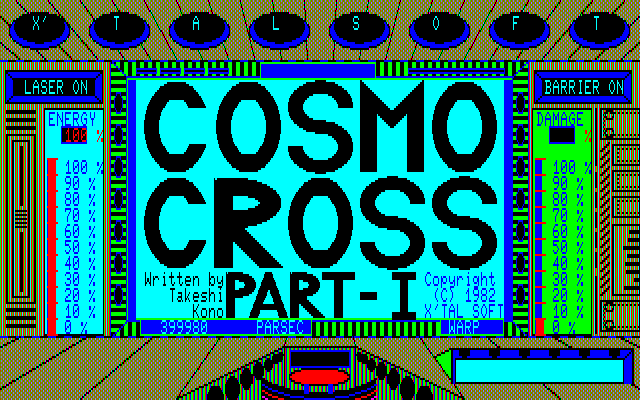
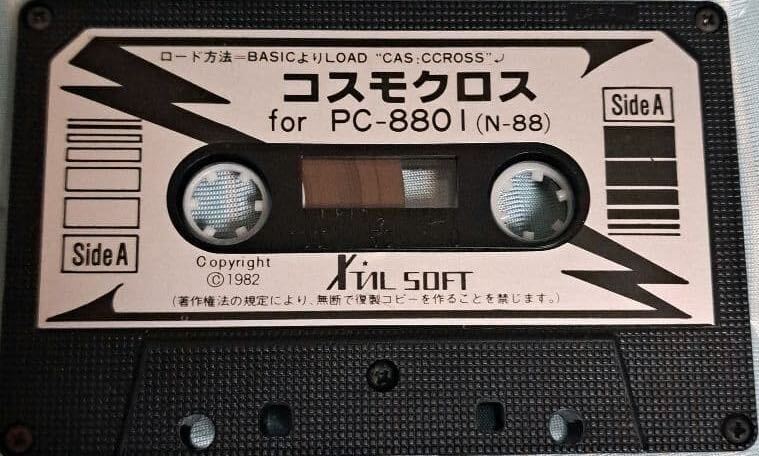
The company for today’s game, confusingly, goes by X’TAL SOFT, XTAL SOFT, or CRYSTAL SOFT depending on what document you are looking at. At least the title of the game is straightforward:
Except for the “Part-I”, thing, but that’s not part of the title; the game was sold as one whole but the three different parts are accessible with different passwords. Part-I is reached with XTAL.
The founding president, Yoshiyuki Morita, was a music fan in high school (along with Takeshi Kono, who he discussed rock and guitars with) and after graduating from university he founded the music studio “SKY SOUND” in Osaka. I found a 1982 recording from the studio, if you want to hear what sort of work they did:
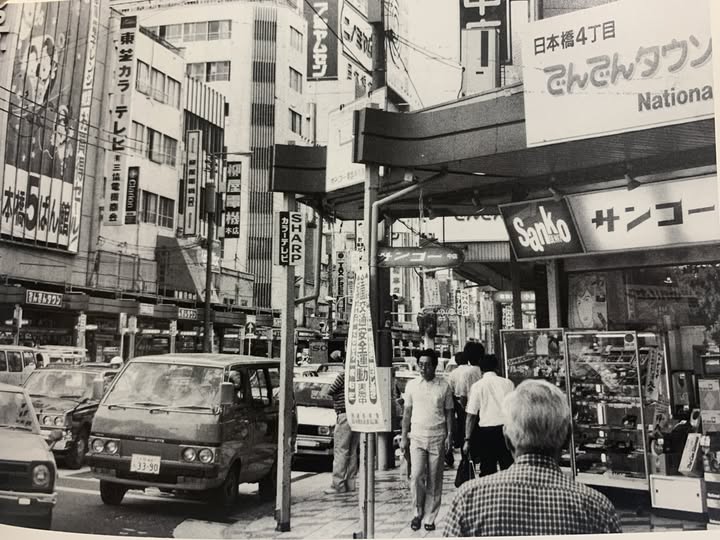
In 1980, he saw a PC-8001 in Nipponbashi (aka “Den Den Town”, the second big electronics haven in Japan after Akihabara), and bought a MZ-80B for his studio “under the guise” of customer management.
Den Den Town in the 1980s. Via @carllin117464 on Twitter.
He found the management software terrible and learned programming by modifying it to be usable. This experience gave him enough of a taste of software development he wanted to work on his own. Because of the tape-based nature of computers at this time, it was not that unusual to switch from music to games; he founded Xtal Soft in April 1982 and the company’s first product (Cosmo Cross) was written by his old acquaintance Takeshi Kono, who left his job to join. Initial copies were made manually for the local Osaka area, one by one.
Cosmo Cross eventually sold a solid 10,000 tapes and was enough to kickstart the company to life, although where they really established their credibility was the RPG Mugen no Shinzou (translated either as “Heart of Fantasy” or “Heart of Illusion”). Quoting the composer Chihiro Fujioka (who had joined the company in 1983), the game was “a bit hard to explain” and they were “anxious about whether it would actually sell” but “the game decided the fate of Crystal Soft.”
While they have multiple early adventures, they became mostly known for their RPGs; both Lizard and Crimson are available to play on Switch (Japanese language only, they never sold in English). Noteworthy is that the music for Crimson includes Sky Sound in the credits so they were still operating the same time as the software company.
For the purposes of today’s game specifically, I want to jump ahead a bit to 1990: Xtal Soft does a merger with T&E Soft, the latter most famous for the seminal RPG Hydlide. Takeshi Kono is still around as a game director. Mitsuto Nagashima is hired right before the merger as a programmer; his first project is the Japan-only (and technically impressive) vertical shooter Chikyuu Kaihou Gun ZAS…
…which he follows up with a game for Virtual Boy, one of the most famous for the system: Red Alarm. While Mitsuto Nagashima wore quite a few hats, according to an interview…
I was in charge of the game’s content, balance, enemy positions, and even parts of the story.
…the director of the game was Takeshi Kono, the author of Cosmo Cross.
ASIDE: Of the two top videos on Youtube, one calls it one of the very best Virtual Boy games and one calls it the worst. The reactions seem dependent on how people are able to handle the wireframe graphics, and this may be a case where the 3D looks different to different brains. Gunpei Yokoi, designer of the Virtual Boy, is quoted as saying, “when playing, you completely forget it’s all just lines” but that clearly wasn’t true for everyone. Digging into the Youtube comments: “in the actual game, it [the wireframe design] can actually make it difficult to focus your eyes because there is no surface to focus to.”
Cosmo Cross is part space shooter, part adventure game. It was originally for PC-88 (the version I’m playing) and later got a Sharp X1 port. It isn’t quite like Probe One: The Transmitter with both running simultaneously forcing the player to leap between joystick and keyboard rapidly; a better comparison is The Desecration, which switches between “arcade segment” and “adventure segment”. The Desecration’s arrangement is:
action (in space) – adventure – action (in space) – action – action (in space) – action
(I’m basing this off both the manual which describes Act 2 of Part I as “kind of an adventure”, but also the guide from a 1984 issue of Oh! MZ. “Action” is more like “simulation” but I’m being handwavy here.)
There’s hence only a little adventure going on, but it’s unusual and early enough in Japanese adventure history to be worth a play even if I skip by the other parts. The problem is getting to it! I spent a long time deciphering what was going on with Part I Act 1.
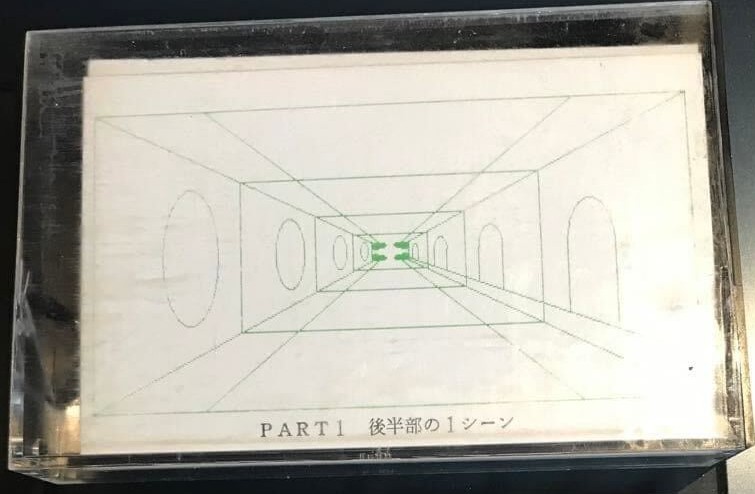
The game came with “instruction cards” showing each of the scenes. This is a scene from the “adventure” part of the game.
Plot: in the year 259 on the Octam calendar, humanity was expanding their space colonies, and started to have constant battles with the Zagros. While most humans had moved from Earth, they still regarded it with fondness, and so the Zagros came up with an evil plan: tamper with a device installed by ancient aliens — intended to keep planets stable — to instead fling a planet into Earth and destroy it.
Humanity pooled their resources to build a single spaceship, the Saint Cosmo, piloted by… you! Your mission is to
a.) fly to the “clear blue” planet of Ariosferia (アリオスフェリア) to retrieve a Bluestone (ブルーストーンを); note that “the Zagros have anticipated this and have set many traps on Ariosferia.”
b.) use that Bluestone to power a “Revival Ray” and fix the sabotaged planetary-stability unit.
There’s a lot of keys going on; there’s a summary here and the more full manual text here. The big issue is that there are three kinds of steering:
◆ The number pad is used to generally change which direction your ship is pointing at.
◆ While floating in space with no enemies, you can press up plus a number (1 through 4) to activate Warp at different speeds. You can backwards-Warp by pressing down and a number.
◆ You can press F1 to activate a laser (F2 to turn it off); then holding down arrow keys will move a “crosshair” around. You cannot do any other kind of movement with the laser on.
I often was befuddled trying to rapidly switch from one to another, and since any kind of stalling can result in being attacked by ships, the result of pressing F2 a little too slow for the umpteenth time can be deadly.
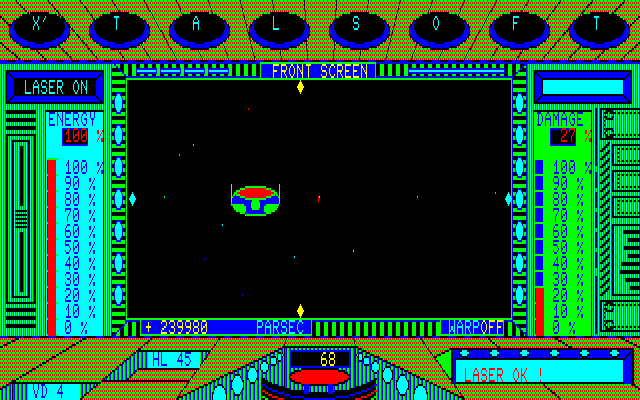
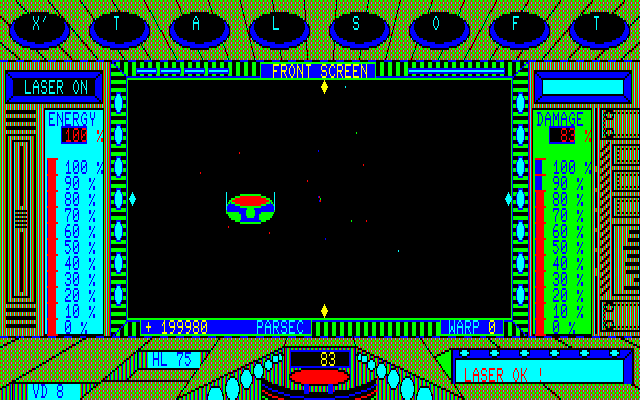
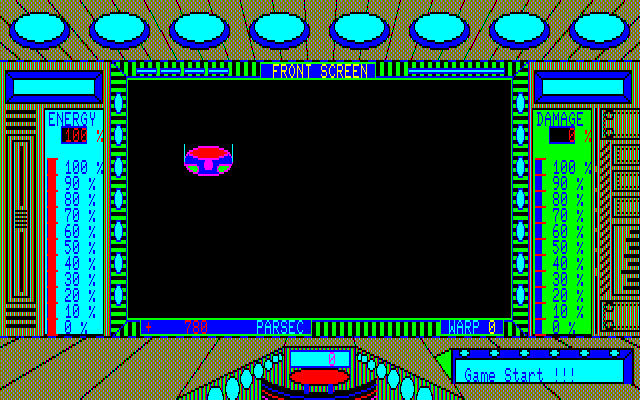
Facing a Zagros ship, with the laser active.
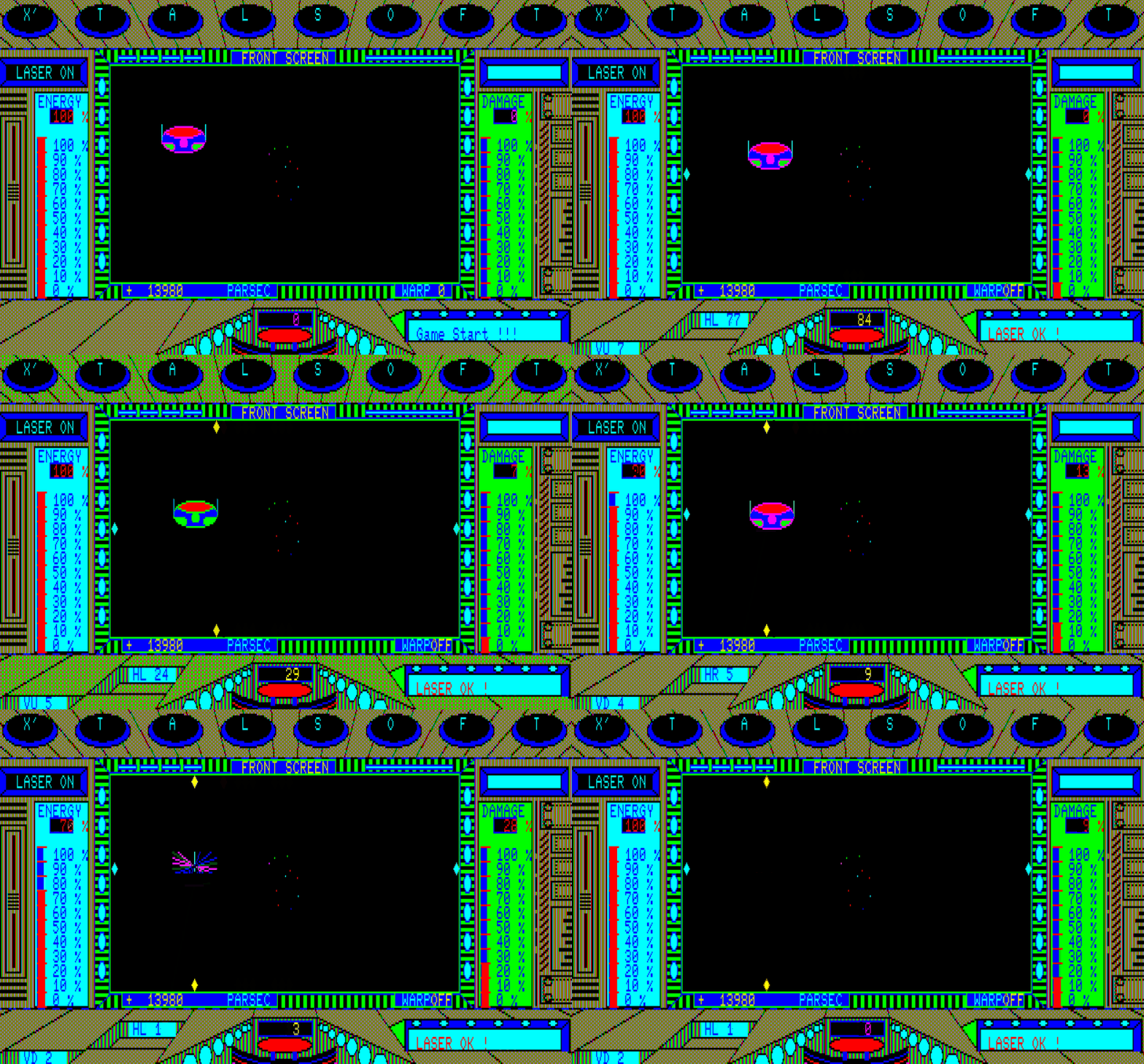
There’s also a “barrier” that the player can activate with F3 (and turn off with F4) which will absorb some enemy shots; there’s a lot of details and rules about what you can do with particular amounts of enemy damage (like reduced warp) but the important points are that killing an enemy gains you 30% energy, and in general if you start to get serious damage (past about 50%) it is almost inevitable that you are going to die.
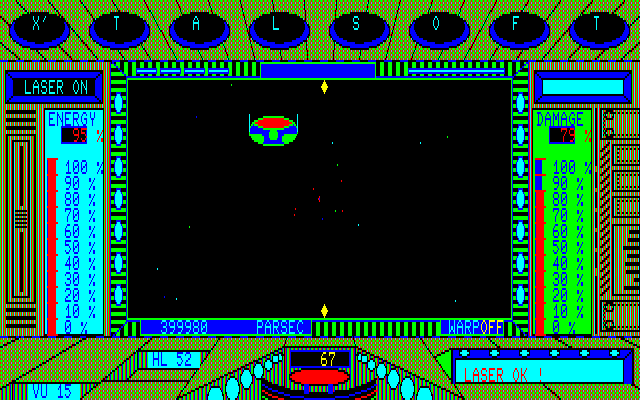
Suffering major damage. Notice that the laser crosshairs no longer show on the right and left side; this is one of the results of the damage.
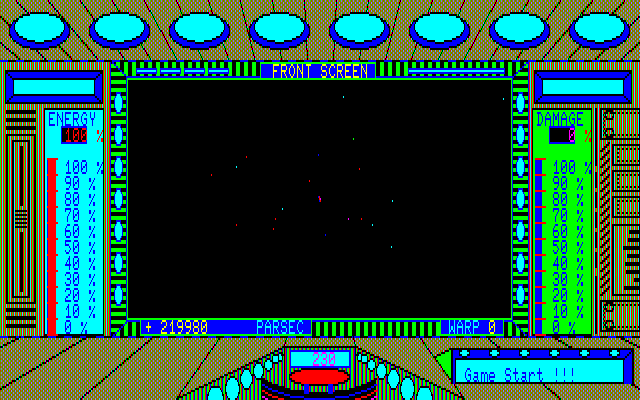
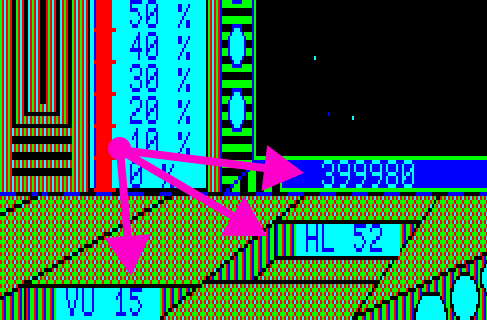
The numbers in the bottom left corner end up being important.
VU and HL refer to how far off you are from an enemy vertically and horizontally. If you get these numbers down to 0 you are dead center and your shot will automatically kill. (You can still cause damage and eventually kill if you aren’t direct on center.) These become super important later (in a section I haven’t reached yet, and will probably decline to play) when there are invisible enemy ships to contend with.
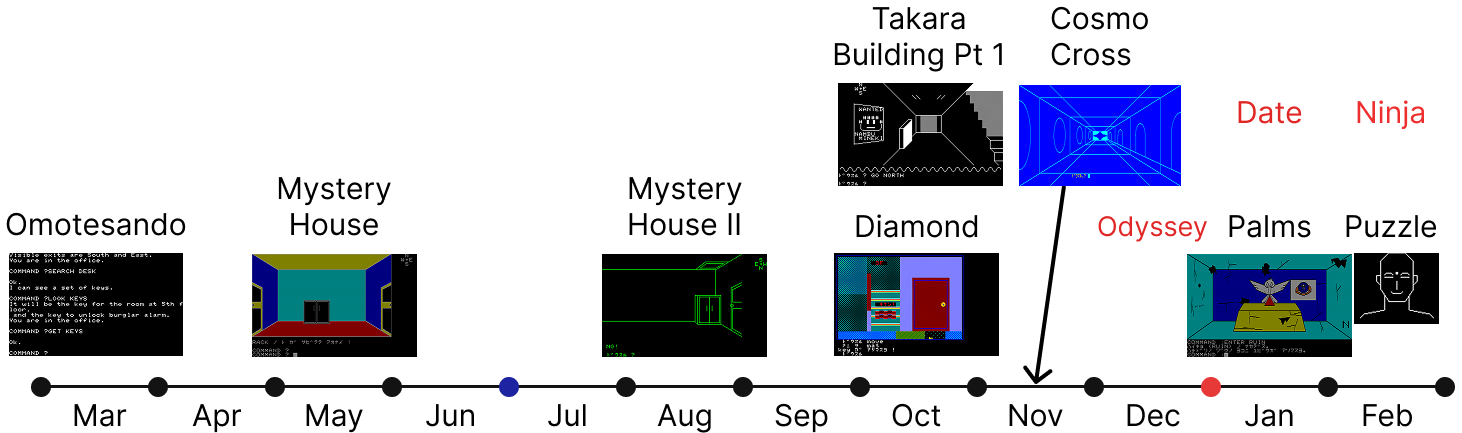
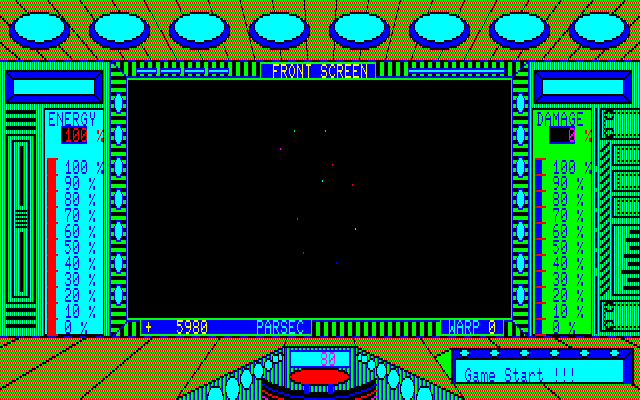
The PARSEC display indicates shows how close you are to the destination planets. There’s a whole set of planets off in the distance you can try to get closer and closer to, and you point to the right one with your number pad movement; if you aren’t pointing at any planet, the display saying 0 PARSEC will be black space. You need to be pointing directly at a planet to see it at 0, and the goal of each of the space sections is to fly to the correct planet.
Ariosferia (the initial goal) is the clear blue one as the instructions say; later sections apparently can have the colors change when up closer.
Closer to the planets, close enough that if you try warp speed 4 you’ll overshoot and the game will automatically switch to rear camera and you’ll need to use warp backwards. The blue one is in the lower right. It’s not true 3D space and you’re essentially on a “track” like the one in Red Alarm or Star Fox, just the way you point your ship matters when you get up to the <2000 parsec range.
I found this section extremely frustrating to play. You start almost like a game of Lunar Lander where you’re just watching a number (the PARSEC count) in the corner, first holding up and Warp speed 4 and watching the counter tick down, then switching at the right moment to warp 3, 2, and 1 as you get closer and closer. Somewhere along the line you need to stop and steer, and that’s when an enemy will almost definitely appear (they can catch you at low warp, but it’s less likely).
The big problem is that often ships will appear in a position like this…
…and the laser is very slow at moving. (You can’t do number-pad steering in combat.) You can take many hits just from moving to shooting position. Here’s a battle (with the barrier shields off) that went relatively lucky; often the ships aren’t as well behaved and you need to adjust multiple times:
I constantly found myself in a situation where I would sustain rapid-fire from an enemy ship and even with my attempt at moving the laser over as “fast” as possible eventually I just would die.
I finally threw in the towel, as this is All the Adventures, not All the Space Simulators. I have here a video of the game played on Sharp X1 cued to start right at “0 PARSECS” with the planet in view. Once pointed the right direction, your ship will enter orbit and you press F5 to activate the next section of the game.
The video above keeps going into the adventure part but does not finish it. Things get a bit complicated so I’m going to wait on delving into there next time. (The game is in BASIC, and I have a setup from gschmidl that will skip straight to the adventure.) I will try a few more jabs at the space combat, but unless I’m missing something I’ll say finding the Bluestone will stay as my ultimate goal, because I really don’t want to deal with shooting down invisible enemies in space.
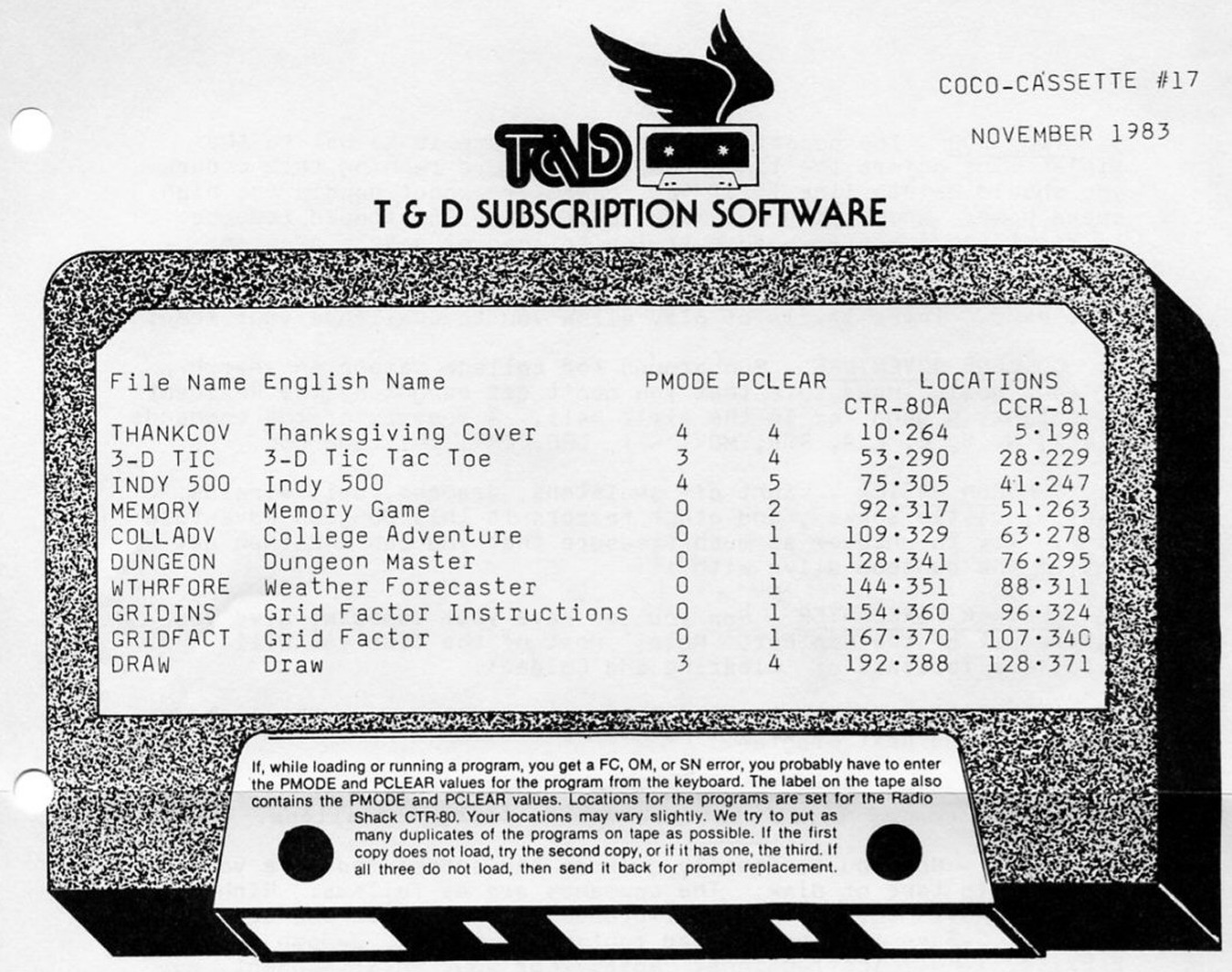
Today sees the return of the tapemag T&D Subscription Software, which we last saw with the game Killer Mansion. The tapemag was started in 1982 by Tom Dykema to distribute Tandy Color Computer tapes monthly and was successful enough to last until 1991.
Tom wrote a great deal of the software himself (“at the rate of about four programs a week”) but had a “programming genius down the street” help him and accepted contributions otherwise. A Facebook post by Youngstown Ken talks about several games of his taken in on the tapemag, including a clone of Trek that was published in the September 1983 issue.
The publication as a whole lands on CASA as having 77 adventure games (!!) so we’ll eventually be seeing a lot more of them. Just to be thorough I checked the T & D catalog for anything they described as in the “adventure” genre after Killer Mansion. There are two tagged from 1982, Quest for Lenore (Issue 2)…
…and Terrestrial Adventure (Issue 4).
Neither quite fits what I’m calling an adventure, although Terrestrial Adventure is sort of a top-down “choose your own adventure” style game with mild action elements; you control a little green dot and if you run into anything on the map you die. (This almost feels like it is meant to parody the gameplay of the Atari 2600 game E.T. with the infamous pits, but Issue 4 was in October 1982 which is before the Atari game came out.)
The controls make a room like this perilous.
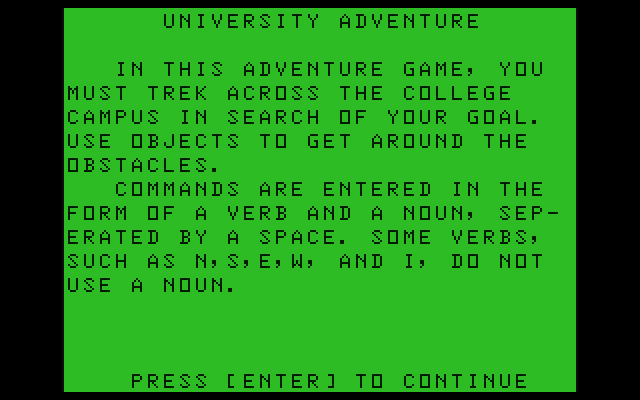
After that, there’s a long gap until the next adventure, which the listing guide calls College Adventure but the game itself calls University Adventure. Confusingly, the file is called COLLADV/BAS.
YOU MUST TREK ACROSS THE COLLEGE CAMPUS IN SEARCH OF YOUR GOAL, with no clarity what that goal might be.
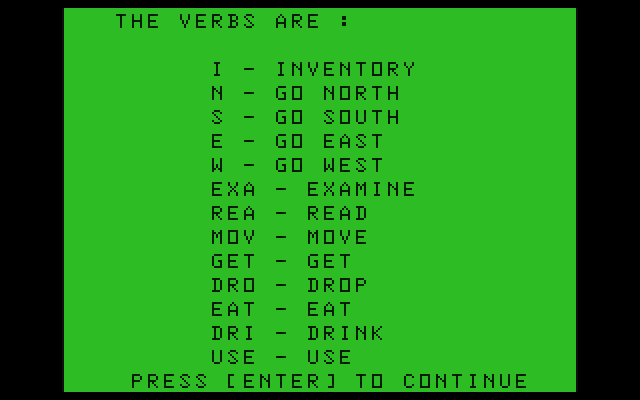
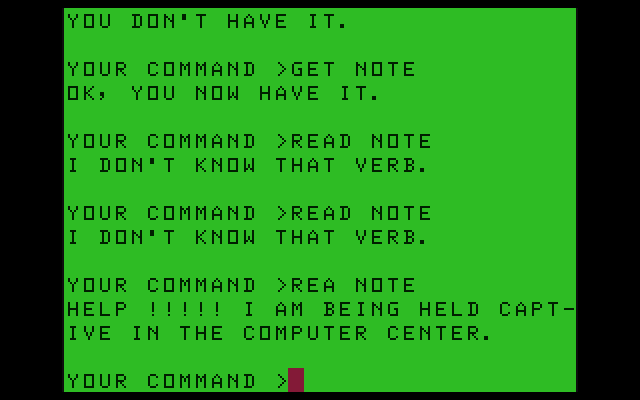
The verb list is unusual in that only the first three letters from the applicable verbs can be used. That is, from the starting room…
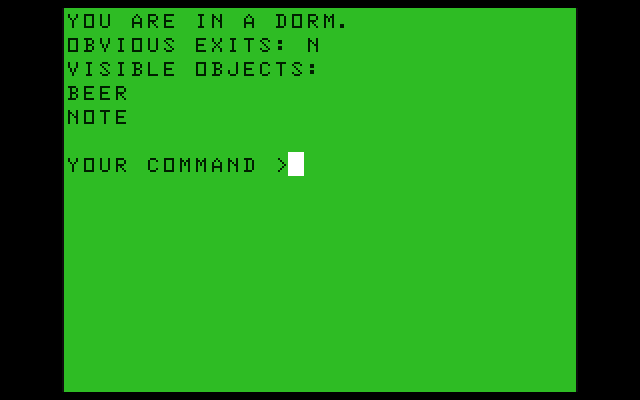
…and you can type GET NOTE just fine, in order to read it you must type REA NOTE, not READ NOTE. I’ve never seen this particular piece of jank before, indicating this is an author we haven’t met yet.
I’m so unused to the “shortened verbs only” setup that I accidentally typed READ in full twice.
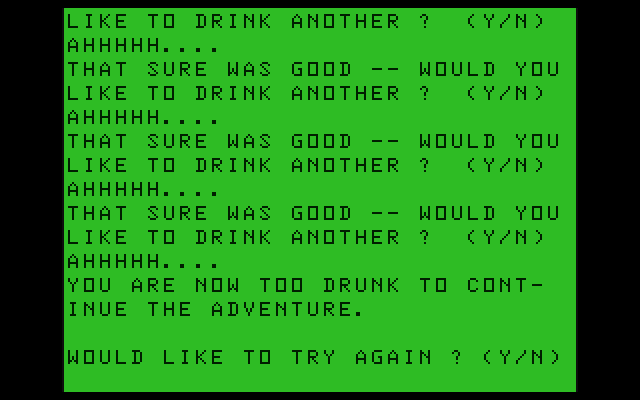
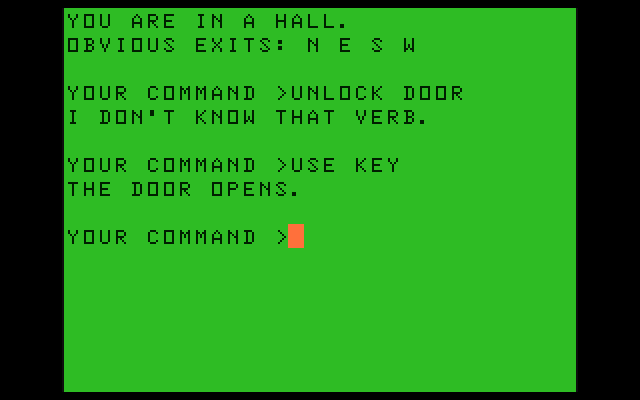
As the note indicates, someone is being held captive in the computer center. With the beer, you can DRI (not DRINK) it until you finally end up drunk.
We’re definitely on a University Adventure now! This moment where you could keep hitting Y made me laugh out loud.
If you pick up the beer and take it to the west, a resident assistant will stop you and end your adventure prematurely.
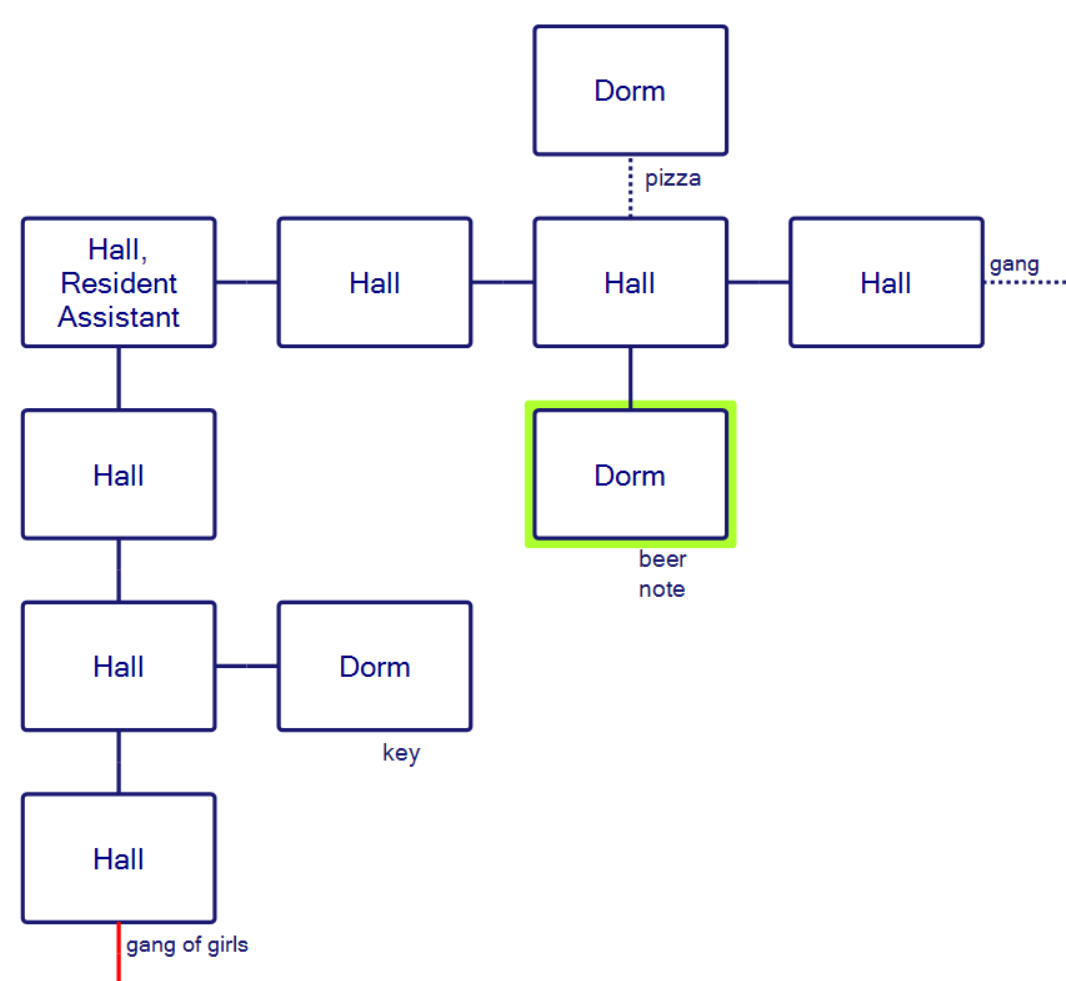
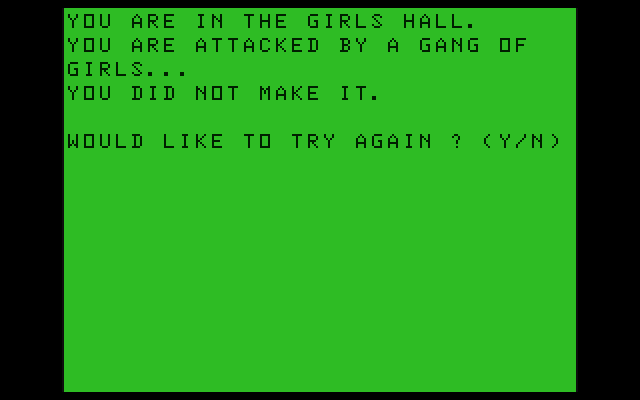
The trick is to not pick up the beer, walk on past, slip into another dorm and grab a key, avoid meeting the gang of girls down the south hall…
…and then unlock a closed door across your own dorm room…
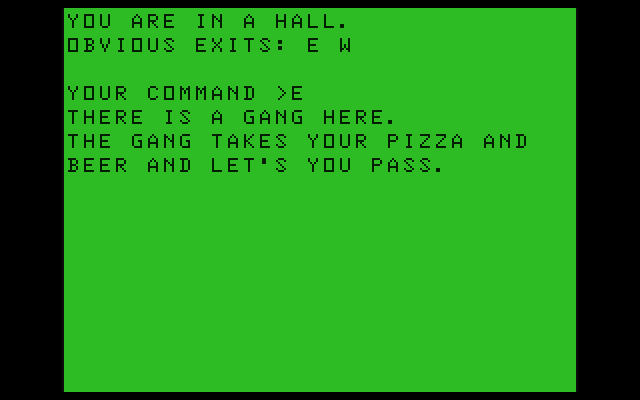
…and pick up a pizza. While the pizza and beer are held, there is a different gang (presumably of men) who will let you pass.
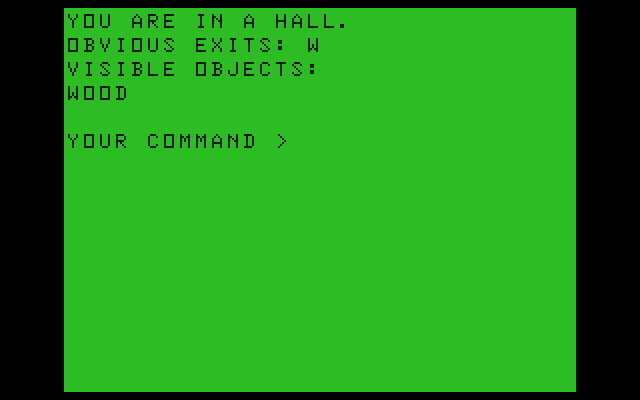
Go east for long enough and you’ll find a random piece of wood.
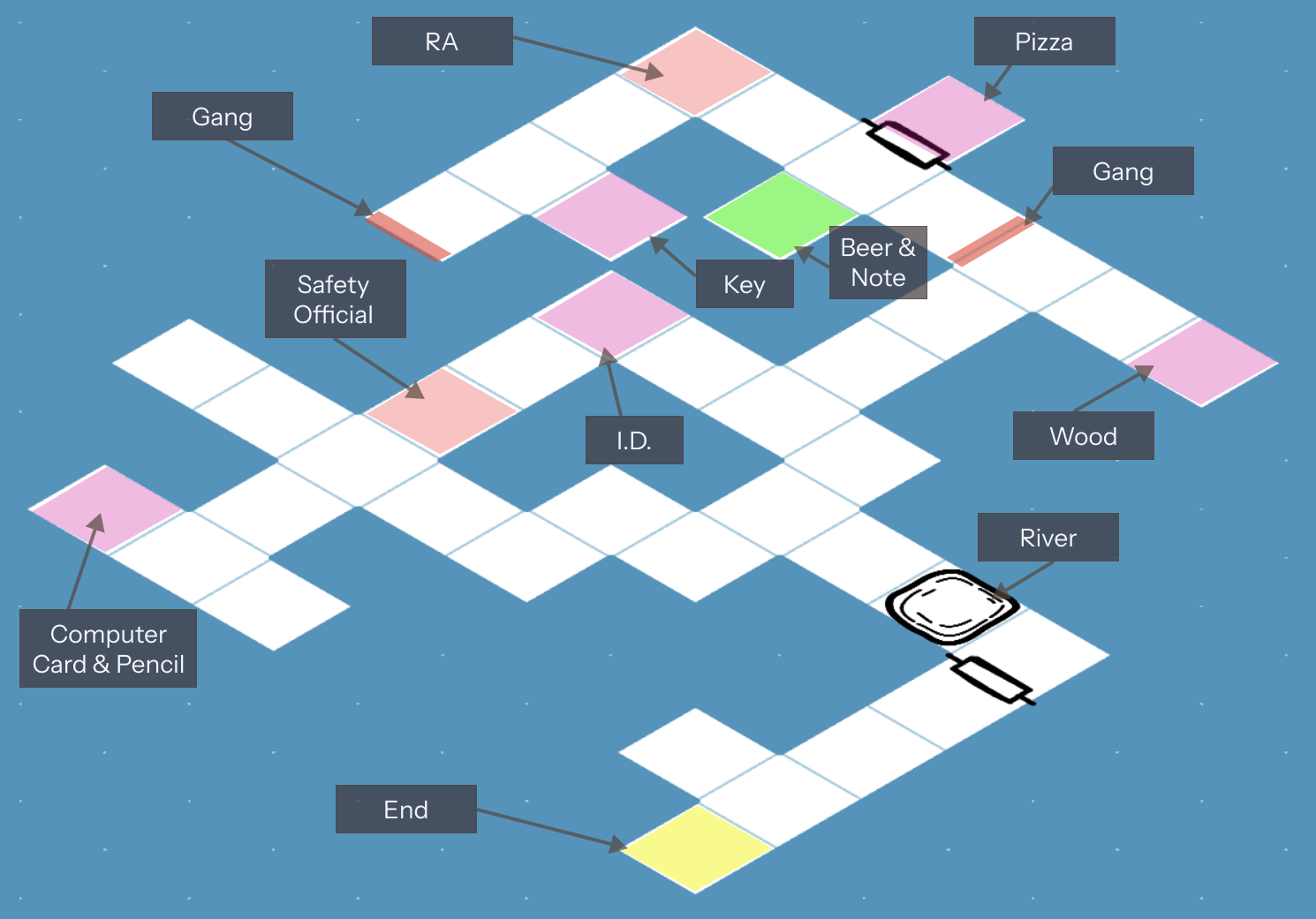
From here the only way to go is outside, and I’m going to switch to isometric mode!
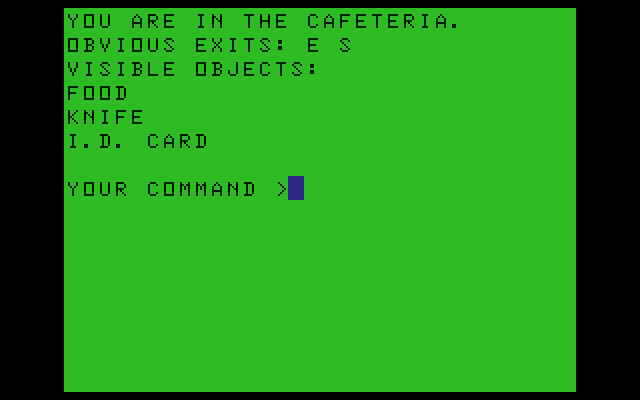
I’ve left items off as the remainder of the map is mostly a red herring. There is, for instance, a cafeteria.
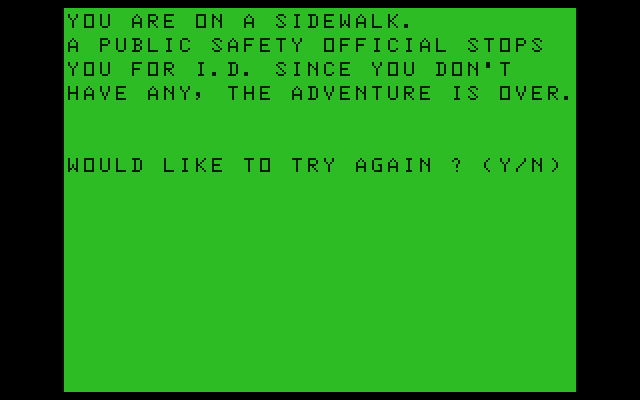
None of these items are useful except technically the I.D. card, where if you go south you’ll run into a safety official who will cause a game over.
However, this encounter isn’t necessary at all, because you can just avoid that spot on the map! (Not like it matters too much — the game has no inventory limit so you can scoop up everything. The only moment where this causes a problem is with the beer.)
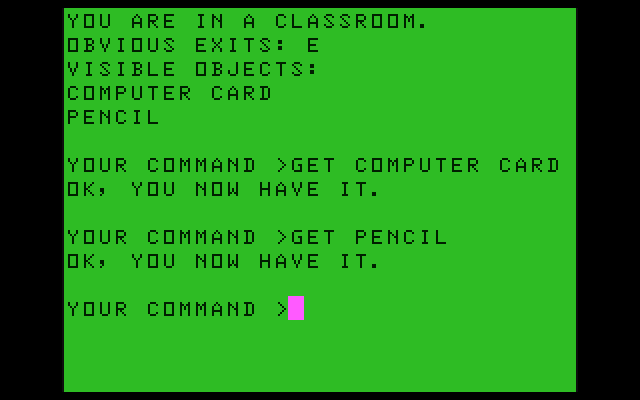
The important item is instead down in a classroom where you can find a computer card in a classroom.
Scooping up the pencil too, because why not.
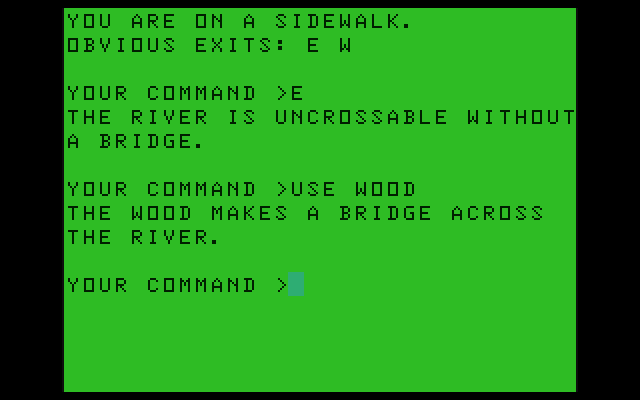
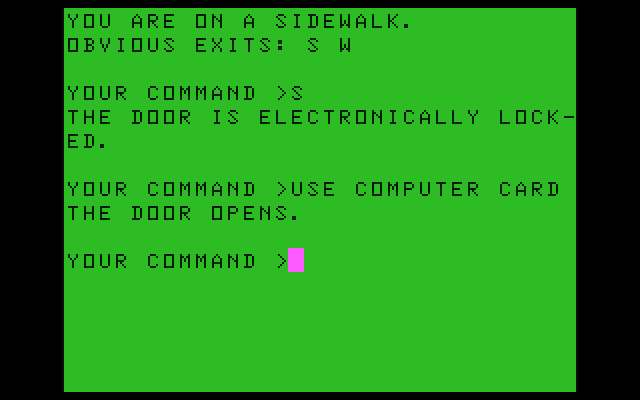
This can be taken over to the east where there’s a river that you need to USE WOOD in order to pass over…
…followed by the computer card which gets applied to a security door.
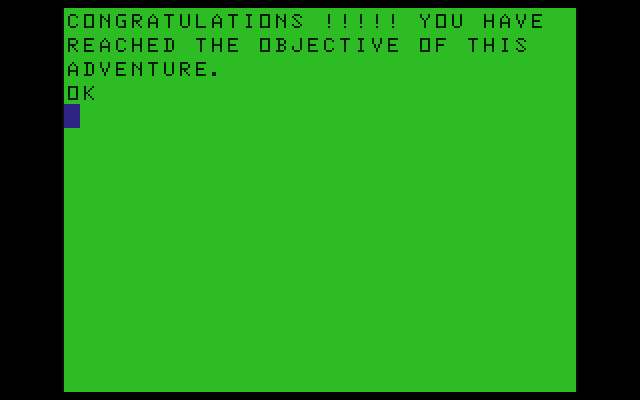
Head south and you’ll win, with no further plot explanation of who needed rescuing or if the note was just some kind of prank.
I get the impression the author was aiming for something a little more dense. The opening made me hopeful we were going to get a “my university” satire with lots of obscure references; that’s not a bad thing in this context because it means the author would be aiming at a particular target and trying to say something, even if that something is an observation on the overzealousness of campus patrol. However, they clearly gave up by the end and the red herrings start to feel more like parts of the game the author never finished with (potentially due to lack of memory space). The opening spiel to the T&D newsletter for this issue even says
WOW! The programs on this month’s tape are so long that we could barely put two copies of each on the tape…
…indicating the game couldn’t have been longer even if the author wanted it to be. At least “every verb must be written in three letters” is an odd enough aspect it will be clear if they pop up again.
Coming up: assuming I get the tech issues resolved, an early hybrid action/text adventure game in Japanese.







 Renga in Blue