I’ve defeated the game; my previous posts are needed to understand this one.
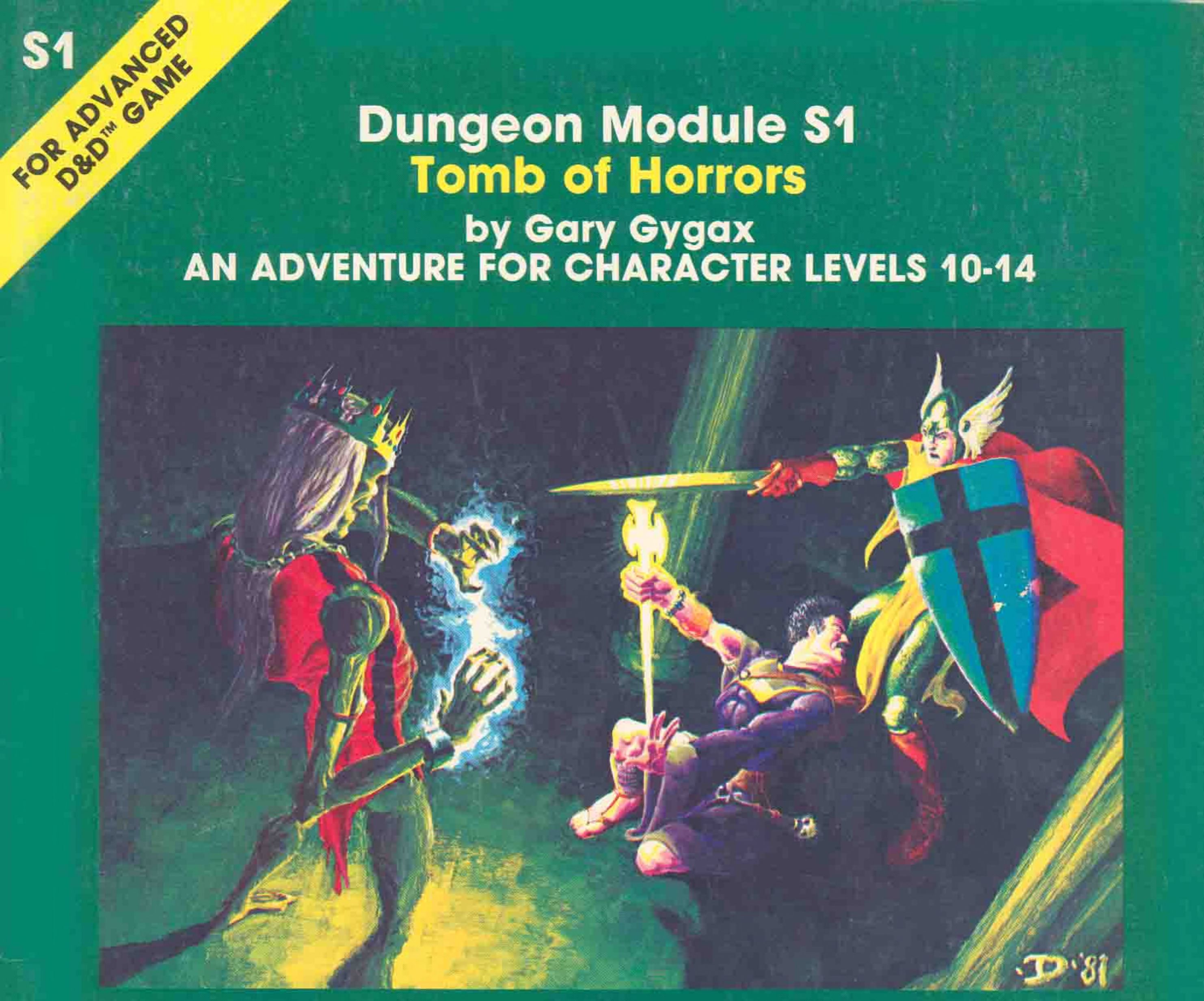
For reasons I’ll get into, I believe some inspiration came from here. Source.
First of all: it was a short hop to defeating the vampire master (and both John Myers and Rob guessed the answer more or less). I was thinking in particular about how there’s no pause (RNG or otherwise) like there was for the regular vampire: you open the coffin, you’re dead. This suggested a “preparation puzzle” as opposed to some particular action that’s needed, and based on all the items of the game, the only one that seemed like it might beat an enemy “passively” was the Mirror of Neo-Madness. Hence:
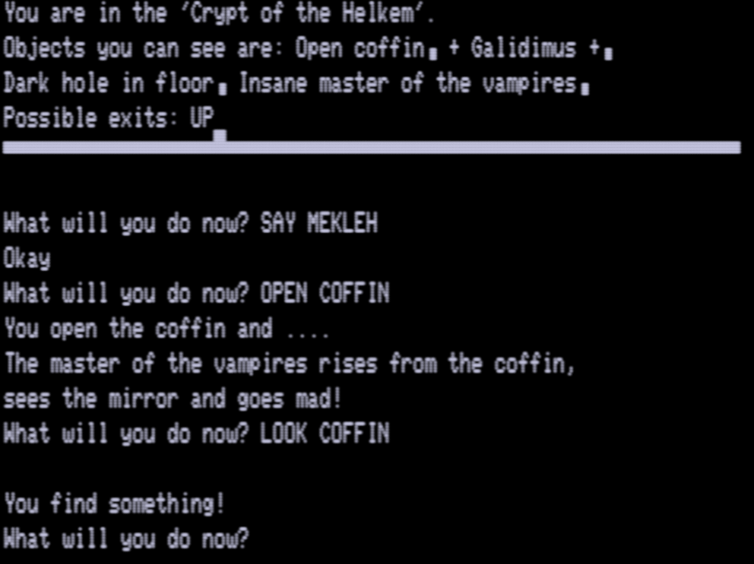
It didn’t occur to me immediately — I would have thought of vampires as already insane — but at least I could see the logic. Searching in the coffin reveals “Galdimus”; even without looking I knew I had a sword, so I knew what to do next.
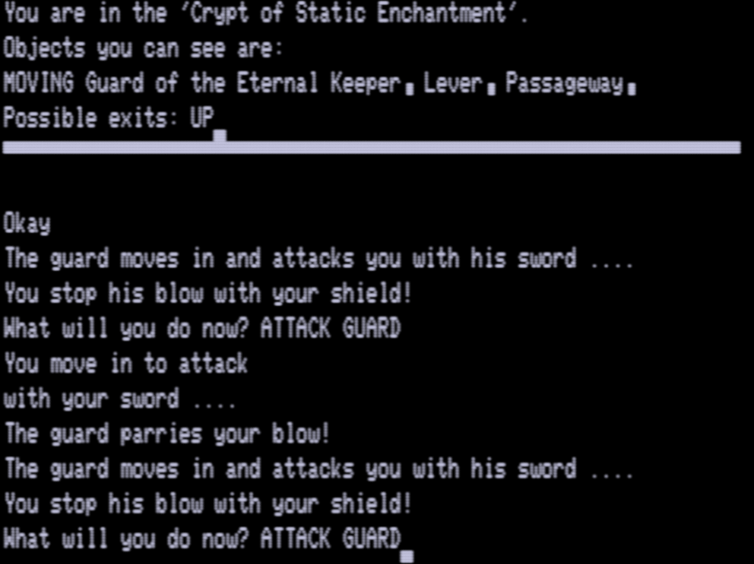
Well, somewhat. Even with the shield and the sword you can lose! It’s just RNG, but given my antics with the wandering vampire that could kill you between 0 and 99 turns I figured that might be the case.
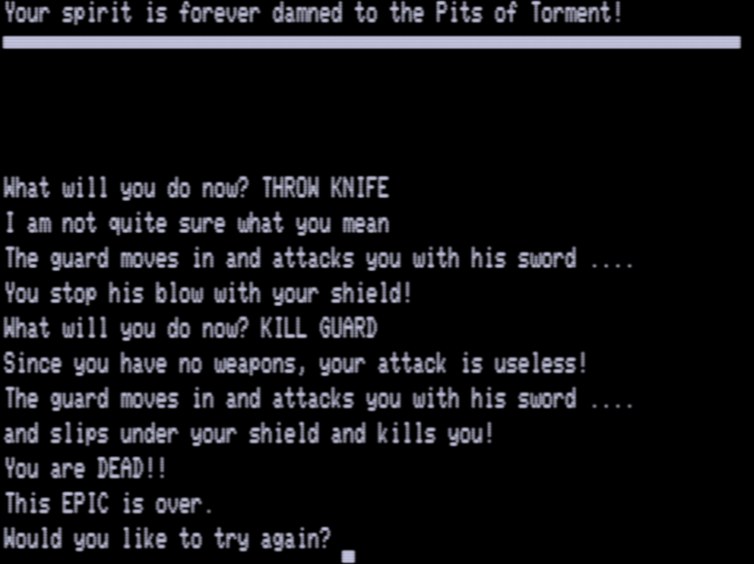
In a game without a save game facility (like Seiko’s Adventure) having an RNG-dependent death at the very end of a game is automatically a bad move; here at least you can save. (I wasn’t thrilled about it, but it wasn’t catastrophic to either the gameplay or my mood.)
Once you actually kill the guard (see below)…
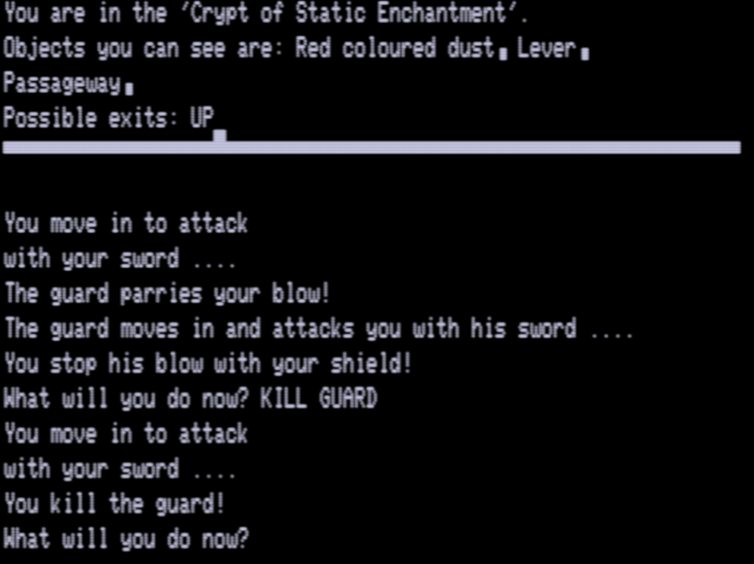
…you get some red dust, which then converts into a red orb (“a diameter of about two inches”) when you look at it.
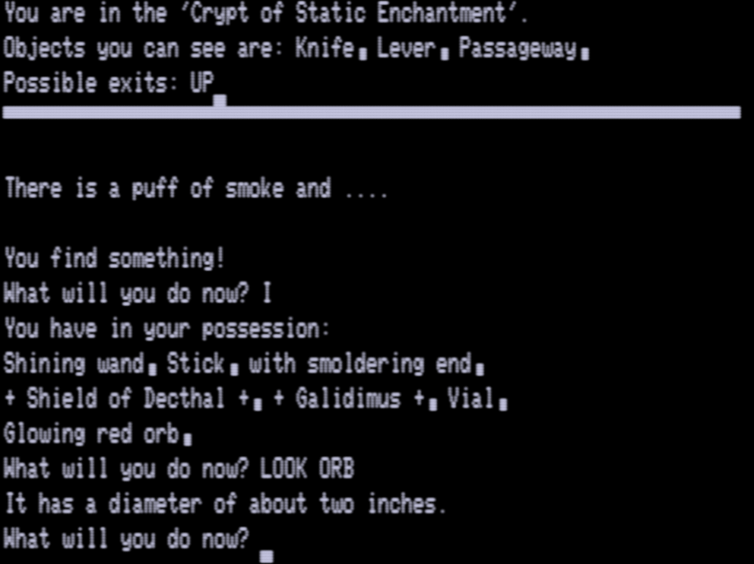
Last time we had put a glass ball (“about two inches in diameter”) into a hole to get an item. This is just re-using the same hole. (Item re-use is always satisfying, even when it’s simple, and the size is a good indicator that the magic is being used in parallel.)
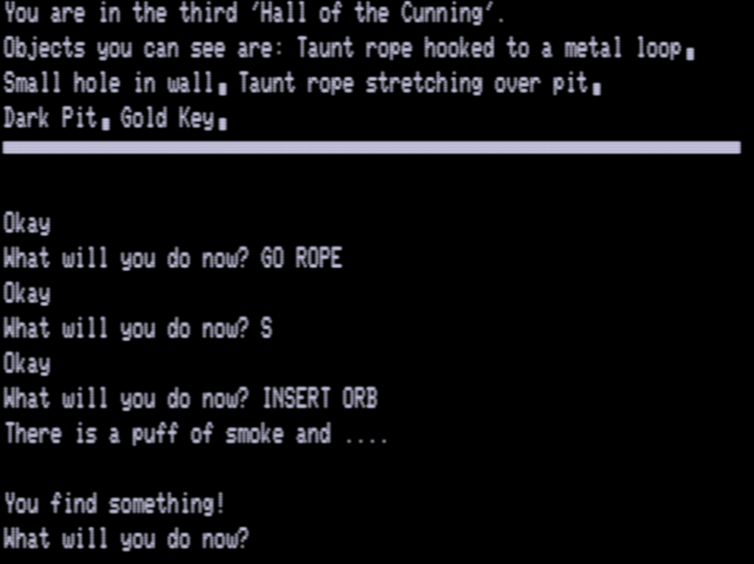
Now we can unlock Final Judgement and win, right?
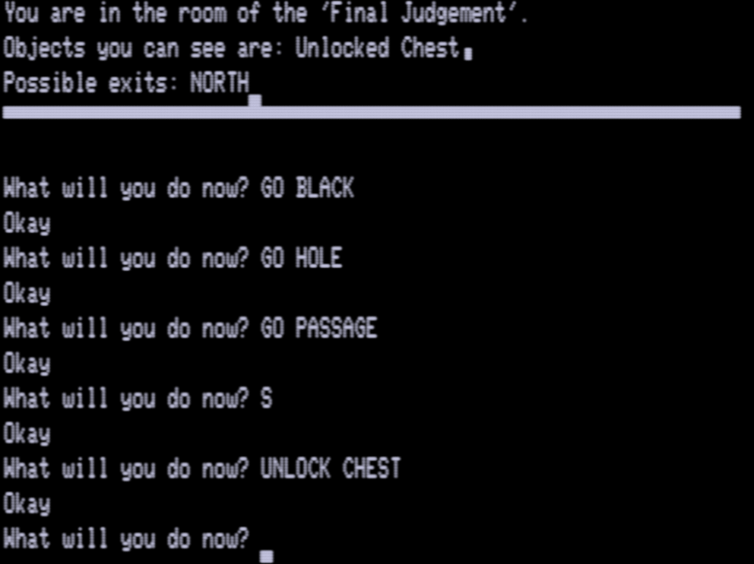
The game says “Surprise!” and a “Grinning Skeleton” appears in the room description. After KILL SKELETON:
You move in to attack
with your sword ….
The skeleton chops down with his saber ….
…. you shatter its sword with a deflection from GALIDIMUS!
It shoots a fire ball at you ….
and kills you!
This is the part that I think might be derived from Tomb of Horrors. Amongst the traps of the game is a room with three chests: gold, silver, and wood. The wood one has a skeleton.
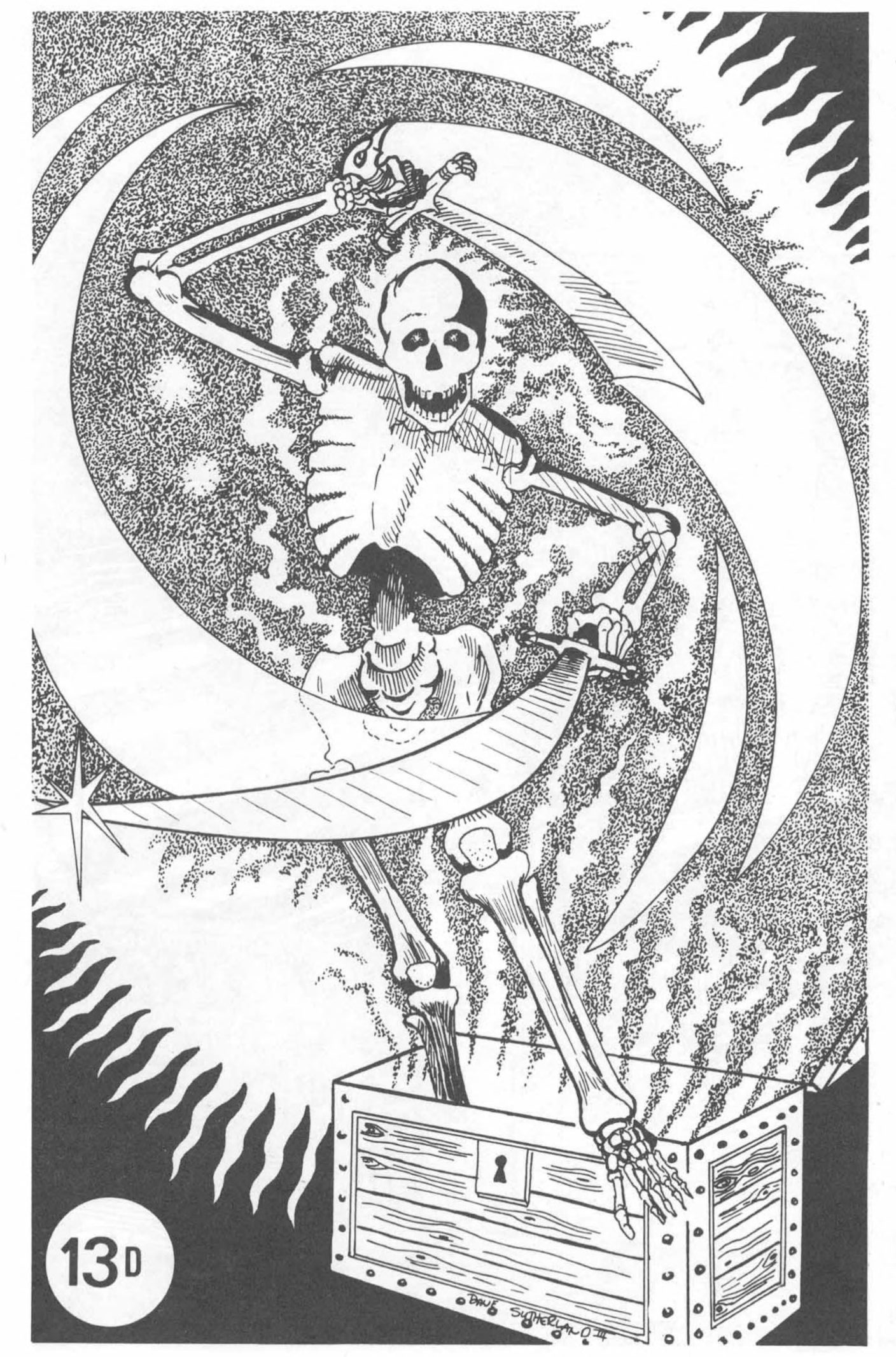
It’s not exactly the same; it uses scimitars rather than a saber, but it is resistant to bladed attack (like this game implied), and holy water is useful in both incarnations (as you’ll see in a moment). For this game’s version, you need a set of objects to fend off a series of attacks: saber, fireball, curse, and finally death gaze. It’s a little like the Babel Fish puzzle of Hitchhiker’s but with everything done in one shot. This has the downside it is easy to beat by accident, but the inventory limit means you probably dropped one of the important items before arriving here.
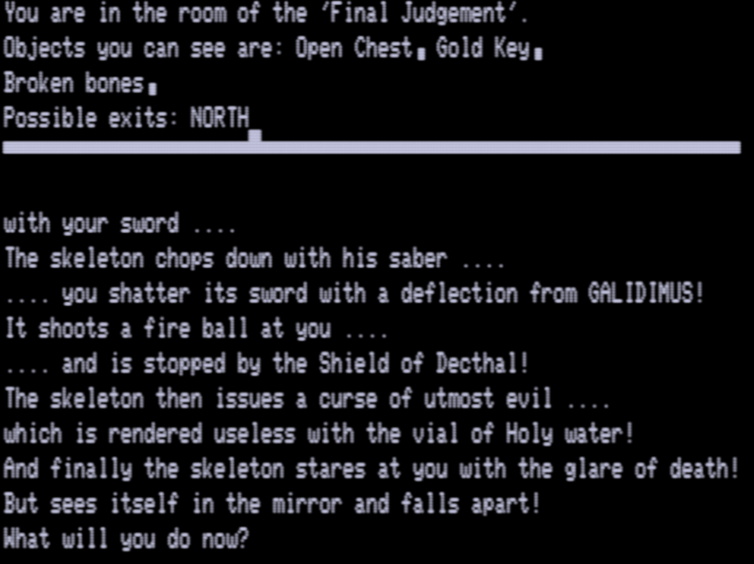
Holding the sword, shield, vial of holy water, and mirror: victory! In the chest is the Jewel of Derojhen, which now can be taken to King Brion.
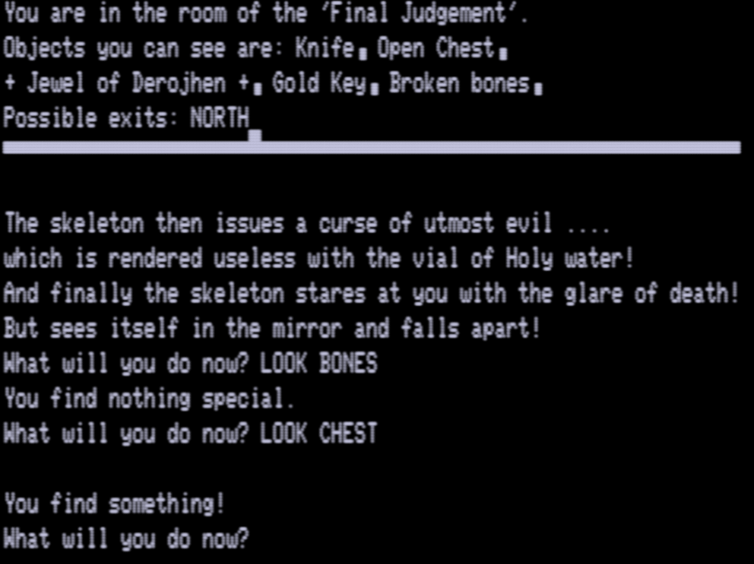
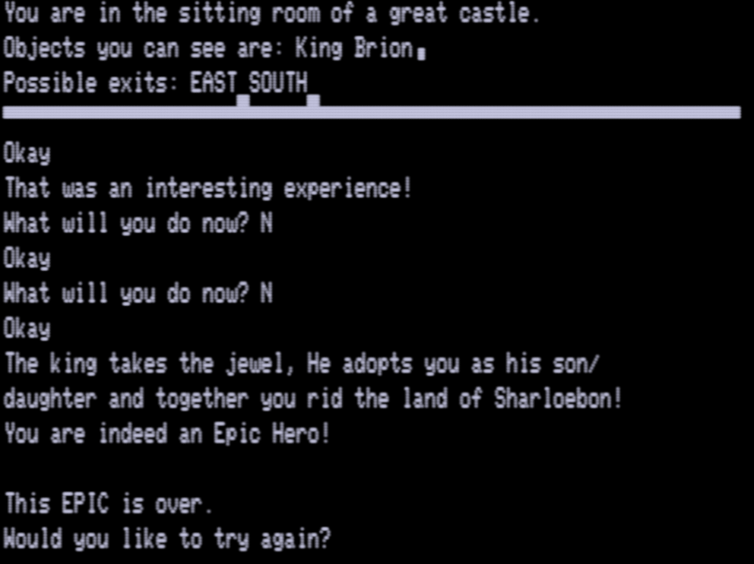
This might be the most I’ve enjoyed myself on an experimentalism-based game where magic is at play. My main frustration with magic has been a fundamental lack of logic; you wave some items at an arbitrary point to cause an arbitrary action. Even though you couldn’t find out the sequence of the Final Judgement skeleton without dying to it (unless you get lucky) the response to a particular attack wasn’t unreasonable; I got cursed, thought about the items I had laying about, and immediately latched onto the holy vial as useful. (This is using the “fan fiction shortcut” to be fair, knowing that holy water and the undead don’t mix.) Similarly, the death gaze made me think of re-using the mirror for “bouncing” even though it already got used once for the madness quality. The effects of various colors was completely unclued, but not unclued in a way that required checking across the map (like The Hermit’s Secret requiring magic words at unexpected points). The experimentation was self-contained.
If I was playing this on a computer that had slow save/reload I might be a bit more annoyed about all the above.
This compares quite favorably to the Howarth games (I think Arrow of Death Part 2 was a little better due to clever geography design, and it’s on par with The Time Machine). Scott Adams still inches above with clever use of daemons which doesn’t happen here; there are no persistent effects (like rooms that change over time) to deal with or coordinate. However, given this is still only game number 2 from Leduc we may still see something like that in the future.
Coming up: some unfinished business, followed by Japan and then Ireland. This will be the first time Ireland has featured on this blog.


 Renga in Blue
Leave a comment