I’ve finished, and this continues from my previous post.
First, briefly, regarding the verbs: they’re inside the machine code in plain text, but backwards. I don’t know if this is meant as a slight bit of “encryption” or if there’s some technical reason based on how input sequences are treated. It was mainly useful to find that “med” is the word to get inventory (as in “jeg har med”, “I am carrying”) and “dro” as in “drop” lets you drop stuff. (I really need to remember to test English words in foreign games, because sometimes they work.)
I also found “fjolet” and “idiot” on the list, both translating to, er, idiot; essentially this is for insulting the computer, which responds with “Det forstod jeg godt” or “I understood that!”

A book on Treasures and Treasure Hunters. One of my results while using image search for vocabulary. Via GPRIS.DK.
I needed advice from the comments (via Rob) to find one object that was tricky to get, and then the entirety of the rest involved mapping and digging in every room. I never even found the nails to build a ladder; I assume they’re somewhere because I poked at the machine code to list the nouns. The ladder points represent alternate exits from the labyrinth area but neither is needed.
For that one object, it was back in the shed:

That’s listing a shovel, an empty oil barrel (except it has a hammer if you check), a stack of boards, a garden rake, a hoe, a saw, and the door. Everything is takeable except the barrel and door, and knowing a ladder was coming I had automatically grabbed the boards and the saw. Somehow — and it doesn’t exactly make sense why this happens — you can be carting around the boards but be missing an item hidden if you examine them: a lamp. (You can find the lamp while carrying the boards, at least.)
With the lamp and matches in hand I was able to “taend lampe” (“put on the lamp”) and that vanquished the dark areas and any puzzles remaining in the game: as I said, the rest is pure map-making.
Starting with the dark place next to the kitchen, that just leads to a north/south tunnel, where the south opens out to the forest, and the north to the shed. This doesn’t really represent a shortcut, but rather just the author trying to add more connectivity to the world.

The other dark part was next to the shed, leading down to a cellar.

“Skeleton” and “matches” are marked rooms in the labyrinth after this section.
There are four marked rooms, and each has a treasure that is found by digging with the shovel (“grave”). There are five treasures total, so almost the entire rest of the game can be found without entering the labyrinth at all! (Except you are likely to enter by accident as you map things out.)
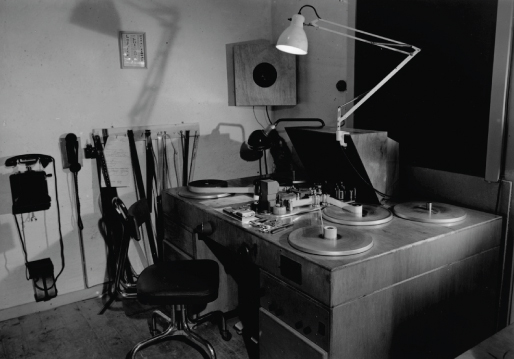
I incidentally had trouble translating “klipperum”. The pictures that I found were all editing rooms, like this one from a Danish film site…

…and the best I could find digging through dictionaries was “cloakroom” but that also doesn’t make sense to me based on the context. ADD: Petter Sjölund in the comments mentions “klippe” is stone or rock so it could be “room (carved out?) of rock”.
Leaving that behind, and heading into the labyrinth (pardon the mess, I know I’m missing a few exits)…

…it’s a fairly standard “drop items to map scenario”. One passage includes a paper at the end which suggests the treasures be dropped at the starting cottage in order to be scored. This happens to be the otherwise-inaccessible basement of the cottage; a hole is mentioned from the very start of the game, so it is a nice piece of geographic connection to mention it here.

One room also has a skull there (which serves both as decoration and a map-making marker) and another lets you dig up a skeleton of a past treasure-hunter.

The skull and skeleton are the two “sinks” of the maze (that is, random travel will more likely land in one of those two) so it makes for an interesting narrative moment to have a skeleton of a past adventurer dropped in there. However, our long expertise with Dropping Stuff makes it not hard to find the fifth and final treasure, which is right under the giant hole we found earlier outside.

(You know, I didn’t see if the treasure had the nails. I’m too exhausted to go back and check, after a while the Danish was hurting my brain.)
So all that’s left to do is make sure all the treasures are deposited followed by typing SCORE, kicking us back to the operating system prompt.

This was about the joy of exploration with an attempt at verisimilitude in environment, with the massive number of red herrings like a rake in the shed or a bottle cap buried on a random path. The “shortcuts” weren’t really needed but I’m not sure the author even thought of them in a design sense, but more in a sense that it’s logical for a realistic world to have multiple routes passing through it.
In a way this was good for a language-beginner game (that is, for me), as it didn’t in the end make horrendous demands on vocabulary. What I found most interesting was a general lack of puzzles at all; while it is essentially certain the author had experience with at least some standard adventure games, this one also harkens back to the Chaffee Quest, which when translated into Danish also was given the name Skatte Jagt.

Labyrinth north of Copenhagen, via The Copenhagen Post.
Thanks to Mikkel Christensen who did the scans of NASCOMNYT which helped find out the year of the game.
There is allegedly another Danish game from 1983 so we’re not done with the language yet, but I’m not sure where to find it. CASA states the Christmas-themed Juleadventurespil is in the December 1983 issue of Hjemmedata magazine. This is the Norwegian issue but we don’t have the Danish one.
For now, I need to stick with English for a while anyway for a mental breather; coming up there’s one spooky game, one Tolkien game (that hasn’t been discussed here yet), and finally Urban Upstart (for real this time).


 Renga in Blue
“Har” also works for inventory.
The box of nails is in the cellar in front of the shed where the ship’s chest/old coins are. There’s a “skab” (cupboard) there, and you have to “und” it for them to appear.
I thought it was kind of amusing that he basically rendered one of the only puzzles in the game irrelevant because he was having too much fun connecting up all the sections of his map.
Oh, and that Hjemmedata link is for the Norwegian magazine, which is unrelated to the Danish one with the type-in. This topic was covered here:
https://solutionarchive.com/phpBB3/viewtopic.php?t=1645
There was another Danish language adventure type-in published in the early/mid 1984 issues of the Hjemmedata section of Mikro, another Danish computer magazine that it got folded into, but these are also mostly unavailable online.
Only six issues, wurf. Will ping someone I know is in Copenhagen to see if they can get the code, thanks
“Klipperum” probably means a room made (or carved out?) of rock. “Klippe” is stone or rock.
Yeah, since it’s basically a small area of tunnels in the game. But it’s an odd usage, because as a compound word it really does mean “cutting room”, like for films, the same as in Norwegian (klipperom).
When it comes to stone/rock, I would strongly associate “klippe” in Norwegian with outdoor cliffs (sjøklipper, etc.) rather than an underground cave or tunnel, so maybe something different going on there in Danish?
My guess it is just bad writing. The author wanted a single (compound) word for a room with rock walls. Perhaps he did not even realise what a “klipperum” really is.
yeah, my guess also a situation like Cauchemard-House had in French (where I spent a while trying to figure out if I hit some kind of regional dialect thing, but no, it is just a typo)