Archive for August 2024
(My previous posts on Starcross are here.)
I’ve made enough incremental progress for a report. I was hoping to have everything on the “main floor” wrapped up, but alas, one puzzle remains elusive.

From the first British paperback cover of Larry Niven’s Ringworld, illustrated by Eddie Jones. Weirdly, it looks like there’s a painting landscape drawn on the inside, instead of the general-above view map the structure should have. The teleportation disks in Starcross come specifically from The Ringworld Engineers, although they aren’t portable in the book.
The most straightforward thing I did was finally get the red rod. The problem with testing every verb on everything is that there are exact conditions that still might not be replicated by the test.
Nesting Cage
The force projectors here aren’t working, but the cage is nonetheless inhabited by many creatures who resemble crosses between a rat and an ant. They are multi-legged with chitinous shells and pincers around their mouths, but they have long ratlike tails and sparse tufts of hair. Some of them are armed with tiny spears and walk precariously on their hind legs. In one corner is a very large mud and stick nest. The nest is constructed of all sorts of odds and ends, including a red rod. The rod is embedded in the mud near one of the entrances of the nest.
>throw black rod at nest
The black rod doesn’t damage the nest very much, and in fact a rat-ant quickly incorporates it into the nest.
Reviewing the text, I realized this implied something heftier might do the job.
>throw gun at nest
The nest smashes into fragments and the rat-ants stop dead in their tracks! They frantically evacuate the nest and immediately begin constructing a new nest at the opposite end of the cage. Rat-ant babies are being carried across the cage, and warriors watch you suspiciously.
Useful for everything but shooting at someone! But I finally got to grab the red rod, and use it to test out what it’s like to set the life support system to methane.
Repair Room
This room is taken up by two large pieces of machinery. The leftmost has a symbol depicting the emission of rays beside a yellow slot. The other machine bears a symbol in three parts: the first two parts, in black, are a solid block and a fluid level. The third, in red, is a series of parallel wavy lines. Beside it are three diagrams; under each one is a red slot. The first diagram shows four single dots equally spaced around a six-dot cluster. The second shows two eight-dot clusters in close proximity. The third has three single dots equally spaced around a seven-dot cluster. The only exit is up some stairs.
There is a metal and ceramic square here.
>put red rod in first red slot
The red rod disappears into the slot. You hear a subdued hum of machinery coming to life.
Just as a reminder, the dot patterns I had theorized were atomic numbers, and indeed that turned out to be right.
Carbon 1, Hydrogen 4 or CH⁴ = methane
Oxygen 2 or O² = dioxygen
Nitrogen 1, Hydrogen 3 or NH³ = ammonia
Enough waiting and you get
The air here has become quite pungent, smelling vaguely of charcoal.
followed by
The air here has become quite hard to breathe, permeated with the smell of coal gas.
The air here has become almost unbreathable, and heavy with the smell of coal gas.
and death with a hard cut off, just like letting the life support run out of time before.
The red rod in the second slot (like you’re supposed to do responsibly, getting oxygen) is sufficient to keep the game going on with no more time limit. I do think the “feel” of the game would be significantly different for someone who solved this puzzle early; for one thing, they wouldn’t get the still-mysterious death messages about how this solar system was going to be marked. There also wouldn’t be as much of a feeling of dread and danger, since most of the other deaths you have to go out of your way to see.
Drive Bubble Entrance
You are floating (clinging?) outside the drive bubble, a crystalline half-sphere covering the aft end of the artifact’s axis of rotation. Small knobs like handholds lead up the surface of the bubble, away from the end of the cylinder. The drive bubble is transparent and through it you can see the controls for the main engines of the artifact, which must be aft of here. The only way in is a hatch which is closed. Beside the hatch is a silver slot.
>jump
Gravity is very light here and you practically zoom into the air. Unfortunately gravity is not entirely non-existent, so eventually you begin to fall, faster and faster, in a lovely curve produced by the rotation of the artifact. You make a gorgeous but fatal swan dive into the surface.
**** You have died ****

The closest I could find with a real chemistry paper containing the same diagram, via ResearchGate.
I made a hard run then at trying to figure out the electronic mouse, since I could take my time following it around (with the literal verb FOLLOW). I tried marking up my map, especially paying attention then the mouse disappeared into the wall, and trying to figure out why it would sometimes go into a room and sometimes avoid it. (In general, it seems to “sense” garbage so, for example, it will avoid the laboratory unless you’ve put something on the ground.)
Yellow Hall
The room is lit by an emergency lighting system.
There is a maintenance mouse here, cheerfully scouring the area for garbage. It has already collected a blue disk, and a safety line.
The mouse disappears into a heretofore unnoticed hole in the wall, which closes and becomes nearly invisible.
I decided to try — just in case I maybe had made a typo before — to try out giving the mouse the blue teleportation disk again (keep in mind I was also thinking they were only usable once and I needed them for the altar; I was trying everything). Just like before, after the mouse disappeared, the blue disk did not work. However, if you wait a long time — and upon subsequent testing this might be a very long time, like 40 turns — it will finally work, and you can teleport to a new area.
>stand on red disk
There is a loud click as you step on the disk, and then a moment of disorientation.
Garage
This is the garage for Maintenance Mice. There are several stalls in which non-functional mice are rusting away. Other stalls are empty. There is a chute into which trash could be dumped, and a large bin nearby. A maintenance-mouse-sized door is in the forward wall.
There is a thin blue disk the size of a manhole cover here.
There is a maintenance mouse here.
There is a trash bin full of junk of all sorts here. Someone appears to have been dumping things for years (decades? centuries?) and never cleaning them out.
Among the trash near the top of the bin you see:
A safety line
The mouse rolls up to the trash bin and dumps some stuff into it.
The mouse leaves as unobtrusively as it arrived.
Oho! I was able to retrieve my disk, dig around the bin and find a green rod, and escape through the north wall (which leads you in that room with the mysterious south wall, so that’s two mysteries in one go).

My structural intuition was that the violet rod still gets stolen via teleport, so I tested out the disks again after the Garage incident and … they worked! But why? It turns out the teleportation happens as many times as you like, as long as you “reset” the disk positions afterwards. This opened the possibility that the disks also get applied to the obnoxious lab-globe puzzle. Alas, that’s the one puzzle I’ve been hacking at with no luck.
Laboratory
This is a glaringly lit room filled with strange devices, most completely incomprehensible. For example, a huge projector of some sort points menacingly at a silvery globe floating in midair in the center of the room. The silvery globe is the size of an orange. Imbedded in the silver globe is a blue crystal rod. Beneath the projector is a dial with four positions.
The silver sphere contains:
A blue rod
Some fun observations:
1. Typing CLIMB GLOBE just says “Bizarre!” but you can try to ENTER GLOBE gets the message:
Climbing it gives you a strange feeling, so you get back down.
2. You can fry the blue rod with the ray gun, or fry the silver sphere. If you fry the latter, everything goes away briefly (and the blue rod is destroyed permanently) but the sphere is re-formed via the matter projector.
The blast washes over the globe, which grows brighter and brighter as it overloads, then with a sinister shiver, it disappears! The blue rod is destroyed by the blast! Moments later, the projector builds up enough energy to restore the globe, and it reappears.
3. BLOCK BEAM is understood as a command, but doing so only gets the response:
Trying to destroy the beam of energy isn’t notably helpful.
4. As noted earlier, the mouse can be coaxed into the room so it might possibly give an assist, but I haven’t been able to trap it in the globe or get it to try to yank out the blue rod. (Yes, longshots, but so was hoping I could just teleport to the disk the mouse had just by waiting 50 turns.)
5. The most obvious behavior to play with is still the fact you can put things under the globe and on top of the globe. It feels like this has to be pertinent, especially because in my (admittedly short) tests I couldn’t find any object other than the globe that let you refer to the space UNDER it and put things. But what is the use? The blue rod only appears on switching the size of the globe to 1, so that has to be the last step, which potentially causes things to fall from above, or from the bottom of the bigger globe to the floor; there might be something on the floor when this happens. I tried having the teleport on the floor so that the thing from above lands on it and teleports, but no dice (additionally, why would that help?)
>turn dial to 1
The globe flickers out for an instant and then reappears, shrunken. The silvery globe is the size of an orange. Imbedded in the silver globe is a blue crystal rod.
When the sphere shrinks, the ray gun falls to the new surface and then slides to the floor.
I’m starting to get the feeling this isn’t totally self-contained and I need an item from elsewhere, but where? The game hid its crystal rod pretty cunningly so I might be missing one or more hidden puzzles which reveal rod and/or helpful items. Even if I play like Green Lantern and try to imagine any helpful item at all, I can’t think of what would extract the blue rod.
It seems like there needs to be some way of manipulating the physical properties of the sphere — with heat or cold, say — and this can then be combined with the size changing to make the small version of the globe go pop. It has resisted all my attempts, and I did do the “try every verb” maneuver on it. It just isn’t normal matter!
>get globe
The globe won’t budge no matter how hard you try.
>touch globe
The globe feels neither hot nor cold. The globe doesn’t move no matter how hard you press.
Weirdly, even while stuck I am finding new things (even if new ways to die) so I don’t feel like I’m reaching a content limit yet. However, I just might try peeking at two (2) of the Invisiclues if I hit, let’s say, one more hour with nothing to show for it. Given the Invisiclues are already cunningly arranged by the original company I don’t need hints in the comments. (However, I would like to hear from either person who said they were playing: are you any farther? Feel free to answer in saying you have X rods.)
Garage
This is the garage for Maintenance Mice. There are several stalls in which non-functional mice are rusting away. Other stalls are empty. There is a chute into which trash could be dumped, and a large bin nearby. A maintenance-mouse-sized door is in the forward wall.
There is a trash bin full of junk of all sorts here. Someone appears to have been dumping things for years (decades? centuries?) and never cleaning them out.
>examine chute
The chute seems bottomless and warm air rises from it.
>enter chute
The chute leads straight to the input hopper of a fusion reactor which gets some of its power from trash. It’s now getting some of its power from you.
**** You have died ****
(You should read my previous three posts about Starcross before this one.)
I’ve made enough progress to feel like I’m “close” to finishing, yet I simultaneously feel far away.
One thing I stared testing — and this will turn out to have payoff later — is trying to figure out different ways to die. For one thing, Infocom’s prose sometimes waxes its most poetic on killing off the player, but more importantly, death can contain clues.
>shoot me with ray gun
If you say so… The blast destroys you and your possessions so quickly there is no point in even describing the carnage.
(OK, this probably wasn’t going to give a hint, but it was worth trying still.)
>shoot weasels with ray gun
Many aliens are disintegrated, in the best tradition of the 1930s pulps. The remainder of the tribe attacks you, seeking revenge. You fire the ray gun at them. Nothing happens.
Ultimately, you are overwhelmed.
(The game lets you vaporize some things you might not expect and keep playing, like the cleaning mouse and the rat-ant nest.)
Yellow Airlock
This is the main airlock of the yellow docking port. The inner door leading up to the interior is open, and the outer door leading down to the surface is closed.
The room is lit by an emergency lighting system.
Discarded here is a metal basket with a small pocket.
>OPEN OUTER
A bright light over the door flashes menacingly until you remove your hand.
>CLOSE INNER
The yellow inner door closes.
>OPEN OUTER
The door appears to be jammed. There may be debris outside blocking it. Perhaps if you pushed again.
>OPEN OUTER
The outer door opens and air rushes out of the airlock.
Didn’t they teach you anything in the Academy? You can’t breathe vacuum! The process of dying in this way is very painful but at least relativley short.
(Yes, the typo at the end is in the original. Also, that metal basket is useful for carrying rods — if you put one in, a new hole will form for a second rod, and adding a second rod will cause a third hole to form, etc., so clearly it is meant to be a convenient way to carry them all.)
Observatory
This is the interior part of the artifact’s observatory, with an exit to starboard. There are no telescopes or other instruments visible, but in the center of the room is an image of space in the vicinity. Examining the image, you see a tiny model of the solar system. The sun is a bright dot in the center; Jupiter and Saturn are easily discovered. The colors of the dots are not what you would expect, though, and range throughout the spectrum.
A holographic projector is on one wall.
>look in projector
The light being emitted is so bright that your retina is scorched and you are blinded. You blunder about for a while, end up in a dark place, and are set upon by grues.
One death in particular is arguably the most interesting, but let’s save that for the end…
…and instead kick off with the Laboratory, where I hadn’t done that much experimentation yet. Just as a reminder, that has a “silvery globe” with a dial that has 4 settings, and the settings change the size of the globe. At setting 1, a “blue crystal rod” is visible but it is stuck.
>turn dial to 1
The globe flickers out for an instant and then reappears, shrunken. The silvery globe is the size of an orange. Imbedded in the silver globe is a blue crystal rod.
>get blue rod
The blue rod is solidly held by the silvery globe.
>put gold rod on sphere
The blue rod sticks out of the globe, preventing you from placing the gold rod there.
You can put things on the sphere at different size settings. For example, if you switch the dial to 2, put the gold rod on top, and then switch the dial to 1, it will cause the gold rod to slide off (“it falls to the new surface and then slides to the floor.”)
You can have combinations like crank the setting to 2, put something on top, crank the setting to 3, put something else on top, and then crank back to 1 and have both items fall simultaneously. The sphere that is being generated is hollow, though, so when switching between 2 and 3 whatever you had on top is now is sitting on the bottom of sphere.
>set dial to 2
The globe flickers out for an instant and then reappears, shrunken. The silvery globe is the size of a basketball.
>put gold rod on sphere
The gold rod is now on the globe.
>set dial to 3
The globe flickers out for an instant and then reappears, expanded. The silvery globe is the size of a beachball.
You hear something fall inside the sphere.
The ultimate goal, clearly, is to extract the blue rod in the setting 1, but I admit the whole setup has me baffled as to a procedure. All that really seems to be happening is the ability to have an item from above fall onto the top of the “orange” sized globe, but that doesn’t cause the blue rod to budge.
>set dial to 1
The globe flickers out for an instant and then reappears, shrunken. The silvery globe is the size of an orange. Imbedded in the silver globe is a blue crystal rod.
When the sphere shrinks, the safety line falls to the new surface and then slides to the floor.
The closest I’ve had to something “productive” is with the red and blue disks that are in the same room. I at least managed to figure out what they’re for. When you drop one of the disks there is an “inaudible click”. If you drop both of them and step on one…
>drop red disk
The red disk drops to the ground. There is an almost inaudible click as it comes to rest.
>stand on red disk
There is a loud click as you step on the disk, and then a moment of disorientation.
Laboratory
There is a thin blue disk the size of a manhole cover here.
The silver sphere contains:
A blue rod
…you get teleported! This only works once, and it can also work on items.
I was able to slide one the red disk under the sphere (suspicious that the parser even accepts that), crank the sphere to 4 (that’s the huge setting) and teleport. Unfortunately this just kills you:
>stand on blue disk
There is a loud click as you step on the disk, and then a moment of disorientation.
You reappear amidst the sphere. Unfortunately, parts of you are inside it and parts of you are outside it. Very untidy.
I tried going for extra-grisly (collecting deaths, remember) by putting the disk on the sphere in size 2, cranking only up to size 3 (so the disk should be sitting on the bottom of the beachball-sized sphere), and teleporting inside. Unfortunately, teleportation in this scenario does nothing. I think the disk needs to be set specifically on the floor to activate. This also means that the mouse that likes to pick stuff up (and occasionally disappears in a hole in the wall) can’t be teleported to, even if the mouse has picked up one of the disks.
I found a spot later where the teleporter was useful, so this mucking about likely was for nothing, but there is the faint possibility this game has alternate solutions to things that use up resources in a wrong way (like Hadean Lands, but without that game’s ultra-fancy rewind system).
After getting nowhere on the lab gizmo I decided to take another run at the red rod. This time I brought out the big guns:

Infocom has enough verb coverage that this almost doesn’t seem useful to make. (This also hides some details, like how POKE seems to be interpreted the same as SMASH. Some are also likely “vestigial” via porting from Zork — that is, they’re standard enough to be included like DRINK, but they don’t do anything.) I went ahead and tried all of them on the nest, the rat-ants, and on the red rod, and nothing worked. This is where I found I could shoot and vaporize the nest (this vaporizes the red rod too), shoot and vaporize the red rod individually, shoot and vaporize some of the rat-ants…
>shoot rat-ant
Several rat-ant warriors are reduced to ash, but many more rush out to replace them, and these look mad!
…but most interestingly, give items over that are then incorporated into the nest.
>give black rod to rat-ant
A rat-ant takes the black rod and incorporates it into the nest.
Unfortunately, while each item you give over then lands in the room description, nothing of use happens with the procedure.
Nesting Cage
The force projectors here aren’t working, but the cage is nonetheless inhabited by many creatures who resemble crosses between a rat and an ant. They are multi-legged with chitinous shells and pincers around their mouths, but they have long ratlike tails and sparse tufts of hair. Some of them are armed with tiny spears and walk precariously on their hind legs. In one corner is a very large mud and stick nest. The nest is constructed of all sorts of odds and ends, including a black rod, a gold rod, a space suit, a metal basket, a blue disk, a red disk, a safety line, a ray gun, and a red rod. The rod is embedded in the mud near one of the entrances of the nest.
No luck nudging the mouse up to the cage, either. The mouse seems to be restricted to the bottom three rings, and I suspect it has more to do with the wall on Ring Four with the distinctive message (“There is no exit visible on the aft wall.”) since it sometimes goes into a “mouse hole” and disappears.
However, the reason I still have something to report is that verb list. FOLLOW is a very rare verb, and when it does appear it can be anti-intuitive. You’d expect to just be able to use a compass direction to have identical effect to a verb FOLLOW, but sometimes it gets used as a direction system bypass (like how in Demon’s Forge you needed to FOLLOW a man to find a secret room, which was otherwise inaccessible).
I remembered seeing the chief of the weasels in the “warren maze”, and since it wasn’t acting like a real maze, maybe FOLLOW would work instead (even though the chief was staying in place, making the command might spurn him to move?)

Where my map was before solving the Warren puzzle.
Shockingly, it worked! This is decidedly a bit where the game earned its Expert label (remember, there’s no indication he’s trying to “lead you” somewhere, it only happens if you’re applying FOLLOW).
>follow chief
In the Warren
This is an earth and reed burrow within the warren. There are many aliens here, going about their business. The younger ones stare at you and make funny noises. There are passages all over the place, and a constant traffic in and out.
The chief alien, wearing your space suit, is here.
The chief slips through a crowd, which parts deferentially.
>follow chief
In the Warren
This is an earth and reed burrow within the warren. There are many aliens here, going about their business. The younger ones stare at you and make funny noises. There are passages all over the place, and a constant traffic in and out.
The chief alien, wearing your space suit, is here.
>follow chief
You can’t follow him until he leaves…
The chief slips through a crowd, which parts deferentially.
>follow chief
In the Warren
This is an earth and reed burrow within the warren. There are many aliens here, going about their business. The younger ones stare at you and make funny noises. There are passages all over the place, and a constant traffic in and out.
The chief alien, wearing your space suit, is here.
Dodging several youngsters, the chief enters a hovel.
(…etc. for a bit…)
>follow chief
Center of the Warren
This burrow is deep within the warren and the aliens seem to avoid it. An exit to port leads back into the warren. The walls are covered with crude but vibrant paintings depicting a huge spider, a gigantic mouse, man-sized lizards, and in the center, a being in a space suit. You realize that this room is the center of the green hall’s junction with the ring corridor. In fact, a ladder leads down to the green airlock.
The chief alien, wearing your space suit, is here.
The chief grins, exposing his pointy teeth, and points portentiously at the ladder. He curls up on the dirt floor and waits, watching you with interest.
Plot-wise, the paintings are interesting — we know from the spider that the physiology of humans was pre-announced, so to speak, but I’m curious if the paintings were added one by one, or all four species intended to be contacted were known from the start. (I’m thinking the former, especially given the dead lizard who tried to escape.)

Page from the manual. Notice the mention of Leather Goddesses of Phobos.
Going in the green airlock, we find the ship that brought the weasels, and a shrine.
Umbilical
You are in a plastic umbilical about two meters in diameter which connects the green airlock to starboard with a spaceship about ten meters to port. The plastic is cloudy, obscuring your view of the outside.
>w
Cargo Hold
This was once the cargo hold of a spaceship, and is filled with fetishes of wood and clay, totems in the shape of strange beasts, and a great deal of withered fruit and grain. Openings lead fore and aft, and the umbilical tube is to starboard. There is dim illumination from ancient glow bulbs.
A large fragment of black smoked glass from the chief’s helmet visor lies on the floor.
>get
(black visor fragment)
Taken.
>s
Guard Room
Once a guard room or barracks, this room is now dusty and unused. The only exit is back the way you came. A large door that may have led to the engine room is fused shut, as if by enormous heat.
>n
Cargo Hold
>n
Control Room
This was the control room of the ship which originally carried the now-primitive aliens to the artifact. The control panel was obviously destroyed by a fire or explosion long ago, although the lights here still glow dimly.
Outside you can see the surface of the artifact. Gazing longingly at that view are the empty eyesockets of a skeleton; the skeleton of an aliens weasel. It is dressed in the shreds of a space suit and sitting in the control couch. Scattered around the couch are fresh offerings of fruit and vegetables.
>get
(alien skeleton)
When you touch the skeleton, its arm falls off the armrest. Something slides out of the space suit and onto the floor.
That’s a violet rod, so we need it. Unfortunately, disturbing the skeleton is Very Bad, and if we go back after having done so (even if we hide the violet rod by putting it in the basket and closing it) the chief will realize something is wrong and you’ll game over.
As you re-enter the warren an alien approaches, spear in hand. Initially he looks friendly but becomes suspicious and rushes past you into the ship. There is a loud roar as he realizes you have desecrated the altar! Other aliens surround you, spears at the ready.
However, the teleporter works! We can simply warp out after the violet rod heist, with the only problem being we can only do the trick once.
The black visor fragment is useful for an entirely different puzzle, and I knew about it because I was collecting deaths. Go back to the list, and notice one time we simply died because of too much light.
Observatory
This is the interior part of the artifact’s observatory, with an exit to starboard. There are no telescopes or other instruments visible, but in the center of the room is an image of space in the vicinity. Examining the image, you see a tiny model of the solar system. The sun is a bright dot in the center; Jupiter and Saturn are easily discovered. The colors of the dots are not what you would expect, though, and range throughout the spectrum.
A holographic projector is on one wall.
>look at projector with glass
The light is very bright, but the black visor fragment filters it enough so that you are not blinded.
Inside the projector is a clear crystal rod, which has a prismatic effect on the light being emitted.
>get clear crystal rod
Taken. The image displayed is now clear and correctly colored.
So that’s two more rods down (violet and clear) but I still don’t have the one I really want, which is red! Argh!

Part of a letter included in the grey box packaging.
I’m still making progress, so no hints please. I’m hoping that the red and the blue are the last two to go (although surely the mouse is hiding something?) and I’ll be able to make my final push.
Before checking out I should share what I thought was the most interesting death. This happens if you run out of time on the life support (just WAIT a bunch) and happen to be wearing the space suit so you don’t die outright.
Suddenly, everything begins going dark, as though the artifact was shutting down. A thrumming vibration stops; one you didn’t even notice until it ceased.
**** You have died ****
An expressionless voice seems to be trying to express outrage, but not successfully. “The candidate has not made the necessary repairs in time. This is a disaster. All are now dead, and repairs are not possible. They would not approve. This area will be marked, that is certain.” Everything fades to black, and silence reigns.
The game just hard quits here; no revival, no prompt asking if you want restore a saved game.
(You can read my Starcross posts in order with this link.)
As I am sure is obvious to my long-time readers, I am a huge fan of puzzles, and would have been just as happy doing an All the Puzzle Games project instead of an All the Adventures project*. However, there is something exhilarating and unique that adventure games provide when they are done well. Rather than just thinking about one obstacle, I’m thinking about the combination of current plot, past lore, and environment in combination with the obstacles. Thinking about the story can help solve puzzles, and solving puzzles can help reveal the story; this interchange gives me a sort of immersion I can’t get from any other experience.
One thing that distinguishes this game from Zorks in Space (as Lebling termed it) is that the environment is designed in way that there is a logical superstructure (the cylinder) that everything fits into. Zork could go anywhere at any time, but here, the feeling is not so much exploring as uncovering, since all the missing pieces are hidden in one (admittedly large) object. When thinking about what to do next, I’ve been invoking my intuition about the structure and its history, rather than just deciding I need to map out East now.

The ultra-rare Dysan printing for DOS. These were originally intended to sell their new 3 1/4 disk format (they look like regular 5 1/4 floppies, just smaller) but it never took off. The “hard shell” 3 1/2 inch size ended up become the true next generation in disks. From the Museum of Computer Adventure Games.
While making my post last time I theorized two actions mid-stream that might help solve puzzles; I got hits both times! (My rate at such guesses in not normally that great.) First off, I thought (while listing off my objects) if the “tape library” from the Starcross itself would interest the spider.
>play library
The player picks a recently referenced selection: “Fantasia,” complete with holo-projection, begins.
>play library
The player picks a recently referenced selection: A lecture on the history of Brazil in the 2030’s begins.
>play library
The player picks a recently referenced selection: This is Pynchon’s “Gravity’s Rainbow.”
>play library
The player picks a recently referenced selection: The classic computer mystery “Deadline” is displayed.
The spider had already expressed excitement about “A whole new culture to learn” so I handed it over, and my sincere apologies to the spider if they hit bad RNG finding the shards of the teacup in Deadline.
>give library
(to the giant spider)
The spider examines the tape player and discovers the controls. A random song begins playing. Agitated, he fiddles with the controls again, and a lecture begins. He becomes even more agitated. “What a wonderful gift, human! This will alleviate my boredom for a while. Your culture is young, but you have amassed enough of interest to keep me sane for a few more years. I thank you.” He fishes in a pouch and comes up with something. “Perhaps you may find some use for this; I long ago grew bored with such baubles.” He tosses a yellow crystal rod at your feet.
This rod will become very important shortly.
My other guess was that I could interrupt the weasels hunting the unicorn by using the “backfire blast” of the ray gun.
Grassland
A grassy plain circles this band of the cylinder, the vegetation merging into dense forest as you look aft, and stopping abruptly at bare metal as you look forward. The plain arches above you, giving an aerial view of the other side and the entry through which you came. The forest obscures the aft end of the cylinder. A herd of creatures not unlike unicorns crops grass nearby.
There is activity nearby: Weasel-like aliens in a hunting party enter the grassland.
>shoot aliens
You have disturbed the hunters, who are annoyed, and the unicorns, who are now more wary. The hunt is spoiled.
A giant blast of silvery rays issues from the barrel, but it doesn’t go very far. In fact, there is a secondary explosion about a foot from the barrel, scattering dust motes in the air. There is almost no recoil: instead the gun vibrated almost painfully. This felt like a misfire.
The aliens are impressed and terrified.
I have yet to see a positive result from the hunt’s interruption. It does mean you get a different reaction from the weasel village:
They resemble human-sized weasels. Their bodies are thin, flexible, and covered with several colors of hair. There are all sizes and ages, and the stronger ones are armed with spears, knives, and other nasty hardware.
They stare at you with mingled awe and belligerence.
The smaller ones are hustled away, leaving only the better-armed members of the tribe.
Before, the weasels gesture in a way to “indicate friendship”. However, you can still have the scene like normal where you trade your space suit for a brown rod (and the alien leaves behind his own space suit).
>point at brown rod
The chief hesitates, understanding you all too well, then reluctantly removes the rod from its string and hands it to you.
Dodging several youngsters, the chief enters a hovel.

From the cover of the Zork User Group hint guide.
After this, the weasels are back to the “friendship” gesture, so maybe this was all just a small touch of plot? Either way, the unicorns are skittish and don’t let anyone close. Maybe the ramification of this all shows up later.
Having used the ray gun first for the backfire, I wanted to try out the second use where it works. This is the one place in the game where I remember what happened from many years ago. I don’t know why this puzzle in particular stuck, but it requires going back to the top of the tree and the “Bubble Drive”.
You are floating near and clinging to a large crystalline bubble covering the aft end of the axis of rotation of the artifact. There is no weight here. Small knobs resembling handholds cover the bubble; you could use them to climb back down. Far away at the fore end of the axis you can see another bubble very similar to this one.
>jump
You push against the surface of the bubble, and because there is no weight here, you shoot into the air and away along the axis!
Floating in Air
You are floating at the axis of rotation of the cylinder, near the drive bubble. There are enormous trees “below.” There is no gravity here.
>shoot ray
A blast of orange flame issues from the gun, and the recoil propels you at an impressive speed through the air. Eventually, air resistance slows you down, but you are still in the weightless area near the center of the cylinder.
Floating in Air
You are floating at the axis of rotation of the cylinder. There is grassland “below.” There is no gravity here.
>shoot ray
“Click.”
Hmm, I don’t remember that happening. Maybe air resistance will be cut later.
I next wanted to fiddle more with the repair room. That had some “rays” showing next to a yellow slot, and three red slots with different dot diagrams. While I can’t confirm my answer yet, I think the dots are meant to be atomic numbers, meaning the three slots represent specific gases:
Carbon 1, Hydrogen 4 or CH⁴ = methane
Oxygen 2 or O² = dioxygen
Nitrogen 1, Hydrogen 3 or NH³ = ammonia
This corresponds with a solid-liquid-gas symbol on the machine and hence is also connected to the solid-liquid-gas indicator on the computer. That light was (when I saw it) flickering dimly. Later it is flickering more rapidly, and there are messages about it being hard to breathe. Clearly then, the solid-liquid-gas picture is describing the artifact’s life support system. I absolutely would love to test out the options (let’s breath ammonia, everyone!) but I don’t have a red rod to go with the red slots yet — that was stuck at the nest with the rat-ants. I’ll give my theory about how to nab the red rod later.
Speaking of color coding, I do have a yellow rod to go with the yellow slot. Let’s go!
>put yellow rod in yellow slot
The yellow rod disappears into the slot.
I admit I was confused by the lack of noise, but if you head back to the DARK hall, it is now lit by emergency light.

Please note the middle ring: it has a dock in three halls (yellow, blue, red). The fourth green hall (which if the computer is to be believed, still has a working airlock) has its corresponding place covered by the village center. I do wonder if we’re supposed to dig down there later somehow, but it’s interesting to see the weasels building a society right on top of where the entered the artifact.
Not everyone was content with staying, as you’ll see when we go in the yellow airlock. But let’s visit the laboratory first:
Laboratory
This is a glaringly lit room filled with strange devices, most completely incomprehensible. For example, a huge projector of some sort points menacingly at a silvery globe floating in midair in the center of the room. The silvery globe is the size of a basketball. Beneath the projector is a dial with four positions.
A thin red disk the size of a manhole cover hangs on the wall.
A thin blue disk the size of a manhole cover hangs on the wall.
I don’t know what the disks are for. The dial has four settings.
>turn dial to 1
The globe flickers out for an instant and then reappears, shrunken. The silvery globe is the size of an orange. Imbedded in the silver globe is a blue crystal rod.
>turn dial to 2
The globe flickers out for an instant and then reappears, expanded. The silvery globe is the size of a basketball.
>turn dial to 3
The globe flickers out for an instant and then reappears, expanded. The silvery globe is the size of a beachball.
>turn dial to 4
The globe flickers out for an instant and then reappears, expanded. The silvery globe is the size of four feet and seems embedded in the floor.
The rod is “solidly held” by the globe. My assumption is some sort of globe size manipulation is combined with ??? to get the blue crystal globe to pop out and add to our collection.
Now for that airlock:
Yellow Airlock
This is the main airlock of the yellow docking port. The inner door leading up to the interior is open, and the outer door leading down to the surface is closed.
The room is lit by an emergency lighting system.
Discarded here is a metal basket with a small pocket.
The basket is empty. I don’t know what it’s for.
>close inner
The yellow inner door closes.
>open outer
The door appears to be jammed. There may be debris outside blocking it. Perhaps if you pushed again.
Remember, the computer said the yellow airlock was having issues (flickering) but not completely broken (lit).
>open outer
The outer door opens and air rushes out of the airlock.
>out
Yellow Dock
This dock area is severely scorched and damaged where other docks have rope housings. There was apparently a major explosion here, or possibly a chemically fueled rocket attempted to leave without taking proper precautions. There is a hook beside the airlock.
Entangled in debris at the edge of the dock, to port, is what might be a body. It is out of reach from here.
I’d been wondering why the safety line hook has been available, even if it wasn’t useful. Here it is useful. Attach yourself, and you’ll be able to approach the rocket:
>go port
You crawl across dock area, your magnetic boots overcoming the effect of centripetal force. The metal area they can cling to ends before you reach the edge of the dock, but thanks to your safety line you make it successfully to the tangle of debris.
Among Debris
You are among the blackened and twisted metal left by a huge explosion. The tentacle housings have been destroyed. To starboard is the airlock dome.
Entangled in the wreckage is the scorched body of a creature resembling a large reptile, almost a miniature allosaurus, clad in the remains of a space suit.
Clutched in the reptile’s claw is a pink rod.
The pink rod is the only result, but I still found filling in this piece of lore to be satisfying.
I incidentally find it very disconcerting that I’ve “used up” the yellow rod yet I’m collecting other ones. Usually when a game has a collect-a-thon all the items are needed, and they’re all applied in the same place. Just as a reminder, I currently have a black rod (from the airlock at the start) a gold rod (from getting the computer working) a brown rod (from trading), and a pink rod (from visiting the unfortunate lizard at the rocket). The yellow rod was used up, I haven’t found a silver rod, and the red rod still needs to be reclaimed from the rat-ants before it gets used.
Speaking of that red rod:

From the inside front cover of the Zork User Group hint guide. I haven’t been able to look at any more pictures (spoilers and all that) so I don’t know what’s in there other than the two I’ve shown off.
>e
Nesting Cage
The force projectors here aren’t working, but the cage is nonetheless inhabited by many creatures who resemble crosses between a rat and an ant. They are multi-legged with chitinous shells and pincers around their mouths, but they have long ratlike tails and sparse tufts of hair. Some of them are armed with tiny spears and walk precariously on their hind legs. In one corner is a very large mud and stick nest. The nest is constructed of all sorts of odds and ends, including a red rod. The rod is embedded in the mud near one of the entrances of the nest.
>get rod
As you reach for the red rod, a rat-ant pokes its head out of the nest and snaps at you with its needle-sharp mandibles. You draw back just in time.
You notice that the air has become quite thin.
Yes, I get it, it’s urgent, the air is thin. (The spacesuit works, but given how much work has been put into the puzzle I’m guessing it’s only temporarily, plus, something bad probably happens if all the weasels die.) My guess for rod retrieval is the mouse robot. I haven’t been able to pick up the mouse or coax it towards the cage, though.
For an “open dilemma” update:
1.) how do you “capture” or direct the mouse?
2.) how do you get the red rod at the zoo? (does it use the mouse?)
3.) what is the holo-projector for?
4.) what do the things at the laboratory do?
5.) how can we fix the ray gun so we fly farther? or is there some other method of continuing?
6.) how do we get past the damaged wall?
7.) what do we do once we’ve stopped the hunt?
8.) where do we get the silver rod?
*Speaking of puzzle games, the famous Deadly Rooms of Death has a new hold (aka “levelset”) coming out, and it took 10 years to write. Allegedly, it is bigger than every previously released hold combined (!!). The thread is here and The Descent of King Hesper drops on the 14th of September.

(This continues my previous post.)
I mostly did mapping without puzzle solving. There’s a lot to take in.
Before I start showing maps, I should mention this game describes directions in terms of ship directions (port/starboard/etc.) but you can just use n/s/e/w if you want. I will be sticking with normal compass directions to avoid hurting my brain. One interesting side effect — due the lack of a word for, say, port-aft — is that there are no diagonal compass directions in this game. Nevertheless, the map manages to be complicated due to the physics involved.
Last time I was at a red dock and just made it into an airlock, getting a black rod in the process. This leads to an appropriately color-coded red hall.
>GET ROD
When you take the black rod, the airlock door opens!
>IN
Red Airlock
This is the main airlock of the red docking port. The inner door leading up to the interior is closed, and the outer door leading down to the surface is open.
>CLOSE OUTER
The outer door closes and air rushes into the airlock.
>OPEN INNER
The red inner door opens.
>IN
Red Hall
This is a wide room with corridors leading in four directions and a ladder down to the airlock. The lighting is poor, as though the lights were worn out. Halfway up the walls are planters full of wilted plants.
>S
Red Hall
This is part of a long hall with failing lights. It intersects with another corridor at right angles. The plant boxes here are empty.

The map is a cylinder, with blue, red, green, and “dark” stripes going north/south — the dark being portion of the artifact that doesn’t have light. The map wraps around when going east/west (I’ve marked the exits in orange) so if, for example, you start from the farthest north point and go east five times, you get back to where you started.
Red Hall
The red hall ends here. A smaller corridor curves away on both sides. The light is dim and the plants are stunted.
>E
Green Hall
The green hall ends here at a ring corridor. The planters are well-tended.
>E
Room on Ring One
A passage leads aft from this point on the ring corridor.
>E
It is pitch black. You are likely to be eaten by a grue.
>E
Blue Hall
The fore end of the blue hall meets a ring corridor here.
>E
Red Hall
The red hall ends here. A smaller corridor curves away on both sides. The light is dim and the plants are stunted.
The “eaten by a grue” room is noteworthy for two reasons. First, it’s a whimsical reference in what is otherwise a serious game; I guess Lebling didn’t want to change what was a convenient way to keep the player from stumbling in the dark. Second, the way grue logic (and Crowther/Woods logic) has always worked is that stepping into a dark room is safe, as long as you step into a lit room afterwards. Normally this is intended to force the player back to where they came from, but since this map clearly is forming a wraparound cylinder, I tried doing the “pass through” seen in the transcript above and it worked. This allows reaching one bit of the “Village” that is otherwise inaccessible, although it’s just a dead end:
Blue Hall
A ring corridor joins the blue hall here. There is an entrance (presumably for the blue docking area) below, and also a way up.
>W
It is pitch black. You are likely to be eaten by a grue.
>W
Outskirts of Village
This is the fringe of a populated area lying to port. The corridor is filled with primitive huts, and is being used for the cultivation of grain. It seems that the inhabitants heard you coming and have fled.
>W
The corridor is blocked by a wood and mud palisade.
Let’s zoom in, starting with the aforementioned village.

The village is centered around the “green hall” zone, and has a weasel-like race.
This is the edge of a populated area, growing denser as you move starboard. Primitive huts line the corridor, which is blocked ahead by a palisade built of mud and wood. An open gate, guarded by several spear-bearing aliens, leads into the structure. A small crowd of aliens has gathered to watch you.
They resemble human-sized weasels. Their bodies are thin, flexible, and covered with several colors of hair. There are all sizes and ages, and the stronger ones are armed with spears, knives, and other nasty hardware.
They gesture in a way intended to show friendship (they bare their huge razor-sharp teeth).
The smaller ones are hustled away, but almost immediately begin to sneak back.
In the center of the village I encountered a chief alien (“all-grey”) who wanted me to give him my space suit.
He looks at you in awe, staring at your space suit. He points to it, and then at himself, and brandishes his spear menacingly.
I was then able to point at the brown crystal rod he was wearing to receive it in trade. Given I already had a black rod in addition to the brown rod, and we’ll later see a red rod (which I haven’t been able to get yet), there is clearly a collect-a-thon element to this game, where likely we’ll need to full set of rods to fix something.
To the east there’s what is technically a maze, maybe?
In the Warren
This is an earth and reed burrow within the warren. There are many aliens here, going about their business. The younger ones stare at you and make funny noises. There are passages all over the place, and a constant traffic in and out.
Any direction just loops back to the same room description. If you drop an item it gets stolen by children. I wandered enough times and made it back to the Village Center, but I don’t know if there’s any real geography. You can later find the grey alien in the Warren in order to confirm you’re just looping back to the same room over and over.
In the Warren
This is an earth and reed burrow within the warren. There are many aliens here, going about their business. The younger ones stare at you and make funny noises. There are passages all over the place, and a constant traffic in and out.
The chief alien, wearing your space suit, is here.
>N
In the Warren
This is an earth and reed burrow within the warren. There are many aliens here, going about their business. The younger ones stare at you and make funny noises. There are passages all over the place, and a constant traffic in and out.
The chief alien, wearing your space suit, is here.
One other bit I marked on the map — but which turned out to be not particular to that spot, since I’ve encountered the robot elsewhere — is a “mechanical mouse”.
A small metal contraption about a meter long and half a meter high enters the room. Its guidance system (two dish antennae at the front) circles quizzically. A power antenna juts from the rear. On top is a small tray. It cleans the floor as it goes, humming contentedly. All in all, it looks like nothing so much as a mechanical mouse.
The tray is empty (at least it was when I looked). I don’t know yet what puzzle the mouse would help me solve, but I assume it can go places I can’t (and maybe get stuff from the dark if it turns out the lights never turn on).
Let’s zoom in around the blue corridor next.

The Observatory is self contained. A blindingly bright projector would be great to take to the dark areas of the map, but given the response to TAKE PROJECTOR is “Not bloody likely” I think we’re not talking something at the portable scale.
Observatory
This is the interior part of the artifact’s observatory, with an exit to starboard. There are no telescopes or other instruments visible, but in the center of the room is an image of space in the vicinity. Examining the image, you see a tiny model of the solar system. The sun is a bright dot in the center; Jupiter and Saturn are easily discovered. The colors of the dots are not what you would expect, though, and range throughout the spectrum.
A holographic projector is on one wall.
>EXAMINE PROJECTOR
The projector is a type of laser, producing a continuous holographic view of space outside the artifact. The light issues from the front of the projector, and is blindingly bright.
Nearby this is the Zoo, which I’ve got on the map as a dotted “region area” because it actually is four rooms:

To the west is a broken cage which appears to have once had the grues; that must be whey they’re roaming the ship freely. To the east is a Nesting Cage.
Nesting Cage
The force projectors here aren’t working, but the cage is nonetheless inhabited by many creatures who resemble crosses between a rat and an ant. They are multi-legged with chitinous shells and pincers around their mouths, but they have long ratlike tails and sparse tufts of hair. Some of them are armed with tiny spears and walk precariously on their hind legs. In one corner is a very large mud and stick nest. The nest is constructed of all sorts of odds and ends, including a red rod. The rod is embedded in the mud near one of the entrances of the nest.
Here’s the red rod I already mentioned, but if you try to take it you get snapped at by a rat-ant. I haven’t tried anything as a counter yet.
Returning to the Blue Hall and heading south, the Weapons Deck has one more fun items of the game: a ray gun.
Weapons Deck
This was the armory of the artifact. A massive bulkhead has been burned away, giving free access to the weaponry. Unfortunately, it appears that the vast stock of futuristic armaments has been mostly destroyed. Gigantic projectors are scorched and shattered, strange battle armor is reduced to splinters, and wall racks for small arms are mostly empty.
Mounted in a wall-rack is a genuine-looking ray gun, large and formidable, with a long, ugly barrel. It’s difficult to tell whether or not the gun is fully charged.
I like how the description suggests some sort of past history to the place. I don’t know if deciphering the lore is part of figuring out the game as a whole. The ray gun itself initially backfires if you try to shoot it; on the second shot it issues “searing orange rays” and the recoil knocks you over. The third shot just gives a “click”.
I tried it on a suspicious wall in Ring Four, between the Red and Blue halls:
Room on Ring Four
You are between the red and blue halls on a ring corridor. The corridor looks damaged to port. The illumination dims to starboard.
>SHOOT WALL
A giant blast of silvery rays issues from the barrel, but it doesn’t go very far. In fact, there is a secondary explosion about a foot from the barrel, scattering dust motes in the air. There is almost no recoil: instead the gun vibrated almost painfully. This felt like a misfire.
>SHOOT WALL
An explosion of orange rays sweeps over the wall, but when the smoke clears, it is still there (though perhaps a bit singed).
No luck! This might be the sort of puzzle where the solution just reveals itself on its own later.
Before going on, a quick summary:
1.) upon entering the artifact you get a black rod
2.) there’s a village with a chief that you can trade your space suit for a brown rod
3.) a red rod at the zoo is protected by a rat-ant that snaps at us
4.) an electronic mouse is running around
5.) a projector is running with a super-bright light
6.) a ray gun is lying around but can only be fired twice
7.) there’s a suspicious damaged wall
There’s still more to go! (And in the main cylinder area I’m skimming over the Computer Room that’s back at the Green Hall, because that’s better saved for last.) In the middle of the Blue Hall, at the same ring as the Red Dock, there’s both a Blue Dock (if you go down) and a second, smaller cylinder (if you go up). Heading to the Dock first:
Blue Dock
You are viewing this area, color-coded in blue, through the first of several transparent bubbles connecting the dock with a large spherical object tethered by silvery ropes. The blue airlock dome is behind you, and the spherical spaceship is aft of here. There is a hook by the airlock.
Yes, that hook is suspicious, and you can attach your spacesuit to it using the safety line, but given the line has only five meters of slack you can’t go anywhere. It might come up in a specific moment later.
>S
Bubbles
This is a series of plastic bubbles connecting the blue airlock with a spherical spaceship docked aft of here. The bubbles are made of a thick material which is nonetheless transparent.
>S
Spherical Ship
You are within a huge bubble, transparent from this side. The interior is crisscrossed with wire webbing, so that an agile creature could move around using only the wires. Objects are stuck in the wires in various out-of-reach places. The whole impression is of a rather untidy spiderweb. The connection to the artifact is at the forward end of the sphere.
Crouched in the center of the sphere, where the wires converge, is a creature resembling a giant spider. A closer look reveals that it is not an insect, but rather a multi-legged, endoskeletal mammal. It has huge eyes and impressive grinding teeth. It grips the wires with many tiny fingers, and gazes at you with almost hypnotic intensity.
The spider watches you with multifaceted eyes.
Hang out at the spider enough, and he’ll talk with you:
The spider draws forth an object from a wire clump. He fiddles with it and a voice issues from it: “Greetings, creature from Earth. Are you afraid of me? Come closer, I won’t harm you.”
The spider tells you his name is “Gurthark-tun-Besnap,” (or something more-or-less that). Like yourself, he landed here to explore. He failed to control the artifact before it left his system, and has been stranded here for centuries. He sighs. “It’s getting a little boring. The other inhabitants of this place are not too stimulating. The computer was some company until it malfunctioned. When we began to approach your system, I got excited! A whole new culture to learn! The end of boredom, for a while at least. I fed your language to my translator, from your radio broadcasts, and have eagerly awaited your arrival.” He grins broadly, a fairly horrific sight.
I’m having a lot of trouble here; TALK TO SPIDER gives a blank prompt (!). (I’m not playing one of the early versions, either, this is from the Masterpieces of Infocom collection in the 90s.) ASK SPIDER ABOUT THING isn’t even an understood syntax. We’re not playing Deadline here. Still, I assume given the spider’s behavior I’ll need to figure out an interaction somehow. But let’s save that for later, since we still have yet to go up from the Blue Hall’s 3rd ring, which reveals a whole new area.
You climb a vertical shaft for a considerable distance. The shaft opens into a gigantic space which obviously occupies most of the interior of the artifact. The area is brightly lit and has an interesting geography…
Grassland
You are standing on the floor of an enormous cylinder, kilometers in length and hundreds of meters across. Above you and all around is revealed a micro-geography of trees, grassland, and manufactured structures. The cylinder is divided into various bands, of which this is approximately the central one. Things cling to the floor (or ceiling) above you, as each band continues all the way around the cylinder.
You are in the midst of a grassy plain, a sort of savannah with warm breezes and tall grasses. An exit leads down to the outer deck. Looking forward, a metal floor circles the cylinder, and extends all the way to the forward end of the cylinder, which is a sheer metal wall with a crystal bubble at the axis. Looking aft, the grassland becomes more and more densely forested. The aft end of the cylinder is totally obscured by impossibly tall trees. A herd of creatures not unlike unicorns crops grass in the distance.
This is a whole new cylinder within the cylinder. Just like the other one, it has a “wrap-around” effect if you keep going east or west.

If you wait long enough, some weasels will hunt and kill one of the unicorns. I have yet to try to interfere (the ray gun might be fun). A bit farther south is a “thin forest” with a hatch that goes down to a Repair Room, which I’ll show off in a second. Even farther is a tall tree.
Base of Tree
You are in a primeval forest, near the base of a giant tree. The trunk is thick, perhaps 40 meters in diameter, and the height is incredible. The forest is dense, so you can’t see exactly how tall it is, but extending all the way to the axis isn’t out of the question. The bark is so rough that climbing would be no problem.
>U
Up a Tree
You are climbing a gigantic tree, one that would make the largest sequoia blush with envy. Fortunately the bark is rough and climbing is easy. The gravity lessens as you near the axis of rotation, which also helps.
>U
Top of Tree
You are at the top of a giant tree, just below a huge crystalline bubble full of machinery and controls which lies at the axis of rotation at the aft end of the cylinder. Out of reach above you is a hatch which leads into the bubble. Beside the hatch is a silver slot. Gravity has almost disappeared here as you near the axis.
Keeping in mind the physics of the situation (low-gravity) I tried out JUMP and reached a Drive Bubble.
Drive Bubble Entrance
You are floating (clinging?) outside the drive bubble, a crystalline half-sphere covering the aft end of the artifact’s axis of rotation. Small knobs like handholds lead up the surface of the bubble, away from the end of the cylinder. The drive bubble is transparent and through it you can see the controls for the main engines of the artifact, which must be aft of here. The only way in is a hatch which is closed. Beside the hatch is a silver slot.
>U
On Drive Bubble
You are floating near and clinging to a large crystalline bubble covering the aft end of the axis of rotation of the artifact. There is no weight here. Small knobs resembling handholds cover the bubble; you could use them to climb back down. Far away at the fore end of the axis you can see another bubble very similar to this one.
Note the silver slot; we’re about to see more slots in a moment. If you’re having trouble visualizing the “drive bubble” (I know I did), it might help to go back to that map cover from the Zork User Group. Zooming in:

You can see the half-sphere at the end, the tentacles at the dock prior to dragging the Starcross in, and the spherical spaceship with the spider.
Now, we finally get to the two rooms that I skipped talking about. One of them is the Repair Room below the hatch.
Repair Room
This room is taken up by two large pieces of machinery. The leftmost has a symbol depicting the emission of rays beside a yellow slot. The other machine bears a symbol in three parts: the first two parts, in black, are a solid block and a fluid level. The third, in red, is a series of parallel wavy lines. Beside it are three diagrams; under each one is a red slot. The first diagram shows four single dots equally spaced around a six-dot cluster. The second shows two eight-dot clusters in close proximity. The third has three single dots equally spaced around a seven-dot cluster. The only exit is up some stairs.
There is a metal and ceramic square here.
The metal and ceramic square does not fit in the yellow slot, but it does fit in the red slots; however, it just gets swallowed up. I’m not sure what rays are being emitted by machine #1. Machine #2 I’m going to guess shows chemistry diagrams (I haven’t sat down to figure out which chemicals are being represented).
I never bothered to test the square back at the silver slot (with the engine) because I found somewhere better for it to go. Near the green hall, down at Ring One (the far north), there’s a Computer Room.
Computer Room
This is the main computer room. The builders of this ship were obviously still wedded to large mainframes: this one fills the room and is thirty meters high. There is an overlarge switch at about eye-level and an access panel below it, which is closed. The power seems to be off.
>OPEN PANEL
Opening the access panel reveals rack upon rack of metallic cards. There is one slot that has no card in it.
>TURN SWITCH ON
The lights in the room come on and there is a deafening FOOOOM! noise as the computer starts up.
Lights blink on the main display and the word “Fault” appears.
The “metal and ceramic square” fits here, giving a different reaction.
The lights in the room come on and there is a deafening FOOOOM! noise as the computer starts up.
The main display blinks twice, a bell rings, and a gold rod falls from the output hopper onto the floor! A moment later, a previously unseen enunciator panel comes on.
The panel has three banks of four colored lights: red, yellow, green, and blue. The first is labelled with a symbol of the emission of rays: of the lights underneath, the red one is flashing and the yellow one is brightly lit. The second bank is labelled with a stylized docking port and the third with an airlock. Of these two banks, the first yellow one is brightly lit and the other yellow one is flashing. The panel also contains six other lights, each bearing a stylized picture. The first four, all dark, represent navigation, engine, library, and defenses. A fifth, picturing a cage, is brightly lit. The sixth is flickering dimly. It bears a symbol in three parts: the first two parts, in black, are a solid block and a fluid level. The third, in red, is a series of parallel wavy lines.
I assume the colors are referring to the different Halls. This is very hard to parse and I had to make a picture. (L = lit, F = flickering)

I think the writing could have sorted things out a little more clearly. If I’m reading it correctly, an indicator being lit means “broken”; a indicator flickering means “danger zone”.
So in the Yellow Hall, illumination is broken, the docking port is broken, and the airlock is nominal. Navigation, the engine, the library, and defense are all working; the cage at the zoo (the grue one) is busted, and whatever is represented by the three-part symbol is in “danger”. The block, fluid, and wavy lines suggest solid/liquid/gas to me, so maybe temperature regulation?
To add to that enormous info-dump:
1.) upon entering the artifact you get a black rod
2.) there’s a village with a chief that you can trade your space suit for a brown rod
3.) a red rod at the zoo is protected by a rat-ant that snaps at us
4.) an electronic mouse is running around
5.) a projector is running with a super-bright light
6.) a ray gun is lying around but can only be fired twice
7.) there’s a suspicious damaged wall
8.) there’s a spider at the Blue Dock who wants to talk
9.) there’s a unicorn that gets hunted at the secondary cylinder
10.) there’s four slots at the Repair Room
11.) there’s a “square” found in the Repair Room that starts a Computer Room display showing what’s broken
12.) there’s an extra slot and hatch entrance at an engine found by climbing a tall tree
The items I have are a black rod, brown rod, ray gun, safety line, space suit (before trading), tattered suit (after trading), and a tape library (from the ship, which I haven’t mentioned yet — it plays Earth media, and now that I think about it might interest the spider). Also the square that started the computer if you want to count that.
One last thing! I had discovered this early but mentally brushed over it; however, it seems to be integral to the plot. Just like Adventure/Zork, you can get revived if you die.
You wake to find yourself alive, on board the “Starcross.” It appears you have been given another chance.
This was given neutrally enough I thought maybe this was “meta”, just some sort of automatic multi-undo command. However, if you die after docking you get a much different message:
You hear, if that is the right word, an expressionless voice. It seems to be inside your head. “This is not promising. The candidate does not deserve another chance, but the instructions are explicit. There are not even any more docking ports. They would be disappointed if they knew.” You wake to a brief glimpse of a pallet (on which you are lying) surrounded by metallic threads. The whole apparatus begins to vibrate and you feel very dizzy. As you lose consciousness, you realize that you can’t see the rest of your body. There is a feeling of dislocation, and then…
Curious. This suggests we’re undergoing a “test” just like the Dungeon Master was giving in Zork III, although in that game, the Dungeon Master was essentially controlling everything (even appearing in disguise). Trying to explain why all the items needed to beat an adventure game are somehow always at hand leads naturally to “clearly some external intelligence was controlling the strings!” Given the weasel-creatures and the spider-creature are their own beings, I don’t see how that can quite be the case here. The broken pieces of ship also suggest things have gone awry. Maybe this is like the tests in Portal, which supposedly follow a script, but the cake is a lie?
I’ve had two people tell me they started playing along, but please no spoilers (or speculations) yet. I’ll let y’all know if I hit the threshold.
“Just as Mark is almost entirely responsible for Deadline, Starcross is mostly mine,” Lebling smiles. “I have always been a science fiction fan and have wanted to do an adventure in the genre. That’s one of the things I really like about Infocom. We figure out what we really want to do, rather than design games by market demand. I’m in this to have fun. It would be nice also for Infocom to make lots of money and be very successful, but I couldn’t work if I wasn’t having fun doing it. I love writing these games — much more than I enjoy playing them.”
“Starcross was a real joy to write and should be a lot of fun for people to play. The puzzles are science fiction puzzles, not adventure puzzles. We did not want to do a ‘Zork in Space’ game. Starcross is intended as an entry level game for people who like science fiction but who haven’t played many adventure games before.”
— Softalk, October 1982
After finishing work on Zork I and II, Marc Blank moved over to Deadline which came out early in 1982; he then switched to making new content for Zork III, while Dave Lebling polished the re-used Zork mainframe puzzles. At the same time, Lebling created Starcross.

From The Infocom Gallery. Notice: “intended as entry level” vs. “expert level”.
Lebling was a major science fiction fan, and for this game his main two references were Clarke and Niven. Clarke’s Rendezvous with Rama in particular is quite adventure-game-like, with a mysterious giant alien structure of unknown purpose being entered by explorers; Niven had multiple stories that served as inspiration, but his Ringworld was an alien structure in the same manner of Clarke’s. We’ve had one game for the Project already inspired by Ringworld.
Notably, both are hard science fiction authors — as in attempting to have some scientific basis for what’s going, unlike, say, philosophical science fiction — and Starcross similarly has an emphasis on puzzles involving science. I have played this before (back in ’92 or so) and I don’t remember much other than one of the ending puzzles invokes a principle of Newton.

Rather famously for collectors, the initial publishing run put the game in a “saucer shape” box. This was again the brainchild of ad agency Giardini/Russel. Inside was included a map (the only part that’s Lebling’s) which gets used for the initial puzzle and serves as copy protection. I’ll pull it out later in the post when it becomes relevant.
The year is 2186. Humanity has established colonies on the moon, Mars, and several of the larger asteroids. Earth’s sky is dotted with space habitats, and the spaceways are always busy. As usual, there is the urgent need for energy to power this advanced civilization, one of the primary sources of that energy is quantum black holes.
In STARCROSS, you are a miner of black holes, scouring the asteroid belt in your one-man survey ship. Finding and harnessing a single black hole can make a person’s fortune. It’s a lonely business, fraught with the known and unknown hazards of space. You’ve equipped your ship, the M.C.S. STARCROSS, with the best gear you could afford. You’ve put everything into this venture, and though you’ve tried before, you somehow sense that this time will be different.
We’re prospecting for black holes when we get woken up by our ship’s computer. We’ve found something big.
You are sound asleep in your bunk aboard the deep-space black hole prospecting ship “Starcross,” operating out of Ceres. Just as your sleep becomes deep and comfortable, an alarm bell begins ringing! It’s the mass detector! Instantly you awake. This hasn’t been a profitable trip so far, and you don’t even have the cash for repairs. This could be the break you’ve been waiting for.
Living Quarters
(You are in the bunk.)
This nook is your spartan living quarters, containing only a bunk and a bureau. The only exit is to starboard.
There is a tape library here. (outside the bunk)
>STAND UP
You are on your own feet again.
The alarm bell on the mass detector is ringing stridently.
The initial roll-out is a bit more lengthy than Zork 1, which started with no introduction whatsoever, just “You are standing in an open field west of a white house, with a boarded front door. There is a small mailbox here.” — the wide open space of possibilities that I’ve termed the “pastoral opening”. Lebling has explained with this game they needed some cushion for those used to fantasy, and also because the player is immediately confronted with a ship they need to control.
>E
Bridge
This is the control room of the Starcross. There are exits labelled (arbitrarily) “Port,” “Starboard,” and “Out.” The latter exit has a heavy bulkhead which is closed.
Your ship’s computer does the routine tasks of navigation and life support. A control couch is mounted before a control panel and a large viewport. The ship’s registration is affixed nearby.
Your mass detector, essential in the search for black holes, sits to one side. On the detector are a red button, a blue button, and a small screen on which something is displayed.
The alarm bell on the mass detector is ringing stridently.
>PUSH RED
The alarm goes silent.
>EXAMINE REGISTRATION
Mining Class Ship “Starcross”
Registered out of Ceres
Registration 47291AA-4X
Designed by David Lebling
Constructed in 2178, Luna City Docks
by Frobozzco Astronautics
and Infocom, Inc.
>READ SCREEN
The display reads: “mass UM91.”
The blue button prints information which looks roughly like the map that comes with the game.

UM91 was specific for my game; it can be any of the orange “previously uncharted mass” objects. A bit of math is required. As the right side of the map explains, you need to give commands like so:
COMPUTER, RANGE IS VALUE
COMPUTER, THETA IS VALUE
COMPUTER, PHI IS VALUE
and then COMPUTER, CONFIRM will cause the ship to move.

While range is fairly straightforward to read (50, assuming polar coordinates) as was Phi (121º, given directly on the object as mentioned by the side directions) giving Theta took me a little math. “Up” is given as 0º and “Right” is 90º, so I worked out by counting that the map is using 90/6 = 15 degree increments. So Theta here is 15º.
(Note there’s a “screen-reader friendly” version of the coordinates here, although that removes the slight bit of math puzzle. Maybe that isn’t a bad thing; one of the comments on Drew Cook’s writeup is from someone who could never figure out how the coordinates worked and was unable to play the game. I do wonder if there’s a screen-reader method of preserving the math puzzle rather than just skipping the puzzle with a list!)
>computer, phi is 121
“Phi set.” Lights blink furiously for a moment. The computer speaks: “Sequence for intercept of mass concentration is programmed and ready. Please confirm new navigational program. I’m waiting…”
>computer, confirm
“Thank you. New navigational program will initiate in fifteen seconds. There will be a course correction burn of 60 seconds duration. I advise you to fasten your seat belt.”
I admit I died the first time here because there’s a “safety line” in the adjacent room (along with a space suit) and I went to try to hold onto that. Instead there’s a buckle revealed if you sit down on the couch.
Time passes as you journey towards your destination.
Filling space before you is an enormous artifact, more than 5 km long and about a kilometer in diameter. Regularly spaced around its waist are bumps and other odd protrusions. You cannot see the aft end but the fore end sports a glass or crystal dome almost 100 meters across.
There is a brief burn as the ship matches course with the artifact. You are hanging in space about half a kilometer away from the waist of the object. The Starcross’s engines shut down. The computer speaks: “Program completed. We are being scanned by low level radiation. Awaiting instructions.”
The “awaiting instructions” threw me for a bit. What happens is that a “red dome” comes into view, with a metal “tentacle” that wraps around your ship’s hull.
You are smashed against the bulkhead as the tentacle accelerates the Starcross to the artifact’s speed of rotation. Inexorably, your ship is drawn toward the dome. When you are a few tens of meters away, three smaller tentacles issue forth and grapple the ship solidly to the surface of the artifact. The large tentacle retreats into its housing, which closes.
Unfortunately, the accelerations involved were tremendous, and being smashed into the walls didn’t help your condition either.
I spent a while trying to figure out a direction, any direction at all, that the computer might accept other than the initial ones. COMPUTER, LAND was at least acknowledged (the artifact is rotating too fast to land). However, I couldn’t scan, do some kind of communication ping, or anything else I thought might help prevent the artifact from thinking we were hostile.
I also found I could OPEN BULKHEAD and go outside with the space suit, as long as I first attached the line to the suit and a hook outside the airlock.
>attach line to suit
Attached to the space suit.
As the object rotates below, the features of a different area become visible through the viewport.
There is an area with a blue dome below. Near the dome is a spherical object which just might be a spaceship. It is held down by silvery ropes.
>attach line to hook
Attached to the hook.
>out
Outside Ship
You are floating outside the Starcross. The airlock door is open. One end of your safety line is attached to a hook next to the airlock. This is deep space, outside the plane of the ecliptic and far beyond the orbit of Earth. The sun seems small but still intolerably bright to look at directly.
There is an area with a blue dome below. Near the dome is a spherical object which just might be a spaceship. It is held down by silvery ropes.
I went down another confused direction as I tried to jet out an escape from the ship before it got destroyed.
Finally it occurred to me the intent may be simply to “dock” our vessel and it wasn’t trying to smash it up, so I went back and used the seat buckle at the couch, and it worked. You can in fact WAIT from the entire time your ship starts moving until its final “landing” on the artifact without moving at all, and it works.
As the object rotates below, the features of a different area become visible through the viewport.
Below is an area with a red dome which has no ship near it.
Suddenly an odd protrusion near the red dome splits open and a huge articulated metal tentacle issues from it at great speed. It approaches the ship and delicately wraps itself around the hull. You are slammed against your seat as the tentacle accelerates the Starcross to the artifact’s speed of rotation. Inexorably, your ship is drawn toward the dome. When you are a few tens of meters away, three smaller tentacles issue forth and grapple the ship solidly to the surface of the artifact. The large tentacle retreats into its housing, which closes.
You are disoriented: now that you are attached to the artifact, which is rotating, “up” and “down” have taken on new meanings. Your sense of balance tells you that your ship is clinging to the underside of some enormous object, and if you aren’t careful you will fall! “Up” now refers to the center of the object, “down” to the immensities of space.
Now is when you should go in the airlock. The whole safety line thing seems to not be important yet, though.
>OUT
You exit gingerly, climbing “up” to the surface of the artifact, where your magnetic boots hold you securely as you hang “upside-down.”
Red Dock
This is a docking port color-coded in red. All around are strange protrusions, one of which could be a hook for a safety line. The surface here is metallic, but gets stony further from the dock. On one side (“Down”) is your ship, tethered to the surface of the artifact by thick silvery ropes. On the other (“Up”) is a large dome with an airlock.
A round metal sculpture or relief covers part of the airlock door. It is made up of thousands of tiny hexagonal columns which extend various lengths from the surface, making a three-dimensional representation. You can examine it more closely to see the details.
>EXAMINE SCULPTURE
A closer examination reveals that there are exactly ten circular bumps or columns on the sculpture: the first is large and centrally located, the second through tenth are smaller and scattered at various distances and orientations. As you go outward from the large bump in the center there are four small bumps, two rather large ones, two medium-sized ones, and then a small one again.
After brief contemplation I had fair certainty this is meant to be the solar system (another sci/math puzzle!) Trying to “push” most of the bumps results in the message “All of the hexagons extend to full length, then retract into the surface, leaving the sculpture completely smooth.” It’s honestly kind of mean of the aliens not to specify
– are we indicating the star of our solar system? (first bump)
– are we indicating our planet of origin? (fourth bump)
– are we indicating the planet we are nearby? (fifth bump)
Planet of origin works:
>push fourth bump
A tiny column made up of only one hexagon appears at about the same distance from the center as the first large bump.
>push hexagon
The sculpture flattens out completely, except at the former location of the tiny bump, where a hexagonal rod of black crystal is extruded.
>get rod
When you take the black rod, the airlock door opens!
Suddenly things get wide open, so this still seems like a good place to stop until next time.

From the Zork User Group map cover, which does not match my visualization of the game at all.
From Apex Trading (and the proprietor, Vince Apps) we have seen the games
Devil’s Island (open world that started with a real-time puzzle using a turn-based puzzle),
Forbidden City (lots of red herring objects, a “force field” puzzle at the end),
and Pharoah’s Curse (deathtrap heavy, “ON SHALL GO” riddle)
with the latter two also being printed in “source code books” by the author.
Haunted House is much different than these three, and it is tempting to say it must be by a different author, but I’m still putting the probability at higher than 70% this is another work by Apps. Adventures were just one of the styles that Apps wrote in, since his books weren’t just adventure games, but a whole menagerie of genres. I’d call this one on the near-adventure / near-strategy end similar to Hunt the Wumpus and Treasure Hunt; the tape this game originally came on has Haunted House on one side and Wumpus on the other.

This game also falls in the roguelike-adventure bin I’ve been placing works that are heavy enough on randomization that, conceptually, the player ought to be playing a “new adventure” on each restart. This was sometimes quite explicitly the authorial goal, like with Madness and the Minotaur. We’ve had games on the edge, like The Queen of Phobos, which has items scattered in random places and four enemies which move at random, but that game still can have a traditional “walkthrough”; a true roguelike-adventure would have a hint guide that reads like with a strategy game, which gives general guidance but can’t anticipate fully what the player is seeing.
The map, the objects, the puzzle placement, and the puzzle solutions all potentially have randomness applied. With Mines by James L. Dean, puzzles had fixed solutions, but everything was otherwise mixed up. Madness and the Minotaur had a fixed map but had everything else (including some but not all puzzle solutions) get jumbled.
Haunted House has
a.) a fixed map
b.) with an object in every room, and random placement
c.) where some of the objects solve puzzles, and the correspondence between object and solution is fixed
d.) but where the puzzles themselves are placed randomly.

The only moves are N, S, E, W, T (take) and O (open). This isn’t that unusual for this style of game; Mines had similar restrictions as did 6 Keys of Tangrin (despite Haunted House not having the random map, 6 Keys feels the closest in gameplay to everything I’ve tried).

Every room has a “container” although containers can vary all the way from an outhouse to a desk. For some of the containers, the player needs to be holding a particular item to open them; the outhouse might be locked and need a key. However, these conditions are jumbled along with the objects, so an outhouse might be open in one run, locked needing a key in another, and stuck needing a hacksaw in yet another.

You have an inventory limit of 3. The goal is to escape with as much treasure as possible, so I suppose a “win” would find three treasure items of high value.

The coins and gold bar would count. Other items you might randomly find are a dead rat and some dust, which I reckon gives less points.
Moving from one room to another takes 2 minutes. The game starts at 11:30 PM and everything is “safe” until midnight. Once midnight hits, the player has a random chance of running into an enemy.

The player might escape (but have their items stolen) or they might just die.

My very first run I got two treasures (see the coins and gold bar earlier) but I had gone east from the start, which you’ll notice from the map is a one-way-path. The only way to get back and escape is from the west side of the house, so I died before making it there.

6 Keys had the same large number of containers and same level of inventory restriction, but in that game there was absolutely no reason to suspect key #2 would be more valuable than key #3; it was always simply a crapshoot. This game is a little better: the small map means you are more likely to run across a puzzle before its solution, and there’s some objects whose physical nature (like an old top) are clearly unlikely to be used in a puzzle. You can perhaps do a risk/reward balance between carrying just items-that-seem-like-they-solve things like a screwdriver, and items that seem like they have value for escape.

In other words, it is possible to try to devise a strategy on the fly. The big issue is that the turn limit is incredibly tight; at 2 minutes per turn starting at 30 minutes before midnight, you technically have 15 moves only that are “safe”. This is not enough to be thorough and after that point you just need to get lucky.
I made it out with a score of 3400 with a “safe route”. In each place I opened the container (this doesn’t use up time) but only picked up items that seemed useful, eventually making it to two treasures in my inventory and just guessing what I should be holding.
tomb: spider
outhouse: cup
chest: can of oil*
coffin: hacksaw*
filing cabinet: mouse
sideboard: hammer*
basket: glass eye
conservatory: gold bar (leave behind oil)
back of house: banknotes (leave behind hammer)
garden shed: key (leave behind hacksaw)
back of house
west of house: top
coach house: layer of dust
west of house
south of house
OUT
The can of oil, hacksaw, hammer, and key are all potentially tools. One of the game’s issues is if you do actually need a key or whatnot, while it will tell you when you don’t have the item, if you’re actually using it no message is given. It is possible one or more of the items I found in the route above required something I was holding, but I don’t know for sure. I also am unclear if there’s lower or upper limits to how often an object is used; I played a game where the key was used twice, but might it be that the key is used zero times on a particular generated map?

The route I used for a “hard exit at midnight” run. You need to go to the east side of the house first since the only way to end is via the west side of the house.
I did a slightly riskier run where I added a visit to the kitchen, but otherwise used the same route. (In the oven I found a mouldy loaf, which makes me wonder if some rooms are more liable to have certain random objects — that does change the calculus of all this, but I didn’t find the experience compelling enough to work out how this might change percentages.)
hammer*
top
banknotes*
can of oil*
gold bar* (leave can)
dead rat
cobweb
mouldy loaf
hacksaw* (leave hammer)
(step)
(step)
(step)
spider
glass eye
mouse
(step)
cup
need screwdriver
(step)
(step)
“Need screwdriver” was with the coach house. You could try, at this point, to adapt and see if you can make a run into the house to search for the screwdriver. If you do this, you should try to swap your items you are holding for the useless ones (that is, trade the mouse for a gold bar, and the banknotes for a spider) so that if the kind of supernatural enemy comes that only steals your items, you can get your treasures back while on the return route.
I tried to do a “flexible” run where I ran through every room if I was denied opening a container I would go back once I found the item to do the opening, but this ends up being too far past midnight: either I would have my tool stolen or I would die.
If you’re writing a strategy game, one of the best things to do in order to test it is to simply write a guide to your own game. If it involves interesting choices and dynamic responses to the environment, it’s better than one where the best approach is to simply follow a script. Based on my multiple attempts at Haunted House, I think the best approach is to follow a script.
After making it out with two treasures which is easily doable with the minimal script, the only level after is finding three (out of diamond necklace, banknotes, gold bar, coins); that seems to be heavily dependent on luck and the slight bit of strategy I just mentioned (keeping treasure from getting stolen) only serves to protect one’s current score. Since the only reason you’d be backtracking in the first place is you found the tool you need, you can’t really do anything to mitigate the effect of spirits stealing your stuff; either you are holding the tool on the way to a treasure location (and if it gets stolen, it is gone forever) or you are holding the treasure you obtained by using the tool.

From one of my runs. I tried to backtrack after getting the hammer but it was stolen.
So while this is essentially a strategy game rather than adventure (which is interesting in a conceptual sense, at least) the actual gameplay fails at the strategy level. The player’s restrictions are too tight and options too low to really have good choices vs. bad choices rather than lucky choices vs. unlucky ones.
Let’s get back to a real adventure next time, shall we? With a good parser, even! I have a whole week booked out and might be willing to extend to two if the game’s difficult enough.
Although it was the kind of “won” where I wasn’t aware of it until I played a while longer and hit a crash bug.
You can read my part 1 on this game here.
In terms of responses to typed input, you can roughly divide the parsers from the 70s-80s era into roughly:
Tier 1: does not respond to anything other than “correct” input, single error message for all failures
Tier 2: will specify if an unknown verb or an unknown noun, but otherwise single error message for all failures
Tier 3: will acknowledge basic hinderances like using GET with too many items in inventory
Tier 4: will include custom reasons why things won’t work (“you can’t stab with anything in your inventory”; “his armor is too thick to stab”), the messages may give hints as to correct action (“stabbing won’t work, you need something blunt instead”)
This is quite rough and not always sequential. A game might even start with helpful messages but have them drop later because the author ran out of space. Tier 3 is the most common, but we’ve had Tier 4 all the way back to the earliest parser games, so it isn’t like any level is uniquely innovative. It’s just a matter of: does the author(s) have the technical chops and game-design insight to include them?
Game-design insight especially is more of an obstacle than you might think; I’ve noticed designers really have trouble having an intuition for how things might go wrong as it requires “being in the head” of a player who doesn’t have the knowledge that you do.
Star Trek Adventure hovers around Tier 2 (“CAN YOU REPEAT THAT” for nearly everything) with the bonus that one part where there’s a different message it becomes actively deceptive for the player! I’m referring to this:

I honestly thought this was a puzzle about speed somehow. Maybe you had a camera that saw ahead of you so you could pre-emptively aim at the Klingons? Or fire at them from a “different room”? Or maybe my joke about drug enhancement was real? (It’d be weird for Original Trek, but keep in mind lately this blog has seen a game where you have to shoot your own mule to get the shovel off their back, so anything’s possible.)
No, this is a spot with a “parser override”: when in danger from a Klingon, anything typed other than the “correct action” will tell the player they’re too slow. The thing is, shooting the Klingon is correct! It just was communicated with words the game didn’t like. You’re supposed to FIRE PHASER:

I want to emphasize FIRE PHASER is a reasonable thing to accept, but having a parser message which suggests that shooting happened but failed makes for one of the worst things a parser can do: an actively deceptive message. Of course, it likely never occurred to Mr. Hawkings that someone might communicate the exact sentiment of FIRE PHASERS and glean a different understanding. That is, he must have thought of the message as “you were too slow and dithered around instead of using weapons” without knowing it could be read as “you tried to use a weapon but were too slow”.
This opens several floors up a little more, but not the big set of Klingons in engineering (we’ll take care of them in a moment).
On the third floor (with a medical bay that has a hypo), you can find the Klingon guarding a library, which contains a TECHNICAL MANUAL. I was first quite confused because it initially talked about “NOTHING OF VALUE IN THIS SITUATION” which I interpreted in a holistic sense (we have Klingons who took over the ship, and the manual is useless in such circumstances). Instead the manual is supposed to be read in particular rooms, where you can get information about what you see.

On the fourth floor (with the supply warehouse, where you can GET ITEM-YOU-NAME and hope it is there) you can find a knocked-out Spock, then use a hypo from the medical bay to revive him. He will start following you around after. I discovered much later that when you type HELP with him around this is directed at Spock (not the invisible helper behind the parser) and this needs to be done at least once for some essential information.

Thanking McCoy is interesting. Even though he doesn’t appear, this implies he left the hypo behind in the sick bay before being captured with the hope it might get used; that is, he was able to scan the situation and prepare. Usually you’re supposed to just accept the helpful items will be left out for solving puzzles, without a reason given.
On the second floor (with the Captain’s Quarters and the Transporter Room) it opens up a Crew Quarters which have a tribble in them. Tribbles are from the episode the Trouble with Tribbles and are small furry balls with voracious hunger that multiply quite quickly. One of the most famous scenes from original Trek has Kirk buried in a pile of them which got into a space station’s food store.

Relevant to the game, tribbles also have a negative reaction to Klingons, enough so that they get used in the episode to unearth a spy. Heading back to Engineering, just outside where the mass of Klingons are:

It’s not clear from the phrasing, but that HELP line is given by Spock.
The trick here is to THROW TRIBBLE. I can’t swear there’s no hint anywhere (I haven’t bothered to de-rotate the encryption of the entire source code), but I think this is a rely-on-outside knowledge puzzle. These are general considered bad design, but I admit if you’re going to include such a puzzle, a Star Trek game is a reasonable place: you’d generally expect players to be fans. (Except some people in ’82 would have just typed the game in because it was there.)

The opens two rooms. One is a room for dilithium crystals where we find out the crystals are depleted. The other is auxilary control.


If you ask Spock for HELP at the commander, he’ll tell you the Klingon word for surrender, and you can SAY it to him and he will give you coordinates where your crew are on the planet. (At least in this version of the game, that’s all you need to “rescue them” — it gets assumed this happens off-screen. Remember what I said about not realizing the game was over?) You can instead shoot the commander, and Spock will comment that shooting an unarmed person was a poor choice. But the game lets you do it, so you get softlocked!

Oddly enough, I’m in favor of this scene. It reminds me of the baton taken up by Star Trek: 25th Anniversary (and later games like A Final Unity) where there are multiple approaches to dilemmas, and it is possible to be aggressive and get through but still be “less Federation-like”. Here, it’s clearly just one answer to the dilemma, but the fact Hawkins spent the work including this possibility (given how many times I saw CAN YOU REPEAT THAT) in this game means he was actively thinking about the peace-or-war dichotomy that arises naturally with Star Trek as a whole.
Put another way, you might argue that the format for Star Trek itself — being explorers and scientists who sometimes act as soldiers — is part of what spawned the gaming innovation in the first place.
Let’s get back to the other issue in the room, the broken Aux Control. The technical manual works here (and to the game’s credit, even I though I didn’t understand the manual’s purpose up to this moment, it immediately occurred to me as a solution).

Heading back to supplies, I tried GET SHUNT and it worked.

OK, I’m almost accepting of this room (with the wide-open GET WHATEVER format).

To be clear, this screen was before I realized the Spock HELP command so I hadn’t reckoned with the Commander yet.
The other thing the ship needs to move is dilithium crystals. I checked the “ship status” from the bridge and it mentions that there’s dilithium crystals on the surface of the planet we’re orbiting. Great, I just needed to beam down! Too bad it is so hard to communicate:

This is the moment I figured out HELP referred to Spock. He tells you that you need to SAY ENERGIZE. Unggh. At least I wasn’t alone here, as there was one player who experienced this in the 80s but couldn’t beat it, even with a walkthrough.
I was never able to beat it, because I couldn’t figure out how to operate the transporter. Years later I found a walkthrough I think on Compuserve, and it said to beam down to the planet, but not exactly what to type, so I remember trying USE TRANSPORTER, BEAM DOWN, ENERGIZE, ENERGIZE TRANSPORTER, etc., but I never figured it out. I guess I didn’t try SAY ENERGIZE. :(

An uneventful away mission follows. This is the last time you need your phaser.
With the crystals in hand you can replace them. This starts an immediate countdown as your ship’s orbit starts decaying. (It is possible to fix the crystals first and shunt second — this will cause the same result.) You need to rush to the bridge with engine control — no mistakes — and PRESS BUTTON (not PUSH! you monster).

We win! Yes, that’s the end of the game. What, you expected some sort of end message? I tried checking if maybe I could look for the crew on the planet but found that typing HELP made the game think I didn’t have a communicator (which was clearly in my inventory) and crash at the same time.

Worried, I ended up pulling up the walkthrough from the original magazine. This is quite unusual to print a walkthrough with the game, but the author wanted to show off the utility of the letter-munging aspect and so included one with the encryption, and a program to decrypt a walkthrough line by line (it says for you to BREAK when you’re done).
PROCEED NORTH FROM YOUR CABIN INTO THE HALLWAY. HEAD WEST UNTIL
YOU COME TO THE TURBOLIFT ENTRANCE. ENTER BY HEADING NORTH
AND GO UP. EXIT THE LIFT TO THE EAST AND EXPLORE THE BRIDGE.
FEEL FREE TO PRESS BUTTONS AND RECEIVE THE VARIOUS REPORTS.
GO BACK TO THE LIFT AND GO DOWN TWO LEVELS. EXIT THE TURBOLIFT
AND HEAD EAST UNTIL YOU COME TO THE SICK BAY. TAKE THE HYPO
AND RETURN TO THE TURBOLIFT. GO DOWN ONE MORE LEVEL AND TURN
WEST AFTER EXITING THE LIFT. GO NORTH & WEST UNTIL YOU FIND A
WAREHOUSE. YOU WILL NEED A PHASER AND COMMUNICATOR IMMEDIATELY
GO NORTH OUT OF THE WAREHOUSE AND THEN CONTINUE EAST. YOU WILL
ENCOUNTER A KLINGON GUARD BUT FIRING YOUR PHASER WILL DISPOSE
OF HIM. SPOCK’S TRICORDER INDICATES HE IS CLOSE BY AND ONE MORE
STEP EAST FINDS HIM UNCONSCIOUS IN THE BRIG. INJECT THE HYPO
AND HE WILL BE REVIVED AND HELP YOU. RETURN TO THE ENTRANCE
TO THE TURBOLIFT AND GO UP. EXIT ON DECK 3 AND HEAD EAST THEN
NORTH. PHASER THE KLINGON AND HEAD EAST AND GET THE MANUAL. GO
BACK TO THE LIFT — GO UP — AND HEAD EAST. TRANSPORT DOWN TO
THE SURFACE OF THE PLANET AND GET THE DILITHIUM CRYSTALS. RE-
TURN TO THE SHIP. GO WEST TO THE CREW’S QUARTERS AND TAKE THE
TRIBBLE. GO BACK TO THE TURBOLIFT AND GO DOWN TO THE BOTTOM
LEVEL — ENGINEERING DECK 5. FACE THE SQUADRON OF KLINGONS IN
ENGINEERING AND THROW THE TRIBBLE AT THEM. REMEMBER — KLINGONS
ARE EXTREMELY FRIGHTENED OF TRIBBLES. GO SOUTH AND REPLACE THE
DILITHIUM CRYSTALS. GO NORTH THEN EAST TO AUXILIARY CONTROL.
SPOCK WILL HELP YOU WITH THE KLINGON COMMANDER … THEN INSERT
THE SHUNT (IF YOU DON’T HAVE IT IT IS IN THE WAREHOUSE).
YOU ONLY HAVE A LIMITED AMOUNT OF TIME SO HURRY BACK TO THE
BRIDGE AND PRESS THE BUTTON TO FIRE THE ENGINES. WHEN STABLE
ORBIT IS ACHIEVED … YOU HAVE SUCCESSFULLY COMPLETED YOUR
S T A R T R E K A D V E N T U R E !
With this I was able to confirm I was done. If that seems odd to you, you’re in company, as Howard Batie (who did the Tandy CoCo port called Galaxy Trek Adventure) must have felt the same way. In that version, the game keeps going! Quoting Dave Dobson, who played the game on a portable Model 100 with its own unique bugs:
Now how do we beam everyone back aboard the Enterprise? The Tribble is still available, so maybe we can shoot one Klingon and scare the other to get into the Klingon camp. THROW TRIBBLE at the south edge of the camp on Tieras-80 works, but we get a syntax error in line 101, another semicolon/colon mixup (fortunately the Model 100’s EDIT command is pretty easy to work with.)
The tribble runs off again after scaring the Klingon guard away, but we can still FIRE PHASER to eliminate the sentry outside the camp. And now we can enter the camp and find the crew! YOU MUST LEAD THEM BACK TO WHERE YOU BEAMED DOWN, we learn, which is easy enough to do if we’ve drawn a map so we don’t wander into the surrounding dangers. We return to our landing point, SAY ENERGIZE one last time to beam back aboard with the crew, and victory is ours!
I recommend that version over the original. (The Jim Gerrie port is fine.) Not only does ending at a rescue feel more satisfying, but Batie thought to take out the “loops” in the corridors which don’t do anything other than make the ship feel bigger. I’m sure they’re there for “atmosphere”; they copy the technique that goes back to Crowther (which wanted his outside Forest to seem like it was outside) but the ship is clearly simplified even with the trick, so it’s better to just acknowledge the tiny map and move on.

Deck 4 as an example. Those “loops” in the corridor are gone in Galaxy Trek.
Coming up: a haunted house as we aren’t in any danger of running out of those, followed by Starcross, followed by two recently-unearthed games for the North Star Horizon.
This is the third time Star Trek has appeared on this blog. First came Trek Adventure (1980) by the oddball company Aardvark, with a parser meant for a system with a tight memory limit; the game itself was one of the best of the Aardvark games, with a clever map trick (where rooms are first accessible only by airduct, but eventually you attain a more natural way of reaching them) and some savvy atmosphere, despite the ship being abandoned and the protagonist being a random crew member who has been left behind.
The second time was the graphic adventure Star Trek: 25th Anniversary (1992), where I took down a fair chunk of the “episodes” but I got softlocked by a bug (I think). Dubious UI, but voice acting from the original stars still gave a wonderful Original Series vibe. I promise I’ll give it a replay sometime (maybe I’ll try to mop up those missing points). As an aside, I’ll plug the freeware game Super Star Trek meets 25th Anniversary which combines the bridge of the graphic adventure with the gameplay of the original 1971 Mike Mayfield game.

It would have been better had the graphical adventure copied this style for the battles, instead of the slightly janky Wing Commander clone we got.
This game, by Randy Hawkins of Corpus Christi, Texas, first appeared in the August 1982 edition of 80 Micro. It has an internal copyright date of 1981. It was later re-written for the magazine Hot CoCo by Howard Batie under the title Galaxy Trek Adventure, with the odd condition that while the article gave full credit to Hawkins, the source doesn’t, meaning when the source code resurfaced later (as a game for the portable Model 100, for instance) it lists as being by Batie instead of Hawkins.

The problem with making a Star Trek game with 1982 technology (or even, let’s be honest, 2024 technology) is that the ship is supposed to be teeming with people. Even if we limit crew interactions, we’d at least have the main trio in action (Kirk, McCoy, Spock) with support from everyone else (Sulu, Chekov, Uhura, Scotty). While Deadline managed a cast this large, most authors cannot, so rather like Trek Adventure, the game gives a reason to isolate the player, who is playing as Kirk himself. Time to warm up on your Shakespeare!
(In all seriousness, William Shatner’s Shakespeare is better than you might think. He was allegedly quite good in his Ontario Stratford Shakespeare Festival days. I have a theory that the type of acting that works with elevated language can seem overmuch when transferred to everyday dialogue; that is, some of his more “famous” acting moments in Star Trek would have worked had they been Shakespearian poetry instead.)
I had some serious issues getting the program working because the source code does a letter-shift-by-one in order to avoid giving the game away to people typing in the type-in. Randy Hawkings explains:
… I have typed several other Basic adventure games myself, but by the time I had read through the program and, laboriously, typed every line, I knew how to solve the adventure’s riddles before the first execution. Just reading the list of nouns, verbs and descriptions gives too much of the mystery away.
The source code does a POKE in memory to do the decipherment, but this can cause havoc with emulators. I recommend trs80gp in Model 1 mode, where you load BASIC manually, then load the program manually, then start by typing RUN.

Otherwise this can happen.
If that’s too much work, you can play Jim Gerrie’s port of the CoCo version. (He also ported the original Trek Adventure.)

The Enterprise has suffered a boarding party of Klingons; Kirk wakes up seemingly alone, and needs to heroically claim the ship.
I haven’t even come close to being heroic yet, but I can at least give the lay of the land ship. Star Trek is based around turbolift floors. Star Trek First Contact (1988, no relation to the later movie!) lets you visit every single one of the floors. Star Trek ’82 lets you visit five of them.

A zoomed out view of my incomplete map so far.
Let’s linger a moment in the starting room, the captain’s quarters of Floor 2:

Trek Adventure ’80 put multiple objects, with the Saurian Brandy giving a convincing impression of Kirk.
You ARE–
In a CABIN
You Can See-
Saurian BRANDY
PILLOW
MIRROR
VIEWPORT
VENTILATOR
Computer TERMINAL
This game … just puts a 3d chess set. This does not quite give the Captain Kirk aura. Also and more unfortunately, no verbs I could find work.

Mind you, since CAN YOU REPEAT THAT is the error command for every rejected command, no matter what, I can’t tell if it’s a verb misunderstanding, a noun misunderstanding, or the game truly means the chess set as scenery and I’m supposed to leave it alone. My list above assumes the noun is SET, but maybe the game is looking for CHESS, or 3D?
Moving on and staying on the same floor, there’s a transporter in one direction, but again I’m parser hell. Am I messing with the PANEL, the CHAMBER, what?

Rounding off the floor is a confrontation with a Klingon who captures you if you don’t have a phaser. (The game even explicitly says the game over is because you don’t have a phaser.) If you do have a phaser, you manage to — nope, never mind, you get captured anyway.
It’s not a real time thing. I turned the emulator down super slow to test while typing fast and I had the same result.
The Bridge (deck 1) is fortunately empty.

There are STAR CHARTS you can pick up (GET CHARTS, TAKE instead of GET otherwise you get the generic failure) and three stations available. Navigation has a button for impulse control but it doesn’t seem to be working.

PRESS, not PUSH. sigh
Status indicates the Enterprise is in decaying orbit and having the impulses engines broken is very bad. Communications indicates in addition to a humanoid on board (yourself) and many Klingons, there is one Vulcan.


Yes, I accidentally did PUSH first every single time. If the text wasn’t encrypted I’d hack the verb in just out of spite.
Deck 3 (medical) has a hypo antidote in a sick bay, and a Klingon guarding the rest (who I can’t get by). Deck 5 (engineering) has many Klingons in the engine room.

Nope, that’s not going to work. Instead of a hypo antidote Kirk needs a hypo stimulant.
Deck 4 has a corridor one way (with a Klingon hanging out at “Spock’s tricorder”) and a supply room the other way. The supply room is designed like Dog Star Adventure where you’re supposed to just name what you want.

In addition to the phaser (see above) I found a communicator by guessing. I haven’t lucked out with any more items, and I have not been able to find any verb that works with the communicator (I’d love to try contacting Spock, who apparently is still somewhere on the vessel).
I’d certainly be leaning on my verb list about now but a generic error response means I can’t tell if a verb is understood or not. Sometimes in such circumstances I can find a loophole so I’ll keep prodding but this is a game that simply does not want to be communicated with.
Bonus post!

A North Star Horizon computer; the original was released 1977. They are notable for having early versions of CP/M and DOS, as well as being one of the first personal computers with an available hard drive. Via the blog Broadbandpig.
This is thanks to Gus Brasil who commented in my last post. I mentioned a 1979 North Star game (Middle Earth) which might be somehow related to Tolkien, although the situation was ambiguous as the game was lost media. I also mentioned Cranston Manor Adventure (North Star Horizon version) being a lost game as well. This was on the basis of my searching in 2022. However, it turns out that late in 2023, a large archive of North Star Horizon software got uploaded. By large, I mean at least 30 disks that haven’t seen daylight for a long time, including the North Star version of Cranston Manor.
Two adventures from the archive I have other copies of in another format (Windmere Estate, Zodiac Castle), but there were two more I had never heard of before: Uncle Harry’s Will (1981) and Whembly Castle (1982). Both are by R.L. Turner. I have added them to my list (and there’s something fascinating about Uncle Harry’s Will, but let’s wait on that until we get there).
Relevant to Cracks of Doom, the archive has the game Middle Earth. Let me quote, in its entirety, the entry from the Chronological list of Tolkien games:
Produced by: Dendron Amusements (?)
Distributor: Dendron Amusements
Year: 1979
System: North Star Horizon
Type: Possibly wargame
Distribution: Commercial
Availability: Out of print
Licensed: No
I am not sure if this is really based on Tolkien’s Middle Earth or if it is just another game that steals the title therefrom. The game was released as part of a series. Other titles in the series included Panzer, Blitzkrieg, Fall of the Third Reich, D-Day, Armorcar, Porkchop Hill, Africa Corps, Waterloo, The Battle of Monmouth, Starship Troopers, Invasion of the Mud People and The Boston Marathon.
Arnold Bogenschutz suggests that this may be somehow connected with a board game published by SPI with the same title. He seems to remember seeing the computer version, but has no further details.
I’m not seeing Dendron mentioned in the source anywhere, but the year and author are:
COPYRIGHT 1979 R A MAGAZZU
I don’t think there’s title stealing. I think the title is just incidentally connected.

The Middle Earth is referring more in a “journey to the center of the Earth” sense.

I did play just a little to confirm; while there are creatures, they are definitely not of Tolkien vintage.


I am not doing All the Wargames (that’d be a certain Scribe) so I am not the best person to parse this, other than to confirm that: as long as you discard The Lord of the Rings (TRS-80, 1981) as a weird trivia quiz, the first commercial Tolkien videogame adaptation we know of is Cracks of Doom.
(Star Trek is in progress! Next time.)
I have finished the game; you should read part 1 here first.
Before plunging ahead and witnessing Frodo perform judo (really), I want to look a little more at the early history of Tolkien videogames. There are complications in asking “what’s the first Tolkien videogame” along with “what’s the first commercial Tolkien videogame”. It depends on what you think counts.
For any influence at all we might think about 1975 with Moria, one of the early CRPGs on the PLATO system, although that game is really just an adaptation of an earlier PLATO game (neither author was aware of the existence of the tabletop D&D nor had they read Lord of the Rings). Mines of Mordor (1979) similarly just does a namecheck, and seems to be an adaptation of the boardgame Citadel.
Hovering somewhere in the 70s is the game Nazgul, which is mentioned by Christopher Burke in a Quora thread as a “private” game he wrote for an ASR-33 where the player is trying to avoid a bunch of Ns on a grid. It is a re-skin of the game variously known as “Robots” or “Daleks” or “Chase”. I have trouble counting this as an actual Lord of the Rings adaptation.
+-----------+

|N     N    |  812

|           |  703

|           |  654

|    NN     |

|     *     |

|           |

|   N       |

|           |

|      N    |

|    N      |

|   N    N  |

+-----------+

Enter move (0-8):
Staying with 1979, the Tolkien Games chronology lists Ringen, The Shire, and Middle Earth. Ringen was an adventure in Norwegian only preserved by being made into an area on a MUD and you can read about my playthrough on this very blog. The Shire was potentially a mainframe game, maybe on PLATO? Middle Earth is allegedly a wargame for the now-super-obscure North Star system by Dendron Amusements. (Cranston Manor Adventure had a now-lost North Star version, as did the GROW software, but those are the only times the system has appeared here.) That last game was technically commercial but both its existence and its content are ambiguous.
Ringen is solidly enough “real Tolkien” I’d give it credit as first we know of that tries to be a real adaptation, although it doesn’t take the commercial mantle. For a candidate we might try source code dated February 1981, by “P. & M. Hutt” and published by Kansas City Systems.

From the Museum of Computer Adventure Games.
I’ve gone ahead and played it and the gameplay is hard to describe. It’s sort of a cross being the previously mentioned Robots/Chase game and a trivia quiz.

You’re Frodo exploring around Shelob’s lair, and it is divided into floors where you are stumbling in the dark. The floors are represented in ASCII.

As you move around, a “nasty” marked with an N tries to find you (it takes about five moves trying to get to you, and if it gets seriously blocked, it disappears entirely and a new nasty appears). If the nasty gets to you it might be a dwarf, or might be Shelob. If it is Shelob you need to answer the next letter in the “spell”, that is, answer the trivia question appropriately.
There’s various doors that lead up and down floors, and the game implies some sort of final conditions to exit, but I never got that far. The Lord of the Rings credentials are extraordinarily tenuous.

Honestly the best part is this opening screen.
Kansas City Systems incidentally has only previously appeared on this blog in context of illegally re-publishing games from other companies (the case against them ended up being what firmly established software in the UK as being under copyright); although I wouldn’t say the theming is just a cynical ploy to sell copies, I would say it is a game more in the category of Moria with “elements inspired by” Tolkien without really being an adaptation.

Here I prove — by typing in the first letter of the name within 5 seconds — that I know who the “bear-man” in Tolkien is. So Shelob goes away, taking 1 gold piece, rather than killing me.
All this is meant to lead to the fact that — especially since it appeared in a January 1982 issue of Computer and Video Games Magazine, meaning it was really published late 1981 — Cracks of Doom is arguably the first actual adaptation of Lord of the Rings for commercial sale. As already highlighted, caveats are needed. However, even with the odd “alternate reality” of the mission just being Frodo, having to toss 5 treasures into Doom rather than just the One Ring, etc., there’s still some recognizable elements, especially upon picking up the One Ring. The game felt like an attempt to put the player in the part of the story rather than just namecheck Shelob.

The cover of the de-Tolkien-ized edition, from the Museum of Computer Adventure Games. Saruman is now Solbone. Shelob is now Shogra.
Back into the action! Regarding the Palantir that I was unable to cart all the way back to the cracks without Frodo losing it mentally…

…I found you could just pick up the “wolf fur” that was covering the Palantir and you’d be fine. No need to rush. I had noted a lack of “wrap” or whatnot as a verb but I guess you are implicitly covering the Palantir up, matching the lore that it really is only dangerous if you can see into it (and Sauron can see you back).
There’s also something I did right without being clear I was doing something right. There was a “mighty falcon” where I gave it a feather and it broke a “binding spell”. The idea is that you can take the falcon away now; before it says it has a spell and is stuck in place. So the falcon is useful for a confrontation later.

Picking up the falcon suggests something else that Rob mentioned in the comments as an idea: the NPCs aren’t the sort that stay in place and you interact with them, but rather you can simply pick them up. This seemed like an absurd idea (Halfing arms!) but then I was able to just wholesale grab Gollum, giving Frodo a serious workout. Gollum does not stay put but he moves somewhere better for him to be later, anyway.
Gollum cackles Stupid Halfling! Did precious think it could hold Smeagol and runs off.
In fact, I briefly was carrying both Gollum and Saruman the White at the same time. Saruman doesn’t let you just powerlift him. I had missed another aspect to the game, with the third dwarf at the Cave of Crystal Presence. It also wants a crystal cup, just like the dwarf I got a hat from. However, if you give the Crystal Presence dwarf the cup first, he’ll give it back to you along with Gandalf’s staff. If you instead pick the other dwarf first, you’ve softlocked the game.

With the staff in hand, then Saruman is paralyzed, and you can take him. Not only take him, but cart him all the way over to the Cracks of Doom and hurl him down. Yes, he’s one of the 5 anti-treasures. (By the way, the iron fist? Is not useful for anything. It can go down too.)

Shelob tries to catch you again at the cracks, so you need to BRANDISH PHIAL before practicing your judo toss.
Having the discards made is sufficient to trigger that message about the One Ring; in addition, for some mysterious reason, you can defeat the Balrog now. I had previously theorized the green fire would work, and I was absolutely right, but I was doing it at the wrong time. (IF you type HELP at the Balrog room, in addition to the “walkthrough” you get by saying “yes” to Gandalf, you can just get a contextual hint by saying “no” to Gandalf; you’ll be informed to “fight fire with fire”. I was heavily stuck because dropping the green fire did nothing.)

Past the Balrog is some red fog, and then a tower containing Morgoth the Dark Enemy. Here’s a rendition of Morgoth as he is usually depicted:

Via Guillem Pongiluppi.
In Cracks of Doom, your falcon friend is sufficient to scare Morgoth away.

Given the falcon was freed via a magical artifact of the original Eagle Lord, this doesn’t feel too absurd to me.
The falcon flies away, which is unfortunate, because you can find a “gleam” in the tower which is high up and clearly one of the anti-treasures we want. Going down the opposite way you can find Gollum hanging in a cell.

I never got “speak Gandalf” to do anything.
We’ll need Gollum in a moment. To get at the gleam, we need the falcon back; the falcon has wandered all the way back to the room we started the game in. (No clue or anything, we’re just supposed to hope we’ll find him and check the entire map.) With the falcon in hand we can get it to retrieve whatever that gleam might be.


We are now on a strict time limit. This part was really well done; we start feeling “depressed”, and then eventually the baleful eye is cast upon us.

I felt genuinely tense and thought I was going to need to reload a save and optimize my route to avoid being crushed by Sauron.
We need to scoop Gollum along the way to the cracks (he’s a lot easier to get from the cell at the tower than his starting place, this is why I said it was helpful he ran away). Then dropping the ring leads to a canon-adjacent effect:


Despite it suffering an almost equal amount of jank, I enjoyed this a lot more than Hitch Hiker’s Guide. I think, curiously enough, the odd effects and messages add to a general feel of oppression, and that mood fits a lot better hanging out at Mount Doom than it does traversing the universe in the Heart of Gold.
I also really, really enjoyed hurling Saruman the White into Mount Doom, despite the improbability. Maybe it was all that lembas bread.


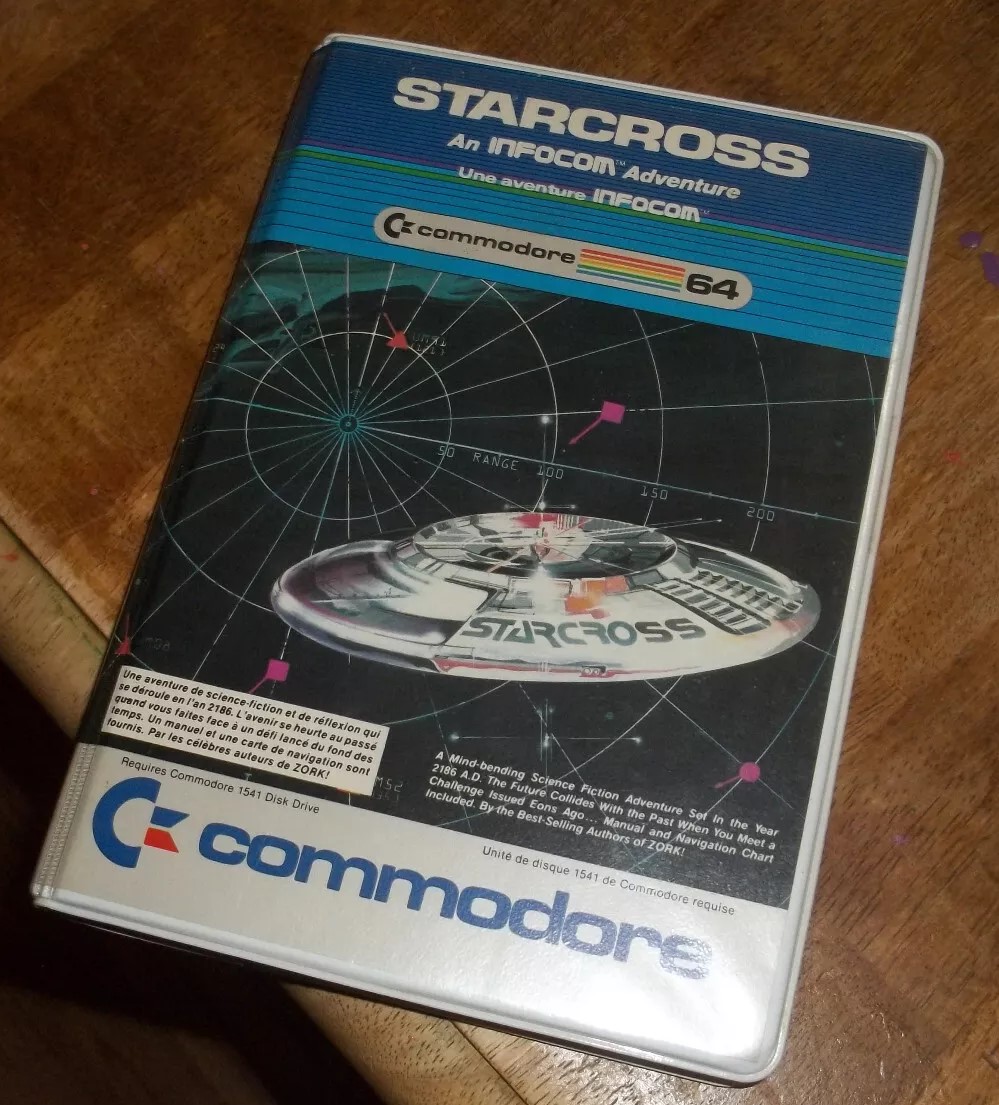



 Renga in Blue